
Reviewed · TOURS IN CANTERBURY
Silver Ring Workshop in Kent, England
Turning a plain strip of silver into a ring you can wear home is the heart of this Canterbury workshop. Annie guides you through sawing, texturing, forging, soldering, filing, and polishing, so you do not simply watch a craft demonstration. You make the piece yourself, with help at each stage.
I especially like the private format, which gives you time to ask questions and work at your own pace. I also like the clear, hands-on teaching: Annie demonstrates each technique on her own piece, then lets you repeat it on yours. The main consideration is that materials cost extra, and the beginner-friendly designs are simple rather than elaborate.
- You make the ring yourself: Saw, forge, solder, file, buff, and polish your own silver band.
- Annie teaches every stage: Her calm, patient instruction suits complete beginners.
- A private workshop: Only your group takes part, with sessions for one or two people.
- A personal finish: You can choose basic texturing, patterning, or stamped details.
- A useful price note: The advertised price is $131.95, plus £10 to £30 for silver materials.
- A convenient Canterbury setting: Meet at 76 Castle Street, close to public transport and a multi-story car park.
A Silver Strip Becomes Your Canterbury Keepsake
This is not a class where you sit at the back and watch someone else work. At 10am, you arrive at Annie’s studio at 76 Castle Street, Canterbury, receive an apron, and settle at the workbench with tea or coffee.
The first conversation is about your design and finger measurement. Since this is a beginners’ workshop, you will work toward a straightforward ring rather than a signet ring or a highly complex setting. That limit is sensible. Three hours is enough time to learn the basics and finish a wearable band, but not enough for advanced jewellery construction.
You can choose how to personalise the ring within that simple form. Annie can show you ways to add texture, pattern, or stamped marks. This gives you room to make the ring your own without forcing you to draw a complicated design or master techniques beyond the session.
The setting adds to the appeal. The workshop takes place in a gallery in an old Canterbury building, and the surrounding space is described as comfortable and pleasant. You are not being rushed through a large group class. For one or two people, the session usually lasts between two and three hours.
Sawing the Silver to Length
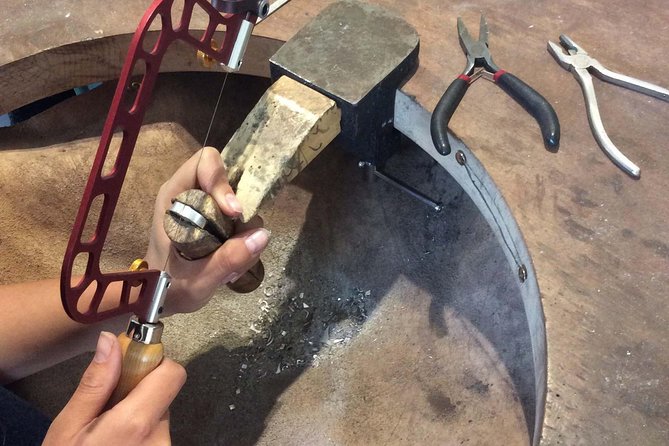
The first practical task is sawing the silver to the right length. This may sound basic, but it is an important introduction to the work. You learn how the tool feels in your hand and how carefully you need to follow the line.
Annie’s role here is useful for beginners. She explains the process, demonstrates it on her own ring, and then lets you try. You are not expected to arrive with prior metalworking skills. The workshop is built around learning by doing, with guidance when you need it.
The early stage also sets a realistic tone. Jewellery making is not instant. A ring that looks simple may require several separate jobs before it is ready to wear. Starting with a plain piece of silver helps you see how much handwork goes into the finished object.
Take your time with this part. A clean, accurate cut makes later stages easier. You may find the first sawing work more demanding than expected, but that is part of the value. You begin to understand the craft rather than simply leaving with a souvenir made by someone else.
A few more things to do in England worth a look
- Surf Lesson
★ 5.0 · 349 reviews - London Traditional English Scone Making and Tea Workshop
★ 5.0 · 271 reviews - Beginner Surf Lesson in Newquay, Cornwall
★ 5.0 · 215 reviews
Adding Texture, Pattern, and Stamped Details
Once the silver has been cut, you can personalise it. The available approach is deliberately simple: patterning, texturing, and stamping are the main choices mentioned for the workshop.
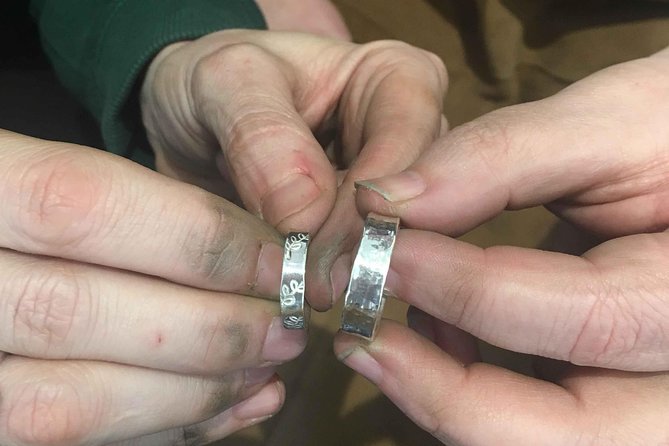
This is where the ring begins to feel personal. A plain band can become a reminder of a special visit, an anniversary, a wedding, or a shared day in Canterbury. One couple used the workshop to make new wedding rings together, while another pair made rings for each other for an anniversary.
You should keep your design practical. This is not the place to request a detailed signet ring or an advanced gemstone setting. Instead, think about the kind of surface you want and how much decoration will still look good on a small band.
Annie gives you choices throughout the process, but she also keeps the work within what can be completed in the available time. That balance matters. You get creative control without being left alone with a piece of metal and a pile of unfamiliar tools.
The Torch, Annealing, and Forging the Shape
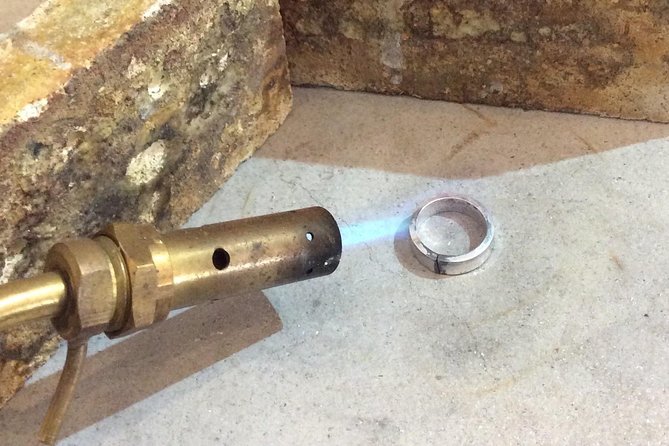
The silver must be annealed before it can be shaped properly. Annie explains why this heating process is needed and shows you how to use the torch. You then use the tools under her instruction, gaining a basic introduction to how metal changes as you work it.
For many people, using the torch will be the most memorable part of the class. It can sound intimidating before you try it, but the activity is explained step by step. You are not thrown into the process without preparation.
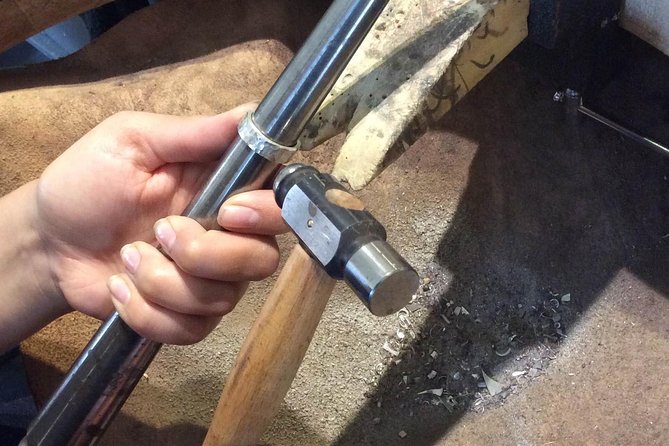
After annealing, you forge the silver into a ring shape. You then saw it to the correct size, preparing the two ends to meet. At this point, the project has changed from a strip of metal into something recognisably ring-shaped.
The process also shows why fit matters. Annie measures your finger at the start, but the ring still needs careful adjustment as it takes shape. You have the chance to see how a small change in the metal affects the final fit.
If you are left-handed, you should not worry that the tools will make the session impossible. One left-handed participant needed to move to Annie’s workbench for one stage, and the arrangement was handled without fuss. The private format helps here because the session can adapt to your working position.
Soldering the Join
With the ring shaped and sized, you are ready to solder the join. Annie explains how the torch is used to connect the two ends of the band, and you take part in the process.
This is a key stage. If you have never made jewellery before, soldering makes clear that a ring is not simply bent into shape. The join needs to be clean and secure, and the heat must be used with care.
Annie’s teaching style is especially important here. She demonstrates the process first, then guides you through your own work. Her approach is patient and encouraging, which helps if you feel nervous about making a mistake on the piece you have spent the morning creating.
The class is still hands-on, but you are not left to guess. You can ask questions as you go, and Annie explains why each stage is necessary rather than giving you instructions with no context.
Same base, a different kind of day:
- Stonehenge, Windsor Castle, and Bath from London
★ 4.5 · 18,662 reviews - London Big Bus Hop-On Hop-Off Tour with Optional River Cruise
★ 3.5 · 10,803 reviews - London Small Group Tour of Historical Pubs
★ 5.0 · 10,422 reviews - Beatles Magical Mystery Tour
★ 5.0 · 9,266 reviews
Filing, Buffing, and Polishing the Finished Ring
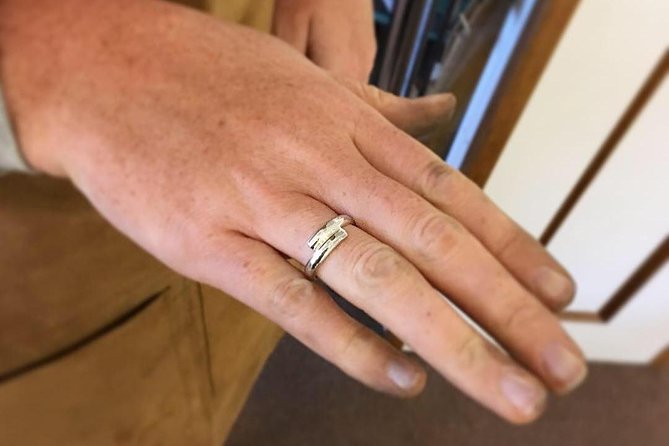
After soldering, the ring will not yet look like a finished piece of jewellery. You use metal files to clean the join, remove unwanted marks, and smooth the surface. You also buff scratches before polishing the whole ring.
This finishing work may be the most satisfying part of the session. You can watch a dull, rough band become smooth and bright through your own effort. It also rewards patience. Filing too quickly or skipping the small surface marks would leave the ring looking unfinished.
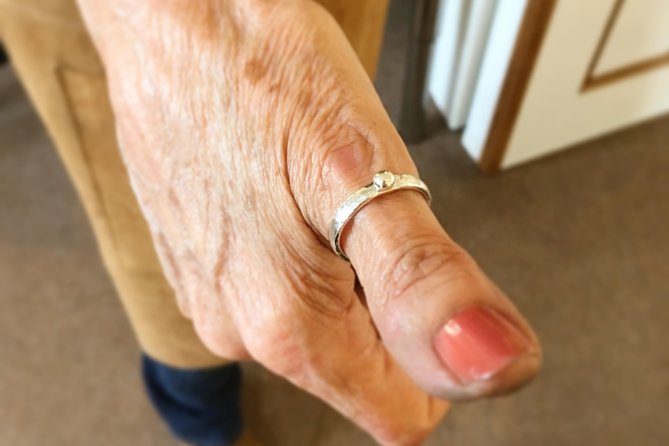
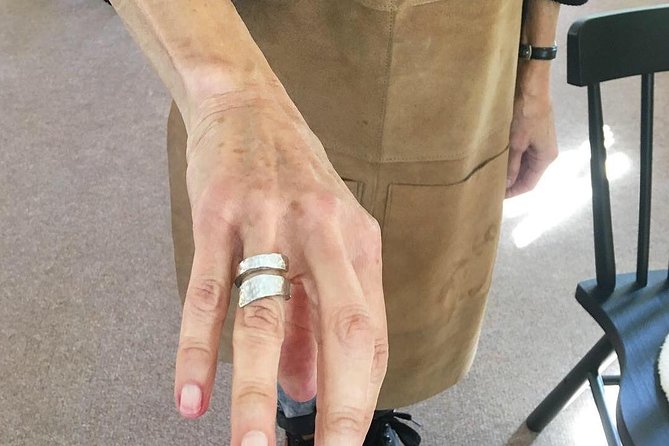
The final polish gives you the moment most people are waiting for: placing a wearable ring on your finger. You leave with the piece you made, not a pre-made item selected from a display case.
That distinction gives the workshop lasting value. The ring may be simple, but it carries the memory of the work involved. You will know why the surface looks the way it does, how the join was made, and how many stages were needed to turn raw material into a finished object.
What the $131.95 Price Really Covers
The listed price is $131.95 per person. That is not the full cost, because silver materials are charged separately at the end. The additional amount ranges from £10 to £30 per ring, depending on the finished weight. A basic ring has a minimum material cost of £10.
You should include that extra payment in your budget before booking. The final amount will depend on the ring you make, so a heavier band will cost more than a light one.
The price pays for more than a finished ring. You are also paying for a private lesson, use of the studio and tools, an apron, drinks, and Annie’s direct help throughout the process. Sessions for one or two people normally last two to three hours, which gives you a fairly personal introduction to silversmithing.
I would compare this with other craft workshops by asking what you take home and how much direct instruction you receive. Here, you leave with a handmade silver ring and a basic understanding of several jewellery-making techniques. If you only want an inexpensive souvenir, the total may feel high. If you value the activity as well as the object, the cost makes more sense.
The extra materials charge is not a surprise if you plan for it, but it is the most important price detail to note. Check the expected silver cost when you book if your budget is tight.
Who Will Enjoy This Workshop Most
This is a strong choice for someone who wants a creative activity in Canterbury and likes the idea of making something useful. It works particularly well for:
- Couples making matching or wedding rings
- Friends looking for a shared activity
- Families or pairs giving the workshop as a gift
- Solo visitors who want a personal memento
- Beginners curious about metalwork
- Anyone who prefers an experience that produces something to take home
You do not need previous jewellery-making experience. The class is designed for beginners, and most people can participate. Service animals are allowed, and the studio is near public transport.
The workshop may be less suitable if you want a large choice of advanced designs, gemstones, or signet rings. You should also allow enough time for careful work. Although the session is only two to three hours, it is an active class rather than a quick drop-in craft.
Timing, Location, and Planning Your Visit
The meeting point is 76 Castle Street, Canterbury CT1 2QD. The activity ends at the same address, so you do not need to arrange transport between locations.
Sessions are listed from Thursday through Saturday, from 10am to 1pm. Arriving ready to begin at 10am matters because the workshop has several stages, and the work needs to progress in order.
The studio is close to public transport, and one useful practical detail is its proximity to a multi-story car park. That makes the location easier if you are driving into Canterbury for the morning.
The activity is often booked well ahead, with an average booking lead time of about 80 days. If your visit falls on a particular Thursday, Friday, or Saturday, book early rather than assuming you can find a last-minute place.
Confirmation is sent within 48 hours, subject to availability. Free cancellation is available if you cancel at least 24 hours before the start time. Changes or cancellations made later are not accepted for a refund.
My Take on the Teaching
Annie is the key to the experience. Her teaching method is clear: she demonstrates each stage on her own ring, explains what the tool does and why the step matters, then lets you copy the technique on your piece.
That structure is reassuring for a first attempt. You are learning from a working example rather than trying to follow a long verbal explanation. You can also ask questions as they arise, which is useful when you are handling a saw, file, or torch for the first time.
The tone appears relaxed rather than formal. Tea and coffee are offered, and the workshop is set up as a comfortable working session. You are encouraged to make choices, but Annie remains close enough to help when you need it.
The private arrangement is a major advantage. In a large group, you might spend much of the time waiting for attention. Here, the session is limited to your party, so the pace can match your experience and confidence.
Is the Finished Ring Worth the Effort?
The finished ring is not a luxury jewellery piece, and it is not meant to be. Its value comes from the fact that you made it through every main stage.
You will see the marks of your decisions in the texture, shape, and finish. That makes the result more personal than a standard souvenir. The ring can also mark an occasion, such as an anniversary, a wedding, a birthday, or a special weekend in Canterbury.
I would set your expectations correctly. Your first ring may not have the exact precision of a professional silversmith’s work. That is part of the charm, and Annie helps you clean, smooth, and polish it so it is ready to wear.
The process also changes how you see handmade jewellery. After sawing, shaping, soldering, filing, and buffing your own piece, you have a better sense of the labour behind a finished ring.
Should You Book the Silver Ring Workshop?
Book it if you want a personal Canterbury activity with a real result at the end. The private setting, patient instruction, and clear sequence of tasks make it approachable for beginners, while the chance to create wedding or anniversary rings gives the session extra meaning.
I would skip it only if you want advanced jewellery design, a very elaborate ring, or a low-cost souvenir. Remember to add £10 to £30 for materials, and reserve early because sessions are limited to Thursdays through Saturdays.
For most people, the strongest reason to book is simple: you leave wearing something that passed through your own hands from start to finish.
FAQ
Where does the silver ring workshop take place?
The workshop takes place at 76 Castle Street, Canterbury CT1 2QD, England. The activity ends at the same meeting point.
How long does the workshop last?
Sessions for one or two people last approximately two to three hours. The listed time is 10am to 1pm.
What days is the workshop available?
The workshop is offered Thursday through Saturday, from 10am to 1pm.
Is this a private experience?
Yes. Only your group takes part in the activity.
Is the workshop suitable for beginners?
Yes. The workshop is designed for beginners, and Annie guides you through each stage of making the ring.
Are materials included in the price?
No. Silver materials cost an additional £10 to £30 per ring, depending on the finished weight. The minimum charge for a basic ring is £10.
What is included in the workshop?
The experience includes a guide, an apron, and coffee or tea. The advertised price is $131.95 per person.
Can I cancel for a full refund?
Yes, if you cancel at least 24 hours before the experience start time. Cancellations or changes made less than 24 hours in advance are not accepted for a refund.
Just added in England
- Exceptional Bath tour guide making your visit splendidly memorable.★ 4.5 · 69 reviews
- Full-Day Private Tour of Stonehenge and Bath with Pickup★ 5.0 · 6 reviews
- One Way or Round Trip Private Transfer: Heathrow Airport to Bath★ 5.0 · 3 reviews
- Quintessential Cotswolds Half-Day tour from Bath (for 2-8 guests)★ 5.0 · 27 reviews
- Stonehenge Half-Day luxury guided tour from Bath for 2-8★ 5.0 · 15 reviews
- Private Guided Tour of Jane Austen’s Bath★ 5.0 · 7 reviews
- British Wine and Cheese Tasting Experience in City of Bath★ 5.0 · 18 reviews
- Cotswold Village Private Day Trip from Bath★ 5.0 · 24 reviews
Tours in Canterbury, compared.

Official Canterbury Guided Walking Tour – 11.00 Tour
Read our review →
Cultural Homestay Exploring London, Oxford and National Parks
Read our review →Browse the lists this tour appears in