
Reviewed · AFTERNOON TEA EXPERIENCES
London Traditional English Scone Making and Tea Workshop
Scones are one of Britain’s simplest pleasures, and this one-hour class lets you make them instead of merely ordering them. You’ll mix dough, roll it out, cut your own scones, and eat them warm with clotted cream and jam, plus plenty of English-style tea.
I like two things here: the class is short enough to fit into a busy London day, and you leave with a technique you can use at home. The small group, capped at 15, also gives hosts such as Ron, Danni, and Danny room to help nervous bakers.
The main consideration is the limited duration. This is a quick, well-organized baking session, not a full cooking course. It is also unsuitable for anyone who cannot eat gluten or dairy.
Key points to know before booking
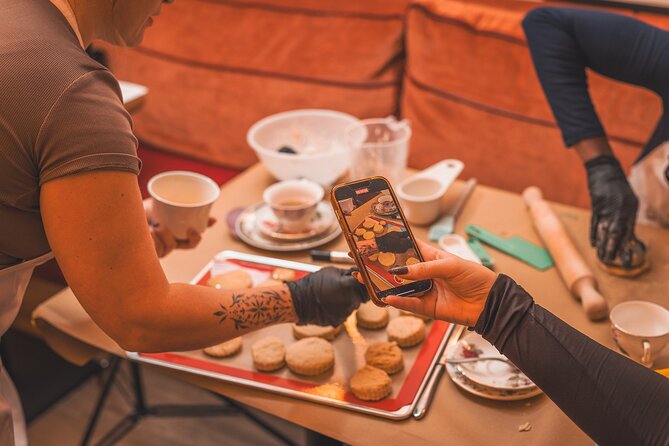
- Bake at least three scones from scratch: You measure, mix, roll, shape, and bake rather than simply watching a demonstration.
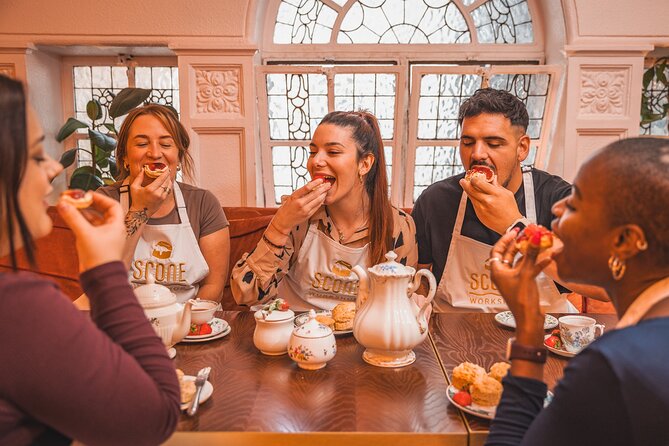
- Eat them the traditional way: Warm scones come with clotted cream, jam, and tea.
- Meet at De Hems Dutch Cafe Bar: The workshop begins and ends at 11 Macclesfield Street in the West End.
- Expect a friendly small group: The maximum is 15 people, useful for questions and hands-on help.
- Take home more than a snack: The baking method, certificate, and any extra scones give the experience value beyond the hour itself.
- Plan around the dietary limits: The class is not suitable for gluten or dairy intolerance, and children under six are not recommended.
Making scones in London’s West End
The workshop starts at De Hems Dutch Cafe Bar on Macclesfield Street, a central West End address. That makes this a handy add-on to a day around Soho, Covent Garden, Chinatown, or nearby theaters. You receive a mobile ticket, and the activity returns to the same meeting point, so you do not need to arrange a second pickup.
Inside, the atmosphere is designed to feel relaxed rather than formal. Aprons are provided, and some sessions include embroidered chef aprons and a photo prop, which adds a playful touch without turning the class into a staged photo stop.
Your host introduces the basic story of the British scone, tea, and clotted cream before the practical work begins. You get enough background to understand why this small baked treat matters in British food culture, but the emphasis stays on making and eating.
That balance works well for a short activity. You get a taste of local food tradition without spending half a day in a kitchen. If you want an academic food lecture, this will feel light. If you want a clear explanation followed by hands-on work, the pace is a good fit.
More afternoon teas in London:
- London: Afternoon Tea Bus Tour – 1960s Routemaster Bus
★ 4.5 · 2,032 reviews - The Kensington Palace Gardens Royal High Tea
★ 4.5 · 934 reviews - Afternoon Tea River Cruise on the Thames
★ 4.0 · 884 reviews
Rolling, shaping, and baking your own scones
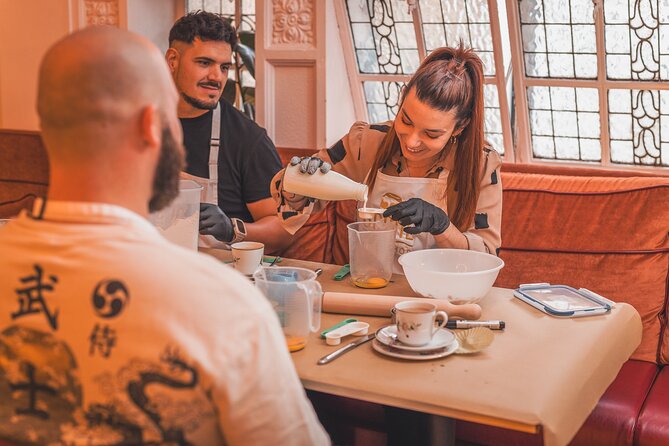
The heart of the class is the dough. Ingredients and equipment are prepared for you, so you can focus on the useful parts: combining the mixture, handling the dough, rolling it out, and cutting the rounds.
This setup is especially friendly for beginners. You do not need to arrive with baking experience, and the process is broken into manageable steps. The hosts explain how to keep the dough delicate and layered, a small technique that makes a real difference in the final texture.
I like that the preparation is partly measured in advance. That keeps the class moving and reduces the chance that one small mistake will derail the batch. You still do the work, but you are not wasting your hour weighing every ingredient or waiting for a group member to catch up.
The class usually produces at least three freshly baked scones per person. Some descriptions from the activity indicate four scones, so the exact number may vary by session, but you should have enough to eat during the class and possibly take some with you.
The hosts also make room for questions. That matters more than it may sound. Scone dough is easy to overwork, and a quick correction from the instructor can save you from dense, heavy results. The teaching style is aimed at non-bakers, so you are not expected to know kitchen terms or techniques in advance.
Tea, clotted cream, and the right way to eat a scone
While the scones bake and cool, tea becomes part of the lesson rather than just a drink on the side. You sip English-style tea as the class continues, and some sessions provide bottomless tea. Coffee and tea are included, although tea is the natural choice for this particular experience.
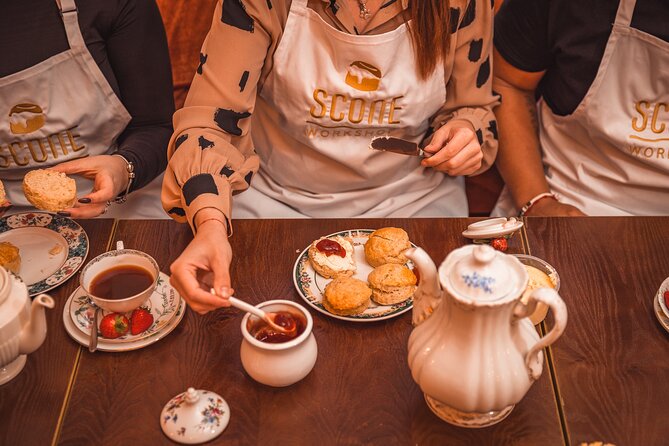
Then comes the reward: warm scones with jam and clotted cream. The rich cream and sweet preserve turn a plain baked round into the classic British combination you came to try.
You may hear discussion of the familiar question of what goes on first, jam or cream. The activity focuses more on enjoying the food than enforcing one strict rule, but the pairing itself is the important part. You get to taste the texture of the scone while it is fresh, rather than comparing one that has sat in a shop display case.
This is also where the workshop feels more social. You sit with the small group, drink tea, and share the results of the baking. It suits solo visitors because the format naturally gives you people to chat with, while couples and families can work through the process together.
Do not expect a formal afternoon tea spread. The food is centered on your own scones, with jam, clotted cream, and tea. That is a strength if you want a focused activity, but anyone seeking sandwiches, cakes, and a long hotel-style tea service should book a separate afternoon tea.
What you take home after the 60 minutes
The most useful souvenir is the method. You learn how to make a traditional scone at home, including the handling tips that help create a lighter, more delicate result.
You also receive a scone baking certificate. It is a small memento, but it adds a pleasant finish, especially for families or anyone collecting food-related memories from a London trip.
Some sessions provide an official Kensington Palace recipe, which gives you a practical way to repeat the class at home. Since the supplied details do not promise that this is included in every booking, treat it as a possible extra rather than a guaranteed part of the package.
You may also have several scones left to take away. That depends on how many you eat during the tea break, but the batch is described as generous enough to leave with extras. Bring a small container only if you want one, as no takeaway packaging is specifically listed among the inclusions.
The certificate and recipe are nice additions, but the real value is that the lesson is repeatable. A museum ticket gives you a memory. This gives you a breakfast or afternoon treat you can make again.
A few more things to do in London worth a look
- Surf Lesson
★ 5.0 · 349 reviews - Beginner Surf Lesson in Newquay, Cornwall
★ 5.0 · 215 reviews - Sea Kayak Lesson & Tour in Newquay
★ 5.0 · 189 reviews - Private Surfing Lesson
★ 5.0 · 173 reviews
How the small group affects the experience
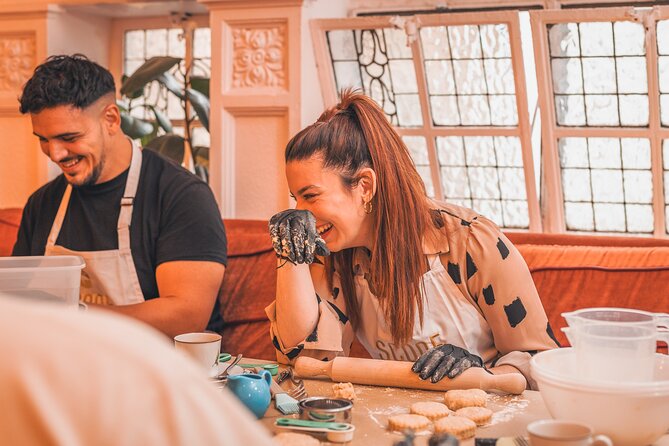
The maximum group size is 15. That is not a private lesson, but it is small enough for the host to demonstrate the steps and keep an eye on the work.
A larger class could make a hands-on food activity feel like a production line. Here, you have a better chance to ask about dough texture, baking, tea, or clotted cream. The hosts are described as patient with people who have little baking experience, which makes the class less intimidating.
The mood is informal and social. You may be baking beside couples, families, or people on their own. That mix works because everyone has the same small task in front of them. Even if you arrive without a group, the tea break gives you an easy opening for conversation.
For families, the experience is recommended for children aged six and older. One eight-year-old was able to take part and enjoy the mix of prepared ingredients and hands-on work. Younger children are not recommended, and the one-hour format still requires them to listen, handle dough, and follow instructions.
Is $48.20 a fair price?
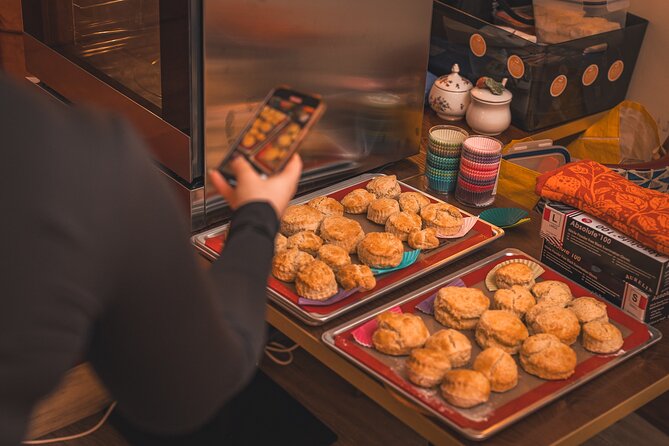
At $48.20 per person, this is not the cheapest way to eat a scone in London. You could buy tea and a pastry for far less. The price makes more sense when you count the instruction, ingredients, equipment, apron, tea, certificate, and hands-on activity.
You are paying for a compact food lesson in the center of London, not simply for three baked goods. If you would happily watch a demonstration but never make the recipe yourself, the value is less convincing. If you want a practical skill and a pleasant break from museums and churches, the cost is reasonable.
The one-hour length helps keep the price manageable. A longer class might offer more recipes, but it would also take a larger piece of your sightseeing day. This session gives you a clear beginning, a satisfying result, and a return to the same meeting point without committing your whole afternoon.
Because the workshop is booked about 40 days ahead on average, popular time slots may fill early. That is useful planning information for a short activity. If you already know you want it, booking well before your London visit is sensible.
Who should book this scone class?
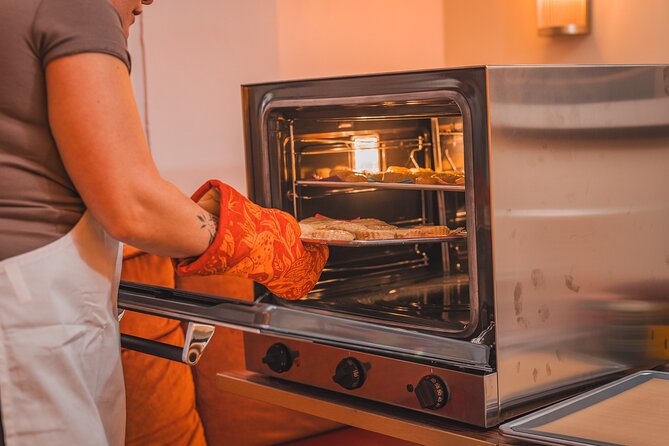
I would recommend it to first-time London visitors who want an activity tied closely to British food. It is also a good choice for couples, parents with older children, solo visitors, and anyone who prefers doing something instead of simply looking at another display.
It suits people who want a quick morning or afternoon activity. You can fit it between sightseeing stops, and the West End location makes it easy to combine with central London plans.
Beginner bakers are the ideal audience. You do not need special skills, and the hosts guide you through each step. Experienced bakers can still enjoy it, but the lesson may feel basic if you already make scones often.
This is not the right choice for anyone with gluten or dairy intolerance. The activity is built around traditional scones, clotted cream, and other dairy-based ingredients, and no suitable alternative is listed. Service animals are allowed, and the venue is near public transportation, but the supplied information does not give specific details about step-free access or seating arrangements.
Practical timing and cancellation details

Allow about 60 minutes for the full experience. The class begins and ends at De Hems Dutch Cafe Bar, 11 Macclesfield Street, London W1D 5BW.
Arrive with enough time to find the meeting point. One host was able to welcome a late arrival after receiving a phone call, but you should not rely on that as a standard arrangement. London traffic and crowded central streets can make a short delay harder to manage.
Free cancellation is available if you cancel at least 24 hours before the start time. A cancellation inside that window is not refunded, and changes made within 24 hours are not accepted. Cutoff times use London local time, so check the clock carefully if you are changing plans from abroad.
Should you book the London scone workshop?
Book it if you want a short, hands-on taste of Britain with a useful result. The strongest reasons are the friendly small group, patient instruction for beginners, generous tea, and the chance to eat your own warm scones with jam and clotted cream.
Skip it if you are looking for a full afternoon tea, a serious pastry course, or a class that can accommodate gluten-free or dairy-free diets. For everyone else, $48.20 buys more than a snack. You get a simple London memory, a certificate, and the ability to make the same treat when you are back home.
FAQ
Where does the scone workshop begin?
The workshop begins at De Hems Dutch Cafe Bar, 11 Macclesfield Street, London W1D 5BW, United Kingdom.
Where does the activity end?
The activity ends back at the same meeting point.
How long does the workshop last?
The workshop lasts approximately one hour, or 60 minutes.
How many people can join the class?
The group has a maximum of 15 participants.
What is included in the price?
The price includes all equipment, coffee and/or tea, at least three freshly baked scones, a professional local instructor, and a scone baking certificate.
Do I eat the scones during the class?
Yes. You eat the freshly baked scones with clotted cream and jam, along with English-style tea.
Is the workshop suitable for children?
The activity is not recommended for children under six. Children aged six and older may take part.
Is the workshop suitable for people with gluten or dairy intolerance?
No. The workshop is not suitable for people who are gluten or dairy intolerant.
Can I cancel for a full refund?
Yes, if you cancel at least 24 hours before the experience start time. Cancellations made less than 24 hours in advance are not refunded, and changes inside that period are not accepted.
Just added in London
- Professional Private Photoshoot in London★ 5.0 · 63 reviews
- Shoreditch Street Art and Graffiti Tour (Private Group Booking)★ 5.0 · 108 reviews
- Transfer London to Southampton Cruise Terminal (extra luggage)★ 4.5 · 81 reviews
- London, Windsor Castle, Hampton Court Palace with Free Snack Pack★ 4.0 · 102 reviews
- Central London to Southampton Cruise Port Private transfers★ 4.5 · 128 reviews
- London Christmas Lights Tour by Vintage Double-Decker Bus★ 4.0 · 135 reviews
- London Christmas Lights Guided Tour With Christmas Music★ 5.0 · 118 reviews
- Emirates Stadium and Arsenal Museum Entrance Ticket Including Audio Guide★ 4.5 · 113 reviews
Afternoon Tea Experiences, compared.

Afternoon Tea Bus Tour – 1960s Routemaster Bus
Read our review →

Afternoon Tea Sightseeing River Cruise in Oxford
Read our review →

Hampton Court Guided Tour. Full day Access & High Tea
Read our review →Browse the lists this tour appears in