
Reviewed · CITY TOURS
Small-Group City Running Tour in Canterbury
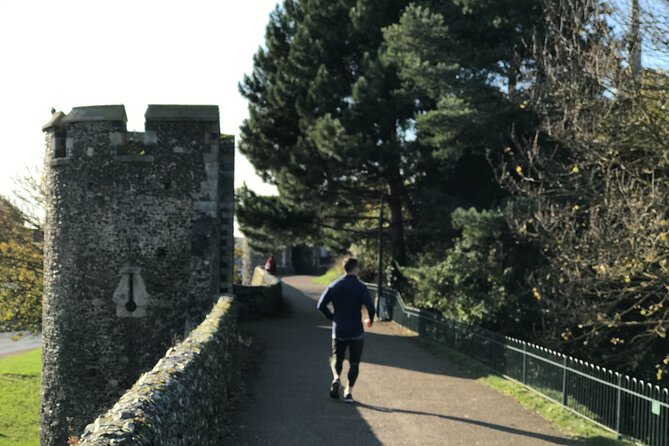
Canterbury is compact, layered, and best understood on the move. This small-group city running tour takes you from the cathedral area to Roman walls, medieval gates, riverside gardens, and the Marlowe Theatre, with guide Andy filling in the stories between stops. You cover more ground than on a standard walking tour without turning the outing into a race.
I especially like the five-person limit, which gives Andy room to adjust the pace and answer questions. I also like the mix of big sights and easy-to-miss details, from the history of the city walls to the old tree in Westgate Gardens. The main consideration is simple: this is still a running tour, so you should be comfortable with some movement, even though the pace can be gentle and run-walk groups are welcome.
Key points at a glance
- A five-person maximum keeps the outing personal and makes it easier to stay together.
- Andy sets the pace to the group, including slower running and jeffing, a run-walk style.
- The route covers 2,000 years of Canterbury history, from Roman defenses to medieval fortifications.
- Dane John Mound gives you a citywide view and a useful sense of Canterbury’s size.
- Westgate Gardens adds a calmer riverside pause, with the 200-year-old Baobab plane tree.
- The tour costs $28.78 per person, a fair price if you want sightseeing, local stories, and exercise in one hour to 90-minute outing.
Why running is a smart way to see Canterbury
Most city tours make you choose between covering ground and stopping often. This one does both. You move between historic areas at a light running pace, then pause for photos, explanations, and questions. That rhythm lets you see more of central Canterbury without spending the whole morning walking from one sight to the next.
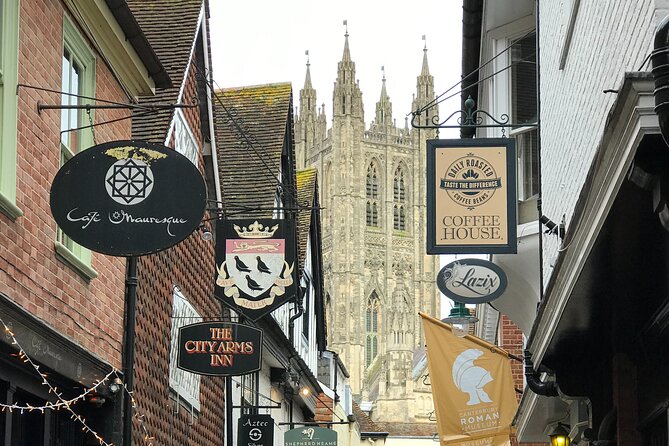
The route is also useful on your first day in the city. You get a quick sense of the cathedral quarter, the old walls, the gardens outside the center, and the main western entrance. Afterward, you can return to the places that caught your eye and explore them at a slower pace.
The pace is not presented as a test of fitness. Andy has adjusted the outing for people who had not run in years, older participants, slower runners, and groups using a jeffing pattern. He checks that the group is comfortable as the tour goes along. That matters more here than the advertised duration, since a relaxed group may stop often and take longer than an hour.
More city tours in England:
- Liverpool: “Blue Route” – City & Beatles Tour
★ 5.0 · 8,562 reviews - The Manchester City Stadium Tour
★ 5.0 · 4,176 reviews - Westminster to Greenwich Sightseeing Thames Cruise in London
★ 4.5 · 2,969 reviews
Meeting Andy near the Canterbury War Memorial
The stated meeting point is the Canterbury War Memorial at 12-13 Sun Street, Canterbury CT1 2HX. The tour ends back at the meeting point, which makes the outing easy to fit into a day of sightseeing and avoids the nuisance of finding your way back from an unfamiliar part of town.
The tour information also describes the city tour as starting and ending outside the cathedral. Since the meeting details identify the War Memorial, check the exact meeting instructions you receive at booking and arrive ready to move. Confirmation is provided when you book.
Andy is the guide named in the available tour details and personal accounts. His role is more than keeping the group moving. He explains the major events of Canterbury’s past, points out small features you might pass without noticing, and adjusts the run to suit the people in front of him.
The small group is a real advantage. With no more than five people, Andy can ask how the pace feels, keep the group together, and spend time on questions. A large running group would make that harder, especially on a route with frequent stops.
Canterbury Cathedral and the city’s dramatic past
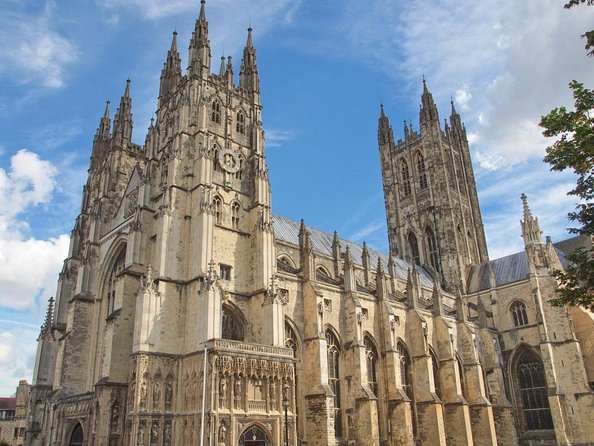
The cathedral is the natural starting point for Canterbury’s story. Here, Andy explains its importance to the city, its role over the centuries, and the part it plays today. You are not simply looking at a famous building, you are getting the basic reason Canterbury became such an important place.
The cathedral section is especially useful if you plan to visit inside later. A short introduction gives you a framework for what you are seeing, even though this running tour does not list a cathedral admission or an interior visit. You should treat the cathedral as a major outside stop and historical focus, not as a substitute for a full cathedral tour.
Starting near such a powerful landmark also helps you get your bearings. The route then spreads into the surrounding streets, letting you see how the cathedral fits into the older city rather than viewing it in isolation.
City walls: 2,000 years under your feet
The city walls are one of the most rewarding parts of the route because they compress a long stretch of history into a single run. Andy explains how the defenses developed from primitive Roman works into the fortified stone walls you see today.
That change tells you something important about Canterbury. The walls were not built once and forgotten. They reflect different needs and periods, from Roman defense to the stronger medieval fortifications that shaped movement into the city.
Running along the walls gives you a more physical sense of the old city than reading a plaque. You see how the defenses enclosed Canterbury and how the routes through the gates controlled arrival. The pace also lets you pause for photos and discussion rather than rushing past the structure.
The limitation is that a running route cannot provide the same close inspection as a dedicated history walk. If military architecture is your main interest, you may want more time afterward to examine the walls on foot. For a broad introduction, though, this is an efficient way to understand their place in Canterbury.
Same base, a different kind of day:
- Stonehenge, Windsor Castle, and Bath from London
★ 4.5 · 18,662 reviews - London Big Bus Hop-On Hop-Off Tour with Optional River Cruise
★ 3.5 · 10,803 reviews - London Small Group Tour of Historical Pubs
★ 5.0 · 10,422 reviews - Beatles Magical Mystery Tour
★ 5.0 · 9,266 reviews
Dane John Gardens and the view from the mound
Dane John Gardens contains the highest point on the tour, Dane John Mound. The stop lasts about five minutes and admission is free. From the top, you can see much of the city and get a sense of its scale.
This is a useful pause for both sightseeing and breathing. After running through streets and along walls, the open view helps you connect the separate parts of the route. You can see why Canterbury feels manageable on foot while still offering a surprising amount of history in a small area.
The mound itself is described as mysterious, which gives Andy room to add context beyond a simple viewpoint. The exact amount of time spent here can depend on the group’s pace and questions, but you should expect a short stop rather than a long park visit.
Franciscan Gardens and the city’s quieter side
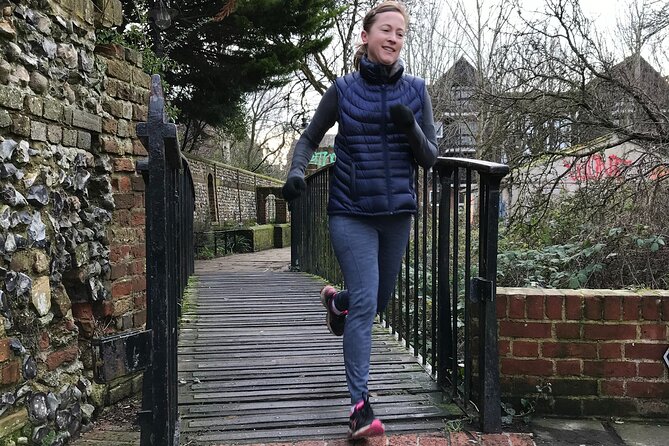
Franciscan Gardens offers a change of mood. You see monastery buildings connected with an establishment dating to 1267, along with one of the prettiest spots on the route. The planned stop is about five minutes and free.
This is the sort of place that benefits from a local guide. You might pass the gardens while focusing on larger landmarks, yet the monastery buildings add another layer to Canterbury’s story. The stop also breaks up the running with a calmer setting and a chance to take photographs.
Do not expect a long garden visit. Five minutes is enough for an introduction and a quick look, but not enough for a detailed examination of every building or plant. If the gardens appeal to you, note them for a later, slower visit.
Westgate Gardens and the old Baobab plane tree
Outside the city walls, Westgate Gardens brings the route to the River Stour. You cross the river and pause beside a Baobab plane tree said to be 200 years old. The tree is also described as hiding a remarkable secret, giving this stop a small mystery to look forward to.
The garden is one of the route’s scenic breaks. After the stone walls and built-up center, the river and greenery make the run feel less like a chain of historic sites and more like a tour of Canterbury’s varied spaces.
The stop takes about five minutes and is free. That short pause should be enough to hear the story, look around, and take a photo. The route is designed to keep moving, so you should not expect time for a long riverside stroll.
Westgate Towers and the western entrance
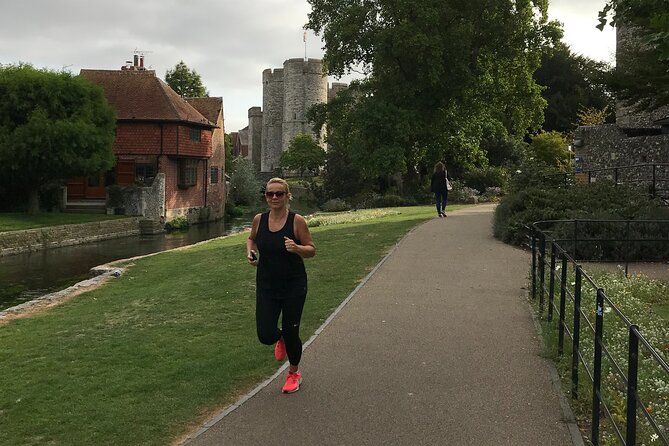
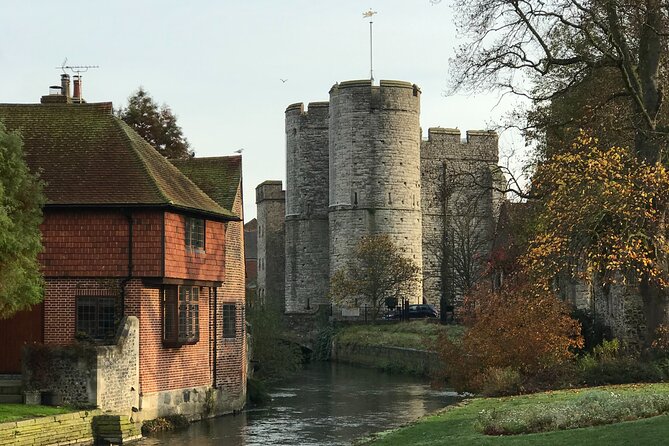
Westgate Towers is the main entrance into Canterbury and one of the route’s most striking structures. The medieval gatehouse reaches 18 metres and dates to 1378. It is described as the oldest surviving tower in Britain, an impressive claim that Andy explains as part of the site’s story.
The gate mattered because it shaped the first impression of people arriving in the city. From this point, you can understand how the medieval entrance controlled movement and presented Canterbury’s authority to newcomers.
Andy points out details and explains the tower’s secrets during the five-minute stop. The attraction is listed as free on the tour, but the experience described here is an exterior historical visit, not a separate museum admission or extended tower climb. If you want a longer look at the structure, plan to return after the run.
This is also one of the places where the running format makes sense. You reach a major landmark quickly, stop for context, then continue instead of spending a large part of the tour inside one building.
The Marlowe Theatre and Canterbury’s literary connection
The Marlowe Theatre brings the route into more recent cultural history. Andy points out statues and sculptures around the theater and explains how they connect with Christopher Marlowe, one of Canterbury’s best-known sons.
This stop helps keep the tour from becoming a parade of medieval buildings. Canterbury’s identity is not limited to cathedral history and old walls. The theater area gives you a look at how the city remembers its literary and artistic connections today.
The planned pause is about five minutes and free. Expect an outdoor introduction to the sculptures and their links to Marlowe rather than a theater performance or interior tour.
Pace, fitness, and the run-walk option
The strongest feature of this experience is its flexibility. Andy has run with people who were returning to exercise after years away, people who described themselves as slow runners, and groups using a run-walk approach. He checks the pace during the outing and aims to keep the group together.
That makes the tour suitable for several kinds of participants:
- A beginner who wants gentle movement while sightseeing
- An experienced runner who likes local history
- A couple or small group that wants a private-feeling activity
- A person who prefers jeffing instead of continuous running
- A local who wants to notice overlooked details in a familiar city
Still, you should be honest with yourself about the format. The tour is not a walking tour with an occasional step. It is built around running between stops, even if the speed is adjusted. If you have a serious mobility concern, contact the operator before booking rather than assuming the flexible pace solves every issue.
Service animals are allowed, and most people can participate. The activity is offered in English.
What $28.78 buys you
At $28.78 per person, this is reasonably priced for a small-group city experience. You are paying for more than a route between famous places. The fee combines a guide, historical interpretation, exercise, photo stops, and a group size capped at five.
The value is strongest if you were already planning to run or walk around Canterbury. Instead of fitting sightseeing around a workout, you do both at once. You also get a local guide who can explain details that are easy to miss when you explore alone.
The price is less compelling if you want a slow, detailed examination of every stop. Most pauses are about five minutes, and the route keeps moving. You may still want separate visits to the cathedral, gardens, or Westgate Towers, depending on your interests.
The tour runs for approximately one hour to 90 minutes. Some groups may take longer if they stop often or ask many questions. One extended running outing described by a participant lasted more than two hours, but that was a longer 10-kilometre custom-style run rather than a reliable measure of this standard city tour. Plan around the stated duration and allow extra time if you do not have a tight schedule.
What the high rating tells you, and what it does not
The experience has a 5 out of 5 rating from 33 reviews, with 100 percent recommending it. The repeated strengths are clear: Andy’s friendly manner, his historical explanations, his ability to adjust the pace, and the way the route reveals details people often overlook.
One especially nice extra is that Andy has sent a short video with photos after a run. That is not listed as a guaranteed feature, so treat it as a possible personal touch rather than something included in the formal package.
The high rating should not make you ignore the basic question of fit. People who want a traditional walking tour, a cathedral interior visit, or a long stop at each attraction may prefer a different format. The praise is most relevant if you want a flexible run with conversation and local context.
Booking, timing, and cancellation
The tour is often booked about seven days ahead, so booking early is sensible if your Canterbury visit has fixed dates. You receive confirmation at booking, and the activity uses a mobile ticket.
Free cancellation is available up to 24 hours before the start time for a full refund. Cancellations or changes made less than 24 hours before the start are not accepted for a refund. The cut-off uses Canterbury’s local time.
Because the group is limited to five, last-minute changes may be harder to accommodate. Check the meeting details in your confirmation, especially since the route description emphasizes the cathedral while the stated meeting point is the Canterbury War Memorial.
Should you book this Canterbury running tour?
Book it if you want a lively introduction to Canterbury, enjoy light exercise, and value a guide who can adapt the pace. It is particularly appealing for couples, small groups, returning runners, and people who want to see more than the standard central sights in a short time.
I would also choose it early in a Canterbury stay. The cathedral, walls, gardens, Westgate Towers, and theater give you a useful map of the city, while Andy’s explanations can help you decide where to spend more time later.
Skip it if you want a fully indoor history experience, a slow architectural tour, or a guaranteed continuous 10-kilometre run. For most people who can comfortably move at an easy pace, though, the combination of exercise, stories, and a five-person group makes $28.78 good value.
FAQ
Where does the running tour meet?
The stated meeting point is the Canterbury War Memorial at 12-13 Sun Street, Canterbury CT1 2HX, UK.
Where does the tour end?
The activity ends back at the meeting point.
How long does the tour last?
The expected duration is approximately one hour to 90 minutes.
How many people can join the tour?
The tour has a maximum of five participants.
How much does the tour cost?
The listed price is $28.78 per person.
Is the tour suitable for beginners?
Yes. The pace can suit beginners as well as experienced runners, and the guide adjusts the outing to the group.
Can I use a run-walk pace?
Yes. The tour has accommodated jeffing, a run-walk approach.
What language is the tour offered in?
The tour is offered in English.
Are service animals allowed?
Yes. Service animals are allowed.
What is the cancellation policy?
You can cancel at least 24 hours before the start time for a full refund. Cancellations or changes made less than 24 hours before the start time are not accepted for a refund.
Just added in England
- The Beatles and a Secret pub★ 4.5 · 36 reviews
- The Beatles & Liverpool Magical Mystery Tour from London★ 4.5 · 80 reviews
- Airport Coach Service from Heathrow to Oxford★ 3.5 · 67 reviews
- The Beatles Magical History Black Taxi Tour London★ 5.0 · 51 reviews
- The Beatles London walking tour. From Abbey Road to the Roof Top★ 5.0 · 61 reviews
- Private The Beatles Taxi Tour in London★ 5.0 · 12 reviews
- The Beatles London Walk★ 4.5 · 120 reviews
- Dinner and Jazz Cruise on the River Thames★ 4.0 · 140 reviews
City Tours, compared.


Westminster to Greenwich Sightseeing Thames Cruise in London
Read our review →
London Sightseeing Tour: Guard Change with Tower of London Option
Read our review →
Liverpool City Sights Hop On Hop Off City Tour – 24hr Ticket
Read our review →
1.5-hour Oxford City and University Walking Tour
Read our review →
Hop-On Hop-Off Sightseeing River Cruise on the Thames
Read our review →
Browse the lists this tour appears in