
Reviewed · TOURS IN CANTERBURY
The Condensed Canterbury Tour
Canterbury’s past is packed into a remarkably small area, and this one-hour walking tour makes a useful first pass through it. You move from Chaucer to Christopher Marlowe, medieval defenses, Tudor ceremony, and Thomas Becket without spending half a day on a formal sightseeing program.
I like the small maximum of 10 people, which should make it easier to hear Sam and ask questions. I also like the sharp focus: the tour gives you a quick sense of Canterbury before you decide where to spend more time. The trade-off is clear: attraction entry is not included, and one hour leaves no room for a long visit inside Canterbury Cathedral or Westgate Towers.
Key points
- Six central stops in about an hour, ending near Canterbury Cathedral’s historic quarter
- Sam’s lively local approach, with stories about artists and writers as well as famous political figures
- A maximum of 10 people, making the walk more sociable and easier to follow
- Westgate Towers explained from the outside, including its medieval attack and defense systems
- Thomas Becket and Canterbury Cathedral context, without entry to the cathedral or its precincts
- Useful for a first orientation, especially if your time in Canterbury is limited
A fast introduction to Canterbury’s big stories
The Condensed Canterbury Tour is best understood as an orientation walk rather than a full sightseeing visit. You will not enter the major attractions, and you will not get a long lecture at each stop. Instead, the tour links the people and places that give Canterbury its character.
That approach works well here. Canterbury can feel like a jumble of cathedral buildings, old gates, narrow streets, theaters, shops, and reminders of literary figures. A good guide helps you see how those pieces fit together.
The walk begins outside The Beaney House of Art & Knowledge on High Street and finishes at St. Thomas of Canterbury Roman Catholic Church on Burgate. Along the way, you cover six main points, with each one receiving roughly five minutes of focused attention, plus the time needed to walk between them.
The pace is brisk but not meant to feel like a race. Sam’s style, according to the details available about the tour, includes answering questions and offering suggestions for what to do after the walk. That makes the tour more useful than a simple list of dates and names.
Other trips people book in England:
- Stonehenge, Windsor Castle, and Bath from London
★ 4.5 · 18,662 reviews - London Big Bus Hop-On Hop-Off Tour with Optional River Cruise
★ 3.5 · 10,803 reviews - London Small Group Tour of Historical Pubs
★ 5.0 · 10,422 reviews
Starting at The Beaney House of Art & Knowledge
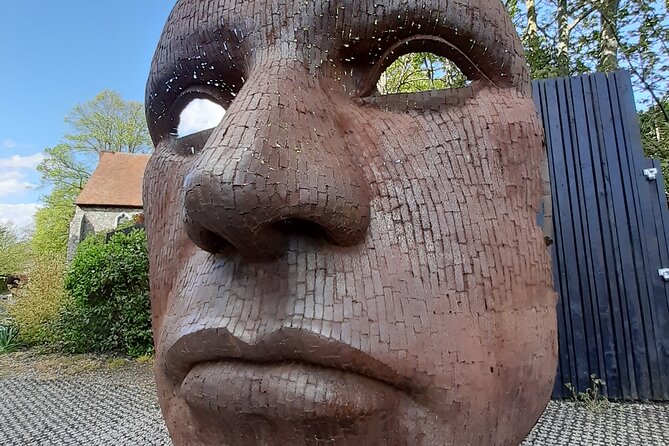
The Beaney is a practical meeting point in the middle of the city. Its central location makes the start easy to reach, and the building has facilities you can use before the tour begins.
You begin outside, so do not expect to tour the museum as part of this activity. That is not a serious weakness, but it is worth knowing if you had hoped for an indoor opening or a quick look at the collections.
The meeting point gives the guide a good place to set the scene. Canterbury is not only about kings, archbishops, and medieval pilgrims. The city also has a strong literary and artistic side, and the opening stops begin to widen your view beyond the cathedral.
The mobile ticket is convenient. You receive confirmation when you book, so you can keep the details on your phone rather than arranging printed tickets. Since the walk is short, arriving with the meeting point already marked on your map should help you avoid wasting part of the hour.
Chaucer’s Canterbury at the city center
The statue of Geoffrey Chaucer provides an early reminder that Canterbury became famous not only as a religious destination but also as a setting in English literature.
Here, you learn about the writer of The Canterbury Tales, the work that turned a group of pilgrims heading toward Canterbury into one of the best-known literary journeys in English writing. The stop is brief, so expect a clear introduction rather than a detailed literary seminar.
I like this early focus because it gives the city a second identity. If your only picture of Canterbury is a cathedral town shaped by medieval religion, Chaucer helps correct it. The city is also a place imagined, described, and remembered through stories.
The statue itself is free to view, and the short stop does not require you to change your plans. You can return later for a longer look at the surrounding streets or visit the places that interest you most after the walk.
Westgate Towers and medieval defense
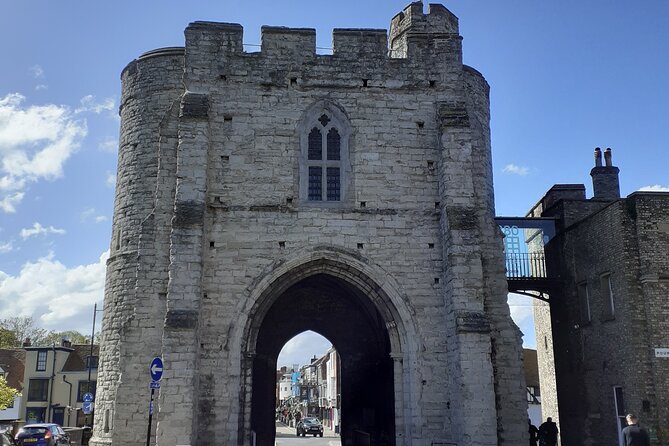
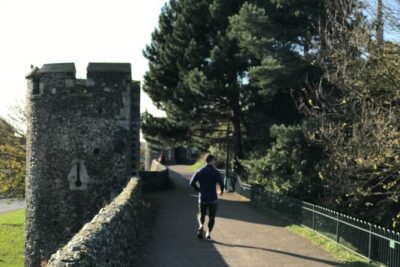
Westgate Towers is one of the most striking stops on the route. It is described as the largest surviving medieval city gate in the United Kingdom, and the guide explains how its design helped defend Canterbury during a difficult period.
The useful part here is not just the age of the stone. You hear about the methods used to attack and defend the gate, along with the ways its design answered those threats. That turns an old tower into a working piece of military engineering.
The tour discusses Westgate from the outside. Entry to the museum and viewpoint is not included, so you will need a separate ticket if you want to go inside. The short stop may leave you curious to return, especially if you enjoy views or defensive architecture.
That is a recurring feature of this walk: it points out the places that deserve more of your time later. If you are visiting Canterbury on a tight schedule, this helps you choose. If you have a full day, you can treat the tour as a map of ideas and return to Westgate when you are ready.
Same base, a different kind of day:
- Beatles Magical Mystery Tour
★ 5.0 · 9,266 reviews - Liverpool: “Blue Route” – City & Beatles Tour
★ 5.0 · 8,562 reviews - Stonehenge, Windsor Castle and Bath with Pub Lunch in Lacock
★ 4.5 · 7,402 reviews - Oxford University Walking Tour With University Alumni Guide
★ 5.0 · 6,905 reviews
Christopher Marlowe beyond the usual royal stories
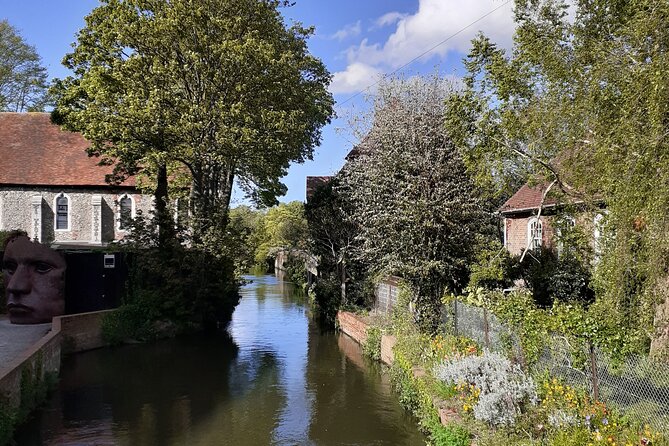
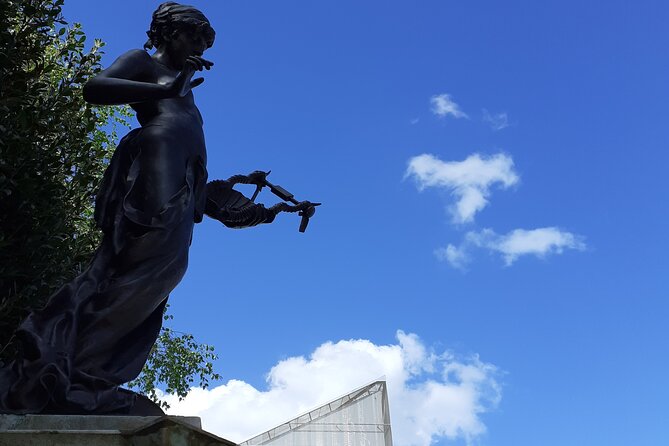
At the Marlowe Theatre, the focus shifts from medieval Canterbury to Christopher Marlowe, the playwright associated with the city. You pass the modern theater building while learning about Marlowe’s eventful life and the influence of writing on Canterbury.
This is one of the tour’s strongest choices. Many quick city walks stay with kings, queens, battles, and churchmen. Including Marlowe gives the route a more human and creative edge, and it will appeal especially to anyone interested in English drama.
The theater itself is a passing stop, not a performance visit. No admission is included, and the tour does not promise entry to the building. Think of this as a short piece of literary context attached to a modern landmark.
Sam’s style is particularly useful here because the walk seems designed to connect famous names with the actual streets around you. The point is not to memorize a string of dates. It is to understand why Canterbury has kept producing stories that reach far beyond the city.
Christ Church Gate and Tudor memory
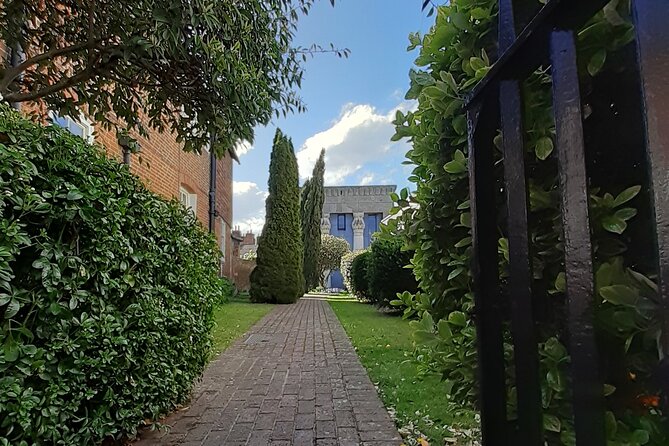
Christ Church Gate brings you back to the cathedral quarter and to the Tudor period. The gate was completed to commemorate a Tudor prince and his Spanish bride, though the identity of that prince is not the obvious one many people first assume.
That small surprise is exactly the sort of detail that makes a guided walk worthwhile. You see an old entrance, but the guide gives it a changing purpose and a human story.
The stop also covers the changes made to the gate over time. This matters because historic buildings are rarely frozen in their original form. They are repaired, altered, reused, and sometimes reinterpreted. A short explanation helps you look at the structure with more care.
You do not enter the cathedral precincts as part of this tour. If Canterbury Cathedral is a main reason for your visit, plan separate time and budget for it. This walk can give you context before your visit, but it cannot replace the cathedral admission experience.
Thomas Becket at the final stop
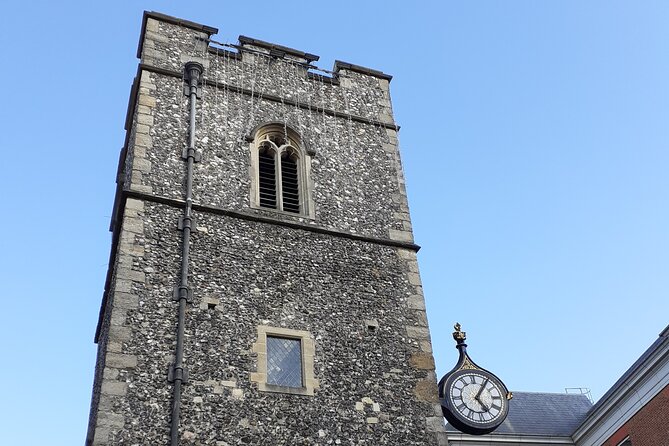
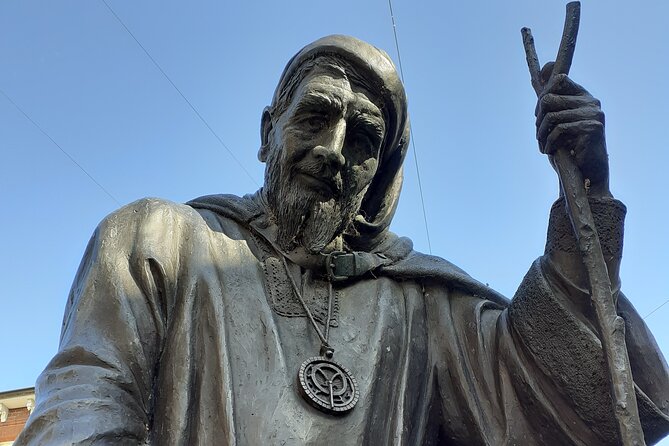
The tour ends at St. Thomas of Canterbury Roman Catholic Church on Burgate. The subject is Thomas Becket, the figure most closely tied to Canterbury’s international fame.
The guide presents the full story of Becket and explains how a man who was not from Canterbury became the defining figure in the city’s past. That distinction is helpful. It shows how Canterbury’s identity was shaped by events and people who arrived from elsewhere, then became permanently linked to the place.
The final stop also gives the route a clear finish. You move from literature and city defenses through the Tudor gate and arrive at the figure whose death transformed Canterbury into a major pilgrimage destination.
The church is the endpoint, not an included admission site. Its location on Burgate puts you near the cathedral area, so you can continue exploring after the walk. Sam also provides suggestions for later activities, which is useful if this is your first few hours in the city.
Why the small group matters
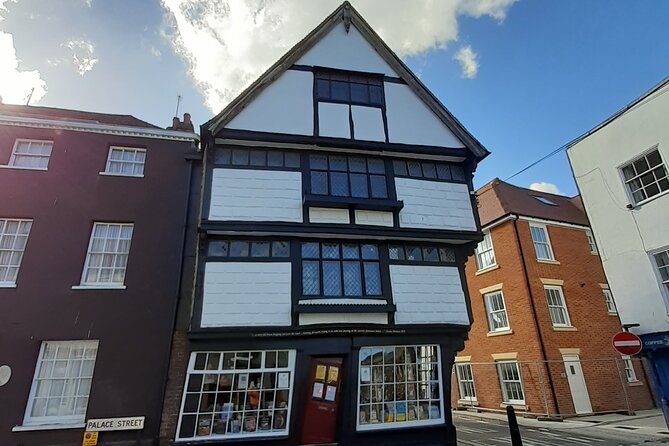
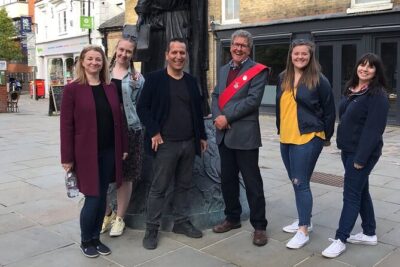
The maximum group size is 10 people. That is a real benefit for a short tour because a large crowd can make a one-hour walk feel rushed and impersonal.
With a small group, you should have a better chance of hearing the guide clearly on city streets and asking a question without interrupting the flow. The available feedback also points to Sam’s willingness to answer questions patiently and make an effort to keep the group involved.
The social side matters too. A compact group creates a more relaxed feel than a large procession. It suits couples, families, and solo visitors who want company without joining a crowd of dozens.
Families with teenagers may find the range of subjects useful. Chaucer, Marlowe, medieval defenses, Tudor politics, and Becket offer different ways into the city. The walk does not depend on one narrow interest.
Price, timing, and what you actually receive
At $15.09 per person, the tour is priced as a short guided orientation, not as a full attraction package. That makes the value depend on how much you need a guide to help you use your limited time.
I think the price is fair if you have only part of a day in Canterbury, are visiting for the first time, or want a quick introduction before exploring on your own. The guide provides structure, local context, and a route that includes several important names and buildings.
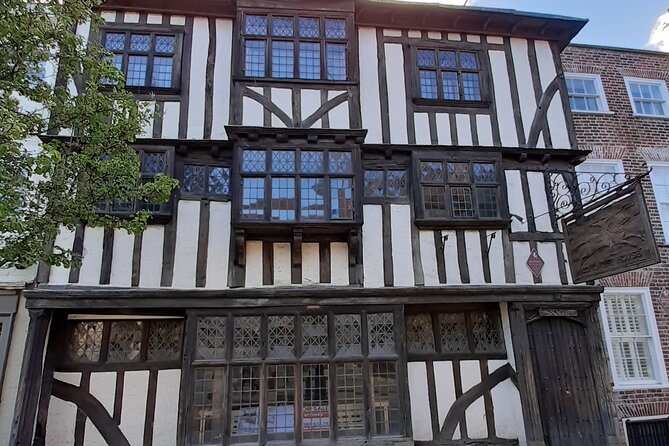
The value is weaker if you expect admission to Canterbury Cathedral, Westgate Towers, or another paid site. None of those entries is included. You are paying for the guided walk and the historical material shown along the way, including reproduced images and objects.
The average booking point is 44 days before the tour, which suggests that planning ahead can be sensible, particularly if you want a small-group time that fits a tight schedule. Confirmation arrives immediately after booking, and the mobile ticket keeps the process simple.
Free cancellation is available up to 24 hours before the start time. If you cancel later than that, the payment is not refunded, and changes made inside the same 24-hour window are not accepted. The cut-off follows local Canterbury time.
Who should book this walk
I would choose this tour if you want to get your bearings quickly. It works especially well on a first visit, before a longer independent walk or a separate cathedral visit.
It also suits anyone who enjoys stories more than a long list of architectural details. The route gives equal attention to writers, church figures, military buildings, and civic landmarks, so it does not feel like a single-subject tour.
Families can benefit from the short length. An hour is long enough to create interest without asking younger participants to commit to a half-day program. The small group also makes it easier to ask questions.
This is less suitable if you want extensive time inside historic buildings. The tour does not include attraction admission, and its brief stops are meant to explain places rather than explore them in depth.
The route is near public transportation, and service animals are allowed. Most people can take part, though the activity is a walking tour, so you should expect to remain on foot for the duration.
The best way to use the hour
Try to arrive at The Beaney House of Art & Knowledge with the mobile ticket ready. That leaves the guide free to begin on time and gives you a chance to use the nearby facilities before setting off.
Bring questions. Sam’s approach includes answering them, and the short format works best when you treat the walk as a conversation rather than a silent lecture.
Keep your plans flexible after the final stop. You may want to return to Westgate Towers, spend time at Canterbury Cathedral, investigate the streets around Christ Church Gate, or follow up on Marlowe and Chaucer.
Do not judge the tour by what it does not enter. Its purpose is to connect the city’s main stories. The follow-up visits are where you can spend more time inside the places that catch your interest.
Should you book the Condensed Canterbury Tour?
Book it if you want a quick, low-cost introduction to Canterbury led by a guide who can tie together Chaucer, Marlowe, Westgate, Tudor history, and Thomas Becket. The 10-person limit, one-hour length, central route, and mobile confirmation make it easy to fit into a busy day.
Skip it if your priority is entering Canterbury Cathedral or Westgate Towers as part of a single paid tour. Those admissions are not included, and the short format cannot provide an extended visit.
For most first-time visitors with limited time, I would use this as the opening chapter of a Canterbury day. Let the walk show you what matters, then choose one or two places to explore at your own pace.
FAQ
How long is the Condensed Canterbury Tour?
The tour lasts approximately one hour.
Where does the tour begin?
It begins outside The Beaney House of Art & Knowledge at 18 High Street, Canterbury CT1 2RA.
Where does the tour finish?
The walk ends at St. Thomas of Canterbury Roman Catholic Church at 59 Burgate, Canterbury CT1 2HJ.
Is Canterbury Cathedral admission included?
No. Entry to Canterbury Cathedral and its precincts is not included.
Is Westgate Towers admission included?
No. The tour discusses Westgate Towers from the route, but admission to the museum and viewpoint is not included.
How many people can join the tour?
The tour has a maximum of 10 participants.
Just added in England
- The Beatles and a Secret pub★ 4.5 · 36 reviews
- The Beatles & Liverpool Magical Mystery Tour from London★ 4.5 · 80 reviews
- Airport Coach Service from Heathrow to Oxford★ 3.5 · 67 reviews
- The Beatles Magical History Black Taxi Tour London★ 5.0 · 51 reviews
- The Beatles London walking tour. From Abbey Road to the Roof Top★ 5.0 · 61 reviews
- Private The Beatles Taxi Tour in London★ 5.0 · 12 reviews
- The Beatles London Walk★ 4.5 · 120 reviews
- The Authentic London Food and History Tour★ 5.0 · 53 reviews
Tours in Canterbury, compared.

Official Canterbury Guided Walking Tour – 11.00 Tour
Read our review →

Cultural Homestay Exploring London, Oxford and National Parks
Read our review →


Browse the lists this tour appears in