
Reviewed · CHURCHILL & WWII TOURS
London: Churchill & World War 2 Walking Tour
London’s wartime story comes into focus as you walk from Embankment to the Churchill War Rooms. This is not just a Churchill biography. You’ll connect his life with Downing Street, Parliament, wartime finance, air defense, and national remembrance.
I like the route for two reasons: it visits several important memorials that are easy to miss on your own, and it places Churchill’s personal life beside the machinery of government. The stop at St Margaret’s Church, where he married Clementine, adds a human touch. The main drawback is clear: the Churchill War Rooms are not entered, so you’ll need a separate ticket and extra time if you want to see the underground bunker.
Key points to know before booking
- Churchill’s story goes beyond speeches: You’ll see the places tied to his marriage, political career, wartime leadership, and public memory.
- The route links major government sites: Downing Street, the Houses of Parliament, the Ministry of Defence, and HM Treasury all help explain how Britain functioned during the war.
- The War Rooms are exterior only: The walking tour ends at the entrance, but admission to the underground complex is not included.
- The memorials broaden the story: The Battle of Britain Memorial, Women of World War II Memorial, and Cenotaph cover military and civilian sacrifice.
- The tour is built for walkers: Expect 2 to 3 hours on foot, with no special provision for mobility difficulties, prams, buggies, or strollers.
- The $19.01 price is modest: You are paying for a guided orientation, not museum admission or a full-day experience.
Why this route gives you more than a Churchill biography
Many London history walks stay focused on one famous person. This one uses Churchill as the thread, then widens the view to Britain’s government and wartime society.
That matters because Churchill did not win the war alone. His speeches and decisions mattered, but so did the civil servants, military planners, factory workers, air crews, parliamentarians, and families who kept the country functioning. The route gives you several chances to see those connections in physical places.
The walk begins at Embankment station at 1:30 pm. From there, you move through central London toward Westminster. The tour lasts roughly 2 to 3 hours, so you should plan on a steady afternoon walk rather than a series of long indoor visits.
The group can have up to 25 people. That is small enough to follow a guide through city streets, though it is not an intimate private tour. A professional guide leads the experience in English and provides the historical explanation as you move between stops.
More walking tours in London:
- Tour for Muggles The Ultimate Harry Potter Walking Tour in London
★ 5.0 · 4,684 reviews - London Jack The Ripper Guided Walking Tour
★ 5.0 · 3,131 reviews - Changing of the Guard Guided Walking Tour in London
★ 5.0 · 1,793 reviews
Churchill War Rooms: know what you are not getting
The Churchill War Rooms are the natural climax of this route, but the distinction between seeing the building and entering it is important.
The underground complex served as the nerve center of Britain’s World War II operations. Churchill and his staff used the bunker to work and shelter during air raids. Inside, the museum preserves the rooms and spaces connected with wartime decision-making.
On this walking tour, you see the exterior only. The tour ends in front of the War Rooms, and your admission ticket is not included. That can be a useful arrangement if you already have a ticket, want to visit later, or prefer to decide after the walk.
If the War Rooms are your main reason for booking, factor the separate admission cost and additional visiting time into your plans. The walk itself gives you context before you enter, but it does not replace the museum visit.
Downing Street and the business of government
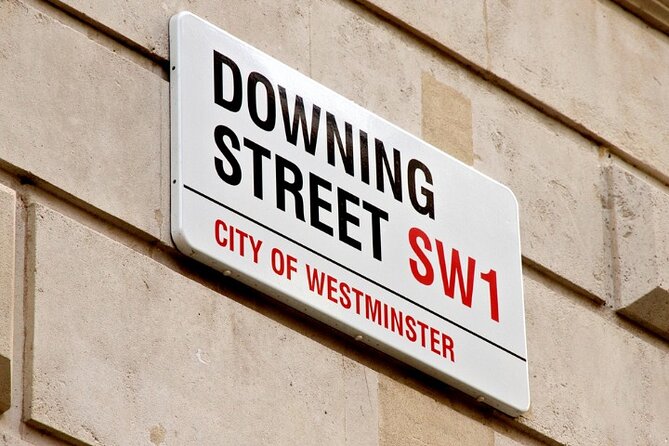
A short stop at 10 Downing Street brings you to one of the most recognizable addresses in British public life. It has been the Prime Minister’s home and office since the 18th century, while No. 11 is associated with the Chancellor of the Exchequer.
The value here is less about seeing an interior and more about understanding how close together Britain’s political decisions were made. Churchill’s wartime leadership was tied to this compact government district, not to some distant military headquarters.
You should expect an exterior stop of about 10 minutes. The tour does not include an interior visit, and the address is protected, so the guide’s explanation is the main reason to pause here.
This is also where the tour moves from Churchill the public speaker to Churchill the head of government. You’ll hear about the work behind the speeches: administration, finance, military planning, and the pressure of running a country under attack.
Churchill in Parliament Square
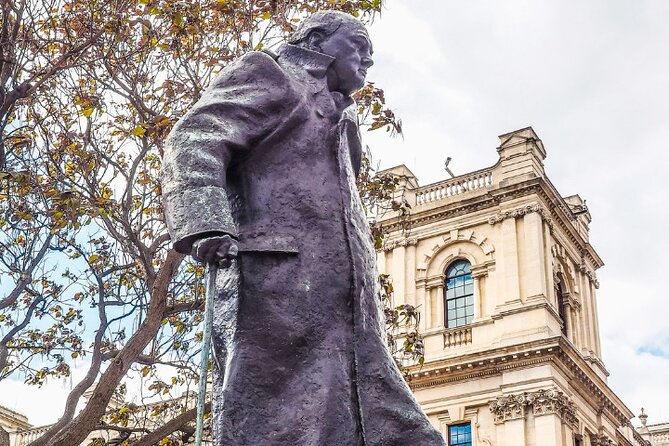
The Winston Churchill statue in Parliament Square is one of the walk’s clearest visual moments. The bronze figure shows him in a military overcoat, leaning on his cane, with a determined expression.
The statue sits near the Houses of Parliament, where Churchill’s wartime speeches helped rally Britain. It offers a straightforward chance to consider how public monuments shape memory. Churchill is presented here as a leader who defended parliamentary democracy during a period of extreme danger.
The stop lasts about five minutes and is free. It is brief, but the location gives it weight. You are not looking at the statue in isolation. Parliament, government offices, and other national memorials surround it.
Other wartime London sites from London:
- Westminster 3 Hour Walking Tour and Visit of Churchill War Rooms
★ 5.0 · 967 reviews - WW2 London Walking Tour & Churchill War Rooms Entrance Ticket
★ 4.5 · 933 reviews - London in WW2 Walking Tour with Churchill War Rooms Visit
★ 5.0 · 721 reviews - Churchill War Rooms “Behind The Glass” and Private Car Tour
★ 4.5 · 322 reviews
The Battle of Britain Memorial and the air war
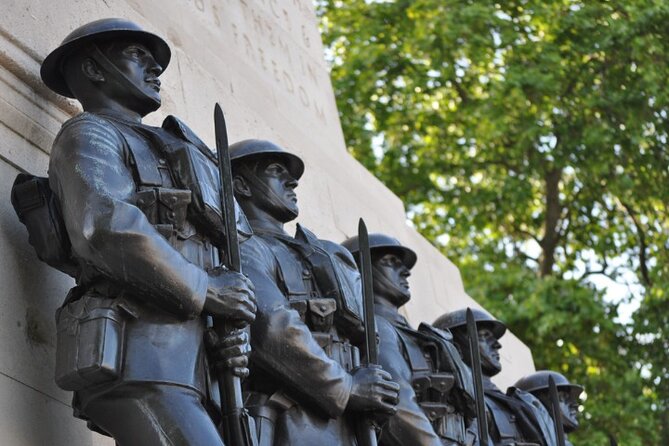
The Battle of Britain Memorial honors the Royal Air Force pilots who defended Britain during the air campaign of 1940. Its bronze frieze shows scenes from the battle, and the monument records the names of airmen who served.
This stop brings the military side of the story into view. Churchill’s speeches are often remembered first, but the Battle of Britain was also a campaign fought by pilots facing a direct threat to the country.
The memorial gives the guide a chance to explain the scale of the danger and the people involved. It also breaks up the political focus of the route. You move from offices and parliamentary buildings to a place dedicated to those who fought in the air.
The tour information lists this as a stop without a separate entry fee. As with the other memorials, you should expect an outdoor visit rather than an indoor display.
The Houses of Parliament and wartime democracy
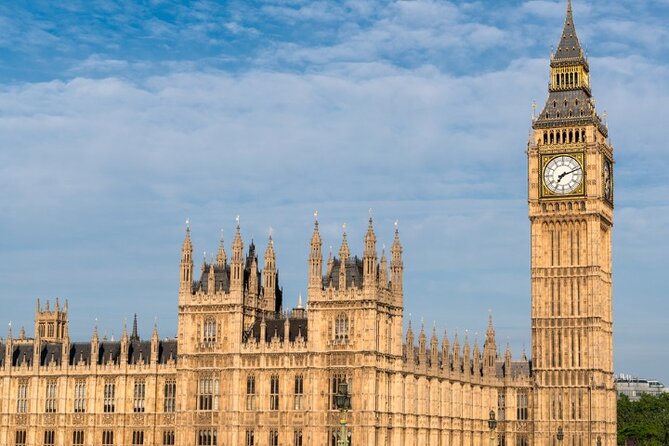
The Houses of Parliament are one of the most important stops because the building itself carries the story of wartime endurance. Air raids damaged Parliament, including the Commons chamber in 1941, yet parliamentary business continued.
Churchill delivered some of his best-known wartime speeches here. The building therefore represents two sides of the story: the practical damage caused by bombing and the decision to keep democratic government operating.
You’ll spend about 10 minutes at the exterior. Entry is not included, and this is not a tour of the chambers. Still, the stop is valuable because the guide can connect the building with Churchill’s political work rather than treating it as just another London landmark.
I especially like this part of the route because it puts the word democracy into a real setting. Parliament was not simply a backdrop for Churchill’s speeches. Its continued operation sent a message that government would not be suspended by attack.
The Women of World War II Memorial
The Women of World War II Memorial recognizes the essential work done by British women during the conflict. The bronze figures represent women in civilian defense, military services, and wartime industries. One figure wears overalls, pointing to the women who worked in practical and industrial roles.
This five-minute stop widens the tour beyond military leaders and politicians. The war depended on people doing jobs that had often been closed to women, including work in factories and other essential services.
The memorial is free to view. Its place on the route is important because Churchill’s story can easily become too male and too centered on famous names. This stop gives you a more balanced picture of the national effort.
The Cenotaph and public remembrance
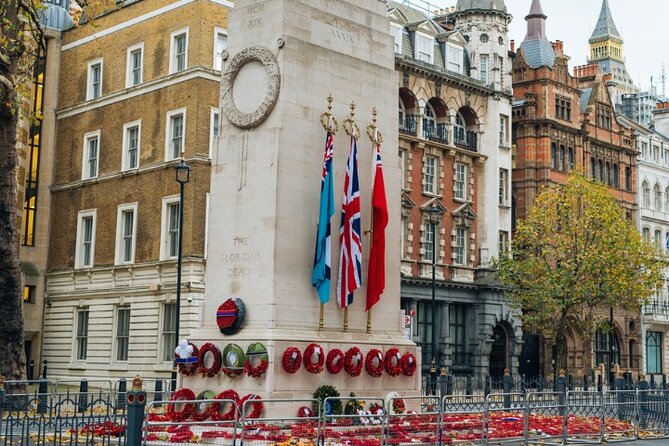
The Cenotaph is a solemn memorial to British and Commonwealth soldiers who died in both World Wars and later conflicts. It is also the focus of the annual Remembrance Day ceremony on November 11.
You’ll spend about five minutes here. There is no admission charge, but this is a place for quiet attention rather than a quick photo stop. The Cenotaph asks you to think about the human cost behind the political and military story.
Placed among government buildings, it links national decisions with individual loss. That contrast is one of the route’s strengths. You see the offices where policy was made, then a memorial dedicated to those who paid the ultimate price.
The Ministry of Defence and HM Treasury
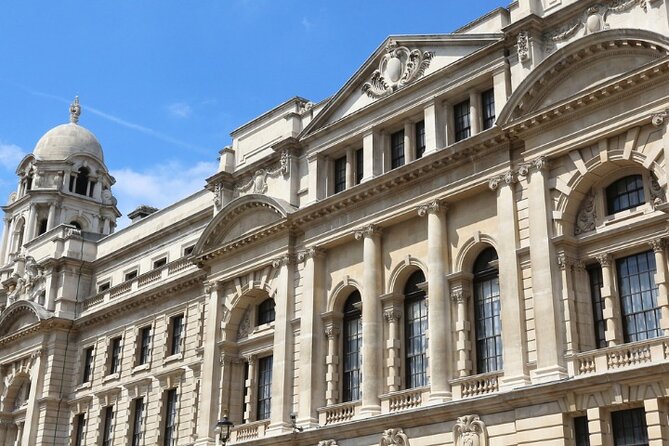
The Ministry of Defence occupies the historic Main Building and oversees Britain’s armed forces and defense policy. The stop is brief, about five minutes, and takes place outside.
Its value comes from the guide’s explanation of how the country’s military administration operated. Churchill’s leadership depended on an entire defense structure, not just his own decisions. The building helps you picture that wider system.
The route then includes HM Treasury for about 10 minutes. During World War II, the Treasury helped manage the war economy and direct resources toward both military and civilian needs. Its basement also served as an emergency location during air raids.
This is one of the more unusual aspects of the walk. Most visitors recognize Churchill’s statue and Parliament, but fewer connect wartime survival with budgets, supply, and financial administration. The Treasury stop shows that victory required money, materials, and careful planning as much as courage.
St Margaret’s Church and Churchill’s private life
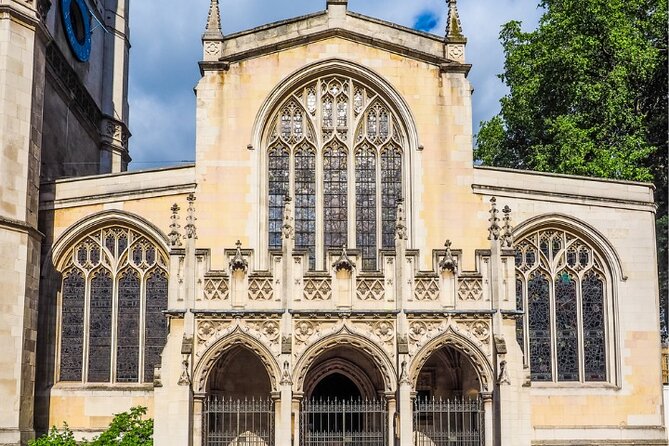
St Margaret’s Church on Parliament Square adds a personal detail that many political tours lack. Churchill married Clementine Hozier there in 1908.
The church dates to the 12th century and is known as the Church of the House of Commons because of its long association with parliamentary figures. You’ll spend about 10 minutes here, with entry not included.
This stop gives you a glimpse of Churchill before his wartime fame. It reminds you that he was not only a prime minister and public speaker. He was also a husband whose personal life was tied to the same political and religious setting that shaped his public career.
Depending on access at the time of your visit, the guide’s explanation may be the main part of the stop. The tour information does not promise interior admission, so do not book expecting a full church visit.
How the price compares with what you receive
At $19.01 per person, this is a reasonably priced guided introduction to Westminster’s wartime sites. The fee covers the walking tour and professional English-speaking guide, but not admission to the Churchill War Rooms.
I see the price as good value if you want the story explained as you move through the city. You would see many of these monuments for free on your own, but the route connects them in a useful order. The guide helps explain why the sites belong together.
The value is weaker if you expect a museum experience. There are no included indoor admissions listed, and several stops last only five or ten minutes. You are paying for interpretation, structure, and access to a focused route, not for a long visit inside each building.
The tour’s small maximum of 25 people is another practical plus. It is not a private walk, but the group limit should make it easier to hear the guide than on a large coach-style outing.
Timing, meeting point, and walking demands
You meet at Embankment station at 1:30 pm. The route ends at the Churchill War Rooms, King Charles Street, London SW1A 2AQ. This makes the finish convenient if you plan to visit the War Rooms afterward.
Allow the full 2 to 3 hours. The schedule includes many short stops, but you will still cover central London on foot. Wear comfortable shoes and prepare for outdoor conditions.
The tour is not suitable for people with walking or mobility difficulties. It is also not suitable for prams, buggies, or strollers. Service animals are allowed, and the route is near public transportation.
The tour is offered in English only. Most people can participate, but you should choose another format if standing and walking through city streets for several hours would be difficult.
Who should book this Churchill walk?
I would recommend it to you if you want a focused introduction to Churchill and wartime Westminster before visiting the War Rooms. It also suits anyone interested in how Britain’s government, military, finances, and memorial culture fit together.
It is a particularly good choice for a first visit to London if you want a clear historical route through Parliament Square and Whitehall. The walk gives you enough background to recognize the importance of places that can otherwise look like ordinary government buildings.
You may want something else if you prefer long indoor visits, a private guide, or a tour centered only on Churchill’s personal life. You should also skip it if you cannot comfortably walk for 2 to 3 hours.
The strongest feature is the wider story. You learn about Churchill, but you also learn about Britain’s government, the Royal Air Force, women’s wartime work, national finance, and remembrance. That broader view gives the tour more value than a simple list of famous statues.
Should you book it?
Book this tour if you want a reasonably priced, English-language walking introduction to Churchill’s London and you understand that the War Rooms are exterior only.
I like the route because it brings together major sites, lesser-discussed wartime roles, and a personal detail at St Margaret’s Church. Add a separate Churchill War Rooms visit if the bunker itself is important to you.
Skip it if you need step-free mobility support, want included museum tickets, or prefer to explore at your own pace. For a compact afternoon walk with a clear wartime focus, this is a practical choice.
FAQ
How much does the Churchill and World War 2 Walking Tour cost?
The tour costs $19.01 per person.
How long does the walking tour last?
The tour lasts approximately 2 to 3 hours.
Where does the tour begin?
It begins at Embankment station, Embankment Place, London WC2N 6NS.
What time does the tour start?
The start time is 1:30 pm.
Where does the tour end?
The tour ends in front of the Churchill War Rooms at King Charles Street, London SW1A 2AQ.
Are Churchill War Rooms admission tickets included?
No. The walking tour includes the exterior of the Churchill War Rooms only. You must arrange and pay for entry separately.
What language is the tour offered in?
The tour is offered in English.
How many people can join the tour?
The tour has a maximum group size of 25 people.
Is the tour suitable for people with mobility difficulties or strollers?
No. The tour is not suitable for guests with walking or mobility difficulties, prams, buggies, or strollers. Service animals are allowed.
Just added in London
- The Beatles and a Secret pub★ 4.5 · 36 reviews
- The Beatles & Liverpool Magical Mystery Tour from London★ 4.5 · 80 reviews
- Airport Coach Service from Heathrow to Oxford★ 3.5 · 67 reviews
- The Beatles Magical History Black Taxi Tour London★ 5.0 · 51 reviews
- The Beatles London walking tour. From Abbey Road to the Roof Top★ 5.0 · 61 reviews
- Private The Beatles Taxi Tour in London★ 5.0 · 12 reviews
- The Beatles London Walk★ 4.5 · 120 reviews
- Dinner and Jazz Cruise on the River Thames★ 4.0 · 140 reviews
Churchill & WWII Tours, compared.
Westminster 3 Hour Walking Tour and Visit of Churchill War Rooms
Read our review →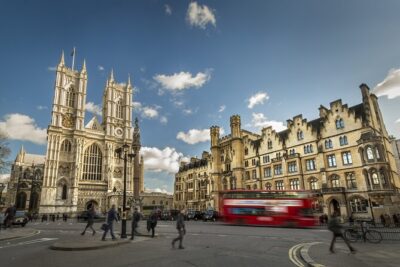
WW2 London Walking Tour & Churchill War Rooms Entrance Ticket
Read our review →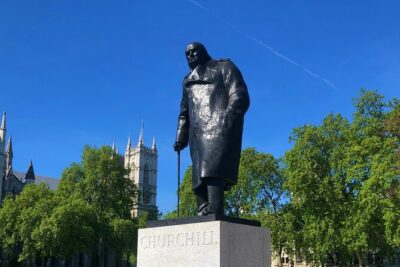
London in WW2 Walking Tour with Churchill War Rooms Visit
Read our review →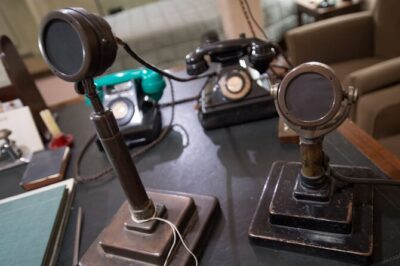
Churchill War Rooms “Behind The Glass” and Private Car Tour
Read our review →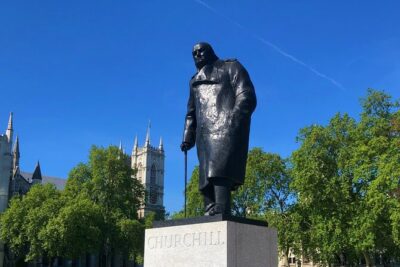
Winston Churchill & London in World War II Walking Tour
Read our review →
Roman Ruins to Blitz Bombings: A Walking Tour of London’s Fiery History
Read our review →
Sir Winston Churchill Private Walking Tour & War Rooms
Read our review →
Winston Churchill Walking Tour with WII War Rooms Entrance
Read our review →Browse the lists this tour appears in