
Reviewed · CHURCHILL & WWII TOURS
Sir Winston Churchill Private Walking Tour & War Rooms
Churchill’s London is best understood on foot, one grand street and wartime memorial at a time. This private walk links his clubs, tailors, cigar shop, childhood home, government offices, and favorite haunts before sending you underground into the Churchill War Rooms, preserved much as they were in 1945.
I like the tour’s personal scale and its unusual details. You get a guide such as Martin, Marty, Kevin, or Stephen rather than a large group, and you can ask questions as the route unfolds. I also like the way the walk mixes Churchill with broader London: royal palaces, military memorials, Mayfair shops, and the machinery of government.
The main consideration is the price, $263.90 per person, and the amount of walking. Most of the stops are brief outdoor explanations, not long visits inside buildings, and the War Rooms portion is self-guided rather than led by your private guide.
Key points to know before booking
- Churchill’s everyday London: See the tailor, hatter, cigar shop, club, palace, and streets tied to his public and private life.
- A private route to the War Rooms: The walk begins at Piccadilly Circus and ends at the underground wartime headquarters.
- Strong guide-led storytelling: Martin, Marty, Kevin, and Stephen are named guides praised for clear explanations, humor, and flexibility.
- About three hours on foot: The route covers Piccadilly, Mayfair, St. James’s, Whitehall, and Parliament Square before the museum visit.
- War Rooms entry is included: Allow about an hour inside, using the site’s audio and video guides.
- Useful for first-time and repeat visitors: The route helps you get your bearings while adding Churchill detail that many standard city walks skip.
From Piccadilly Circus into Churchill’s London
The meeting point is outside the Criterion Theatre at Piccadilly Circus, right in the West End. If you arrange hotel pickup, the guide can meet you at a central London hotel and use the Underground to reach the start. That transport is not included in the tour price, so confirm the pickup plan before setting out.
Piccadilly Circus is an energetic opening point, but the tour quickly moves beyond the familiar photo stop. At the statue of Eros, your guide explains how the site has figured in wartime gatherings and national celebrations. It is a small stop, yet it gives useful context for how Londoners use public spaces during moments of crisis and joy.
From there, you walk along Regent Street, known for its grand curve and smart shops, toward Mayfair. This is not a march from one museum to another. The point is to watch the city change as Churchill’s world comes into view: polished facades, old institutions, royal connections, and shops that served an upper-class clientele.
The early section is especially useful if you have just arrived in London. One past participant described it as a good way to get familiar with central London, and that rings true as a practical benefit. You learn how Piccadilly, Mayfair, St. James’s, and Whitehall connect, rather than seeing them as isolated points on a map.
More walking tours in London:
- Tour for Muggles The Ultimate Harry Potter Walking Tour in London
★ 5.0 · 4,684 reviews - London Jack The Ripper Guided Walking Tour
★ 5.0 · 3,131 reviews - Changing of the Guard Guided Walking Tour in London
★ 5.0 · 1,793 reviews
Savile Row, Churchill’s clothes, and the wartime look
Savile Row is one of the tour’s more distinctive stretches. The guide points out its famous tailoring houses and the clothing traditions tied to British public life. At Henry Poole and Company, you hear a Churchill story connected to one of London’s most prestigious tailors.
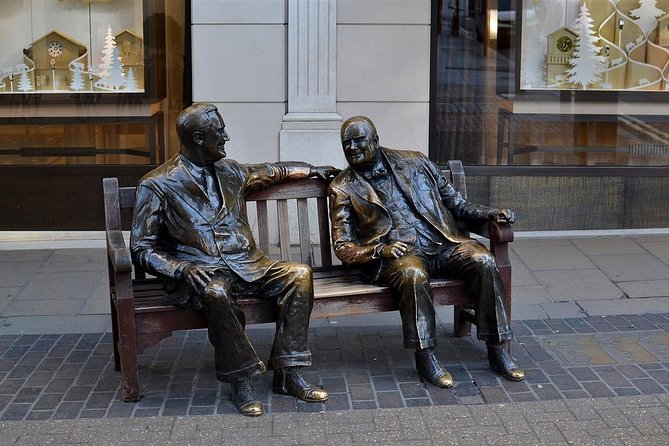
The walk then reaches the Churchill and Roosevelt Allies sculpture. It makes a natural photo stop and brings the wartime partnership into the present-day streetscape. The sculpture is included in the route, but the value here is less about a long visit and more about placing Churchill beside the Allied relationship that shaped the war.
At Burlington Arcade, the story shifts from government to personal taste. Churchill liked fine things, and this elegant covered shopping passage helps explain the world he moved through. You follow the route he once used and see the sort of setting that matched his public image.
Turnbull and Asser adds a rare physical connection. The shop displays one of Churchill’s surviving Siren suits, the practical one-piece garment associated with him during World War II. That is the sort of detail that gives the walk texture: you are not only hearing about Churchill’s speeches and decisions, but also seeing an object linked to his daily wartime appearance.
The shop is closed on Sundays and some public holidays. If this stop matters to you, check the day before booking. The tour can still continue, but you should not expect access to the interior or the suit display when the shop is shut.
Spencer House, hats, cigars, and the private Churchill
Spencer House brings the tour to Churchill’s childhood. You see the exterior and learn why his family lived there. Admission inside is not included, so treat it as an architectural and biographical stop rather than a house tour.
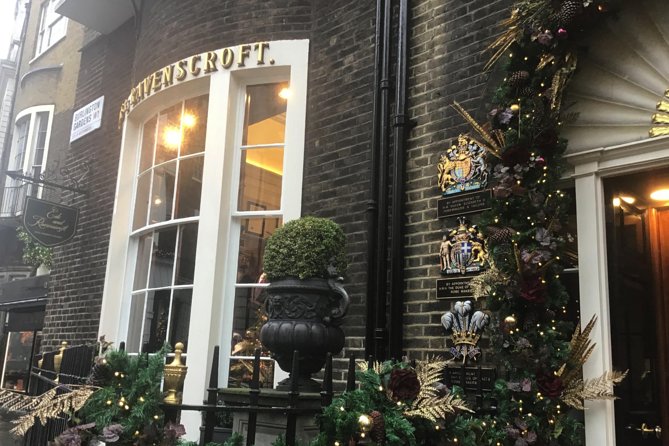
Nearby, Lock and Company Hatters adds another pleasingly specific thread. The shop has supplied hats to figures including Churchill, and the guide connects the business to the wider culture of London’s old specialist shops. The James Bond reference tied to the shop gives this section a light touch without pulling it away from Churchill.
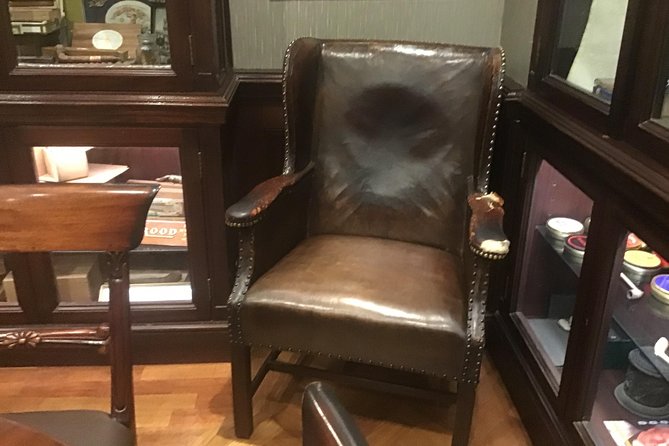
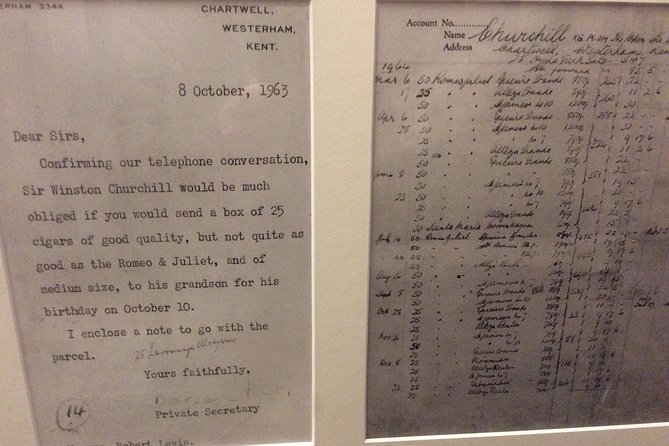
At James J. Fox and Robert Lewis, the subject is cigars. Churchill bought cigars here, and the shop also has connections to Napoleon and British royalty. If the room is open, you may be able to sit in Churchill’s smoking chair or find a Churchill or cigar-related souvenir.
Again, Sunday and public holiday closures matter. The tour includes the exterior and the story, but the special interior access depends on the shop being open. I see this as one of the strongest reasons to take the walk on a weekday if your schedule allows. These small businesses provide a more human picture of Churchill than another statue would.
Royal palaces and the question of Churchill’s place
St. James’s Palace is the senior royal palace on this route, and the guide explains its connection to the monarchy and to modern royal life. You see the outside rather than entering the palace. The stop works well because it widens the focus from Churchill alone to the institutions around him.
The King George VI and Queen Elizabeth Memorial follows. It honors the wartime king and queen and offers a useful reminder that Churchill did not lead Britain in isolation. The bronze work helps bring the experience of civilians and the royal family into the story of the war.
A short stop at the Charles de Gaulle statue raises a harder question. De Gaulle led the French government in exile, but Churchill’s view of him was not simple. The guide uses the statue to explain that wartime alliances could be tense and personal, not merely tidy partnerships remembered in hindsight.
At the Reform Club, you hear about Churchill’s time there. Entry is not included, so the guide’s explanation and the exterior are the focus. This is a recurring pattern on the walk: the route gives you access to stories and settings that a normal museum visit would skip, but it does not turn every landmark into an interior tour.
Other wartime London sites from London:
- Westminster 3 Hour Walking Tour and Visit of Churchill War Rooms
★ 5.0 · 967 reviews - WW2 London Walking Tour & Churchill War Rooms Entrance Ticket
★ 4.5 · 933 reviews - London in WW2 Walking Tour with Churchill War Rooms Visit
★ 5.0 · 721 reviews - Churchill War Rooms “Behind The Glass” and Private Car Tour
★ 4.5 · 322 reviews
Carlton House Terrace and the Battle of Britain
Carlton House Terrace brings several wartime themes together. You see monuments connected with the Battle of Britain, including the memorial to Sir Keith Park. The guide explains why Churchill gave Park such credit for the victory.
This is one of the more important military stops, even though it lasts only a few minutes. A short explanation can change the way you read the memorial, especially if you know Churchill mainly as a speaker and political symbol. Here, the emphasis turns to command, responsibility, and the people who carried out the work.
You also hear the story of Giro, the German ambassador’s dog. The memorial is described as the only Nazi memorial in Britain, which sounds odd until the guide explains the circumstances behind it. That unexpected detail is exactly the sort of thing you are likely to walk past without a guide.
The Duke of York Column and The Mall continue the military and ceremonial theme. The Mall is London’s grand processional road, but the guide points out a World War II remnant that many people pass without noticing. It remains connected to military use today, adding a practical layer to the history.
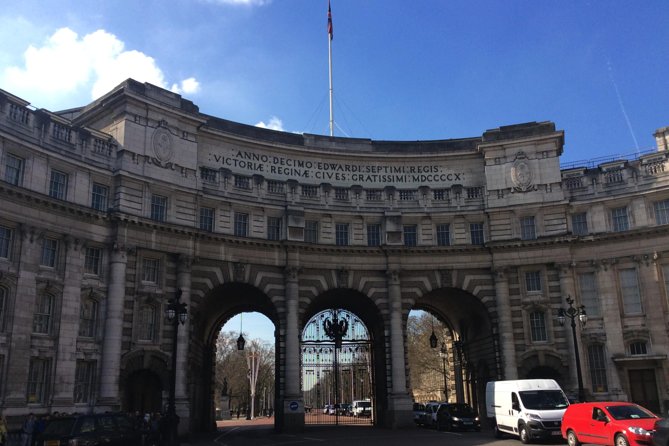
Admiralty Arch then brings Churchill’s working life into view. You see the offices associated with his World War I service, before moving toward Trafalgar Square and its Nelson memorial. The route does not treat Churchill as a figure floating above London. It places him among offices, clubs, monuments, and streets still used every day.
Whitehall, Downing Street, and the government at war
The Ministry of Defence and the old War Office provide another strong section for military history. You see statues of World War II generals and hear about the difficult relationship between Churchill and Field Marshal Montgomery. The guide can use this setting to explain disagreements within the Allied command, not just the public version of wartime unity.
At Horse Guards Parade, you see the World War II citadel and learn what it was designed to do. The stop also covers why Churchill disliked it. Since the citadel is part of the visible fabric of Whitehall, this explanation helps you read the area as a working government and military district.
The Women of World War II Memorial adds a needed balance. The carvings represent the jobs women took on during the war, and the guide explains their meaning. It is a quick stop, but it prevents the walk from becoming only a parade of male politicians and generals.
At 10 Downing Street, you stand outside the gates of the prime minister’s home. The stop connects Churchill with other prime ministers, from Lloyd George to Thatcher and Blair. You do not go inside, and the entrance is guarded, but the location gives a clear sense of how close the decisions of government are to the streets you have just walked.
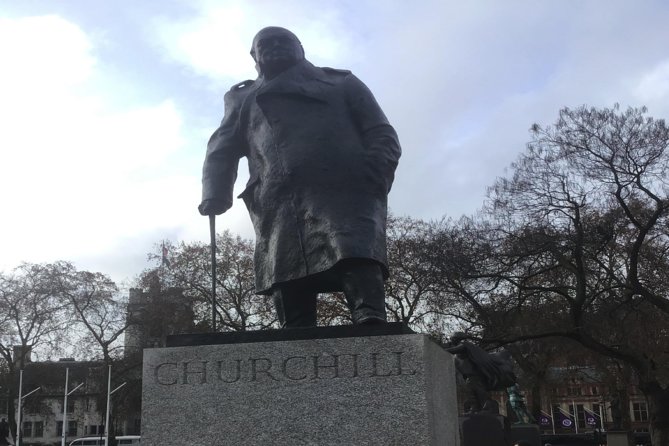
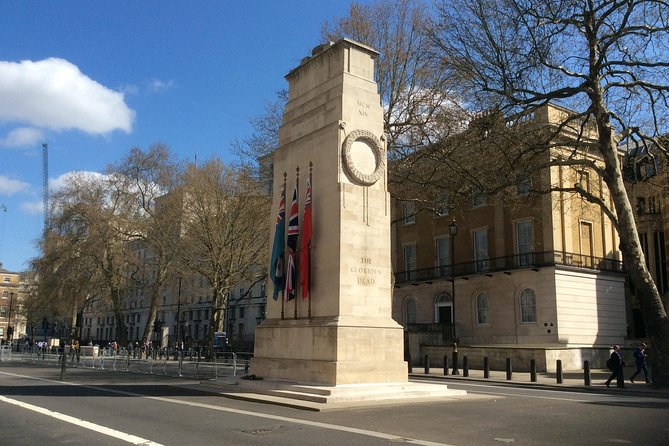
The Cenotaph is the primary memorial for Britain’s war dead from the First World War onward. Then comes Churchill’s statue, where you learn the story behind the familiar pose. Parliament Square follows, with its political monuments and view toward the Houses of Parliament.
St. Margaret’s Church is visible from the square and is linked to Churchill’s marriage to Clementine. The church itself is not entered on this tour, but the exterior makes a fitting personal note before the experience moves underground.
Entering the Churchill War Rooms
The walk ends outside the Churchill War Rooms on King Charles Street, with entry included. Your admission is generally scheduled between 12:45 and 1:45 p.m., depending on your hotel location and walking speed. That timing matters, so avoid planning a tight lunch or another booking immediately afterward.
Inside, you explore the underground bunker from which Churchill and his government directed the war while London was being bombed. The rooms are preserved as they were in 1945, giving you a more direct sense of the cramped, functional headquarters than the outdoor monuments can provide.
The War Rooms visit is self-guided, using audio and video guides. One practical drawback is that the device can feel a little clunky and not entirely intuitive. On the other hand, it lets you set your own pace after several hours with a guide, and you can spend more time on the rooms and displays that interest you most.
Allow at least the included hour, and more if your schedule permits. The supplied timing describes about one hour inside, but the museum can easily become the part where you want to slow down. You will likely be ready for food by then, so plan a meal after the visit rather than expecting a break during the walking portion.
What the private format adds
The private format is the tour’s main advantage. Only your group participates, so the guide can adjust the pace, explain a subject in more detail, or trim a section when needed. That flexibility has helped families with children, history-focused groups, and people dealing with a changed flight schedule.
Martin is praised for making the subject engaging for a 13-year-old, while Kevin is noted for adding humor and unusual historical details. Marty is frequently associated with a lively, question-friendly style, and Stephen is described as accommodating and strong on both Churchill and broader London history. Guide assignments can vary, but these names give you an idea of the style to expect.
The walk is also more than a Churchill biography. You get introductions to the West End, Mayfair, St. James’s, Whitehall, royal landmarks, architecture, and London’s public memorials. That makes it a smart first-day choice if you want to learn the city’s central layout while following a clear historical theme.
The tradeoff is that a private tour costs more than a standard group walk. At $263.90 per person, the value improves when you are traveling as a small group that cares about Churchill or World War II and will use the guide’s flexibility. It is harder to justify if you mainly want a quick look at the War Rooms, since the museum ticket alone does not require this long route.
Walking demands, closures, and booking details
The experience lasts about four hours, with roughly three hours spent walking between short stops and about an hour in the War Rooms. Comfortable casual clothing is suitable, but good walking shoes matter more than dressing up for the West End shops and royal streets.
The route is offered in English. Hotel pickup is available from central London hotels, and the operator can meet you at other central hotels beyond any specifically listed options. If you do not use pickup, meet outside the Criterion Theatre at Piccadilly Circus.
Several shops and some interiors close on Sundays and public holidays. Turnbull and Asser and James J. Fox are the clearest examples. The Reform Club, Henry Poole, Spencer House, Lock and Company, and other stops are mainly viewed from outside or discussed from the street, so do not book this expecting a series of interior admissions.
Confirmation is provided at booking, and the tour is near public transport. Most people can participate, but the experience is still a sustained city walk. You can cancel for a full refund up to 24 hours before the start time. Changes or cancellations inside that window are not accepted for a refund.
Should you book the Churchill walking tour?
Book it if you want Churchill, World War II, and central London in one carefully connected outing. It suits history fans, repeat visitors who want something beyond the usual sights, and families who benefit from a guide who can answer questions and adjust the pace.
I would also recommend it early in a London stay. The route helps you understand how Piccadilly, Mayfair, St. James’s, Whitehall, and Parliament Square fit together, and the War Rooms then gives the day a strong indoor finish.
Skip it if you dislike walking, want a fully guided museum visit, or only have time for the War Rooms themselves. For everyone else, the price is reasonable when shared by a private group and when you value the guide’s stories as much as the admission ticket. The small details, such as Churchill’s Siren suit, his smoking chair, the German ambassador’s dog, and the overlooked wartime remnant on The Mall, are what make this more than a standard Churchill checklist.
FAQ
How long does the Sir Winston Churchill private tour last?
The experience lasts approximately four hours, including the walking route and the visit to the Churchill War Rooms.
Where does the tour begin?
It begins outside the Criterion Theatre at 218 to 223 Piccadilly in London. Pickup can also be arranged from a central London hotel.
Where does the tour end?
The walking tour ends outside the Churchill War Rooms on King Charles Street.
Is entry to the Churchill War Rooms included?
Yes. Entry tickets to the Churchill War Rooms are included in the tour price.
Is the War Rooms visit guided by the private tour guide?
No. The War Rooms portion is experienced independently with audio and video guides after the walking tour.
When do you usually enter the War Rooms?
Entry is generally scheduled between 12:45 and 1:45 p.m. The exact time depends on your hotel location and walking speed.
Is transportation included?
Transportation to and from attractions by London Underground is not included. If hotel pickup is arranged, the guide can travel with you by Underground to the starting point.
Is this a private tour?
Yes. Only your group participates, and the tour can be adjusted to suit your interests and preferences.
Can I cancel for a full refund?
Yes, if you cancel at least 24 hours before the experience start time. Cancellations or changes made less than 24 hours beforehand are not refunded.
Just added in London
- The Beatles and a Secret pub★ 4.5 · 36 reviews
- The Beatles & Liverpool Magical Mystery Tour from London★ 4.5 · 80 reviews
- Airport Coach Service from Heathrow to Oxford★ 3.5 · 67 reviews
- The Beatles Magical History Black Taxi Tour London★ 5.0 · 51 reviews
- The Beatles London walking tour. From Abbey Road to the Roof Top★ 5.0 · 61 reviews
- Private The Beatles Taxi Tour in London★ 5.0 · 12 reviews
- The Beatles London Walk★ 4.5 · 120 reviews
- Dinner and Jazz Cruise on the River Thames★ 4.0 · 140 reviews
Churchill & WWII Tours, compared.
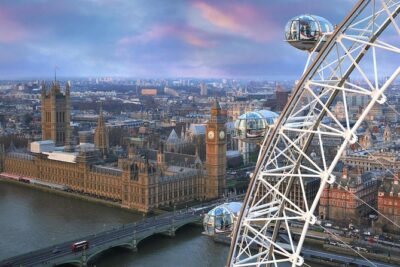
Westminster 3 Hour Walking Tour and Visit of Churchill War Rooms
Read our review →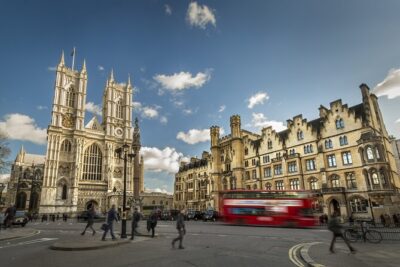
WW2 London Walking Tour & Churchill War Rooms Entrance Ticket
Read our review →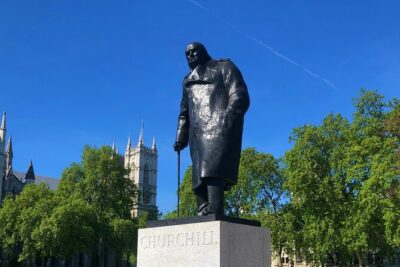
London in WW2 Walking Tour with Churchill War Rooms Visit
Read our review →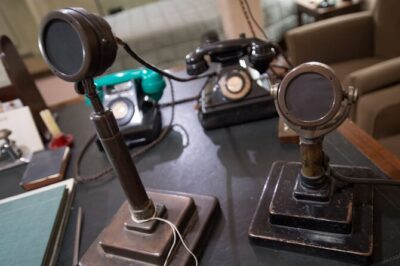
Churchill War Rooms “Behind The Glass” and Private Car Tour
Read our review →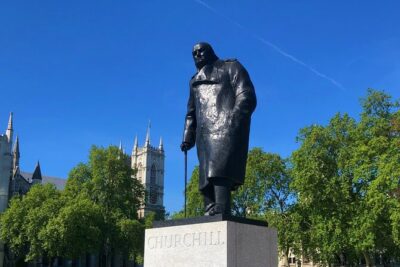
Winston Churchill & London in World War II Walking Tour
Read our review →
Roman Ruins to Blitz Bombings: A Walking Tour of London’s Fiery History
Read our review →
Winston Churchill Walking Tour with WII War Rooms Entrance
Read our review →
Darkest Hour – Parliament and Churchill War Rooms Private Tour
Read our review →Browse the lists this tour appears in