
Reviewed · CHURCHILL & WWII TOURS
Roman Ruins to Blitz Bombings: A Walking Tour of London’s Fiery History
London’s past is written into its pavements, church ruins, banks, monuments, and pubs. This two-hour walk from the Tower of London to Fleet Street connects Roman traces, royal power, the Great Fire of 1666, and the destruction caused by the Second World War.
I like the route’s range. You get major sights such as the Tower of London and St. Paul’s Cathedral, but also quieter stops such as St. Dunstan in the East and the London Stone. I also like the small-group limit of 15, which gives guide Tom room to answer questions and point out side attractions.
The main drawback is the amount of walking. One account calls it an extremely long walking tour, and the route is not a good fit if you have mobility problems. Several stops are viewed from outside, and entrance fees are not included.
Key points for choosing this London history walk
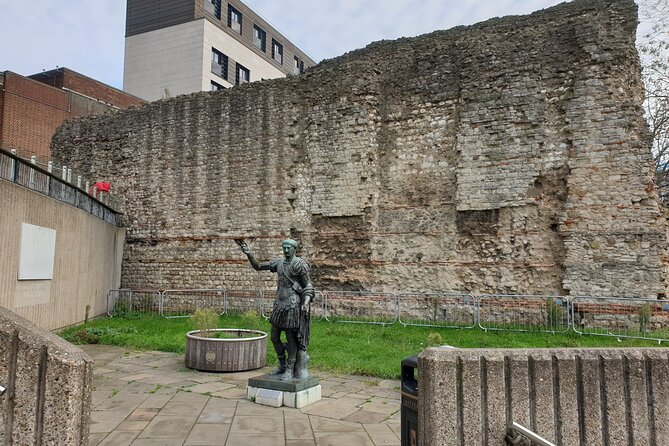
- A seven-stop route across the City of London: The walk links the Tower, St. Dunstan in the East, the Monument, London Stone, the Bank of England, Guildhall, and St. Paul’s Cathedral.
- Guide Tom brings the stories to life: He is praised for clear explanations, enthusiasm, and helpful suggestions for places to visit after the tour.
- A useful mix of famous and lesser-known sights: You get headline attractions alongside a ruined church garden and a stone wrapped in old legends.
- A maximum of 15 people: The small group suits anyone who wants to ask questions without shouting across a crowd.
- Tickets are mostly separate: The tour fee covers the guided walk, but admission is not included at the Tower, Monument, Bank of England Museum, Guildhall, or St. Paul’s Cathedral.
- Easy to reach and simple to leave: The walk begins at Trinity Square near the Tower and finishes outside Ye Olde Cheshire Cheese on Fleet Street, not far from Blackfriars Station.
Why this route makes London’s past easier to understand
London history can feel like a pile of unrelated dates. One minute you are looking at a medieval church, then a Roman wall, then a Victorian monument. This walk gives those pieces a physical order.
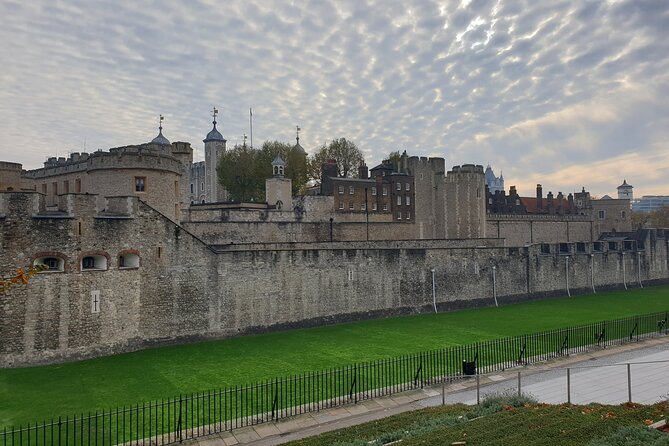
You begin near the Tower of London, a place tied to royal authority, punishment, and national power. From there, the route moves through streets shaped by fire, rebuilding, commerce, religion, and war. By the time you reach St. Paul’s Cathedral and Fleet Street, you have seen how London kept replacing itself without wiping away every trace of what came before.
That is the real value here. You are not spending two hours inside one attraction. You are using the city itself as the museum.
The price is $27.78 per person, which is reasonable for a guided walk of about two hours, especially with a group capped at 15. You are paying for the guide’s explanations and local interpretation, not for entry to the sights. If you plan to go inside several of them, budget separately.
More walking tours in London:
- Tour for Muggles The Ultimate Harry Potter Walking Tour in London
★ 5.0 · 4,684 reviews - London Jack The Ripper Guided Walking Tour
★ 5.0 · 3,131 reviews - Changing of the Guard Guided Walking Tour in London
★ 5.0 · 1,793 reviews
Starting at the Tower of London
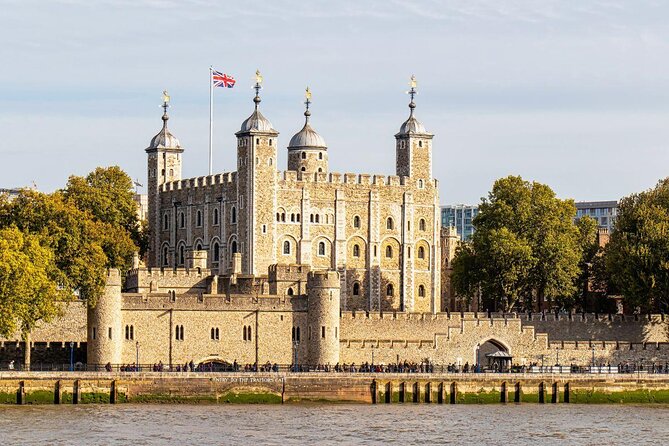
The meeting point is 38 Trinity Square, London EC3N 4DJ, near the Tower of London. The Tower is described as Europe’s oldest surviving royal palace, so it is a fitting place to begin a walk about power, conflict, and London’s long memory.
You should expect the Tower to be an exterior stop rather than a full visit. The admission ticket is not included, and the listed stop is brief. That matters because the Tower can easily take much longer if you enter and explore it properly.
I like beginning here because the setting gives the guide a strong first chapter. The Tower is not simply an old building to photograph. It helps explain why this part of London mattered so much, and why the city grew around institutions that shaped the country.
If you want to visit inside, plan that separately. Do not assume the walking tour fee covers admission.
St. Dunstan in the East and the beauty of ruins
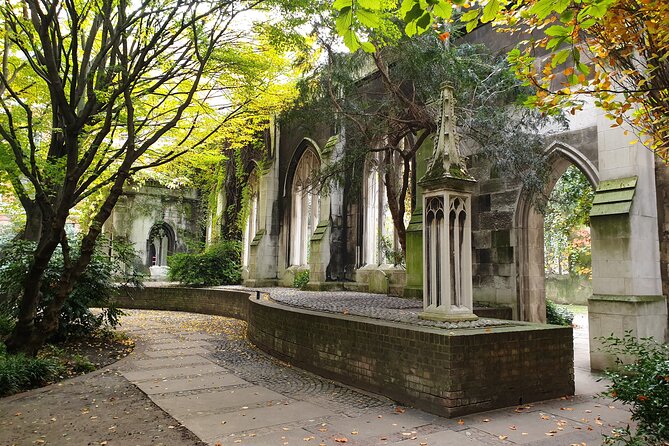
St. Dunstan in the East is one of the most atmospheric stops on the route. It is a garden set within the remains of a medieval church destroyed during the Second World War.
The appeal is not just visual. The ruined walls show how London’s churches and streets were damaged by war, while the garden shows how the city found a new use for a broken place. It is a quiet counterpoint to the royal drama of the Tower and the financial power found later on the route.
The stop is listed as free, with no admission ticket required. You get a quick look rather than an extended pause, so listen closely while the guide explains what happened here.
This is also one of the places where sturdy shoes help. The walk includes several stops and continues across central London streets, so comfort matters more than dressing for a single photo opportunity.
The Monument and the Great Fire of 1666
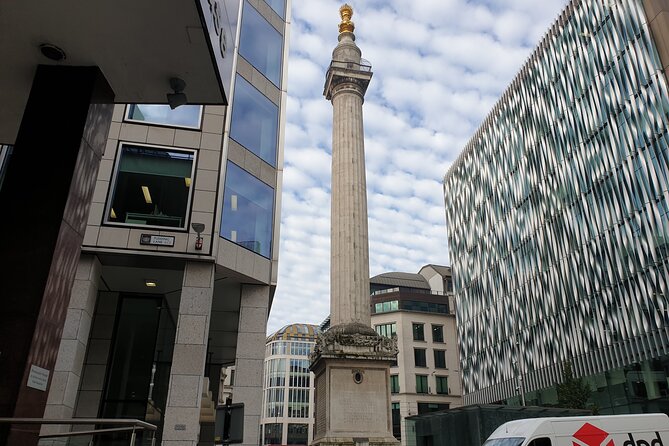
The Monument to the Great Fire of London marks one of the city’s most important turning points. The fire of 1666 changed large parts of London and led to major rebuilding.
The Monument itself is an exterior sight on this tour, and admission is not included. The guide’s role is especially useful here because the column can seem like a simple landmark if you do not know what it commemorates.
I like this stop because it connects disaster with urban change. London was not rebuilt as a perfect new city, but the fire altered its buildings, streets, and public identity. You begin to see that the city’s character comes from repeated damage and repair, not from one carefully planned design.
The stop is short, listed at about five minutes. That is enough for an explanation and a look, but not enough for a full visit if you want to climb or explore the Monument on your own.
Other wartime London sites from London:
- Westminster 3 Hour Walking Tour and Visit of Churchill War Rooms
★ 5.0 · 967 reviews - WW2 London Walking Tour & Churchill War Rooms Entrance Ticket
★ 4.5 · 933 reviews - London in WW2 Walking Tour with Churchill War Rooms Visit
★ 5.0 · 721 reviews - Churchill War Rooms “Behind The Glass” and Private Car Tour
★ 4.5 · 322 reviews
London Stone and the legends beneath the pavement
The London Stone is a small stop with a large reputation. It is a stone associated with several legends, and the guide can explain why such an ordinary-looking object became part of London’s story.
This is the sort of sight you might pass without noticing. That makes it useful on a guided walk. A guide can show you where to look and explain the stories attached to it, turning a minor detail into a memorable part of the city.
The stop is free. It also adds variety to the route. You move from grand buildings and public monuments to an object whose importance comes from tradition and mystery rather than size.
Do not expect a major attraction with a long visit. The value is in the context, and this is where an engaging guide makes a real difference.
The Bank of England and London’s financial center
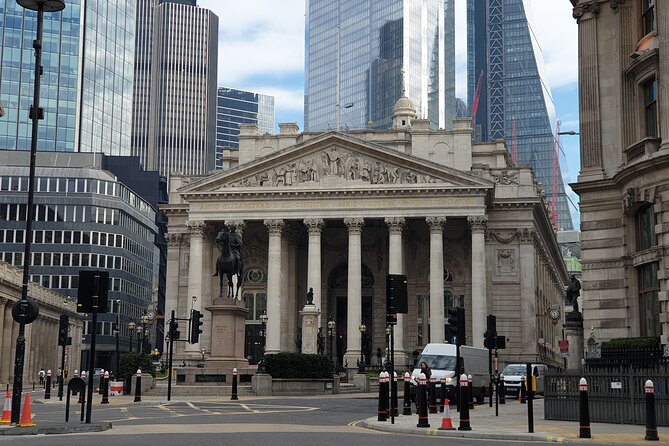
The Bank of England Museum introduces the financial side of London’s story. The Bank is the central bank of the United Kingdom, and its presence shows how the City developed into a major center of national finance.
Admission to the museum is not included, so the walk does not replace a museum visit. Instead, you get a short guided look at the institution and its place in the city.
This is a good section for anyone who wants more than royal history and famous churches. London’s past is also a story of money, trade, government, and institutions. The route puts those subjects alongside the Great Fire and wartime destruction, giving you a broader view of how the city works.
If you are especially interested in the Bank of England Museum, you may want to return at another time. The five-minute stop allows for orientation, not an in-depth museum visit.
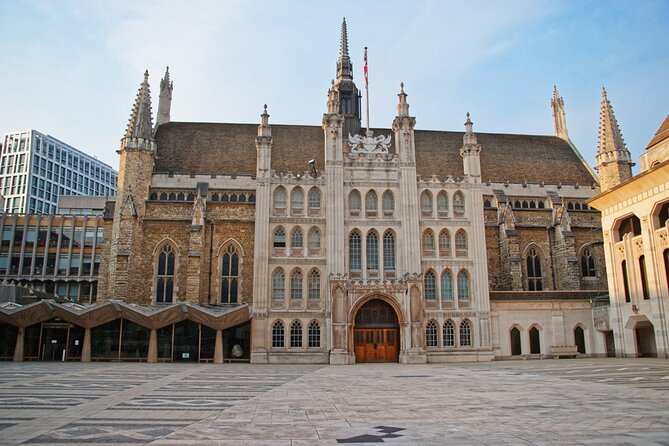
Guildhall, the City’s civic heart
Guildhall is a 15th-century hall and the home of the Corporation of London. It brings local government and civic power into the story.
After the Tower’s royal associations and the Bank of England’s financial role, Guildhall shows another part of London’s structure. The City has its own long civic traditions, and this building helps explain why the area is more than a collection of office blocks.
Admission is not included. The stop is brief, so you should treat it as part of the walking narrative rather than a full indoor tour.
This section will suit history fans who like institutions as much as famous buildings. It also helps make sense of the City of London as a distinct part of the capital, with its own corporation and historic identity.
St. Paul’s Cathedral and Christopher Wren’s London
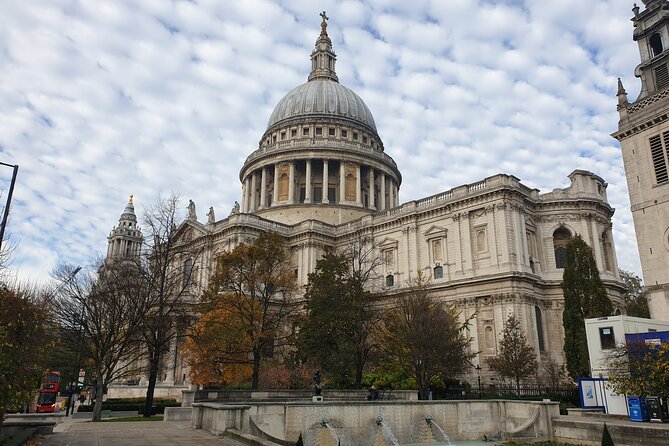
The route continues to St. Paul’s Cathedral, Christopher Wren’s 17th-century cathedral. It is one of the most recognizable buildings in London and a natural high point for a tour that has covered fire, rebuilding, and war.
The cathedral is another stop where admission is not included. You will need a separate ticket if you want to go inside, so factor that into your plans.
Even from outside, St. Paul’s gives the guide plenty to discuss. Its presence links the Great Fire to the city that rose afterward. It also offers a strong visual finish to the main sightseeing portion of the walk.
The tour does not end here. You continue toward Fleet Street, so do not plan to leave the group at St. Paul’s unless you have confirmed that arrangement.
Finishing on Fleet Street
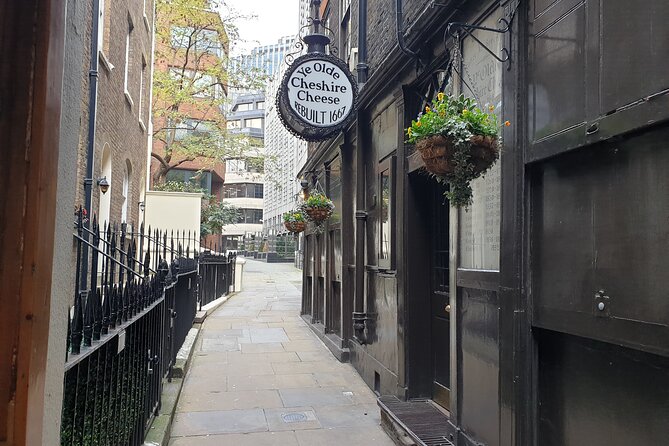
The walk ends outside Ye Olde Cheshire Cheese at 145 Fleet Street, EC4A 2BP, not far from Blackfriars Station. That is a practical finish, especially if you want to continue exploring central London or stop for food and a drink.
The pub gives the ending a distinctly London feel, but the supplied details do not say that food or drinks are included. Think of it as the meeting point for the end of the route, not part of the tour fee.
I like this finish because it leaves you in a useful part of the city rather than sending you back to the starting point. From here, you can continue on foot or use nearby public transport.
What Tom adds to the experience
The guide can make or break a history walk, and Tom receives especially strong praise for his storytelling, clear explanations, and enthusiasm. His approach appears to balance information with conversation, rather than turning the walk into a stream of dates.
You can expect him to point out side attractions, including free museums with Roman ruins and artifacts. That is useful if you want to keep exploring after the official two hours.
Another plus is the chance to ask questions. Tom is described as approachable and willing to offer suggestions for other places to visit and local spots to enjoy afterward. Those practical recommendations can be worth as much as the formal route, particularly if this is your first stay in London.
The tour is offered in English. With a maximum of 15 people, you have a better chance of hearing the guide clearly and getting an answer when something catches your interest.
Walking demands, timing, and value
The listed duration is about two hours, but the experience is still a substantial walking tour. You move between seven stops, and one account specifically warns that it can feel very long and is not suitable for people with mobility issues.
The information does not give a total distance, so you should not plan around a precise mileage figure. The safe assumption is that you need to remain on your feet for much of the experience and keep a steady pace between stops.
At $27.78, the tour offers good value if you want a guided introduction to London’s central historical district. It is less valuable if you want extended time inside each attraction, since the Tower, Monument, Bank of England Museum, Guildhall, and St. Paul’s Cathedral all require separate admission where applicable.
Think of the fee as payment for a connected story and an informed guide. It is not a sightseeing pass.
Who should book this walk
I would choose this tour if you enjoy history but do not want to spend an entire day inside museums. It suits first-time visitors who want to understand how several major sights fit together, as well as repeat visitors who want to notice details they usually walk past.
It is particularly good for people interested in Roman traces, medieval London, the Great Fire, wartime destruction, royal power, civic government, and finance. That is a wide subject range, but the route keeps the focus on how London changed over time.
I would think twice if you have mobility limitations or dislike walking in a group. The small group helps, but it does not shorten the route. I would also skip it if your main goal is to tour the interiors of the Tower or St. Paul’s, since the admission fees and visiting time are separate.
The tour offers free cancellation if you cancel at least 24 hours before the start time. Cancellations made less than 24 hours ahead are not refunded, and late changes are not accepted.
Should you book Roman Ruins to Blitz Bombings?
Book it if you want a lively, connected history lesson on foot and appreciate a guide who can make ordinary street details matter. Tom’s personal style, the 15-person limit, and the mix of major sights with less obvious stops give the experience a clear advantage.
Skip it if you need a slow pace, have mobility concerns, or want long indoor visits. For most history-minded visitors who can manage two hours of walking, $27.78 is a fair price for a focused introduction to London’s changing face.
FAQ
How much does the walking tour cost?
The tour costs $27.78 per person.
How long does the tour last?
The tour lasts approximately two hours.
Where does the tour begin?
It begins at 38 Trinity Square, London EC3N 4DJ, UK.
Where does the tour finish?
It finishes outside Ye Olde Cheshire Cheese at 145 Fleet Street, London EC4A 2BP, not far from Blackfriars Station.
What language is the tour offered in?
The tour is offered in English.
How large is the group?
The tour has a maximum of 15 participants.
Are admission tickets included?
No. Admission is not included for the Tower of London, the Monument, the Bank of England Museum, Guildhall, or St. Paul’s Cathedral. St. Dunstan in the East and the London Stone are listed as free stops.
Is the tour suitable for people with mobility issues?
The tour information says most people can participate, but a direct account warns that it is a very long walking tour and is not recommended for people with mobility issues.
Are service animals allowed?
Yes, service animals are allowed.
Can I cancel for a full refund?
Yes, if you cancel at least 24 hours before the experience start time. Cancellations made less than 24 hours before the start time are not refunded.
Is the tour near public transportation?
Yes. The route begins near the Tower of London and ends not far from Blackfriars Station.
Just added in London
- Professional Private Photoshoot in London★ 5.0 · 63 reviews
- Shoreditch Street Art and Graffiti Tour (Private Group Booking)★ 5.0 · 108 reviews
- Transfer London to Southampton Cruise Terminal (extra luggage)★ 4.5 · 81 reviews
- London, Windsor Castle, Hampton Court Palace with Free Snack Pack★ 4.0 · 102 reviews
- Central London to Southampton Cruise Port Private transfers★ 4.5 · 128 reviews
- London Christmas Lights Tour by Vintage Double-Decker Bus★ 4.0 · 135 reviews
- London Christmas Lights Guided Tour With Christmas Music★ 5.0 · 118 reviews
- Emirates Stadium and Arsenal Museum Entrance Ticket Including Audio Guide★ 4.5 · 113 reviews
Churchill & WWII Tours, compared.
Westminster 3 Hour Walking Tour and Visit of Churchill War Rooms
Read our review →
WW2 London Walking Tour & Churchill War Rooms Entrance Ticket
Read our review →
London in WW2 Walking Tour with Churchill War Rooms Visit
Read our review →
Churchill War Rooms “Behind The Glass” and Private Car Tour
Read our review →
Winston Churchill & London in World War II Walking Tour
Read our review →Browse the lists this tour appears in