
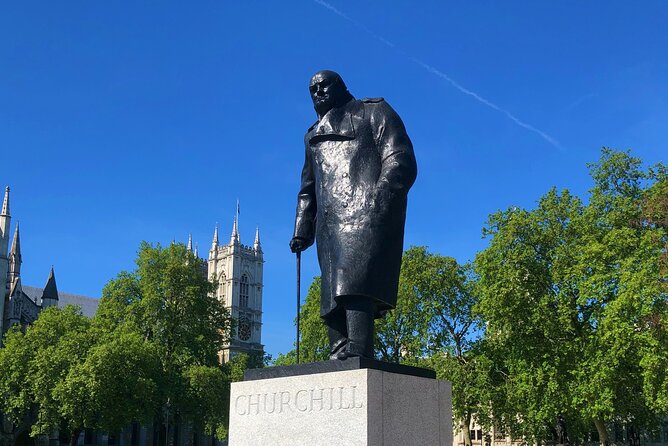
Reviewed · CHURCHILL & WWII TOURS
London in WW2 Walking Tour with Churchill War Rooms Visit
London’s wartime story comes alive in two very different ways on this tour. Outside, you walk through Westminster, where Parliament, Whitehall, memorials, and royal landmarks became part of Britain’s daily struggle against Nazi Germany. Below ground, you enter the Churchill War Rooms, the cramped command center where Britain’s government worked through the threat of invasion.
I like the small group limit of 15, which gives guides such as Nathan, Babs, Jeremy, Paul, and Francis room to answer questions and adjust the storytelling. I also like the balance between a guided walk and a self-guided museum visit. You get a human voice first, then time to explore the exhibits at your own pace.
The main consideration is pace. Three hours is enough for a strong introduction, not a complete study of Churchill or the Second World War. Several outdoor stops are brief, and Westminster Abbey is viewed from outside only. At $104.02 per person, the included War Rooms admission makes the package reasonable, but history fans who want a slow museum visit may want extra time afterward.
Key points to know before booking
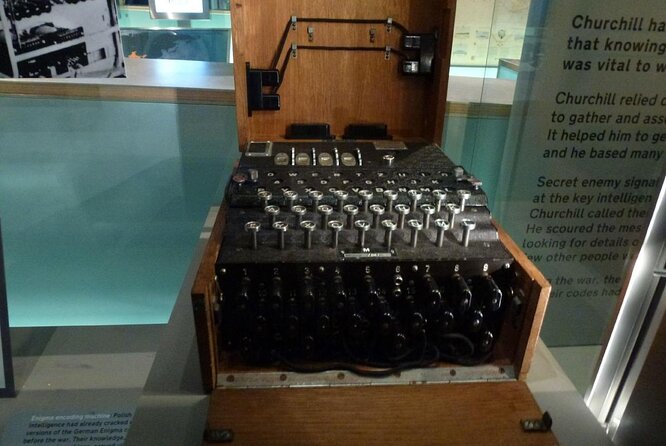
- Churchill’s War Rooms admission is included, along with an audio guide for the underground complex and museum.
- The walking group is capped at 15 people, a useful size for hearing stories and asking questions.
- The route covers Westminster Bridge, Parliament, Parliament Square, Westminster Abbey, Whitehall, and Horse Guards Parade.
- The outdoor walk gives wartime context, including Parliament’s response to the threat, wartime memorials, and the role of central government.
- The guided portion ends at the War Rooms, where your guide sees you inside before you continue independently.
- The strongest guide names in the feedback are Nathan, Babs, Jeremy, Paul, Richard, and Francis, all praised for lively storytelling and strong subject knowledge.
Why this tour works as a London history lesson
This is not simply a museum ticket with a short walk attached. The route gives you a physical sense of wartime Westminster before you enter the underground rooms. That order matters. You first see the institutions Britain was trying to protect, then visit the place where officials planned how to keep the country fighting.
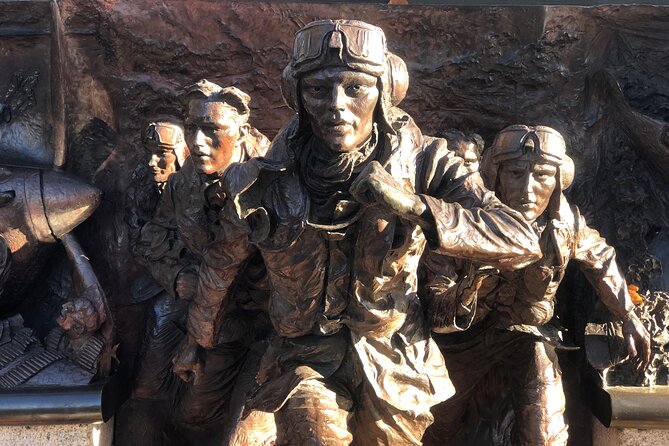
I like the way the walk connects grand symbols to human cost. Parliament represents national decision-making. Whitehall points to the machinery of government. The Cenotaph and the Women in World War II monument bring the focus back to service and sacrifice. The guides also use personal stories, including family experiences of the war, to keep the subject from becoming a list of dates and battles.
The strongest feedback centers on guides who can shift between serious history and lighter London stories without losing the thread. Nathan is repeatedly praised for his energy, detail, and ability to match the group’s level of interest. Babs is described as passionate and calm while handling a changing route during a protest. Jeremy is praised for humor and clear explanations, while Paul receives high marks for his delivery and flexibility.
That guide quality matters here. Much of the outdoor walk involves looking at buildings and monuments from public spaces. The value comes from what you are told while standing there. Without a good guide, Parliament Square is just another sightseeing stop. With the right context, it becomes a place to think about democracy under pressure.
More walking tours in London:
- Tour for Muggles The Ultimate Harry Potter Walking Tour in London
★ 5.0 · 4,684 reviews - London Jack The Ripper Guided Walking Tour
★ 5.0 · 3,131 reviews - Changing of the Guard Guided Walking Tour in London
★ 5.0 · 1,793 reviews
Starting at Westminster Bridge
The meeting point is at Boadicea and Her Daughters on Victoria Embankment, near Westminster Bridge. This is a central location, close to public transportation, and the bridge is easy to recognize once you are in the area.
The bridge itself is painted green, a color associated with the Houses of Commons. You visit from outside for about five minutes, but the short stop carries a useful wartime detail: bombs are still found in the area from time to time. That fact gives the setting a more immediate edge than a standard bridge photo stop.
Do not expect a long architectural talk here. The point is to establish Westminster as a working center of government and a target during the war. From the bridge, the group moves toward the buildings that shaped Britain’s response.
Parliament and the silence of Big Ben
The Houses of Parliament receive about ten minutes from outside. Your guide explains how Parliament reacted as the threat from the Third Reich grew, how the Luftwaffe filled London’s skies, and why the normally familiar sound of Big Ben went quiet.
This is a good example of the tour’s approach. You are not entering the building, so you will not see its interior or visit a parliamentary chamber. Instead, the stop uses the exterior as a stage for political decisions made during an extraordinary crisis.
The bell’s silence is an especially effective detail because it links a famous London sound to wartime security. You can picture a city where even a beloved landmark had to change its normal routine. The guide’s storytelling does the work here, so stay close and listen carefully.
Parliament Square and the idea of democracy
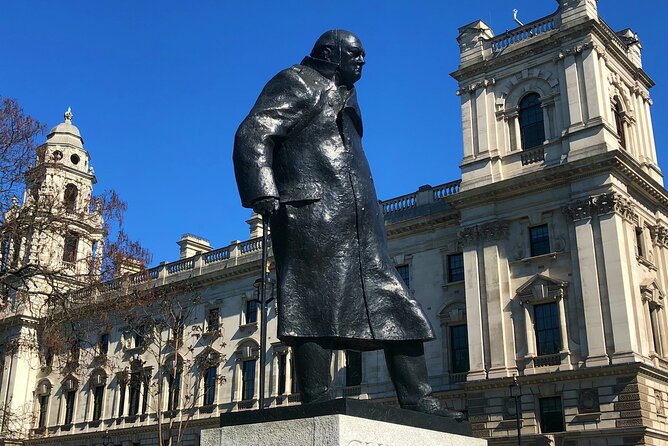
Parliament Square is another outside stop, lasting about ten minutes. Its statues include Mahatma Gandhi, Millicent Fawcett, and Abraham Lincoln, often known as Honest Abe. The square’s collection of political figures gives the guide a natural way to discuss democracy and the values Britain claimed to defend during the war.
I find this stop useful because it broadens the tour beyond Churchill. The Second World War was not only about military operations or one famous prime minister. It was also about political systems, civil rights, public duty, and the question of what kind of society would survive.
You will not have admission to the square as a paid attraction because it is an outdoor public space. The group may pause for photos, but the main purpose is interpretation rather than extended sightseeing.
Other wartime London sites from London:
- Westminster 3 Hour Walking Tour and Visit of Churchill War Rooms
★ 5.0 · 967 reviews - WW2 London Walking Tour & Churchill War Rooms Entrance Ticket
★ 4.5 · 933 reviews - Churchill War Rooms “Behind The Glass” and Private Car Tour
★ 4.5 · 322 reviews - Winston Churchill & London in World War II Walking Tour
★ 5.0 · 194 reviews
Westminster Abbey from the outside
Westminster Abbey is viewed externally for about ten minutes. The Abbey is one of London’s most important landmarks, but entrance is not included, so you should not plan on seeing the interior as part of this experience.
The stop fits the tour because the Abbey sits at the heart of national ceremonies and public memory. Your guide places it within the wartime story while keeping the visit brief. If you want to explore the Abbey itself, you will need a separate ticket and additional time outside this tour.
This is one of the clearest limits of the experience. Someone hoping for a combined Abbey and War Rooms visit may feel that the Abbey portion is only an introduction. Someone focused on the 1940s will probably appreciate the exterior context without adding another major indoor attraction to an already full day.
Whitehall’s memorials and wartime service
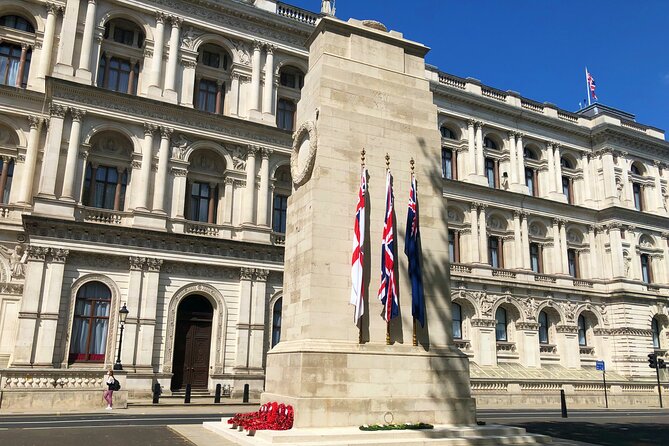
The route continues along Whitehall, home to the Ministry of Defence and a central address for British government. You stop at the Cenotaph and the Women in World War II monument for around ten minutes.
The Cenotaph is a place of national remembrance, while the Women in World War II monument recognizes the work and sacrifice of women during the conflict. Together, these stops help correct the narrow idea that wartime history belongs only to generals and political leaders.
I especially value this part of the route because it links official decisions with the people who carried out the work and paid the cost. The guide may also use the monuments to discuss individual lives. One account of the tour describes personal stories about wartime family experience and service, which is the sort of detail that can make a memorial feel less abstract.
The stop is outdoors, so weather matters. Wear comfortable shoes and bring protection from rain or sun. The route is not described as strenuous, and most travelers can participate, but you will be on your feet for the walking portion.
Horse Guards Parade and the royal setting
Horse Guards Parade receives about ten minutes. It is a popular photo location for the mounted cavalry of the Queen’s Horse Guards and is described as the official entrance to Buckingham Palace itself.
This stop changes the mood slightly. After Parliament, memorials, and wartime government, the parade ground brings in ceremony and royal tradition. Your guide can place the royal setting alongside the public institutions already seen, showing how many symbols of Britain sit close together in central London.
It is worth keeping expectations clear. You are visiting outside, not entering Buckingham Palace or taking a dedicated palace tour. The stop is short and visual, making it a good chance for photographs before the group reaches the War Rooms.
Entering Churchill’s underground War Rooms
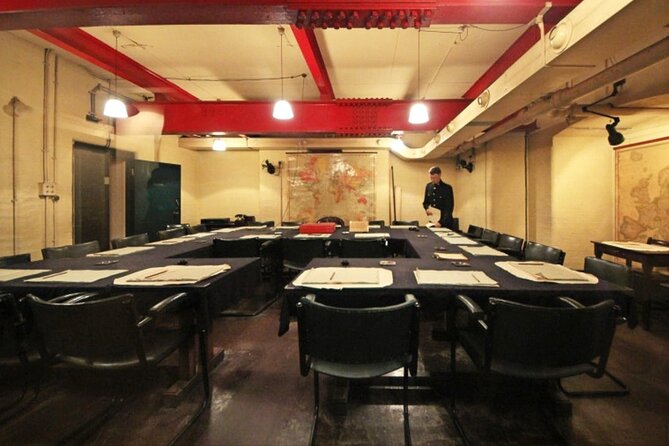
The final part is the reason many people will book this experience. Admission to Churchill’s War Rooms is included, and the museum visit lasts about one hour within the advertised three-hour tour. Your guide sees you into the complex, but the indoor portion is self-guided.
That arrangement has both strengths and limits. I like having a guide explain the setting before you go in, then being free to spend longer with the displays that interest you. You can use the audio guide to move through the underground offices at your own speed rather than staying with a group.
The War Rooms were a winding complex of underground offices used as the center of Britain’s wartime government. Here, the story becomes physical. You are no longer looking at a ministry from the pavement or hearing about decisions in a square. You are seeing the type of working environment where officials tried to direct the war and prepare for a possible invasion.
The included audio guide helps you fill in the details once the walking tour ends. Several people describe the War Rooms and Churchill museum as fascinating, with a wide range of learning materials. One useful way to approach the visit is to pay attention first to the rooms themselves, then use the museum displays to build a fuller picture of Churchill’s role and the wider British war effort.
Do not rush out when the one-hour portion ends if your schedule allows more time. The tour’s stated duration is approximately three hours, and the group visit may be structured around that timing. The supplied information does not promise a longer independent stay, so check the arrangements when booking if you want to remain inside well beyond the guided portion.
The guide makes the difference
The route is strong, but the guide determines how much you take from it. The most highly praised guides are repeatedly described as engaging, witty, passionate, and clear. Nathan is noted for adapting his conversation to the group’s interests and level of background knowledge. Babs is praised for bringing energy and a strong command of Churchill and the war.
Jeremy receives praise for explaining details with humor, while Paul is singled out for his love of London and his ability to make the subject feel personal. Francis adds stories about wartime monuments and even personal connections to Scotland Yard and family life during the war. Richard is described as warm, engaging, and particularly good with a group of nine.
You cannot assume a particular guide will lead your departure unless the booking process allows you to request one. Still, these names give you a useful sense of the style to expect: plenty of facts, some humor, clear directions, and an effort to connect military history with individual lives.
A small group helps. With 15 people or fewer, you have a better chance of hearing the guide near busy streets and asking a question without holding up a large crowd. The size also allows some flexibility. One private group had a slight itinerary change and found the guide able to adjust the discussion, though private tours are a different and more expensive option.
Is $104.02 a fair price?
At $104.02 per person, this is not a budget walking tour. The value rests mainly in the included entrance to Churchill’s War Rooms, the small group, and the live historical explanation across Westminster.
If you were already planning to buy a War Rooms ticket and wanted a short guided tour of central London, the package combines both needs. You also avoid having to build your own wartime route between Westminster Bridge, Parliament, Whitehall, and the museum.
The price is less compelling if you want only a casual Westminster walk or if you prefer to explore museums entirely alone. The outdoor stops are short, and the tour does not include Westminster Abbey admission, food, drinks, hotel pickup, or drop-off.
The reported rating is 4.9 from 721 reviews, with 98 percent recommending the experience. Those figures support the idea that guide quality and the combined format are the main strengths. I would still judge the price against your own schedule: history-focused visitors will likely get more from it than someone looking for a general sightseeing stroll.
Who should book it?
I would recommend this tour to first-time London visitors who want a clear introduction to Churchill, wartime Westminster, and the War Rooms without planning every detail themselves. It also suits families with older children and teenagers. One family found that the personal stories and strong guide helped teenage boys stay interested.
It works well for a short London visit because it brings several major landmarks into one focused morning or afternoon. The route also suits anyone who enjoys political history, memorials, and the human side of wartime decisions.
You may want a different plan if Westminster Abbey is a priority, if you dislike group walking tours, or if you want several uninterrupted hours inside the War Rooms. In those cases, book the museum separately or add extra time around this experience.
Practical details before you go
The tour is offered in English, and you receive a mobile ticket. Confirmation arrives at booking. Service animals are allowed, the route is near public transportation, and most people can take part.
The meeting point is at Boadicea and Her Daughters on Victoria Embankment, London SW1A 2JH. The tour ends at Churchill War Rooms on King Charles Street, London SW1A 2AQ. Since the route includes outdoor stops, wear shoes suited to walking and allow time to find the meeting point.
Free cancellation is available up to 24 hours before the local start time. Cancellations or changes made inside that window are not refunded or accepted. A minimum number of participants is required, and if the operator cancels for that reason, you are offered another date, another experience, or a full refund.
Should you book the London in WW2 Walking Tour?
Book it if you want context before the museum. The walk turns familiar landmarks into part of the wartime story, while the included War Rooms visit gives you a substantial indoor focus. The small group and consistently praised guides add real value.
Skip it if you mainly want Westminster Abbey inside, a private experience, or a long unhurried museum session. For most history-minded visitors, though, this is a practical way to connect Churchill’s decisions with the streets, institutions, and memorials around them.
FAQ
How long does the tour last?
The experience lasts approximately three hours. The outdoor walk includes several short stops, followed by about one hour in Churchill’s War Rooms.
Is admission to Churchill’s War Rooms included?
Yes. Entrance to Churchill’s War Rooms is included in the tour price, along with an audio guide for the indoor visit.
Is the War Rooms visit guided?
Your guide sees you into the War Rooms, but the museum portion is self-guided. You use the audio guide and explore at your own pace.
Is Westminster Abbey included?
No. Westminster Abbey is visited from outside, and entrance is not included.
How many people can join the tour?
The group has a maximum of 15 participants.
What language is the tour offered in?
The tour is offered in English and includes an English-speaking local expert guide.
Where does the tour start and finish?
It starts at Boadicea and Her Daughters on Victoria Embankment, London SW1A 2JH. It ends at Churchill War Rooms on King Charles Street, London SW1A 2AQ.
Are food and drinks included?
No. Food and drinks are not included.
Can I cancel for a refund?
Yes, you can cancel for a full refund up to 24 hours before the experience’s local start time. Cancellations made less than 24 hours before the start are not refunded.
Just added in London
- Emirates Stadium and Arsenal Museum Entrance Ticket Including Audio Guide★ 4.5 · 113 reviews
- Hampton Court Palace Private Tour – Secrets of Henry VIII★ 5.0 · 127 reviews
- Heathrow To Southampton Cruise Port Transfers★ 4.5 · 110 reviews
- Private London Departure Transfer – Hotel / Accommodation to Cruise Port★ 4.5 · 77 reviews
- Private landmarks photoshoot for families and couples★ 5.0 · 92 reviews
- Professional Photoshoot in London Photographer★ 5.0 · 102 reviews
- Private Tour: Night Photography Tour in London★ 5.0 · 48 reviews
- Professional Private Photoshoot in London★ 5.0 · 63 reviews
Churchill & WWII Tours, compared.
Westminster 3 Hour Walking Tour and Visit of Churchill War Rooms
Read our review →
WW2 London Walking Tour & Churchill War Rooms Entrance Ticket
Read our review →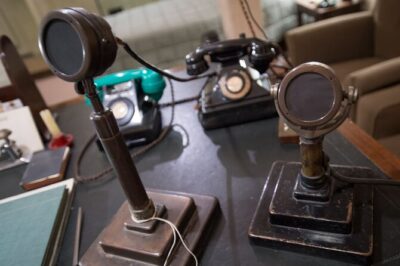
Churchill War Rooms “Behind The Glass” and Private Car Tour
Read our review →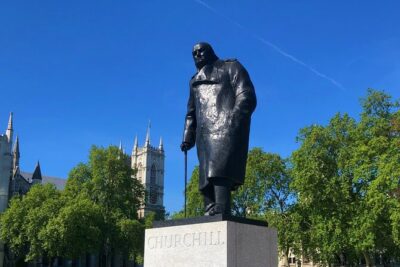
Winston Churchill & London in World War II Walking Tour
Read our review →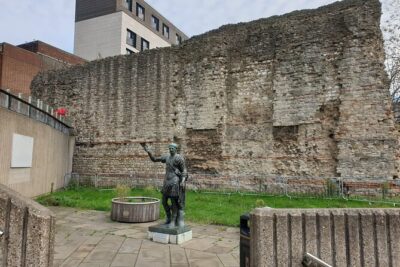
Roman Ruins to Blitz Bombings: A Walking Tour of London’s Fiery History
Read our review →Browse the lists this tour appears in