Reviewed · TOURS IN LONDON
Witchcraft, Ancient Cults & MI15 Spy Secrets
London keeps its oldest stories under modern streets. This three-hour private walk moves from Roman cult worship to medieval churches, public executions, witchcraft, ghosts, and modern spy lore. It is aimed at the parts of the city that many first-time sightseeing routes skip.
I like the personal format, since your guide can focus on the subjects that catch your attention instead of delivering a fixed speech to a large crowd. I also like the route’s mix of physical places and strange stories, from the underground Mithraeum to the devilish figures on Cornhill House and the execution ground at Smithfield.
The main caution is the price: $371.59 per person is a serious outlay for three hours, especially if only one or two people are booking. The tour also has a title promising MI15 spy secrets, while the listed stops focus most heavily on Roman religion, churches, witchcraft, and executions. I would confirm the spy section before paying.
Key points to know before booking
- Roman London comes first: Begin near the London Mithraeum, where a subterranean temple once served the secretive cult of Mithras.
- The route stays central: Walk from Bleeding Heart Yard through the City of London to Monument Station.
- Your guide is private: Only your group participates, allowing room for questions and a more tailored pace.
- The stories are unusual: Expect pagan worship, astrologers, ghosts, revenge figures, Bloody Mary, and execution sites.
- Some admissions cost extra: The Mithraeum and Cornhill House list admission as not included, while several other stops are free or included.
- Best for repeat London visitors: This works best after you have seen the major sights and want a stranger, less familiar side of the city.
A different route through London’s oldest layers
This is not a general London highlights tour. You will not spend the afternoon ticking off Buckingham Palace, Westminster Abbey, or the Tower of London. Instead, the walk uses a handful of compact sites to show how Roman religion, medieval Christianity, folklore, punishment, and modern commerce overlap in the same streets.
That approach gives the tour a clear purpose. London often hides its past in plain sight. A church may sit over a Roman religious site. A modern office building may preserve a temple below ground. A road junction can mark a place of execution that is now surrounded by offices and transport links.
The route begins at Bleeding Heart Yard at noon and finishes beside Monument Station. That is a useful arrangement if you want to continue sightseeing afterward, since Monument connects you with the wider Underground network and puts you near the Thames, the Bank area, and the City of London.
The walking format also matters. You will focus on details that are easy to miss from a bus or on a standard hop-on, hop-off route. The tradeoff is that the experience depends on your guide’s storytelling. The sites themselves are close together, and several scheduled visits last only about ten minutes.
Other trips people book in London:
- Stonehenge, Windsor Castle, and Bath from London
★ 4.5 · 18,662 reviews - London Big Bus Hop-On Hop-Off Tour with Optional River Cruise
★ 3.5 · 10,803 reviews - London Small Group Tour of Historical Pubs
★ 5.0 · 10,422 reviews
Starting beneath the Bloomberg building at the London Mithraeum
The London Mithraeum Bloomberg SPACE is the most distinctive stop. The site has been important for roughly two thousand years, and the remains of a Roman temple are preserved beneath the modern Bloomberg building.
The temple belonged to the cult of Mithras, which first appeared in Rome in the first century AD and spread across the Roman Empire over the next three centuries. Merchants, soldiers, and imperial administrators were among those drawn to it. Meetings took place in private, windowless spaces, often below ground, which helps explain the atmosphere associated with the cult.
At the center of Mithraic belief was the image of Mithras killing a bull inside a cave. This scene, called the tauroctony, remains open to interpretation. That uncertainty is one of the stop’s strengths. You are not simply looking at a clearly labeled monument with every question settled. You are seeing a place connected to a secretive religious group whose symbols still invite debate.
The tour allows about ten minutes here, and admission is not included. That is important. The stop may be the strongest reason to book, but you should budget for the additional ticket and check the visit arrangements when booking.
The Mithraeum also sets the tone for the rest of the walk. London’s past is not presented as a neat sequence of kings and battles. You are looking at competing beliefs, buried buildings, and traces left behind by groups that once occupied the city but did not leave much written evidence.
St. Mary Woolnoth and the long life of sacred ground
St. Mary Woolnoth is a short stop, but it adds an important idea: religious sites can survive even when the buildings around them change.
The ground has been used for worship for at least two thousand years. Traces of Roman and pagan religious buildings have been found below the foundations of the present church. That makes the church more than a medieval or later place of worship. It is another example of London building new religious spaces over older ones.
You will have about ten minutes here, and admission is free. The short visit means you should not expect a full church tour or a long architectural study. Instead, the value comes from the connection between the visible church and the older layers beneath it.
I like this stop because it helps connect the Mithraeum to the rest of the route. The Roman temple is a clear archaeological site. St. Mary Woolnoth shows how less obvious traces can survive under a working city church.
Cornhill House and the three mocking figures
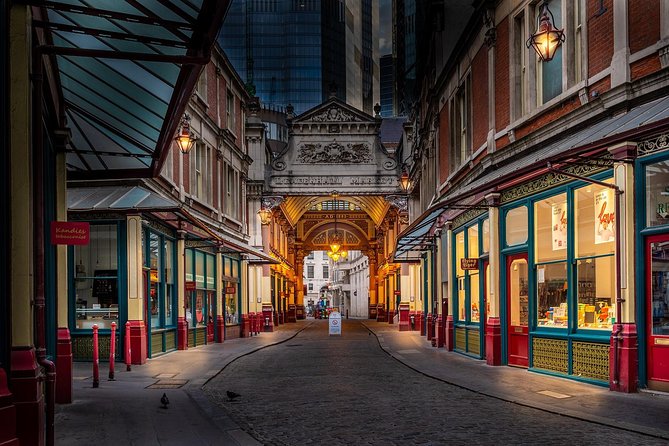
Cornhill House brings the route into stranger territory. Three devilish terracotta figures are placed on the building, and their story involves religious rivalry and revenge.
The figures mock worshippers at neighboring St. Peter upon Cornhill, an old City church now almost submerged at street level by surrounding office blocks. This is an excellent example of the tour’s style. The interest is not only in the building itself, but in the human motives behind a peculiar detail that most people would walk past without noticing.
The stop is scheduled for around ten minutes. Admission is listed as not included, so you should ask the guide or provider exactly what access means here. The wording suggests that the focus may be on seeing the exterior, but the supplied details do not confirm the arrangement.
This is also a good place to judge your own taste. If you prefer major monuments with clear historical importance, a few terracotta figures may feel slight. If you enjoy odd details, local grudges, and stories that survived through architecture, this could be one of the most memorable moments.
Same base, a different kind of day:
- Stonehenge, Windsor Castle and Bath with Pub Lunch in Lacock
★ 4.5 · 7,402 reviews - Tower of London and Crown Jewels Exhibition Ticket
★ 4.5 · 6,677 reviews - Thorpe Park Admission Ticket
★ 4.0 · 5,915 reviews - Stonehenge, Windsor Castle and Bath Full Day Guided Tour
★ 4.5 · 5,346 reviews
St. Bartholomew the Great and the Great Fire
The Church of St. Bartholomew the Great is one of the route’s strongest medieval stops. It is one of the few medieval churches to survive the Great Fire of London in 1666.
That survival gives the church a special role in the tour. Much of central London was rebuilt after the fire, so any surviving medieval structure offers a direct link to the city before the disaster. The church also gives the walk a change of pace after the Roman and pagan material.
Admission is free, and the planned visit lasts about ten minutes. Again, this is a concise stop rather than an extended architectural visit. Your guide’s explanation will likely do much of the work, pointing out why the building matters and how unusual its survival was.
You should keep your expectations realistic. The tour cannot give every church, archaeological site, and legend a full treatment in three hours. Its strength is the range of subjects and the connections between them. If you want a detailed church history, you may need to return on your own.
Smithfield Market, executions, and Bloody Mary
Smithfield Market brings the walk into London’s grim history of punishment. Here you will see places connected with executions and hear a story about Bloody Mary.
The stop changes the mood. Roman religion and church history can feel distant and symbolic, but execution sites bring the city’s past into sharper focus. Smithfield was not merely a market area. It was also associated with public death and the use of punishment as spectacle.
The tour includes admission here, and the planned visit lasts about ten minutes. The supplied details do not identify the exact execution locations or spell out which Bloody Mary story you will hear, so you should ask your guide for the specific account if that subject particularly interests you.
This is likely to appeal to anyone who enjoys London’s darker stories, but it may not suit every group. Families should decide in advance how comfortable everyone is with accounts of executions. The material is historical, but the subject is still harsh.
The stop also keeps the tour from becoming a simple parade of old buildings. You are shown how London used public spaces for worship, trade, ceremony, and punishment. That wider view gives the route more meaning than a collection of disconnected spooky tales.
Witchcraft, astrologers, ghosts, and the title’s spy promise
The title groups together witchcraft, ancient cults, and MI15 spy secrets. The listed stops clearly support the first two themes. The itinerary includes Roman religious practice, pagan sites, devilish figures, ghosts, astrologers, and executions.
The modern spy material is less clear from the route details. No separate MI15 building or spy location is identified among the five stops. If the spy stories are a major reason you are booking, contact Pigeon Tours before purchase and ask how much time is devoted to them and where that part fits into the walk.
That is not a minor point. The price makes the exact focus worth confirming. You may be happy with a tour centered on ancient cults and London’s darker past, but someone specifically seeking espionage history could find the advertised balance different from what they expected.
The private format helps here. You can tell the guide which subjects you want more of, although the three-hour schedule still limits how far the discussion can go. The guide can give your group undivided attention, and one available five-star comment specifically praised the guide’s kindness and command of the subject. No guide’s name is provided, so you cannot request a particular person in advance.
What the private format is really worth
A private tour has clear advantages. Your group is the only group participating, so you do not have to listen to unrelated questions or wait for a large crowd to gather. You can ask why the Mithras cult attracted certain people, how pagan sites relate to later churches, or what makes a particular execution story reliable.
The format is especially useful if your group has mixed interests. One person may care about Roman religion, another about ghosts, and another about the City of London’s buildings. A private guide can usually adjust the emphasis more easily than a large scheduled group, though the available details do not guarantee that every requested topic can be covered.
The drawback is value. At $371.59 per person, this is expensive for a three-hour walking experience. Group discounts are available, which may help if you are booking for several people, but the amount of the discount is not specified. The price is easier to justify when a group shares the cost or when personal attention is your top priority.
You should also remember that not every admission is covered. The professional guide is included. The Mithraeum and Cornhill House list admission as not included. St. Mary Woolnoth and St. Bartholomew the Great are free, while Smithfield Market lists admission as included.
Timing, meeting point, and walking conditions
The start time is 12:00 p.m. at Bleeding Heart Yard, London EC1N. The walk ends beside Monument Station on King William Street, London EC4R 9AA. That makes it easy to continue into the afternoon, but you should not plan a separate timed attraction too tightly after the tour because the duration is approximate.
The experience lasts about three hours and takes place on foot. Wear comfortable shoes and allow enough time to reach Bleeding Heart Yard. The route’s central location makes public transportation practical, and the activity is near public transportation.
Most people can participate, and service animals are allowed. No specific accessibility details are provided for every stop, so anyone with mobility concerns should ask about stairs, underground areas, church access, and walking surfaces before booking.
Confirmation is sent at the time of booking. Free cancellation is available up to 24 hours before the start time, with a full refund. Changes or cancellations inside that window are not accepted, and a minimum number of participants is required for the experience to operate.
Who should book this London walking tour?
I would choose this tour if you have already covered London’s headline attractions and want something more focused on hidden details, religious change, old punishments, and unsettling stories. It also suits repeat visitors who like to understand how a modern street can preserve several different periods at once.
The private format makes it a good match for couples, families, or small groups that prefer conversation over a standard group lecture. It is also useful for people who enjoy asking questions and want a guide’s attention rather than a fixed audio guide.
I would hesitate if you are watching your budget, want a full day of sightseeing, or mainly want spy history. Three hours passes quickly, and several stops are brief. You are paying for the private guide and the unusual subject matter, not a long list of major attractions.
Should you book Witchcraft, Ancient Cults & MI15 Spy Secrets?
Book it if the idea of seeing London through Roman cults, old churches, public executions, and strange architectural details appeals to you. The route offers a clear change from standard sightseeing, and the private format gives you the best chance to ask questions and shape the conversation.
Before paying $371.59 per person, confirm two things: the exact cost and access arrangements for the Mithraeum and Cornhill House, and how much MI15 spy history is included. If those details match your interests, this can be a sharp, unusual introduction to London’s less familiar past. If not, the price is too high for a general walking tour.
FAQ
How long is the tour?
The tour lasts approximately three hours.
Where does the tour start?
It starts at Bleeding Heart Yard in London EC1N, United Kingdom, at 12:00 p.m.
Where does the tour end?
It ends beside Monument Station on King William Street, London EC4R 9AA.
Is this a private tour?
Yes. Only your group participates, and a professional guide is included.
What is included in the price?
A professional guide is included. Admission to the London Mithraeum Bloomberg SPACE and Cornhill House is not included. St. Mary Woolnoth and St. Bartholomew the Great list free admission, and Smithfield Market lists admission as included.
Can I cancel for a full refund?
Yes. You can cancel at least 24 hours before the local start time for a full refund. Cancellations or changes made less than 24 hours before the start time are not accepted.
Just added in London
- West End and South Bank Theatre Walking Tour in London★ 5.0 · 35 reviews
- Harry Potter Studio Tickets and London Film Locations Guided Tour★ 4.5 · 28 reviews
- Private Tour of Haunted London in a Black Cab★ 5.0 · 21 reviews
- London Mystical and Dragons Walking Tour★ 5.0 · 41 reviews
- The Kings Gallery – Queen Elizabeth II: Her Life in Style★ 4.0 · 63 reviews
- The Harry Potter Walking Tour with Potter-Vision★ 5.0 · 3 reviews
- The Best of Wales: Small-Group Tour from London (5-days)★ 5.0 · 14 reviews
- The Great British Museum Experience★ 5.0 · 5 reviews
Tours in London, compared.
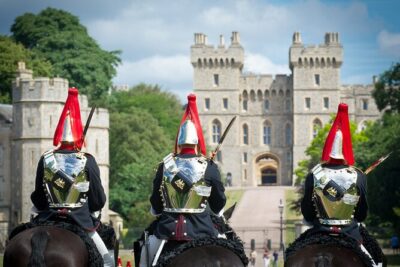
Stonehenge, Windsor Castle, and Bath from London
Read our review →
London Big Bus Hop-On Hop-Off Tour with Optional River Cruise
Read our review →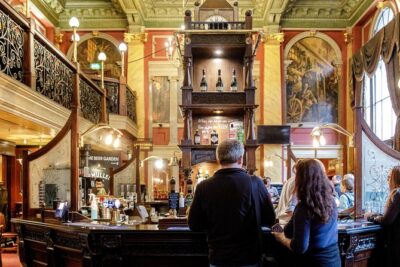
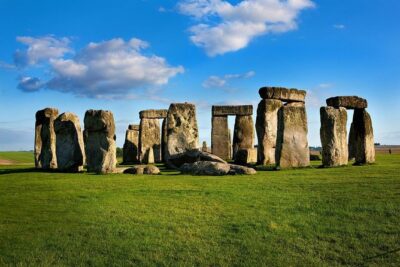
Stonehenge, Windsor Castle and Bath with Pub Lunch in Lacock
Read our review →
Tower of London and Crown Jewels Exhibition Ticket
Read our review →
Stonehenge, Windsor Castle and Bath Full Day Guided Tour
Read our review →
Windsor Castle, Stonehenge, and Oxford Day Trip from London
Read our review →