
Reviewed · WALKING TOURS
London Mystical and Dragons Walking Tour
London’s old City is full of symbols hiding in plain sight. This walk links the London Stone, lost rivers, Roman religion, dragons, phoenixes, and church carvings into one unusual story about power, protection, and belief. Guide Arjun leads the route with plenty of historical detail and a strong interest in mythology.
I like two things here: the small group limit of eight, which makes it easier to ask questions, and the route itself, which takes you into courtyards, churches, and corners you could easily miss. The walk also offers a different lens on familiar places such as St. Paul’s and the Bank of England.
The main caution is that this is a symbolic and interpretive tour, not a standard sightseeing walk. Some sites may be closed, especially on Sundays or bank holidays, and you will cover a fair amount of ground on foot.
Key points before you book
- Follow London’s dragon lines: The route connects dragons, sacred rivers, churches, and old City symbols.
- See more than the usual landmarks: Expect the London Stone, Walbrook, Mithraeum, St. Bride’s Well, Temple Church, and other lesser-known stops.
- Small groups matter: A maximum of eight people allows Arjun to adjust explanations and answer questions.
- Plan for a thoughtful afternoon: The walk mixes documented history with mythology, symbolism, and spiritual ideas.
- Wear good walking shoes: The pace is steady, with many stops, but the route covers a substantial part of central London.
- Allow for closures: You may see photographs or discuss a site from outside if a church or attraction is not open.
London’s mystical side begins at the London Stone
The tour starts at 113 Cannon Street at 1:30 p.m., close to the London Stone. This unassuming block has long carried a larger-than-life reputation. It is described as a sacred stone whose presence protects London, and it gives the walk an immediate sense of place: this is not a tour built only around grand facades.
You will spend about 10 minutes here. That may sound brief, but the point is not to admire a major monument. It is to consider how an ordinary-looking object can gather stories over time. If you enjoy folklore, this is a good opening stop because it sets up the tour’s main question: how do old beliefs survive inside a modern city?
From here, Arjun guides you toward the traces of the Walbrook, one of London’s lost streams. The waterway once helped shape the Roman settlement and the later City. At Bloomberg Arcade, you look at the modern streets above a buried past.
The stop lasts about five minutes and admission is free. Do not expect a visible river. The interest comes from understanding how water, settlement, trade, and sacred places once fit together. That theme returns throughout the walk.
More walking tours in London:
- Tour for Muggles The Ultimate Harry Potter Walking Tour in London
★ 5.0 · 4,684 reviews - London Jack The Ripper Guided Walking Tour
★ 5.0 · 3,131 reviews - Changing of the Guard Guided Walking Tour in London
★ 5.0 · 1,793 reviews
Roman mystery at the Mithras temple
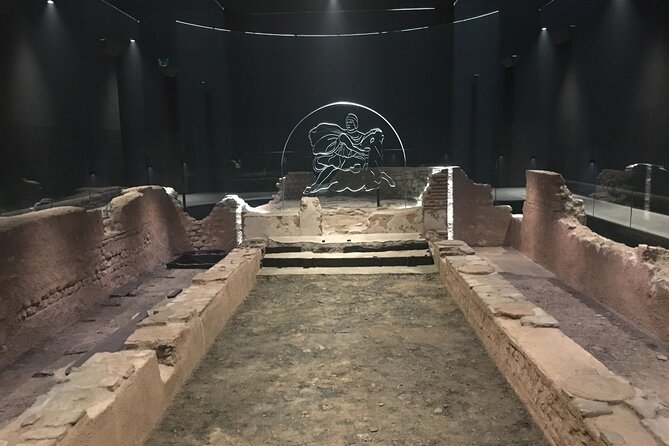
One of the most striking parts of the afternoon is the Roman Temple of Mithras. Mithras was a sun god worshipped by Roman soldiers and others across the empire. The temple is a reminder that London was not simply a medieval or Victorian city waiting to be built. Roman religious life ran below the later streets.
The stop is presented as a place where ancient and esoteric ideas meet. The Mithras connection gives the tour a solid historical anchor, even as the discussion moves into occult knowledge and symbolism. I find this balance useful. You are not only hearing a dragon tale. You are also being shown how different religious traditions left marks on London.
Access can vary, so check the details close to your date. One part of the experience may involve seeing the site, while another visit may rely on images and explanation if it is closed. The tour’s value does not depend entirely on going inside, but the Roman temple is one place where access can make a real difference.
The Bank of England and the City’s dragon power
The route continues to the Bank of England, described here as a seat of power linked to the City of Dragons and the forgotten river below. The stop lasts about five minutes and costs nothing to visit.
This is a useful contrast with the Roman temple. You move from a place of ancient worship to one of the modern City’s strongest symbols of money and authority. Arjun’s approach connects these locations through ideas of power, protection, and the forces that shape a city.
You should come ready to consider symbolic links rather than expect a conventional financial district talk. The Bank of England is not treated as an isolated building. It becomes part of a larger story about the City of London and the old waterways beneath it.
Bow Bells and the symbols of St. Mary le Bow
At St. Mary le Bow Church, the focus shifts to the symbolism associated with Bow Bells. You spend around 10 minutes here, looking at a church whose identity is familiar to many people who know London, but whose details can be easy to pass without thought.
This is where careful looking pays off. The tour asks you to notice sidelined symbols and to consider what they might have meant to earlier generations. Arjun is especially good at making the group pause over features that a standard route might skip.
The stop also shows why this experience suits people who like churches for more than architecture. You are not simply ticking off another historic building. You are being encouraged to examine signs, shapes, stories, and layers of belief.
Same base, a different kind of day:
- Stonehenge, Windsor Castle, and Bath from London
★ 4.5 · 18,662 reviews - London Big Bus Hop-On Hop-Off Tour with Optional River Cruise
★ 3.5 · 10,803 reviews - London Small Group Tour of Historical Pubs
★ 5.0 · 10,422 reviews - Stonehenge, Windsor Castle and Bath with Pub Lunch in Lacock
★ 4.5 · 7,402 reviews
Cheapside’s tree and the memory of lost nature
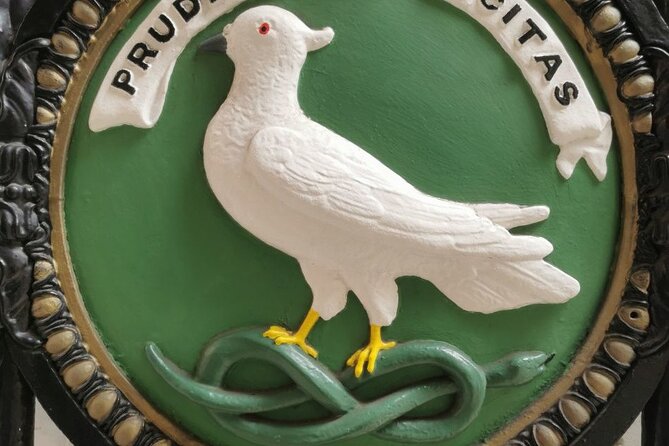
Cheapside brings another unexpected idea: the oldest tree in the City of London and the many trees that have disappeared. The stop is short, about five minutes, but it widens the tour beyond stone and church walls.
The route repeatedly returns to natural forces, especially water, trees, and the ground beneath the streets. That gives the afternoon a clear thread. London’s old spiritual life is presented not only through buildings and figures, but also through the natural features that once shaped the city.
If you prefer a traditional tour with dates and major events, this part may feel more speculative. If you like environmental clues and the way cities bury their earlier forms, it should be rewarding.
St. Paul’s as a symbol of the Phoenix
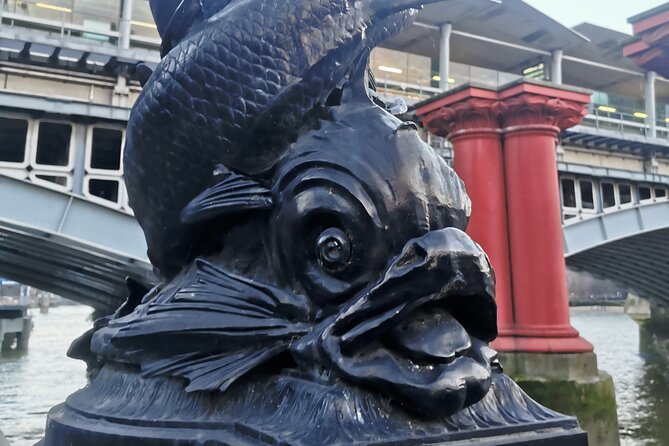
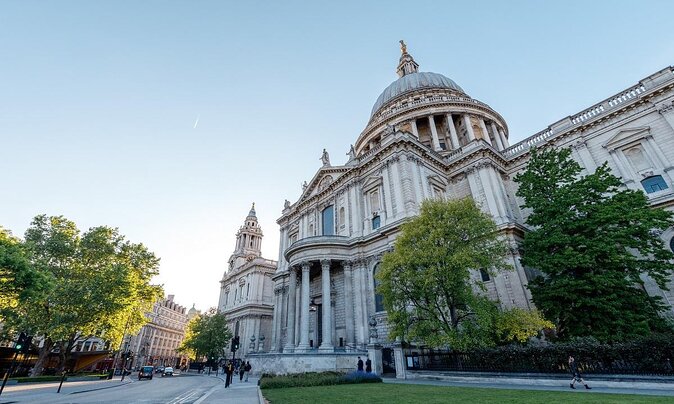
St. Paul’s Cathedral is one of London’s best-known sights, but the tour approaches it from a less familiar angle. St. Paul’s has long been a place of ceremony, and here it is connected with the symbol of the Phoenix.
The stop lasts about 10 minutes and does not include an admission charge as part of the walk. The attraction is the interpretation rather than a full cathedral visit. You will consider how a building associated with destruction, rebuilding, ceremony, and renewal can fit the Phoenix image.
This is one reason I would not book the walk simply as a way to see famous buildings. You will not get the standard interior tour of St. Paul’s. Instead, you get a focused conversation about meaning and symbolism in the setting of a landmark you may already know.
Ancient enigmas at St. Martin-within-Ludgate
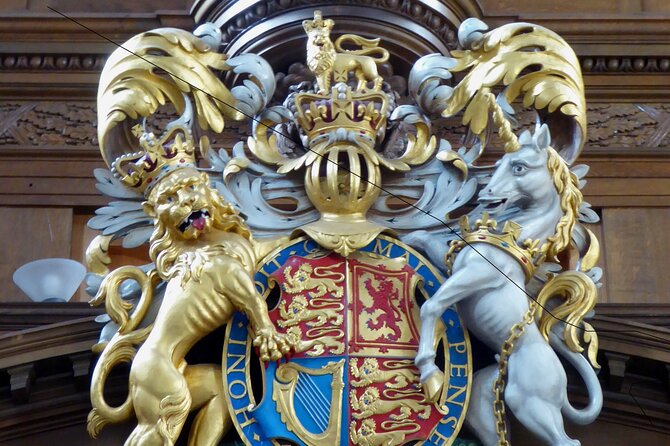
At the Church of St. Martin-within-Ludgate, the pace slows. About 20 minutes are set aside for a church with a long history and older enigmas beneath or around its visible story.
Longer stops such as this one are important. They give Arjun time to explain connections rather than rush from one photo point to the next. You can ask questions, look more closely, and let the ideas settle.
The exact experience depends on opening hours. Church access is not guaranteed, and the tour has sometimes used photographs or alternative explanations when sites are closed. That is worth keeping in mind if entering every building is essential to you.
Ludgate Circus and London’s lost rivers
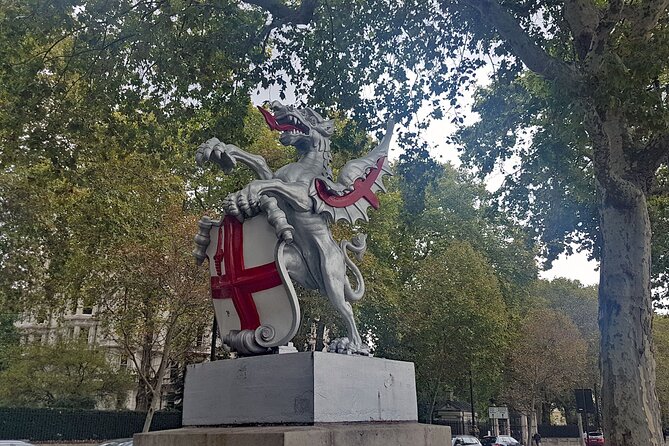
Ludgate Circus marks another lost river and recalls the king said to have given London its name. The stop takes about five minutes, but it connects the city’s geography with its oldest legends.
This is a good example of the tour’s method. A modern road junction becomes a prompt to think about buried waterways and the names attached to London’s beginnings. You may walk through the area every day and never know what lies below or what stories cling to the name.
The route is strongest when it asks you to see ordinary streets differently. It does not require every idea to be accepted as fact. Instead, you are given historical material, old stories, and symbolic patterns, then invited to think about how they fit together.
St. Bride’s Well and a church with pagan echoes
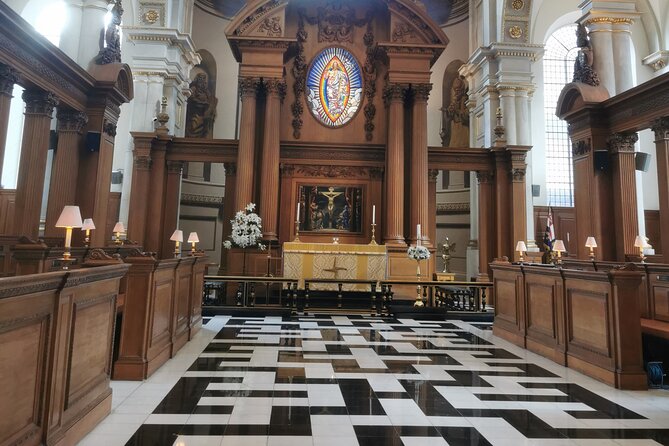
St. Bride’s Church receives about 20 minutes, one of the longer stops on the route. The church has a strong pagan connection in the tour’s telling and contains a Well, bringing together Christian worship, older traditions, and underground water.
This is the sort of location that makes the walk feel unlike a standard City tour. You are looking at a functioning place of worship while also considering beliefs that predate its current form. The conversation may appeal to you if you enjoy folklore, sacred wells, and the way older customs continue inside later traditions.
It is also a stop where the interpretive nature of the experience is clearest. Arjun presents symbolism without forcing a single conclusion, giving you room to decide how much weight you want to place on myth, ritual, and historical evidence.
Medieval symbolism at St. Dunstan in the West
St. Dunstan in the West is a shorter five-minute stop, but it adds another medieval church to the chain. The focus is on ancient symbolism and the details that can be overlooked from the pavement.
Several churches appear on the route, so this tour is not ideal if you want a broad mix of museums, markets, and viewpoints. It is ideal if carved figures, church traditions, unusual objects, and old layers of London hold your attention.
The repeated church stops also make the PDF promised after the tour useful. You can note which buildings you want to revisit, especially if one was closed during your afternoon.
Temple Church and the Knights Templar
Temple Church is given about 20 minutes. Built by the Knights Templar and modeled on the Church of the Holy Sepulchre, it brings the walk’s themes of pilgrimage, secret knowledge, sacred geometry, and medieval power into sharper focus.
This is one of the stops most likely to interest anyone fascinated by the Templars. It is also one where access matters. Temple Church may be closed to visitors, and a closure can be disappointing if you expected to see the interior. The guide can use images and discuss the site, but that is not quite the same as walking inside.
Even so, the church is a strong endpoint for the route’s historical thread. The walk has moved from Roman religion to medieval Christianity and chivalric orders, always asking you to notice the symbols carried forward between periods.
The dragon at Temple Bar Memorial
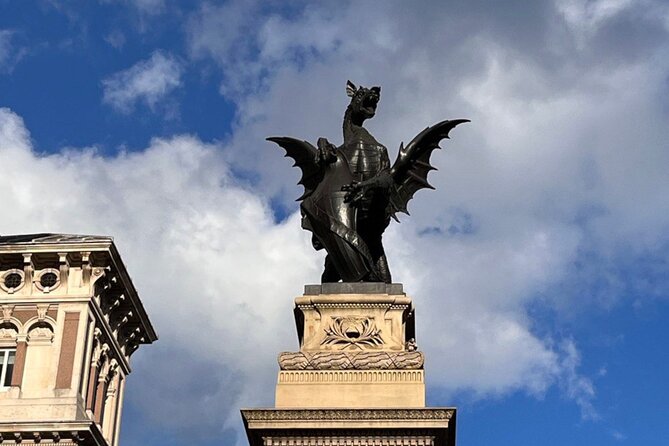
The final stop is the Temple Bar Memorial, beside the Royal Courts of Justice, where the tour ends. This is the fiercest of the City’s protector dragons, and its mythology is linked with Beowulf, Tiamat, and St. George.
The dragon gives the afternoon a clear final image. It also brings together the tour’s main subjects: old stories, city boundaries, protection, and symbols placed in public view. After several hours of looking down at streets, church details, and traces of buried rivers, you finish with a figure that makes the theme plain.
The end point is practical, too. You finish near public transport and the Royal Courts of Justice rather than returning to Cannon Street. Plan your afternoon around that one-way route.
What the $29.48 price gets you
At $29.48 per person, this is a strong value if you want a specialist walk rather than a general introduction to London. You get roughly 2 to 3 hours with a guide, a small group capped at eight, and a route covering many stops. Every listed stop has free admission, so your payment goes toward the guide’s time, research, storytelling, and the design of the route.
The value is highest for people who would not find these connections alone. The walk gives you a framework for noticing London’s symbols, old rivers, churches, and Roman remains. The PDF of locations is another useful touch because it lets you return to places at your own pace.
The price does not include entry to every interior, and the experience can change when churches or attractions are closed. If you want guaranteed access to major sights, spend your money on a conventional cathedral or museum tour instead.
Who will enjoy this walk most
I would choose this tour for fans of folklore, mythology, ancient religions, church architecture, and symbolic storytelling. It also suits repeat visitors who have already seen the major landmarks and want a more unusual way to read the City of London.
Families can enjoy it, especially if children are curious and willing to ask questions. The guide has handled younger participants well, including children around 10 and 11, and the small group format makes it easier to keep them involved.
You should be comfortable with a mix of firm history and interpretation. Some connections are presented as mythic or esoteric rather than as settled academic fact. That is not a flaw, but it is important to know what kind of afternoon you are booking.
Wear walking shoes. The pace is described as comfortable, with frequent stops, but you still cross a broad stretch of central London. The start time is 1:30 p.m., and the walk takes about 2 to 3 hours.
Should you book the London Mystical and Dragons Walking Tour?
Book it if you want London to feel strange, layered, and full of old signs. Arjun’s small-group walk is particularly good at pointing out places you might pass without noticing, from the London Stone and Walbrook to St. Bride’s Well and the Temple Bar dragon.
Skip it if you want a straightforward chronology, guaranteed entry into every church, or a tour focused only on major monuments. Also check the date carefully if you are visiting on a bank holiday, when closures can mean more outdoor explanations and images.
For the price, the route offers plenty of material and a genuinely different way to see the City. Free cancellation is available up to 24 hours before the start time, while poor weather or an insufficient group size can lead to a new date or a full refund. That makes this an easy pick for an open afternoon, especially if mythology matters as much to you as conventional sightseeing.
FAQ
Where does the London Mystical and Dragons Walking Tour start?
The tour starts at 113 Cannon Street, London EC4N 5AW, at 1:30 p.m.
Where does the tour finish?
The walk ends at the Temple Bar Memorial in the City of London, beside the Royal Courts of Justice.
How long does the tour last?
The experience lasts approximately 2 to 3 hours.
How large is the group?
The tour has a maximum of eight travelers.
Is the tour offered in English?
Yes. The tour is offered in English and includes a mobile ticket.
What happens if the weather is poor or a site is closed?
The experience requires good weather. If poor weather causes cancellation, you will be offered another date or a full refund. Individual churches or attractions may also be closed, in which case the guide may use photographs or spend more time at other sites.
Just added in London
- West End and South Bank Theatre Walking Tour in London★ 5.0 · 35 reviews
- Harry Potter Studio Tickets and London Film Locations Guided Tour★ 4.5 · 28 reviews
- The Kings Gallery – Queen Elizabeth II: Her Life in Style★ 4.0 · 63 reviews
- Private Tour of Haunted London in a Black Cab★ 5.0 · 21 reviews
- The Harry Potter Walking Tour with Potter-Vision★ 5.0 · 3 reviews
- The Best of Wales: Small-Group Tour from London (5-days)★ 5.0 · 14 reviews
- The Great British Museum Experience★ 5.0 · 5 reviews
- The Haunted Pubs of Old London: Small Group Tour★ 5.0 · 38 reviews
Walking Tours, compared.
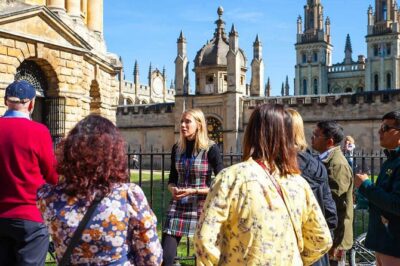
Oxford University Walking Tour With University Alumni Guide
Read our review →
Tour for Muggles The Ultimate Harry Potter Walking Tour in London
Read our review →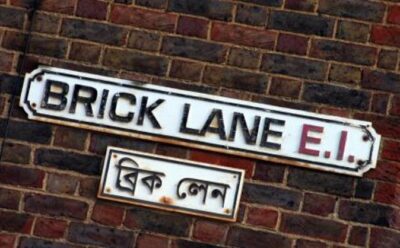
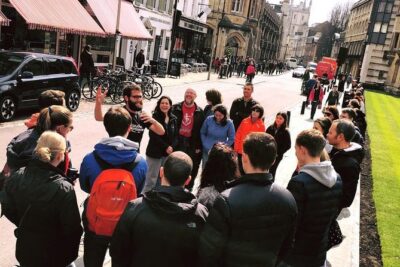
Cambridge University Walking Tour by Alumni™ Kings College Option
Read our review →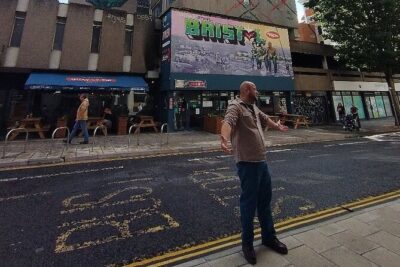
Blackbeard to Banksy – The Ultimate Walking Tour of Bristol
Read our review →
Air Raid Shelter + St. Nicholas Market Walking Tour
Read our review →
Walking Tour of Bath with Blue Badge Tourist Guide
Read our review →
Changing of the Guard Guided Walking Tour in London
Read our review →Browse the lists this tour appears in