

Reviewed · MUSEUMS
The British Museum: a highlights tour with a TV historian
The best thing about this British Museum tour is the guide’s insider view. Loona formerly worked at the museum and has even supervised sleepovers with the mummies, so the visit goes beyond reading labels. I like the way the tour connects the Rosetta Stone, cuneiform, and ancient libraries to the practical problem of how people first recorded and decoded ideas. I also like the family-friendly approach, with Harry Potter, films, and modern life used to make ancient objects click.
The main drawback is that you must arrange your own free museum ticket, and timed entry can fill several days ahead. You also need to allow about 30 minutes to get inside, so arriving at the 11 a.m. meeting time without a ticket or enough time could put the whole visit under pressure.
Key points to know before booking
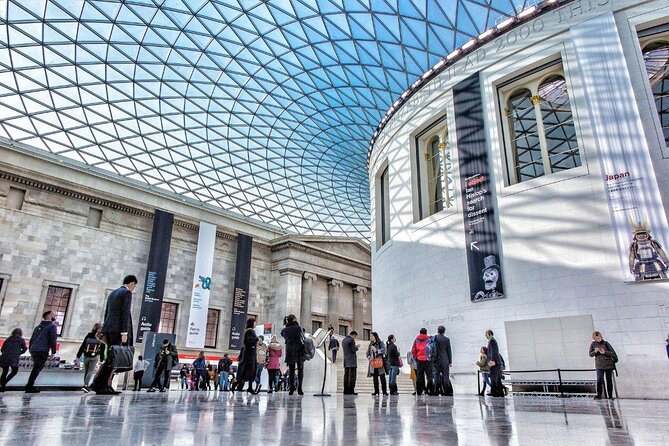
- Former British Museum staff guide: Loona brings firsthand knowledge of the building, collections, and behind-the-scenes museum life.
- A fast trip through world history: The route covers Egypt, Mesopotamia, Anglo-Saxon England, the Americas, China, India, Africa, and Greece.
- Private format: Only your group takes part, making it easier to ask questions and adjust the pace.
- Major objects plus unusual surprises: Expect the Rosetta Stone, Parthenon Sculptures, Sutton Hoo, Lewis Chess pieces, fake crystal skulls, and more.
- Good for families: Harry Potter references, Hollywood connections, and modern examples help younger visitors stay involved.
- Free museum entry, paid guiding: The tour fee covers guiding only. Book your museum admission separately through the British Museum website.
Why this three-hour British Museum tour works
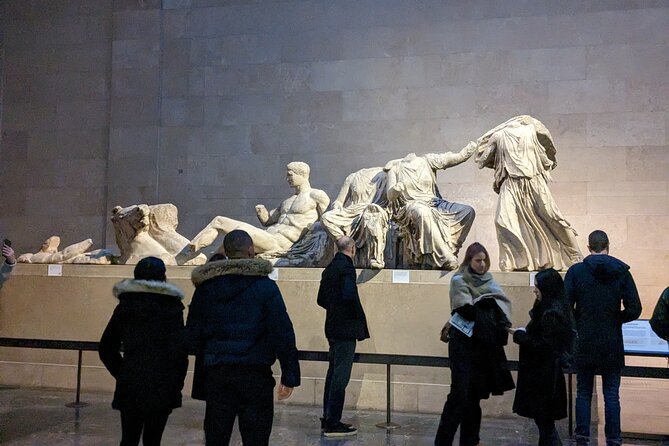
The British Museum can be a difficult place to handle on your own. Its collection spans thousands of years and several continents, while the most important objects are spread through different galleries. You can easily spend an hour admiring one room, then leave without seeing the pieces that best explain how human societies changed.
This private tour gives you a route through the museum’s major ideas, not just a march from one famous object to another. Loona explains how writing was developed, how ancient rulers presented themselves, how archaeologists reconstructed lost cultures, and how modern museums acquired objects from around the world.
I like that the tour does not treat every exhibit as equally important. Three hours is long enough for a strong first visit, but short enough to keep the day manageable. The pace includes time for breaks, and the private format means you can ask about something that catches your eye instead of being pushed along with a large crowd.
The experience is listed as a tour with a TV historian, and Loona is described as a former British Museum staff guide. That combination matters. You get the polish and storytelling expected from a media historian, along with practical familiarity with the museum itself.
More city tours in London:
- Westminster to Greenwich Sightseeing Thames Cruise in London
★ 4.5 · 2,969 reviews - London Sightseeing Tour: Guard Change with Tower of London Option
★ 4.5 · 2,672 reviews - Hop-On Hop-Off Sightseeing River Cruise on the Thames
★ 4.0 · 1,256 reviews
Meeting the museum at the Reading Room
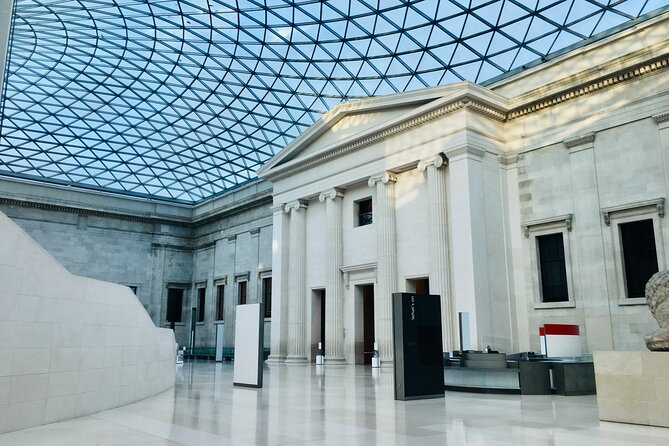
The tour starts at 11 a.m. by the British Museum Reading Room on Great Russell Street. The end point is inside the British Museum, at the Mummies gallery. Because the museum requires its own free timed ticket, plan this part carefully.
You should book entry directly through the British Museum website before booking the day around the tour. The museum ticket is free, but free does not mean unlimited. Timed spaces can sell out, especially on popular dates.
Allow roughly 30 minutes to get through the entrance process. That advice is especially important here because the tour has a fixed start time. You do not want to begin your first museum visit by rushing through security and trying to find the guide.
The museum is near public transportation, and the tour is available in English. Confirmation is provided when you book the guiding service. Service animals are allowed, and most people can take part.
Egypt, writing, and the Rosetta Stone
The Rosetta Stone is the natural opening highlight for many people. It is famous because the same decree appears in three scripts, including hieroglyphs. Loona explains how comparing the versions helped scholars work out a writing system that had been unreadable for centuries.
That story is more useful than a quick photo stop. It shows how translation works and why the stone mattered so much. You begin to see the object not only as a large inscribed slab, but as a key to an entire body of Egyptian writing.
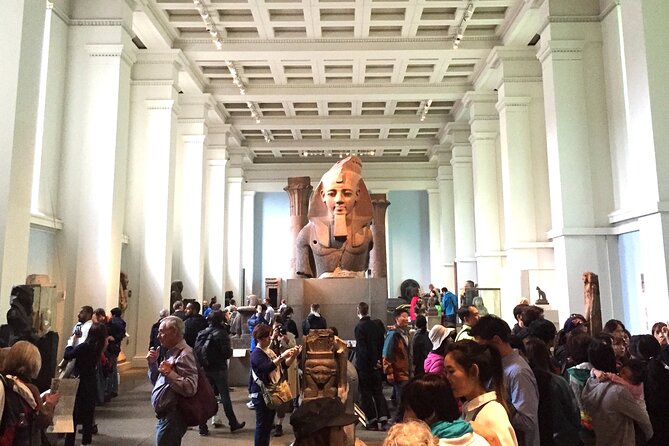
The Egyptian section also includes the bust of Rameses II. Here, the focus shifts from writing to royal image-making. A ruler’s portrait was not simply a record of appearance. It projected strength, order, and authority, and the guide can place that object within the wider story of ancient power.
The route includes mummies and the Mummies gallery, although the information provided does not specify every mummy display visited. The unusual detail about Loona supervising museum sleepovers with the mummies gives you a sense of the kind of personal museum story he can add. It is a small detail, but it helps turn a formal collection into a real workplace with odd hours and memorable duties.
From the oldest library to the first epic
The tour then reaches Mesopotamia and the early history of writing. You will see cuneiform and hear how it was translated. Cuneiform began as marks pressed into clay, yet it could record business, laws, royal claims, prayers, and stories.
The idea of the world’s oldest library adds another layer. Ancient libraries were not just quiet rooms filled with books in the modern sense. They preserved clay tablets and helped rulers gather information, literature, and records in one place.
The world’s oldest epic story is another major stop. The object connects writing to storytelling, not only administration. The point is easy to miss when you visit alone: some of the first written records were also attempts to wrestle with fear, power, friendship, and mortality.
I especially like this part of the route because it links several objects that are often displayed in separate sections. You see the marks, learn how the language was read, and then encounter one of the earliest great stories. That gives the galleries a clear thread.
More museums in London:
- Chelsea FC Stadium Tours and Museum
★ 5.0 · 1,908 reviews - Official tickets: Moco Modern & Contemporary Art Museum
★ 4.5 · 1,157 reviews - British Museum London Guided Tour Semi-Private 8ppl Max
★ 5.0 · 984 reviews - The British Museum London – Exclusive Guided Museum Tour
★ 5.0 · 555 reviews
Sutton Hoo and the treasures of Anglo-Saxon England
The Anglo-Saxon Sutton Hoo treasures offer a change of mood. This famous burial discovery shows the skill, status, and long-distance connections of early medieval England.
The objects are not simply old metalwork. They reveal how a powerful person was buried and how art, weapons, jewellery, and ceremony could work together. A guide can help you notice the details that a quick walk past the case might miss.
One of the strongest points of this tour is its range. After Egypt and Mesopotamia, you are not stuck in one ancient world. Sutton Hoo brings the story closer to Britain, while also showing that early English society had its own complex links to wider cultures.
If you have limited time at the museum, this is a section worth seeing with guidance. It can be easy to give it less attention than the Rosetta Stone or Greek sculpture. The tour helps correct that imbalance.
Fake crystal skulls, mermaids, and museum detective work
Not every object on the route is presented as a masterpiece. The tour includes fakes, including crystal skulls and mermaids. This is one of the more interesting choices because it introduces the problem of authenticity.
Museums do not only preserve beautiful or famous objects. They also have to ask who made something, when it was made, why it was made, and how it reached the collection. Some objects were misunderstood, misrepresented, or accepted before modern research exposed problems.
For families, this can be a welcome change from one serious display after another. Children often enjoy the idea that even museums can contain objects that are not what they claim to be. Adults get a useful lesson in evidence and the limits of expert judgment.
The exact details of these displays can change, so think of them as part of the tour’s broader look at museum detective work rather than a guaranteed set of individual cases.
The Americas, Africa, and the question of ownership
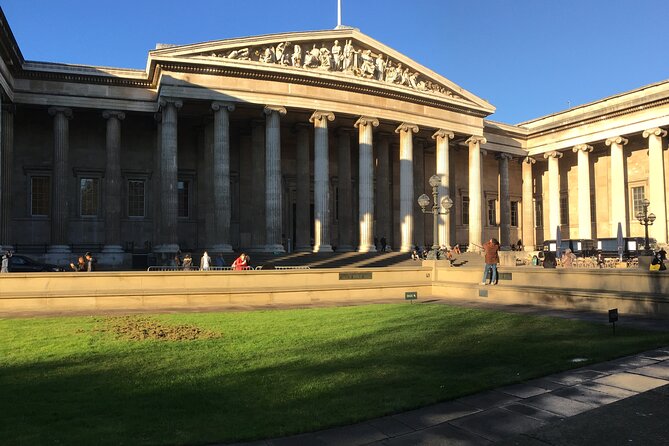
The route includes Aztec jewellery associated with Montezuma and Mayan carvings. These objects open the door to ancient American civilizations and their artistic, political, and religious worlds.
The guide uses the objects to connect distant cultures to familiar ideas. For children, Harry Potter references, Hollywood, and modern life can make a Mayan carving or Aztec jewel easier to approach. The goal is not to turn the museum into a theme park. It is to give you a bridge into unfamiliar material.
The Benin Bronzes bring a more difficult subject into view: how museums acquired objects and what ownership means today. The tour specifically promises attention to acquisition, which is important at the British Museum. You are not only looking at craftsmanship. You are also considering the history of collecting, imperial power, and disputed cultural property.
That conversation can make the visit more thoughtful. The British Museum’s greatest objects do not all have simple journeys from their original homes to London. A guide who addresses acquisition helps you understand the collection without pretending every object arrived under equal or peaceful circumstances.
The Parthenon Sculptures and ancient Greece
The Parthenon Sculptures are among the museum’s most famous displays. Their scale and quality make them an essential stop, but their ownership and removal from Greece also make them one of the museum’s most contested collections.
The value of seeing them with a guide is that you can look at both the art and the argument around it. You will hear about what the sculptures represent, how they were made, and how they came to be in the museum. The tour does not reduce the visit to admiration alone.
This is a good example of why a private guide can be more useful than an audio recording. If you have a question about the sculptures, their context, or their acquisition, you can ask it at once. The conversation can follow your interests rather than a fixed script.
Chess, Celtic jewellery, and a changing route
The Lewis Chess pieces offer another memorable stop. Their carved faces and compact size make them easy to enjoy, but they also tell a larger story about medieval games, trade, status, and craftsmanship.
Celtic jewellery adds another view of design and identity. These pieces show how ornaments could carry meaning beyond decoration. They also give the tour a chance to move between everyday objects and grand public monuments.
You may not remember every object after three hours, and that is fine. The point is to leave with a mental map of the museum and a handful of strong anchors. The Rosetta Stone explains translation. Sutton Hoo explains burial and status. The chess pieces explain how a small object can carry a large cultural story.
The full route includes many more stops, so the exact order can vary. You should expect a quick but purposeful trip rather than a slow inspection of every case.
Asia, India, and the final highlights
The tour also reaches a Chinese Buddha, a Shiva statue from India, and an Easter Island statue. These stops widen the story again, bringing Asian religious art and Pacific cultural heritage into the same three-hour visit.
A Buddha and a Shiva statue are not just examples of sculpture. Their forms relate to belief, ritual, and the way religious ideas are expressed through the human body. A guide can point out what to look for and help you avoid treating them as generic decorative figures.
The Easter Island statue provides another useful reminder that the museum contains objects from cultures often reduced to a single famous image. Seeing the statue in London raises questions about distance, display, and removal from its original setting.
You should not expect a detailed specialist lecture on each civilization in one session. That would take days. Instead, the tour gives you a clear introduction to a wide span of cultures and shows you which galleries deserve a longer return visit.
Is the private format worth paying for?
Museum admission is free, but this is not a free experience. The fee covers guiding services only, and it does not include souvenirs, fees, taxes, or your timed museum ticket.
The value depends on how you use your time. If you are visiting London for a short stay, the private format can save you from wandering through a huge collection without a plan. You get a route, explanations, and the chance to ask questions that a standard visit may not provide.
It is also useful for families or mixed-interest groups. One person can care about Egyptian writing, another about fakes, another about medieval Europe, and a child may need a Harry Potter reference to stay engaged. A private guide can shift the emphasis as the group moves.
The cost is harder to justify if you already know the museum well or want to spend an entire day studying one department. In that case, a self-guided visit may suit you better. For a first visit with only three hours available, the guiding fee buys structure and context rather than admission.
Who should book this British Museum tour?
I would choose this tour if you want the museum’s greatest hits but also want to understand how the objects were translated, interpreted, and acquired. It suits first-time visitors, families, history fans, and anyone who finds giant museums tiring.
The tour is especially useful if you tend to walk past labels without knowing what matters. Loona’s former staff experience and personal stories add a human layer, while the private format keeps the experience flexible.
I would hesitate if your main goal is a quiet, unhurried look at a single gallery. Three hours covers a lot of ground, and the route is designed for breadth. You should also be ready to manage your own entry ticket and arrive early enough for the museum’s admission process.
Final call
Book this private British Museum tour if you want a sharp introduction to the collection, a guide who knows the building from the inside, and stories that go beyond the standard label. The best reasons are the mix of major objects and unusual cases, the attention to acquisition, and the ability to keep children involved.
Skip it if you prefer to wander alone or plan to spend a full day on one narrow subject. For most first-time visitors with limited London time, though, the three-hour route offers a practical way to see the Rosetta Stone, Sutton Hoo, Parthenon Sculptures, Lewis Chess pieces, Benin Bronzes, and many more without losing the thread.
FAQ
How long does the British Museum highlights tour last?
The tour lasts approximately three hours. One available account describes the visit as lasting about three and a half hours, so you should leave some flexibility in your schedule.
Is British Museum admission included?
No. Museum entry is free, but the guiding service does not include your museum ticket. You must book a free timed-entry ticket directly through the British Museum website.
Where does the tour start?
The meeting point is at the British Museum Reading Room on Great Russell Street in London. The stated start time is 11 a.m.
Where does the tour finish?
The tour finishes inside the British Museum at the Mummies gallery on Great Russell Street.
Is this a private tour?
Yes. Only your group takes part in the activity, rather than joining a larger shared group.
Can I cancel for a full refund?
Yes, if you cancel at least 24 hours before the experience start time. Cancellations or changes made within 24 hours are not refunded, and the experience may be canceled if its minimum number of participants is not met.
Just added in London
- The Beatles and a Secret pub★ 4.5 · 36 reviews
- The Beatles & Liverpool Magical Mystery Tour from London★ 4.5 · 80 reviews
- The Beatles Magical History Black Taxi Tour London★ 5.0 · 51 reviews
- The Beatles London walking tour. From Abbey Road to the Roof Top★ 5.0 · 61 reviews
- Airport Coach Service from Heathrow to Oxford★ 3.5 · 67 reviews
- Private The Beatles Taxi Tour in London★ 5.0 · 12 reviews
- The Beatles London Walk★ 4.5 · 120 reviews
- Dinner and Jazz Cruise on the River Thames★ 4.0 · 140 reviews
Museums, compared.

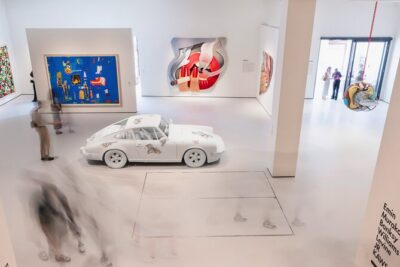
Official tickets: Moco Modern & Contemporary Art Museum
Read our review →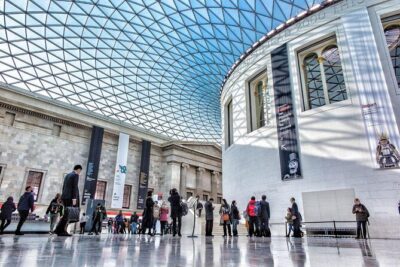
British Museum London Guided Tour Semi-Private 8ppl Max
Read our review →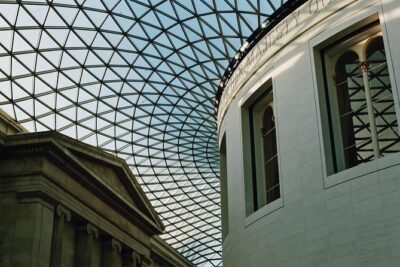
The British Museum London – Exclusive Guided Museum Tour
Read our review →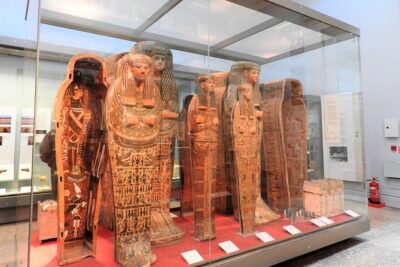

Skip the Line: Liverpool Beatles Museum – The perfect tribute to the Beatles
Read our review →
Browse the lists this tour appears in