
Reviewed · MUSEUMS
London Transport Museum One Day Ticket
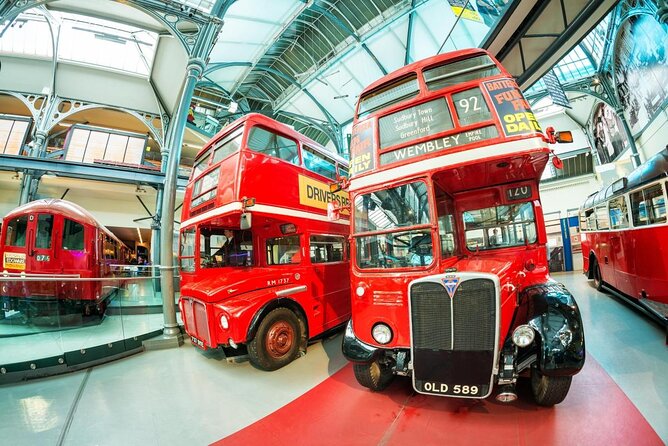
London’s transport story is told through the machines that made the city work: red double-deckers, black cabs, trams, and underground trains. Inside a restored old flower market in Covent Garden, you can walk among beautifully presented vehicles and see how public transport helped London grow.
I like the freedom to arrive in a chosen time slot and stay at your own pace. I also like the mix of serious history and hands-on play, especially the All Aboard area where children can act as drivers, mechanics, and conductors. The main drawback is noise and crowding during school holidays, when the family areas can make it harder to focus on the displays.
Key points to know
- The old flower market setting gives the museum a memorable home in the heart of Covent Garden.
- Restored buses, trams, taxis, and trains make London’s transport story easy to follow.
- The All Aboard playzone gives younger children a reason to engage with the exhibits.
- The visit is self-guided, so you can move quickly or spend extra time with favorite vehicles.
- The museum suits mixed-age families, with interactive sections for children and detailed facts for adults.
- A mobile ticket and flexible visit length make this simple to fit into a day in central London.
Why London Transport Belongs on Your Covent Garden Day
I like museums that explain a city through ordinary things. London’s transport system is one of those things. You may arrive thinking you are coming to see old buses and tube trains, but you leave with a clearer idea of how London expanded, connected its neighborhoods, and developed its familiar public identity.
The museum covers roughly 200 years of transport, beginning with horse-drawn buses and continuing through the rise of underground railways. Its collection includes the world’s first underground steam and electric trains, classic buses and trams, vintage vehicles, and the famous tube map.
That broad time span gives the visit a useful shape. You can see transport change from horse power to steam, electricity, and the modern network. You can also connect the objects to sights you see outside. The red bus is not just a London symbol. It is part of the system that lets people cross the city every day.
The museum’s location helps. You are in The Piazza, right in the middle of Covent Garden, so the visit works well before a meal, after a walk, or between other central London sights. You do not need to set aside a full day unless you want to read every panel and spend extended time with the children’s activities.
More museums in London:
- Chelsea FC Stadium Tours and Museum
★ 5.0 · 1,908 reviews - Official tickets: Moco Modern & Contemporary Art Museum
★ 4.5 · 1,157 reviews - British Museum London Guided Tour Semi-Private 8ppl Max
★ 5.0 · 984 reviews
Inside the Restored Flower Market
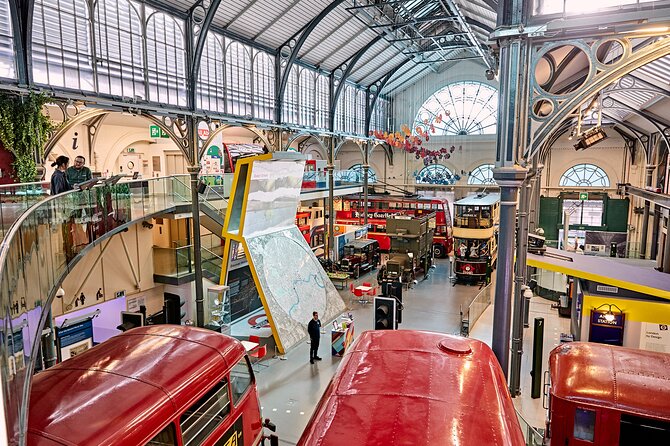
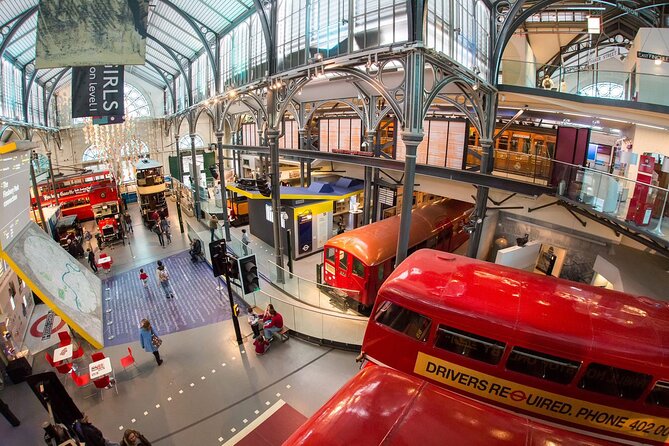
The building is part of the experience. The museum occupies a charming old flower market, giving the displays a more distinctive setting than a plain modern gallery. The restored vehicles and colorful exhibits are arranged across several floors, creating a journey through both transport and city history.
You can expect an indoor visit built around vehicles, posters, interactive displays, and short pieces of information. The layout may take a little time to understand. I would not expect a perfectly straight route from beginning to end, so give yourself a moment to get your bearings before rushing ahead.
The setting also gives the museum a sense of place. You are not looking at transport in isolation. The building sits in one of London’s most recognizable districts, and the exhibits explain how public systems helped shape the city beyond the museum walls.
I would allow about two hours for a normal visit. That is enough time to see the main vehicles, read a useful amount of material, and let children enjoy the play areas. The ticket lets you explore at your own pace, so a family with young children may stay longer while an adult visitor focused on the historical displays may finish sooner.
Horse Buses, Trams, and the Making of Modern London
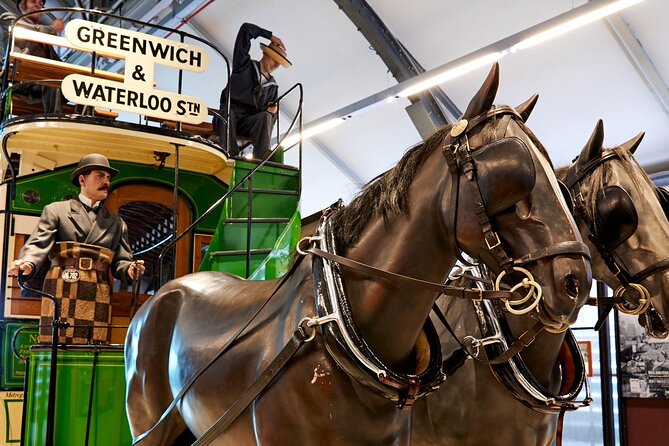
The early transport displays show London before the underground became the city’s main visual symbol. Horse-drawn buses helped people move around a growing capital, but they also point to the limits of older transport systems. The museum uses these vehicles to show a city trying to handle expansion, traffic, and the daily movement of workers.
I find this part useful because it places the tube in context. London did not begin with underground trains. It first relied on road transport, then moved through steam and electric technology as the city needed faster and more dependable connections.
The trams and vintage vehicles add another layer. You can compare different designs and see how engineers adapted vehicles for city streets. The exhibits make the story concrete. A panel about urban growth is one thing. Standing beside an old vehicle that carried people through that change is easier to remember.
The displays also connect transport to social history. The museum covers London’s development over the last two centuries, including the role of transport during wartime. If you like city history, you will find more here than a collection of attractive old machines.
The Underground Trains and the Iconic Tube Map
The underground section is likely to be the main draw for many adults. London’s tube is known around the world, and the museum shows the technology and design behind that reputation.
You can see the world’s first underground steam and electric trains, giving you a direct look at two important stages in the system’s development. Steam trains helped begin underground rail travel, while electric trains made the network more practical for a crowded city.
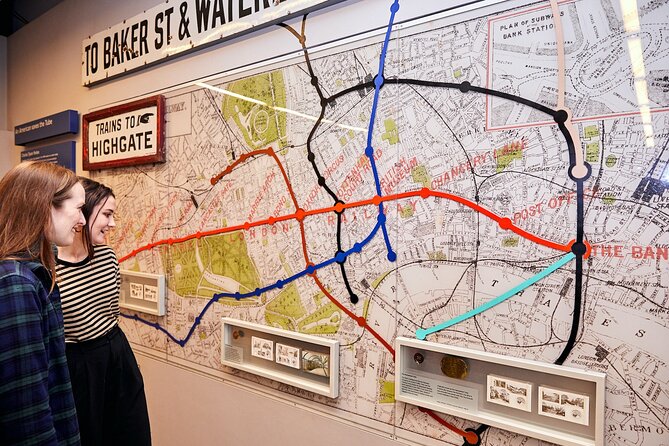
The tube map deserves special attention. Its simple, clear design became one of London’s most recognizable pieces of public information. The museum uses the map to show how design can change the way people understand a complicated transport network.
I like this combination of engineering and graphic design. One display explains the machines moving below the streets. Another explains how people find their way through the system. Together, they show that public transport depends on more than vehicles. It also needs maps, signs, schedules, and a design people can read quickly.
If you are interested in London’s underground, plan to give this area more than a quick glance. The visit is self-guided, so you can spend time with the details that interest you rather than following a guide’s fixed schedule.
A few more things to do in London worth a look
- 1 Day Admission to LEGOLAND Windsor Resort
★ 3.0 · 5,329 reviews - Windsor Castle, Stonehenge, and Oxford Day Trip from London
★ 4.5 · 5,292 reviews - Oxford, Stratford-upon-Avon, Cotswolds & Warwick Castle Day Trip
★ 4.5 · 2,943 reviews - Leeds Castle, Cliffs of Dover and Canterbury Day Trip from London with Guided Cathedral Tour
★ 4.5 · 2,820 reviews
Red Buses, Black Cabs, and Familiar London Symbols

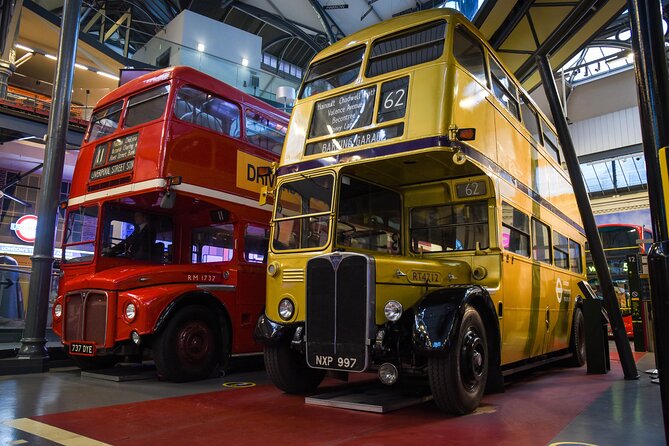
The red buses and black cabs are easy to recognize outside the museum, but seeing older examples indoors helps explain how those designs changed. You can look closely at the vehicles, rather than simply watching them pass on a busy street.
The classic buses are especially useful for families. Children can recognize the shape from London streets, then see how the vehicle works as part of a museum display. Adults get the historical context, while younger visitors have something large and physical to explore.
The black cab displays connect transport with the city’s working life. Taxis, buses, and underground trains served different needs, and the museum brings these systems together in one place.
The displays are not only about nostalgia. They show how transport affected access to jobs, neighborhoods, shops, and public life. That is the key reason I would recommend this museum even if you are not a transport enthusiast. You learn how London operates by looking at the objects that carry its people.
All Aboard Makes the Museum Work for Young Children
The All Aboard playzone is the strongest reason to bring younger children. Kids can take on the roles of drivers, conductors, or mechanics and use interactive vehicles in a hands-on setting.
That matters because a museum filled with historical information can lose a young child quickly. Here, children are not expected to stand quietly beside every display. They can play transport games and then return to the larger vehicles with a better sense of what they do.
The family activities include interactive sections, soft play, and opportunities to act out different transport jobs. Children can also collect a stamped card during the visit, which gives them a small task to remember as they move through the museum.
I would especially recommend the museum for families with children around the early school years. A five-year-old can enjoy the role-play and ask questions, while older children may spend more time with the facts, vehicles, and interactive displays.
There is a tradeoff. The children’s attractions can become loud, particularly during school breaks. If you want a calm visit focused on reading and careful observation, avoid the busiest school-holiday periods if your schedule allows.
How Much Time Should You Allow?
The stated visit length is about two hours, but it is not a timed tour. You choose how long to stay, and the museum’s central location makes it easy to fit into a larger day.
For a quick visit, I would focus on:
- The early horse-drawn transport
- The first underground steam and electric trains
- The classic buses, trams, and black cabs
- The tube map displays
- All Aboard, if you are visiting with children
Two hours gives you a sensible first visit without making the museum feel like an all-day assignment. If your children want to play at every interactive station, expect the visit to stretch longer. If you are mainly interested in vehicles and design, you can move through the displays more quickly.
The flexible format is useful after a busy morning in London. You can arrive in your selected time slot, explore without a guide, and leave when everyone has had enough. That freedom is more practical than a tightly controlled group tour.
Is the $33.76 Ticket Good Value?

At $33.76 per person, this is not a cheap quick attraction. The value depends on how much use you make of the museum and who is in your group.
For an adult who spends only a short time looking at the main vehicles, the price may feel high. You are paying for admission to a full museum collection, not a guided experience with a live expert or a meal. Food and drink are not included.
The value improves for families who stay for the interactive areas. Children can spend time at All Aboard, use the play features, and return to favorite vehicles. Adults can read the historical material, examine the tube map, and visit the shop or Canteen while the children remain engaged.
The ticket also works well if you want a self-guided visit. You are not paying for a fixed two-hour presentation. You can stay longer, move at your own speed, and make the museum part of a full Covent Garden outing.
I would compare it with the rest of your London day rather than judging the price alone. If you are already planning to spend time in Covent Garden and want an indoor attraction that works for adults and children, the ticket can make sense. If you only have a few minutes between other sights, the price may be harder to justify.
Timing, Access, and Practical Details
You receive a mobile ticket, and several time slots are available. Confirmation is provided when you book, so keep the ticket easy to reach on your phone.
The museum is at The Piazza, London, WC2E 7BB, in the heart of Covent Garden. It is near public transportation, which makes it practical to reach without building a separate transport plan around the visit.
Most people can take part, and service animals are allowed. The museum has buggy access and a lift to reach the other floors, which is useful for families and anyone who needs easier movement between levels.
Food and drink are separate. The museum has a cafe-bar called Canteen, but the admission ticket does not cover anything you buy there. There is also a transport-themed shop with gifts and souvenirs, so leave a little time at the end if you enjoy posters, vehicle designs, or London-themed items.
The museum is offered in English. Much of the information is written, so you should allow extra time if you are reading slowly or visiting with someone who is less comfortable with English.
The free cancellation policy gives you useful flexibility. You can cancel for a full refund up to 24 hours before the experience start time. Changes or cancellations made less than 24 hours ahead are not accepted for a refund, and the cut-off follows local London time.
Who Will Enjoy This Museum Most?
I would choose this attraction for families who want more than a standard sightseeing walk. The vehicles are large and memorable, and the interactive sections give children something to do with their hands and imagination.
It also suits adults interested in transport, urban design, engineering, or London’s growth. The museum gives you a different way to understand the city. You can connect the displays to the buses, taxis, and tube trains you use during your trip.
It may be less suitable if you want a quiet, highly ordered museum with little activity around you. The layout can feel confusing at first, and the family spaces may be noisy when schools are on holiday.
I would choose a quieter weekday or a period outside school breaks if your main goal is to read the displays. For a family visit, busy periods may bring more noise, but the children’s activities may also feel lively and social.
Should You Book the London Transport Museum?
I would book this if you want a central London attraction that combines real historic vehicles with hands-on family activities. It is especially useful on a mixed-age day, when adults want facts and children need room to play.
The museum earns its ticket price most clearly when you allow about two hours, use the interactive areas, and take time with the underground trains, tube map, buses, and wartime material. You can then see both the objects and the larger story of London’s growth.
I would think twice if you dislike noisy family attractions or only have a short gap in your schedule. Otherwise, the Covent Garden location, flexible visit length, buggy access, and wide range of transport displays make this a practical choice for a London day.
FAQ
Where is the London Transport Museum?
It is at The Piazza, London, WC2E 7BB, in Covent Garden.
How long does a visit take?
The visit is approximately two hours, but you can explore at your own pace and spend as much time there as you like.
What does the ticket include?
The ticket includes entrance to the London Transport Museum.
Are food and drinks included?
No. Food and drinks are not included in the admission price. The museum has a cafe-bar called Canteen.
Is the ticket available on a mobile phone?
Yes. A mobile ticket is provided.
Is the museum suitable for children?
Yes. The museum has family activities, interactive displays, and the All Aboard playzone, where children can act as drivers, conductors, or mechanics.
Is the museum accessible for buggies?
Yes. Buggy access is available, and the museum has a lift between floors.
Can I cancel for a refund?
Yes. You can cancel up to 24 hours before the experience start time for a full refund. Changes or cancellations made less than 24 hours before the start time are not accepted for a refund.
Just added in London
- Shoreditch Street Art and Graffiti Tour (Private Group Booking)★ 5.0 · 108 reviews
- Transfer London to Southampton Cruise Terminal (extra luggage)★ 4.5 · 81 reviews
- London, Windsor Castle, Hampton Court Palace with Free Snack Pack★ 4.0 · 102 reviews
- Central London to Southampton Cruise Port Private transfers★ 4.5 · 128 reviews
- London Christmas Lights Tour by Vintage Double-Decker Bus★ 4.0 · 135 reviews
- London Christmas Lights Guided Tour With Christmas Music★ 5.0 · 118 reviews
- Emirates Stadium and Arsenal Museum Entrance Ticket Including Audio Guide★ 4.5 · 113 reviews
- Hampton Court Palace Private Tour – Secrets of Henry VIII★ 5.0 · 127 reviews
Museums, compared.


Official tickets: Moco Modern & Contemporary Art Museum
Read our review →
British Museum London Guided Tour Semi-Private 8ppl Max
Read our review →
The British Museum London – Exclusive Guided Museum Tour
Read our review →


Skip the Line: Liverpool Beatles Museum – The perfect tribute to the Beatles
Read our review →
Browse the lists this tour appears in