
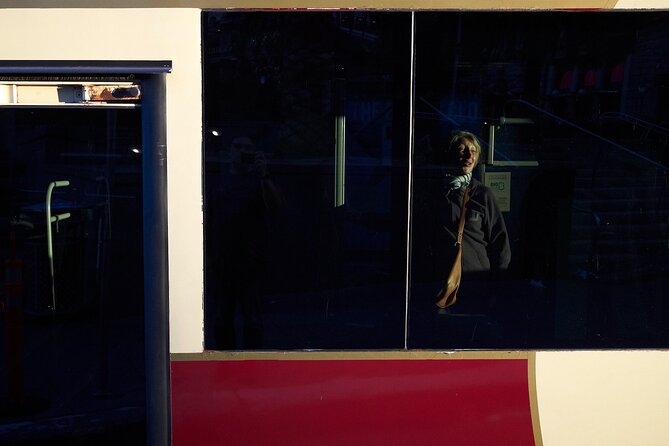
Reviewed · PHOTOGRAPHY SESSIONS
Street Photography Workshops in London
London becomes your classroom in this focused street photography workshop. You spend the day with Cyrus and Marc, moving between instruction, photo assignments, and honest feedback around Fleet Street. The small group, capped at eight, gives you room to ask questions and receive attention that a large walking tour cannot offer.
I especially like the chance to send photographs the night before, then discuss them in person. I also like the practical help with photographing strangers, since that is often the biggest hurdle for beginners. The main consideration is pace: six hours of shooting, talks, editing, and critique can feel intense, especially if you arrive hoping for a relaxed sightseeing walk.
Key points at a glance
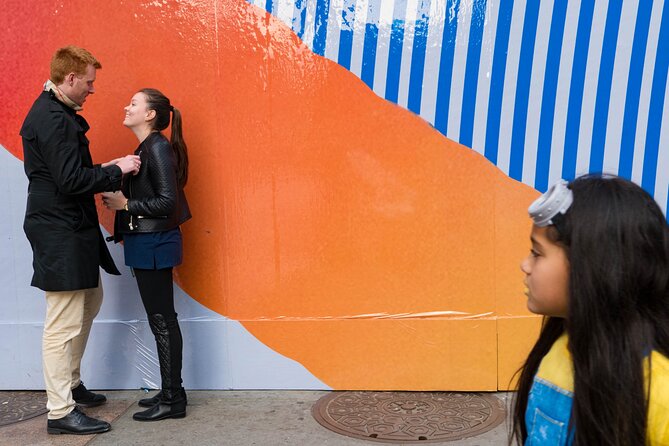
- Photos submitted in advance: You receive feedback on existing work before the street assignments begin.
- Fleet Street classroom and streets: Instruction takes place in rooms and outdoors around one of London’s most atmospheric central areas.
- Maximum of eight people: The small group leaves more time for questions and individual advice.
- Real shooting practice: You are sent out on assignments instead of spending the whole day listening to lectures.
- Help with photographing strangers: Cyrus and Marc address safety, confidence, and the social side of street photography.
- Six hours in English: Bring a camera or iPhone, and expect the activity to finish back at the starting point.
A full photography day around Fleet Street
This is not a quick photo walk with a few tips tossed in along the way. It is built as a workshop, with a mix of short lectures, practical assignments, group discussion, and photo critique.
You meet at 10:00 am on Fleet Street, London EC4A 2DQ. The activity ends at the same meeting point, which keeps the day simple from a transport point of view. You are not asked to find your way to a second ending location after several hours of shooting.
Fleet Street is a useful setting for this kind of work. The area gives you city streets, changing light, people in motion, and plenty of visual details to study. The workshop also aims to take you to less crowded vantage points, so you have a better chance of making photographs without being packed into the most obvious tourist spots.
Do not expect a fixed list of famous London sights. The point is to train your eye, not to collect a standard set of landmark pictures. You might pass familiar streets, but the emphasis stays on subjects, composition, colour, and light.
More photography sessions in London:
- Professional Photoshoot in London Photographer
★ 5.0 · 102 reviews - Private landmarks photoshoot for families and couples
★ 5.0 · 92 reviews - Professional Private Photoshoot in London
★ 5.0 · 63 reviews
Start with your own photographs
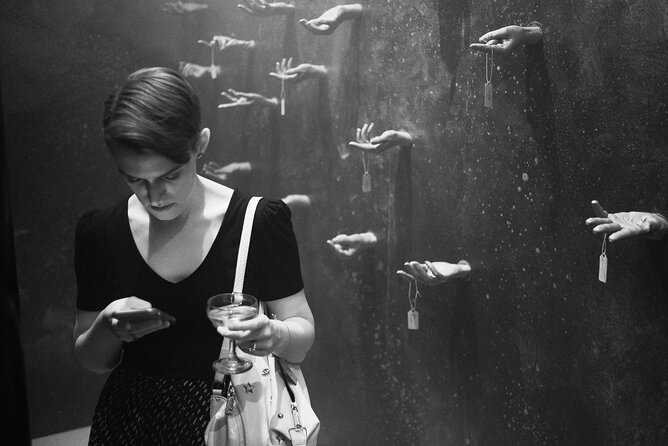
One of the most useful parts of the format happens before the main shooting session. You send photographs the night before, giving Cyrus and Marc a chance to see how you already work.
That matters because general photography advice can miss the real problem. You may think your images need better camera settings, when the bigger issue is timing, framing, or a weak subject. Looking at your own pictures gives the discussion a clear starting point.
The critique is described as friendly and gentle, but it is still meant to be useful. You are not simply shown a collection of perfect examples. You discuss what is working in your pictures and where an image could have more impact.
If you are new to critique, this can feel exposing. That is also why it can help. You begin to notice decisions you made without thinking, such as leaving too much empty space, placing the subject too centrally, or missing a better moment. The goal is not to make every photo look the same. It is to help you understand why an image succeeds or falls flat.
You can also bring photographs from earlier trips, not just new work made in London. That makes the session useful for someone who has been taking pictures for a while but has not had a clear way to assess them.
Lessons on composition, light, and colour
The workshop covers the building blocks of street photography, including composition, the importance of the subject, light, and colour. These sound basic, but basic ideas are often where a photograph either works or fails.
Composition is not just about placing a person neatly in the frame. In a street picture, you are also dealing with background clutter, lines, movement, signs, reflections, and the relationship between several people. A small change in your position can remove a distraction or make the subject clearer.
The emphasis on the subject is equally important. A well-exposed picture can still feel empty if nothing catches your attention. Cyrus and Marc help you think about what the photograph is actually about, then how the rest of the frame supports that idea.
Light and colour give you another way to add force to an image. You may learn to watch for strong contrast, a patch of colour, or the way light falls across a street rather than simply photographing whatever happens to be in front of you.
The teaching also addresses problems that commonly affect street photography. The available information does not list every problem in detail, so you should not expect a formal technical course covering every camera system. The clear focus is on seeing, choosing, and making pictures with more purpose.
Street assignments put the ideas to work
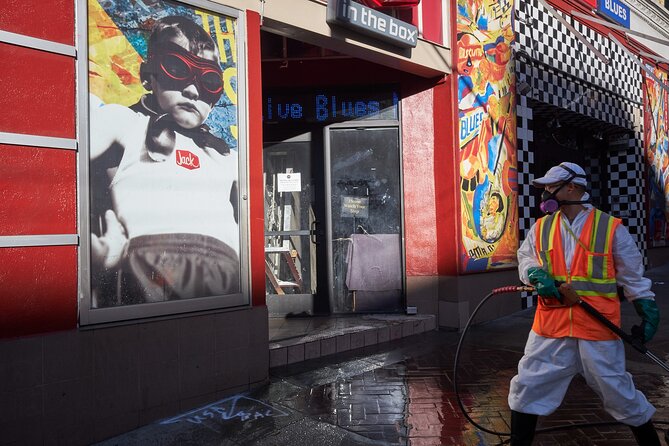
The day includes assignments that send you out to make photographs. This is where the workshop earns its keep. You are asked to apply an idea immediately, then return for more discussion and criticism.
That structure is better suited to active learners than to someone who wants a passive talk. You hear about composition or the use of colour, try it on the streets, and then look at the results. The gap between theory and practice becomes much smaller.
The assignments also give you a reason to keep shooting when you would normally hesitate. Street photography has plenty of waiting, second-guessing, and missed moments. A clear task can help you stop wandering and start looking for a particular kind of picture.
The group format adds a useful comparison. You see how other people interpret the same advice and how different approaches can produce different results. The workshop even includes the option to look at Cyrus and Marc’s own work, though criticism of their photographs is optional.
Expect feedback to be part of the process, not a final add-on. You will receive more critique after shooting, with encouragement where it is deserved and direct advice where it is needed. If you prefer to photograph alone without discussing your choices, this may feel demanding.
A few more things to do in London worth a look
- London Traditional English Scone Making and Tea Workshop
★ 5.0 · 271 reviews - Street Art Tour and Spray Painting Workshop in London
★ 5.0 · 98 reviews - Street Art Walking Tour and Workshop in London
★ 5.0 · 58 reviews - Private DJ Class
★ 5.0 · 11 reviews
Learning to photograph strangers with confidence
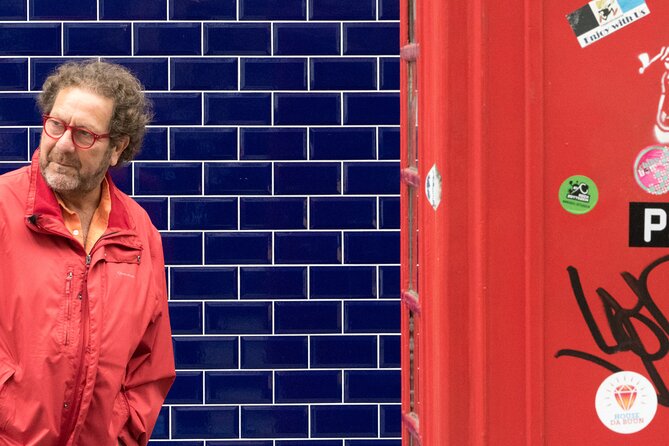
For many new street photographers, the hardest part is not exposure or focus. It is raising the camera when another person is nearby.
The workshop directly addresses that worry. Cyrus and Marc explain how to photograph strangers safely and offer practical ways to become more comfortable in public. That guidance can be especially useful if you have avoided street photography because you did not want to appear intrusive or cause trouble.
The material does not promise that every awkward moment disappears. Street photography still requires judgment and respect. What you gain is a clearer way to approach the situation instead of freezing every time someone enters the frame.
This is one of the strongest reasons for a beginner to choose a workshop rather than simply walk around London with a camera. You can ask questions at the moment they come up, then test your new confidence during an assignment.
It also suits an intermediate photographer who already takes pictures but feels stuck. You may not need help operating your camera. You may need a push to change your habits, approach a subject, or try a style outside your usual work.
Why the group size matters
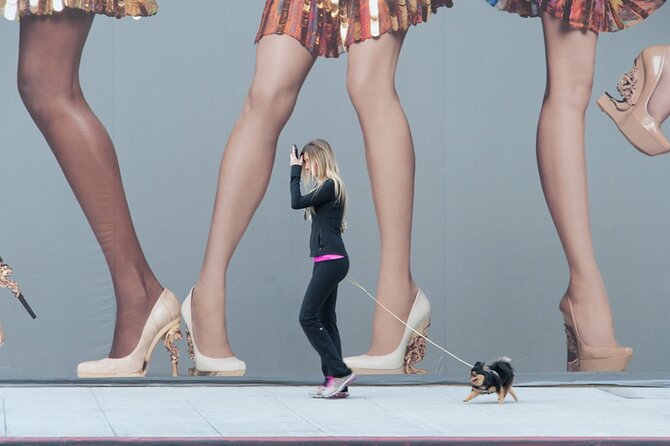
The maximum group size is eight people. That is small enough for a real exchange, but large enough to create varied discussion.
A small group gives you more chances to ask Cyrus and Marc questions. It also makes individual critique more practical. With a large class, each person might receive only a brief comment. Here, the stated format is designed around attention to your work.
You should still expect shared teaching rather than a private lesson. The talks and critiques involve the group, and you will spend time looking at other people’s photographs. That is a benefit if you want to learn from different approaches, but less ideal if you want every minute focused on your own camera.
The group also creates a relaxed setting for people with different levels of experience. The workshop is aimed at beginner to intermediate photographers, so you should not need advanced technical knowledge to take part. At the same time, someone with more experience can bring older work and use the critique to question familiar habits.
What to bring and what not to expect
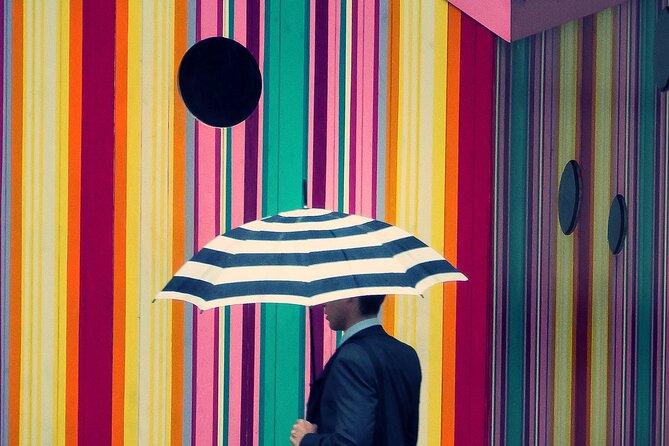
You need to bring your own camera or iPhone. The workshop does not provide a camera, so check your battery, storage, and basic settings before arriving. The supplied details do not specify equipment requirements beyond that, so a simple phone setup is acceptable.
You do not need to arrive as an expert. The course is intended to help people who feel their photos are average, who have little formal training, or who are still nervous about photographing people.
You should, however, arrive ready to make pictures. This is not a sightseeing tour where you can remain in the background. You will be asked to complete assignments, discuss your choices, and look at photographs critically.
The schedule is full. Time is shared among lectures, shooting, editing, critique, talks, and viewing work by the instructors. Six hours is enough to cover a lot, but not enough to explore every possible topic. If you like a slow, unhurried photo stroll, the amount of material may feel like too much.
That intensity is also part of the value. You spend several hours thinking about photography rather than taking a few pictures between other London plans. I would avoid booking this on a day when you need to rush off to another major attraction.
Value for beginner and intermediate photographers
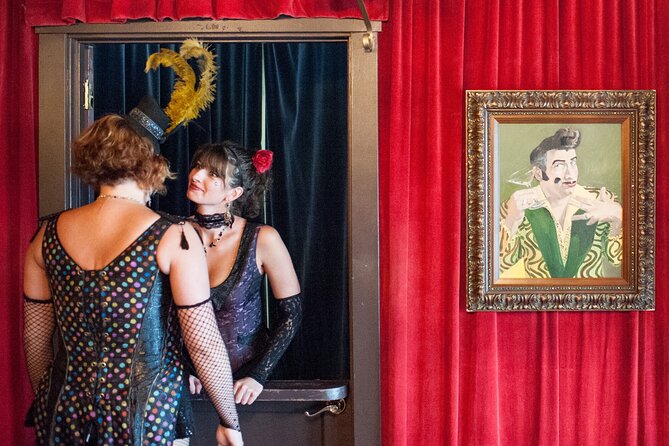
No price is provided here, so I cannot judge the exact cost against similar London activities. I can judge what the format offers for the time.
You receive about six hours of teaching, practical shooting, and critique in a group of no more than eight. You also get feedback on photographs submitted before the workshop, which adds a level of preparation missing from a standard photo walk.
That combination can be good value if you want to improve. A sightseeing tour gives you places to photograph. This workshop focuses on why your photographs work, how to select stronger subjects, and how to approach people with more confidence.
The value is lower if you mainly want attractive views of London or a guide who will point out photo stops. The day is not built around a long list of landmarks. It is built around your choices behind the camera.
It is also worth considering the follow-through. The workshop can give you useful ideas, but your improvement depends on using them afterward. The advice about photographing strangers, for example, becomes valuable only when you keep practicing in other cities and on future trips.
Practical details for planning the day
The workshop begins at 10:00 am on Fleet Street and ends back at the meeting point. It lasts about six hours and is offered in English.
A mobile ticket is provided, and booking confirmation is received at the time of booking. The meeting point is near public transportation, which makes the start easy to reach from elsewhere in London.
Service animals are allowed, and most people can participate. The activity has a maximum of eight participants. The available information does not provide a detailed accessibility description, so contact the operator before booking if you need specific support.
Free cancellation is available up to 24 hours before the start time for a full refund. Cancellations or changes made inside 24 hours are not refunded or accepted. The workshop also requires a minimum number of participants. If that minimum is not reached and the activity is canceled, you are offered another date or experience, or a full refund.
Who should book this Fleet Street workshop?
I would point beginners here if you want more than camera settings. The help with composition, subject choice, light, colour, and photographing strangers addresses the parts of street photography that often stop people from getting started.
It also makes sense for an intermediate photographer who wants an outside view of existing work. Sending photos ahead of time means you can bring real questions rather than hope a general lecture happens to solve your problem.
This is a good match for someone who enjoys discussion and can accept criticism without taking it personally. The tone is meant to be friendly, but the format includes serious critique. You will get more from it if you are willing to examine why a picture works instead of only asking if it looks nice.
I would skip it if you want a quiet morning with no assignments, or if your main aim is to visit famous London sights. The workshop asks you to work, think, and share.
Should you book it?
Book this workshop if you want a concentrated day of practice with Cyrus and Marc, especially if you are unsure how to photograph strangers or cannot yet explain why some of your pictures feel stronger than others.
The strongest features are the small group, the advance photo review, and the balance between instruction and actual shooting. The main drawback is the full schedule. You may leave with more ideas than you can process at once, but that is a useful problem if you want to keep making photographs after the day ends.
FAQ
Where does the street photography workshop start?
It starts at Fleet Street, London EC4A 2DQ, UK.
What time does the workshop begin?
The start time is 10:00 am.
How long does the experience last?
The workshop lasts approximately six hours.
Where does the workshop end?
The activity ends back at the Fleet Street meeting point.
Who leads the workshop?
The workshop is led by Cyrus and Marc.
What equipment should I bring?
You need to bring your own camera or iPhone.
How many people can join the workshop?
The activity has a maximum of eight participants.
Just added in London
- The Beatles and a Secret pub★ 4.5 · 36 reviews
- The Beatles & Liverpool Magical Mystery Tour from London★ 4.5 · 80 reviews
- Airport Coach Service from Heathrow to Oxford★ 3.5 · 67 reviews
- The Beatles Magical History Black Taxi Tour London★ 5.0 · 51 reviews
- The Beatles London walking tour. From Abbey Road to the Roof Top★ 5.0 · 61 reviews
- Private The Beatles Taxi Tour in London★ 5.0 · 12 reviews
- The Beatles London Walk★ 4.5 · 120 reviews
- Dinner and Jazz Cruise on the River Thames★ 4.0 · 140 reviews
Photography Sessions, compared.
Professional Photoshoot in London Photographer
Read our review →
Browse the lists this tour appears in