
Reviewed · MUSEUMS
Marvels at the British Museum: Rosetta Stone, Parthenon, Mummies
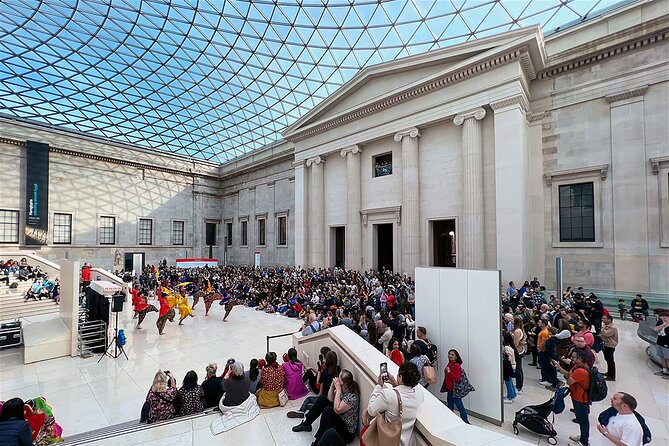
The Rosetta Stone and Parthenon sculptures are the headline acts, but the real strength of this tour is the way a guide connects them to the wider story of Egypt, Greece, Rome, and Britain. In about two hours, you get a brisk route through some of the British Museum’s most important rooms instead of trying to conquer all eight million objects.
I like the focused itinerary, which gives you a useful first look without leaving you lost in the museum’s vast corridors. I also like the chance to ask questions and hear details beyond the short wall labels. The main drawback is the fixed pace: two hours is enough for highlights, not a slow visit to every gallery, and the scheduled time may be changed if your chosen slot is full.
Key points at a glance
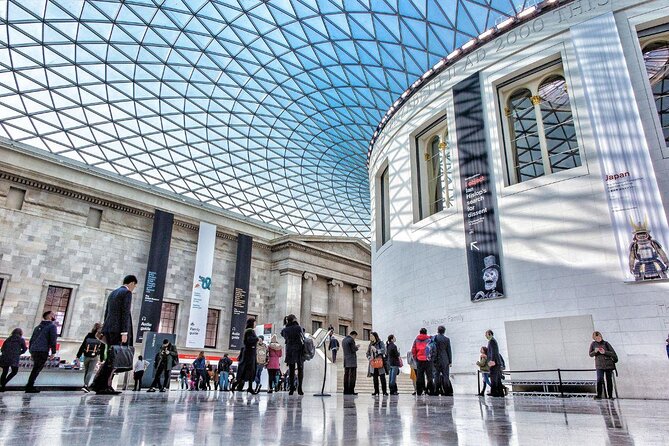
- Rosetta Stone and Parthenon sculptures: See two of the museum’s best-known objects in one short visit.
- Guide-led storytelling: Expect added context and explanations that go beyond standard display text.
- Priority queue: Use a faster entry line rather than the regular long queue, alongside other priority-entry groups.
- Small-group format: The group can include up to 25 people, with Joe among the guides who may lead the visit.
- Two hours on foot: Comfortable shoes matter, since the British Museum is large and the route involves plenty of walking.
- Central London location: Meet at the British Museum on Great Russell Street, with the tour ending there.
Why a two-hour British Museum tour makes sense
The British Museum can be an awkward first stop in London. It is free to enter for general admission, yet its enormous collection can make a short visit feel scattered. You may arrive with a list of famous objects and spend much of your time finding them.
This tour solves part of that problem by giving you a clear route and a guide’s voice. Instead of reading a label, moving on, and wondering what mattered most, you get a selection of major objects with explanation. The result is less about checking off rooms and more about understanding why certain pieces became famous.
The museum holds about eight million objects, so no two-hour tour can show you everything. That limit is not a flaw if you treat the experience as an introduction. You get a strong first pass, then you can return later for a slower look at the galleries that caught your attention.
The tour is not private. A group of up to 25 people may be with you, which keeps the price below that of a private guide but can make the experience less flexible. If you want to linger for ten minutes beside one object, the rest of the group may need to move on.
More museums in London:
- Chelsea FC Stadium Tours and Museum
★ 5.0 · 1,908 reviews - Official tickets: Moco Modern & Contemporary Art Museum
★ 4.5 · 1,157 reviews - British Museum London Guided Tour Semi-Private 8ppl Max
★ 5.0 · 984 reviews
Starting at the British Museum on Great Russell Street
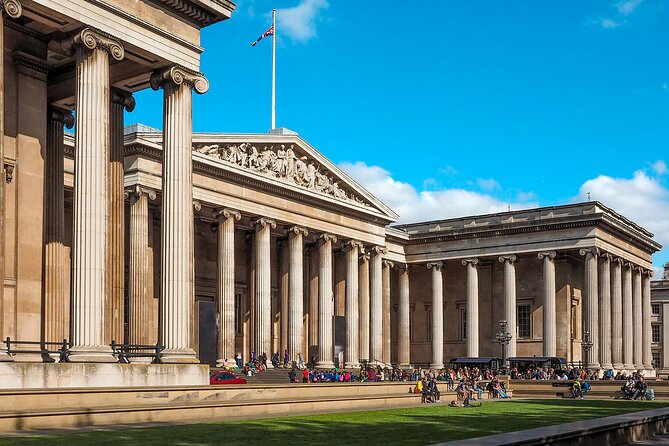
You meet at the British Museum, Great Russell Street, in central London. The location is near public transportation, making it practical to combine with other sights in the West End or Bloomsbury area.
Arrive at least 15 minutes before your scheduled start. That buffer matters in a busy museum, especially if you need to find the entrance, check your mobile ticket, or locate the guide. The tour includes online support at boarding, but it is still wise to have your booking details ready on your phone.
Priority entry does not mean walking past every person at the museum. It means using a faster queue with other people who have booked priority access rather than waiting in the normal line. How much time this saves will depend on the crowd that day, but it is useful when your London schedule is tight.
The museum setting is impressive from the start, though the sheer scale can feel daunting. Once inside, stay close enough to hear the guide. A group of 25 is manageable, but museum noise and passing visitors can make it harder to follow from the back.
The Rosetta Stone and the power of one object
The Rosetta Stone is one of the clearest reasons to book a guided visit. On its own, it is a dark slab covered in writing. With context, it becomes a key object in the study of ancient Egyptian writing.
The stone carries the same decree in three scripts. That feature helped scholars compare known Greek text with Egyptian scripts and make progress in reading hieroglyphs. The object is important not only because it is old, but because it helped open a path into a written world that had been difficult to understand.
This is the kind of object that can lose its impact when you simply walk past it with a crowd. A guide can point out what to notice and explain why the inscriptions matter. You will also have a chance to ask questions, which is helpful if you want more than the basic museum caption.
The area around a famous object may be busy. Do not expect a quiet, private moment with the stone. The value here is the explanation and the efficient way the tour brings you to one of the museum’s essential stops.
Parthenon sculptures and the questions around them
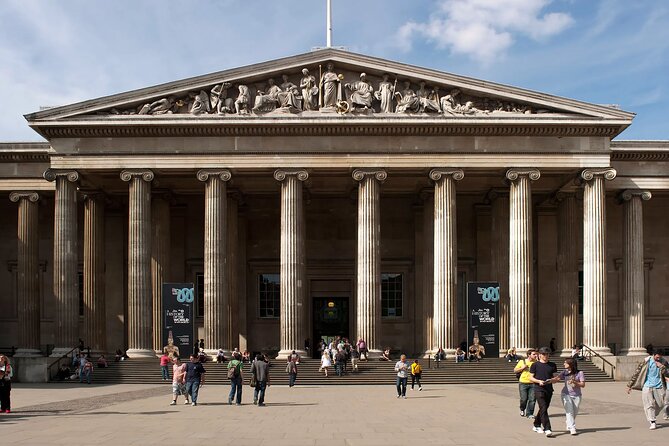
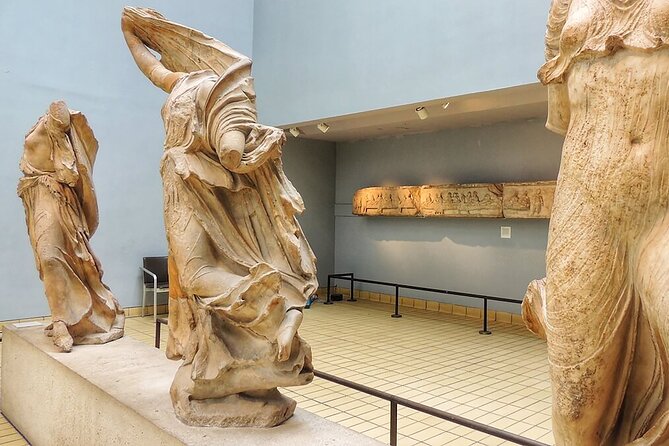
The Parthenon sculptures offer a different kind of museum experience. These ancient Greek works are admired for their craftsmanship, scale, and connection to the Parthenon in Athens. Seeing them in London also raises questions about ownership, removal, and the way major collections were formed.
The tour’s Egyptian and Greek sections help you compare different ancient cultures rather than treating each object as an isolated masterpiece. You can look at the sculpture itself, then hear how it fits into the larger story of classical art and the museum’s collection.
The phrase Parthenon sculptures covers more than a single statue. The museum displays architectural pieces and sculptural work connected with the temple. That makes this stop visually rewarding, but it can also feel overwhelming if you are not sure where to focus. A guide helps direct your attention to the details that matter.
You should also allow for the possibility of a crowded gallery. The sculptures are among the museum’s best-known attractions, so the room may not feel calm or empty. The tour is designed to keep moving and give you useful context, not to provide a private art-study session.
Same base, a different kind of day:
- Stonehenge, Windsor Castle, and Bath from London
★ 4.5 · 18,662 reviews - London Big Bus Hop-On Hop-Off Tour with Optional River Cruise
★ 3.5 · 10,803 reviews - London Small Group Tour of Historical Pubs
★ 5.0 · 10,422 reviews - Stonehenge, Windsor Castle and Bath with Pub Lunch in Lacock
★ 4.5 · 7,402 reviews
Egyptian mummies and the human side of ancient history
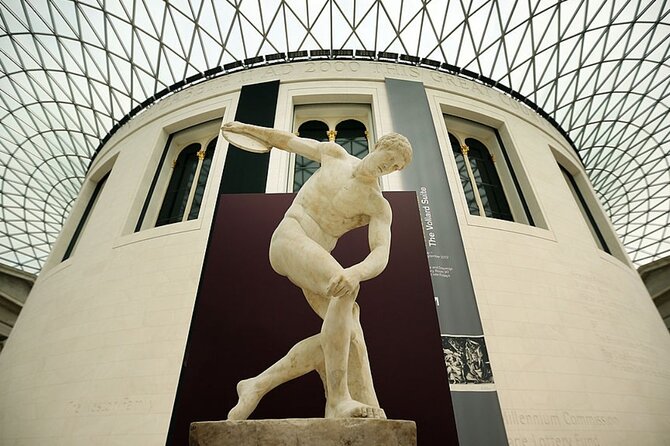
The Egyptian galleries add a more personal element to the visit. The objects are not only grand monuments or royal symbols. Mummies and funerary items bring you closer to the beliefs, rituals, and daily concerns of ancient people.
A good guide can help you read these displays as evidence of how people understood death, the body, and the afterlife. That turns the gallery from a row of cases into a story about human choices and customs. You may find the mummy displays more direct and emotionally striking than the large stone monuments.
The tour includes ancient Egypt alongside Greece, Rome, Mesopotamia, and later British material. This range gives you a broad look at how societies changed over time. It also means you will not spend the full two hours in one department.
If Egyptian collections are your main reason for visiting, note the tradeoff. The tour gives you highlights rather than a full survey of Egyptian art. You may leave wanting more time with the mummies, which is a good reason to return on your own if your schedule allows.
From Mesopotamia to Rome and Anglo-Saxon Britain
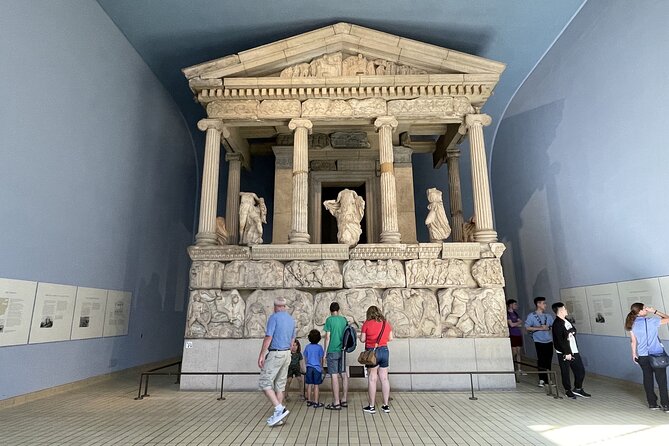
The route is not limited to the three headline attractions. The museum’s galleries also cover Mesopotamia, Rome, and Anglo-Saxon Britain, helping place the better-known objects in a wider human story.
Mesopotamian material can be especially useful for visitors who know the Rosetta Stone or Parthenon sculptures but have less familiarity with the civilizations that came before and alongside them. Roman objects show how ideas and artistic styles moved across a large empire. Anglo-Saxon material brings the story closer to Britain and adds a later chapter after the ancient Mediterranean world.
The exact objects you see and the order of the route may depend on the guide and conditions inside the museum. The supplied itinerary describes a highlights-focused visit, not a guaranteed list of every case. Think of this as a guided selection rather than a complete museum map.
This broad range is one of the tour’s best features for a first-time visitor. You get a sense of the museum’s global reach without spending your entire day trying to connect distant galleries on your own.
Guide Joe and the value of explanation

Guide Joe has led a small group through the museum’s crowds while covering key Egyptian and Greek objects. That detail matters because the British Museum is not difficult only because of its size. It is also full of competing things to look at.
A strong guide keeps the route moving, chooses useful stopping points, and explains why an object deserves your attention. Joe’s route has included the Rosetta Stone and Parthenon marble pieces, with added detail about their place in ancient Greek and Egyptian culture.
You should use the question time. Ask about the writing on the Rosetta Stone, the sculptures’ connection to the Parthenon, or the customs shown in the Egyptian displays. The tour specifically encourages questions, and that is where a guided visit can offer more than a self-guided walk.
The guide is also part of the uncertainty. Joe may not be the person assigned to your departure, since guides can vary. The experience depends on who leads your group, how crowded the rooms are, and how much time is available at each stop.
Is $102.43 a fair price?
At $102.43 per person, this is not a low-cost way to enter the British Museum. The price pays for a guided experience, priority queuing, and a planned route through major objects. It does not include hotel pickup, food, or drinks.
The value is strongest if you have only a short time in London or feel uneasy navigating a huge museum alone. Paying for structure can save you from spending an hour wandering between galleries and missing the objects you came to see. The guide also adds interpretation that a mobile ticket and standard museum labels cannot provide on their own.
The value is weaker if you already know the museum well, enjoy setting your own pace, or want to spend a full day with one collection. The tour moves on a schedule, and a group of up to 25 cannot pause for every personal interest.
I would compare the price with your London priorities. For a visitor who wants the Rosetta Stone, Parthenon sculptures, and Egyptian mummies in one organized visit, it can be a practical use of two hours. For a budget-conscious visitor with plenty of time, independent entry and a museum map may be the better choice.
Walking, timing, and the group experience
The tour lasts about two hours and is conducted on foot. Wear comfortable shoes. The warning about walking is worth taking seriously because the museum is huge, and even a carefully planned route covers a fair amount of ground.
A two-hour visit will feel brisk, especially when the galleries are crowded. You will stop for explanations, but you should not expect long, quiet periods at every display. The pace suits people who prefer a clear plan and want to see the major sights without spending all day indoors.
The group size can reach 25 people. That is small enough to keep the guide’s route organized, but not small enough to guarantee a personal conversation at every stop. Stand where you can see the object and hear clearly, and keep your phone charged for the mobile ticket.
The activity ends back at the meeting point. Since there is no hotel pickup, you handle your own journey to and from the museum. The central location makes it easy to continue sightseeing afterward, though the tour itself does not include food or drinks.
Booking times and cancellation terms
Confirmation is provided at booking, but your selected time is not fully guaranteed if that departure is unavailable. You may be moved to another time on the same day, such as a later afternoon slot. Check your confirmation and keep some flexibility in your schedule.
Last-minute bookings require extra care. If no place is available on the date you choose, the booking may be moved to the following day. For that reason, booking ahead is sensible, especially since this experience is often reserved about 60 days in advance.
Free cancellation is available if you cancel at least 24 hours before the start time. Cancellations or changes made inside that 24-hour window are not accepted for a refund, and the cut-off follows local London time.
Who should book this museum visit?
I would choose this tour if you are visiting London for the first time, have only a morning or afternoon for the British Museum, or want help making sense of major objects. It also suits families and mixed-interest groups who need a clear route rather than hours of independent browsing.
It is a good fit for anyone who likes to ask questions. The guide-led format gives you a chance to move beyond labels and hear connections between Egypt, Greece, Rome, Mesopotamia, and Britain.
I would hesitate if you want a private tour, dislike group pacing, or have one gallery that deserves your full attention. The tour is not designed for a slow, specialist visit, and the time slot can change if your first choice is unavailable.
Should you book the British Museum highlights tour?
Book it if you want a fast, organized introduction to the British Museum’s major objects and place high value on explanation. The Rosetta Stone, Parthenon sculptures, and Egyptian mummies give the route plenty of weight, while the guide helps you make sense of what you are seeing.
Skip it if your priority is saving money, visiting independently, or spending several hours in one collection. You can still enjoy the museum without a guide, but you will need to plan your own route and accept that the building can be confusing.
For most short London visits, the best approach is to treat this as a first look. Let the guide take you to the essential objects, ask your questions, and return on your own only if a particular gallery deserves more time.
FAQ
How long does the British Museum tour last?
The tour lasts approximately two hours.
What objects are included in the visit?
The highlights include the Rosetta Stone, sculptures from the Parthenon, Egyptian mummies, and selected material connected with civilizations such as Mesopotamia, Rome, and Anglo-Saxon Britain.
Where does the tour meet?
You meet at the British Museum on Great Russell Street, London WC1B 3DG, UK.
Where does the tour end?
The activity ends back at the meeting point.
Is entry included?
Yes. Admission to the British Museum guided tour is included.
How large can the group be?
The tour is not private and can have a maximum of 25 people.
What happens if my selected time is unavailable?
You may be transferred to another available time on the same day. For last-minute bookings, if no place is available, the booking may be moved to the following day.
Just added in London
- The Beatles and a Secret pub★ 4.5 · 36 reviews
- The Beatles & Liverpool Magical Mystery Tour from London★ 4.5 · 80 reviews
- Airport Coach Service from Heathrow to Oxford★ 3.5 · 67 reviews
- The Beatles Magical History Black Taxi Tour London★ 5.0 · 51 reviews
- The Beatles London walking tour. From Abbey Road to the Roof Top★ 5.0 · 61 reviews
- Private The Beatles Taxi Tour in London★ 5.0 · 12 reviews
- The Beatles London Walk★ 4.5 · 120 reviews
- Dinner and Jazz Cruise on the River Thames★ 4.0 · 140 reviews
Museums, compared.


Official tickets: Moco Modern & Contemporary Art Museum
Read our review →
British Museum London Guided Tour Semi-Private 8ppl Max
Read our review →
The British Museum London – Exclusive Guided Museum Tour
Read our review →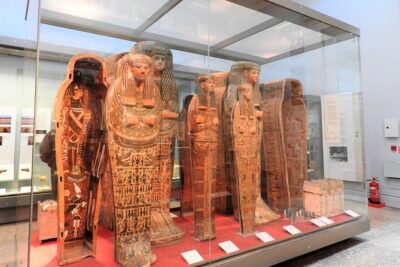


Skip the Line: Liverpool Beatles Museum – The perfect tribute to the Beatles
Read our review →
Browse the lists this tour appears in