
Reviewed · MUSEUMS
Kid-Friendly Private British Museum Highlights and Walk to Covent Garden London
The clever part of this tour is its short, focused route through the British Museum. Instead of asking children to cope with a giant collection on their own, your private guide leads you to major Egyptian and Greek treasures, then keeps the day moving with a walk through London’s West End.
I especially like the family focus and the flexibility of a private booking. Guides such as Larry, Roberta, Kathy, Denisa, Danny, and Sarah have been praised for adjusting their approach to children from about 7 to 16. The main consideration is the $312.57 per-person price, which is a serious expense for a three-hour outing, especially for a larger family.
Key points
- Ginger gives younger children an immediate hook: The 5,400-year-old mummy is one of the museum’s most memorable sights.
- A private guide keeps the museum manageable: You focus on selected treasures rather than wandering through endless galleries.
- The tour works for mixed ages: Guides use questions, stories, and surprises to keep children and adults involved.
- The walk adds real London atmosphere: Neal’s Yard, Seven Dials, Covent Garden, and Trafalgar Square fill out the second half.
- About a mile of walking is included: Wear comfortable shoes and expect a steady three-hour outing.
- The route ends in Trafalgar Square: You finish near major West End sights, galleries, monuments, and historic buildings.
Why the British Museum Needs a Plan
The British Museum is free to enter for general admission, but that does not make it simple. Its collection is enormous, and a family can easily spend too much time in one room, lose the thread, or run out of energy before reaching the objects everyone came to see.
This tour solves that problem with a private route lasting about two hours inside the museum. Your guide meets you outside the building on Great Russell Street, then selects key objects from the Egyptian and Greek sections. You are not trying to cover the whole museum. You are getting a guided introduction to a handful of major pieces, with explanations shaped for children and adults together.
That distinction matters. A family with an 8-year-old, a 13-year-old, and a 16-year-old needs more than a standard lecture. The guide has to move between simple visual clues, bigger historical ideas, and questions that keep older children from tuning out. The strongest feedback about this experience points to exactly that skill.
Several guides receive special praise for making children who normally dislike museums pay attention. Roberta, for example, is described as turning the visit into a hit for a 10-year-old who arrived with little interest. Larry is praised for holding the attention of three children across a wide age range. Those individual guides may not be available on your date, but the pattern is clear: the guide’s personality is central to the experience.
More city tours in London:
- Westminster to Greenwich Sightseeing Thames Cruise in London
★ 4.5 · 2,969 reviews - London Sightseeing Tour: Guard Change with Tower of London Option
★ 4.5 · 2,672 reviews - Hop-On Hop-Off Sightseeing River Cruise on the Thames
★ 4.0 · 1,256 reviews
Ginger, Ramses II, and the Rosetta Stone
The Egyptian section gives the tour an easy starting point. Children can respond to mummies, statues, and ancient writing without needing a long explanation before they see something memorable.
Ginger, the 5,400-year-old mummy, is an especially useful first stop. The sight is direct and human. You are not just looking at a case full of small objects. You are looking at the preserved remains of a person from a very distant period, which gives the past an immediate face.
The statue of Ramses II offers a different kind of impact. Its scale and formal pose help you understand how rulers wanted to be seen. A guide can connect the statue’s appearance to power, public image, and the way ancient societies recorded authority. For children, the visual scale does much of the work before the explanation begins.
The Rosetta Stone is the museum’s most famous object for good reason. It gives your guide a chance to explain how the same message appears in different scripts and why that helped scholars read ancient Egyptian writing. This is one of the better moments for a family guide because the basic idea is easy to grasp, while the wider story can be made as detailed as your children can handle.
Do not expect to see every important Egyptian object in two hours. You should expect a carefully chosen selection, with time for questions and movement between galleries. That is the right trade-off for a family visit. You leave with a few clear memories instead of a blur of display cases.
The Parthenon Sculptures and the Greek Galleries
The Greek section brings a different mood. The sculptures from the Parthenon in Athens are visually impressive, but children may need help noticing what makes them important. Your guide can point out figures, poses, missing sections, and the way the sculptures once belonged to a larger architectural setting.
This is also an area where context matters. A short explanation can help you see the objects not as isolated statues, but as parts of a building and a much larger story about ancient Athens. The tour is not advertised as a full discussion of museum ethics or the ownership debate surrounding the sculptures, so you should not expect that subject to take over the visit. Still, older children may ask questions, and a private guide gives you room to stop and discuss them.
The Greek and Egyptian sections create a good rhythm. One offers mummies, hieroglyphs, and royal statues. The other offers marble sculpture and architecture. That variety helps prevent the museum from feeling like one long sequence of similar cases.
The galleries can change, and some rooms or objects may close for renewal. The guide will select other interesting works if the planned displays are unavailable. That flexibility is useful, but it also means the exact route cannot be guaranteed. If a particular object is your family’s main reason for booking, treat it as a likely highlight rather than a promise.
Why a Private Guide Helps With Children

A private tour changes the pace. You can pause when a child has a question, move on when attention fades, and spend longer with an object that catches the family’s interest. In a large museum, that control is worth more than a fixed list of sights.
The guides are expected to make the visit educational and fun, but the most useful detail is how they do it. The strongest guide examples involve storytelling, questions, humor, and small surprises. One guide gave the children a detail at the end of the tour that they loved. These small touches can matter more than a dense explanation when children are deciding if a museum is worth their time.
A private setting also helps adults. You do not have to worry about a child interrupting a formal group or holding up strangers. You can ask for more detail about art, ancient cultures, or the museum itself while the guide keeps the younger members involved.
There is no guarantee that your guide will be Larry or Roberta, and the booking information does not promise a named guide. Kathy, Denisa, Danny, and Sarah are also associated with particularly positive family experiences. The practical point is to tell the operator your children’s ages and interests when booking, so the guide can pitch the visit at the right level.
More walking tours in London:
- Tour for Muggles The Ultimate Harry Potter Walking Tour in London
★ 5.0 · 4,684 reviews - London Jack The Ripper Guided Walking Tour
★ 5.0 · 3,131 reviews - Changing of the Guard Guided Walking Tour in London
★ 5.0 · 1,793 reviews - The Great British Rock and Roll Walking Tour
★ 5.0 · 1,371 reviews
Walking From the Museum Through Neal’s Yard
After roughly two hours indoors, the tour shifts to a one-hour walk toward Trafalgar Square. This is a smart change of pace. Children get out of the galleries, and the family sees how central London connects its cultural sights with streets, squares, shops, and theaters.
The route passes through Neal’s Yard and Seven Dials. Neal’s Yard is a compact, colorful corner tucked into the West End, while Seven Dials has a distinctive layout and a long connection with the area’s street life. These places offer a useful contrast to the formal rooms of the British Museum.
The walk is not a transport transfer. It is part of the sightseeing. Your guide fills the route with anecdotes and stories, so the second half should feel less like simply getting from one place to another. At the same time, you need to remember that this is about a mile of walking after two hours in a museum.
That distance is modest for most families, but young children can tire quickly after a full morning or afternoon in London. Wear comfortable shoes, bring water, and avoid treating the tour as a completely effortless indoor activity. The route includes ordinary city walking, with the usual crowds and interruptions of a busy central district.
Covent Garden and the Route to Trafalgar Square
Covent Garden is the main neighborhood stop on the walk. It is one of London’s best-known West End areas, with a strong sense of place and plenty of movement around its market and surrounding streets. The tour gives you an introduction rather than a long shopping or food break.
Food and drinks are not included, so plan your expectations accordingly. You may want to eat before the tour or arrange a meal afterward. The guide can point out the area, but this is not a food tour and there is no included refreshment stop.
The route ends at Trafalgar Square, a practical finish for a sightseeing day. The square brings together statues, monuments, galleries, and historic buildings, and it places you near several major central London attractions. Ending here also gives you a clear point from which to continue exploring on your own.
This final stop helps the tour feel broader than a museum visit. You begin with ancient Egypt and Greece, then move through some of London’s most recognizable streets before finishing at one of the city’s great public squares. The experience links art, urban life, and geography in a way children can follow.
How Much Value Do You Get for $312.57?
At $312.57 per person, this is not a budget museum visit. The price includes a private guide and museum admission, but not food, drinks, or hotel pickup and drop-off. Since the tour lasts about three hours, the cost works best for families who place a high value on personal attention and a smooth plan.
For a couple with one child, the total can feel steep. For a larger family, the private format may make more sense, especially if your children have different ages and attention spans. Group discounts are available, although the exact savings are not provided, so check the final price before you commit.
You are paying for direction and family-focused delivery, not simply access to objects. If you are comfortable researching the museum, choosing a few galleries, and keeping children moving by yourself, you can spend less. If the thought of managing a huge museum feels tiring, the guide may prevent a costly afternoon of frustration.
The 98 percent recommendation rate and 4.9 rating from 54 reviews suggest strong satisfaction, but I would still judge the value against your own group. This is most worthwhile when you want a private pace, have children who need active storytelling, or are visiting London for a short time and cannot afford a poorly planned museum visit.
Timing, Meeting Point, and Physical Effort
The tour begins outside the British Museum at Great Russell Street, London WC1B 3DG. You arrange your own way there because hotel pickup and drop-off are not included.
The finish is Trafalgar Square, WC2N 5DS. That end point is useful if you plan to continue around the West End, visit a nearby gallery, or arrange lunch or dinner in central London. It also means you should not expect to return to the museum or your hotel with the guide.
The entire activity lasts approximately three hours: about two hours inside the museum and one hour walking. Children must be accompanied by an adult, and the stated physical requirement is moderate fitness. Service animals are allowed.
The museum’s galleries can change or close for renewal. Your guide will adjust the route and show other works if needed. Keep this in mind if your family has one absolute must-see object.
Free cancellation is available if you cancel at least 24 hours before the start time. Cancellations or changes made less than 24 hours before the start time are not accepted for a refund. Cutoff times use London local time.
Who Should Book This Family Tour?

I would recommend it most strongly for families with children from roughly school age through the teenage years, especially when ages and interests differ. The guide can keep the youngest child engaged while still giving older children something to think about.
It also suits parents who want a clear route through the British Museum without spending time studying floor plans or deciding which objects matter most. The private format gives you freedom to ask questions and adjust the pace.
I would be more cautious if your children dislike walking, if you want a long break for food, or if your budget is tight. The museum portion is focused, but the full outing still involves three hours and about a mile on foot. You should also be comfortable with the possibility that gallery closures may alter the exact selection.
Should You Book It?
Book this tour if your family wants the British Museum made manageable, lively, and age-appropriate. The strongest feature is not simply the list of objects. It is the guide’s ability to connect Ginger, Ramses II, the Rosetta Stone, and the Parthenon sculptures to children who might otherwise lose interest quickly.
Skip it if you prefer wandering independently or if $312.57 per person is more than you want to spend on three hours. For families who value a private pace and want to finish near Trafalgar Square, this is a well-shaped introduction to both the museum and central London.
FAQ
Where does the tour begin?
The tour begins outside the British Museum at Great Russell Street, London WC1B 3DG, United Kingdom.
Where does the tour end?
The walking portion ends at Trafalgar Square, London WC2N 5DS.
How long does the tour last?
The experience lasts approximately three hours, with about two hours at the British Museum and one hour walking through central London.
Which British Museum sections are included?
The tour focuses on highlights from the Egyptian and Greek sections, including Ginger, the statue of Ramses II, the Rosetta Stone, and sculptures from the Parthenon in Athens.
Is the tour private?
Yes. Only your group participates in the private tour, and a professional local guide leads the experience.
Is museum admission included?
Yes. Admission to the British Museum is included. Food, drinks, hotel pickup, and hotel drop-off are not included.
More museums in London
- Chelsea FC Stadium Tours and Museum
★ 5.0 · 1,908 reviews - Official tickets: Moco Modern & Contemporary Art Museum
★ 4.5 · 1,157 reviews - British Museum London Guided Tour Semi-Private 8ppl Max
★ 5.0 · 984 reviews - The British Museum London – Exclusive Guided Museum Tour
★ 5.0 · 555 reviews
Just added in London
- The Beatles and a Secret pub★ 4.5 · 36 reviews
- The Beatles & Liverpool Magical Mystery Tour from London★ 4.5 · 80 reviews
- Airport Coach Service from Heathrow to Oxford★ 3.5 · 67 reviews
- The Beatles Magical History Black Taxi Tour London★ 5.0 · 51 reviews
- The Beatles London walking tour. From Abbey Road to the Roof Top★ 5.0 · 61 reviews
- Private The Beatles Taxi Tour in London★ 5.0 · 12 reviews
- The Beatles London Walk★ 4.5 · 120 reviews
- The Authentic London Food and History Tour★ 5.0 · 53 reviews
Museums, compared.


Official tickets: Moco Modern & Contemporary Art Museum
Read our review →
British Museum London Guided Tour Semi-Private 8ppl Max
Read our review →
The British Museum London – Exclusive Guided Museum Tour
Read our review →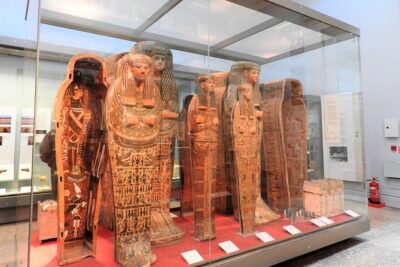

Skip the Line: Liverpool Beatles Museum – The perfect tribute to the Beatles
Read our review →
Browse the lists this tour appears in