
Reviewed · TOURS IN BIRMINGHAM
Digbeth, Public Art & Peaky Film
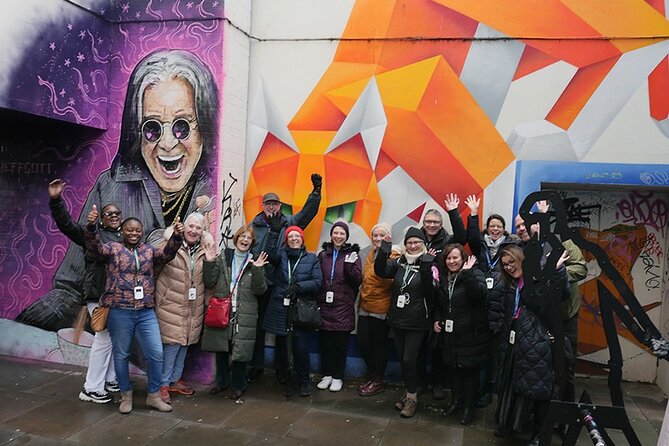
Digbeth is where Birmingham’s past and present collide. On this 2-hour-15-minute walking tour, local author Jonathan Berg leads you from the Bullring into old industrial streets filled with murals, graffiti and unexpected public art. The area also provides a backdrop for filming the Peaky Blinders feature film, adding a bit of screen drama to the city’s rough-edged character.
I like two things here: Jonathan’s lively local insight and the live audio system, which lets you hear him even if the group stretches out on a busy street. I also like the route’s balance, moving from Birmingham’s origins and Victorian art to today’s artists rather than treating Digbeth as just a wall-art photo stop.
The main drawback is pace. The walk covers a fair amount of ground, and Jonathan is described as a speedy walker. You need a moderate level of fitness, and the tour may feel brisk if you want long, quiet periods for photographs.
Key points to know before you book
- Digbeth is the main event: Expect about an hour among old streets, public art, industrial traces and Peaky Blinders filming scenery.
- Jonathan Berg leads the walk: He is a Birmingham author with a strong personal interest in the city and its artists.
- The audio receiver is genuinely useful: Bring wired earphones with a 3.5 mm jack, or pay £1 for a pair supplied on the day.
- The route begins and ends at the Bullring: This makes the tour easy to fit around shopping, sightseeing or a city-centre train arrival.
- The Custard Factory adds a bohemian finish: Former Bird’s custard premises now provide an unusual setting for graffiti and creative businesses.
- It suits curious walkers more than film-only fans: Peaky Blinders is part of the story, but Birmingham’s art and urban history get equal billing.
From the Bull statue into Birmingham’s story
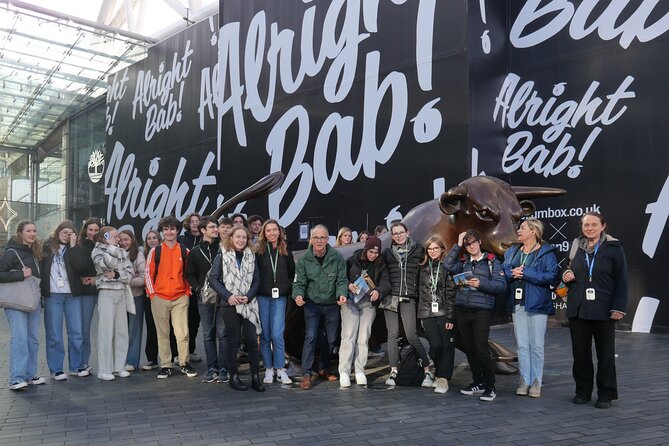
The meeting point is by the Bull statue at the Bullring Shopping Centre, Birmingham B5 4BU. The tour starts at 10:30 am, a useful time for seeing the city before the day gets too crowded. You finish back at the Bullring, usually in the same general area.
That start point is practical rather than picturesque. The Bullring is one of Birmingham’s best-known city-centre landmarks, and it is simple to find by public transport. It also gives the guide a clear place to begin the story of modern Birmingham, a city shaped by trade, manufacturing and constant change.
The first short stop is the Bullring Shopping Centre walkway, where the group gathers by the bull. You spend about five minutes here. Do not expect a long lecture at this point. It is more of a quick orientation before the walk turns toward St. Martin in the Bull Ring.
The church is another brief stop, again around five minutes. St. Martin’s helps connect the modern shopping district with the older city that came before it. The contrast is part of the appeal: one moment you are beside a major retail centre, and soon after you are heading toward Digbeth’s older streets and industrial character.
These opening stops are short, but they help you get your bearings fast. If you arrive early, the Bullring area gives you plenty of options for coffee, food and public transport connections before the 10:30 start.
Other trips people book in Birmingham:
- Alton Towers Resort 1 Day Admission Ticket
★ 3.5 · 5,501 reviews - Warwick Castle Admission Ticket
★ 4.0 · 2,096 reviews - Alton Towers Resort 2 Day Admission Ticket
★ 3.5 · 1,198 reviews
Digbeth, where old Birmingham meets new art
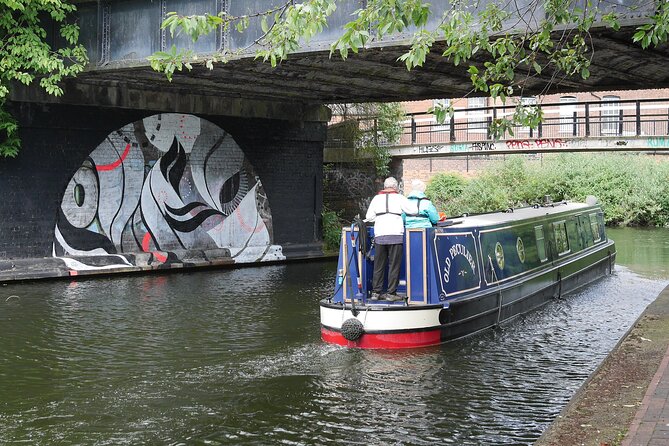
The central section takes about an hour and gives the tour its strongest identity. Digbeth is presented as both the place where Birmingham began to grow and a district still being reshaped by artists, filmmakers and creative businesses.
I like this approach because it avoids a narrow definition of public art. You are not simply taken from one painted wall to another. Jonathan links the artwork to the streets around it, explaining how Birmingham developed and how the district is moving forward today.
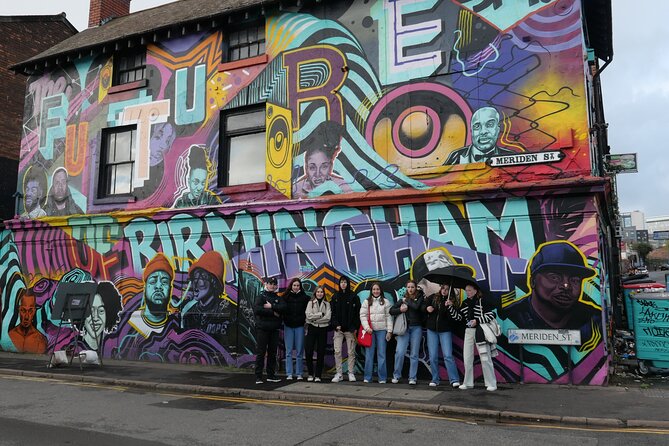
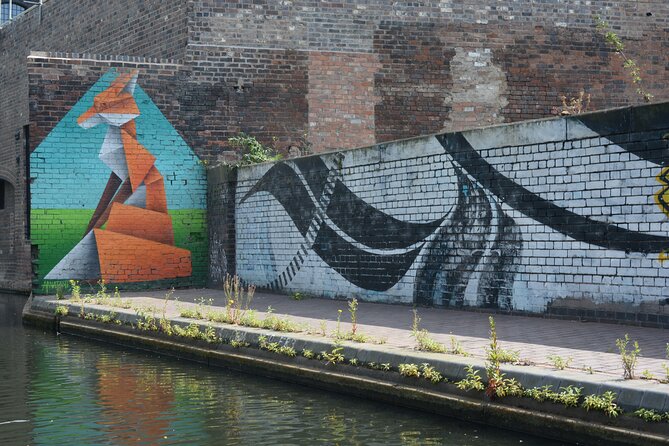
The art may include large murals, graffiti and smaller pieces placed in spots you could easily walk past alone. The guide also helps you notice the difference between graffiti and street art, as well as recurring styles and the work of different artists. You may not remember every name, but you should leave with a better eye for what you are seeing.
That guidance matters in Digbeth. The district can look rough and confusing if you do not know where to look. A tour gives the walls, alleys and industrial buildings some order, while still allowing you to make your own judgment about the art.
The route is also useful for first-time visitors who might otherwise stay around the Bullring, Grand Central and the main shopping streets. Digbeth is close to the centre, but it feels like a different part of Birmingham. The tour shows how little distance is needed to move from polished retail architecture to older buildings covered in color and political or cultural expression.
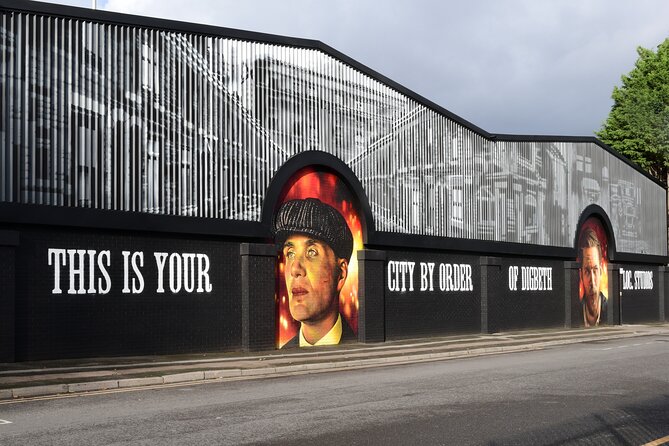
The Peaky Blinders connection is an added attraction. The atmospheric streets of Digbeth will form the backdrop for filming the Peaky Blinders feature film. You should see this as part of the setting rather than a full television-location tour. The main subject remains Birmingham itself, with the film link adding context and a few good photo opportunities.
The route also includes references to Birmingham’s public art from the Victorian era to the present day. That broad time span gives the walk more depth than a modern mural crawl. You get a sense of how the city has used public spaces, monuments and visual work to express its identity across different periods.
The Custard Factory and Bird’s sweet legacy

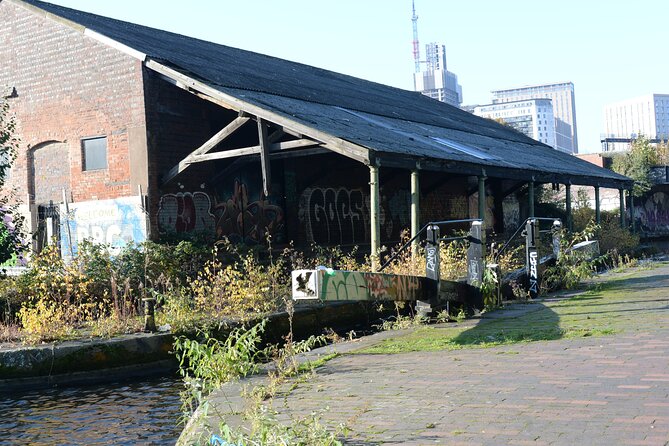
The Custard Factory receives about 15 minutes, but it is one of the more distinctive stops. This was the home of Bird’s custard, and the buildings now form a bohemian part of Digbeth with graffiti and creative activity in surprising places.
The name alone makes the stop memorable. Bird’s custard is a familiar British brand, yet the former factory setting now has a very different feel from a traditional food-production site. That change reflects the wider story of Digbeth: old industrial spaces are being reused, not simply left behind.
You should allow yourself time to look upward and around corners here. The artwork is not always placed where you expect it, and Jonathan’s commentary helps point out details that could be missed. The short stop may feel too brief if you want to photograph every piece, so keep your camera ready and listen first. The guide’s audio will continue clearly while you look.
Centenary Square, Grand Central and the wider city
The advertised highlights also include Centenary Square and Grand Central. The supplied route details focus most closely on the Bullring, St. Martin’s, Digbeth and the Custard Factory, so the exact amount of time at Centenary Square and Grand Central may depend on the day’s route and group movement.
Their inclusion broadens the tour beyond Digbeth. Centenary Square helps place the art discussion within Birmingham’s civic centre, while Grand Central returns you to the modern city and its transport and shopping hub. Together, these locations help show that Birmingham’s public art story is not confined to one district.
The route takes about two hours and 15 minutes in total, even though the listed stop times add up to less. The difference is accounted for by walking between places, commentary on the move, questions, pauses and the practical business of guiding a group through city streets. In other words, do not expect two hours of stationary explanation.
Same base, a different kind of day:
- Entry ticket to Hoo Zoo and Dinosaur World in Telford
★ 5.0 · 591 reviews - Cadbury World Entry Ticket
★ 3.0 · 524 reviews - Birmingham Walking Tour: Canals, Victorians & Today (1:30pm)
★ 5.0 · 346 reviews - Discovering Birmingham 2 hour Walking Tour to the Jewellery Quarter
★ 5.0 · 333 reviews
Why the audio receiver improves the walk
The live audio receiver is one of the tour’s most useful features. Birmingham streets can be noisy, and walking groups naturally spread out when people stop to look at a mural or take photographs. With the receiver, you can adjust the volume and continue hearing Jonathan without pressing close to the whole group.
You need to bring earphones with a standard 3.5 mm jack. If you do not have a suitable pair, the tour can provide earphones for a £1 donation or at cost. Check your phone accessories before leaving, since many newer devices no longer include this older headphone connection.
The system also gives you a little freedom. You can stand back from a wall, move to the edge of a group or pause briefly for a photograph without losing the explanation. That is especially handy during the art sections, where looking closely is part of the experience.
There is a small practical tradeoff: wired earphones can be less convenient than wireless ones, and you need to manage the cable while walking. Still, for a busy urban route, clear sound is more valuable than a perfectly tidy setup.
Jonathan Berg’s guiding style
Jonathan Berg is a local author, and his work gives the tour a clear connection to Birmingham rather than a generic city-walk feel. His approach combines history, humor and discussion of individual artists. He encourages questions and keeps the tone lively rather than formal.
That matters because public art can be hard to explain without becoming either too academic or too shallow. Jonathan’s role is to show why a piece is there, what it says about the area and how it fits into Birmingham’s wider development.
A support guide named Raj may also assist when the group is busy. The maximum group size is 35, so you should not expect a private walk. The audio equipment helps keep the larger group manageable, but the experience will still feel more social and less personal than a one-to-one tour.
Jonathan has also written about Birmingham’s public art and has a book called Birmingham: A Drone’s Eye View scheduled for publication on November 22, according to the supplied tour information. A copy of a book has sometimes been offered at the end of the walk, but you should not treat that as a guaranteed inclusion unless confirmed when booking.
Pace, comfort and what to bring
This is a walking tour on city streets, not a bus ride with short photo stops. The supplied guidance calls for moderate physical fitness. You should be comfortable walking for more than two hours, standing while listening and keeping up with a moving group.
The pace can be brisk. That is useful if you want to cover several areas in one morning, but less suitable if you need frequent rests or prefer to spend 20 minutes at each mural. Wear shoes you can walk in comfortably, and check the weather before setting out.
Bring:
- Wired earphones with a 3.5 mm jack
- A phone or camera for murals and city details
- Water
- Weather protection
- Comfortable walking shoes
The tour runs in English. Service animals are allowed, and the meeting point is near public transportation. The route usually returns to the Bullring, making it easy to continue with shopping, lunch or another Birmingham attraction afterward.
Is $19.43 good value?
At $19.43 per person, this is reasonably priced for a guided city walk lasting roughly two hours and 15 minutes. You are paying not only for a route through Digbeth, but for local interpretation that helps explain what you are looking at.
The value is strongest if you are interested in several subjects at once: Birmingham’s origins, Victorian public art, modern murals, graffiti and Peaky Blinders. A film fan who wants only famous screen locations may find the emphasis wider than expected. A street-art fan should get more from the experience, especially because many of the murals are in places you might not locate on your own.
The included audio receiver also adds practical value. You do need to bring earphones or pay £1 for a pair, but the system solves a common problem on city walks. You can hear the guide even when traffic, pedestrians or group spacing make ordinary conversation difficult.
The maximum group size of 35 means the low price comes with a group-tour format. You will not get a fully custom route or unlimited time at every artwork. For the cost, though, the combination of access, commentary and a well-planned route is fair.
Who should book this Digbeth walk?
I would choose this tour if you want a first look at Birmingham that goes beyond the main shopping streets. It is especially suitable for:
- Street-art fans who want help identifying styles and locations
- First-time visitors seeking context for Digbeth
- Birmingham residents who know the centre but have not explored its public art
- Peaky Blinders fans who also want local history
- Readers, photographers and curious walkers who enjoy city details
- Visitors with a free morning and moderate walking fitness
I would think twice if you dislike group walks, cannot comfortably walk for more than two hours or want a tour devoted only to Peaky Blinders. The route moves at a purposeful pace, and Digbeth’s appeal comes partly from its rough, changing and imperfect character. This is not a polished sightseeing circuit.
Free cancellation is available if you cancel at least 24 hours before the local start time. Changes or cancellations inside that window are not accepted for a refund, so keep the cutoff in mind when making plans.
Should you book it?
Book it if you want to see a side of Birmingham that is close to the centre but easy to miss. Jonathan Berg’s local authorship, the live audio system and the mix of history, street art, the Custard Factory and Peaky Blinders make this more useful than a simple mural walk.
The best reason to go is the route’s balance. You get enough history to understand Digbeth, enough art to keep the walk visually fresh and enough film connection to add a bit of fun. Just bring the right earphones, wear good shoes and expect to keep moving.
FAQ
Where does the tour start?
The tour starts by the Bull statue at the Bullring Shopping Centre in Birmingham, B5 4BU.
Where does the tour finish?
It usually finishes back at the Bullring Shopping Centre.
What time does the tour start?
The scheduled start time is 10:30 am.
How long does the tour last?
The tour lasts approximately two hours and 15 minutes.
Is the tour offered in English?
Yes. The tour is offered in English.
Do I need to bring earphones?
Yes. Bring earphones with a 3.5 mm jack for the live audio receiver. Earphones can be supplied for £1 if needed.
How many people can join the tour?
The maximum group size is 35 people.
Just added in Birmingham
- 2-Hour Alpaca Farm Experience in Kenilworth★ 4.5 · 14 reviews
- Haunted Coventry Ghost Walk & Dark History★ 5.0 · 10 reviews
- Taste of Shrewsbury Food and Drink Tour with Guide★ 5.0 · 22 reviews
- Fun, Flexible Treasure Hunt Around Birmingham with Cryptic Clues & Hidden Gems★ 5.0 · 167 reviews
- Private Birmingham Ghosts and Gallows Walking Tour★ 5.0 · 5 reviews
- Birmingham Gangs Nighttime Historical Walking Tour with Pub Stops★ 5.0 · 53 reviews
- Pride History of Birmingham Tour★ 5.0 · 3 reviews
- From Birmingham Stonehenge and Bath Day Tour★ 4.5 · 33 reviews
Tours in Birmingham, compared.



Entry ticket to Hoo Zoo and Dinosaur World in Telford
Read our review →
Birmingham Walking Tour: Canals, Victorians & Today (1:30pm)
Read our review →
Discovering Birmingham 2 hour Walking Tour to the Jewellery Quarter
Read our review →
Birmingham Slogging Gangs Walking Tour with Edward Shelby
Read our review →
Birmingham City Centre Daily Walking Tour (10:30am & 2pm)
Read our review →Browse the lists this tour appears in