
Reviewed · MUSEUMS
British Museum London Private Guided Tour – 3 hour
The best thing about this tour is simple: you get a clear route through one of London’s hardest museums to tackle alone. In three hours, Robert can lead you from the Rosetta Stone and Egyptian galleries to the Parthenon Marbles, Sutton Hoo, and less obvious objects you might otherwise pass without a second look.
I like the private format, since your group can ask questions and shape the visit around its own interests. I also like the practical help at the entrance. Robert has been praised for meeting early, helping groups avoid the worst queues, and heading straight to popular objects before the galleries fill.
The main tradeoff is price. At $267.36 for up to six people, it is good value for a full group, but much less so for one or two people. Three hours also gives you a strong first visit, not a complete tour of this enormous museum.
Key points to know before booking
- Robert leads a personal route: The tour can focus on art, archaeology, family interests, or the museum’s major objects.
- The Rosetta Stone comes early: A smart morning strategy may help you see it before the heaviest crowds.
- Admission is included: You pay one group price for up to six people.
- Three hours is a useful first visit: You will see major rooms without trying to cover every gallery.
- Morning or afternoon starts are available: Morning is likely the better choice if crowd levels matter to you.
- The tour returns to Great Russell Street: You finish at the same meeting point where you begin.
Why a guide helps inside the British Museum
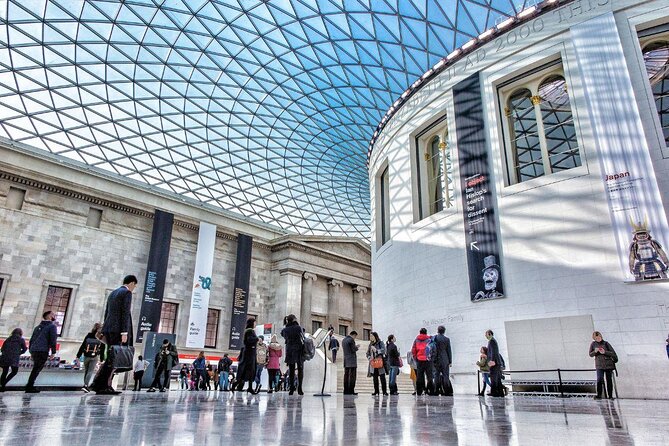
The British Museum is not a tidy collection that you can neatly cover from one end to the other. Its rooms span ancient Egypt, Greece, Rome, China, the Pacific, prehistoric Europe, medieval Europe, and much more. A floor plan can tell you where an object is, but it cannot tell you why that object matters.
That is where a private guide earns the fee. Robert’s approach focuses on stories, links between objects, and the small details that help you understand what you are seeing. You are not simply moved from display case to display case. You can stop, ask questions, and spend more time on the subjects that catch your attention.
This matters most if you have only one visit in London. Without a plan, you can spend half an hour finding a gallery, lose your bearings, and still leave without seeing the objects you came for. A guide keeps the visit moving while giving each major stop enough explanation to feel worthwhile.
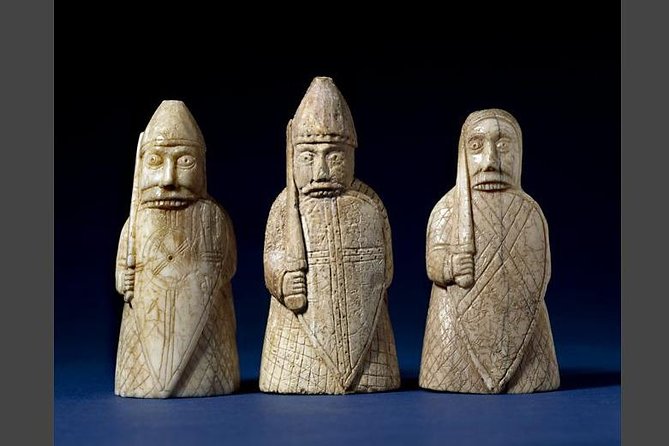
The private setup also suits mixed groups. One person may want Egyptian archaeology, another may care about Greek sculpture, and a child may be waiting for the Lewis Chessmen. A shared public tour has to follow one fixed script. Here, your guide can adjust the balance.
More museums in London:
- Chelsea FC Stadium Tours and Museum
★ 5.0 · 1,908 reviews - Official tickets: Moco Modern & Contemporary Art Museum
★ 4.5 · 1,157 reviews - British Museum London Guided Tour Semi-Private 8ppl Max
★ 5.0 · 984 reviews
Starting at Great Russell Street
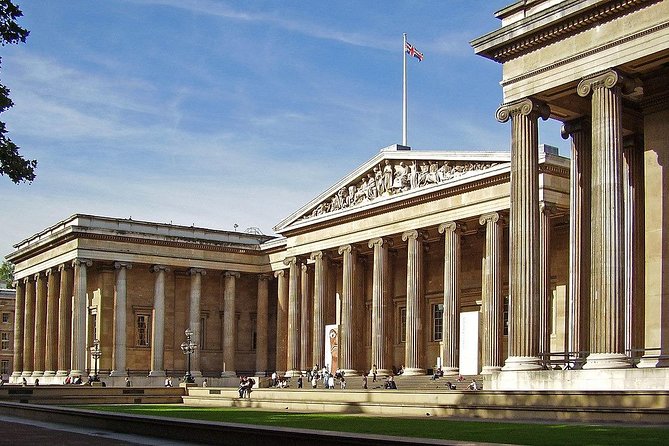
The meeting point is the British Museum on Great Russell Street, London WC1B 3DG. The activity begins and ends there, so you do not need to arrange a separate return transfer after the tour.
The entrance can be busy, especially around opening time. The museum is a major London sight, and the security queue can become part of your visit if you arrive at the wrong moment. Several accounts of this experience highlight Robert’s early arrival and his ability to help groups enter efficiently, but I would still confirm the meeting details with him before the day.
If you choose the morning option, arrive with enough time to find the entrance and meet your guide without rushing. That is especially useful for a family or a group of six. A late arrival cuts into a fixed three-hour tour, even if the guide is understanding.
The mobile ticket is convenient, and admission is included. You should still read the booking confirmation carefully for the exact meeting instructions, since the museum has more than one entrance area and the public queue may not be the best place to wait.
The Rosetta Stone and the Egyptian galleries
The Rosetta Stone is one of the museum’s essential stops. It is famous not only because it is an ancient stone, but because its inscriptions helped scholars understand Egyptian hieroglyphs. Seeing it in person gives the familiar name some physical weight, and a guide can explain why the object changed the study of ancient Egypt.
Going to the Rosetta Stone early is a sensible plan. It is one of the museum’s best-known objects, so it attracts a steady crowd. Robert has been praised for taking groups there near the start, allowing them to get close before the room becomes harder to navigate.
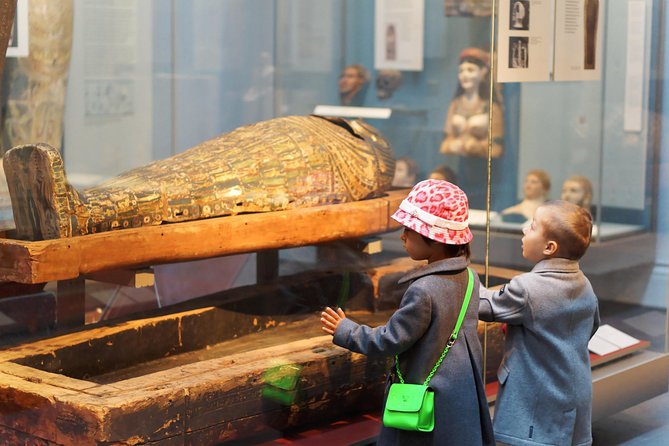
From there, the Egyptian collection offers plenty of room for questions. A guide can help you connect statues, carved inscriptions, funerary objects, and everyday artifacts instead of treating each case as an isolated display. You might also find that the Egyptian rooms appeal to children because the objects are visually strong and the stories are easy to follow.
The limitation is that three hours cannot do justice to the entire Egyptian collection. If Egypt is your main reason for visiting, tell Robert before the tour so he can give it the time it deserves.
Greek and Roman treasures, including the Parthenon Marbles
The Greek and Roman galleries bring a different set of questions. Here, you can expect discussion of sculpture, architecture, religion, public life, and the way later societies viewed the classical world.
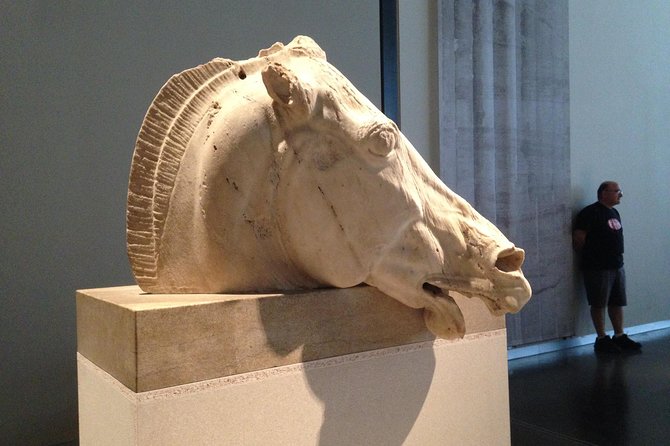
The Parthenon Marbles are among the museum’s most important and debated displays. They came from the Parthenon in Athens, and their presence in London remains a subject of disagreement between Britain and Greece. A good guide can explain both the artistic importance of the sculptures and the arguments around their removal and ownership.
That context is useful because the marbles are easy to admire only as beautiful carvings. Their original setting, religious purpose, damage, and later journey all shape what you are seeing. Robert’s art background and long involvement with the museum can add useful perspective here, though you should expect the amount of time spent on the marbles to depend on your group’s interests.
The Greek and Roman rooms can also be demanding for younger visitors if the tour becomes too technical. The private format helps. Your guide can keep explanations lively, answer direct questions, and move on when attention starts to fade.
A few more things to do in London worth a look
- Westminster 3 Hour Walking Tour and Visit of Churchill War Rooms
★ 5.0 · 967 reviews - Private Guided Tour of The Victoria and Albert Museum – 3 Hour
★ 5.0 · 74 reviews - British Royal 3 Hour Walking Tour!
★ 4.5 · 53 reviews - Best of London Walking Tour – 3 Hours, Small Group max 10 people
★ 5.0 · 49 reviews
The Enlightenment Room and the Waddesdon Bequest
The Enlightenment Room gives you a change of pace. It reflects the museum’s early purpose as a place where objects from different cultures were gathered, classified, and studied. The room helps explain how museums developed and why the British Museum looks and feels different from a single-subject art gallery.
This is a good stop if you want more than a list of famous objects. It gives you a way to think about collecting, scholarship, and the changing meaning of museums. It also helps place the museum itself within the story of European learning.
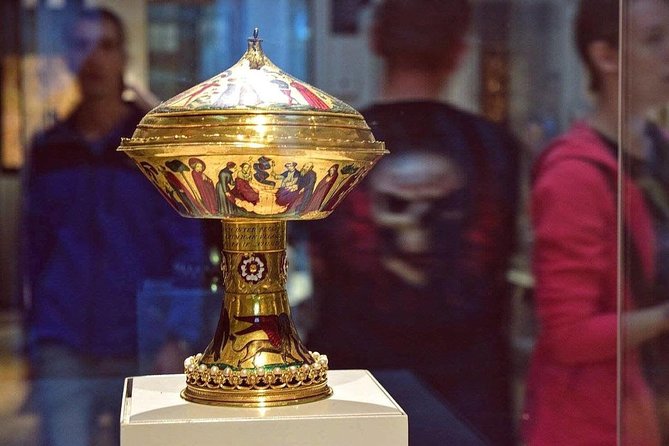
The Waddesdon Bequest offers another shift. It contains decorative arts and finely made objects, showing how small scale and craftsmanship can be just as absorbing as monumental sculpture. You may appreciate this room most if you enjoy jewelry, metalwork, design, and close visual detail.
Neither stop is likely to be the first choice for a child who wants mummies or chess pieces. That is another reason the private itinerary matters. Robert can include these rooms when they fit your interests rather than forcing every group through the same set of galleries.
Sutton Hoo, the Lewis Chessmen, and objects with a human story
The Sutton Hoo Treasure is one of the museum’s strongest stops for connecting archaeology with real people. The finds came from an Anglo-Saxon ship burial in Suffolk, including the famous helmet and other objects linked to a high-status burial.
A guide can help you picture the burial site and explain what the objects suggest about power, belief, trade, and craftsmanship. The helmet is visually memorable, but the wider story gives the display its force. This is often a rewarding section for families because it combines mystery, archaeology, and recognizable human concerns.
The Lewis Chessmen offer a smaller but equally memorable encounter. These medieval figures were carved from walrus ivory, and their expressions make them unusually approachable. You can look at them as art, gaming pieces, archaeological evidence, or glimpses of medieval life.
These are exactly the kinds of objects you might hurry past without guidance. Robert’s strength, according to the available feedback, is spending time on objects that are not always the first names people write on their museum list. If you already know you want Sutton Hoo or the chessmen, mention it before the tour begins.
Chinese art, prehistoric carving, and Easter Island
The tour can also reach well beyond the museum’s most famous European and Egyptian displays. Chinese works of art offer a chance to see a broader range of materials, periods, and ideas. The objects may include ceramics, sculpture, decorative work, or other forms of art, but the exact route depends on your guide and your interests.
Prehistoric carving gives you another view of early human expression. These objects can look simple at first glance, yet their age and purpose raise useful questions about ritual, communication, and daily life. A guide can give you a reason to pause before you move on.
Hoa Hakananai’a from Easter Island is another major object named for this experience. The moai statue is powerful in its scale and presence, but its modern history also deserves attention. The object represents a culture far from London, and seeing it in a museum setting can prompt questions about removal, ownership, and how institutions present the heritage of other communities.
You will not see every region represented by the museum in three hours. That is not a flaw in the tour so much as a fact of the building. Think of this as a carefully chosen introduction, with enough range to help you decide what to revisit on your own.
How the three-hour pace feels
Three hours is long enough to build a real understanding of the museum, but short enough to keep the day manageable. You will move between galleries, stop for explanations, and have time for questions. The pace is active, though the private format allows some adjustment.
Several family accounts describe the tour as holding the attention of teenagers and younger children. That is important because the British Museum can be tiring when every room is treated as equally important. A guide who chooses about twenty major objects and tells their stories can make the visit feel focused rather than rushed.
Crowds remain a factor. Even a skilled guide cannot make a popular museum empty, and busy rooms can limit how long you stand in front of an object. A morning start is the better pick if you want the best chance of seeing major pieces before the day becomes more crowded.
You should also expect some walking and standing. The supplied information says most people can participate, and service animals are allowed. If anyone in your group has particular mobility needs, ask about the route before booking, since the tour covers a large museum.
Is $267.36 good value for your group?
The price is $267.36 per group of up to six people. At the full group size, that works out to about $44.56 per person for three hours, including museum admission and a private guide. That is a fair price for a family or group of friends that wants personal attention.
For two people, the cost is about $133.68 each. For one person, it is a substantial outlay. The value depends on how much you want help with planning, interpretation, and time management.
I would especially consider it for a first visit, a short London stay, or a group with different interests. It is also useful if you have already visited but felt you saw the museum without understanding it. Several repeat visitors found that a private guide changed the experience because the museum’s size made independent wandering less productive.
If you enjoy taking your time with a single object, a fixed three-hour route may feel too brisk. If you want to browse every gallery at your own pace, admission on its own may suit you better. This tour is for making a strong start, not for replacing a full day of independent exploration.
Who should book this private museum tour?
I would recommend it to first-time visitors who want to see the major objects without spending hours lost between galleries. Families are another strong match, especially when children or teenagers need stories and variety to stay interested.
It also suits adults who care about art, archaeology, or history but do not want a lecture. Robert’s style is described as patient, engaging, and open to follow-up questions. His experience with other London museums can also be useful if you want ideas for the rest of your museum days.
The tour is less suitable if your budget is tight, your group is larger than six, or you prefer complete independence. It is also not the best choice if you want to spend three hours in only one small collection unless you confirm that focus in advance.
Free cancellation is available if you cancel at least 24 hours before the local start time. Cancellations or changes made within 24 hours are not refunded.
Should you book it?
Book this tour if you want the British Museum to feel manageable, personal, and purposeful. The strongest reasons are the private group size, the included admission, Robert’s ability to explain major objects through stories, and the chance to shape the route around your interests.
I would choose a morning start, arrive early, and tell Robert before the tour if the Rosetta Stone, Egyptian rooms, Sutton Hoo, the Lewis Chessmen, or another collection is your priority. If you are visiting alone or as a couple and price matters most, consider the cost carefully. For a family or full group of six, though, this is a practical way to turn a huge museum into a memorable three-hour visit.
FAQ
How long is the British Museum tour?
The private guided visit lasts approximately three hours.
How much does the tour cost?
The price is $267.36 per group, with up to six people included.
Are British Museum admission tickets included?
Yes. Admission tickets to the British Museum are included in the tour price.
Is the tour private?
Yes. Only your group participates in the activity.
Who guides the tour?
Robert is the guide most often named in the available tour information. One piece of feedback refers to Richard, so confirm your guide’s name in the booking details if that matters to you.
Can the tour focus on particular museum collections?
Yes. The experience is personalized for your group, and you can indicate the exhibitions and objects that interest you most.
Are morning and afternoon tours available?
Yes. You can choose between a morning or afternoon tour.
Where does the tour begin and end?
It begins at the British Museum on Great Russell Street, London WC1B 3DG, and ends back at the meeting point.
Just added in London
- The Beatles and a Secret pub★ 4.5 · 36 reviews
- The Beatles & Liverpool Magical Mystery Tour from London★ 4.5 · 80 reviews
- Airport Coach Service from Heathrow to Oxford★ 3.5 · 67 reviews
- The Beatles Magical History Black Taxi Tour London★ 5.0 · 51 reviews
- The Beatles London walking tour. From Abbey Road to the Roof Top★ 5.0 · 61 reviews
- Private The Beatles Taxi Tour in London★ 5.0 · 12 reviews
- The Beatles London Walk★ 4.5 · 120 reviews
- Dinner and Jazz Cruise on the River Thames★ 4.0 · 140 reviews
Museums, compared.

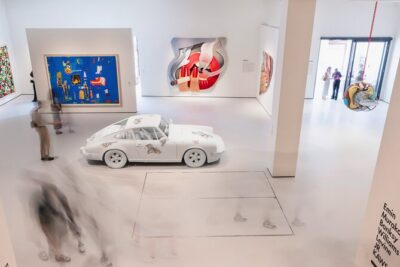
Official tickets: Moco Modern & Contemporary Art Museum
Read our review →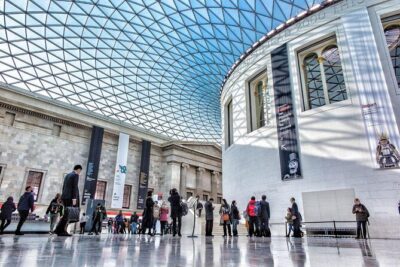
British Museum London Guided Tour Semi-Private 8ppl Max
Read our review →
The British Museum London – Exclusive Guided Museum Tour
Read our review →

Skip the Line: Liverpool Beatles Museum – The perfect tribute to the Beatles
Read our review →
Browse the lists this tour appears in