
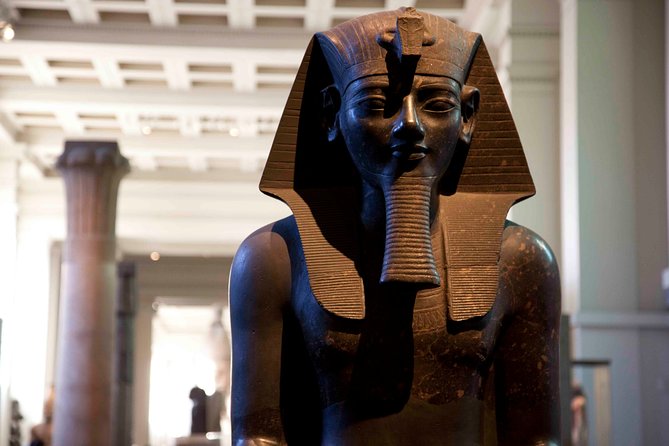
Reviewed · MUSEUMS
British Museum Highlights Private Tour in London including the Rosetta Stone
The British Museum can swallow an entire day before you have found the Rosetta Stone. This private highlights tour takes you straight to the museum’s big stories: Egyptian mummies, Greek sculpture, and Anglo-Saxon treasure. Your guide supplies the map and the missing context.
I like two things here. First, you can ask questions instead of simply reading labels. Second, the route helps you see major objects in a short visit, then return on your own to anything that caught your eye. The main drawback is price: admission to the British Museum is free, so you are paying for direction, explanation, and time saved.
The meeting point needs care. Go to Montague Place by the north entrance, marked by stone lions, and look for a guide holding a sign. A few bookings have had trouble finding the guide, so arrive early and keep the local contact number handy.
Key points at a glance
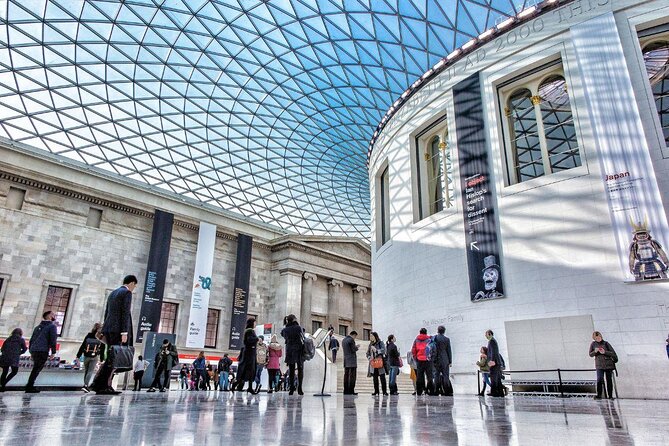
- The Rosetta Stone anchors the visit: See the real stone that helped scholars decipher Egyptian hieroglyphs.
- The Parthenon Frieze brings Athens to London: Your guide explains the scale and setting of this famous Greek sculpture.
- Egyptian Rooms add human meaning: Mummies make more sense when you understand ancient Egyptian ideas about death and the afterlife.
- Sutton Hoo connects the museum to Britain: Anglo-Saxon objects offer a powerful local chapter among the global collections.
- Private guiding keeps the route flexible: You can ask questions and request more attention to subjects that interest you.
- The tour is efficient but not exhaustive: Expect an overview of selected highlights, not every corner of a museum with more than eight million objects.
Why a guide helps inside the British Museum
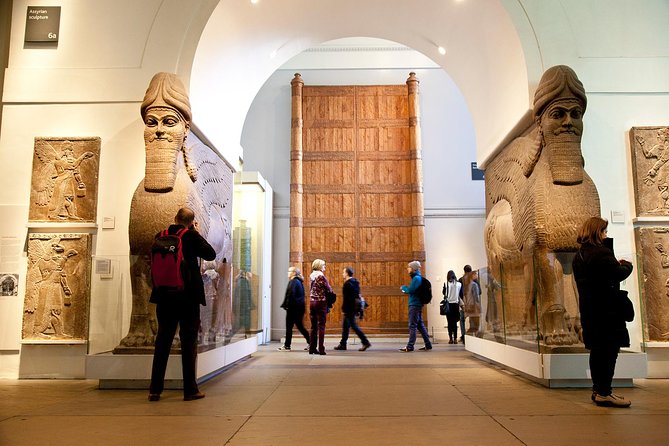
The British Museum is free to enter, but free does not mean easy. Its collection covers about two million years of human history, spread through roughly 70 galleries and nearly one million square feet. You can easily spend half an hour walking in circles, then discover that you have missed the very object you came to see.
This tour gives you a working plan. Rather than wandering from room to room, you follow a route built around famous pieces and the stories behind them. That matters most if you have only a morning or afternoon in London.
I also like the chance to ask questions in real time. If Egyptian burial customs interest you more than Greek sculpture, you can steer the conversation. If your child wants to know how hieroglyphs were read, you can pause. The guide is there for your group, not for a large crowd of strangers.
The quality depends heavily on the individual guide. Strong guides named in the tour feedback include Rob, Rob Smith, Trudy, Guy, Norma, and ZoZo. Rob was praised for giving just enough information without turning every display into a lecture. Trudy was especially appreciated for her energy and for helping visitors navigate crowded galleries. That variation is worth remembering: a private tour gives you personal attention, but the experience still relies on who arrives at the meeting point.
More city tours in London:
- Westminster to Greenwich Sightseeing Thames Cruise in London
★ 4.5 · 2,969 reviews - London Sightseeing Tour: Guard Change with Tower of London Option
★ 4.5 · 2,672 reviews - Hop-On Hop-Off Sightseeing River Cruise on the Thames
★ 4.0 · 1,256 reviews
Starting at Montague Place and finding the north entrance
The tour begins on Montague Place, outside the museum’s north entrance. Look for the stone lions by the doorway and a guide holding a sign. The activity ends back at the meeting point, so you will not be left somewhere across central London.
I would arrive at least 10 to 15 minutes early. The instructions are clear enough on paper, but several people have had difficulty locating the guide, including one instance where no sign was visible and another where the contact person could not give useful directions. The museum is large, and a little extra time removes needless stress.
This is not a hotel pickup service. You make your own way to the museum, and food and drinks are not included. The museum is near public transport, so it fits easily into a day based around Bloomsbury, Covent Garden, Soho, or the West End.
The tour is offered in English, and confirmation is provided when you book. Strollers are not permitted on the tour. Most people can take part, but the route includes roughly two hours of walking, and one account specifically noted stairs. If you use a wheelchair, check the arrangement with the provider before booking, since the information about wheelchair access is not fully consistent.
The Rosetta Stone and the problem of reading the labels alone
The Rosetta Stone is the natural first major stop for many people. It is not a language-learning program or a modern teaching tool. It is an ancient stone with the same decree written in different scripts, including Greek and Egyptian forms. Comparing those texts helped scholars begin to read Egyptian hieroglyphs.
That basic fact is easy to remember, but a guide can make the object feel less abstract. You learn why a single inscription mattered so much and how it changed the study of ancient Egypt. Seeing the stone in person also gives you a better sense of its physical presence, something a textbook cannot provide.
The display area can be crowded. A guide helps you get close enough to see the object, then gives you a sensible amount of time before moving on. This is one of the clearest examples of what you are paying for: not admission, but a direct path through a busy room and an explanation that connects the object to a much larger story.
The guide may also point out nearby Egyptian displays. Expect interpretation rather than a long period of silent examination. If the Rosetta Stone is your main goal, tell the guide at the beginning so you get enough time at the case.
The Parthenon Frieze and the scale of ancient Greece
The Parthenon Frieze is another central stop. This long sculpted band once decorated the Acropolis in Athens. The tour information describes it as just over three feet high and about 525 feet long, an impressive scale even when sections are displayed indoors.
A guide can explain what you are seeing in relation to the Parthenon, rather than leaving you with a row of carved figures and a short label. You may also pass other Greek objects and Athenian marbles during this part of the route.
This section carries an important practical limitation. The British Museum is enormous, and a two-hour-plus tour cannot give every Greek display the attention it deserves. You will see selected highlights, not a full study visit. If Greek sculpture is your main interest, say so early and ask the guide to spend more time there.
The route may feel brisk when the galleries are full. One account described a packed museum and found the guide especially useful for reaching key objects despite the crowd. Another felt that the tour covered too few exhibits and wished for a full day with a self-guided device instead. Both reactions make sense. This is an orientation tour, not a leisurely museum course.
More museums in London:
- Chelsea FC Stadium Tours and Museum
★ 5.0 · 1,908 reviews - Official tickets: Moco Modern & Contemporary Art Museum
★ 4.5 · 1,157 reviews - British Museum London Guided Tour Semi-Private 8ppl Max
★ 5.0 · 984 reviews - The British Museum London – Exclusive Guided Museum Tour
★ 5.0 · 555 reviews
Egyptian mummies and ancient ideas about the afterlife
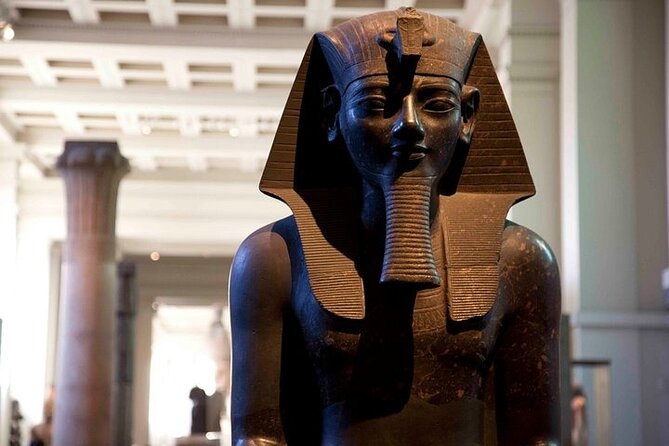
The Egyptian Rooms provide the tour’s strongest chance to move beyond famous names. Mummies can look like dramatic objects behind glass, but their purpose becomes clearer when you understand ancient Egyptian beliefs about death, burial, and the afterlife.
Your guide explains why preserving the body mattered and how objects placed with the dead related to the next world. That context changes the way you look at coffins, statues, and burial goods. You are not just seeing a collection of old objects. You are seeing evidence of how people prepared for death and remembered those who had gone before.
Some displays are intentionally kept at low light to protect the objects. One difficult account described a guide using a flashlight after a museum staff member asked her to stop. That is not acceptable conduct, and it is a useful reminder to respect gallery rules. You should expect your guide to follow museum instructions carefully.
The Egyptian section may be the busiest part of the visit. It is also an area where a clear speaker matters. If your guide’s voice or accent is hard for you to follow, ask politely for repetition. A private setting makes that easier than a large public group.
Sutton Hoo and Britain’s Anglo-Saxon story
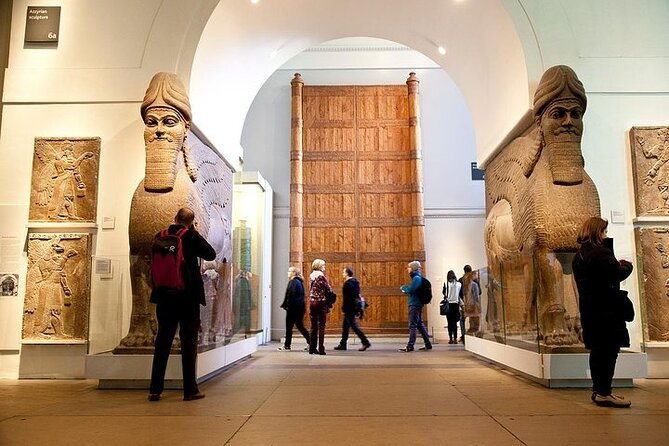
The Sutton Hoo material gives the visit a welcome change of direction. After Greek and Egyptian objects, you turn to treasures from the British Isles and the Anglo-Saxon period.
The burial site is famous because the objects survived centuries, burial, and the attention of grave robbers. The display offers a vivid sense of early medieval Britain and shows that the museum is not only about Egypt, Greece, and Rome.
This part can be especially useful if you want the museum connected to Britain itself. The collection often feels global and imperial in scale, while Sutton Hoo brings the story closer to the country you are visiting. Ask your guide to explain how the objects were found and why the burial was such an unlikely survival.
It is also a good place to ask broader questions about the museum’s collection and the way objects reached London. The supplied information does not promise a dedicated discussion of ownership or repatriation, so do not assume the guide will cover those subjects. Still, a private tour gives you the chance to raise them if they matter to you.
How long the tour really takes
The headline duration is about two hours and 30 minutes, while the detailed itinerary lists one hour and 30 minutes for the museum portion. That difference deserves attention when you plan your day.
Allow at least two and a half hours around the activity, and do not schedule a train, flight, or timed attraction immediately afterward. The actual time can feel shorter or longer depending on crowd levels, questions, and the guide’s route.
The tour is compact by museum standards. You will see a selection of essential objects, then continue exploring independently. Several people found this format useful because the guide showed them where the other major sections were, leaving them free to return to subjects of personal interest.
If you have a full day, you might prefer to enter on your own and use a museum map or digital guide. If you have one half-day in London, the organized route makes more sense. You will not see everything, but you are less likely to leave having missed the best-known rooms.
Price, private attention, and what you are buying
The listed price is $141.56 per person. Since British Museum admission is free, this is not a ticket price in the usual sense. It is the cost of a professional English-speaking guide, a planned route, and the ability to ask questions within a private activity.
That can be good value for a first visit. A guide may save you time, prevent wrong turns, and provide the background needed to understand what you are seeing. It is particularly useful for couples, families, and small groups with different levels of interest in art and history.
The value is weaker if you enjoy slow, independent looking or already know the museum well. You might feel rushed, especially in crowded rooms. One participant preferred a full day with a self-guided device, while others felt they would never have found the key pieces without a guide.
Group discounts are available, though the exact saving is not provided. The activity is private, meaning only your group participates. That is different from joining a large public tour, and it gives you more control over the pace and questions.
Who should book this British Museum tour
I would choose this tour if you are visiting London for a short time, have never been to the museum, or feel overwhelmed by huge collections. It is also a good fit if the Rosetta Stone, Egyptian mummies, Greek sculpture, or Sutton Hoo are on your must-see list.
Families may appreciate the stories and the ability to ask simple questions without holding up a large group. Adults who want historical context rather than a quick photo stop should also benefit.
I would hesitate if you want to examine a small number of objects for a long time. Art students, repeat visitors, and people with a full day to spare may get more from an independent visit. You should also be comfortable with a fair amount of walking and with the possibility that the museum will be warm and crowded.
Arrive early at Montague Place, confirm the guide’s meeting details, and tell the guide your priorities before the route begins. If you have only a few hours, that small conversation can make a big difference.
Should you book it?
Book this British Museum tour if you want a fast, guided introduction to the Rosetta Stone, Parthenon Frieze, Egyptian Rooms, and Sutton Hoo. The museum is free, but the collection is so large that professional direction can be worth the fee, especially on a tight London schedule.
Skip it if your priority is low-cost, slow exploration. In that case, enter on your own and reserve several hours. For everyone else, this is a practical way to get your bearings, hear the stories behind the major objects, and then continue independently once the guided portion ends.
FAQ
How much does the British Museum Highlights Private Tour cost?
The listed price is $141.56 per person. Group discounts are available, though the exact discount is not specified.
How long does the tour last?
The experience is listed as approximately two hours and 30 minutes. The detailed museum itinerary states one hour and 30 minutes, so allow at least two and a half hours when planning your day.
Is British Museum admission included?
Yes. The tour includes admission fees, along with a professional English-speaking guide.
Where does the tour meet?
You meet on Montague Place in London, by the British Museum’s north entrance. The entrance has stone lions by the doorway, and the guide is expected to hold a sign.
Where does the tour end?
The activity ends back at the meeting point.
Is the tour private?
Yes. Only your group participates in the private activity.
What language is the tour offered in?
The tour is offered in English.
Are food, drinks, and hotel transfers included?
No. Food and drinks are not included, and there is no hotel pickup or drop-off.
Can I cancel the booking?
You can cancel up to 24 hours before the experience start time for a full refund. Cancellations or changes made less than 24 hours in advance are not accepted for a refund.
Just added in London
- The Beatles and a Secret pub★ 4.5 · 36 reviews
- The Beatles & Liverpool Magical Mystery Tour from London★ 4.5 · 80 reviews
- Airport Coach Service from Heathrow to Oxford★ 3.5 · 67 reviews
- The Beatles Magical History Black Taxi Tour London★ 5.0 · 51 reviews
- The Beatles London walking tour. From Abbey Road to the Roof Top★ 5.0 · 61 reviews
- Private The Beatles Taxi Tour in London★ 5.0 · 12 reviews
- The Beatles London Walk★ 4.5 · 120 reviews
- The Alfred Hitchcock London Walk with Sandra Shevey★ 5.0 · 15 reviews
Museums, compared.

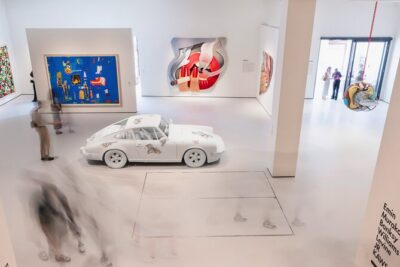
Official tickets: Moco Modern & Contemporary Art Museum
Read our review →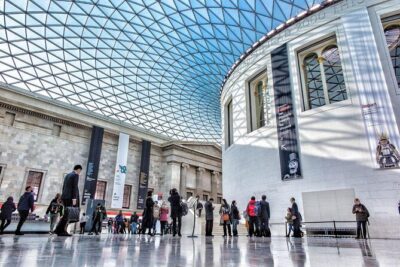
British Museum London Guided Tour Semi-Private 8ppl Max
Read our review →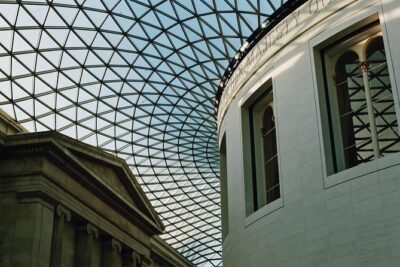
The British Museum London – Exclusive Guided Museum Tour
Read our review →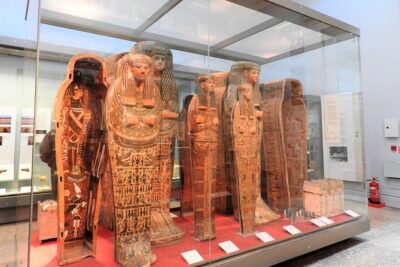

Skip the Line: Liverpool Beatles Museum – The perfect tribute to the Beatles
Read our review →
Browse the lists this tour appears in