Reviewed · TOURS IN CHESTER
Admission Ticket to Sick To Death in Chester
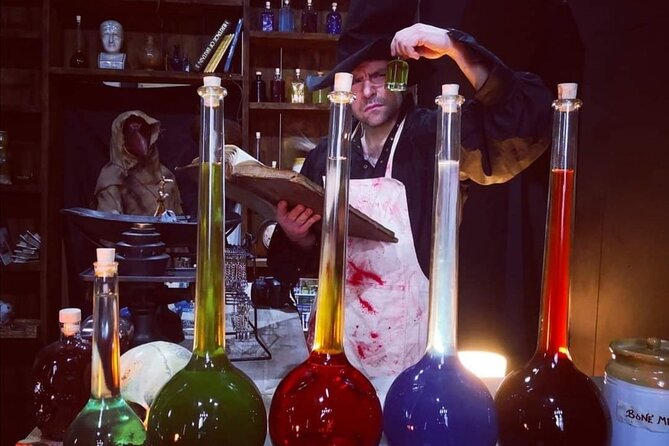
Sick to Death turns Chester’s medical past into a hands-on playground of plague, splatter, and science. You move through doors and corridors on your own, finding displays about disease, early medicine, Victorian health, and the strange ideas people once used to explain illness. It is not a hushed museum. Expect bad smells, creepy props, magic, and jokes alongside the facts.
I like the freedom to set your own pace, and I like the way the exhibits give younger visitors something to touch, smell, solve, and investigate. The main caution is simple: some scenes and smells may be too scary or gross for sensitive children, while adults wanting a polished traditional museum may find parts of the display grubby or hard to read in low lighting.
Key points to know before you go
- A self-guided hour on Chester’s historic Rows: You explore without a scheduled guide or fixed group route.
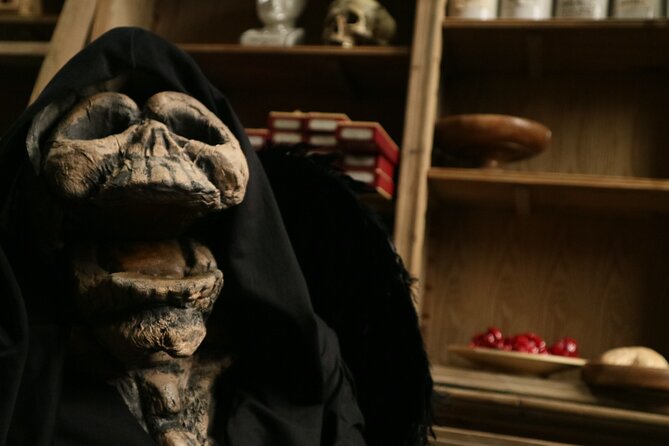
- Medicine with a gruesome twist: Plague, disease, autopsy, early treatments, Victorian illnesses, and medical science all get the theatrical treatment.
- Interactive displays for curious children: Smells, quizzes, hands-on elements, and unusual objects keep the visit moving.
- A good choice for families with older children: The subject is educational, but the presentation includes gore, creepy scenes, and spooky humor.
- A small attraction with an unusual focus: You will not find another standard medical museum experience in Chester city centre.
- About $11.05 per person for roughly one hour: That is fair value if you read the displays and try the interactive features rather than rushing through.
Entering Chester’s playground of plague
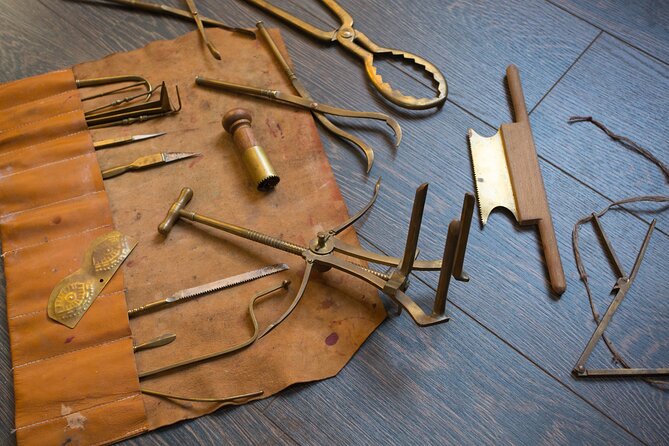
Sick to Death is built around a simple idea: the history of medicine is fascinating because it is also deeply unpleasant. Before modern treatment, people faced plague, infection, disease, pain, and death with limited knowledge and often bizarre remedies. This attraction puts that story in front of you with a theatrical mix of props, facts, smells, and puzzles.
The setting on Chester’s historic Rows adds character. You are not entering a large national museum with endless galleries. This is a compact city-centre attraction, designed to occupy about an hour and give you a concentrated hit of medical history. That makes it easy to fit between Chester’s cathedral, city walls, shops, and other sights.
The opening sets the tone. You are warned, in effect, to expect bad smells and gross gore, but also a bit of magic and plenty of science. That balance matters. Sick to Death is not simply a horror attraction, and it is not a formal medical collection. It uses theatrical presentation to make facts about illness and treatment easier to remember.
I especially like that the experience does not ask you to stand still while someone delivers a long talk. You walk from room to room and corridor to corridor, choosing how much time to give each display. If one subject catches your interest, you can read more. If a scene is too much for a younger child, you can move on.
A few more things to do in England worth a look
- Tower of London and Crown Jewels Exhibition Ticket
★ 4.5 · 6,677 reviews - Thorpe Park Admission Ticket
★ 4.0 · 5,915 reviews - Alton Towers Resort 1 Day Admission Ticket
★ 3.5 · 5,501 reviews
How the one-hour route works
The visit is self-guided, so there is no named guide or set commentary to follow. You make your own way through the exhibition, opening up the next part of the story as you go. That gives you control, but it also means the quality of the visit depends on how much you engage with the displays.
A quick walk-through may take less than the advertised hour. If you stop to read the information panels, test the interactive pieces, and work through the quizzes, the visit becomes a fuller experience. I would plan on about an hour, with a little flexibility if your family reads every panel or spends time examining the stranger objects.
The route covers medicine from the past and points toward the future. You may encounter information about plague, diseases, medical beliefs, early treatment, and later developments in medicine. The presentation is aimed at discovery rather than a strict academic timeline, so expect a mixture of history, science, performance, and visual humor.
One particularly useful feature is the autopsy quiz. It gives the visit a clear activity rather than leaving you to passively scan display boards. The quiz also suits families because children and adults can work things out together, assuming everyone is comfortable with the subject.
There is plenty to read. That is good news if you enjoy facts, but it may test younger children who cannot yet read independently. One useful approach is to let children focus on the interactive pieces while an adult explains selected panels in plain language.
Plague, disease, and the less pleasant side of medicine
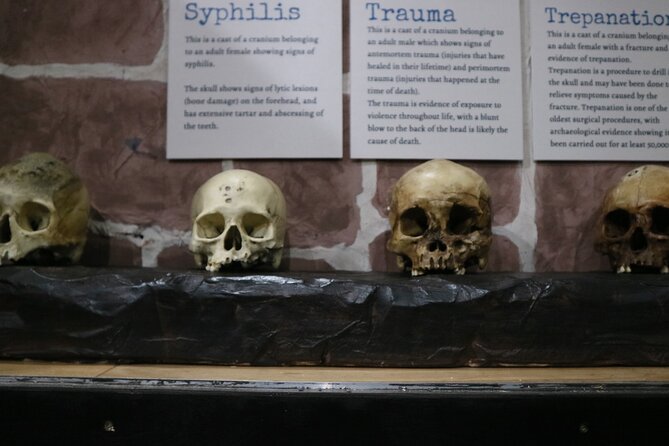
The exhibition’s strongest subject is the story of disease. Plague and the Black Death receive attention, as do Victorian diseases and the development of early medicine. These are not presented as distant textbook topics. The attraction uses sights, smells, and odd details to show how frightening and confusing illness could be.
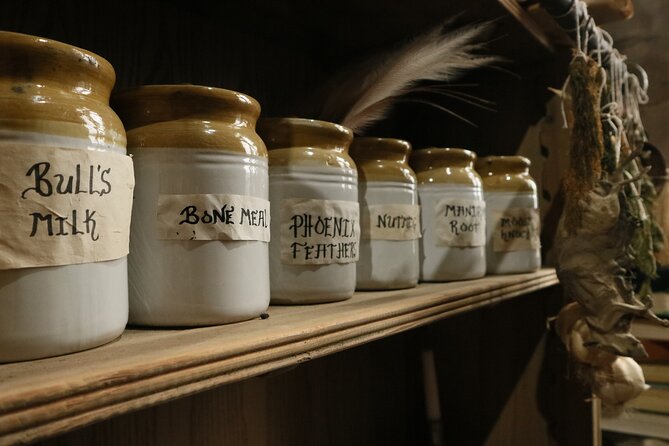
The smell-based elements deserve a warning. You may be asked to smell items connected with the experience, and the effect is intentionally unpleasant. For some children, that is the funniest part of the visit. For others, it will be the point where they decide to keep their distance.
The information is most rewarding when you take time to read it. There are facts about disease and treatment that can surprise both adults and children. The attraction makes clear that medicine developed through observation, experiment, mistakes, and changing ideas. You leave with a better sense of how far medical care has come.
The tone can shift quickly. One moment you are reading a serious explanation of disease, and the next you are facing a gross prop or spooky display. That uneven mix is part of the attraction’s identity. If you want a calm, orderly account of medical history, this may feel too showy. If you want your family to remember what it learned, the unusual presentation works well.
Interactive features that give children a job
Sick to Death makes a clear effort to involve younger visitors. Interactive exhibits are not just decoration. They give children things to investigate, smell, touch, or solve, which helps turn a difficult subject into an active experience.
The autopsy quiz is a highlight for many families. It adds a game-like task to the medical content and gives older children a reason to pay attention. It also helps adults avoid doing all the reading while children simply wait for the next room.
Magic and theatrical effects appear throughout the attraction. The combination of science and magic may sound odd, but it fits the subject. Before modern medical knowledge, illness was often explained through superstition, spirits, curses, or strange theories. The attraction uses that gap between old beliefs and modern science to create humor and surprise.
You will get more from the visit if you encourage children to ask questions. Why did people believe a certain treatment worked? What would happen today? Why does a smell or prop belong in a medical exhibition? Those questions turn the attraction into a family conversation rather than a quick walk through a spooky set.
Age and temperament matter. The exhibition is family-friendly, but that does not mean it is gentle. A child who enjoys creepy toys, gross-out jokes, and science experiments may have a terrific time. A child who dislikes horror, dark scenes, or medical subjects may need reassurance or a shorter visit.
Same base, a different kind of day:
- Stonehenge, Windsor Castle, and Bath from London
★ 4.5 · 18,662 reviews - London Big Bus Hop-On Hop-Off Tour with Optional River Cruise
★ 3.5 · 10,803 reviews - London Small Group Tour of Historical Pubs
★ 5.0 · 10,422 reviews - Beatles Magical Mystery Tour
★ 5.0 · 9,266 reviews
Victorian illness and Chester’s medical past
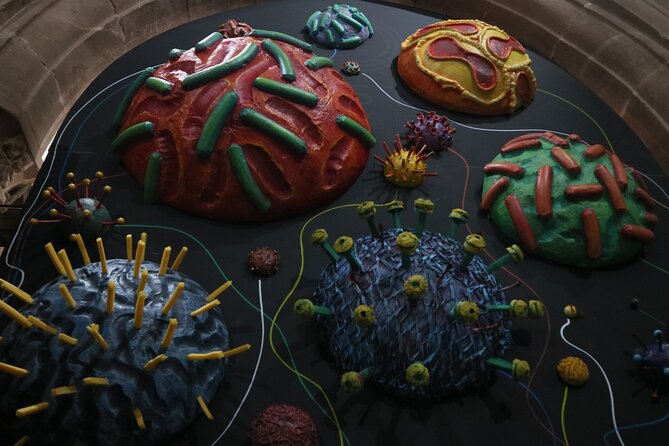
The displays about Victorian diseases and early medicine give the attraction a useful local and historical feel. You are not only looking at modern science. You are seeing how ordinary people once understood sickness, what they feared, and how limited treatment could be.
The exhibition does not require a medical background. The information is written for a general audience, though some sections may reward confident readers more than very young children. I would not treat the visit as a substitute for a formal history lesson, but it can give families a memorable introduction to the subject.
The attraction’s setting in Chester city centre is practical as well as atmospheric. You can visit it during a day of sightseeing without setting aside half a day. Its location near public transportation also makes it straightforward to add to a city itinerary.
Because the visit lasts about an hour, it works especially well in wet weather or when you need a short indoor activity. It can also fill a gap before lunch or between other Chester sights. The limited opening schedule matters, though. The listed hours are Thursday through Sunday, 10:00 a.m. to 6:00 p.m., for the stated operating period, so check the date when you book.
The magic shop and the final browse

Sick to Death includes a magical shop selling curiosities such as witches’ cauldrons, spell kits, crystals, poison chalices, and creepy toys. This is part of the experience’s playful side, and it gives children something to browse after the medical displays.
The shop may appeal even to people who are less interested in the historical material. It also reinforces the attraction’s theme: the boundary between old medical belief, superstition, entertainment, and modern science.
Keep spending in mind. The admission price does not include purchases from the shop, so treat it as an optional extra rather than part of the value calculation. If you are visiting with children, decide in advance whether browsing is enough or whether you are prepared for a souvenir request.
Is $11.05 fair for an hour?
At about $11.05 per person, Sick to Death is priced like a short specialist attraction rather than a full-day museum. The value depends on your pace. If you rush through in twenty minutes, the cost may feel high. If you read the panels, try the displays, work through the quiz, and let children explore, an hour of entertainment and learning is a reasonable return.
I would compare it with the cost of another indoor activity, not with a free historic church or outdoor city walk. You are paying for the unusual presentation, the interactive elements, and the chance to visit a themed attraction that is difficult to duplicate elsewhere in Chester.
Booking ahead is sensible. The attraction is often reserved around nine days in advance, and advance tickets help protect your chosen visit time. Confirmation is provided when you book, and free cancellation is available if you cancel at least 24 hours before the start time. Changes or cancellations inside that period are not accepted for a refund.
Who will enjoy Sick to Death most?
This is a strong choice for families with school-age children and teenagers who like science, history, puzzles, strange smells, and spooky humor. It also suits adults who enjoy unusual small museums and do not need every exhibit to look new or polished.
Older children will get more from the reading and medical explanations, while younger children may focus mainly on the theatrical and interactive features. The attraction can work for mixed-age families because adults can read, children can investigate, and everyone can compare reactions to the more disgusting displays.
I would think twice if your group dislikes gore or horror. Parts of the exhibition may feel too scary for sensitive children, and some adults may find the lighting makes information panels difficult to read. A few displays may also look grubby or less well maintained than a major museum collection.
That does not make the attraction a poor choice. It simply sets the right expectation. Sick to Death is a lively, slightly scruffy, deliberately gross experience. Its charm comes from being odd, playful, and different from a standard museum.
Should you book Sick to Death?
Book it if you want an unusual one-hour stop in Chester, especially with children who enjoy hands-on activities and are comfortable with medical gore. The plague displays, autopsy quiz, smell-based exhibits, and magic-shop finish give the visit a clear personality.
Skip it if you are looking for a large collection, a quiet academic museum, or a polished attraction with bright lighting and pristine displays. For most families who enjoy a little gross humor, the modest price and compact length make it a useful addition to a Chester day. Book ahead, allow the full hour, and prepare children for smells and scary moments before you enter.
FAQ
Where is Sick to Death located?
Sick to Death is in Chester city centre, on Chester’s historic Rows.
How long does the visit take?
The visit takes approximately one hour.
Is the experience self-guided?
Yes. You explore the museum at your own pace through doors and corridors.
What subjects does Sick to Death cover?
It covers the history of medicine, disease, plague, early treatments, Victorian illnesses, medical science, and ideas connected with medicine in the past and future.
Is Sick to Death suitable for children?
It is designed as a family-friendly attraction with interactive exhibits for younger visitors. However, it includes gore, bad smells, creepy material, and some scary elements, so sensitive children may not enjoy every part.
Is the attraction available in English?
Yes. The experience is offered in English.
What are the opening hours?
For the stated operating period, Sick to Death is open Thursday through Sunday from 10:00 a.m. to 6:00 p.m.
How much does admission cost?
The listed admission price is $11.05 per person.
Can I cancel my booking for a refund?
Yes. You can cancel at least 24 hours before the experience start time for a full refund. Cancellations or changes made less than 24 hours before the start time are not accepted for a refund.
Just added in England
- Exceptional Bath tour guide making your visit splendidly memorable.★ 4.5 · 69 reviews
- Full-Day Private Tour of Stonehenge and Bath with Pickup★ 5.0 · 6 reviews
- One Way or Round Trip Private Transfer: Heathrow Airport to Bath★ 5.0 · 3 reviews
- Quintessential Cotswolds Half-Day tour from Bath (for 2-8 guests)★ 5.0 · 27 reviews
- Stonehenge Half-Day luxury guided tour from Bath for 2-8★ 5.0 · 15 reviews
- Private Guided Tour of Jane Austen’s Bath★ 5.0 · 7 reviews
- Cotswolds and Oxford Small-Group Tour from Bath★ 5.0 · 51 reviews
- British Wine and Cheese Tasting Experience in City of Bath★ 5.0 · 18 reviews
Tours in Chester, compared.

Fascinating Walking Tours Of Roman Chester With An Authentic Roman Soldier
Read our review →
Fun, Flexible Treasure Hunt Around Chester with Cryptic Clues & Hidden Gems
Read our review →