
Reviewed · SELF-GUIDED TOURS
Private Liverpool Self-Guided Tour
Liverpool’s best sights are spread across the city centre, and this self-guided walk links them in a sensible line from St George’s Hall to Royal Albert Dock. You get Beatles stories, local history, architecture, football memory, and practical suggestions for museums and food, all without being tied to a group schedule.
I like the three weeks of unlimited access, which lets you pause for lunch, shelter from rain, or return to a favourite area. I also like the clear route, GPS map, and audio guide voiced by Jenny rather than a computer. The main drawback is simple: you are on your own if the app fails, and one booking had trouble connecting.
Key points at a glance
- Follow an 18-stop city-centre route from St George’s Hall to Royal Albert Dock.
- Hear Beatles commentary at the Cavern Quarter and Pier Head, plus stories about Liverpool’s music scene.
- Use the tour for up to three weeks, not just on one afternoon.
- Expect about two to four hours of walking, with time to stop indoors along the way.
- Pay extra for attractions, including the Cavern Club and any ticketed events or museum offerings.
- Use the app’s map, GPS route, photos, videos, and local suggestions to shape the day yourself.
How this Liverpool audio walk works
This is a private activity in the sense that only your group takes part, but it is not a private walking tour with a person beside you. You receive an email with instructions to activate the app, then follow the route on your phone.
Jenny provides the recorded narration. The app includes audio, written information, pictures, videos, directions, and a map showing the stops. You can listen as you walk, pause the commentary, or read along. That last option matters on a wet day, when you may want to duck into a building and continue the story under cover.
The route is designed for roughly two to four hours. The listed stop times add up to about three hours, but your real timing depends on photographs, museum visits, food, weather, and how long you spend around the Beatles sites. You have three weeks of access, so there is no need to force every stop into one rushed outing.
At $12.35 per person, the value is strong if you want orientation and background at a low price. The cost does not cover admission to the Cavern Club, paid events, or other attractions. Think of it as a walking guide and route planner, not a ticket bundle.
More self-guided tours in Liverpool:
- Western Approaches Self Guided Tour
★ 5.0 · 505 reviews - Liverpool Ghost Hunt: Paranormal Detective Self-Guided Game
★ 4.5 · 26 reviews - Westminster Abbey Entrance Ticket Including Audio Guide
★ 4.0 · 661 reviews
Starting with St George’s Hall and William Brown Street
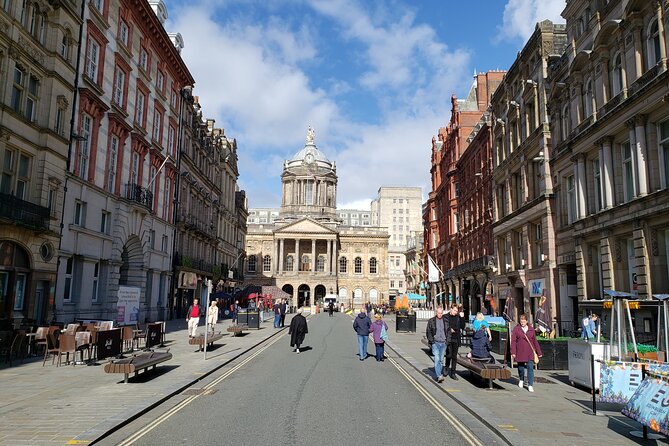
The tour begins at St George’s Hall, one of Liverpool’s most imposing buildings. The opening commentary sets up the city’s story, beginning with Liverpool as a tidal pool beside the River Mersey before the town was founded in the 13th century.
St George’s Hall is Grade I listed, and its design draws on the appearance of an ancient temple. Its high podium was deliberate, giving the building authority over the streets around it. Even if you do not enter, take a moment to look at its scale and position before setting off.
Next comes William Brown Street, Liverpool’s main cultural quarter. This short stretch gathers an unusual number of major public buildings, including the Walker Art Gallery, World Museum Liverpool, Central Library, the former County Sessions Court, the former North Western Hotel, Empire Theatre, Steble Fountain, and Wellington Memorial.
The street takes its name from William Brown, a merchant, member of Parliament, and donor who gave the land for cultural use in 1860. The audio helps you read the street as a connected civic project rather than a collection of unrelated façades.
Choosing between the Central Library and World Museum
The route gives you about 25 minutes around Liverpool Central Library and World Museum. Both occupy the same Grade II listed building, designed in a classical style, and the tour points you toward rooms and exhibits worth considering.
This is one of the places where the three-week access period helps. You can listen to the introduction, decide what interests you, and return later for a proper visit. Entry is generally free, though special events may charge a fee.
The tour does not replace time inside the museum. It gives you a useful preview and helps you avoid wandering without a plan. If you have only one afternoon, you may prefer to keep moving. If you have a second day in Liverpool, this is an easy place to revisit.
St John’s Gardens and the memory of Hillsborough
St John’s Gardens occupies land once known as the Great Heath, beside St George’s Hall. Its flower beds, statues, and memorials provide a quieter pause after the grand public buildings.
The most serious subject here is the Hillsborough disaster, the fatal crush at Hillsborough Stadium in Sheffield on 15 April 1989. The commentary explains why the disaster remains central to Liverpool’s memory and why it matters to football supporters regardless of club allegiance.
This stop asks for attention and respect. It is not simply another photo point. The app’s ability to pause is useful here, since you can take in the information at your own speed rather than listening while trying to keep up with a group.
A few more things to do in Liverpool worth a look
- Private 3-Hour Guided Beatles Classic Tour of Liverpool
★ 5.0 · 1,074 reviews - Private 3 hour Beatles Classic Tour of Liverpool by Taxi
★ 5.0 · 137 reviews - Private Beatles Car Tour, Penny Lane, Strawberry Field & childhood homes
★ 5.0 · 118 reviews - Peaky Blinders 4 Hour Private Tour of Liverpool
★ 5.0 · 51 reviews
Williamson Square, the Playhouse, and St John’s Beacon
Williamson Square brings the route back into the city centre. Its fountain uses playful coloured lights, but the more important landmark is Liverpool Playhouse.
The theatre opened in 1866 as the Star Concert Hall and later became the Liverpool Playhouse. The audio follows its long connection with live performance and the British actors who appeared there. It is a good example of the tour’s wider approach: Beatles history matters, but it is only one part of Liverpool’s cultural life.
Behind the theatre rises St John’s Beacon, now called the Radio Tower. The commentary explains how the tower was once abandoned and disliked by many local people before later finding a more favourable place in the city’s identity.
You may spend only 15 minutes here, but the stop adds useful context to the city centre. It also gives you a change of subject before the route enters the Cavern Quarter.
The Cavern Club and Liverpool’s Beatles story
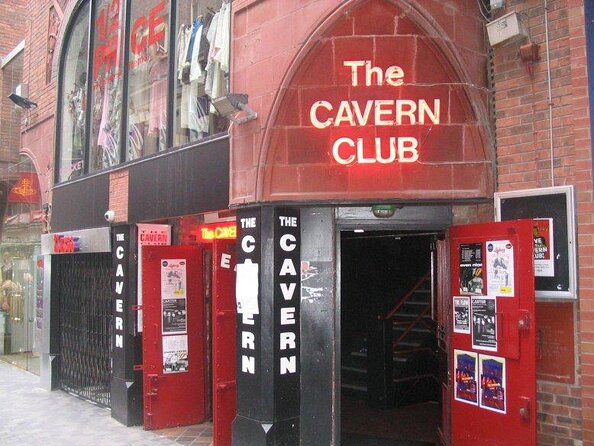
The Cavern Quarter is the heart of the music section. Its narrow pedestrian streets are lined with pubs, clubs, and restaurants, many hosting live music into the evening. The Beatles are the main attraction, but the area also shows that Liverpool’s music story did not end in the 1960s.
The Cavern Club is the essential stop. It became a centre of Liverpool’s rock and roll scene in the early 1960s and was closely linked with Merseybeat and the Beatles. The tour explains its place in that story, but entrance is not included, so you need to pay separately if you want to go inside.
This is an important distinction when comparing the price with a guided Beatles tour. You receive background and directions for a small fee, but you do not receive a club ticket or a musician-led experience.
One useful feature is the ability to linger. You can listen to the audio outside, visit the club, stop for food, or return later during your three-week access period. The app will not tell you what a live performance feels like, but it gives the area a clear frame of reference.
Castle Street, Exchange Flags, and Liverpool’s difficult past
Castle Street is one of Liverpool’s original seven ancient streets, appearing on maps from the 13th century. It sits within the city’s former World Heritage area and is lined with listed buildings, including the Town Hall and former Bank of England.
The Town Hall, at the top of the street, is Grade I listed and often described as one of the finest surviving 18th-century town halls. The route then leads you toward Exchange Flags Square, where the commentary broadens the story to commerce, war, slavery, and the people who shaped Liverpool.
The bronze Nelson monument becomes a prompt for discussing those connections and the controversies around the monument. This is one of the strongest parts of the walk for anyone who wants more than a polished architectural tour. Liverpool’s prosperity had links to global trade and empire, and the route does not leave that part of the story out.
Allow time to look up as you walk. Castle Street rewards attention to façades, while Exchange Flags asks you to think about what the city’s wealth meant and who benefited from it.
Pier Head and the Three Graces
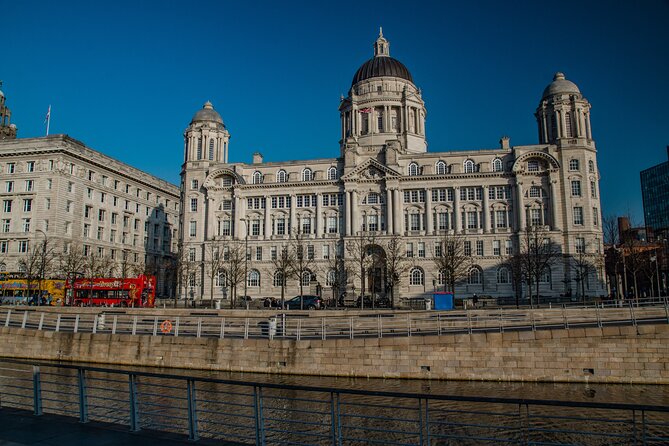
At Pier Head, the Mersey opens the view and the city’s most famous waterfront buildings come together. The Three Graces are the Royal Liver Building, Cunard Building, and Port of Liverpool Building.
The Royal Liver Building is an early reinforced-concrete structure and one of Liverpool’s best-known symbols. Two Liver birds sit on top. The audio covers the legends around them, their place in the city’s coat of arms, and the stories that made the birds part of Liverpool’s public identity.
The Cunard Building combines Italian Renaissance and Greek Revival ideas, with design influenced by Italian palace architecture. The Port of Liverpool Building, formerly the Mersey Docks and Harbour Board Offices, is the oldest of the Three Graces. Its design reflects Liverpool’s importance to the British Empire and its maritime administration.
This stop is especially good for combining architecture with the city’s working past. You can look at the buildings from the waterfront, then use the commentary to understand why their styles and positions matter.
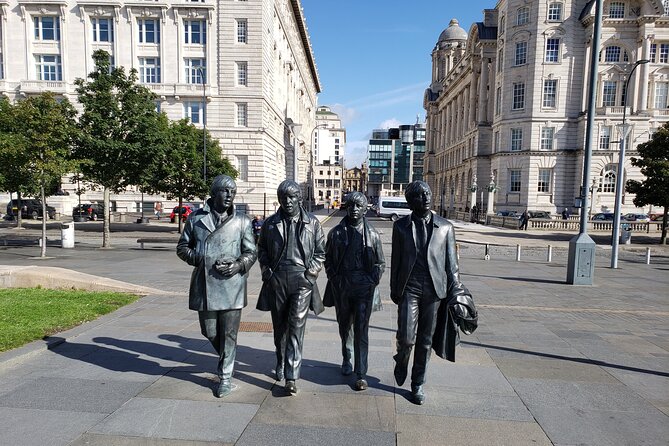
Pier Head also has a Beatles monument. The tour adds lesser-known stories about the group, giving you a second Beatles moment after the Cavern Quarter. The two stops feel different: the Cavern is about performance and nightlife, while Pier Head places the band within Liverpool’s wider public identity.
Royal Albert Dock and the route’s final suggestions
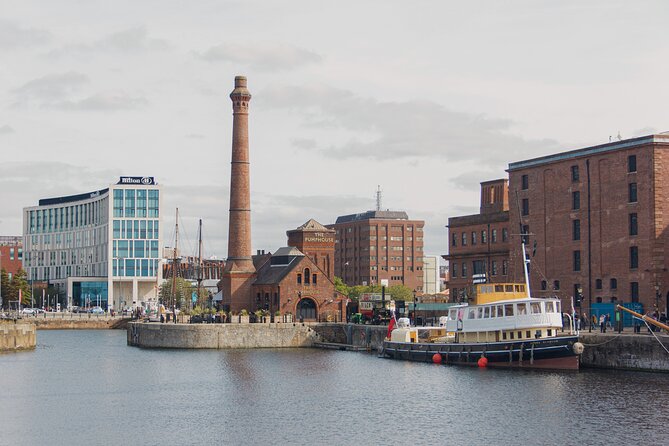
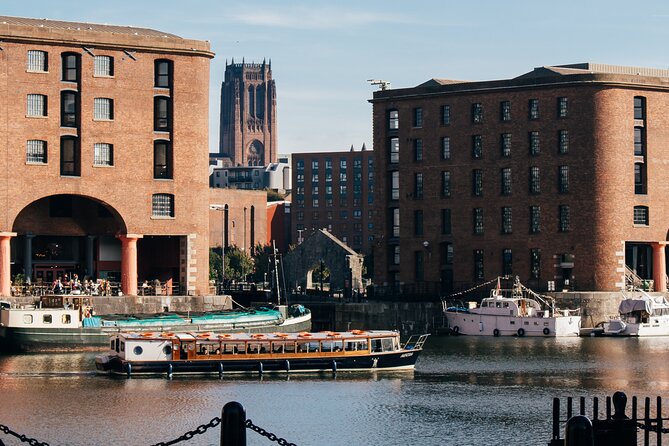
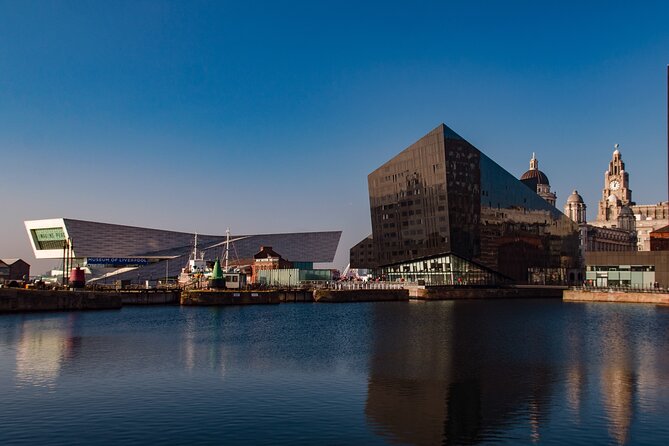
The walk finishes at Royal Albert Dock, where the city’s maritime past meets its museum and restaurant quarter. The dock’s size helped shape Liverpool’s waterfront, and the audio explains its use before and after the Second World War.
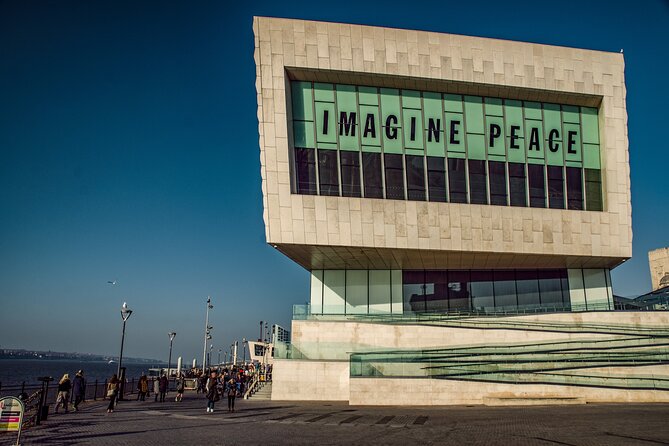
You will hear about the Titanic’s connection with Liverpool, as well as the reasons several major museums are gathered here. Nearby attractions include the Museum of Liverpool, The Beatles Story, and Merseyside Maritime Museum. Admission is not included, so treat this final section as planning help rather than a museum ticket.
The Museum of Liverpool receives a short introduction of its own. You get advice on what to expect, where to go inside, and which areas may suit your interests. The tour also ends with suggestions for places to eat and things to do, which is practical because Royal Albert Dock is a natural place to continue your afternoon.
Do not rush the ending. If you have followed the whole route, you have covered a large part of central Liverpool. You may want to stop at the dock, choose one museum, or simply sit by the water before moving on.
What the audio format gets right, and where it falls short
The strongest feature is control. You can walk quickly through a short stop, pause for photos, take shelter during rain, or read the information instead of listening. One solo user found the route helped cover the sights on time, which is exactly where this format works best.
The map and GPS directions are also useful. A first-time visitor can connect St George’s Hall, the Cavern Quarter, Castle Street, Pier Head, and Royal Albert Dock without repeatedly working out the next direction.
The material covers more than Beatles trivia. You get architecture, public gardens, the Hillsborough disaster, theatre history, maritime trade, slavery, and local symbols. That range makes the tour suitable for first-time visitors who want a basic understanding of Liverpool rather than a single-theme walk.
The weak point is technical dependence. One booking could not connect to the tour despite repeated attempts. Support is available by phone, chat, and email, but help after a failed start is not as good as having a person waiting at St George’s Hall. Download instructions and check the app before setting off if possible.
The other limitation is the absence of conversation. An in-person guide can answer a question, change the pace, or add a personal story. Here, you get a prepared route voiced by Jenny. That is a fair trade for flexibility and price, but you should choose knowingly.
Who should choose this tour?
I would recommend it to solo visitors, couples, and small private groups who want a low-cost introduction to Liverpool. It suits independent walkers who like to stop for coffee, enter a museum, and resume the route later.
It is also useful for a Beatles fan who wants the Cavern Club and Pier Head monument placed within the wider city. The route does not focus only on the band, so you also get Liverpool’s civic, maritime, and social story.
Families may appreciate the pause-anytime format, though the serious Hillsborough section may need a little care with younger children. Anyone with limited mobility should check the route and conditions before booking, since the experience is a walking tour through the city centre and no specific accessibility details are provided beyond service animals being allowed and public transport being nearby.
This is not the best choice if you want a personal guide, included entry tickets, or a carefully timed visit inside the Cavern Club and museums. It is also a poor fit if your phone connection or app access is unreliable.
Should you book it?
Book this tour if you want a flexible Liverpool orientation for $12.35, especially with three weeks to use it. The route covers the city’s major central sights, includes useful local suggestions, and gives you enough context to choose which museums and paid attractions deserve your time.
Skip it if your priority is live conversation or a specialist Beatles guide. In that case, a scheduled in-person walk may give you more personality and room for questions, though likely with less freedom.
For most independent visitors, the sensible plan is to start at St George’s Hall, allow about three hours, and treat the app as your backbone rather than your entire day. Pause at the Cavern Quarter, take your time at Pier Head, and finish with a museum or meal at Royal Albert Dock.
FAQ
How long does the Liverpool self-guided tour take?
The tour takes approximately two to four hours. The listed stops include about three hours of suggested time, but your pace and any museum or food stops will affect the total.
Where does the tour start and finish?
It starts at St George’s Hall on St George’s Place. It finishes at Royal Albert Dock, where you can continue to museums and restaurants.
Is there an in-person guide?
No. This is an app-based self-guided activity. Jenny provides the audio commentary, and the app supplies the map, GPS route, written information, photos, videos, and directions.
How long can I access the tour?
You receive three weeks of unlimited access to the self-guided tour through the app.
Are attraction tickets included?
No. Entry fees are not included. You need to pay separately for attractions such as the Cavern Club, and some museum events may also charge a fee.
Is the tour offered in more than one language?
The tour is offered in English.
Just added in Liverpool
- Half Day Welcome to Liverpool Walking Tour★ 5.0 · 17 reviews
- LIVERPOOL: Yorkshire Adventure – Sightseeing Day Trip Tour★ 5.0 · 13 reviews
- Beatles Ticket To Ride Half Day Tour Small Groups★ 5.0 · 60 reviews
- The Liverpool Pass®: All top attractions inc. Hop-On Hop-Off Bus Tour | 2-Days★ 4.5 · 11 reviews
- The Story of Liverpool 2-Hour Walking Tour★ 5.0 · 3 reviews
- Fun, Flexible Treasure Hunt Around Liverpool with Cryptic Clues & Hidden Gems★ 5.0 · 141 reviews
- Half-Day Liverpool Electric Beatles Bike Tour★ 5.0 · 146 reviews
- Ultimate Ticket To Ride Beatles Half-Day Shore Excursion- Private★ 5.0 · 6 reviews
Self-Guided Tours, compared.
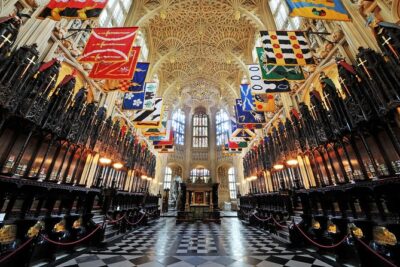
Westminster Abbey Entrance Ticket Including Audio Guide
Read our review →
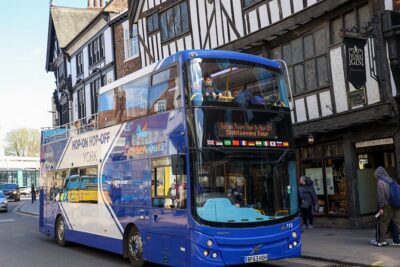
Golden Tours York Hop-on Hop-off Open Top Bus Tour with Audio Guide
Read our review →
Windsor Castle Tour from London with Transportation & Audio Guide
Read our review →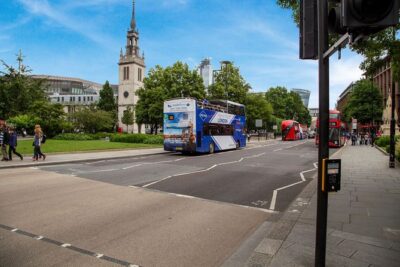
London Panoramic Open Top Bus Tour with Audio Guide
Read our review →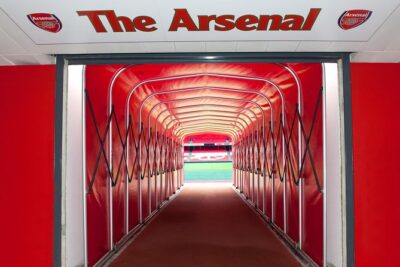
Emirates Stadium and Arsenal Museum Entrance Ticket Including Audio Guide
Read our review →
Private Self-Guided Dinky Door Hunt in Cambridge
Read our review →
Buckingham Palace: Walking Tour with Entry & Audio Guide
Read our review →Browse the lists this tour appears in