
Reviewed · TOURS IN BATH
Exceptional Bath tour guide making your visit splendidly memorable.
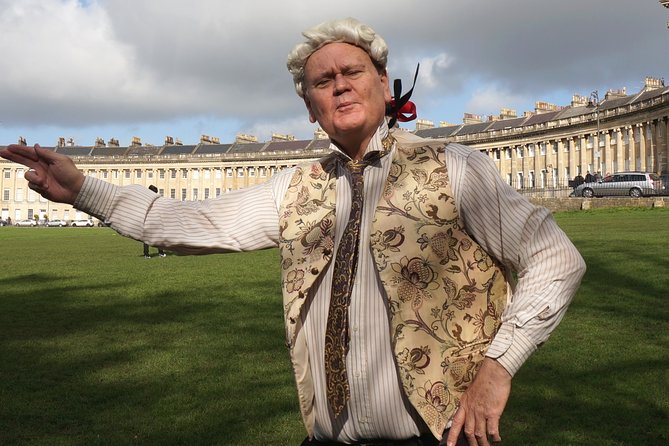
Bath makes sense once you see how its Roman, medieval, and Georgian layers fit together. Paul Elliott’s walking tour does exactly that, linking the Roman Baths and Bath Abbey with Pulteney Bridge, Queen Square, The Circus, and the Royal Crescent. His style is witty, local, and full of side stories, rather than a plain recitation of dates.
I like the route because it gives you a useful first look at central Bath in about two hours, and because it treats architecture as seriously as history. I also like the personal touch: Paul has lived in Bath for many years and brings in the famous figures, social customs, and political links that connect Bath with America, Canada, and Australia. The main consideration is that the tour can run longer than advertised, and Paul’s dry humor may not suit every group.
Key points at a glance
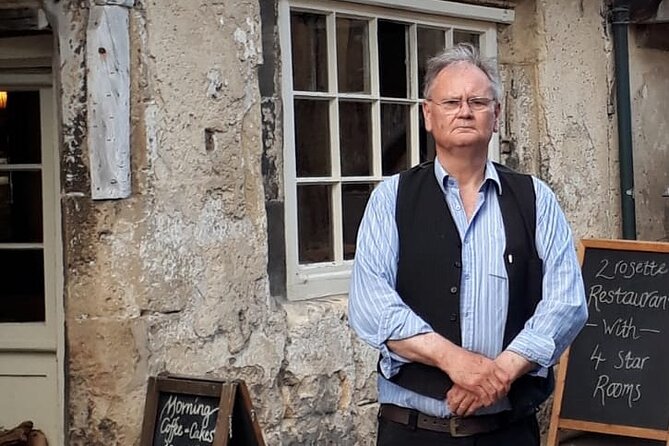
- A local guide with a strong personal style: Paul Elliott leads the walk with broad knowledge, wit, sarcasm, and stories drawn from his long connection with Bath.
- Roman, medieval, and Georgian Bath in one route: You move from the Roman Baths and Abbey to medieval lanes and then into the planned Georgian city.
- The Circus and Royal Crescent are major highlights: John Wood’s designs receive careful attention, with good spots for photographs.
- Admission is not included: You see and hear about the Roman Baths, Abbey, No. 1 Royal Crescent, and Thermae Bath Spa from outside.
- Expect more than a quick one-hour stroll: The stated length is about 90 minutes to two hours, but one tour took 2.5 hours.
- Best for history and architecture fans: The walk suits people who want context, explanation, and a guide who is comfortable adding opinion and humor.
Why this Bath walk works as an introduction

I like starting in Bath on foot because the city is compact, but its story is not simple. Roman Bath, medieval Bath, the fashionable Georgian spa city, and modern Bath all occupy the same streets. Paul’s route gives you a framework before you decide which interiors deserve your admission money.
The walk begins outside the Abbey Hotel near the old city wall. That is a practical starting point, close to Bath Abbey, the Roman Baths, and the center of town. The tour is conducted in English, uses a mobile ticket, and accepts a maximum of 20 people. That limit is small enough to keep the guide within earshot, though a full group will feel different from the private outings some people have had.
Paul’s greatest strength is his delivery. He explains architecture clearly, but he does not treat Bath like a museum label. Expect amusing details, pointed opinions, local anecdotes, and the occasional sarcastic aside. His humor was a major reason many people rated the experience highly, while one person felt that his manner toward questions could be too sharp. If you prefer a gentle, formal presentation, this may not be your ideal match.
A few more things to do in Bath worth a look
- Walking Tour of Bath with Blue Badge Tourist Guide
★ 5.0 · 1,877 reviews - Fully Guided Bath Ghost Tours
★ 5.0 · 539 reviews - Guided relaxation and sound bath
★ 5.0 · 172 reviews
From the Roman Baths to Bath Abbey
The Roman Baths receive about ten minutes of explanation from outside. That is enough to understand why the hot springs made Bath important, how the Roman site fits into the city, and what you might want to see if you later buy entry. It is not a substitute for going inside.
That distinction matters. The Roman Baths are one of Bath’s main paid sights, but admission is not part of this walk. You get the setting and the story, then make your own decision about a separate visit. I consider that a fair arrangement for a city orientation tour because you are not paying twice for a short guided entrance visit.
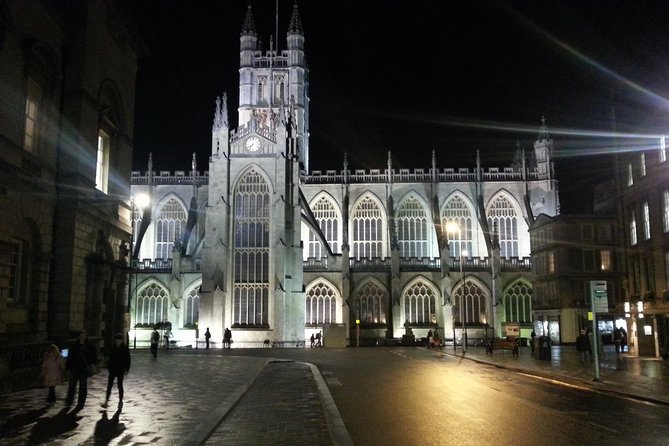
Bath Abbey gets a shorter stop of about five minutes, but the subject is large. Paul covers the Abbey’s development from Saxon beginnings through Norman and Tudor stages to the building you see today. The exterior is close to the Roman Baths, so these first stops quickly show how different periods of Bath’s past sit side by side.
The Abbey is also a useful place to hear how religion, royal power, and civic life shaped the city. If you plan to enter, save time for a separate visit. The guided walk explains the building, but it does not include admission or an interior tour.
Sally Lunn’s and Bath’s medieval lanes
From the Abbey area, the route passes Sally Lunn’s, described as Bath’s oldest house and tea shop. This is a small but useful stop in the story of the city. It shifts your attention from grand monuments to the older fabric of Bath, where narrow streets and surviving historic buildings reveal a less polished side of the center.
The walk then explores old medieval alleys before reaching the line of the old city wall. I like this section because it breaks up the grand Georgian sequence. Bath is often reduced to cream-colored crescents and terraces, but the medieval lanes help you picture a smaller, more enclosed town before the eighteenth-century building boom.
You will walk a little over a mile, with more than 15 stops or points of explanation across the full route. That is not a demanding distance for most people, but the frequent pauses make the experience longer than a simple stroll. Wear shoes you can use comfortably on uneven city surfaces, and allow time for the group to move at the pace of its slowest member.
Pulteney Bridge and the River Avon
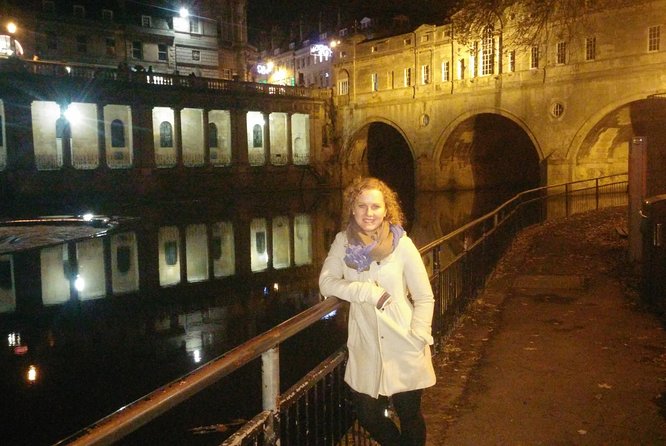
Pulteney Bridge is one of the tour’s strongest visual stops. Paul explains the River Avon, points out places connected with boat trips, and identifies film-set locations. The bridge is especially useful for photographs because it gives you a clear view of Bath’s relationship with the river and the surrounding buildings.
At about five minutes, the formal stop is brief. The value comes from seeing the bridge in context rather than simply taking a picture and moving on. Paul’s broader approach helps explain why the river mattered to Bath’s growth and how the city’s public spaces were arranged around trade, movement, and leisure.
You should not expect a boat trip or any included attraction entry here. This is a viewing and interpretation stop. If you want to explore the river independently, Paul identifies the relevant locations, but the advertised experience remains a walking tour.
Same base, a different kind of day:
- Stonehenge, Avebury & the Cotswolds from Bath (Small group)
★ 5.0 · 798 reviews - Roman Baths and Bath City Walking Tour
★ 4.5 · 762 reviews - Basingstoke iFLY Indoor Skydiving Experience – 2 Flights & Certificate
★ 4.5 · 459 reviews - Best of Bath Walking Tours – Georgian Tour
★ 5.0 · 449 reviews
Queen Square begins Georgian Bath
Queen Square marks the shift into Georgian Bath. The change is easy to feel: streets become more ordered, buildings more deliberate, and the city’s image more polished. Paul uses the square to explain how the Georgian part of Bath began and how planning shaped the fashionable resort that followed.
This is where the tour’s architecture focus becomes especially useful. You are not just looking at attractive facades. You are learning how developers, architects, wealthy residents, and visitors created a new version of Bath. The route also places famous eighteenth-century figures into that setting, showing how writers, politicians, and social figures used the city.
Paul connects Bath with wider stories involving America, Canada, and Australia. The exact emphasis can vary with the questions and interests of the group, but the point is valuable: Bath was part of a much wider British and Atlantic world. Its social life did not develop in isolation.
The Circus and John Wood’s design
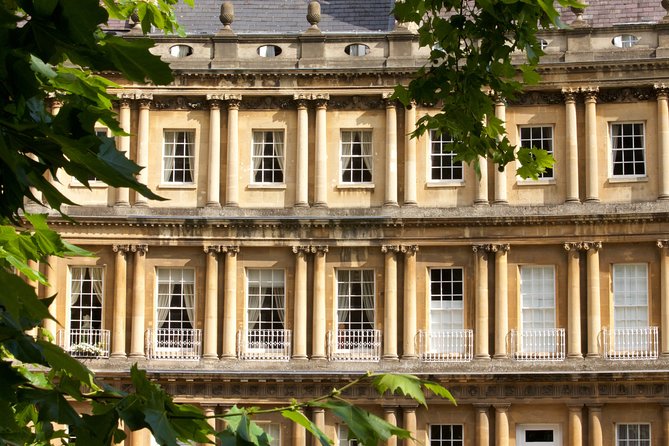
The Circus is one of the walk’s main highlights. John Wood’s design is explained at length, with roughly ten minutes devoted to this important architectural moment. The circular arrangement gives you a chance to look carefully at the repeated details, proportions, and relationship between the buildings.
I find this kind of stop more useful with a guide than alone. Without context, The Circus can look like a beautiful set of buildings. With an explanation of the design and its place in Georgian Bath, you begin to see the planning behind it and why it became such a celebrated address.
This is also one of the better places for photographs, though the shape of the space can make it difficult to capture everything in one frame. Take time to look upward and around the full circle rather than focusing only on the first facade you notice.
Royal Crescent brings the grand finish

The walk continues to No. 1 Royal Crescent, presented as Bath’s top address. About ten minutes are allocated here, and the stop offers plenty of chances for photographs. The broad curve and open space in front make this one of the easiest places to appreciate Bath’s Georgian ambitions.
No. 1 Royal Crescent is a separate paid attraction, so you see it from outside during the tour. Paul explains the building and the social world connected with it, but admission to the interior is not included. If you are interested in domestic life, furniture, and how the wealthy used these houses, plan a separate visit.
The Crescent is a satisfying late point in the route because the progression now makes sense. You have moved from the Roman center through medieval streets and into the grand Georgian city. That sequence is the main reason I would take this tour early in a Bath stay.
Jane Austen, Thermae Bath Spa, and the route finish
The route then heads downhill past the Jane Austen Centre and Thermae Bath Spa. The Austen Centre is not an included stop inside the museum, but its location adds another layer to the story of Bath as a place of fashion, society, literature, and social observation.
Thermae Bath Spa represents modern bathing in the city. Paul also points out the nearby Cross Bath, linking present-day spa visits with Bath’s much older bathing tradition. The listed stop lasts about five minutes, and admission is not included.
There is a small point to clarify before booking. The route description says the walk returns downhill to the Abbey, while the stop list says the tour ends at Thermae Bath Spa. The meeting information also says the activity ends back at the starting point. Since these details do not match perfectly, confirm the exact finish with Paul when you book, especially if you have a train, meal, or timed entry afterward.
Paul Elliott’s guide style
Paul is the main reason to choose this experience rather than simply following a map. He is described as a long-time Bath resident with a strong connection to the city, and his approach mixes facts with personal stories, humor, and occasional cynicism. He aims to entertain as well as inform.
That approach works best if you enjoy a guide with a clear personality. Many people praised his wit, his ability to keep the two-hour walk moving, and his habit of adding lesser-known details. One person specifically liked asking for maximum waffle, meaning extra stories and digressions. That tells you something useful: this is not a tightly scripted audio guide.
The same quality can occasionally work against the experience. A few comments point to an opinionated tone or a response to questions that felt dismissive. Another person felt the guide was too focused on moving on to his next tour at the end. These are not reasons to avoid the walk outright, but they are fair warnings. You should expect a distinctive guide, not a neutral narrator.
Price, timing, and practical value
At $30.53 per person, the tour is priced as an affordable city orientation rather than a full attraction package. You are paying for Paul’s time, route planning, explanations, and local interpretation. You are not paying for entry to the Roman Baths, Abbey, No. 1 Royal Crescent, Thermae Bath Spa, or any other interior.
I think the value is strongest if you are new to Bath and want to understand where everything fits before spending more on admissions. It is less useful if you already know the city well or want to spend most of your time inside attractions.
The advertised length is approximately 1.5 to 2 hours. In practice, allow extra time. One outing lasted 2.5 hours, and the guide explained that the group’s pace can affect the finish. The walk is booked an average of 47 days ahead, which suggests that you should reserve in advance if your Bath dates are fixed.
The group limit is 20 people. Most people can take part, and the meeting point is near public transportation. Since you will be on foot for more than a mile with many stops, comfortable shoes and a little schedule flexibility are sensible.
Free cancellation is available until 24 hours before the start time. Cancellations or changes made less than 24 hours ahead do not qualify for a refund.
Who should book this Bath walk?
I would choose this tour if you care about architecture, local history, and a guide with personality. It is a good fit for a first afternoon in Bath, particularly if you want to get your bearings and decide which paid sights deserve a closer look.
It also suits people who like stories that reach beyond the standard facts. Paul brings in eighteenth-century figures, Bath’s connections with other English-speaking countries, and the social character of the city. Families and mixed-age groups may enjoy the humor, though the dry style will not appeal to everyone.
I would think twice if you need a strict finish time, dislike sarcasm, or want interior access included. You should also avoid treating the listed time as exact. The route is not long, but Paul may spend extra time answering questions or adding context.
Should you book it?
Book this walk if you want Bath explained by a local guide who knows its buildings, stories, and odd details, and who is willing to be funny and opinionated. The Roman Baths, Abbey, Pulteney Bridge, Queen Square, The Circus, and Royal Crescent make a strong route, while the price remains reasonable because you choose your own paid admissions afterward.
Skip it if you prefer a quiet, tightly timed tour or a guide with a softer response to questions. For most first-time visitors who enjoy architecture and an engaging storyteller, Paul Elliott’s tour is a useful and memorable way to begin in Bath.
FAQ
Where does the Bath walking tour start?
It starts outside The Abbey Hotel, a Tribute Portfolio Hotel, on North Parade in Bath, near the old city wall.
Where does the tour end?
The meeting information says the activity ends back at the meeting point. The route also lists Thermae Bath Spa as a final stop, while the description says the walk returns toward the Abbey, so confirm the exact finish with the guide.
How long does the tour take?
The stated duration is approximately 1 hour 30 minutes to 2 hours. It can run longer, with one outing lasting 2.5 hours.
Is admission to the Roman Baths included?
No. Paul explains the Roman Baths from outside, but admission is not included.
Is Bath Abbey admission included?
No. The tour explains the Abbey’s history from outside, but an entry ticket is not included.
Are tickets for No. 1 Royal Crescent included?
No. The building is shown and explained during the walk, but admission is not included.
Is Thermae Bath Spa entry included?
No. The tour points out Thermae Bath Spa and the nearby Cross Bath, but admission is not included.
How large is the tour group?
The maximum group size is 20 people.
Can I cancel for a refund?
Yes, if you cancel at least 24 hours before the experience starts. Cancellations or changes made less than 24 hours before the start time are not refunded.
Just added in Bath
- Full-Day Private Tour of Stonehenge and Bath with Pickup★ 5.0 · 6 reviews
- One Way or Round Trip Private Transfer: Heathrow Airport to Bath★ 5.0 · 3 reviews
- Quintessential Cotswolds Half-Day tour from Bath (for 2-8 guests)★ 5.0 · 27 reviews
- Stonehenge Half-Day luxury guided tour from Bath for 2-8★ 5.0 · 15 reviews
- Private Guided Tour of Jane Austen’s Bath★ 5.0 · 7 reviews
- British Wine and Cheese Tasting Experience in City of Bath★ 5.0 · 18 reviews
- Cotswold Village Private Day Trip from Bath★ 5.0 · 24 reviews
- Cotswolds and Oxford Small-Group Tour from Bath★ 5.0 · 51 reviews
Tours in Bath, compared.
Walking Tour of Bath with Blue Badge Tourist Guide
Read our review →
Stonehenge, Avebury & the Cotswolds from Bath (Small group)
Read our review →
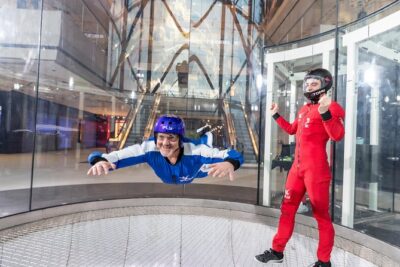
Basingstoke iFLY Indoor Skydiving Experience – 2 Flights & Certificate
Read our review →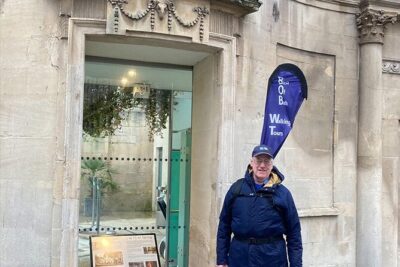
Browse the lists this tour appears in