
Reviewed · SELF-GUIDED TOURS
Soho London Private Music Self-Guided Tour
Soho’s music story is packed into a surprisingly small part of London. In roughly two hours, you follow the trail from the Dominion Theatre and Denmark Street to Ronnie Scott’s, Soho Square, and the former Trident Studios, hearing how rock, jazz, punk, pop, and musical theatre shaped these streets. Denmark Street is the star, with guitar shops, studios, publishers, and old venues tied to major names.
I like the freedom to begin at any time and revisit the route for three weeks. I also like the mix of famous places and small details, from the Mozart plaque to La Giaconda café and the old 2i’s Coffee Bar. The main consideration is that several stops are former venues or businesses, so you are often looking at a building or address rather than entering a working music attraction.
Key points to know
- Denmark Street is the heart of the walk: Allow extra time for its music shops, studios, and songwriter connections.
- The route is self-guided: Evren provides the recorded narration, while the app supplies maps, GPS directions, photos, videos, and recommendations.
- The walk covers more than rock: You’ll encounter jazz at Ronnie Scott’s, classical music through Mozart, punk at No. 6 Denmark Street, and theatre history across the West End.
- Several famous places have changed: The Astoria, Borderline, 12 Bar Club, Marquee Club, and 2i’s Coffee Bar no longer operate in their original form.
- The $12.47 price is low for a private experience: You pay for flexible access and a substantial audio route, but not for admissions or a live guide.
- You finish near Soho’s restaurants and nightlife: The end at Trident Audio Post leaves you well placed to keep exploring on your own.
Why Soho works so well as a music walk
Soho is one of those London districts where music history is not confined to a museum. It appears on theatre facades, blue plaques, pub fronts, former recording studios, guitar shops, bookshops, and ordinary-looking buildings.
That makes this walk useful for you if you prefer context while seeing the city itself. You are not sitting in a gallery looking at old instruments. You are moving through the streets where musicians wrote songs, played first gigs, recorded albums, sold guitars, and gathered after performances.
The route also avoids a narrow definition of music. It covers popular music, jazz, punk, publishing, classical composition, musical theatre, and the businesses that helped artists work. That broader view is one of its strengths.
You should expect about two hours for the main route. Since the experience is self-guided, your actual time can be shorter or longer. Denmark Street deserves a slow look, and a record shop, guitar store, pub, or theatre may tempt you to pause.
More self-guided tours in London:
- Westminster Abbey Entrance Ticket Including Audio Guide
★ 4.0 · 661 reviews - Windsor Castle Tour from London with Transportation & Audio Guide
★ 3.5 · 222 reviews - London Panoramic Open Top Bus Tour with Audio Guide
★ 4.0 · 209 reviews
Starting at Dominion Theatre and the old Astoria
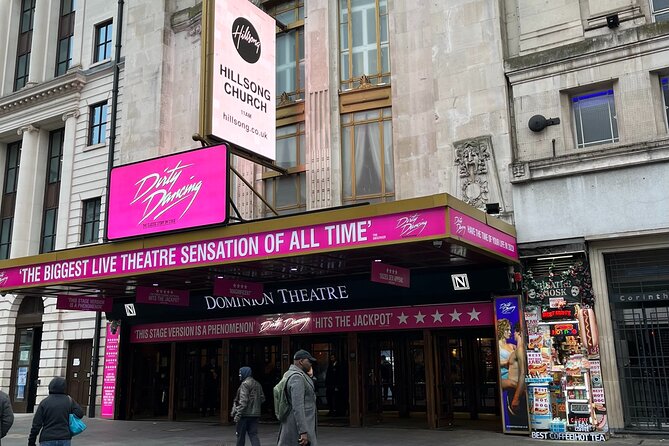
The walk begins outside the Dominion Theatre at 268 to 269 Tottenham Court Road. This large West End venue gives you an immediate sense of the connection between London theatre and popular music.
The Dominion has hosted musicals and concerts, including a landmark David Bowie performance. It is a fitting first stop because the tour is not only about clubs and recording rooms. London’s music story also runs through theatres where singers, bands, and stage productions reached large audiences.
From there, the route points toward the former Astoria Theatre. The Astoria was once an important music venue in the area, hosting a long list of bands and artists before closing. You will not be entering an operating concert hall, and that is worth knowing before you book.
Still, the stop helps explain how much of Soho’s music scene has shifted over time. Venues close, buildings change use, and the story survives through addresses and memories. The audio narration is especially useful here because the physical evidence may be limited.
Denmark Street, London’s songwriter and guitar quarter
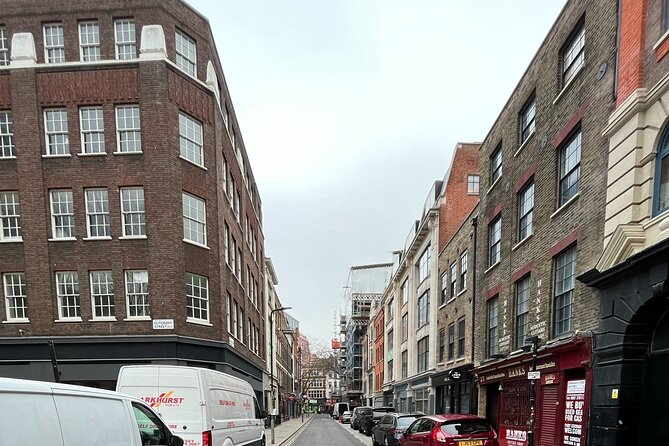
Denmark Street is the main event. It has long been known as Tin Pan Alley, a name linked to its music publishers, songwriting offices, studios, shops, and small venues.
Give yourself the full suggested 20 minutes here, and add more if you want to browse. The route points out connections to Elton John and the Rolling Stones, along with the many songwriters and musicians who worked in the street.
The appeal is its concentration. In a short stretch, you can move from music publishing to guitars, recording, punk, and live performance. That makes the street easier to understand than a list of unrelated music sites spread across London.
The route also helps you notice the difference between a place that made music and a place that simply commemorates it. Denmark Street still has a strong connection with instruments and musicians, while other stops later in the walk survive mainly as historical markers.
The 12 Bar Club, Regent Sounds, and No. 6
The 12 Bar Club was a small but important venue for new acts. Early performances by Adele and The Libertines are linked with the club, which helped give emerging musicians a place to build an audience.
The club itself is no longer operating, so this is another stop where the story matters more than the current interior. I find that useful if you want to understand how careers often begin in modest rooms rather than major arenas.
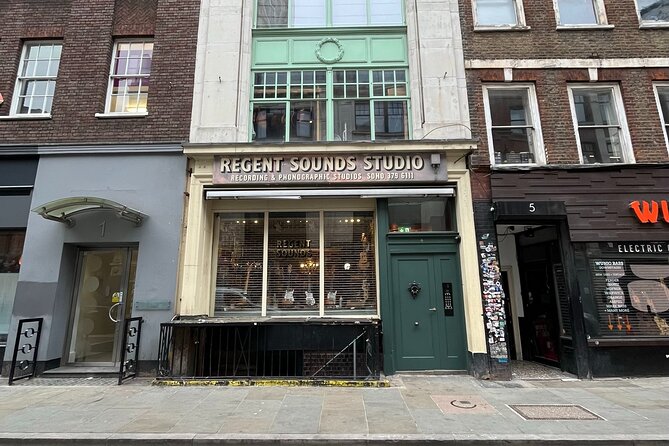
Regent Sounds Studio adds a recording angle. The studio was associated with the Rolling Stones’ first album and sessions by The Beatles. It now operates as a guitar shop, giving you a visible connection between Soho’s recording past and its continuing instrument trade.
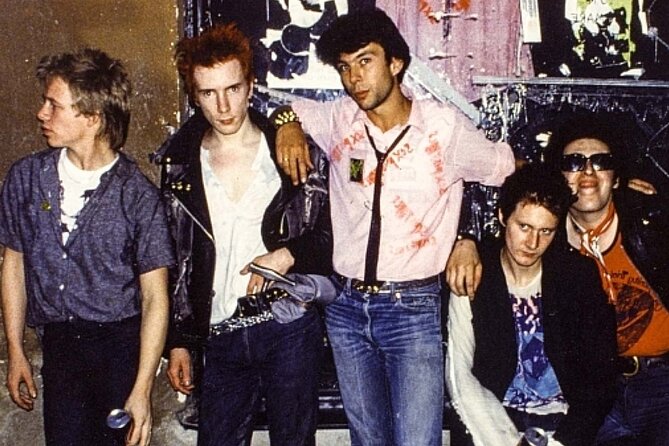
No. 6 Denmark Street takes the story in a harder direction. The Sex Pistols lived and recorded there in the 1970s, linking the building with the punk movement and its direct, unruly energy.
These three stops work well together. One points to live performance, one to studio recording, and one to the way a building can become part of a band’s identity.
Same base, a different kind of day:
- Stonehenge, Windsor Castle, and Bath from London
★ 4.5 · 18,662 reviews - London Big Bus Hop-On Hop-Off Tour with Optional River Cruise
★ 3.5 · 10,803 reviews - London Small Group Tour of Historical Pubs
★ 5.0 · 10,422 reviews - Stonehenge, Windsor Castle and Bath with Pub Lunch in Lacock
★ 4.5 · 7,402 reviews
Mills Music, La Giaconda, and KPM Publishing
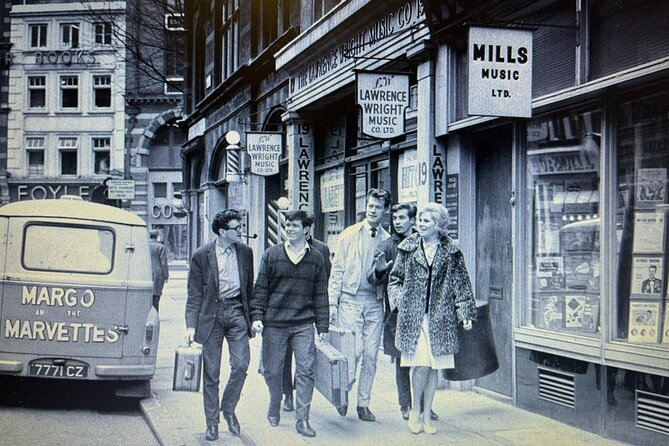
Mills Music was one of the original music businesses in Denmark Street. Its links with Jimmy Page and David Bowie show that the street was not only a place for performers. Publishers and office workers helped turn songs into a wider business.
La Giaconda café offers a more social part of the story. Musicians and songwriters gathered there in the 1960s, with David Bowie, Jimi Hendrix, and Elton John among the names connected with the café.
The stop is valuable because it puts faces and habits around the music. Creative scenes are built in cafés, pubs, rehearsal rooms, and shops as much as on a stage.
KPM Publishing, part of the historic KPM Music House, represents the less visible side of the industry. Its catalogue includes music for records, films, and television. You may not recognize the building immediately, but the stop explains how music reaches listeners through publishing and production as well as live performance.
A few cultural detours: Forbidden Planet and the Phoenix Theatre
Forbidden Planet is not a music stop, but it fits Soho’s broad cultural character. The shop is known for comics, science fiction, fantasy, and cult entertainment. The recommended stop is short, about five minutes, and works as a change of pace between music addresses.
The Phoenix Theatre returns you to the West End. David Cassidy performed in Blood Brothers there, adding a pop connection to a venue better known for stage shows.
The nearby Phoenix Gardens offers another pause. This community garden is not tied directly to music, but it gives you a quiet place to stop amid the streets. The route includes it because Soho is not only clubs, theatres, and shops. Small public spaces help you understand the district’s daily life.
Saville Theatre, Macaris, and Foyles
The former Saville Theatre, now ODEON Covent Garden, is one of the more interesting theatre stops. The Beatles and Jimi Hendrix performed there in the 1960s, and Brian Epstein, the Beatles’ manager, managed the venue.
You can see how the same building connected live music, theatre, management, and the cultural changes of the period. The stop is brief, around five minutes, but the names attached to it make it worth your attention.
Macaris Guitar Shop was another important part of Soho’s music trade. It supplied instruments to aspiring musicians and established stars for decades. The site is now an Apple Store, so do not expect to browse a historic guitar shop there.
That change is not a flaw in the tour, but it does shape your expectations. The audio tells you what the address once meant, while the present-day building shows how quickly commercial Soho can change.
Foyles Book Shop is a literary stop with a music link. Its music section includes scores, biographies, and music history books. If you enjoy learning more after the walk, this is a sensible place to continue your reading, though the tour does not include a book purchase or admission activity.
Soho Square and the former Borderline
The route next reaches the former Borderline Nightclub, once known for indie, folk, and other live acts. It is currently closed, so again, you are tracing a former venue rather than attending a show.
That pattern is central to this experience. The tour is strongest as a lesson in how Soho’s music places change. It does not promise entry to every location, and the included stops are mainly outdoor points.
Soho Square brings the route back to a public space with strong music associations. A building overlooking the square is owned by Paul McCartney, and the square has hosted secret performances, including two appearances by Prince in one night.
The suggested time here is about five minutes, but you may want longer. It is a good place to stop the audio, sit for a while, and think about how musicians used ordinary London spaces for surprise performances.
The Dog and Duck and Mozart’s Soho address
The Dog and Duck is a traditional English pub with long-standing local importance. Its direct connection to music is lighter than the links at Denmark Street or Ronnie Scott’s, but it helps show the setting in which Soho’s creative life developed.
You can treat it as a possible refreshment stop, though the tour information does not promise a reserved table, food, or drink. The audio uses the pub to add atmosphere and local character.
The Mozart Blue Plaque shifts the story back to classical music. It marks the residence where Wolfgang Amadeus Mozart, aged eight, composed his first symphony in 1764.
The building is now a private residence, so this is an exterior viewing stop. It is a useful reminder that Soho’s connection with music reaches far beyond twentieth-century rock and pop.
Ronnie Scott’s and the foundations of British rock
Ronnie Scott’s Jazz Club is one of the essential stops. Founded in 1959, it has hosted major jazz artists including Miles Davis, Ella Fitzgerald, and Nina Simone.
The tour gives you a short look at the club, with about five minutes suggested. If you want to attend a performance, that would be a separate plan. This experience does not include a show or admission.
Even from outside, Ronnie Scott’s gives the walk a strong jazz chapter. It also makes the route more balanced. Without this stop, Soho’s music story could seem focused only on guitar bands and pop celebrities.
The former 2i’s Coffee Bar takes you into the 1950s and early 1960s. It is often described as a birthplace of British rock and roll, with Cliff Richard and Tommy Steele among the artists discovered there.
The coffee bar no longer survives, but its role was important. It shows that the first stage of a music career may be a tiny venue where performers test new material and meet the right people.
The Marquee Club continues that story. The club hosted early performances by the Rolling Stones and The Who on Wardour Street. It was a major part of the 1960s music scene, though it has also closed.
Reckless Records and the final stretch to Trident
Reckless Records is one of the best stops for a hands-on music break. The shop sells second-hand vinyl, CDs, and DVDs, and the suggested visit lasts about ten minutes.
Unlike several earlier addresses, this is a functioning music business. You can browse, look for a rare album, or simply enjoy the old-fashioned pleasure of record-shop browsing. The tour does not include a purchase, so any shopping is up to you.
The route ends at Trident Audio Post at 33 Great Pulteney Street. The address connects with Trident Studios, where David Bowie’s Hunky Dory and albums by The Beatles were recorded.
This is a strong ending because it returns to the studio side of music. You have already passed publishers, instrument shops, cafés, clubs, theatres, and public spaces. Trident brings those threads back to the place where performances became recordings.
Afterward, you are free to continue around Soho. The ending is not at your starting point, so plan to walk or use public transport back to your next destination.
How the app and audio format affect the experience
The tour includes GPS routing, maps, directions, photos, videos, recommendations, and an audio guide narrated by Evren. The voice is described as a real human guide rather than a computer-generated voice.
That matters because a recorded guide can still provide warmth and rhythm, while giving you control over pauses. You can stop for a photo, enter a shop, or take a break without holding up a group.
The three-week access period is one of the better features. You can complete the route in one outing, then return to selected stops later. You could also split the experience into two shorter walks if a full two hours feels too much.
You receive an email with activation instructions. Pay attention to the activation details, since the booking reference is not the code used to start the tour. The tour is offered in English.
Because this is a private activity, only your group participates. That means no fixed departure time and no strangers joining your walk, but it also means you do not have a live guide to answer questions or adjust the route in person.
Is $12.47 good value?
At $12.47 per person, this is a low-cost way to add structure to a Soho visit. You are paying for a private audio route with three weeks of access, not for transport, food, theatre tickets, club entry, or a professional guide walking beside you.
The value is strongest if you already plan to explore Soho on foot. The app gives purpose to addresses that can otherwise look ordinary, and the audio connects places that are separated by only a few streets.
The value is weaker if you want to enter historic venues or hear live music during the walk. Many key places have closed or changed use, and the experience does not include admission tickets.
The non-refundable policy also deserves attention. You cannot receive a refund or change the booking after purchase, so book only when your London plans are reasonably firm.
Who should choose this Soho music walk?
I would choose it for music fans, first-time Soho visitors, and anyone who likes city walks with a clear theme. It suits couples, families with older children, and small private groups who prefer to set their own pace.
It is also a good add-on before or after a West End show. The route begins near Tottenham Court Road and finishes in Soho, where you can continue to restaurants, shops, pubs, and nightlife.
You may want a different experience if you need wheelchair-specific route information, although most people can participate and service animals are allowed. You should also check the current details before setting out, since venues and businesses can change.
Most of all, book it if you enjoy the story behind a place. If you only want active music venues and live performances, the number of closed sites may disappoint you.
Should you book it?
Book this walk if you want an affordable, flexible way to connect Soho’s music addresses. The best parts are Denmark Street, Ronnie Scott’s, La Giaconda, Soho Square, Reckless Records, and the final Trident Studios connection.
Go in expecting an outdoor history walk, not a backstage tour. You will often stand outside a former club, shop, or studio while Evren explains what happened there.
For $12.47, the three-week access period and private format make the tour an easy choice for independent explorers. Start when you like, pause when you want, and leave time to browse Denmark Street and Reckless Records rather than racing from stop to stop.
FAQ
How long does the Soho London Private Music Self-Guided Tour take?
The tour lasts approximately two hours. Since it is self-guided, you can pause the route, spend longer at selected stops, or revisit the walk during the three-week access period.
Where does the tour begin and end?
It begins at the Dominion Theatre, 268 to 269 Tottenham Court Road, London W1T 7AQ. It ends at Trident Audio Post, 33 Great Pulteney Street, London W1F 9NP.
Is there a live guide?
No. This is a self-guided tour using an app. Evren provides the recorded audio guide, along with maps, GPS directions, videos, photos, recommendations, and information about the stops.
What language is the tour offered in?
The tour is offered in English.
Does the price include entry to music venues or attractions?
No. The experience includes the self-guided app content and three weeks of access. It does not include an in-person guide or admission tickets.
Can I cancel or change the booking?
No. The experience is non-refundable and cannot be changed after booking. Check the Before You Go section of your ticket before starting.
Just added in London
- The Beatles and a Secret pub★ 4.5 · 36 reviews
- The Beatles & Liverpool Magical Mystery Tour from London★ 4.5 · 80 reviews
- Airport Coach Service from Heathrow to Oxford★ 3.5 · 67 reviews
- The Beatles Magical History Black Taxi Tour London★ 5.0 · 51 reviews
- The Beatles London walking tour. From Abbey Road to the Roof Top★ 5.0 · 61 reviews
- The Beatles London Walk★ 4.5 · 120 reviews
- Private The Beatles Taxi Tour in London★ 5.0 · 12 reviews
- Dinner and Jazz Cruise on the River Thames★ 4.0 · 140 reviews
Self-Guided Tours, compared.
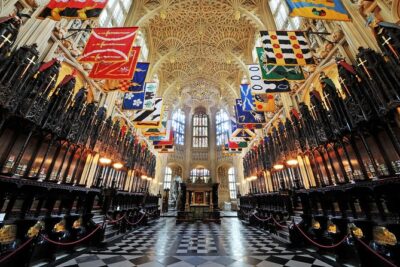
Westminster Abbey Entrance Ticket Including Audio Guide
Read our review →
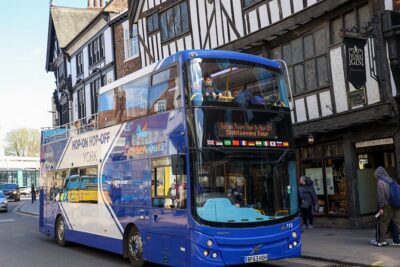
Golden Tours York Hop-on Hop-off Open Top Bus Tour with Audio Guide
Read our review →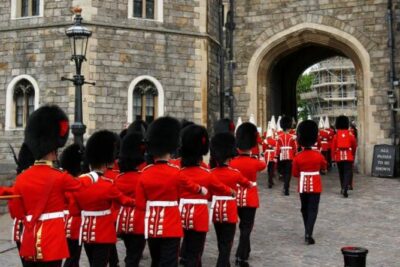
Windsor Castle Tour from London with Transportation & Audio Guide
Read our review →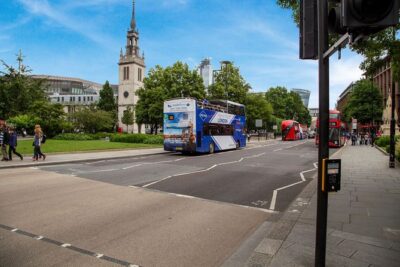
London Panoramic Open Top Bus Tour with Audio Guide
Read our review →
Emirates Stadium and Arsenal Museum Entrance Ticket Including Audio Guide
Read our review →
Private Self-Guided Dinky Door Hunt in Cambridge
Read our review →
Buckingham Palace: Walking Tour with Entry & Audio Guide
Read our review →Browse the lists this tour appears in