
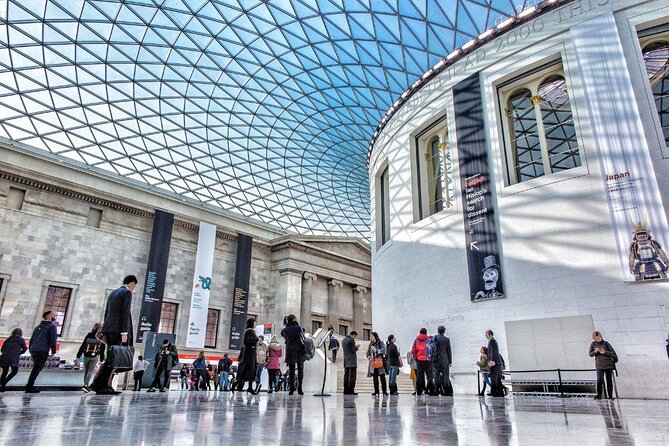
Reviewed · MUSEUMS
British Museum London Guided Tour Semi-Private 8ppl Max
The best thing about this British Museum tour is its maximum group size of eight. In a museum holding roughly eight million objects, a guide can steer you toward the pieces that matter instead of leaving you to wander through room after room without a plan.
I like the smart selection of highlights, from the Rosetta Stone and Parthenon sculptures to the Mummy of Katebet and the Lewis Chessmen. I also like the guides’ reported range: Ivo, Jake, James, Laurence, Steph, Guy, and others are praised for making the objects clear, lively, and honest about how some treasures reached London. The drawback is that 2.5 hours only scratches the surface, and the tour is not suitable for wheelchair users or people with walking disabilities.
Key points to know before you book
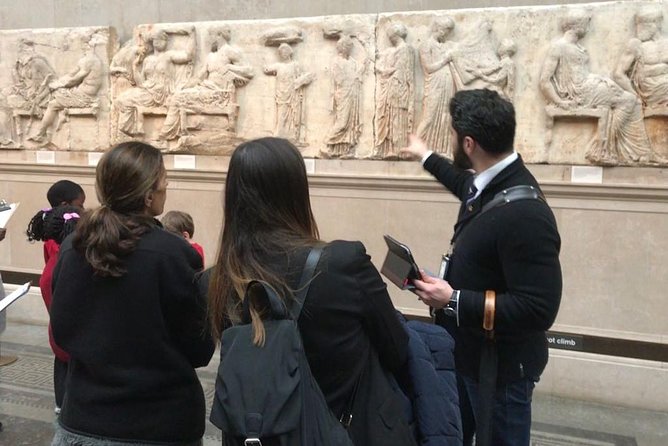
- Eight people maximum: A small group gives you a better chance to hear the guide and ask questions.
- A fast route through 6,000 years: The tour focuses on major Egyptian, Greek, Assyrian, and medieval objects.
- Rosetta Stone and beyond: You’ll see famous pieces, plus less obvious stops such as the Assyrian lion-hunt reliefs.
- Guides shape the experience: Ivo, Jake, James, Laurence, Steph, Guy, and others are praised for humor, clarity, and thoughtful answers.
- Allow for walking and crowds: Comfortable shoes matter, and the museum can be busy even when the tour is well organized.
- Bring only a small bag: Large bags and suitcases are not allowed through museum security.
Why a small group matters inside the British Museum
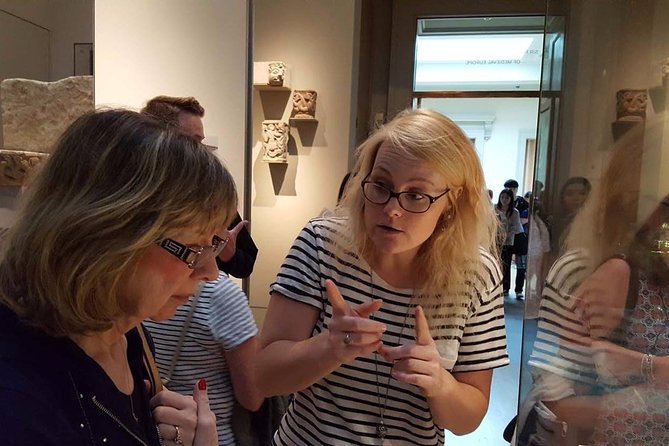
The British Museum is free to enter, but free entry does not make it easy to understand. Its collection covers about 6,000 years and reaches across much of the world. Without a plan, you can spend a lot of time finding the famous rooms and very little time understanding what you are seeing.
This tour gives you a clear route and a human voice. With no more than eight people, you are not standing behind a large crowd trying to catch every sentence. You can ask why an object mattered, how it was used, or how it ended up in Britain.
That small number also helps when the galleries fill up. One guide, Andy, is specifically praised for moving a family through crowded areas while still making sure they saw the important pieces. That is useful at a museum where popular displays can become difficult to approach.
The group may be smaller than the standard museum tour, but it is not necessarily private. If you want the guide’s full attention or have a special list of objects, choose the private option if available. The standard semi-private format remains the better value for most people who want structure without paying for a one-party tour.
More museums in London:
- Chelsea FC Stadium Tours and Museum
★ 5.0 · 1,908 reviews - Official tickets: Moco Modern & Contemporary Art Museum
★ 4.5 · 1,157 reviews - The British Museum London – Exclusive Guided Museum Tour
★ 5.0 · 555 reviews
The British Museum entrance and first orientation
You meet your guide at the British Museum on Great Russell Street in central London. The tour begins at a selected departure time, and the activity ends back at the same meeting point.
Your guide starts with an introduction to the museum and its enormous collection. This opening matters because the building can feel like several museums joined together. You need a basic map in your head before the first mummy or marble sculpture begins competing for your attention.
The museum holds about eight million items, though no 2.5-hour visit can cover more than a small fraction. The guide’s job is to choose objects that tell useful stories about art, religion, power, writing, warfare, and daily life.
You should arrive on time. A late start is especially costly here because the tour already has a tight schedule. Bring comfortable shoes, and consider an umbrella for the walk to the meeting point. The museum is near public transportation, but hotel pickup and drop-off are not included, so plan to use public transit, a taxi, or a rideshare.
The Rosetta Stone and the story of writing
The Rosetta Stone is one of the tour’s key stops. You will see the actual stone, not the language-learning company with the similar name.
Its value is not just visual. The stone became important because its inscription helped scholars compare different writing systems and make progress in reading Egyptian hieroglyphs. A guide can turn what might look like a dark slab behind glass into a story about language, scholarship, and the way one object changed the study of ancient Egypt.
This is a good early stop because it gives you a clear example of how museum objects carry several layers of meaning. You are not only looking at an artifact. You are looking at a record of political authority, written communication, and modern archaeological study.
The display can be crowded, so you may not have unlimited time directly in front of it. That is one reason the guide’s commentary is useful. You can hear the main explanation while positioning yourself for a better look.
Egyptian mummies and the Mummy of Katebet
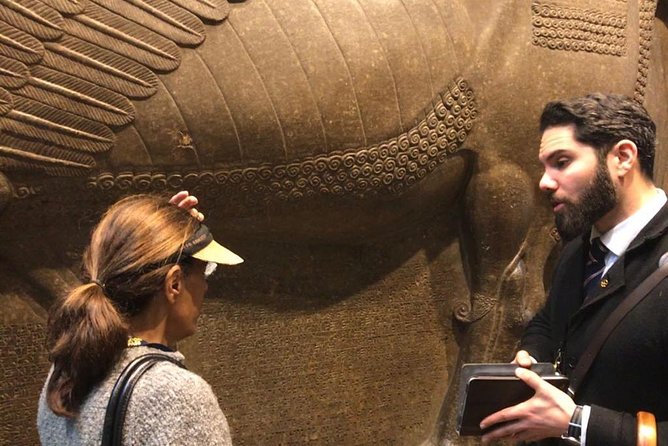
The Egyptian galleries provide some of the museum’s most recognizable sights. The Mummy of Katebet is among the specific objects included in the route.
A mummy can seem like a simple display until you understand the beliefs and practices behind it. The guide explains the object in its historical setting, giving you a better sense of why the body was preserved, how the coffin was decorated, and what the burial tells us about the person and society around her.
The tour does not promise a full survey of Egyptian history. Instead, it uses selected objects to help you read the galleries. That is a strength for a first visit, especially if you want the broad story without stopping at every case.
You may also find that the Egyptian section is one of the busier parts of the museum. Stay close to the guide and listen carefully. The small group helps, but it cannot remove the museum’s crowds or guarantee an uninterrupted view of every display.
A few more things to do in London worth a look
- The Premier Classic London: Private 4-Hour Tour in a Black Cab
★ 5.0 · 2,737 reviews - Stonehenge Inner Circle Private Tour from London with Bath Visit
★ 5.0 · 1,909 reviews - Private Tour: Black Taxi Tour of London
★ 5.0 · 1,153 reviews - Private London Arrival Transfer – Airport to Hotel / Accommodation
★ 3.5 · 1,085 reviews
Assyrian reliefs and the power of detail
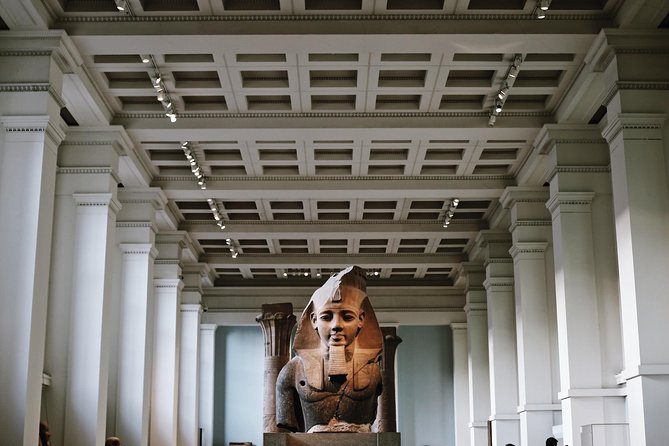
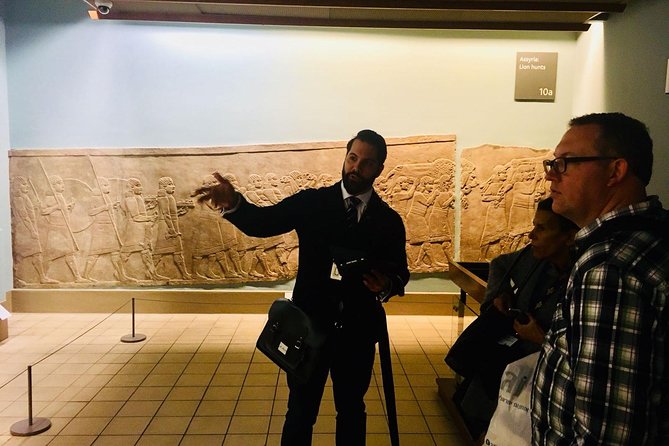
The Assyrian lion-hunt reliefs are among the less obvious highlights on the route, and they can be one of the most memorable stops. The reliefs date from the 7th century BC and show the skill of ancient artists in recording movement, muscle, weapons, and royal power.
A quick look might reveal only carved stone panels. A good explanation helps you notice the choices within them. The hunted animals, the action of the scene, and the way the ruler is presented all say something about kingship and empire.
Several guides are praised for including the Assyrian section rather than sticking only to the most famous objects. James, in particular, is noted for pairing the Rosetta Stone and Parthenon sculptures with the lion-hunt reliefs. That balance is valuable because it gives you both the icons and the surprises.
I like this part of the tour for another reason: it shows why a guide can be worth paying for at a free museum. You are not paying for the building’s admission. You are paying for selection, explanation, and a route that helps you notice what you might otherwise pass.
Greek sculpture and the Parthenon collection
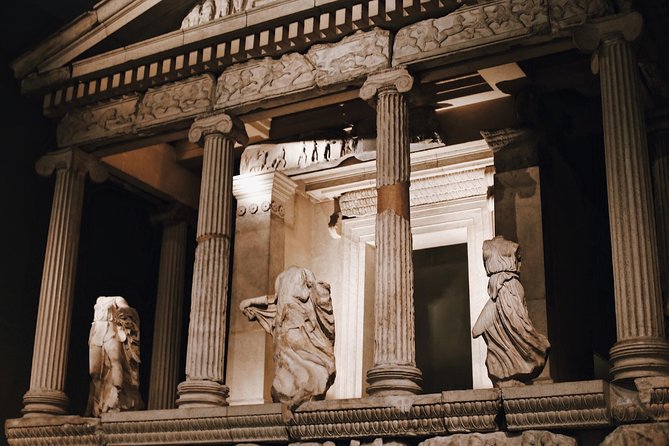
The British Museum’s Greek galleries are another major part of the highlights route. You can expect to see Parthenon sculptures along with other ancient objects selected by the guide.
These galleries also bring up difficult questions about ownership and removal. The museum’s collections include objects from many parts of the world, and the story of how they reached London is not always simple. Jake is praised for discussing controversial subjects directly rather than presenting the collection as if every object arrived without dispute.
That approach improves the visit. You can admire the sculpture while also asking who made it, who controlled it, and who has the strongest claim to it today. The guide may offer historical context and a contemporary viewpoint, but the precise discussion can vary by guide and group questions.
Do not expect a full legal or political debate in the middle of a timed tour. You are getting a clear introduction to the issue, not a specialist seminar. Still, this kind of frank context makes the collection easier to understand and gives you better questions to carry into the rest of your London visit.
The Lewis Chessmen and medieval life
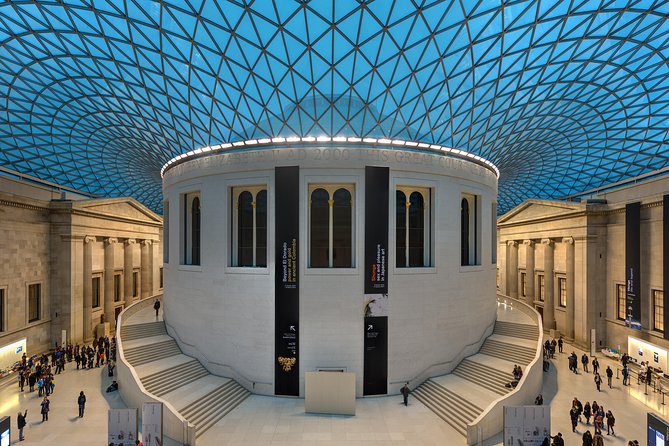
The 12th-century Lewis Chessmen offer a welcome change of pace after the large ancient collections. They are small, expressive figures, and they show how an object can be important because of character as much as size.
A guide can explain what makes these chess pieces special and place them within medieval culture. You get a more personal view of the past here than you do with a monumental relief or royal sculpture. The pieces connect history to play, status, craft, and everyday imagination.
This stop also helps keep the tour from becoming a parade of only Egyptian and Greek objects. The museum’s reach is much wider, and the chessmen show that the route includes medieval Europe as well as the ancient Mediterranean and Near East.
How the guides shape the visit
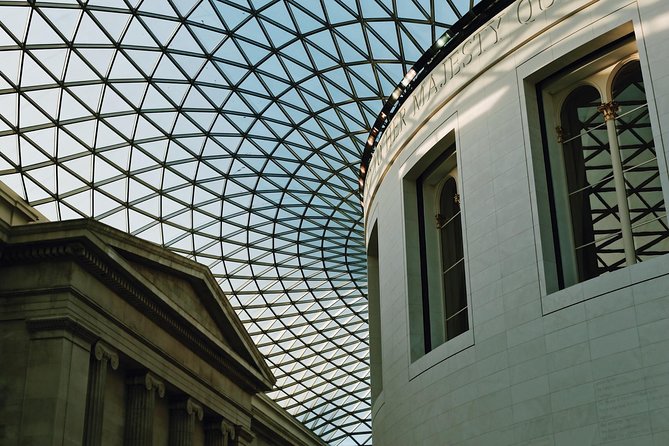
The guide makes or breaks a museum tour, and this experience has a strong record in that area. Ivo is praised for making details easy to miss on your own and for linking objects to larger stories. Jake is noted for clear answers and direct treatment of disputed collecting practices. James is described as friendly, witty, and able to move between famous and less familiar exhibits.
Laurence is praised for covering the museum’s main sights efficiently, while Steph is noted for a presentation that holds a group of eight adults. Guy is described as engaging with teenagers, which matters if you are visiting with a family whose attention may fade after the third marble statue.
You should not book expecting one fixed script delivered identically every day. The route is built around highlights, but the guide may adjust the explanation to your group. Questions, age range, crowd levels, and the guide’s interests can all shape the experience.
That flexibility is a plus. It also means your exact tour may not include every object named here. Collections can change during the year, and some rooms may be closed or subject to quiet rules. Your guide will explain restrictions before entering areas where speaking is limited.
What the $108.44 price buys you
At $108.44 per person, this is not a budget museum visit. The British Museum itself has free admission, so the price is entirely for the guided service and the convenience of a carefully planned small group.
I think the value depends on how you use your London time. If you already know the museum well, prefer to read labels at your own pace, or want to spend an entire day in one collection, self-guided entry may suit you better. You can return to favorite rooms and avoid paying for a route that moves on before you are ready.
If this is your first visit, you have only a morning, or large museums tend to overwhelm you, the price is easier to justify. You get 2.5 hours of direction, historical context, and a chance to ask questions. The small group is the main value point, since it offers a more personal setting than a large coach-style tour.
Group discounts may be available, and a private upgrade gives you a more tailored format. Remember that gratuities are not included, though they are optional. Temporary exhibitions are also outside the tour price.
Practical details that affect your day
The tour requires at least two participants to operate. If the minimum is not met, you are offered another date or experience, or a full refund.
The museum may occasionally close or delay opening without much warning. If the opening is delayed by more than an hour, an alternative is offered, but the tour provider does not promise a refund or discount in that situation.
Security can create a wait, even for tours described with quick access. Large bags and suitcases are not allowed inside. Carry a small handbag or a thin backpack, and leave bulky luggage elsewhere.
The activity is not available to people using wheelchairs or those with walking disabilities. You should have a moderate level of fitness because the tour involves walking through extensive galleries. Comfortable shoes are more useful than stylish ones here.
Free cancellation is available up to 24 hours before the start time. Changes or cancellations inside that window are not refunded, so check your London schedule before committing.
Who should book this British Museum tour?
I would choose this tour for a first-time London visitor who wants the major sights without spending a full day inside the museum. It also fits families, couples, and small groups who prefer questions and conversation to a recorded audio guide.
It works especially well if you enjoy context, including the uncomfortable parts. The guide can explain not only what an object is, but also why it matters and how it came to be in London.
I would skip it if you want a slow, specialist study of one collection or if you need step-free access and mobility support. I would also avoid booking it at the end of a packed sightseeing day if you are already tired. The museum is large, and 2.5 hours of walking requires energy.
Should you book it?
Book this British Museum tour if you want a focused first look, a small group, and a guide who can connect famous pieces with less expected stops such as the Assyrian lion-hunt reliefs and Lewis Chessmen.
The strongest reason to choose it is not simply seeing the Rosetta Stone. You can find that on a map. The value is having someone lead you through a vast collection, explain the objects plainly, and address the museum’s complicated past without dodging the hard questions.
At $108.44, it is a premium way to visit a free museum. For time-pressed visitors, that trade can make sense. For independent museum regulars, it may not. Go with comfortable shoes, a small bag, and realistic expectations: you will leave with a strong overview, not a complete tour of eight million objects.
FAQ
How long does the British Museum tour last?
The tour lasts approximately 2.5 hours.
What is the maximum group size?
The semi-private tour has a maximum of eight people. A private option may also be available when booking.
What objects will I see?
The route includes the Rosetta Stone, Mummy of Katebet, 12th-century Lewis Chessmen, Assyrian lion-hunt reliefs, and Parthenon sculptures. The exact collection route can vary during the year.
Is British Museum admission included?
The tour includes the museum tour and guide service. The itinerary lists the museum admission ticket as free.
Are temporary exhibitions included?
No. Temporary exhibitions are not included in the tour price.
Where does the tour begin and end?
The tour begins at the British Museum, Great Russell Street, London WC1B 3DG. It ends back at the meeting point.
Is hotel pickup included?
No. Hotel pickup and drop-off are not included. Public transportation, a taxi, or a rideshare can be used to reach the museum.
Can I bring a large suitcase?
No. Large bags and suitcases are not allowed inside. Only handbags or small, thin backpacks are permitted through security.
Is the tour suitable for wheelchair users?
No. The tour is not available for people using wheelchairs or those with walking disabilities. A moderate level of physical fitness is required.
Can I cancel for a full refund?
Yes, you can cancel up to 24 hours before the experience start time for a full refund. Cancellations or changes made less than 24 hours before the start time are not refunded.
Just added in London
- Central London to Southampton Cruise Port Private transfers★ 4.5 · 128 reviews
- London Christmas Lights Tour by Vintage Double-Decker Bus★ 4.0 · 135 reviews
- London Christmas Lights Guided Tour With Christmas Music★ 5.0 · 118 reviews
- Emirates Stadium and Arsenal Museum Entrance Ticket Including Audio Guide★ 4.5 · 113 reviews
- Hampton Court Palace Private Tour – Secrets of Henry VIII★ 5.0 · 127 reviews
- Heathrow To Southampton Cruise Port Transfers★ 4.5 · 110 reviews
- Private London Departure Transfer – Hotel / Accommodation to Cruise Port★ 4.5 · 77 reviews
- Private landmarks photoshoot for families and couples★ 5.0 · 92 reviews
Museums, compared.

Official tickets: Moco Modern & Contemporary Art Museum
Read our review →
The British Museum London – Exclusive Guided Museum Tour
Read our review →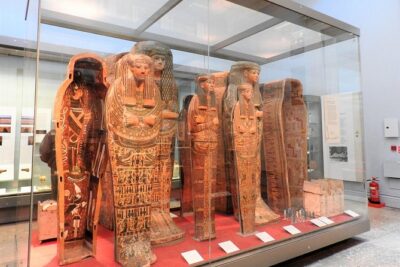

Skip the Line: Liverpool Beatles Museum – The perfect tribute to the Beatles
Read our review →

Browse the lists this tour appears in