
Reviewed · MUSEUMS
Secrets of Underground Walking Tour with London Transport Museum
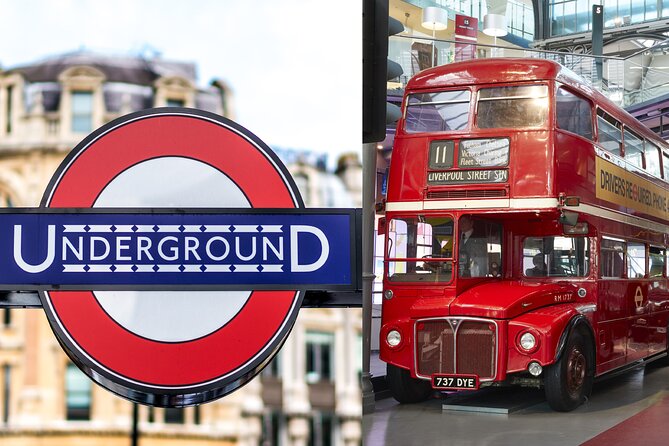
London’s Underground is more than a way to get across town. On this half-day walk, you follow its story from Baker Street, one of the first stations on the world’s first underground railway, to Westminster. Along the way, you see famous stations, former station sites, and the outside of places linked to London’s ghost-platform lore. The best part is the access to stories you would miss on your own, especially around Down Street and the older interchanges.
I like two things here: the live guide commentary, backed by personal headsets, and the included entry to the London Transport Museum, where you can continue exploring at your own pace. The main drawback is that you do not enter disused stations, despite the ghost-station theme, and the museum visit is independent rather than guided. You also need to pay separately for your Underground travel with an Oyster card, Travelcard, or contactless card.
Key details before you book
- Baker Street begins the story: Meet by the Sherlock Holmes statue outside Baker Street Underground Station at 1 pm.
- Six central London stops: The route passes through Oxford Circus, Green Park, Piccadilly Circus, Embankment, and Westminster.
- Ghost stations are viewed from outside: You do not go inside disused Underground stations.
- Headsets keep the guide audible: Each person receives a personal audio headset for the walking portion.
- The museum visit is self-guided: London Transport Museum entry is included, but transport to Covent Garden and any museum guiding are not.
- Allow for real walking: The guided section finishes around 3:30 pm at Westminster, and the full experience takes about five and a half hours when the museum visit is included.
Baker Street and the beginning of the Underground story
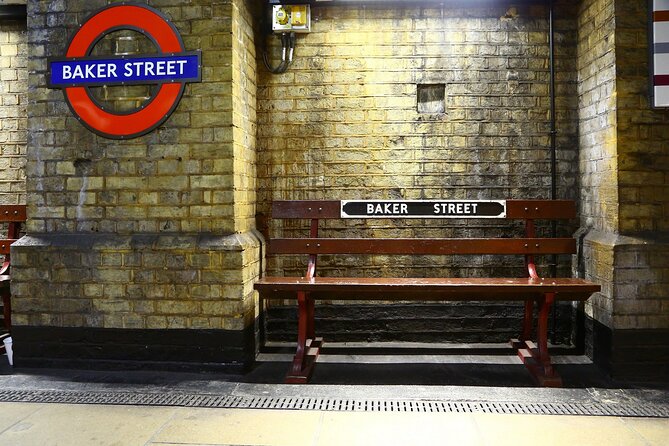
The tour starts at 1 pm outside Baker Street station, by the Sherlock Holmes statue. This is a sensible meeting point, since Baker Street connects the modern London Underground with its earliest days.
Baker Street was one of the original stops on the Metropolitan Railway, opened in 1863 as the world’s first underground railway. That makes it more than a convenient starting place. It gives the guide a strong setting for explaining why London needed underground trains, how the early lines were built, and how the system grew beneath streets that were already crowded above ground.
You should arrive with enough time to find the statue and settle in. The meeting point is outside the station on Marylebone Road, and the route uses public transport and walking rather than a private vehicle. Your Underground fare is not included, so have a contactless payment card, Oyster card, or Travelcard ready for Zone 1.
The personal audio headset is useful here and throughout the walk. Underground stations can be noisy, and a group of up to 25 people can spread out at crossings or station entrances. The headset means you do not have to stay shoulder to shoulder with the guide to hear the explanation.
More walking tours in London:
- Tour for Muggles The Ultimate Harry Potter Walking Tour in London
★ 5.0 · 4,684 reviews - London Jack The Ripper Guided Walking Tour
★ 5.0 · 3,131 reviews - Changing of the Guard Guided Walking Tour in London
★ 5.0 · 1,793 reviews
Oxford Circus and the Underground as a working machine
The next stop is Oxford Circus, where the focus shifts from the earliest Underground to the way London keeps expanding its transport network.
Oxford Circus is an important interchange, and the Victoria line added a newer layer to a much older part of the system. Construction began in 1962 on the first Walthamstow to Victoria section, with cross-platform interchange planned at Oxford Circus. The Victoria line platforms opened on March 7, 1969, as part of the extension from Warren Street to Victoria.
This is the kind of stop that works best with a guide. If you arrive alone, you may notice the station’s crowds, signs, and passageways, but you are unlikely to understand why its layout matters. The commentary connects the practical design of an interchange with the dates and decisions behind it.
Do not expect a long museum-style visit at each station. The listed time at the stops is about 30 minutes, but the tour is still a moving walk through central London. You will hear an explanation, look at the station setting, and then continue. That pace suits anyone who wants a broad story rather than a single station examined in minute detail.
Green Park and the Down Street station story
Green Park brings one of the tour’s more intriguing subjects: Down Street station.
Down Street opened in 1907 under the Great Northern, Piccadilly and Brompton Railway. It later served the Piccadilly line and sat between Dover Street, now called Green Park, and Hyde Park Corner. Because it had little passenger use and was close to other stations, it closed in 1932.
The important practical point is that you view Down Street from outside. You do not enter the abandoned station or walk along its old platforms. That distinction matters, especially if you are booking because you expect a behind-the-scenes visit inside a sealed station.
Even from the street, the stop helps explain how London’s Underground changes over time. A station can be important when it opens, then become unnecessary as nearby stations improve or neighborhoods shift. The system is full of these decisions, and Down Street gives the guide a clear example.
This is also one of the places where expectations should be realistic. The experience is about seeing and understanding sites linked to disused stations, not exploring restricted tunnels. If your main goal is to enter a closed station, this is not the right tour.
Piccadilly Circus and early twentieth-century London
At Piccadilly Circus, the story returns to one of central London’s best-known stations.
The station opened in 1906 in two stages. The Baker Street and Waterloo Railway, now the Bakerloo line, opened its platforms on March 10. Platforms for the Great Northern, Piccadilly and Brompton Railway, now the Piccadilly line, followed on December 15.
This stop shows how the Underground was not built as one single project. Different railway companies developed separate lines, and their routes later became parts of the network you use today. The result is a system that often feels like a collection of different eras joined together.
Piccadilly Circus is also a useful place to consider the difference between an Underground station as transport infrastructure and as a piece of city history. Above ground, you are in one of London’s famous public spaces. Below ground, the station reflects more than a century of extensions, upgrades, and changing travel patterns.
The guide’s role is especially valuable at stops like this. The facts are easy to read online, but the tour links the dates to the physical station and the streets around it. The audio equipment helps keep that explanation clear while the group moves through a busy part of the city.
More museums in London:
- Chelsea FC Stadium Tours and Museum
★ 5.0 · 1,908 reviews - Official tickets: Moco Modern & Contemporary Art Museum
★ 4.5 · 1,157 reviews - British Museum London Guided Tour Semi-Private 8ppl Max
★ 5.0 · 984 reviews - The British Museum London – Exclusive Guided Museum Tour
★ 5.0 · 555 reviews
Embankment and the riverbank connection
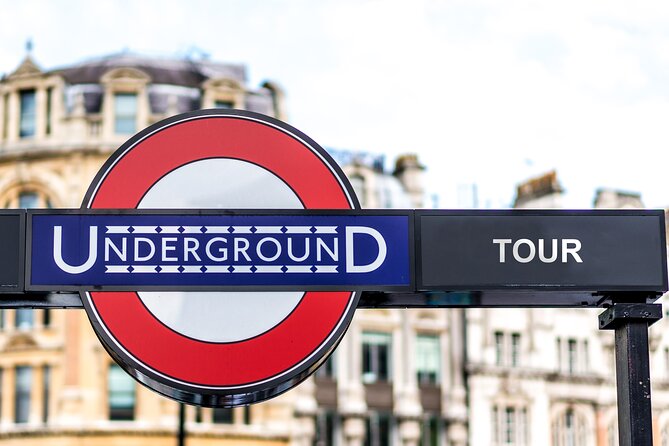
The route then reaches Embankment, tying Underground history to the River Thames.
The Victoria Embankment was developed in the nineteenth century to reclaim marshy land along the river. The embankment now runs from the City of Westminster toward the City of London along the north bank. That setting helps explain why transport, engineering, and urban expansion are so closely connected in London.
At Embankment station, you get another example of how the Underground fits into the wider development of the city. Stations are not isolated structures. They sit within streets, river works, public buildings, and changes to the ground beneath London.
This stop may appeal to you if you like city history that reaches beyond train lines. The tour does not simply list station opening dates. It places the network in the story of how London reshaped its riverfront and made room for roads, walkways, and railways.
The half-day format also gives the route a useful rhythm. You are not spending the whole afternoon in one dark station. You move between different parts of central London, with each stop adding another piece to the larger picture.
Westminster and the end of the guided walk
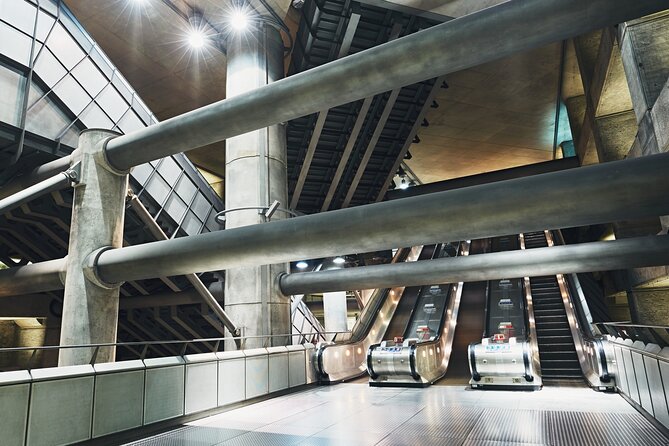
Westminster is the final stop on the guided section, and it brings the route back to the early days of underground rail.
Westminster station opened as Westminster Bridge on December 24, 1868, under the steam-operated District Railway. It was part of the first section of that railway, which ran from South Kensington. Early access came through a passage from Bridge Street and a pedestrian subway beneath the road.
That detail gives you a good sense of how different the first Underground was from the system you use today. Early railway builders had to work around existing roads, buildings, and riverfront development. Even the station entrance arrangements show how the railway was fitted into an already established city.
The guided portion ends at Westminster station at about 3:30 pm. This is not the end of the full experience, but it is the point where the guide-led walk finishes. If you are meeting friends, arranging dinner, or planning another booking, use this time as your firmest reference point.
From Westminster, you make your own way to the London Transport Museum in Covent Garden. Travel there is not included, so budget for a separate Underground fare or other transport. The museum is also within walking distance of Leicester Square, Holborn, Charing Cross, and Embankment stations, with the exact walking time depending on where you start and the route you choose.
London Transport Museum in Covent Garden
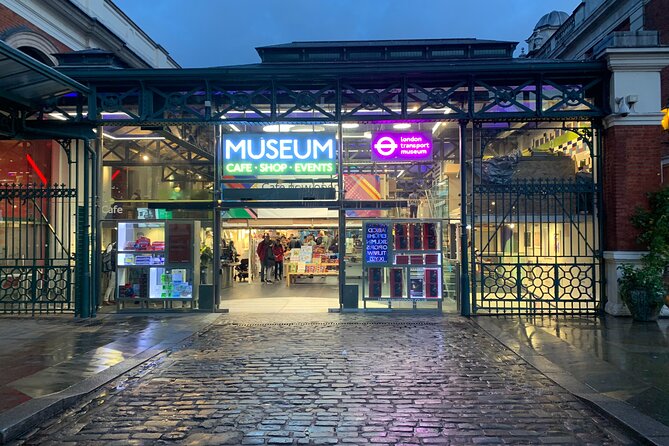
The included museum entry is a useful second half to the experience, but it is important to understand how it works.
You visit the London Transport Museum independently. There is no guide accompanying you through the galleries, and you are responsible for reaching Covent Garden after the Westminster walk. The museum address is Covent Garden Piazza, London WC2E 7BB.
Allow about 90 minutes if you want to follow the planned timing. That is enough for a focused visit, though you can spend longer if your schedule permits and the museum’s opening arrangements allow it.
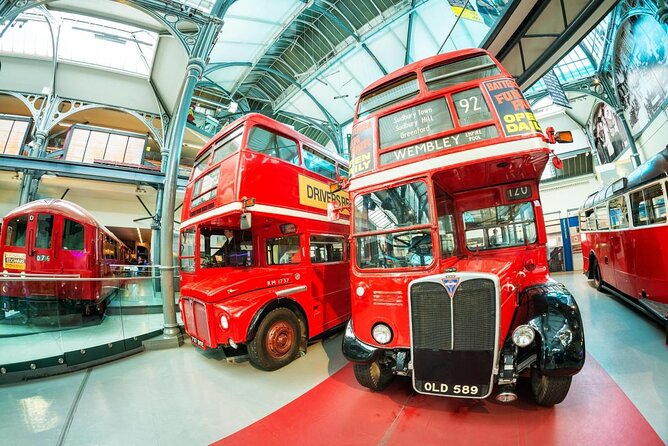
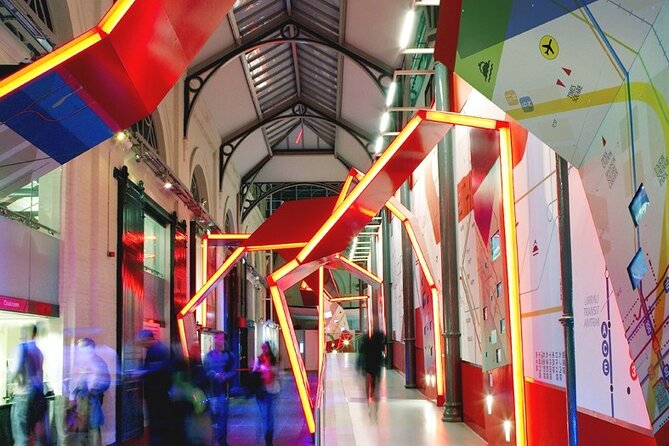
Inside, the museum covers London transport over roughly 200 years. You can explore the people who built, operated, and used the system, as well as the vehicles and technology that shaped the city. The displays also look ahead at how new transport technology may affect London.
I like the museum pairing because it gives you two different ways to learn. The walking tour explains the city from the street and station entrance. The museum gives you objects, vehicles, and displays that make the Underground’s development easier to understand.
There is one practical issue to check before you go. Some booking arrangements have caused confusion at museum admission, including claims of an extra charge or difficulty using the supplied ticket. Because the museum entry is a key part of the price, confirm the redemption instructions before your tour and keep your booking confirmation available. If there is a problem, contact the tour provider promptly rather than waiting until after your visit.
What the $32 price really includes
At about $32, this tour is priced reasonably if you want a guide-led introduction to London’s Underground and plan to visit the museum anyway.
The price covers the walking tour, an expert guide, personal audio equipment for the guided section, and London Transport Museum entry. It does not cover your Underground fare, food, hotel pickup, hotel drop-off, or transport from Westminster to Covent Garden.
The value depends on what you would otherwise do. If you would buy museum admission separately and spend time researching station history on your own, the package can save effort and provide useful context. If you only want to see disused stations from the inside, the price will feel less attractive because this tour does not provide that access.
A maximum group size of 25 is another factor. That is not a private tour, but it is small enough for a guide with a headset system to keep the group together. The experience can still feel less personal than a private walk, especially at busy stations.
Guide quality matters here. John is specifically associated with this tour and is described as entertaining and well informed. The guide is the main reason to book rather than simply riding the Tube with a guidebook. The strongest part of the experience is the live explanation, not a special vehicle or restricted tunnel visit.
Who will enjoy this Underground walk
I would recommend this tour to you if you enjoy transport history, urban engineering, and the small details behind familiar places. It is also a good fit if you want a structured afternoon in central London and prefer a guide to connect the stops.
Families can enjoy it, especially if older children are interested in trains, tunnels, or how cities work. One family group found the combination of walking, stories, and the museum made a fun day. Keep in mind that the tour involves several hours of walking and requires a moderate level of fitness.
It suits first-time London visitors who want to see several central areas while learning something specific. It also works for repeat visitors who have used the Tube many times but never considered why its stations look and function so differently.
I would be cautious about booking it if you need step-free access, though the supplied information does not give a detailed accessibility assessment. I would also think twice if you dislike public transport, crowded central areas, or a tour that continues through several stops rather than settling in one place.
Smart ways to prepare
Wear comfortable shoes. The tour lasts about two and a half hours before the museum, and the full experience is listed at roughly five and a half hours.
Bring a contactless payment card, Oyster card, or Travelcard for Zone 1. The Underground fare is required but not included, and failing to have a valid payment method could prevent you from taking part.
Arrive early at Baker Street and look for the Sherlock Holmes statue outside the station. The meeting point is specific, and Baker Street is a busy area where a few extra minutes can save stress.
Plan the museum as a separate part of the afternoon. You will need to navigate from Westminster to Covent Garden on your own, and there is no museum guide. Check the ticket instructions before setting off so you know how entry is handled.
Finally, keep your expectations clear about the word ghost. You will learn about closed stations and see the outside of some sites, but you will not walk inside abandoned platforms or tunnels.
Should you book it?
Book this tour if you want an accessible, story-led introduction to the London Underground, with a useful museum visit added afterward. The route covers major stations and lesser-known closures, and the audio headset makes the guide easier to follow.
Skip it if your priority is entering secret stations, because that is not what you receive. The tour is best understood as a guided history walk through working stations and former station locations, followed by independent museum time.
At $32, it offers fair value when you want both the guide and museum entry. Just budget for Zone 1 transport, allow time to reach Covent Garden yourself, and confirm the museum admission instructions before the day.
FAQ
Where does the Secrets of the Underground walking tour start?
The tour starts at 1 pm outside Baker Street Underground Station, by the Sherlock Holmes statue on Marylebone Road, London NW1 5LJ.
Where does the guided walk finish?
The guided Underground portion finishes at Westminster Underground Station at approximately 3:30 pm.
Are disused Underground stations entered during the tour?
No. You see the outside of some disused station sites, but you do not enter ghost stations or abandoned platforms.
Is London Transport Museum admission included?
Yes. Entry to the London Transport Museum is included, but the museum visit is independent and does not include a guide.
How do I reach the London Transport Museum after the walk?
You must make your own way from Westminster to the museum in Covent Garden. Transport is not included. The museum is also within walking distance of Leicester Square, Holborn, Charing Cross, and Embankment stations.
Do I need an Oyster card or contactless payment card?
Yes. You need an Oyster card, Travelcard, or contactless payment card for Zone 1. The Underground fare is not included in the tour price.
Just added in London
- The Beatles & Liverpool Magical Mystery Tour from London★ 4.5 · 80 reviews
- The Beatles and a Secret pub★ 4.5 · 36 reviews
- Airport Coach Service from Heathrow to Oxford★ 3.5 · 67 reviews
- The Beatles Magical History Black Taxi Tour London★ 5.0 · 51 reviews
- The Beatles London walking tour. From Abbey Road to the Roof Top★ 5.0 · 61 reviews
- Private The Beatles Taxi Tour in London★ 5.0 · 12 reviews
- The Beatles London Walk★ 4.5 · 120 reviews
- Dinner and Jazz Cruise on the River Thames★ 4.0 · 140 reviews
Museums, compared.


Official tickets: Moco Modern & Contemporary Art Museum
Read our review →
British Museum London Guided Tour Semi-Private 8ppl Max
Read our review →
The British Museum London – Exclusive Guided Museum Tour
Read our review →


Skip the Line: Liverpool Beatles Museum – The perfect tribute to the Beatles
Read our review →
Browse the lists this tour appears in