
Reviewed · MUSEUMS
Women in the British Museum
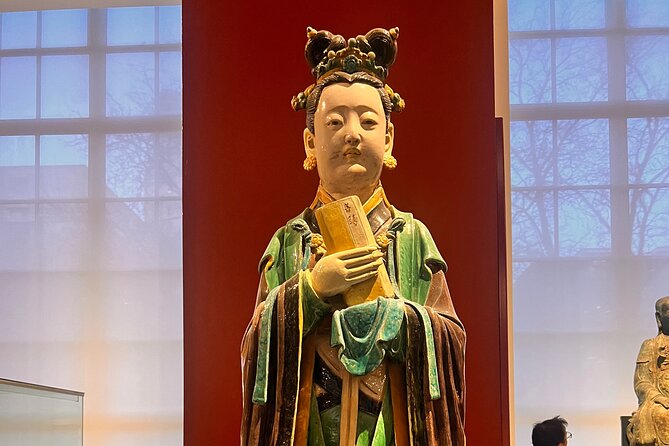
The British Museum can feel like a city of objects, with more rooms and cases than you can sensibly tackle in one visit. This tour gives you a clear route through it, using women’s stories to connect objects from Mesopotamia, Egypt, Mexico, India, Greece, Italy, and England. I like the focused theme and the way guides such as Becky and Matilda bring together art, archaeology, invention, and power. I also like that the small group, limited to 10 people, leaves room for real questions.
The main consideration is that this is not a general highlights tour. If you want the Rosetta Stone, Egyptian mummies, or a broad survey of the museum’s most famous rooms, you may prefer to explore independently. At $54.55 per person for about two hours, the value rests on how much you want interpretation and discussion rather than simple museum entry.
Key points at a glance
- Women’s stories guide the route: Objects are used to examine women’s work, influence, creativity, and place in societies across several regions and periods.
- A small group keeps the discussion personal: The maximum of 10 people makes it easier to hear the guide and ask questions.
- Becky and Matilda have earned strong praise: Both guides are noted for lively storytelling, careful research, and a warm way with groups.
- The route crosses continents and centuries: Expect links between Mesopotamia, Egypt, Mexico, India, Greece, Italy, and England.
- Chess and women’s history make an unexpected connection: The tour goes beyond obvious portraits and famous female figures.
- You can keep exploring afterward: The tour ends inside the British Museum, so you can continue your visit if you wish.
Why a women’s history theme changes the British Museum
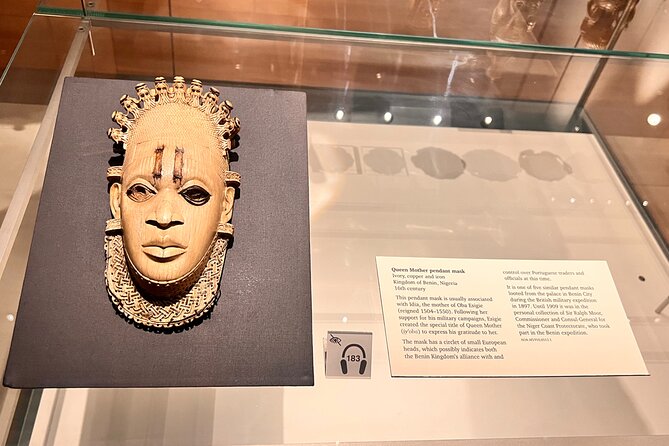
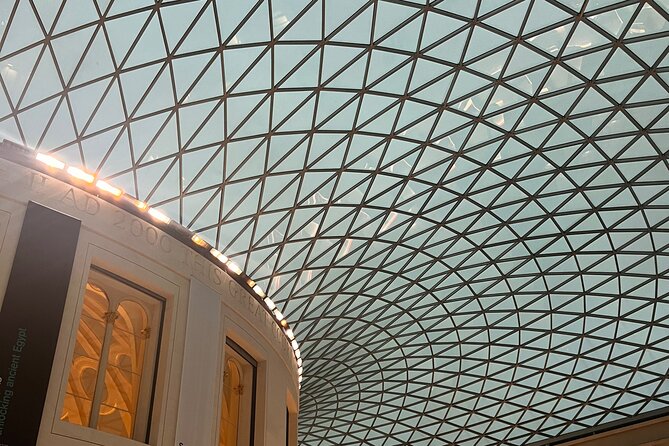
The British Museum is not short on objects. Its challenge is choice. You can wander for hours and still leave without seeing how separate displays relate to one another.
This tour gives you a question to carry through the building: where are women present in these objects, and why have their roles often been overlooked? That question can lead from a work made by a woman to an object connected with women’s labor, education, religion, political influence, or the study of antiquities.
I like this approach because it avoids treating women’s history as a single room or a short appendix to the past. The tour presents women as makers, patrons, thinkers, discoverers, subjects, and people who shaped events even when the surviving record gives them less space.
You should also expect some interpretation of absence. A display may tell you who commissioned an object but not who produced it. A famous artifact may be discussed through the men associated with its discovery, while women who helped document, preserve, or interpret the past receive little attention. That kind of examination gives the museum visit more bite.
The focus is feminist, but you do not need a specialist background to follow it. The guides explain the material in plain terms and connect individual pieces to wider questions. If you already care about women’s history, you will find plenty to think about. If you normally walk past museum cases without knowing what to ask, the theme gives you a useful starting point.
More museums in London:
- Chelsea FC Stadium Tours and Museum
★ 5.0 · 1,908 reviews - Official tickets: Moco Modern & Contemporary Art Museum
★ 4.5 · 1,157 reviews - British Museum London Guided Tour Semi-Private 8ppl Max
★ 5.0 · 984 reviews
Meeting outside Great Russell Street
You meet your guide outside the British Museum at 52 Great Russell Street, London WC1B 3BA. The end point is listed as the British Museum on Great Russell Street, with the important practical detail that you remain inside the museum when the guided portion finishes.
That arrangement works well. You do not have to cross London for your next activity, and you can continue looking at the collection while the objects and stories are still fresh in your mind.
The experience is offered in English and uses a mobile ticket. Pre-booked museum tickets are included, so you are paying for both the guided experience and arranged entry rather than trying to work out access on the day.
Give yourself enough time to reach Great Russell Street. The details provided do not specify a precise meeting sign, interior gallery, or late-arrival procedure, so check your booking instructions carefully before setting out. As with any timed activity, arriving early is the sensible choice.
Two hours with a clear purpose
The tour lasts about two hours. That is long enough to build a connected story, but short enough to fit into a London day without taking over your entire museum visit.
A general visit to the British Museum can become tiring because the collection is so large. You may move from ancient Egypt to Greece, then find yourself in another period before you have understood the first one. A guide can reduce that mental clutter by choosing objects that support one central theme.
Expect a steady sequence of stops rather than a long lecture in one gallery. The guides use individual objects as starting points, then add context about the women linked to them. The route has been described as moving from Mesopotamia through Egypt, Mexico, India, Greece, Italy, and England, although the exact order and objects can vary.
The strongest part of this format is the connection between displays. A casual visit might leave you looking at separate cases with no clear relationship. Here, one object can help explain the next, and a story from one culture may raise a question that returns later in another part of the museum.
Two hours can also feel packed. The tour has been described as full of information, with many facts and links to absorb. That is a benefit if you like a brisk, idea-heavy visit. It may feel demanding if you prefer a slow look at each object or want time for photographs.
I would treat the tour as an introduction, not a complete account of women’s history or of the museum itself. The museum is too large for that. The real benefit is leaving with a better map of what deserves a second look.
From Mesopotamia to England
The cross-cultural route is one of the most useful features. You are not shown women’s history as a single Western story. The stops reach across ancient and later societies, allowing you to compare how women’s roles were recorded, represented, and remembered.
The Mesopotamian and Egyptian material can set up early questions about power, belief, family, labor, and public identity. The exact object list is not provided, so you should not expect a fixed catalogue of named highlights. Instead, the guide selects pieces that help make the theme visible.
Mexico and India add further range. These sections matter because they prevent the tour from narrowing into a story about Britain and Europe alone. You get the chance to see how the same broad questions can take different forms in different cultures.
The Greek and Italian material may connect women with art, mythology, education, patronage, or social status. England brings the story closer to the institution and to the way museums themselves have recorded the past.
This geographical sweep is not just a list of countries. It gives the guide room to show that there is no single experience of womanhood across history. At the same time, two hours means each stop must be selective. You will hear a carefully chosen story, not a full course on each civilization.
Same base, a different kind of day:
- Stonehenge, Windsor Castle, and Bath from London
★ 4.5 · 18,662 reviews - London Big Bus Hop-On Hop-Off Tour with Optional River Cruise
★ 3.5 · 10,803 reviews - London Small Group Tour of Historical Pubs
★ 5.0 · 10,422 reviews - Stonehenge, Windsor Castle and Bath with Pub Lunch in Lacock
★ 4.5 · 7,402 reviews
Women as artists, researchers, and discoverers
One of the most worthwhile features is the attention to women who helped create, find, study, or preserve the past. Many museum visitors instinctively look for women shown in an object. This tour also asks who made the object, who funded it, who documented it, and who helped bring it into public view.
That wider frame can alter the way you look at museum collections. A woman may appear not only as a ruler, deity, portrait subject, or historical figure, but also as an artist or a person whose work shaped the museum’s understanding of antiquities.
This is where the guide’s preparation matters. Becky has been praised for linking objects to wider historical threads and for using extra images and information to make the points clear. Matilda has also been praised for her strong command of women’s history and her ability to explain it with energy.
The guide assigned to your date is not stated in the booking information, so do not assume you will meet one particular person. Still, the experience has been led by guides with a clear interest in research and public storytelling, which is exactly what this format needs.
The result should feel less like a parade of labels and more like an argument. You are encouraged to question who receives credit, whose work survives, and how museum displays shape your understanding of the past.
The unexpected chess connection
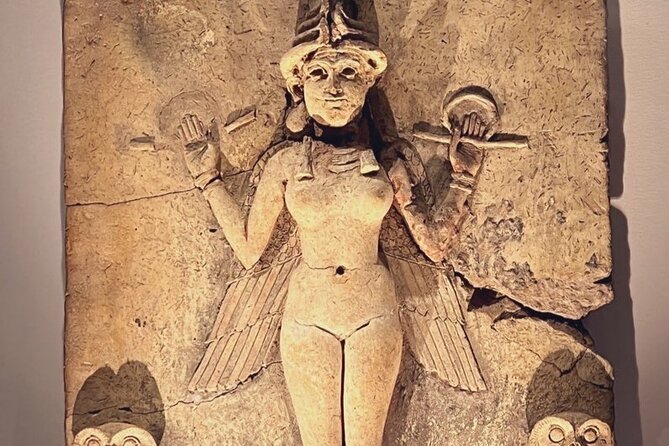
A particularly unusual thread is the link between women’s history and chess. That detail signals the kind of tour this is. You are not simply being taken to objects that depict famous women.
Chess can open questions about strategy, education, leisure, status, symbolism, and who had access to intellectual or social spaces. The value is in the connection. An object that first seems unrelated to women’s history may become significant once the guide explains the surrounding culture and the people who used or interpreted it.
This kind of surprise is one reason to choose a themed tour. You may leave remembering not only a particular object, but also a new way to look at familiar subjects. The tour changes the questions you ask as you move through the rest of the museum.
You should not expect every story to produce such a dramatic revelation. Some stops will likely be more familiar, and the amount of detail may vary. But the chess example shows that the route aims to widen your idea of what counts as women’s history.
Becky, Matilda, and the value of a live guide
The guides are central to the experience. A British Museum case can give you dates, materials, and a brief description. A live guide can show why an object matters, explain what is missing from the label, and respond when your own questions lead somewhere unexpected.
Becky’s style has been described as dynamic, warm, and absorbing. Her tours use stories and connections to keep the group involved, while still making space for questions. Matilda is also praised for passion, clarity, and her ability to share a large amount of information without losing the human side of the subject.
That does not mean the experience is a performance with no room for discussion. The small group is important here. With no more than 10 people, you are more likely to hear the explanation clearly and ask about an object that catches your attention.
The group size does not guarantee a completely private experience. You are still sharing the guide and route with other people, and the tour has a planned duration. But it is a much more workable setting than a crowded public lecture.
If you enjoy asking questions, comparing ideas, and hearing the reasoning behind a museum display, this is a strong fit. If you want silence and total freedom to linger, independent exploration may suit you better.
Is $54.55 good value?
The price is $54.55 per person. That is not a low-cost way to enter a museum, but entry alone is not what you are buying. The fee covers pre-booked museum tickets and an in-person guide for about two hours.
I see the value in three parts. First, the guide saves you from spending your limited time choosing a route through a huge collection. Second, the theme brings out links you might miss on your own. Third, the small group gives you a better chance of discussion than a large public tour.
The price is harder to justify if you already have a strong plan for the British Museum, want to spend most of the day in a few specific galleries, or prefer reading labels at your own pace. It is also worth remembering that the tour does not replace independent time inside the museum. It gives you a focused start, and you can stay afterward to see more.
The booking pattern suggests planning ahead is sensible, since the experience is booked about 40 days in advance on average. That does not promise that every date sells out, but it is a reason not to leave this until the last moment if the theme matters to you.
Who should book this experience?
I would choose this tour if you want a guided museum visit with a clear point of view. It suits you especially well if you are interested in women’s history, feminist interpretation, archaeology, art, or the way museums decide which stories to tell.
It also works for people who find the British Museum intimidating. You get two hours of direction, then the freedom to stay inside and continue alone. That balance is useful: you receive an introduction without being locked into a full-day group schedule.
The tour may suit older children or teenagers who enjoy stories and discussion, but no age guidance is provided, so you will need to judge your own group. Most people can take part, and service animals are allowed. The activity is near public transport, which makes the central London meeting point practical.
I would skip it if your first visit must cover the museum’s standard headline objects, or if you have only a short window and do not want a themed route. You can always visit the museum independently and follow your own priorities.
Cancellation is free up to 24 hours before the start time for a full refund. Changes or cancellations made less than 24 hours before the start time are not accepted for a refund. The activity also requires a minimum number of bookings, so if that minimum is not reached, you will be offered another date or experience, or a full refund.
My verdict on the Women in the British Museum tour
I recommend booking this if you want the British Museum to feel less like a warehouse and more like a conversation about who gets remembered. The best features are the focused theme, the cross-cultural route, the small group, and the guides’ ability to connect objects that you might otherwise see as unrelated.
The main trade-off is focus. You will not get a standard greatest-hits tour, and two hours can be information-heavy. But if women’s voices, overlooked work, and fresh questions matter more to you than checking off famous objects, $54.55 is a fair price for a thoughtful introduction.
Book it when you want interpretation, not just entry. Then stay inside afterward and use your new perspective to explore the rooms the tour did not reach.
FAQ
How long is the Women in the British Museum tour?
The tour lasts approximately two hours.
How much does the experience cost?
The listed price is $54.55 per person.
Is the tour offered in English?
Yes. The experience is offered in English.
How many people can join the group?
The activity has a maximum of 10 participants.
Where does the tour start and finish?
You meet outside the British Museum at 52 Great Russell Street, London WC1B 3BA. The tour finishes inside the British Museum, where you may continue exploring if you wish.
Is museum entry included, and can I cancel?
Pre-booked museum tickets are included. You can cancel up to 24 hours before the start time for a full refund. Changes or cancellations made less than 24 hours before the start time are not accepted for a refund.
Just added in London
- The Beatles and a Secret pub★ 4.5 · 36 reviews
- The Beatles & Liverpool Magical Mystery Tour from London★ 4.5 · 80 reviews
- Airport Coach Service from Heathrow to Oxford★ 3.5 · 67 reviews
- The Beatles Magical History Black Taxi Tour London★ 5.0 · 51 reviews
- The Beatles London walking tour. From Abbey Road to the Roof Top★ 5.0 · 61 reviews
- Private The Beatles Taxi Tour in London★ 5.0 · 12 reviews
- The Beatles London Walk★ 4.5 · 120 reviews
- Dinner and Jazz Cruise on the River Thames★ 4.0 · 140 reviews
Museums, compared.

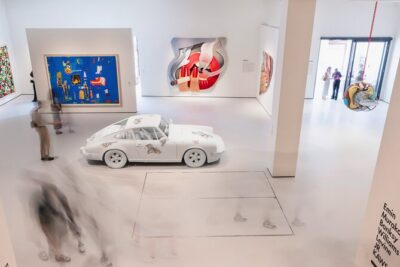
Official tickets: Moco Modern & Contemporary Art Museum
Read our review →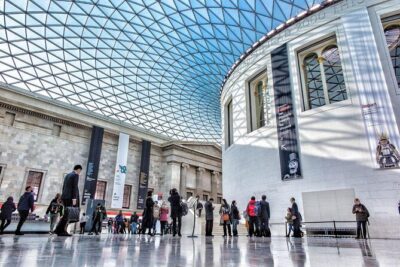
British Museum London Guided Tour Semi-Private 8ppl Max
Read our review →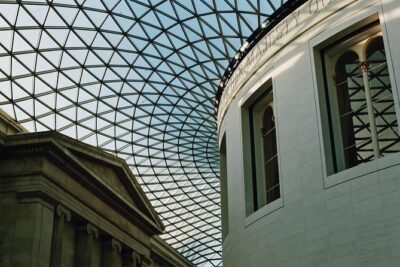
The British Museum London – Exclusive Guided Museum Tour
Read our review →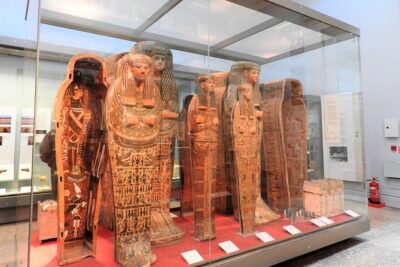

Skip the Line: Liverpool Beatles Museum – The perfect tribute to the Beatles
Read our review →
Browse the lists this tour appears in