
Reviewed · MUSEUMS
Private Guided Tour of the British Museum
The best reason to book this private British Museum tour is simple: the museum can overwhelm you before you find the Rosetta Stone. Anthony Matthews, a retired archaeologist and Blue Badge Guide, takes you straight to major pieces and explains how they fit together, from Egyptian writing to Greek sculpture and Roman power.
I like the private format, which lets you set the pace and ask questions without holding up a larger group. I also like the strong family appeal: Anthony has kept children and teenagers interested with humor, clear stories, and questions that make ancient history feel less remote.
The main trade-off is price. At $344.49 for up to six people, it is a serious expense for one museum visit, and the tour is offered only in English. For a full group, though, the cost can compare well with several individual tickets for a specialist-led experience.
Key Points Before You Book
- See the Rosetta Stone with context: Learn how its repeated text helped scholars translate Egyptian hieroglyphs.
- A private group of up to six: You can ask questions, adjust the pace, and focus on Egypt, Greece, Rome, or a mix.
- Anthony Matthews brings archaeology to the floor: His background includes work as a retired archaeologist and Blue Badge Guide.
- A smart choice for families: The storytelling and humor have worked especially well with children and teenagers.
- Morning or afternoon departures: You can fit the visit around the rest of your London plans.
- Plan for a focused museum visit: The advertised duration is about two and a half hours, while the core museum itinerary is described as two hours.
Why a Private Guide Helps Inside the British Museum
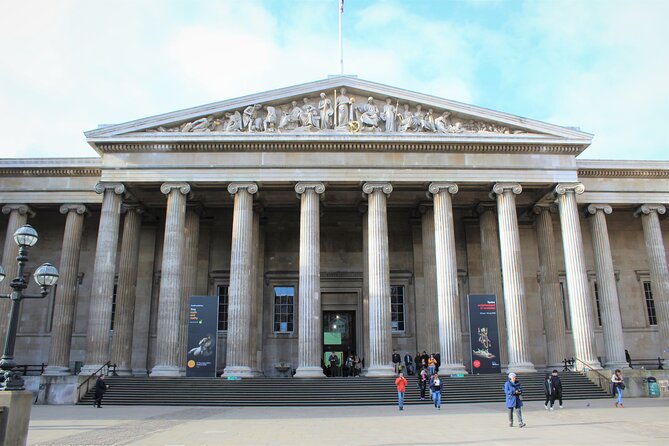
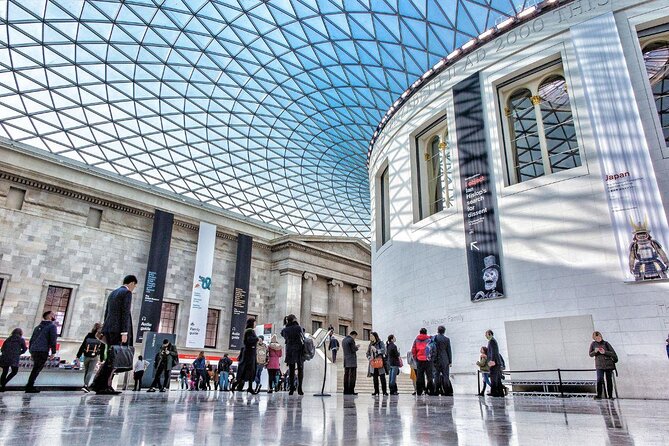
The British Museum is not a small, tidy collection that you can absorb in one quick circuit. It covers thousands of years and many cultures, with objects displayed in rooms that can make even a well-planned visit feel scattered.
A private guide gives you a thread to follow. Instead of reading a label, walking ten steps, and losing the larger story, you can connect an object to a period, a culture, and a technical achievement. Anthony’s approach is especially suited to visitors who want to know not just what an object is, but how archaeologists interpret it.
That difference matters at the Rosetta Stone. You see a famous slab, but the useful part is understanding why it mattered. The same message appears in more than one script, allowing scholars to compare languages and work toward translating Egyptian hieroglyphs. With a guide, the stone becomes a key piece of detective work rather than a famous object you simply photograph.
The private setup also helps if your group has mixed interests. One person may want Egyptian religion, another may prefer Roman engineering, and a teenager may care more about warfare or unusual artifacts. You can tell Anthony what catches your attention and spend less time on sections that do not.
More museums in London:
- Chelsea FC Stadium Tours and Museum
★ 5.0 · 1,908 reviews - Official tickets: Moco Modern & Contemporary Art Museum
★ 4.5 · 1,157 reviews - British Museum London Guided Tour Semi-Private 8ppl Max
★ 5.0 · 984 reviews
Meeting Anthony Matthews and Setting the Route
The tour begins in Greater London, with the activity ending back at the meeting point. The exact meeting instructions are provided when you book, and confirmation is sent at that time.
Morning and afternoon options give you some control over the day. A morning visit may suit you if you want to see the museum before your schedule fills up. Several people who booked Anthony for a morning start appreciated his effort to arrive early and position the group near the front of the entry line. That can be useful during busy periods, although you should still follow the confirmed meeting instructions and allow time to reach the museum.
At the start, you can tell the guide what you want from the visit. If you have only a short stay in London, ask for the essential highlights. If Egyptology is your priority, say so. If your children prefer Greek mythology, Roman soldiers, or dramatic objects, put that on the table before the route begins.
This is not a vehicle tour, and no air-conditioned transport is included. You meet at the museum area and spend the experience inside. The entrance ticket and licensed, insured guide are included.
Egyptian Galleries: The Rosetta Stone and Tutankhamun
The Egyptian portion gives the tour its clearest anchor. The Rosetta Stone is the major stop, but it works best as part of a larger story about writing, kingship, burial, and daily life.
Anthony can explain how the stone helped with translation and can read hieroglyphs, according to the details shared about his guiding. That sort of skill changes the way you look at the display. Instead of seeing rows of symbols as decoration, you begin to notice that the signs carry specific names, titles, and messages.
You also see a statue of Tutankhamun and hear about his life and death. Tutankhamun is familiar to almost everyone, but a guide can help separate the famous image from the historical questions around the young ruler. This is a good point in the tour for children because the story has a clear human focus, while adults can follow the political and religious setting.
The route also includes sarcophagus motifs, canopic jars, and the Book of the Dead. These pieces help explain Egyptian burial customs and beliefs about the afterlife. A canopic jar is not just an attractive container. Its purpose connects to the treatment of the body, and the decoration points to the religious world surrounding death.
The drawback is that two or two and a half hours cannot cover every Egyptian room in detail. You will get a purposeful selection, not a complete study of Egyptian civilization. If you want a long, specialist visit focused only on Egypt, ask about arranging more time or booking another session.
Greek Art: Gods, Gold, and Amazons
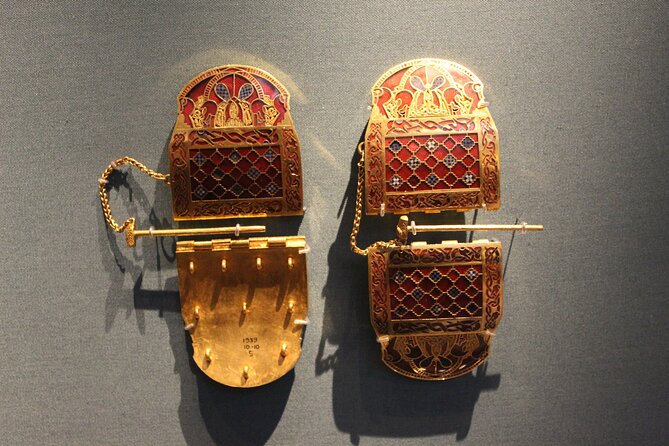
The Greek section brings a different kind of energy. You can expect Greek statuary, a gold headdress, and scenes of Amazons fighting. These objects open several lines of conversation: idealized human form, mythology, warfare, gender, status, and the way later cultures borrowed from Greek art.
Anthony’s storytelling is a strong fit here. He has been praised for making Greek and Roman subjects clear for both adults and teenagers, and for using humor without losing the historical point. That balance is helpful in a museum where a long sequence of marble figures can blur together.
The Greek material also gives your group room to ask bigger questions. Why did certain poses become standard? What did a gold headdress signal about its wearer? How do images of Amazons reflect Greek ideas about outsiders and conflict? The guide can help you read the objects as evidence rather than as isolated decorations.
If you already know the major stories of Greek mythology, you can push the discussion toward style, archaeology, and museum interpretation. If you are new to the subject, you can use the main objects as a clear introduction. The private format means you do not have to choose between the two approaches.
A few more things to do in London worth a look
- The Premier Classic London: Private 4-Hour Tour in a Black Cab
★ 5.0 · 2,737 reviews - Stonehenge Inner Circle Private Tour from London with Bath Visit
★ 5.0 · 1,909 reviews - Private Tour: Black Taxi Tour of London
★ 5.0 · 1,153 reviews - Private London Arrival Transfer – Airport to Hotel / Accommodation
★ 3.5 · 1,085 reviews
Roman Power, Technology, and Propaganda
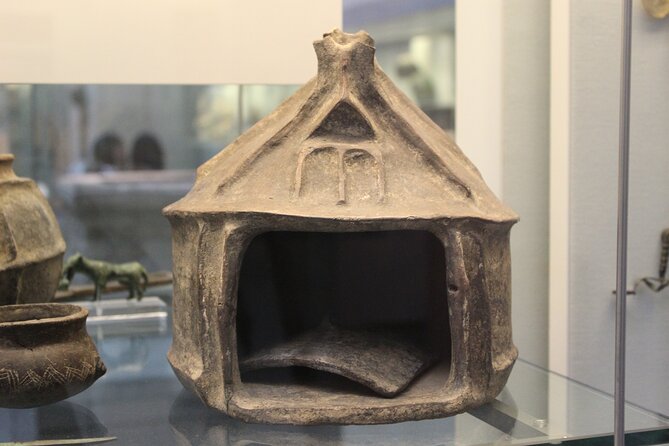
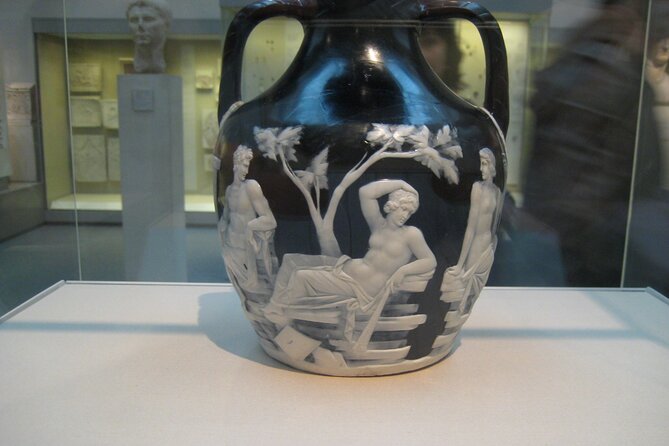
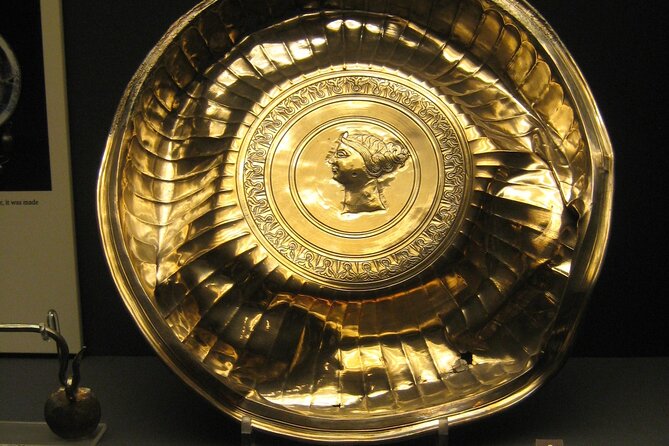
The Roman portion adds scale and political force. You hear about the origins of Rome, Roman technology, glass used for propaganda, alligator armor, and finely made gold jewelry.
Alligator armor is the sort of unusual object that gives a museum visit a jolt. It is more memorable than another standard display case because it raises immediate questions about materials, military display, and the reach of Roman power. The gold jewelry offers a different angle, showing technical skill, wealth, and personal display.
The discussion of glass propaganda is also valuable because it turns a beautiful object into a political tool. Roman art was not only about decoration. Images and materials could help present rulers, victories, and imperial identity in a form people could see and remember.
The Roman rooms can work particularly well after the Greek galleries because you can compare how Rome borrowed from and reshaped Greek culture. The sequence gives you a basic framework for seeing Rome as both an inheritor and a political machine.
Do not expect a full survey of every Roman province or period. The tour is built around selected highlights, and the guide must keep moving to make the time count. That is a strength if you want the major ideas without getting lost, but less useful if your main goal is to examine one narrow topic in depth.
A Tour That Works for Children and Teenagers
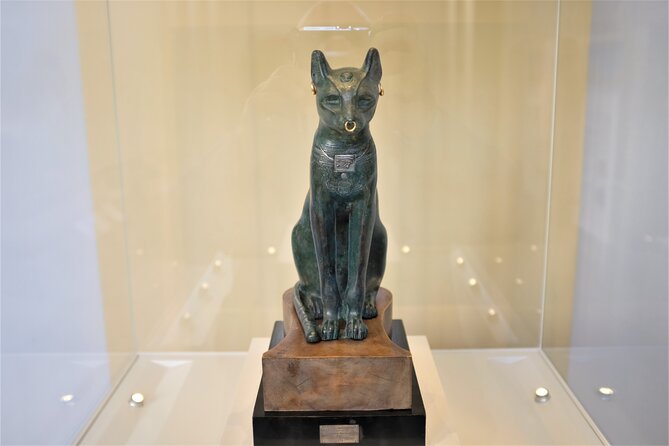
A museum tour succeeds or fails on attention, especially with younger members of a family. The comments about this experience repeatedly point to Anthony’s ability to hold the interest of children from about eight years old through the teenage years.
That does not mean every child will love two hours of ancient objects. You should still tell the guide your children’s interests in advance. A teenager who likes Greek history may respond to sculpture and mythology. Another may prefer Roman armor, ancient technology, or the process of reading inscriptions.
Anthony’s reported style includes questions, humor, and short stories. Those tools help because children can take part instead of simply listening to a lecture. A young visitor may remember the alligator armor or a translated inscription long after forgetting a date.
Families also gain from the guide’s control of time. Six people moving through a large museum can easily split up or spend twenty minutes on an object that does not matter to anyone else. A private guide keeps the group together while leaving space for questions.
For adults, the benefit is not only convenience. Anthony’s archaeology background adds attention to excavation, acquisition, and the way experts identify and interpret artifacts. That gives the tour a practical edge beyond a basic list of famous objects.
How the Price Works for a Group of Six
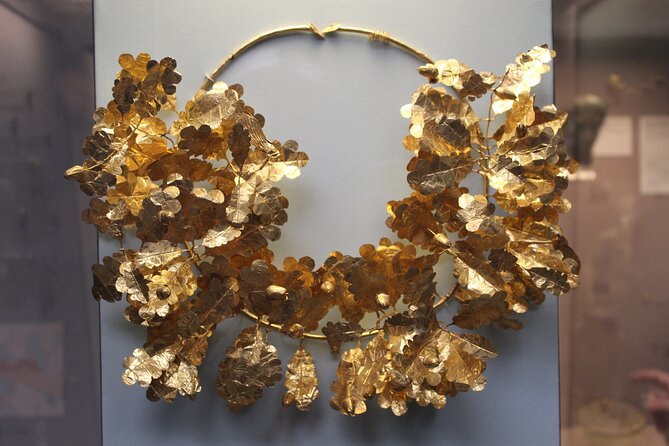
The listed price is $344.49 per group of up to six people, not per person. That works out to about $57.42 each if six people share the cost. For two people, the effective cost is much higher, about $172.25 each.
That makes group size the key value question. A family of four to six can get a private specialist experience for a reasonable per-person rate, especially if the museum is a major priority. A couple with a tight budget may prefer a self-guided visit, though they would give up the route planning and personal explanations.
The price also buys efficiency. You are paying to spend less time finding the major rooms, choosing what to skip, and trying to decode short labels. If your London schedule is packed, that can be more valuable than a lower-cost visit that takes longer to organize.
Admission and the licensed, insured guide are included. Transport is not included, but transport is not needed as part of the museum experience itself. The activity is offered in English, so make sure that suits everyone in your group.
Timing, Access, and Practical Limits
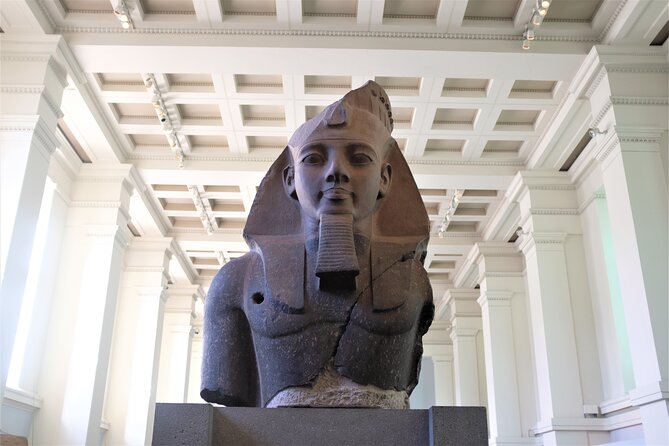
The experience lasts approximately two hours and thirty minutes, while the museum stop is also described as a two-hour visit. Treat it as a focused half-day activity rather than a full-day museum study.
Most people can participate, and service animals are allowed. The museum is in a two-thousand-year-old city, so most areas are accessible but not all areas are fully accessible. If anyone in your group has specific mobility needs, raise the question when booking rather than assuming every route or room will work equally well.
The booking includes a mobile ticket and confirmation at the time of purchase. You can choose a morning or afternoon tour, and the experience is private, so only your group participates.
Free cancellation is available if you cancel at least 24 hours before the start time. Changes or cancellations made inside that window are not accepted for a refund. Keep the local time cut-off in mind when adjusting a London booking.
Is This Private British Museum Tour Worth Booking?
I would book this tour if the British Museum is high on your London list, especially for a family or group of four to six. The private route, archaeology background, and focus on major Egyptian, Greek, and Roman objects give you a clear way into a very large collection.
Ask for Anthony Matthews if that option is available when you book. His strongest qualities are his archaeological perspective, ability to translate and explain ancient writing, efficient museum routing, and ease with children and teenagers.
I would skip it if you prefer to wander alone, have little interest in ancient history, or are visiting on a very tight budget with only one or two people. For everyone else, this is a practical way to turn a potentially confusing museum visit into a focused story about writing, belief, art, technology, and power.
FAQ
How long does the private British Museum tour last?
The experience is advertised as approximately two hours and thirty minutes. The museum itinerary itself is described as two hours, so plan for a focused visit of roughly two to two and a half hours.
How many people can join the private tour?
The price covers one private group of up to six people. Only your group participates in the activity.
Who is the guide?
The tour is led by Anthony Matthews, identified in the tour information and visitor comments as a retired archaeologist and Blue Badge Guide.
What does the tour cover?
The route can include the Rosetta Stone, Tutankhamun, sarcophagi, canopic jars, the Book of the Dead, Greek statuary, a gold headdress, Amazons fighting, Roman technology, glass propaganda, alligator armor, and gold jewelry.
Can the tour be tailored to my interests?
Yes. The private tour can be adjusted to meet your needs and interests. You can focus more on Egyptian, Greek, or Roman history, or ask for a highlights route.
Are museum admission and transportation included?
The entrance ticket and licensed, insured guide are included. An air-conditioned vehicle is not included.
What is the cancellation policy?
You can cancel up to 24 hours before the experience starts for a full refund. Cancellations or changes made less than 24 hours before the start time are not accepted for a refund.
Just added in London
- The Beatles and a Secret pub★ 4.5 · 36 reviews
- The Beatles & Liverpool Magical Mystery Tour from London★ 4.5 · 80 reviews
- Airport Coach Service from Heathrow to Oxford★ 3.5 · 67 reviews
- The Beatles Magical History Black Taxi Tour London★ 5.0 · 51 reviews
- The Beatles London walking tour. From Abbey Road to the Roof Top★ 5.0 · 61 reviews
- Private The Beatles Taxi Tour in London★ 5.0 · 12 reviews
- The Beatles London Walk★ 4.5 · 120 reviews
- Dinner and Jazz Cruise on the River Thames★ 4.0 · 140 reviews
Museums, compared.

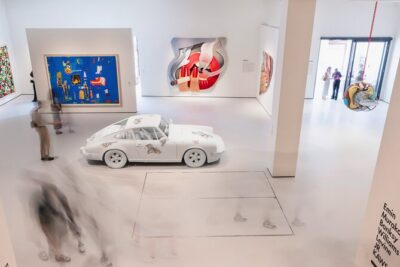
Official tickets: Moco Modern & Contemporary Art Museum
Read our review →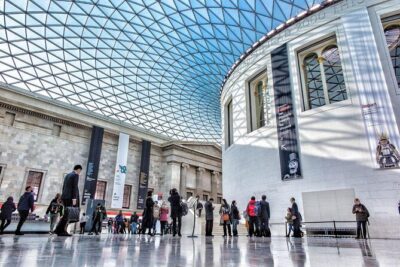
British Museum London Guided Tour Semi-Private 8ppl Max
Read our review →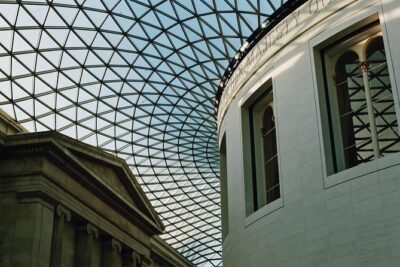
The British Museum London – Exclusive Guided Museum Tour
Read our review →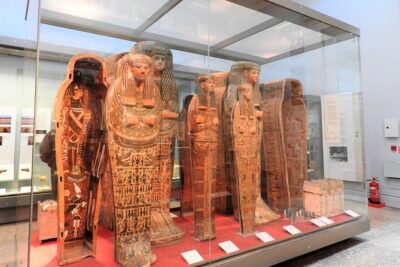

Skip the Line: Liverpool Beatles Museum – The perfect tribute to the Beatles
Read our review →
Browse the lists this tour appears in