
Reviewed · SELF-GUIDED TOURS
London Charles Dickens Puzzle Questo and Self-Guided Tour
Charles Dickens’s London comes alive through a self-guided city puzzle that links his old home, story settings, historic pubs, and literary landmarks. You begin at the Charles Dickens Museum on Doughty Street and work your way toward Fleet Street, solving clues to reveal the next stop.
I like the freedom to start at any hour and stop whenever you wish. I also like the price: at about $8.33 per person, it costs far less than a conventional walking tour. The main drawback is just as clear: no guide is there to explain a confusing clue, add local color, or manage the route for you.
Key points at a glance
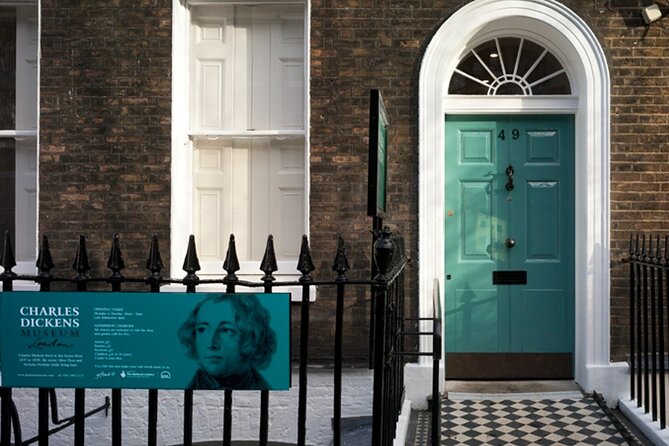
- Begin at Dickens’s former home: The Charles Dickens Museum at 48 Doughty Street gives the game a strong literary starting point.
- Solve clues across central London: Each location asks you to look around and find an answer before moving on.
- Follow a route of old pubs and institutions: Stops include the Three Cripples, Ye Olde Cheshire Cheese, Staple Inn, and Dr Johnson’s House.
- Play on your own schedule: Start any time, take breaks, and return to the game later.
- Keep your phone offline: You do not need an internet connection once the city game is ready to play.
- Expect a quiet, private outing: Only your group takes part, with no physical guide and no contact with other groups required.
Following Dickens from Doughty Street to Fleet Street
The route begins at 47 Doughty Street, beside the Charles Dickens Museum at number 48. Dickens lived in this Georgian terraced house from March 1837 until December 1839, a key period after his marriage and during the early part of his literary career.
That makes the opening stop more than a convenient meeting point. It gives you a direct link to Dickens’s everyday surroundings before the game sends you into the wider city. You will look around for an answer to the first challenge, then use it to reach the next location.
The finish is at 145 Fleet Street, placing the route in one of London’s best-known literary districts. The stated playing time is about one hour, but the stop list is long and the game is designed to let you pause. I would treat the hour as a brisk estimate, not a promise that you will see every place properly in sixty minutes.
The route works best if you see the puzzle as a framework for exploring, not as a race. You can solve the clues quickly, or pause at a pub, examine a building, or spend more time at a site that catches your eye.
More self-guided tours in London:
- Westminster Abbey Entrance Ticket Including Audio Guide
★ 4.0 · 661 reviews - Windsor Castle Tour from London with Transportation & Audio Guide
★ 3.5 · 222 reviews - London Panoramic Open Top Bus Tour with Audio Guide
★ 4.0 · 209 reviews
What the puzzle format adds
At each stop, you look for a detail that answers the challenge and advances the game. This keeps your eyes on the buildings rather than on a guide holding up a flag.
That format is useful in a city such as London, where small signs, carved details, old names, and changes in architecture can be easy to miss. The challenge gives you a reason to inspect your surroundings. It also creates a little suspense as you work out where the next stop will be.
The clues are not described as extremely easy or punishingly hard. The available feedback says they felt balanced, with enough thought required to make the answers satisfying without bringing the game to a halt. That is a good fit for a family, a couple, or a small group of friends who enjoy solving things together.
Still, you should know what you are buying. This is not a guided lecture on Dickens. You will not have a person explaining the plot of Oliver Twist, pointing out the best angle for a photograph, or adjusting the route when you get lost. The app supplies the structure, but your group supplies the conversation and interpretation.
The Charles Dickens Museum and the opening clue
The Charles Dickens Museum is the most direct Dickens connection on the route. Its address is 48 Doughty Street, in a typical Georgian terrace in Holborn. Dickens lived here for nearly three years, from 1837 to 1839.
The game asks you to look around and find the answer that moves you forward. That first challenge should help you get used to the rhythm: examine the setting, identify the relevant detail, enter the answer, and continue.
I like beginning here because the route starts with Dickens himself rather than with a general London landmark. If you have time, the museum is the one stop that may tempt you to linger beyond the game. The tour information does not include museum admission, opening hours, or time inside the museum, so do not assume that the puzzle includes a full museum visit.
For the shortest version, use the exterior meeting point and continue with the game. If the museum is a priority, allow extra time and check its own arrangements separately.
Vine Street and the older city around Piccadilly
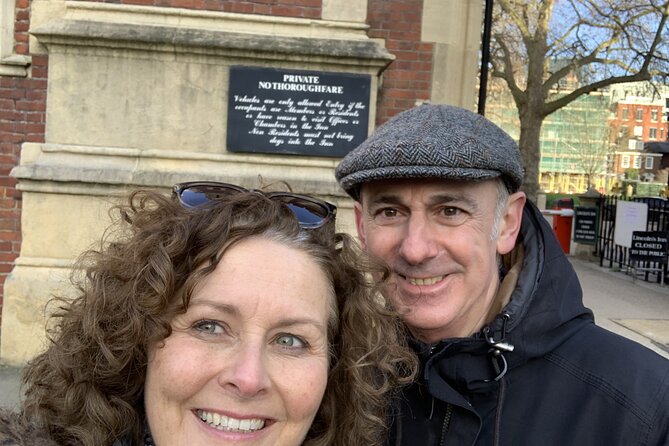
The next setting is Vine Street, a street laid out around 1686. It once extended along what is now Man in the Moon Passage, and an 18th-century map showed it running from Piccadilly toward Warwick Street.
The earlier uses of the street were practical rather than grand. In 1720, its main properties included a brewery and a carpenter’s yard. That detail gives the puzzle a useful change of mood. You move from Dickens’s domestic world into the older working fabric of London.
Here, the challenge depends on looking carefully at the street around you. The stop may appeal most to people who enjoy the layers beneath modern London, where a narrow passage or old street line hints at a different city.
The possible weakness is that a place with limited visible Dickens connection may feel less satisfying if you want every stop to focus tightly on the novelist. Think of Vine Street as part of the route’s wider portrait of London, not simply a Dickens shrine.
Same base, a different kind of day:
- Stonehenge, Windsor Castle, and Bath from London
★ 4.5 · 18,662 reviews - London Big Bus Hop-On Hop-Off Tour with Optional River Cruise
★ 3.5 · 10,803 reviews - London Small Group Tour of Historical Pubs
★ 5.0 · 10,422 reviews - Stonehenge, Windsor Castle and Bath with Pub Lunch in Lacock
★ 4.5 · 7,402 reviews
The Three Cripples and Dickens’s fictional London
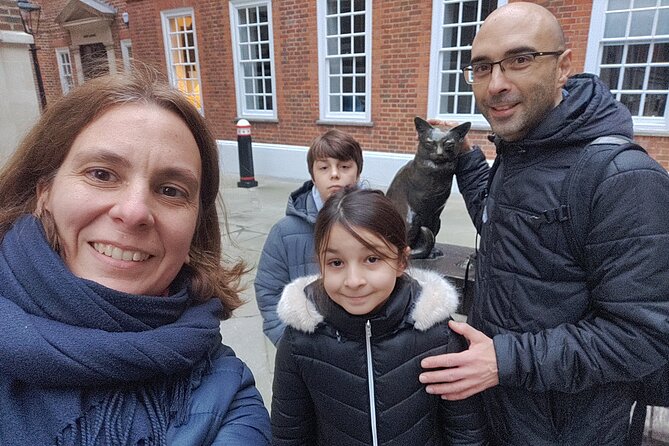
One of the most distinctive stops is the stylish inn dating from 1759. Its Dickens connection comes from 1838, when Dickens renamed it the Three Cripples and used it as Bill Sykes’s favored drinking place in Oliver Twist.
This is where the game ties a real London setting to a fictional one. You are not only visiting an old pub. You are seeing how Dickens reshaped familiar places for his stories.
The stop should be rewarding for anyone who has read Oliver Twist or seen an adaptation. It gives the story a physical setting and helps explain why Dickens’s London feels so grounded in recognizable streets and institutions.
The practical point is simple: this is a pub, not only a historic marker. The supplied experience description does not promise food, drinks, or a reserved table. You can stop for refreshments if you wish, but treat that as your own addition to the outing rather than part of the booked activity.
Staple Inn and the survival of old London
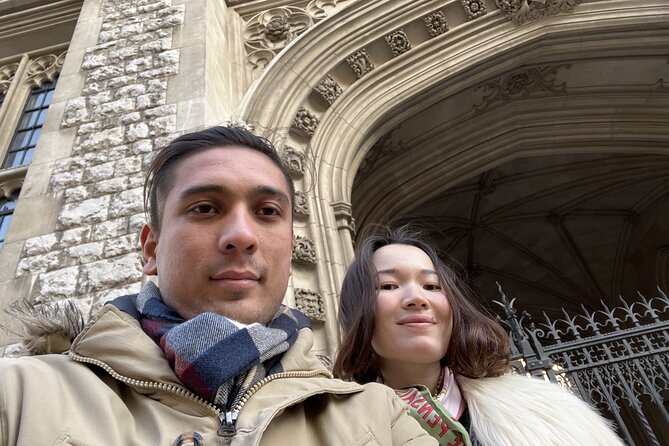
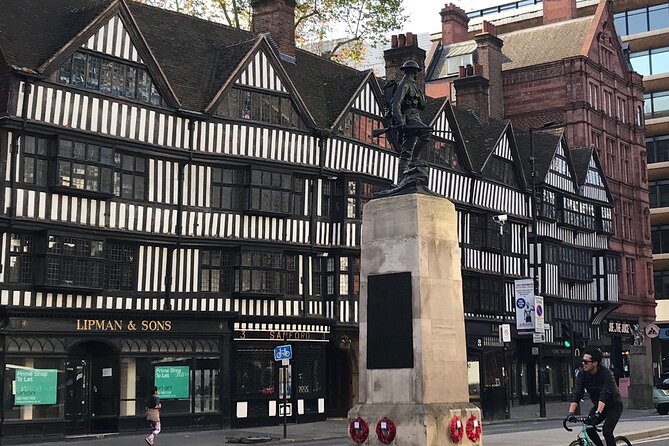
Staple Inn dates from 1585. The building once served as a wool staple, where wool was weighed and taxed. It survived the Great Fire of London, suffered major damage from a Luftwaffe bomb in 1944, and was later restored.
This stop offers a quick lesson in how much London has endured. A building can survive fire, war damage, and centuries of changing use, then still become part of a modern puzzle route.
The setting also broadens the tour beyond Dickens. You get architecture, trade, war, and restoration alongside literary connections. I find that mix useful because it prevents the experience from becoming a narrow checklist of Dickens references.
Look carefully here. The game requires you to find a detail rather than simply arrive at a landmark and hear a speech. If you rush, you may miss the point of the stop.
Lincoln’s Inn Fields and a vanished theatre
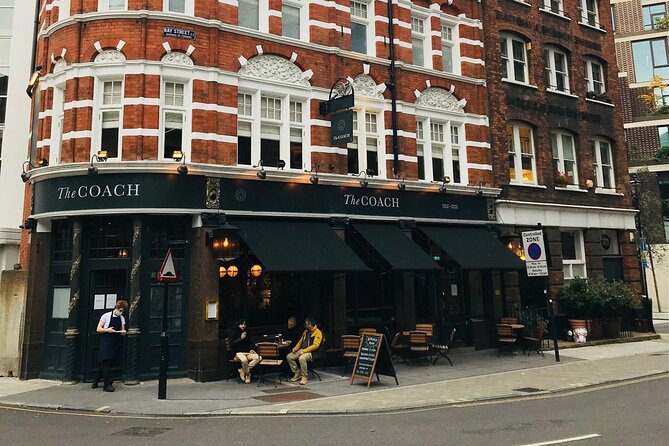
Lincoln’s Inn Fields once held a theatre that operated from 1661 until 1848. It was later demolished. The building began as the Duke’s Theatre, created by converting Lisle’s Tennis Court in 1695.
This is a classic London experience: the place you are asked to find may no longer look like the place that once mattered. The puzzle uses the square and its surrounding story to bring a vanished theatre back into view.
For me, this is one of the route’s more thoughtful stops. It asks you to imagine performance and public life in a space that has changed over time. You will not be walking into the old theatre, and the tour does not provide a performance or interior visit. Its value lies in the historical clue and the setting.
That also means the stop may feel abstract if you prefer surviving buildings. Read the supplied information before you go, and you will get more from the site than you would by simply searching for a facade.
The Maughan Library and a grand change of purpose
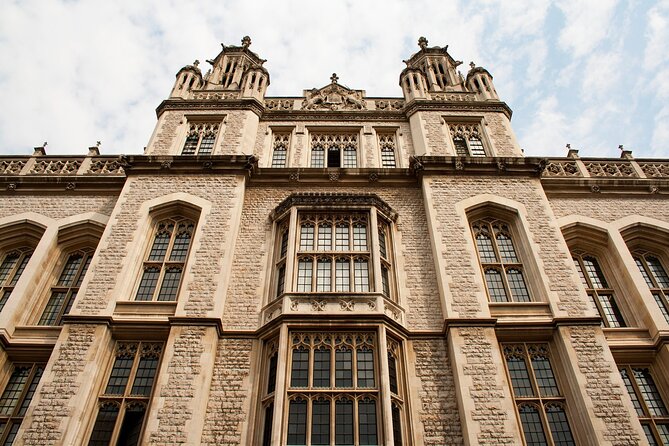
The Maughan Library is housed in a Grade II* listed building designed by Sir James Pennethorne. Construction began in 1851, with later extensions added between 1868 and 1900. A £35 million renovation made it the largest new university library in the United Kingdom since the Second World War.
This stop shifts the route toward grand institutional London. It is not presented as a Dickens home or fictional pub, but it helps show how the city’s buildings change purpose over time.
The former public or institutional character of the building makes it a good visual counterpoint to the smaller streets and inns earlier in the route. The renovation also reminds you that old buildings do not stay frozen. They can be restored and put to new use.
The tour does not state that you can enter the library, so plan to appreciate the building from the route unless you confirm access separately. As with several stops, the clue is the main activity.
Dr Johnson’s House and London’s literary company
Dr Johnson’s House was probably built originally for a City merchant. Samuel Johnson rented it from 1748 to 1759, making it a strong literary stop even though the house is linked to another major English writer.
That connection adds welcome depth. Dickens did not create London’s literary culture on his own. Johnson’s home places the route within a longer tradition of writers, dictionaries, books, and city life.
The house also gives the puzzle a more personal scale after the larger library and institutional buildings. You are again dealing with a place where a writer lived and worked, rather than only a street or public landmark.
The available details do not include admission to Dr Johnson’s House. If you want to tour the interior, check separately and allow time beyond the stated one-hour playing estimate.
Ye Olde Cheshire Cheese after the Great Fire
Ye Olde Cheshire Cheese was originally built in the 1530s, but the first pub was lost in the Great Fire of London in 1666. The current building dates from 1667 and was among the first London buildings reconstructed after the fire.
This is one of the route’s most atmospheric stops. The building connects a familiar pub experience with a major turning point in London’s past. It also fits the literary theme, since old Fleet Street pubs have long been tied to writers, printers, and newspaper life.
You may want to pause here, and the flexible format makes that possible. One person who enjoyed the game specifically liked stopping at several pubs along the way on a sunny day. That is a useful clue about how to get the most from the experience: do not force yourself to finish in one straight push.
The puzzle itself does not include a food or drink allowance. Any pub stop is at your own cost, but the route gives you room to make it part of your day.
The church connected with Italian London
Another stop is a basilica-style church consecrated on April 16, 1863, as the Church of St Peter of All Nations. At the time, it was the only basilica-style church in the United Kingdom. Its organ dates from 1886 and was built by the Belgian maker Anneesen.
The church’s story also includes wartime change. During the Second World War, when Italian immigrants were interned, Irish Pallottines used the church.
This is a reminder that the route is not only about famous writers. It also touches migration, religion, architecture, and wartime London. Those details give the city game a wider human setting.
As with any active church, be respectful and follow any posted rules. The tour information does not promise an interior visit or a service-related experience. Your task is to find the clue and learn the story of the place.
The Royal College of Surgeons and London’s medical past
The Royal College of Surgeons traces its earliest origins to the 1540s, when the Company of Barbers and the Fellowship of Surgeons joined to form the Company of Barber-Surgeons. In the 18th century, medicine became more academic, and surgeons sought greater recognition for their expertise.
This stop introduces a professional story rather than a literary one. It helps you see how London’s institutions grew from trade groups into formal academic and professional bodies.
It is also a good example of the route’s range. You move from a novelist’s former home to a theatre, a library, a pub, a church, and a medical institution. The common thread is London itself, with Dickens as the guide into the city rather than the sole subject at every stop.
Do not expect a museum tour of the college from this activity. The stop is part of the outdoor puzzle route, and the clue leads you onward.
St Dunstan-in-the-West and the Romanian chapel
The final listed stop is St Dunstan-in-the-West, a church that shares its building with the Romanian Orthodox community and St George Church. A chapel to the left of the main altar is separated by an iconostasis formerly from Antim Monastery in Bucharest. It was dedicated in 1966.
This is an especially unusual detail to encounter near the end of a Dickens route. The chapel links London with Romanian religious life and brings another layer of cultural history into the walk.
The stop also rewards patience. The important feature may not be obvious if you only glance at the church from the street. The puzzle asks you to look around, so take the instruction seriously and give each location a proper scan.
The route ends at 145 Fleet Street. The finish gives the outing a fitting literary setting, even though the individual stops cover much more than Dickens alone.
Price, pace, and who gets the best value
At about $8.33 per person, this is a low-cost way to spend an hour or more in central London. The price is particularly attractive for a private group, since only your party takes part and group discounts may be available.
You are paying for a digital puzzle, not a live guide. That distinction matters. A traditional walking tour may cost more but offer storytelling, questions answered on the spot, and help with navigation. This experience gives you flexibility, privacy, and a self-directed route at a much lower price.
The game is available around the clock, every day, with opening hours listed as midnight to 11:59 p.m. You can start at any hour, pause when you like, and resume later. It also plays offline, so you do not need a live internet connection while solving the city game.
You will receive confirmation when booking. The route is near public transportation, service animals are allowed, and most people can participate. The activity is private, which makes it a practical option if you prefer to avoid a larger group.
Free cancellation is available if you cancel at least 24 hours before the start time. Cancellation inside that window is not refundable, and changes made within 24 hours are not accepted.
Should you book the Dickens puzzle?
Book it if you like literary London, old pubs, small historical clues, and the freedom to set your own pace. It is especially well suited to couples, families, and friends who enjoy solving puzzles together and do not need a guide explaining every stop.
I would also choose it as a budget add-on to a London day. The route lets you connect Dickens with Dr Johnson, old theatres, churches, libraries, and Fleet Street without paying for a full private tour.
Skip it if you want a detailed Dickens lecture, a tightly managed walking route, or guaranteed access inside every building. The one-hour estimate is brisk, and the lack of a physical guide means your group must handle the clues and navigation.
For the best experience, begin with enough daylight to inspect the buildings, keep the app ready, and allow time for a pub or museum stop if one interests you. At this price, the game offers a smart way to turn central London into a literary treasure hunt, provided you enjoy doing some of the work yourself.
FAQ
How long does the London Charles Dickens puzzle tour take?
The approximate duration is one hour. You can take longer because the game allows breaks and lets you resume later.
Where does the tour begin?
It begins at 47 Doughty Street, London WC1N 2LW, near the Charles Dickens Museum at 48 Doughty Street.
Where does the tour end?
The route ends at 145 Fleet Street, London EC4A 2BU.
Is there a physical tour guide?
No. The experience is self-guided and does not include a physical guide.
Do I need an internet connection to play?
No. The city game can be played offline.
Can I cancel for a full refund?
Yes, if you cancel at least 24 hours before the experience start time. Cancellations made less than 24 hours before the start are not refunded.
Just added in London
- The Beatles and a Secret pub★ 4.5 · 36 reviews
- The Beatles & Liverpool Magical Mystery Tour from London★ 4.5 · 80 reviews
- Airport Coach Service from Heathrow to Oxford★ 3.5 · 67 reviews
- The Beatles Magical History Black Taxi Tour London★ 5.0 · 51 reviews
- The Beatles London walking tour. From Abbey Road to the Roof Top★ 5.0 · 61 reviews
- Private The Beatles Taxi Tour in London★ 5.0 · 12 reviews
- The Beatles London Walk★ 4.5 · 120 reviews
- Dinner and Jazz Cruise on the River Thames★ 4.0 · 140 reviews
Self-Guided Tours, compared.
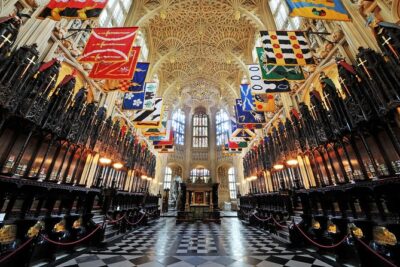
Westminster Abbey Entrance Ticket Including Audio Guide
Read our review →
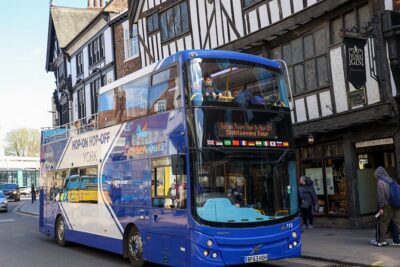
Golden Tours York Hop-on Hop-off Open Top Bus Tour with Audio Guide
Read our review →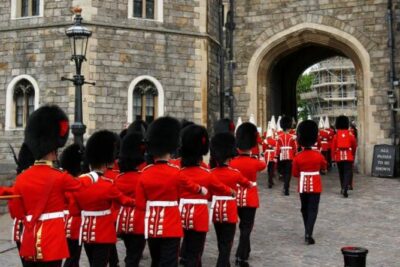
Windsor Castle Tour from London with Transportation & Audio Guide
Read our review →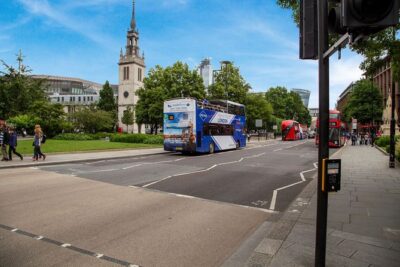
London Panoramic Open Top Bus Tour with Audio Guide
Read our review →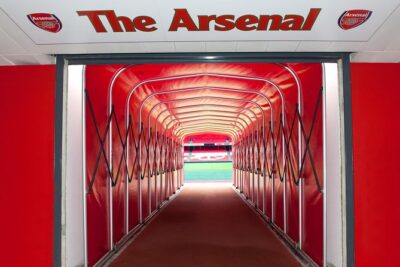
Emirates Stadium and Arsenal Museum Entrance Ticket Including Audio Guide
Read our review →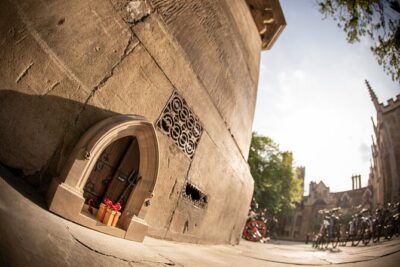
Private Self-Guided Dinky Door Hunt in Cambridge
Read our review →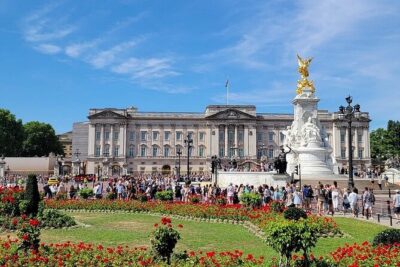
Buckingham Palace: Walking Tour with Entry & Audio Guide
Read our review →Browse the lists this tour appears in