
Reviewed · MUSEUMS
Explore Biblical Artifacts at the British Museum
The most interesting part of this British Museum visit is the way it links ancient objects to specific Bible passages. Under David’s guidance, a lamassu, royal statue, relief, or Roman coin becomes part of a timeline that runs from Joseph and Moses to Jesus and Paul. The museum’s huge collection gets a clear storyline, rather than leaving you to wander from case to case.
I like the small group, capped at 10, and the practical study material, including a Google Doc with Bible verses and notes. I also like that folding stools are available, since three or four hours on hard museum floors can test even sturdy legs. The main drawback is the pace: this is a serious half-day study, not a quick highlights walk, and the subject matter suits an alert mind better than someone fresh off a long-haul flight.
Key points to know before you book
- Forty-ton Assyrian lamassu: Begin with the winged human-headed bulls and connect Assyrian rulers to Old Testament events.
- A Bible-centered museum route: See Egyptian, Assyrian, Greek, Roman, Persian, and Babylonian material through the lens of scripture.
- David leads the tour: Expect clear explanations, questions, humor, and frequent links between objects and named Bible passages.
- Small group of up to 10: The format leaves room for questions and makes it easier to follow the guide through a busy museum.
- Plan three to four hours: Some groups have stayed close to five hours when discussion and questions stretch the visit.
- Useful preparation: Download the suggested Bible app for offline use, and check your email and booking apps for messages before arrival.
Why this British Museum tour feels different
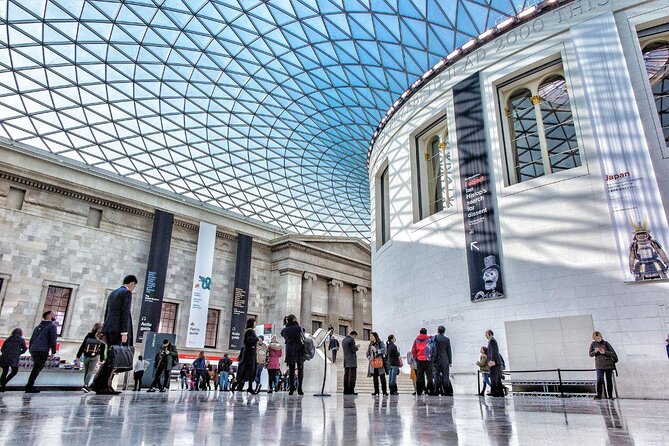
The British Museum can overwhelm you within minutes. Its galleries cover thousands of years, and a visitor moving alone may admire a carved relief without knowing who made it, why it mattered, or where it fits in the biblical timeline.
This tour gives the collection a framework. David moves through the museum by culture and period, then uses Bible passages to explain the political and religious world behind the objects. That approach is especially helpful if you know the broad Bible stories but struggle to place Assyria, Babylon, Persia, Greece, and Rome in the right order.
I would think of the experience as part museum tour and part guided Bible study. You are not simply being shown famous objects. You are asked to consider how those objects relate to people, places, rulers, and events named in scripture.
That focus will appeal most to Christians who want physical context for the Bible. It can also work for anyone interested in ancient history, archaeology, or the way religious texts connect with the material record. You do not need to agree with every interpretation to learn from the historical setting.
More museums in London:
- Chelsea FC Stadium Tours and Museum
★ 5.0 · 1,908 reviews - Official tickets: Moco Modern & Contemporary Art Museum
★ 4.5 · 1,157 reviews - British Museum London Guided Tour Semi-Private 8ppl Max
★ 5.0 · 984 reviews
Starting with Egypt, Assyria, and Greece
The tour begins on the ground floor with the Egyptian, Assyrian, and Greek galleries. This opening sequence gives you a broad sweep of the ancient world before the route moves upstairs to Roman material.
The Egyptian section brings in figures such as Joseph and Moses. The useful part here is not simply seeing statues and carved inscriptions. David uses the exhibits to explain the kind of royal culture and power structure that shaped the world described in the Old Testament.
The Assyrian galleries provide some of the tour’s strongest visual moments. The 40-ton lamassu beasts are hard to miss. These winged creatures with human heads once guarded royal spaces, and their sheer scale helps you grasp the confidence and force of the Assyrian empire.
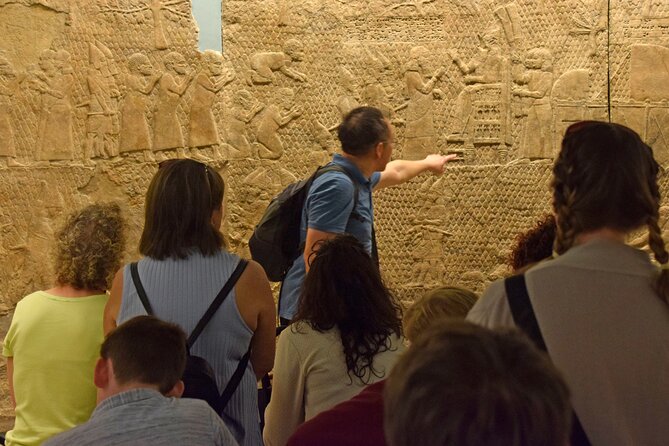
This is also where biblical names such as Jonah, Ahab, and Hezekiah enter the discussion. David connects Assyrian rulers, military power, and imperial imagery to passages involving Israel and Judah. The result is a more grounded sense of what those stories meant in an age of fortified cities, tribute, conquest, and royal propaganda.
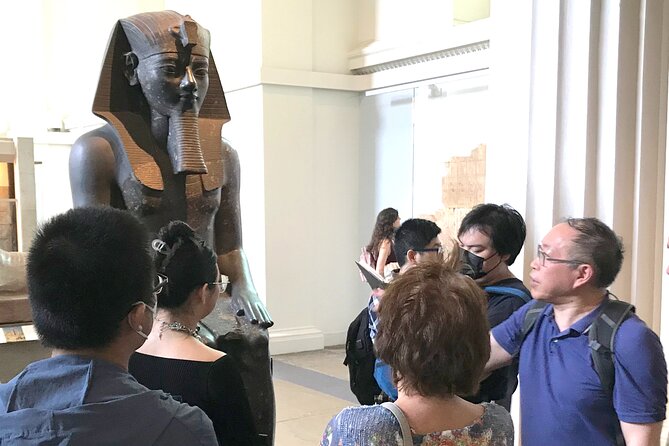
You will also see statues of pharaohs and other Egyptian pieces. The guide’s strength is placing individual objects into a sequence, so names that may have seemed remote in a Bible reading begin to fit into a wider political story.
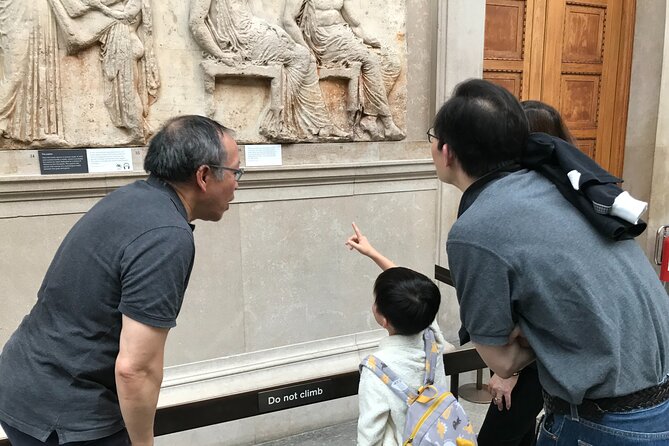
The Greek galleries add another layer. The Parthenon sculptures are among the museum’s best-known objects, but on this tour they are not treated as an isolated art display. The Greek world helps explain the cultural setting encountered by Paul and the spread of Greek language and ideas across the eastern Mediterranean.
The Parthenon sculptures and the value of context
The Greek rooms can easily become a quick photo stop. The sculptures are famous, and the gallery often attracts large numbers of people. David’s approach gives you a reason to slow down and think about the wider Hellenistic world.
The point is not that every Greek object relates directly to a Bible verse. Instead, the gallery helps you understand the world in which later New Testament events took place. Paul’s journeys unfolded in a region shaped by Greek culture and language, followed by Roman political control.
That distinction matters. A good guide should help you separate direct biblical references from broader historical background. This tour appears strongest when it does both: it points to objects tied closely to named rulers or passages, then uses other galleries to fill in the setting around them.
If your main interest is art history, you may want more time for the sculptures themselves. The tour keeps moving toward the biblical story, so it will not offer the same detailed treatment of artistic technique, museum collecting, or the controversy around every major object.
A short pause before the Roman galleries
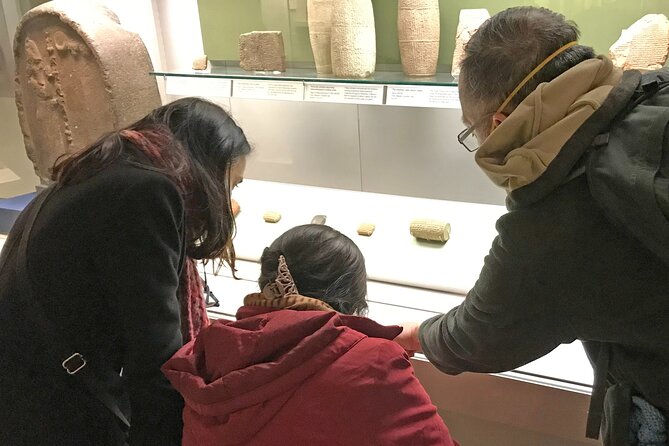
After the first set of galleries, there is a break before the route continues upstairs. That pause matters. Three hours in a museum can feel longer than three hours outdoors, especially when you are standing on hard floors and concentrating on dates, names, and texts.
The museum has folding stools that you can take along if you prefer to sit. This is one of the most useful practical details for older visitors, anyone with sore feet, or anyone who simply learns better when not standing the whole time.
The tour is not designed as a rushed march. Questions are part of the experience, and some groups have taken longer than the advertised three to four hours. If you have another fixed booking immediately afterward, leave plenty of space. The official outline allows about three hours, but a highly engaged group can continue for close to five.
Same base, a different kind of day:
- Stonehenge, Windsor Castle, and Bath from London
★ 4.5 · 18,662 reviews - London Big Bus Hop-On Hop-Off Tour with Optional River Cruise
★ 3.5 · 10,803 reviews - London Small Group Tour of Historical Pubs
★ 5.0 · 10,422 reviews - Stonehenge, Windsor Castle and Bath with Pub Lunch in Lacock
★ 4.5 · 7,402 reviews
Roman emperors, Jesus, and Paul
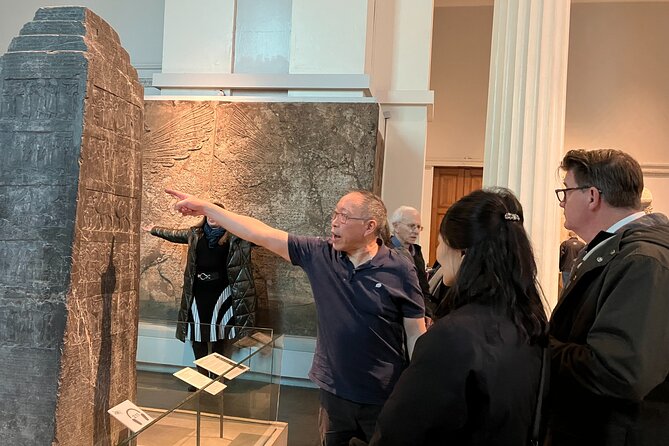
The upstairs Roman galleries bring the story into the period of Jesus and Paul. Here you will look at Roman emperors and objects connected directly to the New Testament world.
Coins are one of the most effective teaching tools in this section. Seeing the faces of Roman leaders on the currency of the period makes imperial power more concrete than a name in a printed passage. It also helps explain the political world surrounding Jesus’s crucifixion and Paul’s travels.
David also uses Roman material to discuss people and events connected with the New Testament. The aim is not simply to show an object from roughly the same century. It is to place the text within the power structure of Rome, the Greek-speaking eastern Mediterranean, and the cities Paul encountered.
This section may be especially rewarding if you have read the New Testament but have never studied its political setting. At the same time, it is worth keeping expectations sensible. Museum objects rarely provide a simple yes-or-no answer to every biblical question. Their value here is in giving you period evidence, names, images, and cultural details that make the written accounts easier to picture.
Optional Persia and Babylon galleries
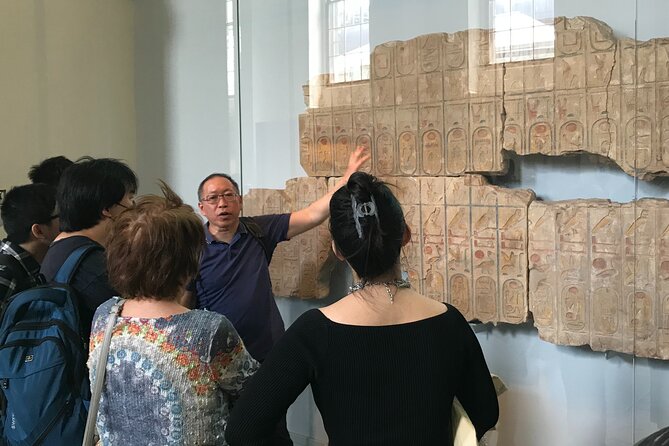
Persia and Babylon may be included depending on available time and your interests. That flexibility is useful because the needs of a small group can vary. One group may want more time with Roman coins and early Christianity. Another may prefer to spend longer on Old Testament kingdoms and imperial history.
These galleries help fill out the story between Assyria and the later Greek and Roman periods. The biblical timeline includes several major empires, and the route can show how control shifted across the ancient Near East.
Do not assume every optional gallery will fit into a standard three-hour visit. The guide has to balance the planned route, museum conditions, gallery hours, and questions from the group. If Babylon or Persia matters most to you, mention that preference early.
The flexible route is a strength, but it also means no two visits need to feel exactly alike. You are booking a focused guide rather than a fixed audio track.
David’s teaching style and the study material
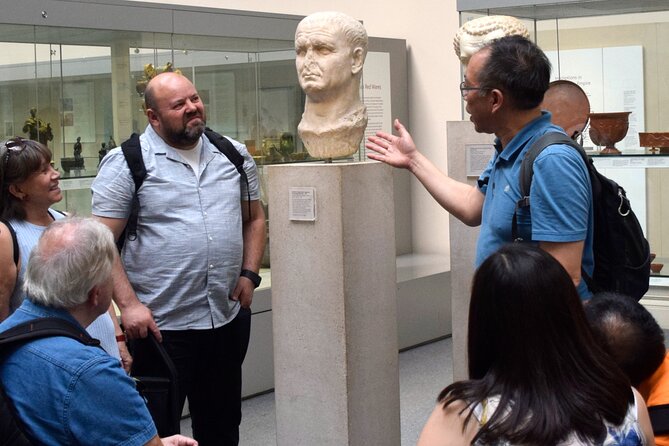
David’s strongest quality is his ability to turn a large amount of information into a usable timeline. He explains the order of major powers, then returns to individual names and passages so the story does not become a blur of kings and empires.
He also uses questions to keep you involved. Instead of delivering a nonstop lecture, he may ask you to connect an object with a passage or notice a detail in a relief. That makes the experience more active and helps the information stay with you after leaving the museum.
Before the tour, you receive access to a Google Doc with study notes and related Bible verses. You should read at least some of it in advance if you can. The preparation gives you a basic map, so the museum visit can focus on objects and discussion rather than explaining every term from scratch.
A Bible app that works without an internet connection is also recommended. YouVersion is suggested, and airplane-mode access is useful inside a large museum where you may not want to rely on a signal. The guide may direct you to a particular passage while you are standing beside the related artifact.
This setup suits people who enjoy learning by reading and comparing. If you prefer a light sightseeing tour with only short explanations, the amount of scripture and historical detail may feel heavy.
Price, group size, and overall value
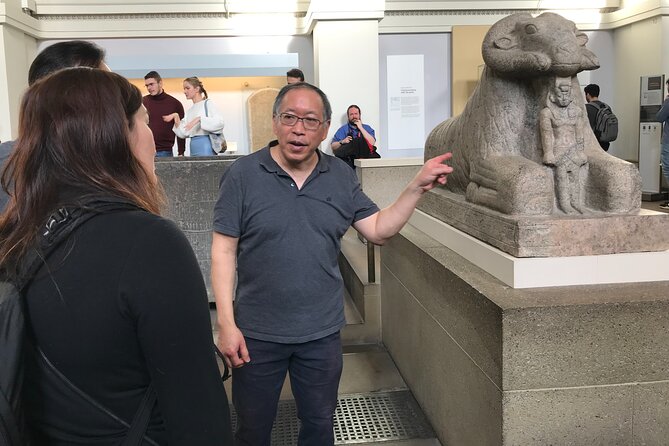
The price is $77.50 per person. General admission to the British Museum is free, so you are paying for David’s time, route planning, teaching, study resources, and the chance to explore with a group of no more than 10 people.
That is not a small add-on for a museum visit. I would judge the value by your interest in the subject. If you already plan to spend half a day studying biblical history, the fee can make sense because it replaces hours of preparation and gives you a coherent route through a very large collection.
The value is also higher for first-time visitors who might otherwise walk past important objects without understanding their relevance. A self-guided visit lets you see more at your own pace, but it does not give you David’s timeline, Scripture references, or ability to adjust the route around your questions.
For a family, the cost deserves a closer look. Older children and teenagers can follow the material, especially if they enjoy history or religious studies. One younger teenager may find the long indoor session harder, particularly if some rooms feel warm. Consider the attention span of each person before paying for a full place.
Group discounts are available, which may help if you are booking for several people. The small maximum also matters. A group of 10 is still large enough for different questions, but much easier to manage than a big coach tour.
Practical details that shape the day
The meeting point is outside the British Museum on Great Russell Street, London WC1B 3DG. The tour ends back at the same meeting point, so you can plan lunch, another museum, or an afternoon walk from there.
The museum is near public transportation, and service animals are allowed. Most people can take part, but the length of the visit and the amount of standing are worth considering. Use the folding stools if needed, and wear shoes you can tolerate for several hours.
This is not the best first activity after a long overnight flight. Jet lag can make a detailed timeline of ancient rulers feel like hard work. I would place it later in your London stay, after you have slept properly and can give the subject your full attention.
The tour is offered in English. You should install the Viator and Tripadvisor apps, then check both your email and the apps for important messages after booking. The practical notes and meeting instructions are part of making the morning or afternoon run smoothly.
The experience is usually booked about 23 days ahead. That is a useful signal for planning. If your London dates are fixed, reserve early rather than assuming you can decide at the last minute.
Free cancellation is available up to 24 hours before the start time. Changes or cancellations inside that window are not accepted for a refund, so keep the local cut-off time in mind.
Who should book this experience
I would choose this tour if you want the Bible placed inside the physical world of ancient Egypt, Assyria, Babylon, Persia, Greece, and Rome. It is a good match for church study groups, families with older children, Bible students, and history-minded visitors who want more than a list of famous museum objects.
You should also book it if you learn best through a guide who can answer questions and adjust the route. David’s clear explanations, humor, and follow-up material add value beyond the objects themselves.
I would skip it if you want to roam freely, spend long stretches on Greek art, or cover the entire British Museum in one visit. You will see only selected galleries, and the Bible-centered route means some major collections receive little or no attention.
Should you book the Biblical Artifacts tour?
Book it if the connection between scripture and ancient material culture is central to your London plans. The Assyrian lamassu, Roman coins, royal statues, and biblical timeline give the British Museum a focus that is hard to create alone.
The best plan is to schedule it as a half-day experience, prepare with the supplied notes, download an offline Bible app, and leave the rest of the day open. At $77.50, it is a considered purchase, but the small group and focused instruction can make it worthwhile for someone who wants a serious, personal study rather than a general museum orientation.
FAQ
How long does the Explore Biblical Artifacts tour last?
The experience is scheduled for about three to four hours. The main itinerary describes three hours, but discussion and questions can extend the visit, in some cases close to five hours.
Where does the tour start and finish?
It starts at the British Museum, Great Russell Street, London WC1B 3DG. The activity ends back at the same meeting point.
What parts of the British Museum are included?
The route begins with the Assyrian, Egyptian, and Greek galleries on the ground floor, then continues to the Roman galleries upstairs. Persia and Babylon may be added if time allows and the group prefers them.
How many people can join the tour?
The group has a maximum of 10 participants. Group discounts are available.
Is museum admission included?
The listed itinerary identifies the admission ticket as free. The $77.50 price is for the guided experience.
What should I prepare before the tour?
Install the Viator and Tripadvisor apps, check your email and app messages, and download a Bible app that works in airplane mode. YouVersion is suggested. You will also receive access to a Google Doc with study notes and related Bible verses.
Can I cancel for a refund?
You can cancel up to 24 hours before the experience start time for a full refund. Cancellations or changes made less than 24 hours before the start time are not refunded or accepted.
Just added in London
- The Beatles and a Secret pub★ 4.5 · 36 reviews
- The Beatles & Liverpool Magical Mystery Tour from London★ 4.5 · 80 reviews
- The Beatles London walking tour. From Abbey Road to the Roof Top★ 5.0 · 61 reviews
- Airport Coach Service from Heathrow to Oxford★ 3.5 · 67 reviews
- The Beatles Magical History Black Taxi Tour London★ 5.0 · 51 reviews
- Private The Beatles Taxi Tour in London★ 5.0 · 12 reviews
- The Beatles London Walk★ 4.5 · 120 reviews
- Dinner and Jazz Cruise on the River Thames★ 4.0 · 140 reviews
Museums, compared.

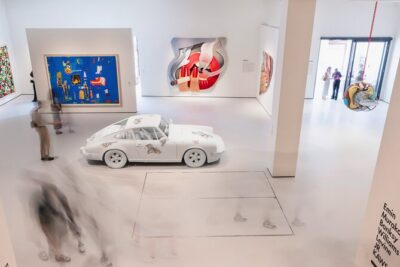
Official tickets: Moco Modern & Contemporary Art Museum
Read our review →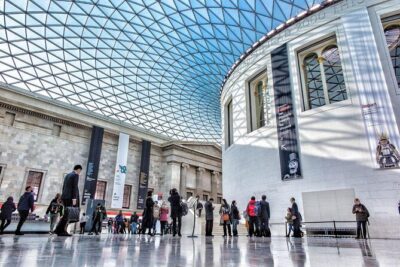
British Museum London Guided Tour Semi-Private 8ppl Max
Read our review →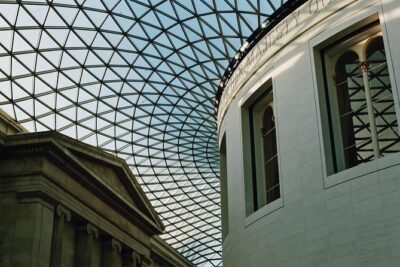
The British Museum London – Exclusive Guided Museum Tour
Read our review →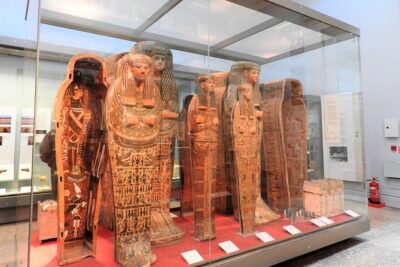


Skip the Line: Liverpool Beatles Museum – The perfect tribute to the Beatles
Read our review →
Browse the lists this tour appears in