Reviewed · WALKING TOURS
Walking tour of Lancaster – Execution Slavery Industry
Lancaster’s story gets darker and more interesting as you walk: executions, witchcraft, slavery, royal plots, and murder all appear on this compact city route. Guide Barrie ties those subjects to real streets and buildings, rather than treating Lancaster as a collection of pretty façades.
I like two things here. First, the tour connects the castle and harbor to the city’s wider fortunes, including its role in the international slave trade. Second, Barrie brings in unusual details, from the first murder solved with forensic science to the bonus paid to slave owners. The main drawback is simple: you spend much of three hours outside, walking and standing, so cold or wet weather can take the edge off.
Key points to know before booking
- Lancaster Castle sets the scene: Start with prisoners, trials, executions, and the castle’s role in local justice.
- The slavery story is tied to the waterfront: Saint George’s Quay helps explain how Lancaster’s trade reached far beyond Lancashire.
- Barrie’s storytelling drives the tour: Expect facts, royal stories, odd characters, and humor rather than a dry building-by-building talk.
- You cover a lot of ground: The route takes about three hours and includes walking between nine stops.
- The group is limited to 20 people: That is small enough for a more personal feel, though the walk is not a private tour.
- It is useful early in a Lancaster visit: The route points out places you may want to revisit on your own.
Why Lancaster’s darker past makes a good walking tour
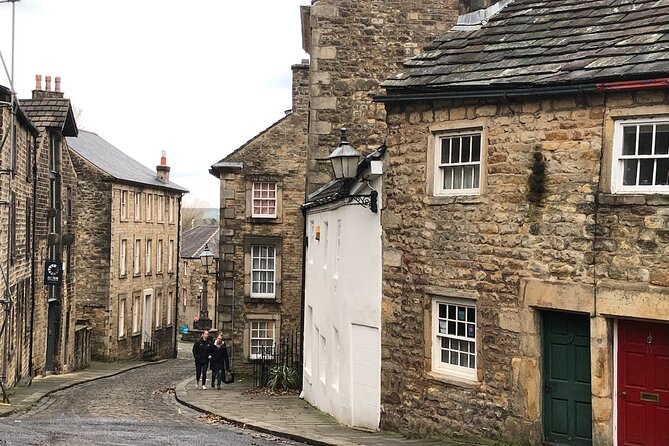
Lancaster is easy to underestimate. You can walk through its center and see a castle, old streets, a quay, a canal, and civic buildings without grasping how closely they connect. This tour joins those pieces through stories of power, punishment, trade, faith, and money.
The title gives you a fair warning. This is not a gentle tour of handsome architecture alone. Execution forms one thread, slavery another, and both are placed beside more familiar tales of princes, mills, charities, and local crime. That mix gives the walk a useful balance. You get serious subjects, but also human stories and moments of humor.
Barrie is the named guide associated with the experience, and his approach appears to be central to its appeal. You can expect a lively delivery, plenty of anecdotes, and room for questions. He also has more material than can fit into one route, which is good news if you plan to spend longer in Lancaster.
The tone is informative without being solemn all the time. A story about a lost shoe can sit near a story about a murder. A former prison can lead into a discussion of social justice. That variety helps the three hours pass quickly, though it also means you should not expect a single subject treated in academic depth.
More walking tours in England:
- Oxford University Walking Tour With University Alumni Guide
★ 5.0 · 6,905 reviews - Tour for Muggles The Ultimate Harry Potter Walking Tour in London
★ 5.0 · 4,684 reviews - London Jack The Ripper Guided Walking Tour
★ 5.0 · 3,131 reviews
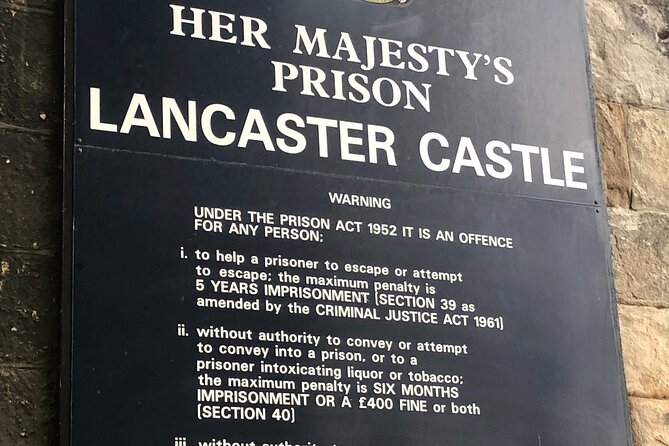
Lancaster Castle: prisoners, trials, and executions
The meeting point is at Castle Approach, outside Lancaster Castle. It is a practical place to begin because the castle is easy to find, even if you are new to the city. You do not need to buy admission for this walking tour, and the castle is used as the opening setting rather than as a full indoor visit.
The first stop lasts about 20 minutes. That is enough time to hear why the castle mattered, who was held there, and how trials and executions fit into Lancaster’s past. The useful point is that the castle is treated as more than an old fortress. Its role in law and punishment shaped the city’s identity.
You will hear about famous and less famous prisoners. That contrast matters. Famous names often attract attention, but ordinary prisoners reveal how the justice system affected people who left little mark on the national record.
Because this is an outdoor walk, you should not book it expecting a long castle tour with time inside every room. The castle front is a meeting place and a historical starting point. If the subject catches your interest, you can use the tour to decide if you want to return later for a separate visit.
Saint George’s Quay and Lancaster’s slave-trade connections
From the castle, the route moves to Saint George’s Quay, an eighteenth-century harbor on the River Lune. This is one of the most important stops because it shifts the focus from local punishment to international trade.
The quay helps you picture Lancaster as a port with wider commercial links. The tour explains its connections with the international slave trade and introduces people tied to the waterfront. That can be uncomfortable, but it is necessary. A town’s prosperity is not explained by elegant buildings alone, and the walk does not avoid the less flattering parts of Lancaster’s past.
The stop lasts about 15 minutes. That may sound short for such a serious subject, but the value comes from seeing the place while the story is told. The waterfront gives the subject a physical setting. You are not just hearing that trade existed somewhere in the past. You are standing in a place linked to it.
This is also a good point to think about the tour’s title. Slavery is not treated as a separate topic added for effect. It is connected to commerce, civic wealth, local people, and later public memory. That makes the story more useful than a simple list of dates.
Judges’ Lodgings and the witchcraft connection
The next stop is the Judges’ Lodgings, described as Lancaster’s oldest house. The tour uses the building to explain who owned it and how it connects with witchcraft.
At about 10 minutes, this is a concise stop, but it adds another layer to the city’s justice story. The castle dealt with formal trials and punishment. The Judges’ Lodgings helps you consider the people who administered justice and the beliefs that could influence legal action.
Witchcraft stories can easily become sensational. Here, the building provides a way to place them within Lancaster’s civic past. You may find this stop especially useful if you like the overlap between architecture, local personalities, and unusual legal cases.
As with the castle, the tour does not promise an extended indoor visit. You are learning from the outside as part of a moving route. That keeps the pace brisk, but you should be ready to listen while standing.
Same base, a different kind of day:
- Stonehenge, Windsor Castle, and Bath from London
★ 4.5 · 18,662 reviews - London Big Bus Hop-On Hop-Off Tour with Optional River Cruise
★ 3.5 · 10,803 reviews - London Small Group Tour of Historical Pubs
★ 5.0 · 10,422 reviews - Beatles Magical Mystery Tour
★ 5.0 · 9,266 reviews
Church Street and the missing prince
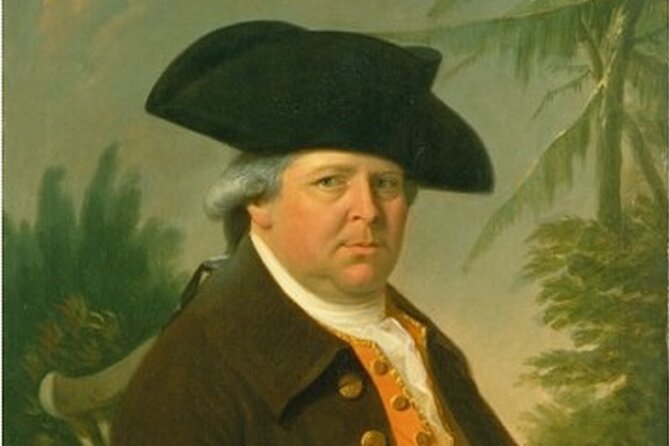
Church Street brings a change of mood. Here the guide tells the story of a prince who went missing, along with theories about a possible king of England.
The stop takes about 10 minutes. Its strength is the uncertainty at the center of the tale. Royal history often arrives in neat textbook form, but local stories can preserve doubt, rumor, and competing explanations. Barrie uses the street to connect national politics with Lancaster’s own setting.
This is the sort of stop that works well on foot. You are moving through the city while hearing about a person whose fate became part of a larger political question. The building or street may not explain the full story by itself, so the guide’s narration matters here.
You should expect an entertaining historical puzzle rather than a definitive answer to every question. That is part of the fun, but anyone seeking only firmly settled facts may find the storytelling style less satisfying.
Market Street and two royal stories three centuries apart
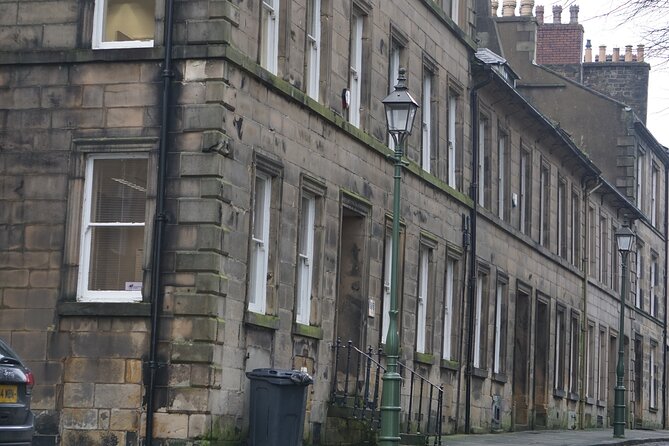
Market Street continues the royal theme with two stories separated by roughly 300 years. One prince raises a banner, while another loses a shoe.
Those details are deliberately memorable. They turn broad political events into small human images. A banner suggests a public challenge or claim. A lost shoe makes a royal figure seem suddenly ordinary and vulnerable.
This 10-minute stop shows the tour’s method well. Barrie does not simply point out a street and recite its name. He uses short episodes to help you remember how national events touched Lancaster. The stories also keep the walk from becoming a parade of dates.
The royal material gives the tour variety after the darker opening stops. You are still dealing with power and conflict, but the tone becomes more playful. That balance is one reason the route can hold your attention over three hours.
Dalton Square, forensic science, and compensation for slave owners
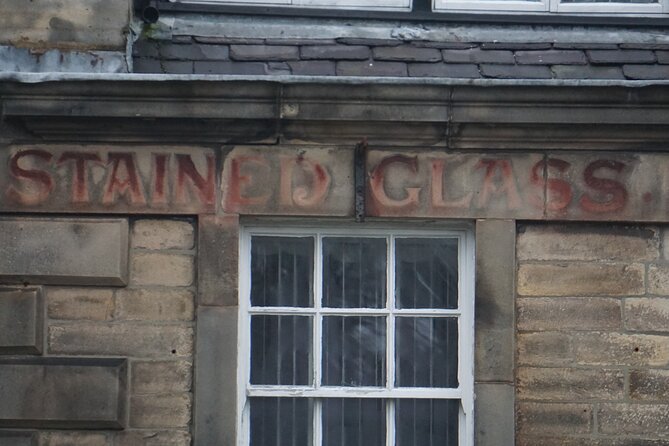
Dalton Square brings together two subjects that seem far apart: a murder and a government bonus. The first concerns what is described as the earliest murder solved by forensic science. The second concerns compensation paid to slave owners.
This pairing is striking because it places local crime beside the financial aftermath of emancipation. In about 10 minutes, the tour moves from evidence and investigation to government policy and the economics of slavery.
The forensic story offers a practical look at how crime solving changed. Rather than treating science as an abstract development, the stop links it to a specific murder. You can better understand why forensic methods mattered when you hear how they helped resolve a case.
The discussion of compensation is equally important. The fact that former slave owners received government payments gives the slavery story a financial and political dimension. It also prevents the waterfront stop from feeling isolated. Lancaster’s connections to slavery were part of wider systems that continued to shape public money and private fortunes.
Lancaster Canal and the Storey Brothers
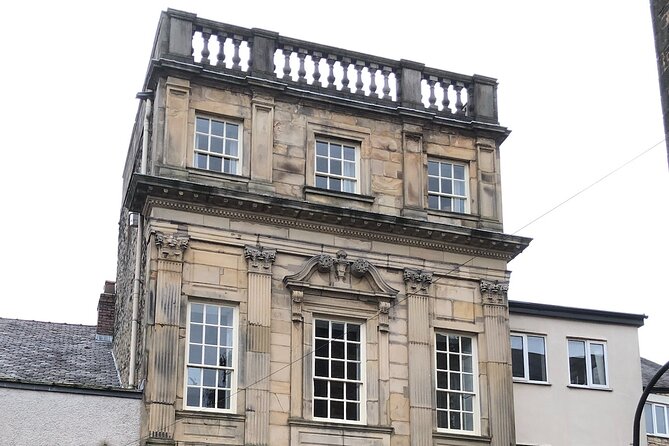
The route then reaches Lancaster Canal, White Cross Mill, and the story of the Storey Brothers. This is the industrial section of the walk, showing how the canal supported Lancaster during its commercial high point.
The stop lasts about 10 minutes. You will hear about the mill, the canal, and the people associated with them. The canal is useful here because it lets you see how transport influenced industry. A waterway is not just a pleasant strip of water. It helped move goods and supported the city’s economic life.
The Storey Brothers also lead into a later part of Lancaster’s civic story. Their name returns at The Storey, where education and public donations become the focus. This repeated thread gives the tour some structure. People and money connect trade, industry, charitable giving, and education.
If industrial history is your main interest, the stop may feel brief. The tour is trying to cover the entire city, not spend an hour inside a mill or trace every canal warehouse. Still, it gives you enough context to understand why this part of Lancaster matters.
Penny’s Almshouses and the city’s charitable tradition
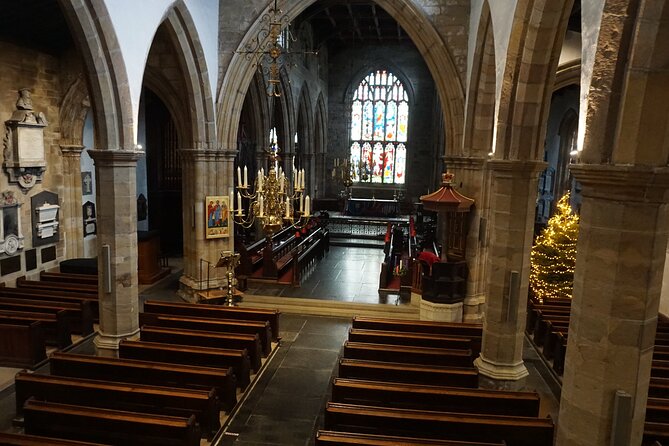
Penny’s Almshouses provide a quieter stop. The route looks at an almshouse that still functions today, who founded it, and how it was financed.
This is a useful reminder that Lancaster’s history is not only about kings, criminals, merchants, and officials. Almshouses show how local people tried to provide support through charitable foundations. The question of funding matters as much as the building itself. It tells you who had money, how that money was directed, and which forms of help were considered important.
The stop takes about 10 minutes. You will not get a full social history of poverty and charity, but you will see how a small institution can preserve a long-running civic purpose.
The fact that the almshouse still functions today gives this part a direct connection to the present. It is not merely a vanished custom described from a distance. You are looking at a surviving institution with roots in Lancaster’s earlier society.
The Storey and Lancaster’s education story
The final listed stop is The Storey, an educational institute founded through donations. The tour explains how it became an early link in Lancaster’s university tradition.
This is a fitting end because it turns the walk toward learning and civic ambition. The route begins with punishment and ends with education, passing through trade, industry, charity, and politics along the way.
The stop also brings the Storey Brothers story back into view. Their connection to industry is part of the city’s economic history, while The Storey shows how money and public-minded projects helped shape cultural and educational life.
At about 10 minutes, the talk is again an introduction rather than a full visit. You can use it to decide if you want to return and explore the building in more detail. One practical advantage of taking the tour early in your stay is that it gives you a list of places worth seeing again at a slower pace.
Three hours of walking, standing, and stories
The route includes nine stops, with listed talks ranging from 10 to 20 minutes. Those talks add up to roughly an hour and 45 minutes, leaving plenty of time for walking between locations, gathering the group, and answering questions.
The walking is described as gentle, but the day can still tire you. You will stand at many points, and the tour keeps moving through the city rather than stopping for long indoor breaks. Wear comfortable shoes and check the forecast before setting out.
The group can include up to 20 people. That is a sensible size for a city walk. You should be able to hear the guide and ask questions, but you will not have the constant personal attention of a private tour.
The pace is designed for most participants, and most people can take part. Service animals are allowed, and the route is near public transportation. The available information does not promise a fully step-free route, so anyone with specific mobility needs should confirm details before booking.
Weather matters. The experience requires good conditions and may be moved or canceled if the weather is poor. You are offered another date or a full refund in that situation.
Is $20.81 a fair price?
At $20.81 per person, this is a strong value if you want an introduction to Lancaster rather than a single-site visit. You get about three hours with a guide, nine locations, and a wide range of subjects. The cost is especially reasonable if you are visiting the wider Lancashire area and want one activity that gives you a sense of the city.
The value comes from the connections. You could walk past the quay, castle, canal, almshouses, and civic buildings on your own, but you would miss much of the meaning behind them. The tour turns separate sights into one story.
It is less suitable if you prefer to spend three hours inside museums, move at your own pace, or focus on only one topic. You are paying for interpretation and company, not admission to the castle or other attractions. Each stop is relatively short, so you may want to return independently to the places that interest you most.
The tour is booked, on average, 19 days ahead. That suggests planning early is sensible, especially if your Lancashire schedule is fixed.
Who should book this Lancaster walk?
I would recommend it to first-time visitors who want to get their bearings quickly. It is also a good choice if you enjoy local stories that go beyond famous kings and grand buildings.
You will get the most from it if you:
- Like social history, crime, royal disputes, and unusual local characters
- Want to understand Lancaster’s links to slavery and maritime trade
- Prefer a lively guide-led walk to reading plaques on your own
- Have a free three-hour block and can manage outdoor walking
- Want ideas for places to revisit later
- Are visiting Lancaster as part of a wider Lancashire trip
You may want another option if you dislike standing outdoors, need frequent indoor breaks, or want a specialist tour devoted only to the castle, canal, or slave trade. This walk covers a lot, which is its strength and its limit.
Booking, timing, and cancellation advice
The tour starts at Castle Approach, Lancaster LA1 1YN, and ends back at the same meeting point. That makes arrival and departure easy, especially if you are unfamiliar with the city.
Your confirmation arrives when you book, and the experience is offered in English with a mobile ticket. Free cancellation is available up to 24 hours before the start time for a full refund. Cancellations or changes made less than 24 hours ahead are not refunded or accepted.
The provider also requires a minimum number of participants. If that minimum is not reached, you are offered another date or experience, or a full refund. Check your confirmation for the exact start time, since the available information includes seasonal scheduling limits and the tour does not operate on some winter weekdays.
Should you book the Execution Slavery Industry walking tour?
Book it if you want a broad, story-led introduction to Lancaster and are comfortable spending three hours outside. Barrie’s strength is the range of material: executions, witchcraft, royal mysteries, slavery, forensic crime, industry, charity, and education all have a place.
The best reason to choose it is that the walk helps you see Lancaster as a connected city rather than a set of isolated sights. The main caution is the physical format. You will walk and stand in whatever weather the day brings, and the short stop times favor an overview over detailed visits.
For $20.81, that overview is worthwhile, especially at the beginning of a stay. Take notes on the places you want to revisit, wear good shoes, and give the route enough time to work its way from the castle’s grim justice stories to The Storey’s more hopeful education story.
FAQ
How long does the Lancaster walking tour last?
The tour lasts approximately three hours.
Where does the tour start?
It starts at Castle Approach, Lancaster LA1 1YN, outside Lancaster Castle.
Where does the tour finish?
The tour ends back at the meeting point at Castle Approach.
Is admission to the stops included?
The listed stops have no admission charge as part of the walking route. The tour does not describe extended admission visits inside the attractions.
How many people can join the tour?
The maximum group size is 20 people.
What language is the tour offered in?
The tour is offered in English.
Can I cancel for a full refund?
Yes. You can cancel at least 24 hours before the local start time for a full refund. Cancellations or changes made less than 24 hours before the start time are not accepted or refunded.
Just added in England
- The Beatles and a Secret pub★ 4.5 · 36 reviews
- The Beatles & Liverpool Magical Mystery Tour from London★ 4.5 · 80 reviews
- The Beatles Magical History Black Taxi Tour London★ 5.0 · 51 reviews
- The Beatles London walking tour. From Abbey Road to the Roof Top★ 5.0 · 61 reviews
- Airport Coach Service from Heathrow to Oxford★ 3.5 · 67 reviews
- Private The Beatles Taxi Tour in London★ 5.0 · 12 reviews
- The Beatles London Walk★ 4.5 · 120 reviews
- Dinner and Jazz Cruise on the River Thames★ 4.0 · 140 reviews
Walking Tours, compared.
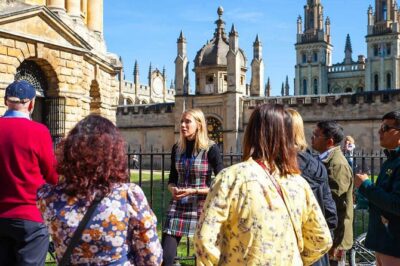
Oxford University Walking Tour With University Alumni Guide
Read our review →
Tour for Muggles The Ultimate Harry Potter Walking Tour in London
Read our review →
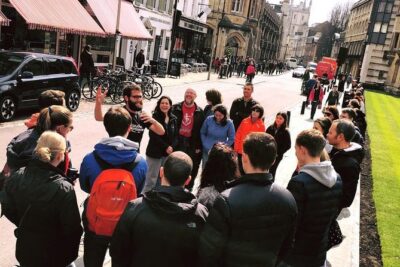
Cambridge University Walking Tour by Alumni™ Kings College Option
Read our review →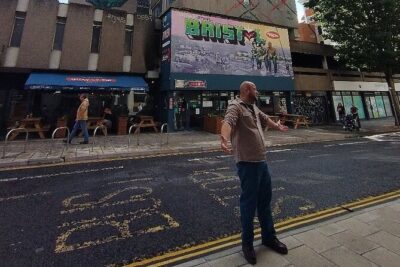
Blackbeard to Banksy – The Ultimate Walking Tour of Bristol
Read our review →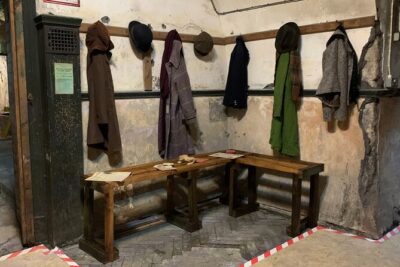
Air Raid Shelter + St. Nicholas Market Walking Tour
Read our review →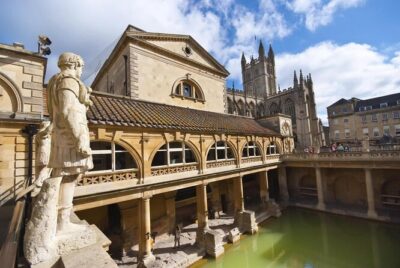
Walking Tour of Bath with Blue Badge Tourist Guide
Read our review →