
Reviewed · WALKING TOURS
Official Canterbury Guided Walking Tour – 14.00 Tour
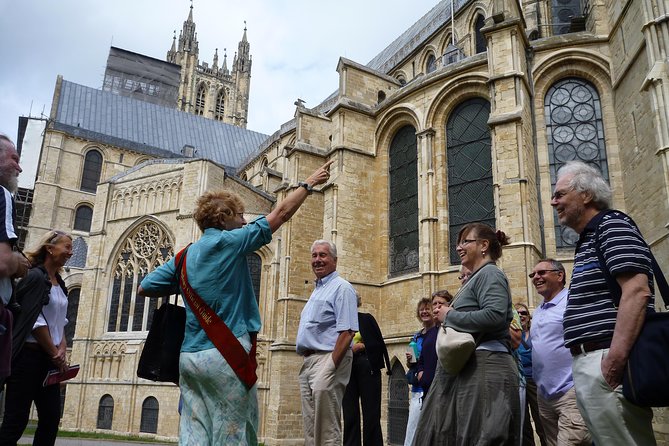
Canterbury’s story is best told on foot, where narrow medieval lanes lead toward the Cathedral and every old wall seems to have a tale attached. This 90-minute walk covers the central streets, the largest medieval gateway in England, the Cathedral precincts, and the grounds of King’s School.
I like the way a Green Badge guide gives you a clear sense of the city before you tackle its major sights alone. I also like the mix of serious history and human stories, from Thomas Becket and Geoffrey Chaucer to Christopher Marlowe, ghosts, murder, plague, and royal visitors. The main caution is that you must be able to hear your guide in a group, and one attendee found the commentary hard to follow when the guide walked ahead.
Key points to know before you book
- The Cathedral precincts are included: You enter the surrounding grounds, but not the Cathedral itself.
- The route begins at Butter Market: The tour starts and ends beside Canterbury Cathedral in the central city.
- The stories are the main attraction: Expect Becket, Chaucer, Marlowe, monarchs, pilgrims, plague, rebellion, ghosts, and local characters.
- The walk is designed for 90 minutes: It moves at a calm pace and covers a fairly short distance through mostly flat streets.
- Guides vary in style: Past tours have been led by Kaye, Adrian, Colin, Lynsey, Sam, Jane, Mark, and others, with strong emphasis on storytelling and questions.
- The afternoon departure is seasonal: The 2 p.m. tour runs from April through October and during seasonal holidays, alongside the daily 11 a.m. tour.
Why this walk is a smart first look at Canterbury
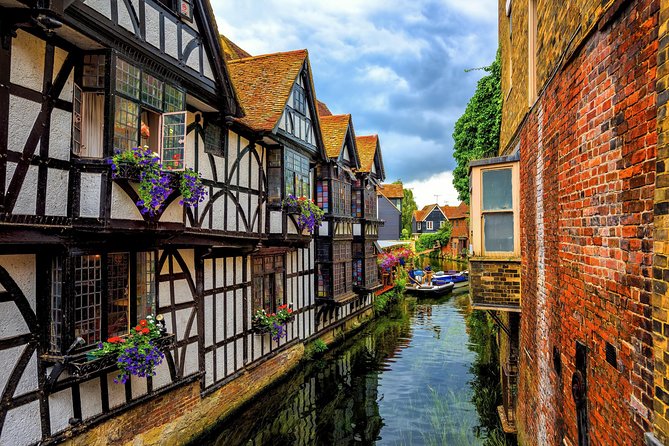
Canterbury can look simple at first glance. You see old timbered buildings, busy shopping streets, church towers, and the Cathedral rising above the center. But without a guide, it is easy to admire the view without understanding why the city matters.
This walk gives you that missing framework. Your guide explains how Canterbury grew as a religious center, how pilgrims shaped the city, and why royal visits, religious conflict, plague, revolt, and trade all left their mark. You are not simply given dates. The stories connect the buildings around you with the people who lived, worked, worshipped, or fought here.
I especially like this kind of introduction because it changes the way you look at Canterbury afterward. A lane becomes more than a shortcut. A gate becomes part of the city’s defenses. A Cathedral wall carries a story about war, worship, or royal power.
The tour is also a practical way to get your bearings. It starts and finishes at Butter Market, a useful central point beside the Cathedral. Afterward, you can return to places that caught your interest, enter the Cathedral separately, or continue exploring the old center without constantly checking a map.
More walking tours in England:
- Oxford University Walking Tour With University Alumni Guide
★ 5.0 · 6,905 reviews - Tour for Muggles The Ultimate Harry Potter Walking Tour in London
★ 5.0 · 4,684 reviews - London Jack The Ripper Guided Walking Tour
★ 5.0 · 3,131 reviews
From Butter Market into the medieval lanes
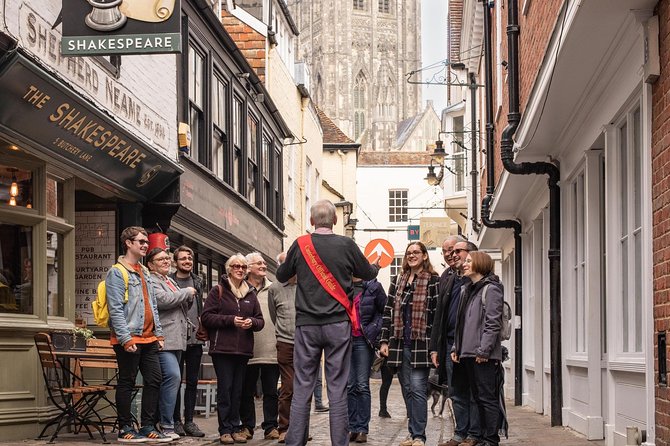
The meeting point is Butter Market, beside Canterbury Cathedral. From there, the guide leads you into the central streets and lanes rather than asking you to find a distant departure point or board transport.
That matters in Canterbury. The most interesting parts of the old city are close together, but the route is not always obvious. A guide can point out details that you might pass without noticing, including old buildings, unusual street features, and places tied to local events.
The walk is not a hard trek. The stated route is about 90 minutes, and the local operator describes it as flat, with no slopes and no regular steps. A few steps may be involved if the route enters the Cathedral cloisters. Still, you are on your feet for the full tour, so comfortable shoes make sense.
The pace appears to suit people who prefer time to look around. Several guides are praised for moving steadily rather than rushing from stop to stop. That gives you a chance to take photographs and listen without feeling pushed along.
The medieval gateway and Canterbury’s darker stories
One of the tour’s promised highlights is the largest medieval gateway in England. The gateway helps explain how the city was entered and controlled, and it gives the walk a strong sense of place. Instead of viewing Canterbury as a collection of attractive old streets, you begin to see a fortified city with boundaries, traffic, power, and danger.
The storytelling does not stop at polished royal history. Your guide may discuss murder, ghosts, plague, peasants’ revolts, and other less tidy parts of Canterbury’s past. That balance is one of the tour’s strengths. Medieval life was not just cathedrals and kings, and the darker tales make the old streets easier to remember.
The guides also connect the city to writers and artists. Becket, Chaucer, and Marlowe receive particular attention, along with the kings and queens who passed through Canterbury’s gates. The result is a broad introduction rather than a narrow tour devoted only to religious architecture.
You should expect the exact stories and emphasis to vary by guide. Names praised for strong presentation include Adrian, Colin, Mark, Lynsey, Kaye, Sam, Jane, and Kirsten. One guide was described as a retired historian, while another used theatrical presentation and humor to bring the Cathedral’s past into focus.
Canterbury Cathedral from the precincts

The Cathedral precincts are the heart of the walk. You can enter the surrounding grounds as part of the tour, but admission to the Cathedral interior is not included in the $20.80 price.
That distinction is important. The precincts offer context and exterior views, while the Cathedral itself is a separate visit. I would strongly consider doing this walking tour before paying to enter. Once you know the major characters and events, the interior spaces and exterior details have more meaning.
The guide may also explain the Cathedral’s changing appearance. One particularly useful point concerns wartime damage and the east end of the city. The Cathedral and its library came close to destruction during German air raids, while bombs fell to the east. That helps explain why some parts of Canterbury look older and others more modern.
The precincts can also be a quiet part of the tour, even when the surrounding city is active. You may pause while the guide explains the Cathedral’s role, its links with pilgrims, or the people connected to it. This is where the tour’s calm pace helps, but it is also where you need to dress for the weather.
One attendee found the long pause near the Cathedral uncomfortable in cold conditions. Bring an extra layer in cooler months, particularly for the 2 p.m. departure, when you may spend time standing outdoors rather than walking continuously.
A few more things to do in England worth a look
- Stonehenge, Windsor Castle and Bath Full Day Guided Tour
★ 4.5 · 5,346 reviews - London Jack the Ripper Guided Tour with Ripper-Vision
★ 4.5 · 4,840 reviews - Original Harry Potter Locations Tour – Guided Tour of London
★ 5.0 · 4,117 reviews - Ghost, Ghouls and Gallows Tour : Guided Tour with Boat Ride
★ 4.5 · 3,212 reviews
King’s School grounds and the city’s famous characters
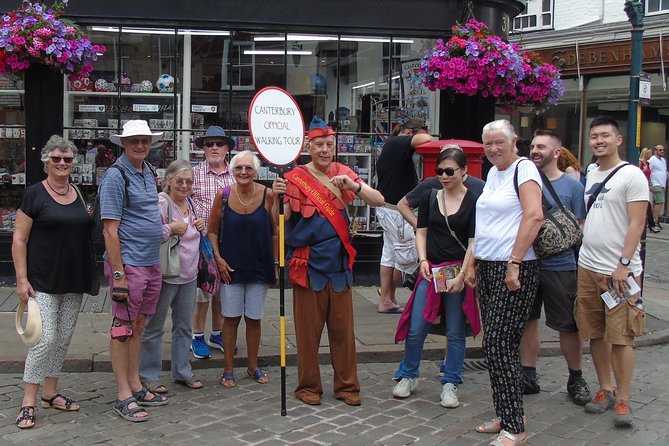
The route includes the grounds of the historic King’s School. This adds another layer to the walk because Canterbury’s story is not confined to the Cathedral. Religious institutions, education, royal authority, writers, and ordinary working people all shaped the city.
The guide uses these surroundings to introduce famous residents and visitors. Becket is central to Canterbury’s religious story, while Chaucer links the city to literature and pilgrimage. Marlowe gives the walk a connection to theater and writing. You may leave with a reading list as well as a better map of the city.
The guides are encouraged to respond to questions, and this is one of the tour’s most useful features. Sam, for example, was happy to continue a little longer while answering a stream of questions. That suggests the experience works best when you take part rather than simply follow silently.
The personal approach can differ from one guide to another. Some focus on humor, some on architecture, and some on social history. You might hear more about local food and present-day Canterbury from one guide, while another spends more time on royal visits or wartime events.
What the $20.80 price really buys you
At $20.80 per person, this is not a full Cathedral visit or a private sightseeing experience. You are paying for a qualified local guide, a structured introduction, and access to the Cathedral precincts and central lanes.
That is a reasonable price if you would otherwise wander without context. A self-guided walk costs less, but you must research the route, identify the important buildings, and decide which stories are reliable. Here, your guide does that work while you walk.
The value is strongest for a first visit. You get a clear outline of Canterbury’s past, learn which sites deserve more of your time, and receive suggestions for the rest of your day. Several people found that the tour improved their later visit to the Cathedral and other major sights.
The tour has a maximum of 30 people. That is not an intimate private walk, and the experience will depend partly on where you stand and how well the guide projects. Smaller groups can feel more personal, while a full group may make it harder to hear in a noisy street.
Private tours are available for groups of up to 10 people at £150, with advance booking required. That option makes more sense if your group wants a slower pace, has many questions, or needs more control over the route.
Timing, weather, and practical comfort
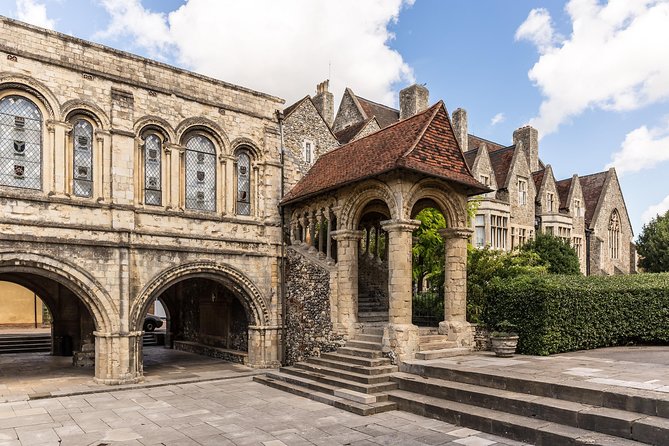
The tour starts at 2 p.m. for this departure and takes about 90 minutes. The afternoon tour is offered from April through October and during seasonal holidays. A daily 11 a.m. tour is also available.
The 11 a.m. option is useful if you want the rest of the day for the Cathedral or other sights. The 2 p.m. walk works well after a morning arrival, lunch, or an earlier visit elsewhere. Check the operating date carefully if you are visiting outside the main April to October period.
Wear shoes suitable for paved streets and old lanes. Although the route is described as flat, you are standing and walking for an hour and a half. You may also stop in open areas near the Cathedral, so rain protection and warm clothing matter more than they might on a short city stroll.
Most people can take part. Service animals are allowed, and well-behaved dogs on short leads may be accepted at the guide’s discretion. A concessionary rate is available for a person with a disability, and a carer accompanying that person can enter free. The concessionary place must be booked online.
The operator also provides a children’s activity sheet and history trail. Ask the guide for it on arrival. This can help younger children pay attention during the historical sections, though the adult storytelling still covers subjects such as murder, plague, and rebellion.
What can go wrong on an otherwise good walk

The main risk is not the distance. It is communication.
One attendee felt the guide spoke too quietly and sometimes walked ahead while talking. In a group of up to 30, that can make a good story disappear into street noise. If you have hearing difficulties, position yourself close to the guide at the start and say so early. A small change in position can make a big difference.
The tour is also not a private experience. You cannot assume the guide will stop for every photograph or answer every question at length. On the other hand, guides have shown a willingness to respond to questions, and some have extended the walk slightly when the group needed more time.
Another consideration is the Cathedral admission. If you expect to go inside as part of the tour, you may be disappointed. The walk covers the precincts and grounds only. Budget separately for Cathedral entry and allow enough time if you want a thorough visit.
Finally, the tour’s appeal depends on your interest in spoken history. This is not a ticket to a single monument or a rapid list of photo stops. You are paying for explanation, local stories, and a guide’s sense of what matters.
Who will get the most from this Canterbury walk
I would recommend it to first-time visitors who want a useful introduction before exploring alone. It is also a good fit if you enjoy local stories more than a simple list of dates and building names.
Families can benefit from the activity sheet, especially if children are old enough to follow a walking tour. History fans will appreciate the range, from medieval religious life to Marlowe and wartime Canterbury. The flat route also helps people who prefer not to tackle hills.
You may want a different format if you need a very slow, highly personalized route, or if you find it difficult to hear in a group. In that case, the private option for up to 10 people is worth considering, provided you arrange it in advance.
Free cancellation is available up to 24 hours before the start time. Changes or cancellations inside that window are not accepted for a refund.
Should you book the 2 p.m. Canterbury tour?
Book it if you want Canterbury to make sense before you explore its Cathedral, lanes, and old buildings on your own. The strongest part is the guide’s storytelling, especially the way local characters, royal visits, literature, religion, war, and darker tales are tied to the streets around you.
At $20.80, it offers solid value for a first visit. Just remember that Cathedral entry costs extra, dress for outdoor stops, and stay close enough to hear your guide. If those points suit you, this is a practical and engaging way to begin your time in Canterbury.
FAQ
Where does the Canterbury walking tour begin?
The tour begins at Butter Market, Canterbury, CT1, beside the Cathedral area.
Where does the tour end?
The activity ends back at the meeting point at Butter Market.
How long does the tour last?
The walk lasts approximately 90 minutes.
Is entry to Canterbury Cathedral included?
No. The tour includes the Cathedral precincts and grounds, but admission to the Cathedral itself is not included.
What time does the 2 p.m. tour run?
The additional 2 p.m. tour runs from April through October and during seasonal holidays. A daily 11 a.m. tour is also offered.
Is the route suitable for people with limited mobility?
The route is described as flat, with no slopes and usually no steps. Two or three steps may be involved if the Cathedral cloisters are visited. The tour does require 90 minutes of walking and standing.
Can I bring a dog or service animal?
Service animals are allowed. Well-behaved dogs on short leads may be accepted at the guide’s discretion.
Just added in England
- Exceptional Bath tour guide making your visit splendidly memorable.★ 4.5 · 69 reviews
- Full-Day Private Tour of Stonehenge and Bath with Pickup★ 5.0 · 6 reviews
- One Way or Round Trip Private Transfer: Heathrow Airport to Bath★ 5.0 · 3 reviews
- Quintessential Cotswolds Half-Day tour from Bath (for 2-8 guests)★ 5.0 · 27 reviews
- Stonehenge Half-Day luxury guided tour from Bath for 2-8★ 5.0 · 15 reviews
- Private Guided Tour of Jane Austen’s Bath★ 5.0 · 7 reviews
- British Wine and Cheese Tasting Experience in City of Bath★ 5.0 · 18 reviews
- Cotswold Village Private Day Trip from Bath★ 5.0 · 24 reviews
Walking Tours, compared.

Oxford University Walking Tour With University Alumni Guide
Read our review →
Tour for Muggles The Ultimate Harry Potter Walking Tour in London
Read our review →

Cambridge University Walking Tour by Alumni™ Kings College Option
Read our review →
Blackbeard to Banksy – The Ultimate Walking Tour of Bristol
Read our review →
Air Raid Shelter + St. Nicholas Market Walking Tour
Read our review →
Walking Tour of Bath with Blue Badge Tourist Guide
Read our review →
Changing of the Guard Guided Walking Tour in London
Read our review →Browse the lists this tour appears in