
Reviewed · JACK THE RIPPER TOURS
London Private Jack The Ripper Tour
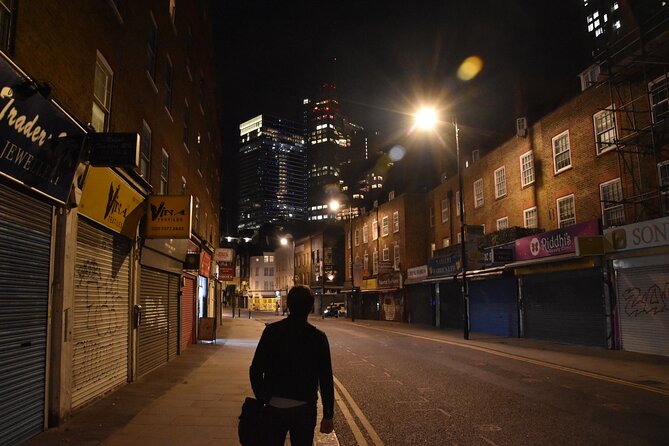
London’s Jack the Ripper story comes alive not in a museum, but along ordinary streets in Whitechapel and Spitalfields. This private 2.5-hour walk follows the five canonical murder sites, from Polly Nichols near Whitechapel Station to Mary Kelly by Old Spitalfields Market.
I like the one-group format, which lets you ask questions without waiting for a large crowd to catch up. I also like the route’s wider view: it covers police inquests, press panic, the famous double event, and modern forensic thinking, not just grisly details. The main drawback is the walking and street-to-street movement, with a London Underground trip between Whitechapel and Aldgate not included.
Key points before you book

- Five canonical murder sites: Follow the locations linked with Polly Nichols, Annie Chapman, Liz Stride, Catherine Eddowes, and Mary Kelly.
- Private group of up to 15: You receive the guide’s attention, with room to ask about disputed evidence and suspects.
- A route built around questions: The tour explains why certain women are counted as canonical victims and why others remain debated.
- Whitechapel to Liverpool Street: The walk begins at 277 Whitechapel Road and ends at Liverpool Street Station.
- A serious look at Victorian policing: Inquests, witness testimony, newspaper reports, clues, and later forensic methods all form part of the story.
- Wear comfortable shoes: The route takes about two and a half hours and includes several stops on foot.
Why this private Whitechapel walk works
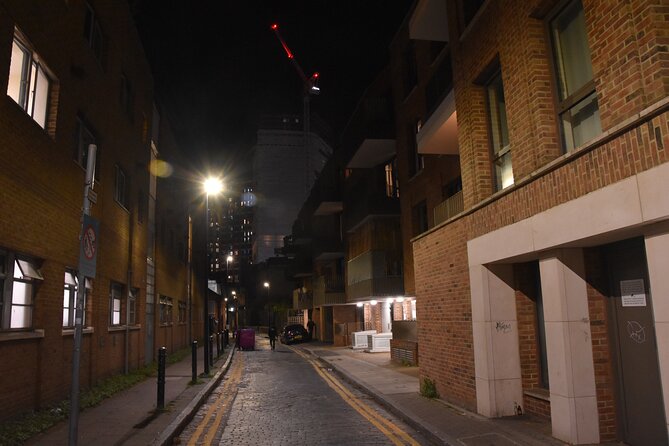
Jack the Ripper tours can easily become a parade of dark alleys and lurid tales. This one has a broader purpose. You follow the murder sites while also learning how Victorian police worked, how newspapers shaped public fear, and how the name Jack the Ripper entered the case.
That matters because the story is not simply about identifying a killer. It is also about uncertainty. The police never proved who committed the murders, and even the list of victims is open to debate. A good guide needs to separate fact, later theory, newspaper invention, and modern speculation. The advertised route gives plenty of room for that distinction.
The private setup is especially useful here. With a maximum of 15 people, you can ask why Liz Stride is sometimes excluded, how the inquests functioned, or why the name changed from a general description of the killer to the label known around the world. On a crowded group walk, those questions may be rushed.
The cost is $246.91 per group, not per person. For two people, that is a sizeable outlay. For a family or group of friends sharing the fee among 10 or 15 people, the value improves sharply. You are paying for a live guide and private attention rather than admission to a fixed attraction.
Other Ripper walks in London:
- London Jack the Ripper Guided Tour with Ripper-Vision
★ 4.5 · 4,840 reviews - London Jack The Ripper Guided Walking Tour
★ 5.0 · 3,131 reviews - Ultimate Jack the Ripper : Guided Tour of London
★ 5.0 · 1,495 reviews
Starting near Whitechapel Station with Polly Nichols
The tour starts at 277 Whitechapel Road, a short walk from Whitechapel Station. This is a useful meeting point because you begin close to the first canonical murder site, rather than spending the opening part of the tour on general orientation.
Polly Nichols is the starting point for the case as it is usually presented. Your guide explains what happened to her, how she was found, and why she is treated as the first canonical victim. Those questions are more important than they may sound. The term canonical refers to the group of five women most often connected with the Ripper murders, not to a court-proven list.
This opening stop sets the tone for the rest of the walk. You are not only hearing a crime story. You are being shown how later writers, police records, and public memory created a fixed version of events.
Expect about 10 minutes at the stop, followed by walking and discussion. The route uses real streets, not reconstructed sets, so the setting is part of the experience. At the same time, modern London has changed greatly. You will need to use the guide’s explanation to picture the Victorian streets rather than expect preserved crime scenes.
The Working Lads Institute and Victorian inquests
The second stop is outside the former Working Lads Institute, where inquests connected with the murders were held. Here the focus shifts from the crime scene to the official process that followed.
You learn how a Victorian inquest worked, who could be called as a witness, and how each case progressed. This is one of the more useful parts of the route because it gives structure to a story often reduced to suspicion and rumor.
An inquest was not the same as a modern criminal trial. It dealt with the circumstances and cause of death, while the wider investigation searched for a killer. Understanding that difference helps you read the old evidence with more care.
The stop also shows why surviving records can feel fragmented. Witnesses gave statements, police followed leads, and newspapers reported the proceedings, but none of that produced a final answer. If you enjoy the investigative side of the subject, this may be one of the strongest stops.
Hanbury Street and the press panic
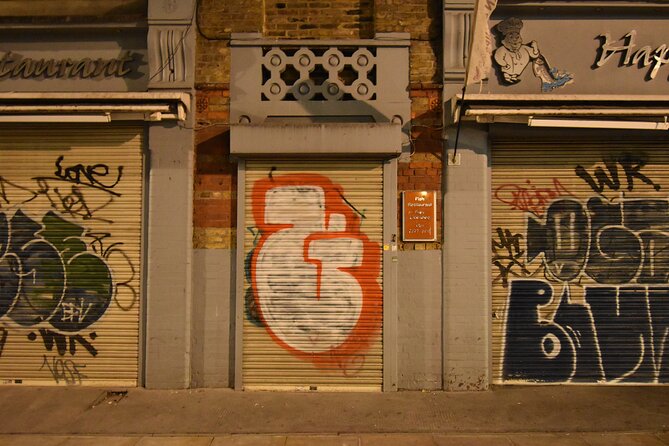
At 29 Hanbury Street, you reach the site associated with Annie Chapman, the second canonical victim. Her death intensified public and newspaper alarm and put greater pressure on local police.
This is where the tour explores the role of the press. London newspapers were not passive record keepers. Their reports helped create a public figure called the Whitechapel Murderer, and the growing fear gave the case a life of its own.
I like this stop because it explains how a local series of murders became a national obsession. The newspapers helped spread information, but they also shaped how people understood the crimes. Sensational reporting could make uncertainty feel like certainty.
The stop lasts around 10 minutes, but your private guide can use questions to connect it to the later name Jack the Ripper. That change in language is a key part of the story. It shows how crime reporting, public fear, and anonymous communications combined to create one of the most famous criminal labels in history.
A few more things to do in London worth a look
- The Premier Classic London: Private 4-Hour Tour in a Black Cab
★ 5.0 · 2,737 reviews - Stonehenge Inner Circle Private Tour from London with Bath Visit
★ 5.0 · 1,909 reviews - Private Tour: Black Taxi Tour of London
★ 5.0 · 1,153 reviews - Private London Arrival Transfer – Airport to Hotel / Accommodation
★ 3.5 · 1,085 reviews
Henriques Street and the question of Liz Stride
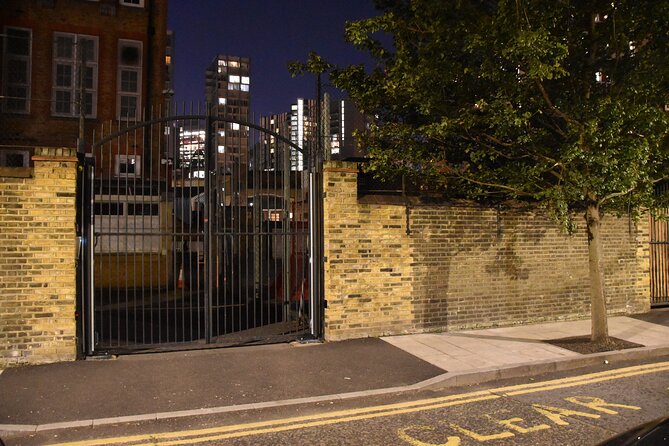
The fourth stop is Henriques Street, formerly Berner Street, where Liz Stride was found dead. Her case is central to the argument over which murders should be linked to Jack the Ripper.
Unlike the other four canonical victims, Stride was not mutilated after her death. That has led some people to argue that she was interrupted before the killer could continue, while others question whether she belonged in the group at all. The tour presents this dispute as part of the evidence rather than brushing it aside.
This is a good moment to ask your guide how historians decide what belongs in the case. The answer is not based only on location or date. It also involves the condition of the body, the pattern of the injuries, available witness accounts, and the limits of the surviving records.
The stop is brief, about 10 minutes, but it may prompt some of the best questions. A private tour lets you spend more time on disputed points if your group is interested. If you prefer a simple, settled story, the uncertainty may feel frustrating. If you like historical mysteries, it is part of the appeal.
Mitre Square and the double event
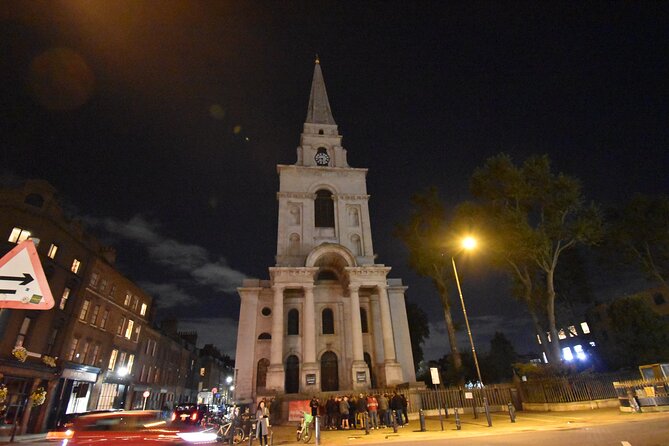
At Mitre Square, you reach the site linked with Catherine Eddowes, the fourth canonical victim. Her murder and the killing of Liz Stride on the same night are known as the double event.
This is the only night connected with two of the five canonical murders. The timing helped drive public fear and increased the pressure on police. It also gave later writers a dramatic centre point for the case.
Mitre Square is important for another reason. The double event and communications sent to the Central News Agency helped produce the name Jack the Ripper. Your guide explains how the name developed and how the public came to associate it with the Whitechapel murders.
That subject is a reminder that names can shape history. Once the label became familiar, it helped bind separate incidents into one larger narrative. The evidence still had gaps, but the name made the case easier to package and remember.
Goulston Street and the key clue
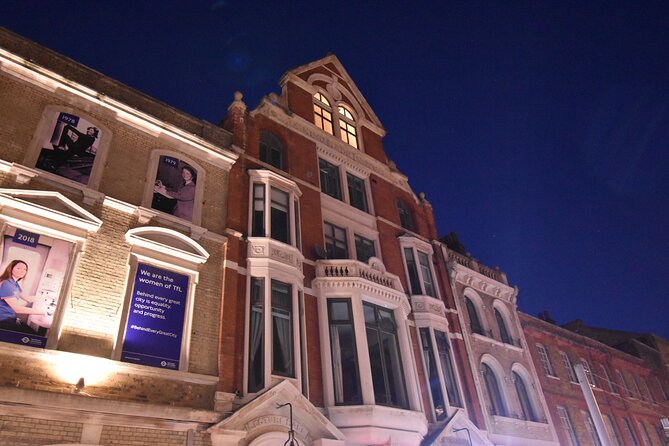
The sixth stop is Goulston Street, where an important clue connected with the investigation was found. This part of the walk moves from the murders themselves to the handling of evidence.
The clue has remained important because it sits at the meeting point of physical evidence, police judgment, and later interpretation. Your guide explains what was found and why it mattered, while also showing why clues from old cases must be treated carefully.
This stop should appeal to anyone interested in detective work. It is not simply a place connected with a dramatic story. It raises practical questions about what investigators could preserve, what they could interpret, and how much later writers may have added to the original facts.
Because the stop is outdoors and lasts about 10 minutes, the value depends heavily on explanation. The physical street alone will not reveal the case. The guide’s account is what turns the location into a useful part of the investigation.
Gunthorpe Street and the possible first murder
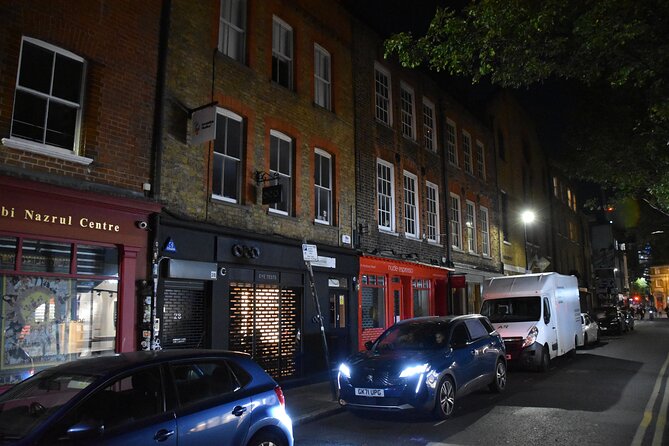
At Gunthorpe Street, the guide discusses an earlier possible murder. Some accounts connect it with the Ripper, while others do not. This is another point where the tour examines the edges of the accepted story.
You also hear how modern policing techniques and forensic science have been applied to the old murders. That does not solve the case, but it explains why interest continues. Old evidence can be reexamined, yet its limits remain. Modern methods cannot recreate missing records or repair every gap in the original investigation.
This stop also asks why the murders still attract attention. The answer lies partly in the unanswered identity of the killer, but also in the contrast between modern London and Victorian policing. You are looking at a cold case from a period when investigators had fewer tools and public information moved through newspapers rather than instant communication.
The stop is useful for keeping the tour from becoming a list of five fixed events. It shows that the wider case includes possible victims, uncertain links, and changing theories.
Old Spitalfields Market and Mary Kelly
The route ends near Old Spitalfields Market, at the site associated with Mary Kelly, the fifth and final canonical victim. This gives the walk a natural closing point near Liverpool Street Station.
Mary Kelly’s murder is usually treated as the final canonical case, and her story brings the route back to the question of why these five women are grouped together. By this stage, you have heard about the crime scenes, the inquests, the press, the name, and the competing ideas about who belongs in the case.
The end point is practical. The tour finishes at Liverpool Street Station, making it easier to continue sightseeing or return to your accommodation. You should not expect a formal museum-style finale. The ending comes through the route itself and the guide’s final explanation.
The route takes about two and a half hours in total, though each listed stop is only around 10 minutes. The rest of the time is used for walking between locations, explaining the changing streets, and answering questions. Comfortable shoes are essential.
What the private format is worth
The biggest advantage is control over the pace and questions. You can ask about the inquests, press coverage, forensic theories, or the identity of individual victims without feeling that you are holding up a large group.
One particularly useful detail comes from a solo booking with a guide named Michael. The guest felt at ease throughout the walk, and Michael even accompanied her to the Tube station at the end. That is a small but meaningful point for anyone considering the tour alone, especially for an evening booking or a first visit to the area.
The tour is offered in English. A live guide is included, and service animals are allowed. You should have a moderate level of physical fitness, since the experience involves a continuous walking route through central London.
The Underground journey between Whitechapel and Aldgate is not included in the price. Check the meeting instructions carefully so you know when that transport is needed. The tour ends at Liverpool Street Station, but the route details indicate that public transport forms part of the movement between some sections.
Who should book this tour
I would choose this experience if you want the Ripper story tied to actual places and you enjoy weighing evidence rather than simply hearing a spooky tale. It suits couples, families with older children, friends, and small groups who can share the private fee.
It is also a sensible option if you want a more personal experience than a large walking group can offer. The five-star rating across nine published ratings, along with strong praise for the guide’s detailed explanations and the private format, supports that choice. Michael received particular praise for his manner and care with a solo participant.
I would hesitate if you dislike grisly subject matter, have trouble walking for two and a half hours, or want a tour focused mainly on architecture and everyday East End life. The subject is murder, and the route spends most of its time on the case rather than on broader London sightseeing.
Should you book the London Private Jack the Ripper Tour?
Book it if the private format matters to you and your group wants a careful, location-based account of the case. The strongest parts are the personal attention, the explanation of Victorian inquests, and the willingness to address why the victim list and evidence remain disputed.
The $246.91 group price makes the most sense when shared among several people. For a solo visitor or couple, it is a premium walking tour. For a group of friends or family, it can be a fair way to receive a dedicated guide and a route built around your questions.
Wear good shoes, allow time for walking and Tube movement, and go in expecting uncertainty rather than a final solution. If that sounds like your kind of history, this is a focused and worthwhile way to see a darker side of London.
FAQ
Where does the tour start?
The tour starts at 277 Whitechapel Road, London E1 1BY, near Whitechapel Station.
Where does the tour finish?
The tour finishes at Liverpool Street Station, London EC2M 7QA.
How long does the tour last?
The experience lasts approximately two hours and 30 minutes.
Is transportation included?
The London Underground journey between Whitechapel and Aldgate is not included. Guiding fees and a live guide are included.
How many people can join the private tour?
Your private group can include up to 15 people, and only your group participates.
What is the cancellation policy?
You can cancel at least 24 hours before the start time for a full refund. Cancellations or changes made less than 24 hours before the start time are not accepted for a refund.
Just added in London
- The Beatles and a Secret pub★ 4.5 · 36 reviews
- The Beatles & Liverpool Magical Mystery Tour from London★ 4.5 · 80 reviews
- Airport Coach Service from Heathrow to Oxford★ 3.5 · 67 reviews
- The Beatles Magical History Black Taxi Tour London★ 5.0 · 51 reviews
- The Beatles London walking tour. From Abbey Road to the Roof Top★ 5.0 · 61 reviews
- Private The Beatles Taxi Tour in London★ 5.0 · 12 reviews
- The Beatles London Walk★ 4.5 · 120 reviews
- Dinner and Jazz Cruise on the River Thames★ 4.0 · 140 reviews
Jack the Ripper Tours, compared.
London Jack the Ripper Guided Tour with Ripper-Vision
Read our review →
Ultimate Jack the Ripper : Guided Tour of London
Read our review →

London Jack The Ripper Small-Group Walking Tour
Read our review →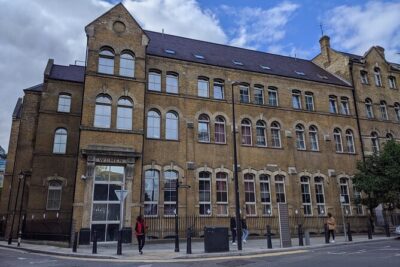

The Original Jack the Ripper Coach Tour of Haunted London
Read our review →
Jack the Ripper Tour with ‘Ripper-Vision’ in London- Afternoon
Read our review →Browse the lists this tour appears in