Reviewed · TOURS IN LONDON
Kew Gardens Entrance Ticket
Kew Gardens gives you a full day of plants, grand glasshouses, old royal buildings, and quiet paths far from central London’s traffic. The Palm House and Temperate House are the stars, especially when tropical leaves, huge lilies, and the Chilean Wine Palm give you a warm escape on a cool day.
I like the freedom to set your own pace, and I like the treetop walkway, which lets you look across the crowns of Kew’s 14,000 trees. The main catch is size: three to four hours may cover the headline sights, but a relaxed visit can take all day, and some guests find the $30.37 admission expensive for a garden.
Key points to know before you go
- Start with a plan: Kew covers 326 acres, so choose two or three priority areas before you enter.
- The glasshouses are essential: The Palm House, Temperate House, and Waterlily House provide some of the most memorable sights.
- Allow extra time for the treetop walkway: The Rhizotron and Xstrata Treetop Walkway adds a welcome change from ground-level paths.
- Royal sights cost extra: Kew Palace and the Pagoda are not included in the basic admission and are open from April through September.
- Food is easy to find: Four cafés offer lunch or tea, or you can eat outdoors at your own expense.
- Free walking tours add context: Daily guided walks can help you understand the plants and major buildings without buying a separate tour.
A large garden that rewards a slow pace
Kew is not a small city park you can cross in an hour. The Royal Botanic Gardens spreads across 326 acres, with formal gardens, wooded paths, lawns, glasshouses, sculptures, historic buildings, and one of the world’s largest plant collections.
That scale is part of the appeal. You can spend one hour seeing a few headline sights, or make a full day of it with long walks and several indoor stops. I would not try to see everything on a first visit. The better plan is to pick a route that matches your interests, then leave room for unexpected corners.
The entrance ticket is for independent exploration. You make your own way to Kew Gardens, enter with the pre-purchased ticket, and decide how long to stay. This works well if you dislike being hurried or want to split your time between serious botany, family activities, architecture, and simple strolling.
Kew receives a rating of 4.1 from 1,055 reviews, which fits the experience well. The gardens are carefully maintained and packed with things to see, but the price and sheer size will not suit everyone.
A few more things to do in London worth a look
- Tower of London and Crown Jewels Exhibition Ticket
★ 4.5 · 6,677 reviews - Thorpe Park Admission Ticket
★ 4.0 · 5,915 reviews - The London Eye Entry Ticket
★ 4.0 · 3,498 reviews
Getting your bearings inside Kew
The practical challenge is orientation. Kew is broad, and a casual walk can turn into a long day before you have reached the area you hoped to see.
I suggest picking one glasshouse, one garden area, and one architectural highlight as your basic plan. For example, you could combine the Palm House with the Queen’s Garden and the treetop walkway. If you have children, you may want to give extra time to the family areas rather than trying to cover every formal garden.
Signage between the Underground station and the entry gate has been a weak point for some visitors, so pay attention as you approach. Once inside, staff are described as friendly and helpful, and entrance staff can assist with organizing your visit.
The listed opening hours are 10 a.m. to 7 p.m., Monday through Sunday, for the stated operating period. Check the date of your visit carefully because special events and seasonal changes can affect what is open. On one listed date, Kew opened at 11 a.m. because of a marathon.
The Palm House and Temperate House
The glasshouses are the heart of a Kew visit. They give you a close look at plants that would never survive London’s ordinary weather, and they remain useful stops when the outdoor gardens look bare.
The Palm House is one of the largest surviving Victorian glasshouses. Inside, you can expect tall palms, humid air, and tropical planting arranged beneath an impressive iron-and-glass structure. The building itself matters as much as the plants. It shows how Victorian engineering and botanical collecting came together in one grand public attraction.
The Temperate House is another major stop. It contains subtropical plants, including a massive Chilean Wine Palm. That specimen is a memorable sight because of its scale, and it gives the building a clear sense of purpose: this is not only an architectural relic, but a working home for plants from warmer regions.
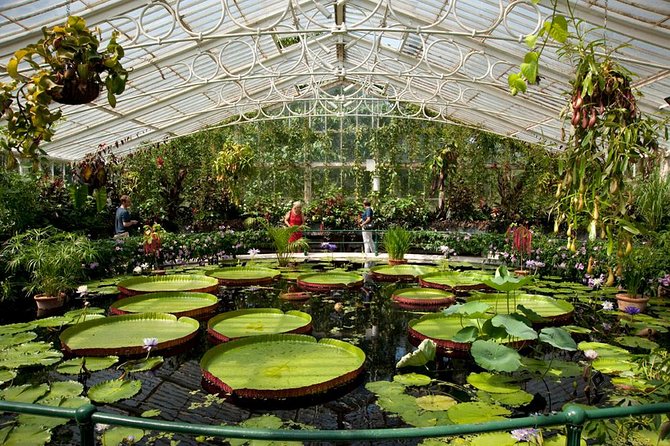
The Waterlily House also earns a place on your route. Giant lily pads and banana plants are among the details that make the indoor displays especially striking. I would save these buildings for the middle of your visit, when you want shelter, warmth, or a change from the long outdoor paths.
The downside is that the most famous glasshouses can become the busiest parts of Kew. If you want time to look closely at the plants rather than simply pass through, build in extra time and avoid rushing from one display to the next.
Queen’s Garden, Kew Palace, and the Pagoda
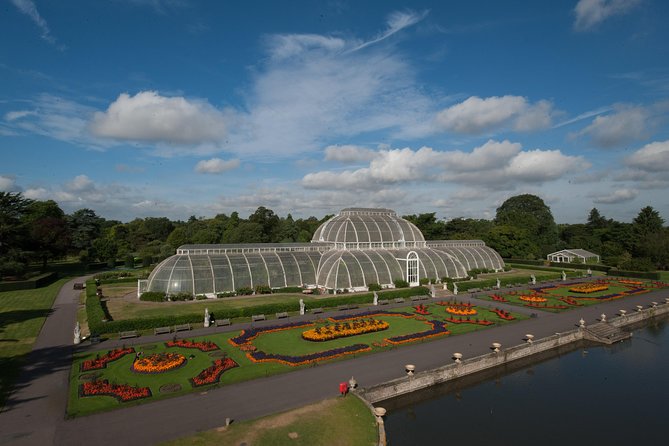
Near Kew Palace, also known as the Dutch House, you will find the Queen’s Garden. It follows a 17th-century style and contains several of Kew’s oldest sculptures, donated by the British royal family.
This is a good place to add history to the plant collection. The garden feels more formal than the broad lawns and woodland walks, and the sculptures give you something to examine beyond flowers and trees. The nearby Kew Palace offers a step back into royal domestic history, but admission to the palace is not included in the standard ticket.
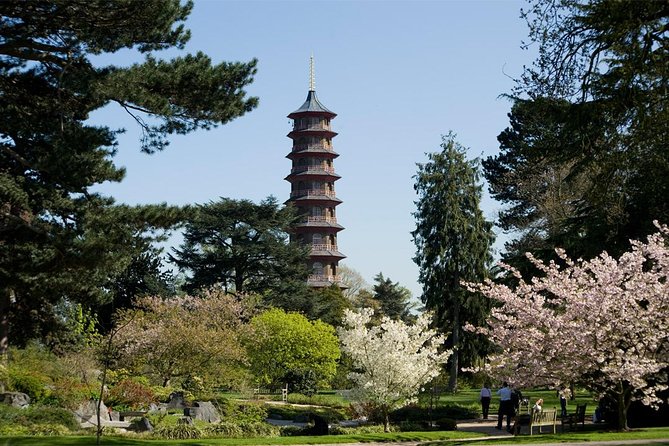
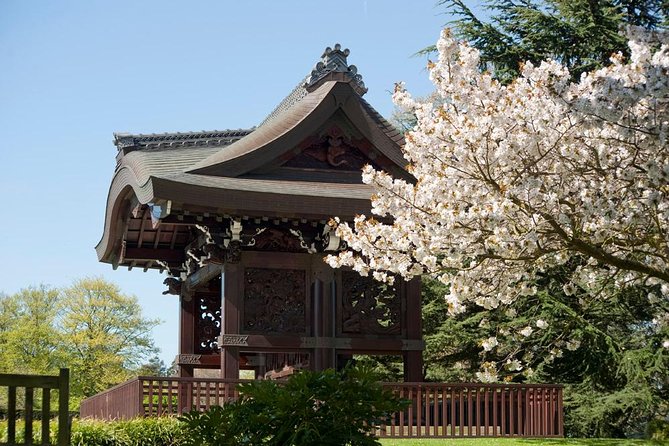
The Pagoda is one of Kew’s most recognizable buildings. This 10-story octagonal structure sits in the southwest corner of the gardens and gives the grounds a strong architectural focal point. The Pagoda is also an extra-cost attraction and is open from April through September.
Be careful when planning around these buildings. The basic entrance ticket does not include Kew Palace or the Pagoda, and both have seasonal opening information in the supplied details. If these are central to your visit, check their status before setting out.
Same base, a different kind of day:
- Stonehenge, Windsor Castle, and Bath from London
★ 4.5 · 18,662 reviews - London Big Bus Hop-On Hop-Off Tour with Optional River Cruise
★ 3.5 · 10,803 reviews - London Small Group Tour of Historical Pubs
★ 5.0 · 10,422 reviews - Stonehenge, Windsor Castle and Bath with Pub Lunch in Lacock
★ 4.5 · 7,402 reviews
Walking among the trees
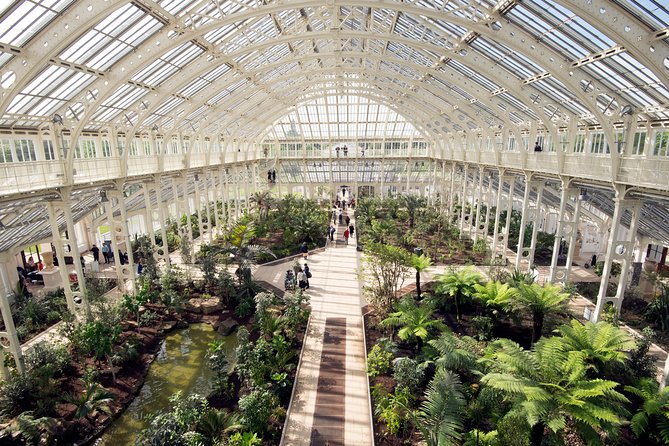
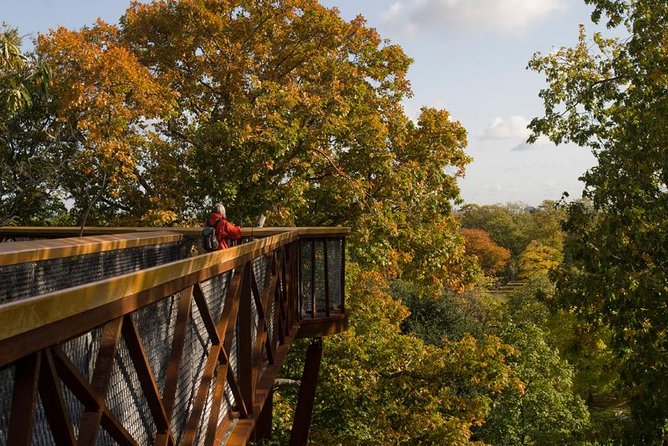
The Rhizotron and Xstrata Treetop Walkway gives Kew a different rhythm. Instead of looking across flower beds or into glasshouses, you move above the ground and see the tree crowns from a new angle.
The walkway reaches into the crowns of Kew’s trees and is one of the best reasons to keep some energy for later in the day. It is also a useful stop for families and anyone who wants more than a traditional botanical garden stroll.
At ground level, Holly Walk offers a quieter route beneath older trees. Some are about 130 years old, so this path gives you a sense of time and scale that a flower border cannot provide. You can move between formal planting, shaded paths, and open lawns without leaving the garden grounds.
The walkway may not suit every visitor. If heights or long walking distances are a concern, you can still enjoy Kew without making it the center of your day. Most travelers can participate in the experience, and service animals are allowed, but the site remains large and involves plenty of walking.
Azaleas, bamboo, Minka House, and seasonal color
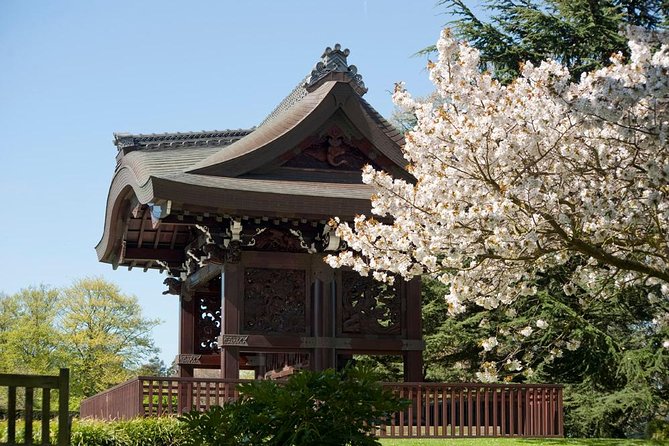
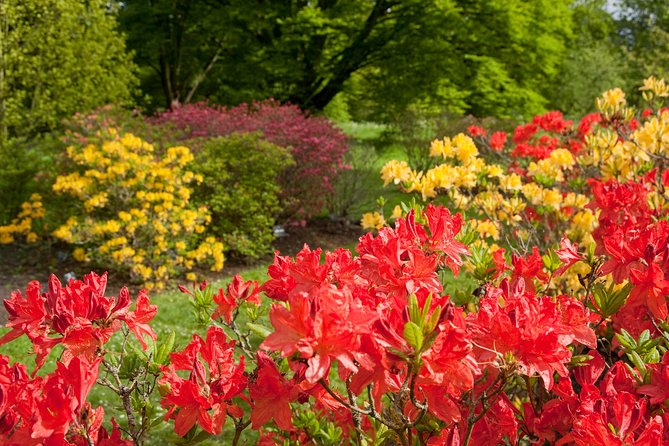
The Azalea Garden, Bamboo Garden, and Minka House provide some of Kew’s more varied outdoor stops. The Azalea Garden is especially seasonal, so the amount of color depends on when you visit.
The Minka House adds a cultural element to the grounds, while the Bamboo Garden changes the texture and sound of your walk. These areas help break up the larger lawns and keep Kew from feeling like one endless collection of flower beds.
Timing matters. Spring and summer offer the best chance of seeing the gardens at their most colorful, while winter can feel stark outdoors. The glasshouses remain worthwhile in colder months, but much of the outdoor planting may not be in bloom.
If roses are important to you, June is a sensible month to consider based on the seasonal advice included with the experience. Do not treat that as a guarantee of perfect conditions, but it is a useful clue when choosing your date.
Free guided walks and independent exploring
You can explore without a guide, and that is probably the best approach if you already know which plants or buildings interest you. The ticket does not include a private guide, but free guided walking tours take place daily.
I like this arrangement because it gives you a choice. You can start with a free walk to get context, then continue alone. Or you can skip the group and spend your time photographing, reading signs, and sitting in quiet areas.
A guided walk may be especially useful on a first visit because Kew’s size can make its collection feel scattered. The tour can help connect the glasshouses, historic buildings, gardens, and scientific purpose of the site.
The free walk is not a substitute for a full private tour, and the provided information does not name individual guides or specify the exact schedule. Ask at the gardens when you arrive if you want to join one.
Eating, resting, and managing the long day
Kew has four cafés, so you do not need to leave the grounds when you want lunch or tea. Meals and drinks are not included in the admission price, but an on-site break can save time and tired feet.
Outdoor eating is another option. You can find a pleasant place on the grounds, though the quality of your picnic spot will depend on the weather and how busy the gardens are.
Plan a rest before you need one. Kew is relaxing in mood, but it is still a large property. The combination of long paths, glasshouses, gardens, and buildings can turn a three-hour visit into a tiring day.
Families have plenty to do, and the children’s area receives positive attention. Adults who are mainly interested in formal gardens may find that area less rewarding, so use it as a family choice rather than a must-see stop.
Is the $30.37 ticket good value?
At $30.37 per person, Kew is not a cheap garden stroll. Some people will find the price high, particularly if they stay only two hours or arrive in winter when outdoor planting is less colorful.
The value improves if you stay for four hours or more and visit several glasshouses, the treetop walkway, the gardens, and the historic areas included with admission. A full day makes the ticket easier to justify because you are paying for access to a huge site rather than one short exhibit.
Remember to budget separately for food, drinks, Kew Palace, the Pagoda, and special events such as the Orchid Festival or Christmas at Kew. These extras can change the final cost quickly.
For me, the ticket makes the most sense for plant lovers, families, photographers, architecture fans, and anyone wanting a calm day away from central London. If you only want a quick look at flowers, the price may feel harder to defend.
What to know before booking
This is an independent visit, not a hotel pickup tour. You must make your own way to Kew Gardens, and the site is near public transportation.
Customers under 16 must be accompanied by an adult. Most people can take part, and service animals are allowed.
Your booking confirmation should arrive at the time of booking. Bring the necessary entrance voucher or QR code. One entrance problem described in the supplied information involved a missing QR code, which caused a long delay, so check your confirmation before leaving for Kew.
Free cancellation is available up to 24 hours before the start time for a full refund. Changes or cancellations inside 24 hours are not accepted and are not refunded. If poor weather causes Kew to cancel the experience, you are offered another date or a full refund.
Should you book Kew Gardens?
Book it if you want a flexible half-day or full-day outing with serious plant collections, beautiful glasshouses, historic royal buildings, and room to wander. Give yourself at least three hours, and stay longer if you want the treetop walkway, several gardens, cafés, and indoor displays.
I would skip it if your London schedule is packed or if you expect one compact attraction with every sight close together. Kew rewards patience and comfortable shoes. The strongest plan is to choose your must-see buildings in advance, check seasonal opening information for the palace and Pagoda, then let the paths fill in the rest of your day.
FAQ
How much does the Kew Gardens entrance ticket cost?
The listed price is $30.37 per person.
How long should I allow for Kew Gardens?
The estimated visit lasts three to four hours, but you can spend a full day because the grounds cover 326 acres and contain many gardens, glasshouses, buildings, and walking routes.
Is Kew Gardens a UNESCO World Heritage Site?
Yes. The Royal Botanic Gardens, Kew is listed as a UNESCO World Heritage Site.
What is included with the ticket?
The ticket includes admission to Kew Gardens. Food and drinks, hotel pickup and drop-off, Kew Palace, the Pagoda, and special events are not included.
Are Kew Palace and the Pagoda included?
No. Kew Palace and the Pagoda are not included in the basic admission ticket. The supplied information lists them as open from April through September.
Can I join a guided tour at Kew Gardens?
Yes. Free guided walking tours take place daily in the gardens. You can also explore independently at your own pace.
Are food and drinks included?
No. Food and drinks are purchased separately. Kew has four cafés, and you can also eat outdoors.
Can children visit Kew Gardens alone?
No. Anyone under 16 must be accompanied by an adult.
What is the cancellation policy?
You can cancel up to 24 hours before the experience start time for a full refund. Cancellations or changes made less than 24 hours before the start time are not accepted or refunded.
Just added in London
- Transfer London to Southampton Cruise Terminal (extra luggage)★ 4.5 · 81 reviews
- London, Windsor Castle, Hampton Court Palace with Free Snack Pack★ 4.0 · 102 reviews
- Central London to Southampton Cruise Port Private transfers★ 4.5 · 128 reviews
- London Christmas Lights Tour by Vintage Double-Decker Bus★ 4.0 · 135 reviews
- London Christmas Lights Guided Tour With Christmas Music★ 5.0 · 118 reviews
- Emirates Stadium and Arsenal Museum Entrance Ticket Including Audio Guide★ 4.5 · 113 reviews
- Hampton Court Palace Private Tour – Secrets of Henry VIII★ 5.0 · 127 reviews
- Heathrow To Southampton Cruise Port Transfers★ 4.5 · 110 reviews
Tours in London, compared.
Stonehenge, Windsor Castle, and Bath from London
Read our review →
London Big Bus Hop-On Hop-Off Tour with Optional River Cruise
Read our review →
Stonehenge, Windsor Castle and Bath with Pub Lunch in Lacock
Read our review →
Tower of London and Crown Jewels Exhibition Ticket
Read our review →
Stonehenge, Windsor Castle and Bath Full Day Guided Tour
Read our review →
Windsor Castle, Stonehenge, and Oxford Day Trip from London
Read our review →