
Reviewed · WALKING TOURS
John Wesley Methodist Private Walking Tour Of London
London’s Methodist story is scattered across lanes, churchyards, ruined walls, and quiet squares. This private walk brings those pieces together, following John Wesley from his family connections and education to the moment in 1738 when he declared his faith in Little Britain. You also see Roman and medieval London along the way, which gives the tour more range than its religious title suggests.
I like the personal format, especially with guide Stephen, who can meet you at a Central London hotel and help you reach the starting point. I also like the mix of major sights and easy-to-miss places, including Postman’s Park, Bunhill Fields, and the remains of the old London Wall. The main drawback is that three hours covers a lot of ground, so some stops are brief and most locations are viewed from outside.
Key points to know before you book
- Wesley’s Chapel anchors the tour: See John Wesley’s grave, home, chapel, and the Museum of Methodism.
- Sixteen stops cover several eras: The route moves from Roman London and medieval churches to the birth of English Methodism.
- Guide Stephen offers practical help: Hotel pickup can be arranged, and he has helped visitors unfamiliar with London reach the meeting point.
- The private format keeps things flexible: Only your party joins the guide, with room for questions and a slower pace when possible.
- The route is not only about Methodism: You also see William Wallace’s execution site, the Peasants’ Revolt memorial, and the Roman wall.
- Allow for outdoor walking: Transport to and from the tour is not included, and several attractions may be closed or admission may not be included.
Why this Methodist walk is different from a standard London tour
Most London walks focus on kings, royal buildings, famous writers, or crime stories. This one follows the life of John Wesley, the 18th-century preacher whose work helped form the Methodist movement in England.
You begin with Wesley’s Chapel and the places closest to Wesley himself, then move through the City of London to sites linked with his family, preaching, marriage, education, and religious work. The route also brings in the older city beneath the Methodist story. You see Roman defenses, medieval churches, old burial grounds, and memorials tied to events far outside Wesley’s lifetime.
That range is the tour’s strongest feature. You do not spend three hours looking at one chapel after another. The Methodist thread gives the walk a clear purpose, while London’s older layers keep the outing varied.
The private setup matters too. You are not joining a large group with a fixed lecture. You can ask why Wesley preached in one place but was refused access to another, or pause over a family connection that interests you. If you know little about Methodism, Stephen can provide the basic setting. If you already know the story, you can spend more time on the lesser-known London locations.
More walking tours in London:
- Tour for Muggles The Ultimate Harry Potter Walking Tour in London
★ 5.0 · 4,684 reviews - London Jack The Ripper Guided Walking Tour
★ 5.0 · 3,131 reviews - Changing of the Guard Guided Walking Tour in London
★ 5.0 · 1,793 reviews
Starting with Wesley’s Chapel and his London home
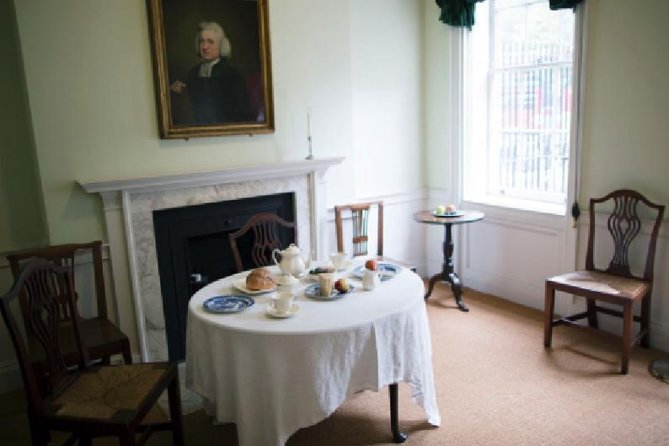
The tour includes Wesley’s Chapel, Wesley’s grave, and John Wesley’s House. This is the logical place to begin because it connects the public preacher with his private life.
Wesley’s Chapel is also tied to the end of the walk. After returning here, you have about an hour to explore the Museum of Methodism or walk with the guide to the nearest Tube station. That extra time is useful. The main route moves quickly, while the museum gives you a chance to look back over the people, objects, and events discussed during the walk.
Entry to Wesley’s house is included through a donation. You should still check current opening arrangements when booking, since historic religious sites can have changing schedules.
The chapel stop is listed as 15 minutes at the start, with a longer return visit at the end. That split works well. You get the essential introduction early, then have time later to explore rather than trying to fit every detail into the walking route.
Finsbury Square and the beginning of the Methodist Society
At Finsbury Square, the guide explains how John Wesley, Charles Wesley, George Whitefield, and other preachers used this area and nearby Moorfields.
This stop helps you understand that Methodism did not grow only through formal church buildings. Open-air preaching and organized meetings were central to Wesley’s work. Wesley arranged meetings, visited converts, and helped form the Methodist Society in England.
Only about five minutes is allocated here, so expect a short explanation rather than a long pause. Still, it gives meaning to the streets around you. A modern square can seem ordinary until you learn that it was once part of a much larger preaching district.
St Giles Cripplegate and Wesley family connections
St Giles Cripplegate brings the story back to Wesley’s family. Samuel Annesley, the father of Susanna Wesley, was expelled from this ancient church in 1662.
That detail matters because the Wesley family’s religious life was shaped by England’s arguments over worship, authority, and conformity. This is not simply a stop connected to John Wesley’s adult career. It points to the earlier generation that helped shape his religious background.
The church is also one of the more substantial visits on the route, with admission included and about ten minutes set aside. You may find this stop especially useful if you want family context rather than only a chronological account of Wesley’s preaching.
Same base, a different kind of day:
- Stonehenge, Windsor Castle, and Bath from London
★ 4.5 · 18,662 reviews - London Big Bus Hop-On Hop-Off Tour with Optional River Cruise
★ 3.5 · 10,803 reviews - London Small Group Tour of Historical Pubs
★ 5.0 · 10,422 reviews - Stonehenge, Windsor Castle and Bath with Pub Lunch in Lacock
★ 4.5 · 7,402 reviews
Threadneedle Street, marriage, and an unexpected injury
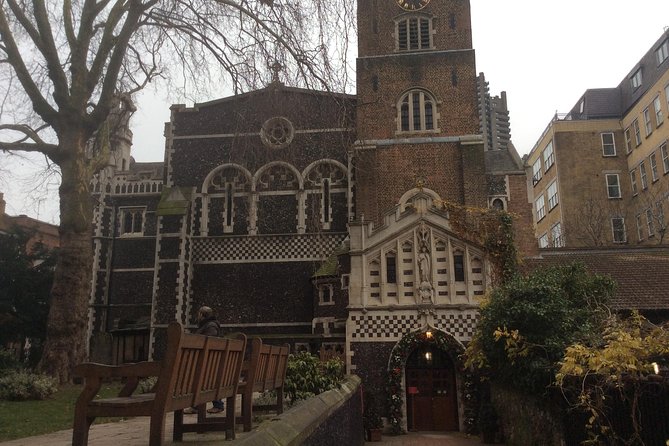
Threadneedle Street offers one of the tour’s more personal stories. John Wesley married Molly Vazeille, a widow, in 1751. Shortly before the wedding, he fell and badly sprained his foot.
He was carried to the Vazeille home and spent a week recovering there, cared for by Molly. It is a small episode, but it puts a human face on a figure often presented only as a tireless preacher.
The location is free to view and receives about ten minutes. Do not expect a preserved interior connected to the event. The value is in hearing the story while standing near the place, then linking it to the many other parts of Wesley’s life spread through the City.
St Paul’s Cathedral and Wesley’s preaching
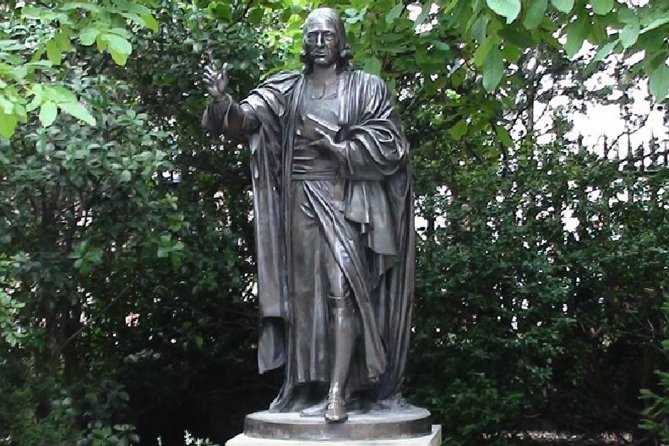
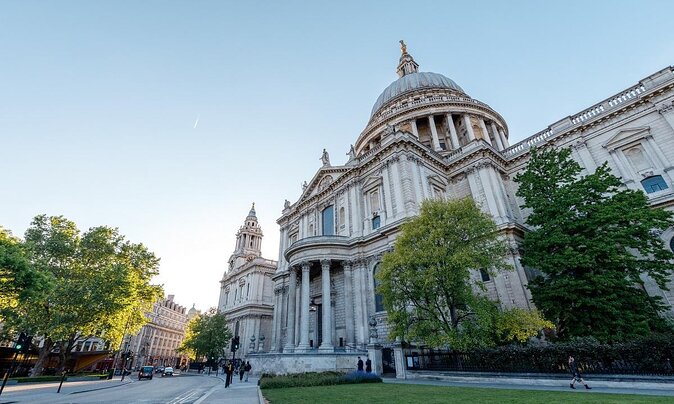
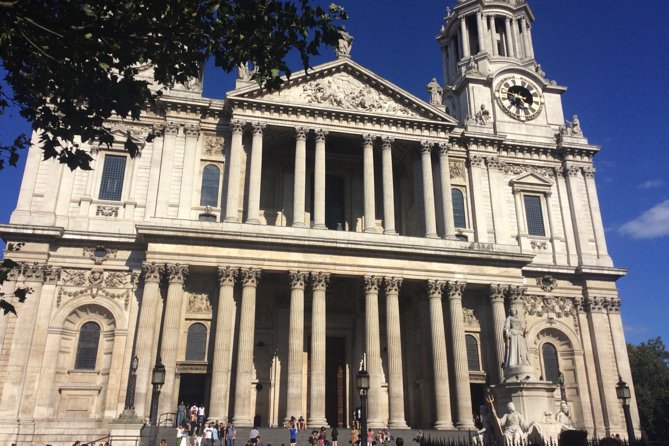
The route reaches St Paul’s Cathedral, where you see a statue of John Wesley in the cathedral gardens. The statue recalls occasions when Wesley preached at this major church.
Admission to the cathedral is not included, and the scheduled stop is about ten minutes. This is therefore an exterior visit rather than a cathedral tour. If entering St Paul’s is high on your list, plan a separate visit and budget for its admission.
The brief stop still has value. St Paul’s represents the established Anglican world in which Wesley worked, even as he faced restrictions at other churches. It also contrasts with the open-air preaching sites and smaller chapels later in the route.
Aldersgate, Little Britain, and the key moment of 1738
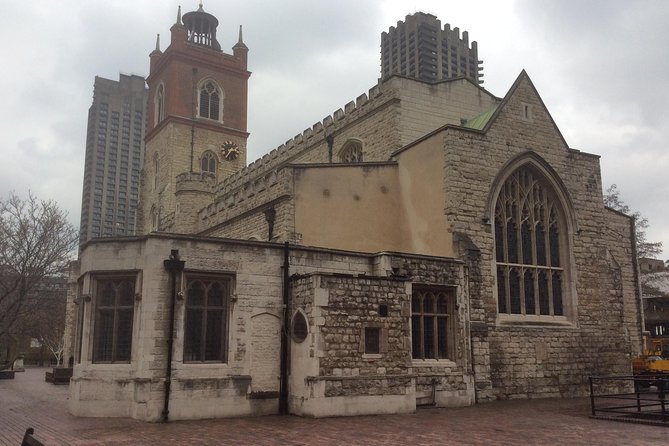
St Botolph’s Church at Aldersgate connects to Wesley’s father, Samuel, who served as curate there for a year. A window shows John Wesley field-preaching in Moorfields, and a plaque recalls the Wesleys’ evangelical work.
The route then reaches Little Britain and the site of John Bray’s house. John and Charles Wesley lodged there in 1738 and 1739. Charles experienced his conversion on May 21, 1738. John declared his own belief at 10 p.m. on May 24.
These are among the most important stops for understanding the spiritual turning point of Wesley’s life. The house is gone, and the visit is marked by a plaque, so you need to appreciate historical location more than preserved architecture. The guide’s explanation is what connects the modest street setting to the larger Methodist story.
Little Britain is also a good example of the tour’s approach. You are taken to a place that many people would pass without noticing. The setting is not presented as a grand monument. Its importance comes from the event that happened there.
Postman’s Park and the city’s less expected memorials
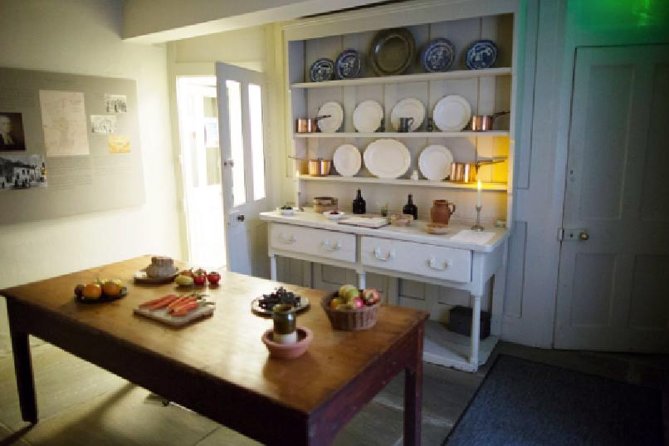
Postman’s Park is one of the route’s most appealing pauses. This small park contains a Victorian memorial to heroic self-sacrifice, honoring people who died while saving others.
The stop lasts only about five minutes, but you may want extra time if the memorial interests you. It is a quiet place and a welcome change from the hard streets of the City. The route does not treat London as only a collection of famous buildings. It also points out compact public spaces with their own strong stories.
The nearby William Wallace Memorial adds another sharp change of subject. This is the spot associated with the execution of the Scottish figure known through Braveheart. The memorial is free to view, and the stop takes about five minutes.
Medieval rebellion and St Bartholomew the Great
At the Great Rising of 1381 Memorial, you pass several reminders of London’s medieval conflicts, including the Peasants’ Revolt and a location where Anglicans were burned at the stake.
This section shows how many layers of conflict occupy a small part of London. Religious disputes, political rebellion, and public punishment all appear within the same walk. The guide can help you place these events in time, since they are separated by centuries.
Church of St Bartholomew the Great brings the focus back to Wesley. It was the last Anglican pulpit made available to him, and he continued preaching there after other London churches had refused him access.
Only five minutes is listed for this church, and admission is not included. You should think of it as a pointed historical stop, not a full church visit. If the church is open and you want to enter, check the admission arrangements before you go.
Roman walls, medieval ruins, and St Luke’s
At St Alphage London Wall, you see sections of the old Roman wall along with the remains of a hospital that is nearly 1,000 years old. This is where the tour’s wider London story becomes especially clear.
You are not just following Wesley’s route. You are also tracing the city’s older defenses and medieval religious institutions. Ten minutes gives you enough time to take in the remains and hear how this part of London changed over many centuries.
The route then passes St Luke’s, now home to the London Symphony Orchestra. The church was consecrated in 1733, and its parish included Wesley’s Foundery Society, whose members took communion there.
The church is not listed as an included interior visit, so expect to view it as part of the route. Its connection to the Foundery Society gives you another glimpse of early Methodism as an organized community, not only a series of outdoor sermons.
Bunhill Fields and Susanna Wesley’s grave
Bunhill Fields is one of the most important stops for anyone interested in the Wesley family. Susanna Wesley, John Wesley’s mother, was buried here after her death on July 30, 1742.
The burial ground is also associated with William Blake and Daniel Defoe. That combination makes it a rewarding stop even if your interest in Methodism is still developing. The setting brings together religious dissent, literature, and London’s long tradition of nonconformist burial grounds.
Admission is included, and about ten minutes is planned. As with several stops, the timing is enough for an introduction but not a long cemetery visit. If you enjoy old burial grounds, you may wish the walk offered more time here.
The Charterhouse and Wesley’s education
The Charterhouse links to Wesley’s early life. He attended Charterhouse School from 1714 to 1720, and the tour visits the ancient church on the site.
This stop helps complete the life story. You have seen Wesley as a preacher, husband, organizer, and religious leader. The Charterhouse reminds you that he first came through London as a student.
About 15 minutes is set aside, and admission is included. It is one of the longer stops, which gives the guide room to explain Wesley’s education and the older institution around it.
Timing, walking, and what the price covers
The tour costs $257.96 per person and lasts about three hours. That is a serious price for a walking tour, but it is a private activity, so the value depends heavily on your group size and interest in the subject.
For a group of several people, the private format can make the cost more reasonable than booking separate individual activities. You receive a dedicated guide, a route built around your interests, and help connecting places that would be hard to understand from a map alone. For one person or a couple with only a casual interest in Wesley, the price may feel high.
The walk includes entry to Wesley’s house, and several other sites list admission as included. St Paul’s Cathedral, Little Britain, St Bartholomew the Great, St Luke’s, and some other locations are viewed without included admission. Transport to and from the tour is not included.
Hotel pickup can be arranged at any Central London hotel, not only selected properties. The guide then travels with you by Tube to the starting point. The stated start time is 9:30 a.m., but a later start around 10:30 or 11 a.m. has been suggested to avoid rush hour. You can also meet at the starting point by taxi or Uber.
The route is near public transport, and most people can take part. Service animals are allowed. Since this is a walking tour with many outdoor stops, wear comfortable shoes and expect London weather to affect the experience.
Who should book this private London walk?
I would choose this tour if you have a real interest in John Wesley, Methodist history, Anglican history, or London’s lesser-known religious sites. It also suits visitors who prefer a personal guide to a large group tour and want to ask questions as they go.
It is a good choice for a family or church group, particularly if your party already knows something about Wesley. A 10-person group can take advantage of the private format, and the guide can help with Tube directions and the meeting point.
I would be more cautious if you want long interior visits, a relaxed pace, or a general overview of London’s top sights. Several stops last only five or ten minutes, and some are plaques or exterior locations. The tour rewards curiosity and context more than grand interiors.
The route was also designed around quiet places where social distancing is generally easier. Private groups can wear masks if they wish, and the guide can carry one. Current site access and opening hours may change, so confirm details before setting out.
Should you book it?
Book this walk if you want London away from the usual postcard route, with John Wesley as your guide through the city’s older layers. The best parts are the personal stories at Little Britain and Threadneedle Street, the family links at St Giles Cripplegate and Bunhill Fields, and the unexpected Roman and medieval remains along the way.
Skip it if your main goal is to enter St Paul’s Cathedral, spend a long time inside historic churches, or see London’s headline attractions. For the right audience, the private format and guide Stephen’s friendly, practical approach make the high price easier to justify. Free cancellation is available up to 24 hours before the start time, which gives you some flexibility while planning.
FAQ
How long does the John Wesley Methodist walking tour last?
The tour lasts approximately three hours, with an additional hour at the end for exploring the Museum of Methodism at Wesley’s Chapel or walking to the nearest Tube station.
Where does the tour start?
The stated meeting point is Panyer Alley, London EC2V 6AA. Pickup can also be arranged at any Central London hotel, followed by travel by Tube to the starting point.
What time does the tour begin?
The listed start time is 9:30 a.m. A later start around 10:30 or 11 a.m. may be suggested to avoid rush hour.
Is this a private tour?
Yes. Only your group participates, and the activity is offered in English.
Is transportation included?
Transport to and from the tour is not included. If hotel pickup is arranged, the guide can meet you at your hotel and travel with you by Tube to the start.
What is included in the price?
A donation for entry to John Wesley’s house is included. Some listed sites also include admission, while admission to St Paul’s Cathedral and several other locations is not included.
Just added in London
- The Beatles and a Secret pub★ 4.5 · 36 reviews
- The Beatles & Liverpool Magical Mystery Tour from London★ 4.5 · 80 reviews
- Airport Coach Service from Heathrow to Oxford★ 3.5 · 67 reviews
- The Beatles Magical History Black Taxi Tour London★ 5.0 · 51 reviews
- The Beatles London walking tour. From Abbey Road to the Roof Top★ 5.0 · 61 reviews
- Private The Beatles Taxi Tour in London★ 5.0 · 12 reviews
- The Beatles London Walk★ 4.5 · 120 reviews
- The Alfred Hitchcock London Walk with Sandra Shevey★ 5.0 · 15 reviews
Walking Tours, compared.
Oxford University Walking Tour With University Alumni Guide
Read our review →
Tour for Muggles The Ultimate Harry Potter Walking Tour in London
Read our review →
Cambridge University Walking Tour by Alumni™ Kings College Option
Read our review →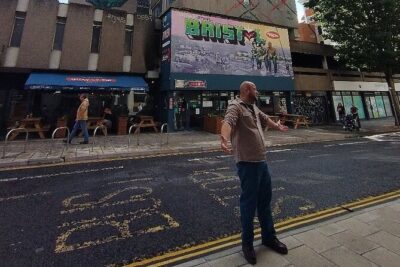
Blackbeard to Banksy – The Ultimate Walking Tour of Bristol
Read our review →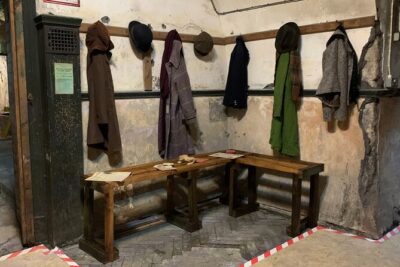
Air Raid Shelter + St. Nicholas Market Walking Tour
Read our review →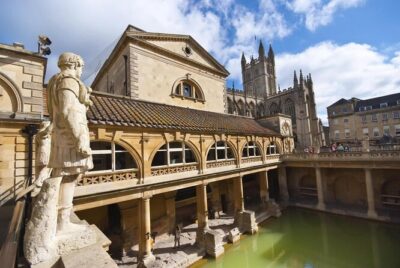
Walking Tour of Bath with Blue Badge Tourist Guide
Read our review →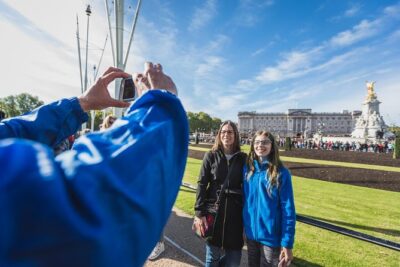
Changing of the Guard Guided Walking Tour in London
Read our review →Browse the lists this tour appears in