
Reviewed · JACK THE RIPPER TOURS
Jack the Ripper: Night Murder Mystery Walking Tour in London
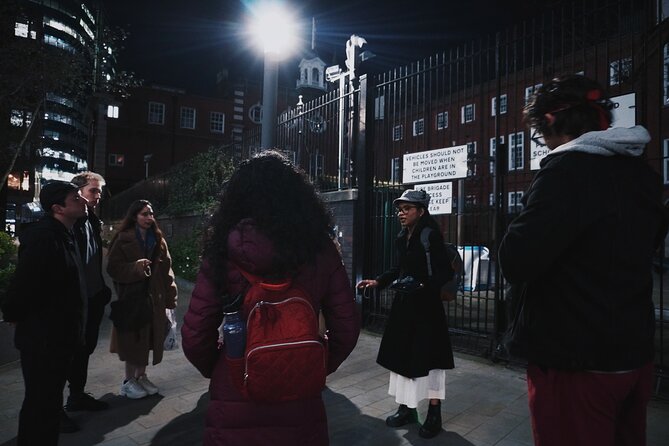
Jack the Ripper’s Whitechapel story works best after dark, when narrow lanes, old brickwork, and quiet corners give the subject the right mood. This 2.5-hour walking tour follows the case through the East End, linking crime scenes with the poverty and social failures that shaped Victorian London.
I like the chronological route, which helps you understand how the case unfolded rather than hearing a jumble of names and dates. I also like the attention given to the women who were killed, not just to the killer. The drawback is simple: you walk for most of the evening, often without a place to sit, and one review noted that it could be hard to hear when the guide looked away.
Key points at a glance
- Seven Whitechapel stops: See Brick Lane, Princelet Street, Puma Court, the Ten Bells, Gunthorpe Street, Goulston Street, and St Botolph without Aldgate.
- A chronological story: The route helps connect the murders, clues, police work, and competing theories.
- Victim-focused storytelling: The women’s lives and the conditions they faced receive more attention than they often do on Ripper tours.
- Nighttime atmosphere: A chilly or cloudy evening can make the setting feel especially powerful, though poor weather is worth preparing for.
- Small enough to follow: The group can reach up to 25 people, with guides expected to keep everyone together.
- Good value for walkers: At $22.93 per person, the tour offers 150 minutes of guiding for less than many London attractions.
Why Whitechapel works after dark
This is not a museum visit with glass cases and neat labels. It is a moving history lesson through streets that still make you think about distance, darkness, and vulnerability.
The tour begins near St Mary’s Whitechapel Church Memorial. From there, you walk through an East End that has changed greatly, but still contains narrow streets and older buildings that help you picture Victorian Whitechapel. The guide supplies the missing layers: overcrowded housing, poverty, street life, and the limited choices available to women living on the margins.
I like that the route does not treat Jack the Ripper as a comic-book villain. The strongest guides, including Tyson, Kory, Hadi, and Dougal, have been praised for explaining the case with care while adding broader London history. Hadi, in particular, was noted for handling the subject with respect and a light touch of humor, which matters when the material involves real deaths.
You should still know what you are booking. This is a murder tour. The subject is grim, and the stories may include disturbing details about violence and the victims’ final hours. The emphasis is historical rather than playful, but the tone can vary slightly with the guide.
More walking tours in London:
- Tour for Muggles The Ultimate Harry Potter Walking Tour in London
★ 5.0 · 4,684 reviews - London Jack The Ripper Guided Walking Tour
★ 5.0 · 3,131 reviews - Changing of the Guard Guided Walking Tour in London
★ 5.0 · 1,793 reviews
Brick Lane puts the murders in context
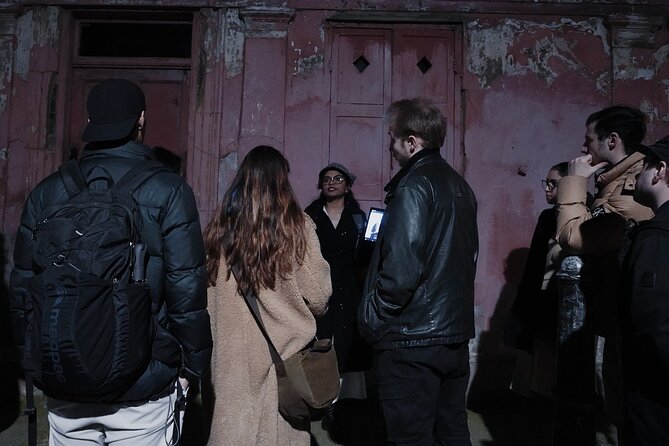
The first stop is Brick Lane, now known for food, shops, and street culture. Here, the focus turns to its Victorian past as part of a poor and overcrowded district.
This is an important opening because the murders did not happen in a vacuum. You hear about cramped living conditions, desperation, and the daily uncertainty faced by people with little money or protection. That background helps explain why some women were out late, why they might seek shelter or income in dangerous circumstances, and why policing was so difficult.
The stop lasts about 17 minutes, but the walk between locations is part of the lesson. You are not only collecting crime-scene facts. You are learning how the streets connected, how close certain locations were, and how quickly someone could move through the area.
Brick Lane is also a useful reminder that London’s neighborhoods change. The present-day setting may feel lively, but the tour asks you to picture a far harsher district beneath the modern surface.
Princelet Street and the lives behind the case
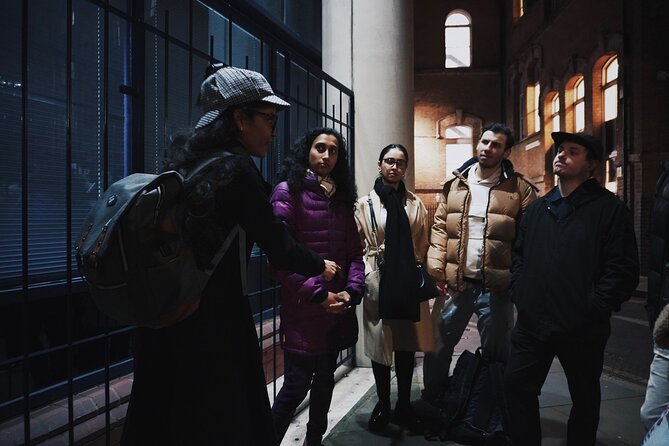
Princelet Street is quieter and narrower. The guide uses it to discuss the Ripper’s connection to the area and the living conditions of women such as Annie Chapman.
This is one of the places where the tour’s victim-focused approach matters most. Annie Chapman was not simply a name in a list. Her life, work, housing, and circumstances form part of the story. When a guide explains those details, the case becomes less about a famous unknown murderer and more about the people who were failed by their society.
The street itself helps create the mood. You may find the silence more affecting than a busy road or large square. At the same time, do not expect every building to be an untouched crime scene. The value comes from the guide’s explanation and the location’s relationship to the wider neighborhood.
Puma Court shows how quickly someone could vanish
Puma Court remains close to its nineteenth-century form, according to the tour description. It is one of the more atmospheric stops because it is narrow and enclosed, with the sort of layout that makes you think about how easily a person could disappear from view.
The guide discusses what the area may have meant in the period and how its physical shape affected movement and safety. This is where a good storyteller earns the price of the tour. You can look at a lane yourself, but you need someone to connect it to the people, fears, and police investigations of 1888.
Take care here and throughout the walk. You are moving through public streets, not a closed attraction. Stay with the group, listen for instructions, and keep your attention on the pavement as well as the story.
Other Ripper walks in London:
- London Jack the Ripper Guided Tour with Ripper-Vision
★ 4.5 · 4,840 reviews - Ultimate Jack the Ripper : Guided Tour of London
★ 5.0 · 1,495 reviews - The Original Jack the Ripper : Guided Tour
★ 5.0 · 1,264 reviews - London Jack The Ripper Small-Group Walking Tour
★ 5.0 · 1,013 reviews
The Ten Bells links pub history with victim stories
The Ten Bells is one of the best-known Ripper locations. Many of the victims are believed to have visited the pub shortly before their deaths, and its name is now closely tied to the case.
The tour stops outside to discuss the women’s final hours and the pub’s place in the story. You may not spend the main portion of the visit inside, so think of this as a historical pause rather than a pub stop with guaranteed seating or drinks.
The location has a useful tension. It is a functioning London pub in a real neighborhood, yet it carries a grim association that has lasted for generations. The guide’s job is to separate documented information from later storytelling and speculation. Strong guides do this by explaining what is known, what is disputed, and why certain theories continue to attract attention.
If you want a drink at the end, the description says the tour wraps up at the Ten Bells, while the meeting details list the endpoint near Mitre Square. Confirm the exact finish with the operator on the day, since the supplied details describe both locations.
Gunthorpe Street and the question of Martha Tabram
Gunthorpe Street is presented as the place where Martha Tabram was brutally murdered. Some Ripper specialists consider her a possible early victim, while others do not include her in the accepted list.
That uncertainty makes this stop useful. You see how the case is built from evidence, patterns, police records, and later interpretation. It is not a tidy puzzle with one answer. The guide explains the clues and the reasons some experts connect Tabram’s death to the later killings.
This is also where the interactive element becomes clearer. You are encouraged to examine the sequence of events and think through the evidence rather than simply receive a fixed answer. The tour may present theories about the killer’s identity, but you should expect debate instead of a confirmed solution.
Goulston Street and the disputed chalk message
Goulston Street is tied to one of the case’s most famous clues: a bloody piece of apron connected to Catherine Eddowes. Nearby, a message was written in chalk, creating arguments about its meaning and whether it had anything to do with the killer.
This stop gives the guide room to explain police decisions, public fear, and the way a small clue can grow into a major part of a mystery. The chalk message has encouraged conspiracy theories for decades, but the value of the stop is not in pretending that every theory is equally strong.
Pay attention to how your guide handles uncertainty. Guides such as Kory and Korhan have been praised for bringing in newspaper reports, dates, photographs, and neighborhood history. That kind of detail helps you judge the evidence for yourself.
The area can also be busy, and several tour groups may be nearby. One guide, Dougal, was praised for positioning the group so everyone could see and hear. That is a practical skill in a popular nighttime tour district.
St Botolph without Aldgate shifts the focus to society
At St Botolph without Aldgate, the story broadens beyond individual crime scenes. The church was associated with women seeking refuge, and the guide uses the stop to discuss the lack of support available to vulnerable women.
This is one of the tour’s most worthwhile sections because it asks a larger question: why were these women so exposed to danger? The answer involves poverty, unstable housing, limited work, social judgment, and weak systems of care.
The church also offers a pause in the route. You remain outdoors, but the stop allows the group to reflect rather than rush from one violent detail to the next. The best guides keep the victims in view as people, not just as evidence in a famous case.
Mitre Square brings the route to a serious close
The meeting information lists Mitre Square as the endpoint. The final section of the route connects the area with the murder of Catherine Eddowes and the case’s wider sequence of events.
Ending here gives the walk a clear sense of progression. You have moved from the social setting of Whitechapel through individual locations and clues, then reached a place tied to one of the central murders. The chronological structure is especially helpful if you know only the broad outline of the story.
The route is described as ending where Mary Jane Kelly met her end, but the location details also identify Mitre Square as the final meeting point. Because those details do not fully match, I would confirm the exact endpoint before booking if your onward plans depend on it.
Guides make the largest difference
The subject matter is fixed, but the quality of the evening depends heavily on the guide’s delivery. The guides associated with strong feedback include Tyson, Kory or Korey, Dougal or Doogle, Hadi, Anahita, Lisa, Kody, Korhan, and Korhn Yasin. Your guide will vary, so you cannot book a particular storytelling style unless the operator confirms it.
The most praised traits are clear narration, strong command of names and dates, good pacing, and respect for the victims. Several guides also stayed afterward to discuss theories, which is useful if you want to ask about suspects and competing explanations.
One practical weakness is audibility. The group can include up to 25 people, and the streets may be noisy. Stay close to the guide and politely ask for repetition if you miss a key point. If the guide faces away while speaking, some commentary may be lost.
The tour has also handled delays well. One account praised a guide for waiting briefly when Tube closures made arrivals difficult. That does not guarantee a delayed start, but it suggests that keeping the group together is taken seriously.
Is $22.93 good value for London?
At $22.93 per person, this is a fair price for a 150-minute guided walk, especially in London. You are paying for local research, route planning, storytelling, and access to a sequence of locations that would be hard to connect on your own.
The value is strongest if you enjoy history, true crime, or atmospheric neighborhood walks. You receive more than a short photo stop at the Ten Bells. The route includes seven locations and a social history lesson about Victorian Whitechapel.
The price is less attractive if you dislike walking, need frequent indoor breaks, or want a theatrical show with sets and actors. This is an outdoor tour with a serious historical focus. Bring clothing suited to the weather, since chilly nights and heavy rain can make the experience less comfortable.
Group discounts may be available, and the mobile ticket makes entry simple. Free cancellation is allowed up to 24 hours before the start time for a full refund. Within 24 hours, cancellation or changes are not accepted for a refund.
Who should book this Whitechapel walk?
I would choose this tour if you want to see a less polished side of London while learning how the Ripper case developed. It suits adults and older children who can handle grim subject matter and walk for most of an evening.
History fans will appreciate the social context. Mystery fans will enjoy the clues and theories. True crime enthusiasts will value the chronological structure and the chance to compare evidence at the actual locations.
I would be more cautious if you want a light evening activity. The murders are central to the story, and the route may feel emotionally heavy. It is also not ideal if sitting is important, since there are few places to rest before the end.
FAQ
How long is the Jack the Ripper walking tour?
The tour lasts approximately 2 hours and 30 minutes.
How much does the tour cost?
The listed price is $22.93 per person. Group discounts may be available.
Where does the tour begin?
The stated meeting point is St Marys Whitechapel Church Memorial on Unnamed Road, London E1 1FE.
Where does the tour end?
The meeting details list Mitre Square, London EC3A 5DE, as the endpoint. The description also refers to the Ten Bells, so confirm the exact finish with the operator.
Is the tour offered in English?
Yes. The tour is offered in English.
Can I cancel for a full refund?
Yes, if you cancel at least 24 hours before the local start time. Cancellations or changes made within 24 hours are not refunded.
Should you book it?
Book this walk if you want a well-paced nighttime route through Whitechapel, with serious attention to the victims, Victorian poverty, and the evidence behind the famous theories. At $22.93, it offers solid value for a long guided walk.
Skip it if you want minimal walking, indoor comfort, or a purely theatrical performance. For everyone else, bring comfortable shoes, prepare for weather, stay near the guide, and expect the evening to leave you thinking less about a legendary killer and more about the women and the city around them.
Just added in London
- The Beatles and a Secret pub★ 4.5 · 36 reviews
- The Beatles & Liverpool Magical Mystery Tour from London★ 4.5 · 80 reviews
- Airport Coach Service from Heathrow to Oxford★ 3.5 · 67 reviews
- The Beatles Magical History Black Taxi Tour London★ 5.0 · 51 reviews
- The Beatles London walking tour. From Abbey Road to the Roof Top★ 5.0 · 61 reviews
- Private The Beatles Taxi Tour in London★ 5.0 · 12 reviews
- The Beatles London Walk★ 4.5 · 120 reviews
- Dinner and Jazz Cruise on the River Thames★ 4.0 · 140 reviews
Jack the Ripper Tours, compared.
London Jack the Ripper Guided Tour with Ripper-Vision
Read our review →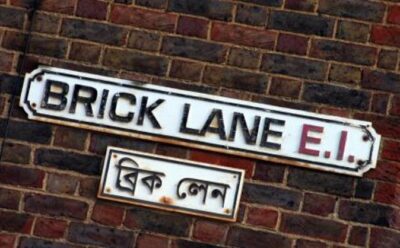
Ultimate Jack the Ripper : Guided Tour of London
Read our review →

London Jack The Ripper Small-Group Walking Tour
Read our review →

The Original Jack the Ripper Coach Tour of Haunted London
Read our review →
Jack the Ripper Tour with ‘Ripper-Vision’ in London- Afternoon
Read our review →Browse the lists this tour appears in