
Reviewed · WALKING TOURS
Guided Walking Tour of Bristol Old City and Harbour
Bristol’s story is written across its streets, docks, churches, bridges, and walls. This small-group walking tour links the old harbour with the medieval city, then adds stories about merchants, artists, politicians, sailors, and the people who shaped modern Bristol. Guide Mike uses photos and drawings to show how the city changed over time.
I like the audio receivers, which let you hear clearly beside traffic and busy streets, and I like the wide sweep of the route. You see far more than a single old-town lane, from Bristol Cathedral and Pero’s Bridge to Queen Square, Castle Park, and Banksy-related street art. The main caution is pace: this is a substantial walk, and comfortable shoes are essential.
Key points to know before you book
- A broad Bristol introduction: The route covers the cathedral, harbour, Old City, Queen Square, King Street, and several historic docks.
- Mike’s personal guiding style: Expect local stories, visual aids, questions, and practical suggestions for the rest of your stay.
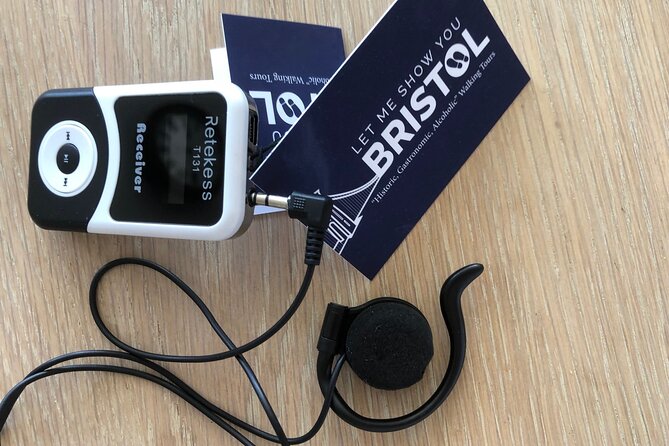
- Clear commentary: Each person receives an audio receiver, a real help in noisy parts of central Bristol.
- A small group: The maximum is eight people, so you can ask questions without shouting across a crowd.
- A fair price for a long city orientation: At $29.86, the tour gives you about two hours and 15 minutes of guided walking, with no admissions needed.
- Plan for the weather: The tour runs outdoors, requires good weather, and returns to the Bristol Marriott Royal Hotel.
Why this route works for a first look at Bristol
The clever part of this walk is its shape. You begin at College Green, near the Bristol Marriott Royal Hotel, then move toward the harbour before turning inland through the old commercial center. That gives you a useful mental map instead of a string of unrelated sights.
Bristol can feel scattered at first. The docks, cathedral, old city, Queen Square, and Redcliffe area each have their own character. Mike connects them with stories about trade, religion, architecture, slavery, street art, and civic life. You finish knowing not only what you saw, but also how the pieces fit together.
The advertised start time is 2:00 pm. The tour lasts about two hours and 15 minutes, although Mike may spend longer when the group is enjoying the discussion or needs more time at a stop. That flexibility is useful, but do not book a tight dinner reservation immediately after the scheduled finish.
More walking tours in England:
- Blackbeard to Banksy – The Ultimate Walking Tour of Bristol
★ 5.0 · 1,961 reviews - Air Raid Shelter + St. Nicholas Market Walking Tour
★ 5.0 · 1,950 reviews - Ghosts, Ghouls & Gallows :The Original Bristol Ghost Walk
★ 5.0 · 262 reviews
Bristol Cathedral and the first city stories
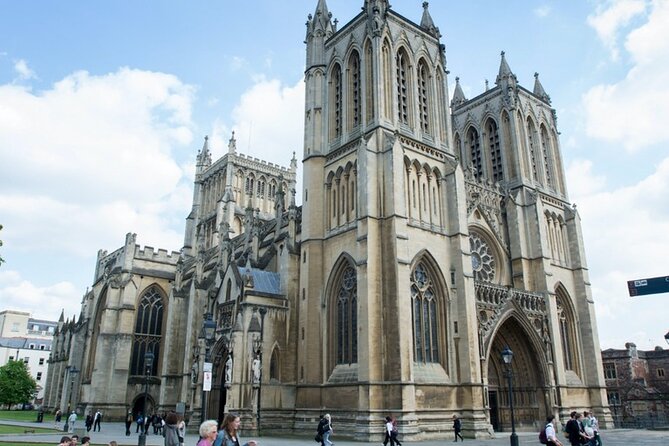
The walk opens at Bristol Cathedral, one of the city’s most recognizable buildings. You have time to admire the cathedral from outside while Mike sets the scene for Bristol’s past. This opening section also takes in College Green, St Mark’s, the Council House, Park Street, and nearby buildings.
The stop includes the Well Hung Lover, one of the street-art works associated with Banksy. Bristol’s street art is not treated as a separate art lecture. Instead, it forms part of the city’s modern story, alongside older buildings and civic landmarks.
That mix is one of the tour’s strengths. You can move from medieval and religious Bristol to contemporary art within a few minutes. Mike also brings photos and drawings to help explain how streets and buildings looked in earlier periods. For you, this makes the city’s changes easier to picture than a list of dates would.
Canon’s Marsh and the working harbour
From the cathedral area, the route heads toward Canon’s Marsh. Here you see Oporto Quay, Limekiln Dock, cranes, and shipping-related remains. This section helps explain why Bristol grew around water and how the harbour shaped work, trade, and daily life.
The docks are not simply scenic backdrops. Mike points out the practical features that made the port function, including dock basins and industrial structures. The result is a more useful understanding of Bristol as a working port, not just a city with attractive waterfront views.
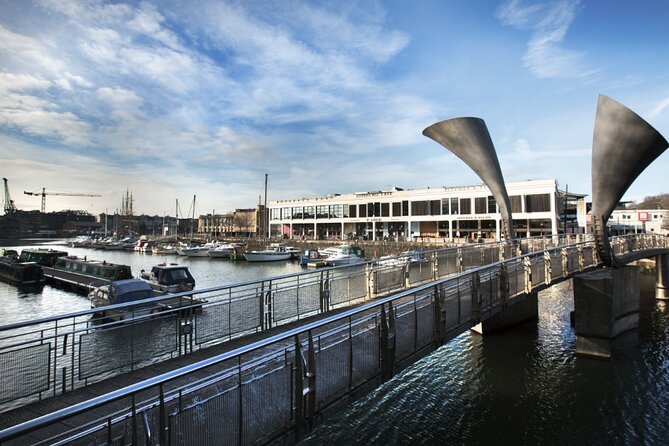
The walk continues into Bristol City Docks and toward a medieval trench. You cross Pero’s Bridge on the way to the Arnolfini. The route brings together old defensive features, dock redevelopment, and modern cultural spaces.
Pero’s Bridge also gives the tour a chance to address Bristol’s connection to the transatlantic slave trade. Later, at Bathurst Basin, the route returns to this difficult part of the city’s past through the homes of slave captains and other historic buildings. You should expect the subject to be part of the wider story rather than a separate museum-style presentation.
Prince Street Bridge and the harbor views
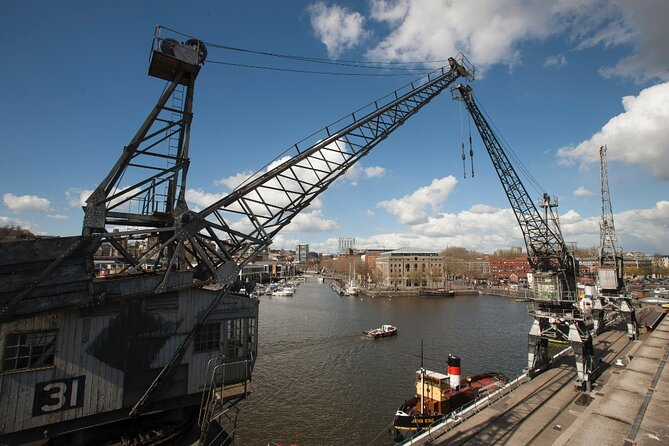
Prince Street Bridge gives you a different view of the water. From the bridge, the tour takes in the M Shed, the Matthew, Container Village, and the remains of the Old Prison.
This is a good point to slow down and look around. The harbour has layers: historic ships, museum buildings, working-port reminders, newer uses, and traces of older structures. You get a sense of how Bristol has repeatedly reused its waterfront.
The bridge section also adds variety to the walk. Much of the first part moves along the water, but crossing the bridge changes your view and helps you understand the shape of the docks. If you enjoy taking photographs, this is one of the more useful parts of the route, although the tour remains focused on explanation rather than long photo breaks.
Same base, a different kind of day:
- Stonehenge, Windsor Castle, and Bath from London
★ 4.5 · 18,662 reviews - London Big Bus Hop-On Hop-Off Tour with Optional River Cruise
★ 3.5 · 10,803 reviews - London Small Group Tour of Historical Pubs
★ 5.0 · 10,422 reviews - Beatles Magical Mystery Tour
★ 5.0 · 9,266 reviews
Bathurst Basin, Redcliffe, and difficult stories
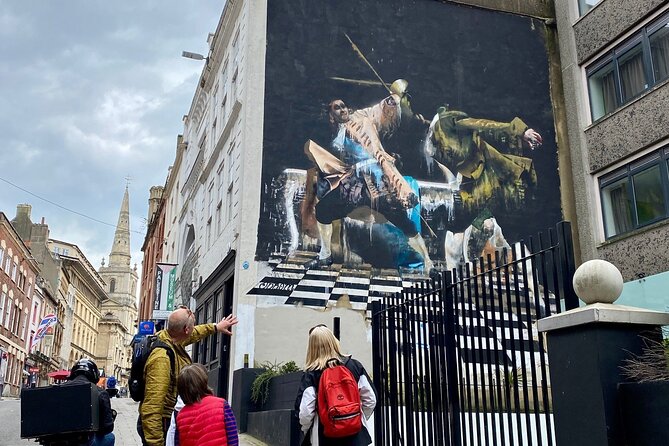
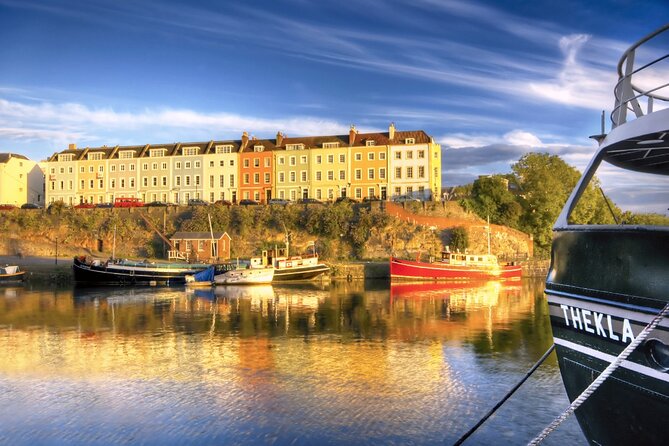
At Bathurst Basin, Mike points out the Old Mill Pond, Guinea Street, the house featured in A House Through Time, homes linked to slave captains, and Redcliffe Church. This is one of the most layered parts of the route because architecture and social history sit close together.
You will hear about prominent Bristol residents and the money behind some of the city’s grander buildings. The stories are not limited to famous names. They also show how commerce, shipping, religion, and private wealth affected the shape of the city.
Redcliffe Church adds another historic landmark to the walk, but the wider value is the connection between the buildings. You begin to see that Bristol’s handsome streets were not created by architecture alone. They reflect trade, labor, faith, and changing ideas about the city’s past.
This portion can feel information-heavy. Mike packs a lot into the route, so you should expect dates, names, and local details. The audio receiver helps, especially if traffic or other groups are nearby.
Queen Square and Bristol’s Georgian heart
The route works around the docks to Queen Square, where you see the King William statue, the American Consulate, and the Spy Glass Inn, associated with Treasure Island.
Queen Square offers a change in mood and setting. After the industrial character of the harbour, the broad square gives you a more formal view of Bristol. Mike uses it to explain people and events connected with the city, while the nearby pub reference adds a touch of literary flavor.
This is also a useful location for understanding how the old dock area and central city meet. You are not being moved from one isolated attraction to another. The walk keeps showing how streets, water, public buildings, and commercial areas overlap.
Bristol Old Vic, King Street, and Welsh Back
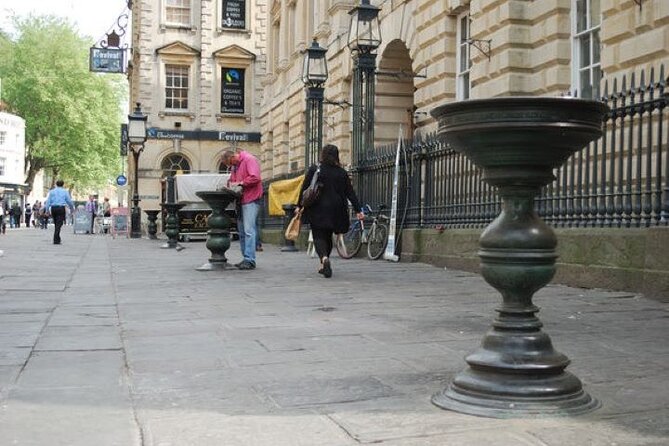
Next comes the Bristol Old Vic, with time to see King Street and Welsh Back. King Street is one of the most atmospheric sections of the walk, and it helps you picture Bristol as a place of theaters, taverns, trade, and public life.
The Old Vic gives the route a cultural thread. Bristol’s story is not only about ships and merchants. It also includes performance, entertainment, and the institutions that helped shape the city’s identity.
Welsh Back brings you near another historic waterside street. By this stage, you have seen enough of the harbour to understand why the route keeps returning to it. Water is the connecting feature between many parts of Bristol’s past.
Baldwin Street and the medieval Old City
At Baldwin Street, the walk turns toward the origins of Bristol as a Saxon settlement. From here, you enter the Old City and see churches, law courts, merchants’ trading areas, the Corn Exchange, and the Nails and guild meeting places.
This is where the tour becomes particularly useful for first-time visitors. Mike explains how the old commercial center worked, rather than simply pointing out attractive façades. You get a sense of where deals were made, where traders gathered, and how civic power operated.
The Corn Exchange and Nails are important because they make Bristol’s trading past more concrete. Instead of hearing only that Bristol was prosperous, you see the places tied to buying, selling, and settling business.
Castle Park adds another change of scenery before the walk continues through the Old City. The route covers a large area, so you should not expect a slow, highly detailed stop at every building. The benefit is breadth. You see the layout and can return later to places that catch your eye.
St John on the Wall and the surviving city gate
St John on the Wall provides one of the most distinctive moments on the route. You walk through one of the remaining old city gates and see the conduit and nearby street art.
This short passage makes the medieval city feel physical. A surviving gate is easier to understand when you actually pass through it, rather than view it from a distance. The nearby street art again links old Bristol with the present day.
I like that the tour does not treat the Old City as a frozen historic zone. Churches, law courts, trading spaces, gates, conduits, and murals all belong to the same walk. You get a city that has changed repeatedly, not a polished display of one period.
Edward Colston, the cenotaph, and the return
The final section covers the site associated with Edward Colston, the cenotaph, and the route back to the Marriott. Colston’s name is central to modern discussions of Bristol, public memory, and the city’s links to slavery.
This ending gives the walk a serious modern edge. Earlier stops introduce trade and slave-owning wealth through buildings and streets. The final discussion brings those questions into the civic center, where the city has had to reconsider how it presents its past.
The tour ends where it began, at the Bristol Marriott Royal Hotel. That makes the experience easy to fit into a first afternoon in Bristol, and you can use the route afterward to decide which places deserve more time.
The audio system and group size matter
The maximum group size is eight people. That is small enough for a more personal exchange, and it gives you a realistic chance to ask Mike about a building, date, or local character.
The audio receiver is one of the most practical features. Bristol’s central streets can be noisy, and a guide’s voice can disappear quickly when a group spreads out. With the receiver, you can keep listening while walking without standing shoulder to shoulder around Mike.
The equipment also supports Mike’s pace. He can keep the group moving while continuing to explain the buildings and street corners along the way. Bring water, wear shoes you can comfortably walk in, and dress for the weather. There are no admission charges during the route, but coffee and tea are not included.
Is $29.86 good value?
At $29.86 per person, I consider this a solid price for a guided introduction to central Bristol. You get roughly two hours and 15 minutes, a route covering both the harbour and Old City, an audio receiver, and a group capped at eight.
The value is strongest if you are new to Bristol or have limited time. A guide helps you find places you could easily pass without understanding, such as the Nails, medieval city gate, trading areas, and streets tied to Bristol’s port economy.
The tour is less useful if you want long interior visits or plenty of free time at each sight. The route is primarily outdoors, and the many stops are viewing and explanation points rather than extended admissions. You are paying for local context, orientation, and storytelling.
Who should book this walk?
I would choose this tour for a first afternoon in Bristol, especially if you want to understand the city before exploring on your own. It also suits repeat visitors who know the main center but want more background on the people, trade, architecture, and street art behind it.
It is a good fit for history fans, architecture fans, and anyone interested in Banksy and Bristol’s wider art scene. Mike can answer questions and adjust some of the discussion to the group’s interests, including street art.
You should think twice if you dislike steady walking or prefer a very slow photography tour. The route covers a lot of ground, and one section of feedback describes it as fast-paced, while other experiences found the pace relaxed. The safest assumption is a steady walk with regular stops, not a stroll where you barely move.
Should you book the Bristol Old City and Harbour tour?
Book it if you want a clear, wide-ranging introduction to Bristol and like hearing local stories from a guide who uses visual material and an audio system. The combination of harbour, Old City, Banksy-related art, medieval remains, and difficult social history gives you a fuller picture than a simple landmark walk.
At $29.86, it is especially good value for a small group and a route of this length. Just allow enough time, wear proper shoes, bring water, and remember that the tour depends on good weather. If those conditions suit you, this is a practical way to get your bearings and find places to revisit during your stay.
FAQ
Where does the tour start?
The tour starts at the Bristol Marriott Royal Hotel on College Green, Bristol BS1 5TA.
What time does the walking tour begin?
The stated start time is 2:00 pm.
How long does the tour last?
The planned duration is about two hours and 15 minutes. It may run longer when the group spends extra time on discussion or sightseeing.
Is the tour offered in English?
Yes. The tour is offered in English.
How many people can join the tour?
The maximum group size is eight travelers.
What happens if the weather is poor?
The experience requires good weather. If it is canceled because of poor weather, you will be offered another date or a full refund. You can also cancel for a full refund up to 24 hours before the start time.
Just added in England
- Exceptional Bath tour guide making your visit splendidly memorable.★ 4.5 · 69 reviews
- Full-Day Private Tour of Stonehenge and Bath with Pickup★ 5.0 · 6 reviews
- One Way or Round Trip Private Transfer: Heathrow Airport to Bath★ 5.0 · 3 reviews
- Quintessential Cotswolds Half-Day tour from Bath (for 2-8 guests)★ 5.0 · 27 reviews
- Stonehenge Half-Day luxury guided tour from Bath for 2-8★ 5.0 · 15 reviews
- Private Guided Tour of Jane Austen’s Bath★ 5.0 · 7 reviews
- British Wine and Cheese Tasting Experience in City of Bath★ 5.0 · 18 reviews
- Cotswold Village Private Day Trip from Bath★ 5.0 · 24 reviews
Walking Tours, compared.
Oxford University Walking Tour With University Alumni Guide
Read our review →
Tour for Muggles The Ultimate Harry Potter Walking Tour in London
Read our review →
Cambridge University Walking Tour by Alumni™ Kings College Option
Read our review →
Blackbeard to Banksy – The Ultimate Walking Tour of Bristol
Read our review →
Air Raid Shelter + St. Nicholas Market Walking Tour
Read our review →
Walking Tour of Bath with Blue Badge Tourist Guide
Read our review →
Changing of the Guard Guided Walking Tour in London
Read our review →Browse the lists this tour appears in