
Reviewed · WALKING TOURS
Booze, Brothels & The Bard: A Walking Tour of London’s Bawdy Borough
Southwark’s old borough is where London’s respectable center met its rougher edge. This two-hour walking tour links prisons, theatres, beer houses, brothels, medieval ruins, and literary landmarks into one lively story. You’ll hear about Shakespeare, Dickens, and the people who lived outside polite society.
I like the small maximum of 15 people, which gives the guide room to answer questions. I also like the mix of major sights and lesser-known places, from Crossbones Graveyard to the Hop Exchange. The main drawback is the brisk pace. Each stop lasts about five minutes, so you get an excellent introduction, but not a full visit to every site.
Key points to know before booking
- Southwark’s bawdy past: Learn how prisons, theatres, beer trade, and entertainment shaped this part of London.
- Eleven stops in two hours: The route covers major landmarks quickly, with the most time spent walking and listening.
- Strong literary connection: Shakespeare’s Globe, Dickens, Southwark Cathedral, and old coaching inns all fit into the story.
- Guide Tom’s storytelling: Tom is praised for clear explanations, enthusiasm, and colorful accounts of local characters.
- Small English-speaking group: The maximum group size is 15, making personal attention more likely.
- Best for curious walkers: You should enjoy history, urban walking, and stories about London’s less polished past.
Why Southwark makes such a good history walk
For centuries, Southwark sat just outside the City of London’s strict rules. That made it a useful place for activities that the city preferred to control or keep at arm’s length. The borough had prisons, inns, theatres, taverns, food sellers, and places of entertainment.
That mix gives this walk its character. You are not simply moving from one famous monument to another. You are following the changing life of a district where poor people, merchants, actors, prisoners, pilgrims, and visitors all crossed paths.
The route begins on Borough High Street and ends at Shakespeare’s Globe on New Globe Walk. Along the way, the guide connects physical remains with the people and institutions that once made Southwark notorious. I like this approach because it helps you read the streets instead of treating each sight as an isolated photo stop.
The tone is historical, but not solemn. The title signals the subject clearly: expect stories about drinking, prisons, sex work, theatre, disease, punishment, and the people pushed to the edge of society. This is not the right tour if you want only royal palaces and polished monuments.
More walking tours in London:
- Tour for Muggles The Ultimate Harry Potter Walking Tour in London
★ 5.0 · 4,684 reviews - London Jack The Ripper Guided Walking Tour
★ 5.0 · 3,131 reviews - Changing of the Guard Guided Walking Tour in London
★ 5.0 · 1,793 reviews
Marshalsea Prison and Crossbones Graveyard
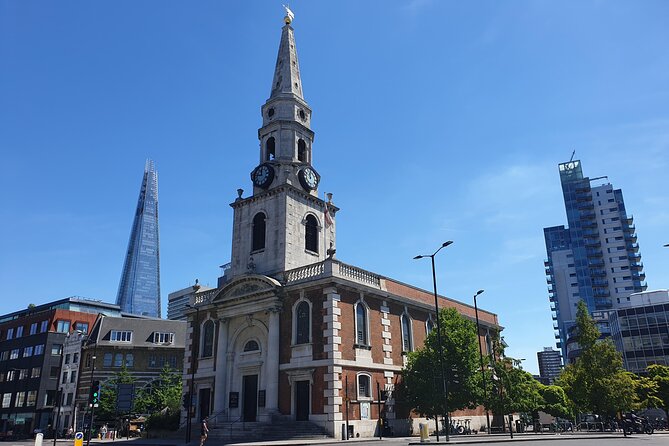
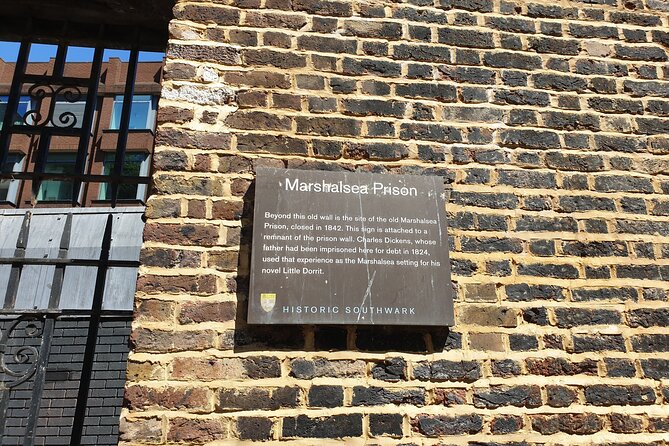
The first stop is St George the Martyr, where the only remaining part of Marshalsea Prison can be seen. The prison held debtors, and its name is closely tied to the harsh realities of imprisonment in old London.
You should not expect a full prison visit here. The stop lasts about five minutes, so the value comes from the guide’s explanation and the visible remnant. That short pause sets the mood for the rest of the walk by showing how much of Southwark’s past survives in fragments.
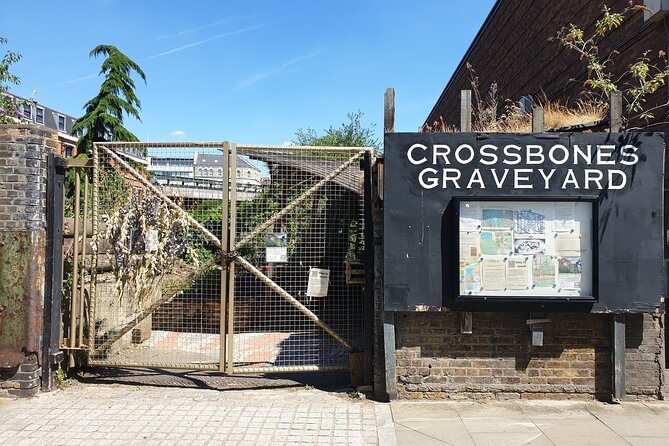
Next comes Crossbones Graveyard and Garden of Remembrance. This was the final resting place for thousands of Southwark’s outcast dead. The site offers a quieter counterpoint to the louder stories about drinking, theatre, and vice.
I find this pairing especially effective. Marshalsea shows how society punished people during life. Crossbones points to those who were denied full respect in death. Together, the stops give the tour some emotional weight without losing its brisk pace.
The five-minute timing matters here. You will hear the essential context, but you may want to return later if a particular site catches your attention.
Beer, coaching inns, and the old Southwark road
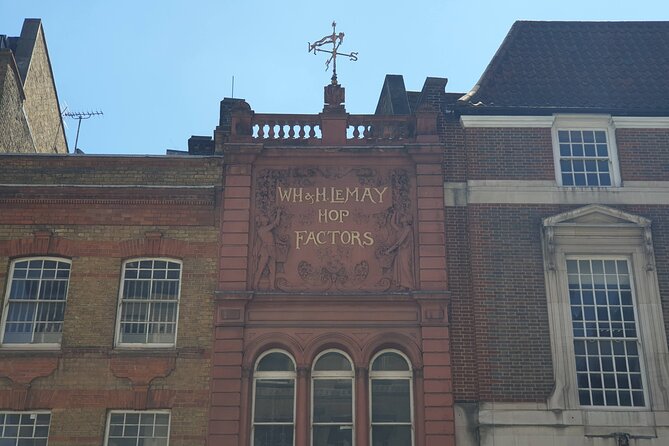
The Hop Exchange recalls Southwark’s beer trade. It is described as the largest surviving reminder of that trade, making it a useful stop for understanding how drink shaped the borough’s economy and daily life.
This is one of the tour’s more unusual subjects. Many London walks focus on kings, churches, and grand buildings. Here, the story includes the commercial world that supplied beer to a growing city. The guide uses places like the Hop Exchange to show how ordinary trades helped form London.
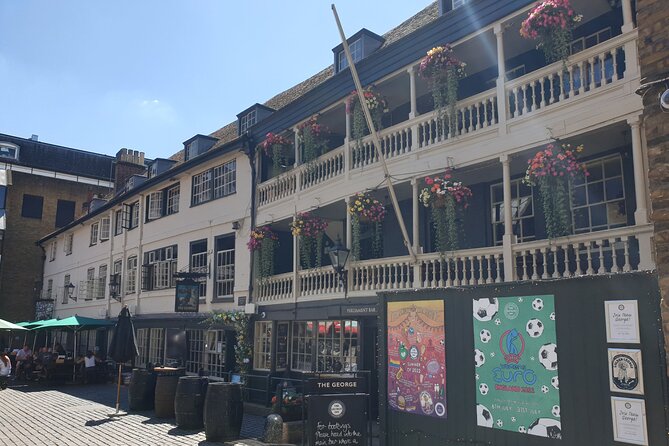
The George comes next. It is London’s last surviving galleried coaching inn, and its galleries give you a strong sense of how an old inn was arranged around a central courtyard.
The George also connects to the literary side of the walk. Coaching inns were places where people arrived, departed, ate, drank, exchanged news, and waited for transport. They were natural settings for writers and characters in old London stories.
Because each stop is short, you are unlikely to study the building in detail. Still, the sequence works well. After hearing about beer and trade, you see the kind of inn that served people moving through the borough. The walk keeps showing you how entertainment and commerce depended on one another.
The Old Operating Theatre and London’s medical past
The Old Operating Theatre Museum and Herb Garret is described as Europe’s oldest surviving operating theatre. It introduces a very different side of Southwark, one tied to medicine, surgery, and the experience of patients before modern healthcare.
This stop broadens the tour beyond its bawdy theme. Southwark was not only a place of pubs and theatres. It was also home to institutions where people faced illness, injury, and painful medical treatment.
The five-minute schedule means you should treat this as an introduction rather than a museum visit. The itinerary includes the museum as a stop, but it does not promise an extended interior tour. If you are especially interested in medical history, note the name and consider returning separately if time allows.
That is a useful pattern for the whole experience. The guide gives you a strong map of Southwark’s past. You can then decide which places deserve a longer return visit.
Same base, a different kind of day:
- Stonehenge, Windsor Castle, and Bath from London
★ 4.5 · 18,662 reviews - London Big Bus Hop-On Hop-Off Tour with Optional River Cruise
★ 3.5 · 10,803 reviews - London Small Group Tour of Historical Pubs
★ 5.0 · 10,422 reviews - Stonehenge, Windsor Castle and Bath with Pub Lunch in Lacock
★ 4.5 · 7,402 reviews
London Bridge and Southwark Cathedral
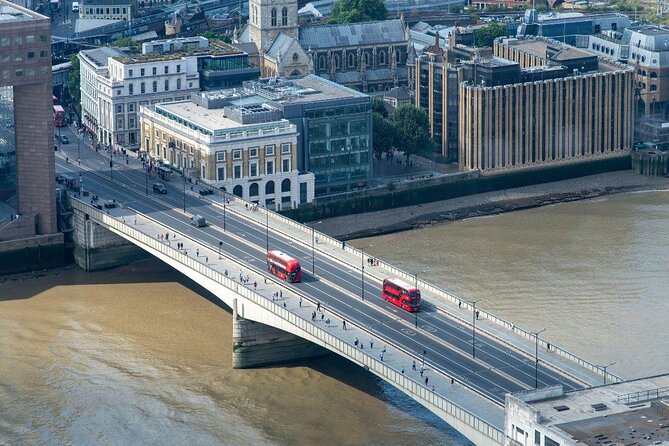
London Bridge is the next landmark. It is one of London’s best-known sights, but on this tour it is more than a photo opportunity. The bridge helps explain why Southwark developed as a gateway between the City and the southern side of the Thames.
The guide’s job here is to connect the bridge with the borough’s movement of people, goods, and ideas. That context makes the later stops feel less random. Southwark’s inns, markets, prisons, and theatres all benefited from the steady flow of people crossing the river.
Southwark Cathedral follows. It is described as London’s oldest surviving Gothic church, giving the tour a major religious landmark amid its stories of vice and public entertainment.
That contrast is one of the walk’s strengths. The cathedral represents an older, more formal side of the borough, while the nearby prison and theatre stories show how varied local life could be. You get a better sense of Southwark when both sides appear in the same walk.
Again, the stop is listed at about five minutes. I would enjoy having more time at the cathedral, but the schedule is designed to give you broad coverage rather than detailed interior visits.
Borough Market and the food of Southwark
Borough Market is described as a one-thousand-year-old food market. It is one of the most appealing stops because it remains tied to a basic part of city life: feeding people.
The market also helps you picture Southwark as a working district. Food, drink, transport, lodging, and entertainment all supported one another. A person arriving over London Bridge might eat at the market, stay at an inn, see a play, or face trouble with the law.
Do not expect a dedicated food tour. The walk includes the market as one of several historical stops, and the scheduled time is about five minutes. If you want to browse stalls or eat, plan to return after the walk.
This is one of the clearest examples of why the tour offers value beyond a list of famous sights. You are given a framework for understanding the area. Afterward, Borough Market becomes more than a convenient place for lunch.
Winchester Palace and the Clink Prison
The remains of Winchester Palace reveal one of the most prestigious homes in medieval England. Its ruins are a reminder that Southwark was not simply a poor or disreputable quarter. Important religious and political figures also had a presence here.
I like the way this stop complicates the usual picture of old Southwark. The borough contained power and poverty, sacred places and rough entertainment, wealth and punishment. The remains of Winchester Palace make that contrast visible.
The Clink Prison Museum marks the site of the notorious Clink Prison. The name has entered the English language, and the location gives the guide another chance to explain how punishment worked in old London.
The stop is particularly useful for first-time visitors because it connects a familiar phrase with a real place. Still, the five-minute visit is short. The route takes you to the site, but it should not be confused with a long museum tour. If you want to examine prison history in detail, you may need a separate visit.
Together, Winchester Palace and the Clink create one of the strongest contrasts on the route. One reflects status and authority. The other points to confinement and disgrace. Southwark’s story needs both.
Shakespeare’s Globe and the literary thread
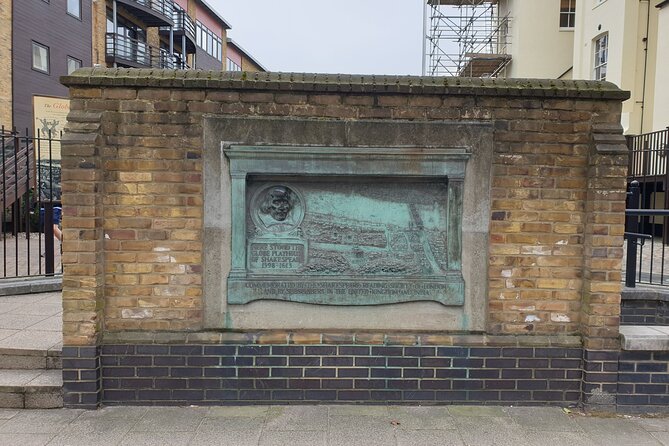
The final stop is Shakespeare’s Globe Theatre, a reconstruction of the theatre associated with Shakespeare. This is a natural ending because the Globe brings together the walk’s main themes: public entertainment, crowded Southwark, literature, and the social world beyond the City’s walls.
The tour also discusses Dickens and other literary figures. That gives you more than a single-author story. You hear how writers used London’s streets, inns, prisons, markets, and theatres as settings for people with very different fortunes.
The Globe is the endpoint, not necessarily a full theatre visit. The information provided describes the reconstruction as the final stop, with about five minutes allocated. If you want a performance, exhibition, or extended look inside, you should arrange that separately.
Ending here works well. The walk begins with prison and outcast burial, passes through trade and religion, and finishes with one of London’s great cultural landmarks. You leave with a clearer sense of why Shakespeare’s theatre belonged in Southwark.
How the two-hour format affects the experience
The tour lasts about two hours and includes 11 stops. Since each listed stop is scheduled for roughly five minutes, the remaining time is used for walking and the guide’s explanations.
That makes this an orientation tour rather than a sequence of long site visits. You will see a lot, hear a lot, and leave with a list of places to revisit. The format suits you if you prefer movement and stories to standing in one building for an hour.
The pace may disappoint you if you want time for photographs, museum displays, or quiet reflection. One direct piece of advice is to avoid booking this as your only chance to visit the Globe, the Old Operating Theatre Museum, or the Clink Prison Museum. Use the walk to understand where they fit, then return to the places that interest you most.
Comfortable walking shoes are sensible. The route is in central London and near public transportation, but the provided details do not give a precise distance or terrain. Allow yourself enough time to reach Borough High Street before the start.
Group size, guide style, and the cost
The price is $27.78 per person. For two hours with an English-speaking guide and a maximum of 15 people, that is a reasonable price if you value interpretation and local context.
You are not paying for a series of paid admissions. The stops are listed with no admission charge, so the main value is the guide’s knowledge, route planning, and storytelling. If you only want to photograph the landmarks, you can see many of them without booking a tour. If you want someone to explain how prisons, theatres, markets, and churches fit together, the fee makes more sense.
Guide Tom receives particular praise for being punctual, friendly, and clear. His style seems to suit people who want colorful stories without losing the historical thread. The guide’s personality matters on a walk like this because much of the experience takes place outdoors, between the landmarks.
A group capped at 15 is another plus. It is small enough that you should be able to hear the guide and ask questions, but it is not a private tour. The experience is offered in English, so you should be comfortable following spoken historical explanations.
The tour is often booked about 35 days in advance. That suggests you should not leave it until the last day of a short London visit, especially if your schedule is fixed.
Who should book Booze, Brothels & The Bard?
I would choose this tour if you want a different view of London than the usual royal and museum route. It suits adults interested in social history, Shakespeare, Dickens, old prisons, food markets, and the stories of people who lived outside polite society.
It also works well early in a Southwark visit. The route gives you useful bearings around Borough Market, London Bridge, Southwark Cathedral, and the Globe. Afterward, you can decide where to spend more time.
Families can participate, since most travelers can take part, but the subject matter includes prisons, death, prostitution, and rough historical conditions. Parents should decide if that tone suits younger children.
I would skip it if you want a slow architectural tour, a dedicated Shakespeare lecture, or full entry to every museum and landmark. The five-minute stops are designed for coverage. They are not a substitute for independent visits.
Should you book it?
Book this walk if you want Southwark explained as a living district rather than a set of postcard sights. The strongest features are the unusual subject matter, the route’s range, the small group size, and Tom’s engaging delivery.
Go in expecting a brisk introduction, not eleven full attractions. At $27.78, the tour offers good value for the stories and local connections, particularly if you use the final hour of your day to return to the places that caught your interest. Free cancellation is available up to 24 hours before the start, giving you some flexibility if plans change.
FAQ
Where does the tour start?
The tour starts on Borough High Street, London SE1 1JX, UK.
Where does the tour end?
It ends at Shakespeare’s Globe, 21 New Globe Walk, London SE1 9DT, UK.
How long does the walking tour last?
The experience lasts approximately two hours.
What language is the tour offered in?
The tour is offered in English.
How many people can join the group?
The maximum group size is 15 travelers.
What landmarks are included?
Stops include St George the Martyr, Crossbones Graveyard, the Hop Exchange, the George, the Old Operating Theatre Museum and Herb Garret, London Bridge, Southwark Cathedral, Borough Market, Winchester Palace, the Clink Prison Museum, and Shakespeare’s Globe.
Is admission included?
The listed stops show no admission charge. The tour includes a walking guide, but the provided information does not promise extended entry into each museum or attraction.
Is the tour close to public transportation?
Yes. The experience is listed as being near public transportation.
Can I cancel for a full refund?
Yes, if you cancel at least 24 hours before the experience start time. Cancellations or changes made less than 24 hours before the start are not refunded.
Just added in London
- The Beatles and a Secret pub★ 4.5 · 36 reviews
- The Beatles & Liverpool Magical Mystery Tour from London★ 4.5 · 80 reviews
- Airport Coach Service from Heathrow to Oxford★ 3.5 · 67 reviews
- The Beatles Magical History Black Taxi Tour London★ 5.0 · 51 reviews
- The Beatles London walking tour. From Abbey Road to the Roof Top★ 5.0 · 61 reviews
- Private The Beatles Taxi Tour in London★ 5.0 · 12 reviews
- The Beatles London Walk★ 4.5 · 120 reviews
- Dinner and Jazz Cruise on the River Thames★ 4.0 · 140 reviews
Walking Tours, compared.
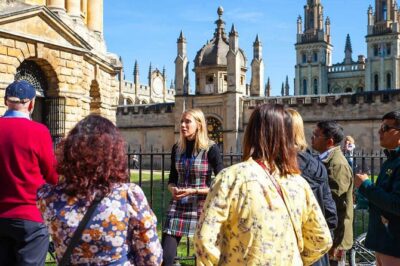
Oxford University Walking Tour With University Alumni Guide
Read our review →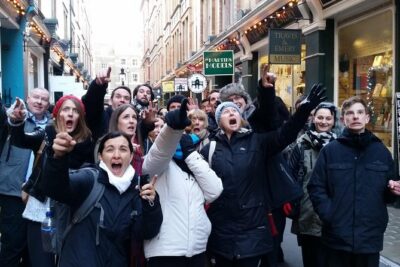
Tour for Muggles The Ultimate Harry Potter Walking Tour in London
Read our review →
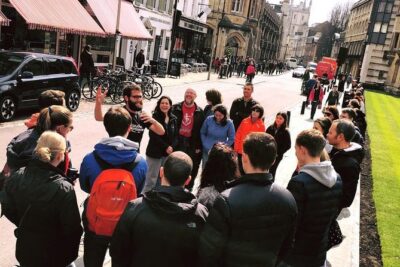
Cambridge University Walking Tour by Alumni™ Kings College Option
Read our review →
Blackbeard to Banksy – The Ultimate Walking Tour of Bristol
Read our review →
Air Raid Shelter + St. Nicholas Market Walking Tour
Read our review →
Walking Tour of Bath with Blue Badge Tourist Guide
Read our review →
Changing of the Guard Guided Walking Tour in London
Read our review →Browse the lists this tour appears in