
Reviewed · WALKING TOURS
A Walk Through Time: History of Liverpool Walking Tour
Liverpool’s story comes into focus along the water. This 1 hour 50 minute walk links the Three Graces, medieval Liverpool, the old cotton trade, Liverpool Castle, and the docks, showing how a small port became a world trading center. The tour is led by historians such as John and Julio, with plenty of local detail and Scouse humor.
I like the route’s clear shape: it moves through time as well as across the city. I also like that it does not skip Liverpool’s difficult past, including its role in the Atlantic slave trade. The main drawback is pace. One guide speaks quickly, and the busy streets, traffic noise, cold, or wind can make it harder to catch every fact.
Key points to know before booking
- A 13th-century starting point: See the site of St. Nicholas’ Church and learn how Liverpool began after its town charter in 1207.
- Trade drives the story: Cotton, docks, global commerce, and the Atlantic slave trade receive far more attention than a standard sightseeing walk usually allows.
- John and Julio bring different strengths: John is known for a long, detailed presentation, while Julio offers an engaging introduction to the city.
- The route covers major sights: Expect the Three Graces, Liverpool Town Hall, Castle Street, Liverpool ONE, the Old Dock, and Royal Albert Dock.
- Good value at $27.74: You receive nearly two hours with a historian guide, though there are no included interior admissions.
- Dress for the waterfront: Wind from the Mersey can be sharp, so bring a warm jacket and wear comfortable shoes.
Liverpool’s past unfolds along the waterfront
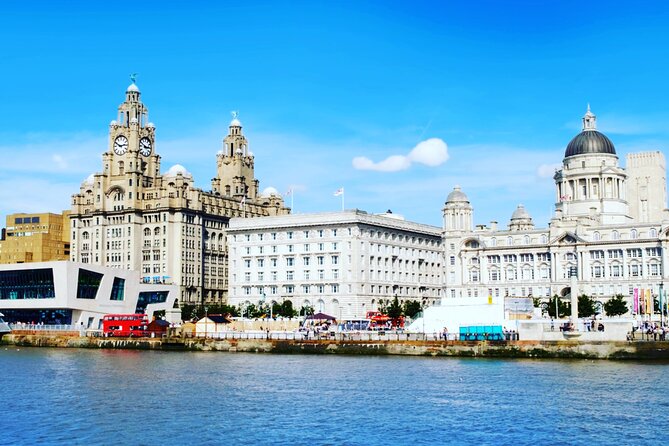
The best feature of this walk is its basic idea. Instead of treating Liverpool’s landmarks as separate photo stops, it connects them through the city’s growth. You begin with the modern image of Liverpool, the Royal Liver Building and the Three Graces, then move back to medieval foundations before returning to the docks and the present day.
That approach gives you a useful framework for the rest of your visit. You begin to understand why the waterfront looks grand, why Castle Street matters, and why so much of Liverpool’s story revolves around ships, warehouses, cotton, commerce, migration, and war.
The price is $27.74 per person. For a guided walk lasting about 1 hour 50 minutes, that is a reasonable cost, especially if this is your first time in Liverpool. The tour is not a substitute for paid attractions such as the Royal Liver Building’s interior experiences, but you get a broad introduction without extra admission fees along the route.
The group can include up to 40 people. That is large enough for a lively outing, though it may feel less personal than a small-group walk. Most people can take part, service animals are allowed, and the route is near public transport.
More walking tours in Liverpool:
- Liverpool Ghost Walking Tour
★ 5.0 · 862 reviews - Beatles Famous Walking Tour Of Liverpool- Fully Guided
★ 5.0 · 751 reviews - Downtown Liverpool Walking Tour – In Spanish
★ 5.0 · 591 reviews
Starting beneath the Royal Liver Building
The walk begins at the Royal Liver Building on the Pier Head. This is a strong meeting point because the Three Graces give you an immediate sense of Liverpool’s scale and ambition.
The Royal Liver Building, Cunard Building, and Port of Liverpool Building form Liverpool’s famous waterfront trio. Your guide uses these buildings to explain the city’s maritime importance before the walk heads inland. You do not need to enter the Royal Liver Building, and admission is not included, so this part is about the exterior and the story attached to it.
Give yourself enough time to reach the meeting point. The Pier Head is exposed, and the river wind can be uncomfortable in poor weather. A warm coat is not excessive here, even on a day that feels mild elsewhere in the city.
At Liverpool Parish Church Gardens, the medieval beginning
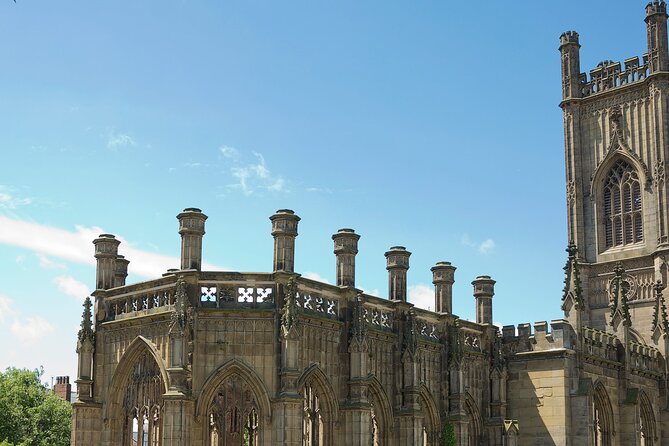
The next stop crosses the Strand to Liverpool Parish Church Gardens. This site connects the present waterfront to the city’s early beginnings.
The church was once known as St. Nicholas’ Church, named for the patron saint of the sea. That name fits Liverpool’s later role in ocean trade, but the site also helps explain the much smaller medieval settlement that came before the port city.
Here, the guide points to physical evidence connected with Liverpool’s creation in the 13th century, including the town’s origins around 1207. This is one of the most useful stops because it prevents the city from seeming to have appeared fully formed during the industrial age.
You will spend about 15 minutes here. The stop is outdoors and free, so there is no ticket to arrange. Listen closely, since the amount of background packed into this section can be considerable.
Old Hall Street and the difficult side of trade
Old Hall Street takes you through another layer of Liverpool’s development. The street dates from the 13th century and was connected with the old town after Liverpool received its charter.
The walk then reaches Grade I listed buildings and the former Cotton Exchange. This is where the tour shifts from local beginnings to international commerce. Liverpool’s port grew rapidly through trade with the wider world, and by the late 18th century it had overtaken London in the cotton trade.
This section is also where the tour deals directly with Liverpool’s role in the Atlantic slave trade. That subject is not treated as a footnote. It is part of the explanation for the city’s wealth and influence, and it gives you a more honest understanding of what global trade meant in practice.
I value this part of the route because it avoids a postcard-only version of Liverpool. You will hear about achievement and expansion, but also about the human cost tied to the trade that helped the city prosper.
Same base, a different kind of day:
- Beatles Magical Mystery Tour
★ 5.0 · 9,266 reviews - Liverpool: “Blue Route” – City & Beatles Tour
★ 5.0 · 8,562 reviews - Liverpool City Sights Hop On Hop Off City Tour – 24hr Ticket
★ 4.5 · 2,555 reviews - The LFC Stadium Tour
★ 5.0 · 1,548 reviews
Liverpool Town Hall and Georgian power
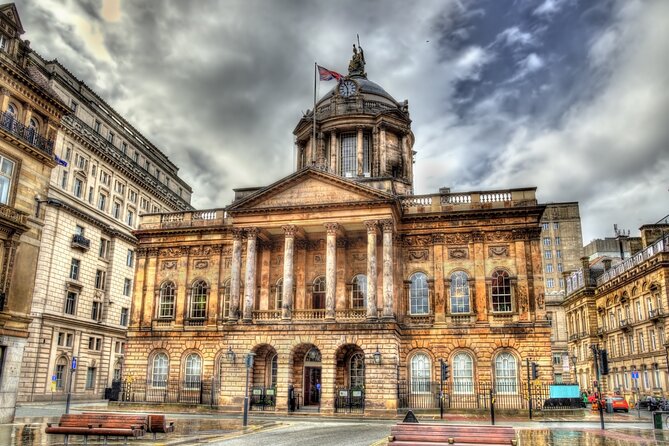
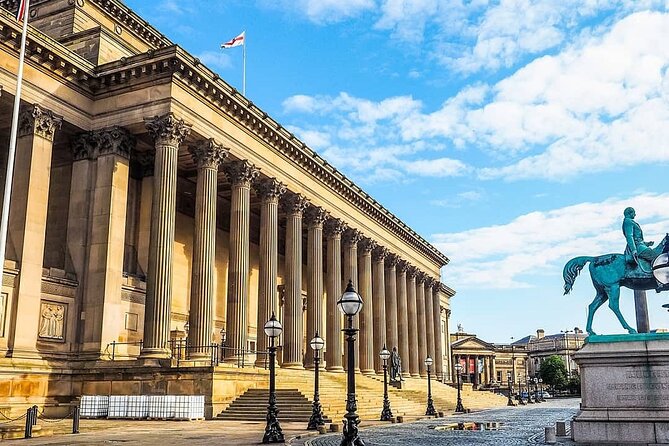
Liverpool Town Hall, built in 1749, gives the guide a chance to explain how the city’s civic power grew alongside its commercial wealth. The building is described as one of Britain’s finest surviving Georgian structures, and its exterior helps show how successful merchants expressed their status.
The tour does not include entry, so you should view the building from outside. That is enough for the walk’s purpose, since the main focus is the city’s rise as a port and center of commerce.
This is a short stop of about 10 minutes. The information can come quickly, particularly if your guide is John, whose talks are often packed with dates, links between events, and local detail. If you want to ask questions, do so as the walk goes along rather than waiting until the end.
Castle Street and the lost castle
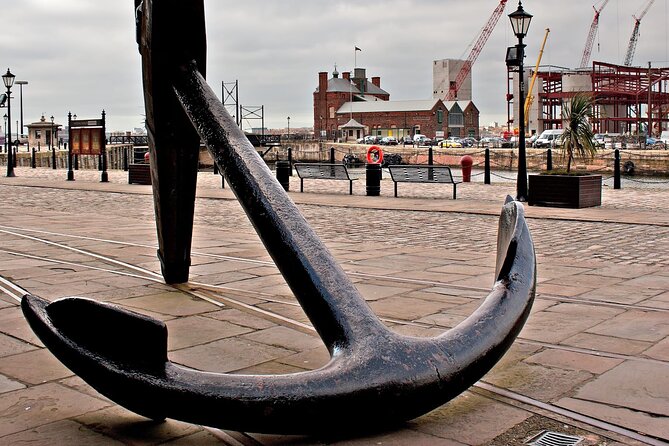
Castle Street feels like a literal walk through Liverpool’s changing architecture. Its buildings reflect the city’s move from medieval settlement to Georgian commercial center, while its name recalls Liverpool Castle.
The castle itself no longer survives as a complete building, so this stop depends on explanation rather than a dramatic ruin. That is not a weakness if you enjoy history brought to life through street layout and building styles, but it may disappoint you if you expect a visible castle.
The guide uses Castle Street to explain Liverpool’s growth and the role of the area in civic and commercial life. It is also a good place to notice how close the old center is to the waterfront. The route does not treat the city’s history as something confined to museums. Streets, angles, monuments, and building fronts become the evidence.
The Queen Victoria Monument and Liverpool’s global reach
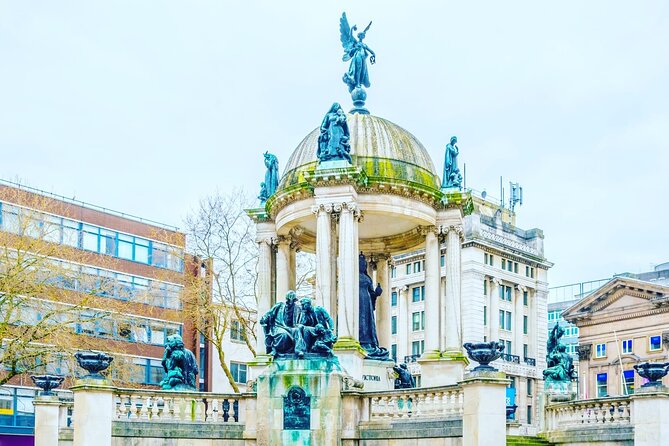
At the Queen Victoria Monument, the story returns to Liverpool’s growth as a port. The guide explains how the city became one of the most important places in global trade by 1800.
The monument is also listed as the tour’s end point in the meeting information, at One Derby Square on James Street. The route description then gives the final portion as a return to the Three Graces. Because those details do not perfectly match, check the exact end point when you book or contact the operator if the finish matters for your plans.
Either location is central and useful. From here, you can reach Castle Street, Liverpool ONE, the waterfront, and nearby transport links without much trouble.
Liverpool ONE, where old streets meet a new center
The walk passes through Liverpool ONE, the modern shopping and leisure district. This is the least historic stop, but it serves a purpose.
Liverpool ONE shows how the city has adapted its center after the great age of docks and heavy commerce. The guide points out shops and attractions, helping you connect present-day Liverpool with the older streets around it.
Do not expect a long shopping visit. The stop lasts about 10 minutes and remains part of the larger history story. If you want to shop, return later. During the tour, pay attention to how the modern district fits into the old city center.
The Old Dock and the mechanics of a port
The Old Dock is one of the most important stops on the route. Built in 1715, it was the first commercial wet dock of its kind in the world.
A wet dock allowed ships to remain afloat regardless of the changing tide. That practical improvement helped Liverpool handle cargo more efficiently and gave the port a major advantage. Here, the guide explains how the dock helped transform Liverpool from a smaller port into a leading center for global trade.
This stop is especially useful because it explains the mechanics behind the city’s success. Grand buildings tell you that Liverpool became wealthy. The Old Dock helps explain how that wealth was generated and how ships, cargo, tides, and trade worked together.
The site itself may be less visually dramatic than the Three Graces, so the guide’s explanation matters. John is particularly strong at linking small details to the larger story of Liverpool’s rise.
Royal Albert Dock and the 19th-century city
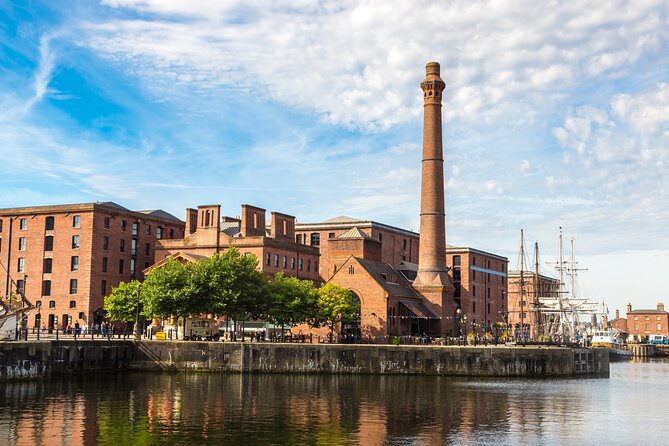
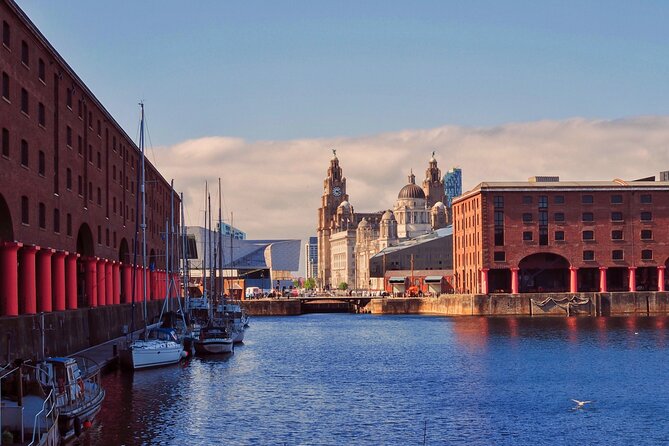
Royal Albert Dock brings the walk into the 19th century. Built in 1846, it became a major commercial center and one of Liverpool’s best-known waterfront spaces.
Here you can see how the port’s architecture changed as trade expanded. The dock also provides context for Liverpool’s role during the First and Second World Wars. The focus remains historical rather than an interior museum visit, and admission is free.
Royal Albert Dock is a natural place for the tour to gather its main themes: ships, commerce, war, technology, and the city’s changing fortunes. You should have your camera ready, but remember that the guide’s talk is the main attraction. Traffic, wind, and nearby activity can make it harder to hear, so stay close to the group.
The final look at the Three Graces
The route finishes with a final discussion of the Three Graces and Liverpool’s waterfront. Returning to the opening sight gives the walk a neat structure. You begin with the city’s proudest modern symbol, travel back to its medieval roots, trace its rise through trade, and end at the same waterfront with a better sense of what you are seeing.
The final talk lasts about five minutes. It is brief, so save any last questions for the walk’s earlier stops or ask the guide before the group separates.
How the guides shape the experience
John receives the most direct praise in the available feedback. His strength is the sheer amount of material he can cover, from medieval Liverpool to maritime commerce and the present city. He also uses humor and encourages questions, although his fast delivery may challenge you if English is not your first language or if you prefer a slower talk.
Julio is also named as a guide. His approach is described as engaging and friendly, and the walk with him worked well as an introduction for a longer stay in Liverpool.
The experience depends heavily on the individual guide. This is not a quiet audio walk or a simple list of landmarks. You receive a spoken history lesson on busy streets, so your enjoyment will be highest if you like listening, asking questions, and following a detailed narrative.
Timing, weather, and what to wear
The advertised duration is approximately 1 hour 50 minutes. That is long enough to cover a lot, but not long enough to linger at every building or take extended breaks.
Wear comfortable shoes. The walk covers several city-center areas, and the route includes outdoor stops. The waterfront can be cold and windy, even when the rest of the day feels pleasant. Poor weather can lead to cancellation, with a different date or a full refund offered.
The tour is offered in English and uses a mobile ticket. It is generally suitable for most participants, with service animals allowed. Since the group may reach 40 people, stand where you can hear clearly, especially near roads and open waterfront spaces.
Who should book this Liverpool walk?
I would choose this tour if you want a broad introduction before exploring Liverpool on your own. It is especially useful for first-time visitors, history fans, and anyone curious about the city’s port, docks, cotton trade, and links to the Atlantic slave trade.
It also suits local residents who want the connections explained. The material reaches beyond the Beatles and modern popular culture, showing how Liverpool’s maritime past shaped its streets and institutions.
You may want a different experience if you prefer small groups, leisurely photography, or long visits inside buildings. There are no included interior admissions, and the amount of information can feel dense. The route also spends most of its time around the waterfront and central streets rather than covering distant neighborhoods.
Should you book it?
Book this walk if you want Liverpool’s major sights tied into one clear story. At $27.74, it offers solid value for nearly two hours with a historian guide, especially when you consider the attention given to trade, docks, and the city’s less comfortable past.
Skip it if you need a slow pace or dislike outdoor tours in uncertain weather. For everyone else, it is a useful first-day choice. You finish with more than a set of photographs: you understand why the waterfront looks the way it does and how Liverpool’s global importance began.
FAQ
How long does the History of Liverpool walking tour last?
The tour lasts approximately 1 hour and 50 minutes.
Where does the tour begin?
It begins at the Liver Building, Pier Head, Liverpool L3 1HU, near the Three Graces.
Where does the tour end?
The meeting information gives the Queen Victoria Monument at One Derby Square, James Street, as the end point. The route description also refers to a final return to the Three Graces, so confirm the exact finish when booking.
Is admission to the buildings included?
No. The walk views the landmarks from outside, and admission to the Royal Liver Building and Liverpool Town Hall is not included. The listed outdoor stops have no admission charge.
What language is the tour offered in?
The tour is offered in English.
Can I cancel for a full refund?
Yes. You must cancel at least 24 hours before the experience starts for a full refund. If poor weather causes the operator to cancel, you will be offered another date or a full refund.
Just added in Liverpool
- LIverpool beer or prosecco bike tour★ 5.0 · 146 reviews
- Liverpool’s Brewery Bus Tour– 4 Breweries, 12 x Craft Beer & Food★ 5.0 · 172 reviews
- Anfield Abseil with Free Entry to the LFC Museum★ 5.0 · 171 reviews
- Skip-the-Line in The National Museum of Popular Music Ticket★ 4.5 · 205 reviews
- Lake District Adventure Sightseeing Day Trip from Liverpool★ 4.5 · 211 reviews
- Reel Tours: Liverpool Film Location Walking Tour★ 5.0 · 188 reviews
- Liverpool Hidden History and Dead House Evening Walking Tour★ 5.0 · 200 reviews
- Tales from the Necropolis – A Ghost Walk Through St. James Cemetery★ 5.0 · 263 reviews
Walking Tours, compared.
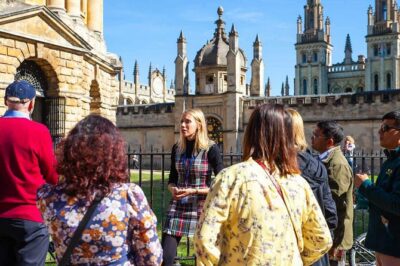
Oxford University Walking Tour With University Alumni Guide
Read our review →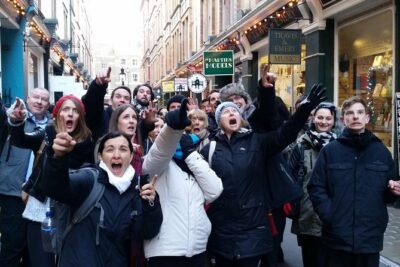
Tour for Muggles The Ultimate Harry Potter Walking Tour in London
Read our review →
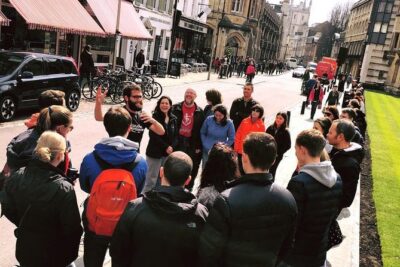
Cambridge University Walking Tour by Alumni™ Kings College Option
Read our review →
Blackbeard to Banksy – The Ultimate Walking Tour of Bristol
Read our review →
Air Raid Shelter + St. Nicholas Market Walking Tour
Read our review →
Walking Tour of Bath with Blue Badge Tourist Guide
Read our review →
Changing of the Guard Guided Walking Tour in London
Read our review →Browse the lists this tour appears in