Reviewed · TOURS IN NOTTINGHAM
A Story of Discovery, Education and Remembrance
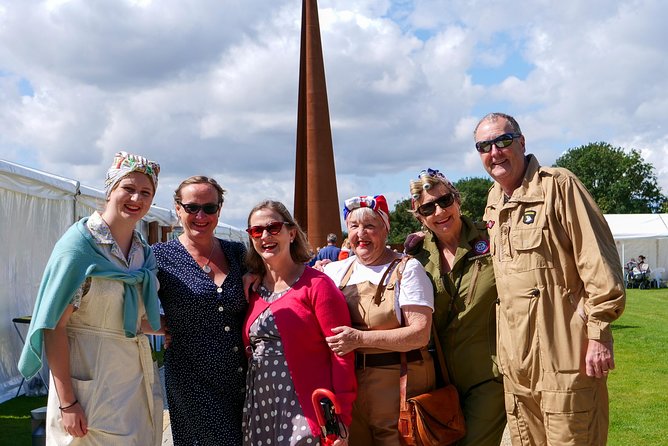
The most striking part of the International Bomber Command Centre is its huge metal memorial, rising 31.09 metres above Lincoln. It is not simply a photo stop. The structure frames views across the city while the surrounding panels remember almost 58,000 people who died serving Bomber Command during World War II.
I like the personal stories in the three exhibition galleries, and I like the chance to see the war from several sides through the Orchestra of Voices. The peaceful gardens give you room to think after the heavier indoor displays. The main consideration is location: the experience is described as being in Nottingham, but the ticket address is in Lincoln, so check your route carefully before booking.
Key details before you go

- Almost 58,000 names: Search the Losses Database and the memorial panels for individuals who died while serving Bomber Command.
- Three interactive galleries: Follow the period through first-hand accounts and displays designed for adults and children.
- 31.09-metre memorial: See the UK’s tallest metal war memorial and enjoy views over Lincoln.
- Free guided tours: Experienced guides lead tours of the memorial and gardens.
- A thoughtful outdoor pause: The two Peace Gardens offer a quiet break between the galleries and memorial.
- Good family value: The admission price is $15.94 per person, and the centre can fill two to five hours.
Why the Bomber Command story needs care
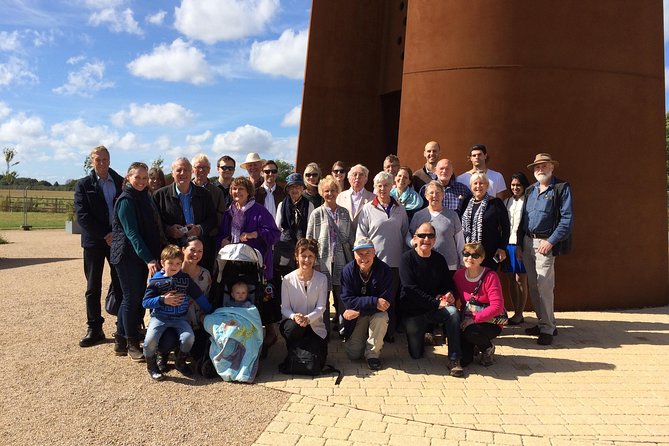
Bomber Command is not an easy subject. The bombing campaign helped defeat Nazi Germany, but it also caused enormous civilian suffering. The centre deals with that difficult balance rather than presenting a simple victory story.
That makes this more than a conventional military museum. You hear about the people who served, the people who supported the bombing effort, and the people on the receiving end of it. The emphasis is on human choices, loss, fear, and duty.
I appreciate that approach because it gives you context without asking you to admire war. The experience is better suited to someone who wants to think about the moral questions around wartime bombing than to someone looking only for aircraft or weapons.
The subject matter can be emotional. If you are visiting with children, the centre offers hands-on displays that can hold their attention, but you will still want to guide the conversation. The material deals with death and destruction in a direct way.
Other trips people book in England:
- Stonehenge, Windsor Castle, and Bath from London
★ 4.5 · 18,662 reviews - London Big Bus Hop-On Hop-Off Tour with Optional River Cruise
★ 3.5 · 10,803 reviews - London Small Group Tour of Historical Pubs
★ 5.0 · 10,422 reviews
Begin with the memorial and its city views
The memorial is the natural starting point. Its height gives it a strong presence, but its design is simple enough to leave space for reflection. The metal structure is visible from a distance and provides one of the clearest photo opportunities at the centre.
From the memorial, you can look over Lincoln. That view adds useful scale to the visit. You are not standing in an abstract memorial space. You are looking out over a living city while considering the decisions and losses of the 1940s.
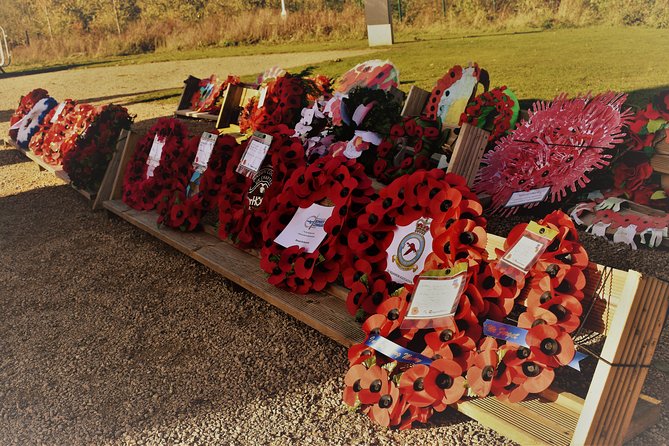
Take time to examine the names rather than treating the panels as background decoration. Almost 58,000 people are recorded here. The Losses Database gives you a way to learn more about individual names, which can turn a large number into a personal story.
If you know that a relative served in Bomber Command, allow extra time for this section. Finding a family name can change the entire character of the visit. The memorial is designed for remembrance, but the database helps connect that remembrance to real people.
Take the free guided tour
The centre offers free guided tours of the memorial and gardens. I would make this a priority, especially if you are new to the subject. A guide can explain the design, point out details you might miss, and place the names and memorial structure in context.
The tours also help you read the outdoor spaces as part of the centre’s story. The Peace Gardens are not just attractive planting around a large sculpture. They provide a quieter setting for remembering those who died and for considering the personal cost of the campaign.
The available information does not give the guides’ names or a fixed tour timetable, so ask at the centre when you arrive. If you reach the site early and a tour is available, take it before the galleries become the main focus.
The outdoor tour is likely to be most useful for visitors who want a clear explanation of the memorial’s symbolism. If you prefer to move at your own pace, you can still explore independently, but you may miss some of the meaning built into the gardens and structure.
Explore the three interactive galleries

Inside, three interactive and immersive galleries tell the story through the eyes of people who were there. The displays combine static material with hands-on elements, so this is not a place where you simply walk past glass cases and read long labels.
The centre uses an Orchestra of Voices to present different perspectives. That matters because Bomber Command involved many groups: aircrews, ground staff, workers, families, civilians, and people living under attack. Hearing those voices gives the subject a human scale.
The galleries are particularly useful if your knowledge of Bomber Command is limited. You can learn about the role of the command while also considering the campaign’s consequences. The centre does not require you to arrive with specialist military knowledge.
Families should find enough interactive material to keep younger visitors involved. Children aged eight and ten have been able to enjoy the displays, and the hands-on elements make the experience more approachable for them. Still, the topic is serious, so parents should be ready to explain difficult material.
Plan on at least two hours if you want a proper look at the galleries, memorial, and gardens. A four-hour visit is also realistic if you use the database, take the tour, stop at the café, and read the displays closely.
Same base, a different kind of day:
- Beatles Magical Mystery Tour
★ 5.0 · 9,266 reviews - Liverpool: “Blue Route” – City & Beatles Tour
★ 5.0 · 8,562 reviews - Stonehenge, Windsor Castle and Bath with Pub Lunch in Lacock
★ 4.5 · 7,402 reviews - Oxford University Walking Tour With University Alumni Guide
★ 5.0 · 6,905 reviews
Use the Losses Database to find a personal connection
The Losses Database is one of the centre’s most useful features. The memorial presents a vast number of names, while the database gives you a chance to investigate particular individuals.
You can use it even if you arrive without a family connection. Searching a name can help you understand how the memorial records individual loss. If you do have a relative connected to Bomber Command, check the database before your visit if possible and bring the information with you.
Do not rush this part. The scale of the memorial can feel overwhelming at first. A single name, a service detail, or a family connection can give your visit a clear point of focus.
This is also where the centre moves beyond broad wartime statistics. Numbers explain the scale of loss, but individual names remind you that every number represents a person with a life beyond the conflict.
Slow down in the two Peace Gardens

The two landscaped Peace Gardens provide a pause after the indoor displays. Their value is simple: you can step outside, breathe, and let the material settle before moving on.
I would not treat the gardens as a quick walk-through. The experience asks you to think about bombing, responsibility, and loss. A quiet outdoor space helps prevent the visit from becoming a rush from one information panel to the next.
The gardens also make the centre more comfortable for mixed-age groups. One person can sit quietly while another continues looking at the memorial or galleries. That flexibility is useful on a family visit.
The exact amount of time you spend outside will depend on the weather and your interest in the memorial. The centre is open from Tuesday through Sunday, 9:30 a.m. to 4 p.m., according to the supplied schedule. Check the current hours before setting out, particularly if your visit falls near a holiday or outside the stated operating period.
Stop at the Hub Café
The Hub Café serves locally sourced food and drink. That gives you a practical reason to stay on site rather than leaving as soon as you finish the galleries.
A café break works well here because the visit can easily last four hours. You can take the guided tour, explore the indoor displays, spend time at the memorial, and then have a meal or drink before returning to anything you missed.
The café is also useful for families. A proper break can make a serious museum visit easier for children, especially when the subject matter requires concentration. The supplied information does not provide a menu or prices, so treat the café as a convenience rather than building your budget around a particular meal.
Is $15.94 good value?
At $15.94 per person, admission is reasonable for an experience that can occupy two to five hours. The ticket includes all fees and taxes, and the free guided tour adds value without another charge.
The price works best if you use the centre fully. A quick visit focused only on taking a picture of the memorial will not make as much sense financially. Give yourself time for the three galleries, the database, the gardens, and at least one guided element.
The free memorial and garden tour is an especially useful part of the value. A good guide can make the outdoor design and names more meaningful, and the tour adds a human voice to what could otherwise feel like a very large monument.
Parking fees are not included. That is the main extra cost listed, so include it when comparing the centre with other attractions. The ticket is offered in English only, which may also matter if you need another language.
Getting there and planning your visit
The ticket redemption point is the International Bomber Command Centre, Canwick Ave, Lincoln LN4 2HQ, United Kingdom. The supplied tour summary labels the location as Nottingham, but the street address is in Lincoln. Treat the Lincoln address as the practical detail and confirm it on your booking before travelling.
The centre is near public transportation. No detailed transport instructions are provided, so check your route from your starting point rather than assuming the Nottingham label is correct.
The experience is usually booked around eight days ahead. That is a useful planning guide, though it is not a required booking window. If you want a particular date or hope to join a guided tour, booking ahead is sensible.
Confirmation is received at the time of booking. Free cancellation is available up to 24 hours before the experience start time for a full refund. Cancellations or changes made less than 24 hours before the start are not accepted for a refund.
The centre allows service animals and has a Changing Places Facility. Most people can participate, but the listing does not provide a detailed accessibility assessment of every path, display, or garden area. Contact the centre directly if you need specific access information.
Who will get the most from this visit?
This is a strong choice for anyone interested in World War II, military history, memorial design, or the personal stories behind large events. It also suits families looking for an educational attraction with interactive displays rather than a quiet collection of artefacts.
You will get the most from it if you are willing to consider different sides of the bombing campaign. The centre is not simply a celebration of Bomber Command. It asks you to remember those who served while also acknowledging the destruction caused by the campaign.
A family visit can work well, especially with children who enjoy hands-on displays. Plan a break at the café and avoid trying to force every gallery into a short schedule.
This may be less suitable if you want a fast, light attraction or if your main interest is aircraft. The supplied information focuses on voices, personal stories, commemoration, and moral questions rather than a large aircraft collection.
Should you book the International Bomber Command Centre?
Book it if you want a serious, well-organized visit that connects wartime events to individual lives. The combination of the 31.09-metre memorial, almost 58,000 names, interactive galleries, free guided tours, and Peace Gardens gives you plenty to do for the price.
I would especially recommend it if you have a family connection to Bomber Command. The Losses Database and memorial panels can give that connection a clear place within the wider story.
Before booking, check the Lincoln address, confirm the opening hours, and allow at least two hours. If you have time for four hours, you can experience the centre without rushing. That is when the visit moves from a quick memorial stop to a thoughtful study of remembrance, responsibility, and war.
FAQ
Where is the International Bomber Command Centre located?
The ticket redemption point is the International Bomber Command Centre on Canwick Ave, Lincoln LN4 2HQ, United Kingdom. The supplied tour information also labels the location as Nottingham, so confirm the address before travelling.
How much does admission cost?
The listed price is $15.94 per person. All fees and taxes are included.
How long does the experience take?
The visit takes approximately two to five hours, depending on how much time you spend in the galleries, gardens, memorial, database, guided tour, and café.
What are the opening hours?
The supplied schedule lists opening hours from Tuesday through Sunday, 9:30 a.m. to 4 p.m. Check the current schedule before visiting.
Is a guided tour included?
Yes. Free tours of the memorial and gardens are available with experienced guides. A fixed tour timetable is not provided, so ask at the centre when you arrive.
What can I see at the memorial?
You can see the UK’s tallest metal war memorial, which is 31.09 metres high, enjoy views over Lincoln, and find the names of almost 58,000 people who died serving Bomber Command during World War II.
Is there an indoor exhibition?
Yes. The centre has three interactive galleries presenting the period through the experiences of people who were there. The Orchestra of Voices presents perspectives from all sides of the conflict.
Are food and parking available?
The Hub Café serves locally sourced food and drink. Parking fees are not included in the admission price.
Can I cancel my booking?
You can cancel for a full refund up to 24 hours before the experience start time. Cancellations or changes made less than 24 hours before the start are not accepted for a refund.
Just added in England
- Exceptional Bath tour guide making your visit splendidly memorable.★ 4.5 · 69 reviews
- Full-Day Private Tour of Stonehenge and Bath with Pickup★ 5.0 · 6 reviews
- One Way or Round Trip Private Transfer: Heathrow Airport to Bath★ 5.0 · 3 reviews
- Quintessential Cotswolds Half-Day tour from Bath (for 2-8 guests)★ 5.0 · 27 reviews
- Stonehenge Half-Day luxury guided tour from Bath for 2-8★ 5.0 · 15 reviews
- Private Guided Tour of Jane Austen’s Bath★ 5.0 · 7 reviews
- British Wine and Cheese Tasting Experience in City of Bath★ 5.0 · 18 reviews
- Cotswold Village Private Day Trip from Bath★ 5.0 · 24 reviews
Tours in Nottingham, compared.