
Reviewed · JACK THE RIPPER TOURS
A Private VIP Jack the Ripper Black Cab Tour
Jack the Ripper’s London comes into sharp focus from the back seat of a traditional black cab. Danny takes you through Whitechapel, Spitalfields, Cable Street, Farringdon, and old Scotland Yard, linking grim crime scenes with the crowded Victorian neighborhoods around them. This is less a ghost story than a moving lesson in poverty, policing, newspapers, and life in 1888.
I like the private format, which lets you ask questions and set the pace with only your own group aboard. I also like the combination of cab travel and short walks: you cover a lot of East London without spending three hours on foot, yet you still get out at key streets and buildings. Danny uses old photographs and visuals to help you compare past and present.
The main consideration is the subject itself. The murders are disturbing, and some descriptions are graphic. Also, this is a broad three-hour route with many stops, so you should expect focused visits rather than long time at each location.
Key points at a glance
- Private black cab for up to six: Round-trip transport keeps the group together and limits the amount of walking.
- Danny leads the tour: His style combines crime details with social history, police work, and Victorian London.
- Nine major areas are covered: Whitechapel, Spitalfields, Limehouse, Cable Street, the Inner Temple, Farringdon, and Whitehall all play a part.
- Old photographs add useful context: Present-day streets make more sense when you can compare them with scenes from the period.
- A strong choice for small groups: At $338.90 per group, the price becomes much better when divided among four to six people.
- Flexible departure and pickup: You can choose a departure time, and pickup is offered.
What this private tour is really about
Jack the Ripper is the hook, but the best part of this experience is the setting around the crimes. You are not simply taken from one murder site to another. Danny also explains the communities where the women lived, the working conditions of the period, the way police operated, and how newspapers helped turn the case into a national obsession.
That wider frame matters. Without it, Whitechapel can feel like a list of grim names and streets. With it, the tour gives you a better sense of the crowded, unequal Victorian city where the murders happened.
The black cab makes practical sense. East London’s sites are spread across several neighborhoods, and the route includes locations that would take time to connect by foot and public transport. You can settle into an air-conditioned cab between stops, then step out for short walks and explanations.
This is a private activity, so only your group participates. That is especially useful if your party has different interests or if you want to ask about disputed suspects, police methods, or the social conditions behind the case.
Other Ripper walks in London:
- London Jack the Ripper Guided Tour with Ripper-Vision
★ 4.5 · 4,840 reviews - London Jack The Ripper Guided Walking Tour
★ 5.0 · 3,131 reviews - Ultimate Jack the Ripper : Guided Tour of London
★ 5.0 · 1,495 reviews
The opening drive through Victorian London
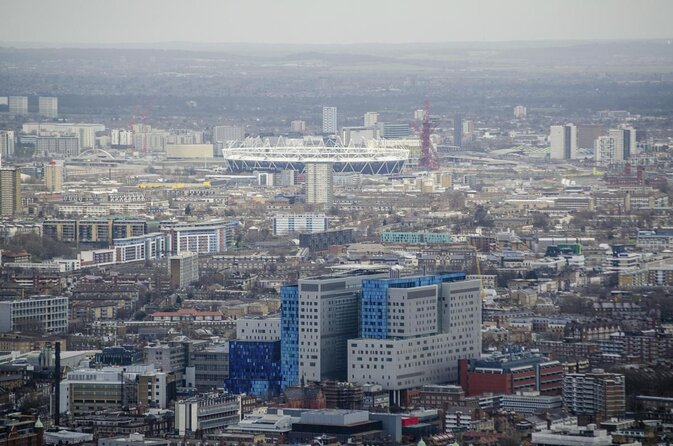
The tour begins with a drive past places that help set the period. You pass a hospital dating from 1740, the ruins of a church that gave the area its name, fountains, and rooms connected with inquests into the murders.
This opening section is valuable because it gives you a sense of how much older the setting was than the case itself. The Jack the Ripper murders took place in 1888, but the streets, churches, hospitals, and civic buildings belonged to a much longer story.
You will also hear about the inquest process, which adds a legal and social angle often missing from crime-focused tours. The aim is not just to locate the killings, but to place them inside the institutions and neighborhoods of the time.
Whitechapel and Mary Ann Nichols
The first main stop is Durward Street in Whitechapel, where Danny discusses Mary Ann Nichols, identified here as the first victim in the usual sequence of the case.
You spend about ten minutes at the stop, with no separate admission charge. That short time is enough for a focused explanation, but not for a long walk or a museum visit. Keep your attention on the street layout and Danny’s visual material, since modern surroundings can make it hard to picture the area as it was in 1888.
The value of stopping here is the direct connection between a present-day street and the first crime in the tour’s sequence. Danny’s old images help bridge that gap. You can see what has changed, what remains, and why photographs are so useful on this sort of tour.
Hanbury Street and Annie Chapman
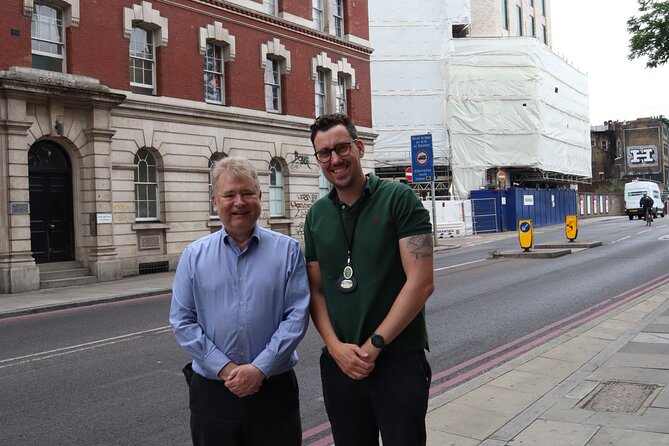
The cab then moves to Hanbury Street in Spitalfields, where the focus shifts to Annie Chapman, described as the second victim.
Again, the stop lasts around ten minutes. That makes the experience easy to follow, but you should not expect a long period of independent exploration. Danny’s role is central. He explains the location, supplies context, and answers questions while you stand in the area where the events unfolded.
Spitalfields is one of the stronger parts of the route because the tour moves beyond a single crime scene. Danny also describes the surrounding community, helping you understand that these were lived-in streets rather than empty stage sets for a mystery.
For many people, this is where the tour’s social side begins to matter most. The case is grim, but the surrounding story includes work, housing, drink, policing, and the limited choices available to poor women in Victorian London.
Other black cab tours in London:
- The Premier Classic London: Private 4-Hour Tour in a Black Cab
★ 5.0 · 2,737 reviews - Private Tour: Black Taxi Tour of London
★ 5.0 · 1,153 reviews - London Sightseeing Private Black Cab Tour with Hotel Pick Up
★ 5.0 · 917 reviews - Rock Cab Tours presents Music Legends Private Taxi Tour of London
★ 5.0 · 637 reviews
Spitalfields Market, Brushfield Street, and Commercial Street
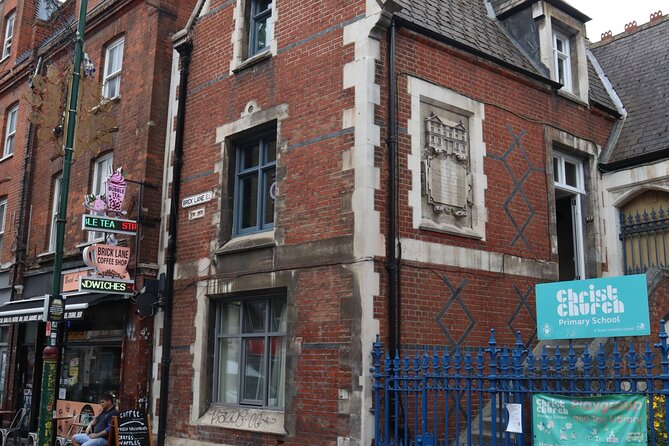
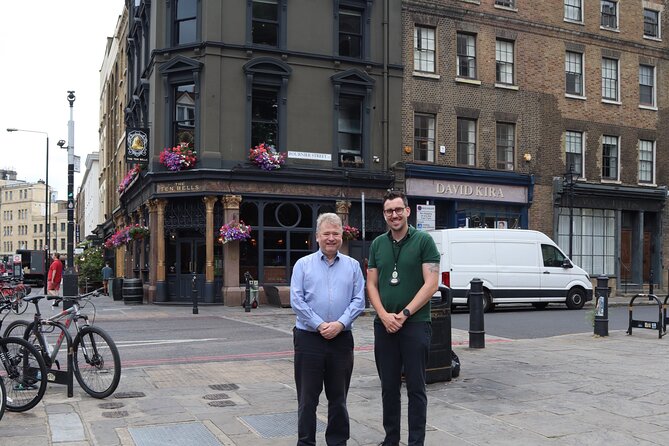
At Spitalfields Market, the tour pauses around Brushfield Street and Commercial Street for roughly twenty minutes. Danny discusses Mary Kelly, described in the tour sequence as the fifth victim, and points out the pub where she and others would have drunk.
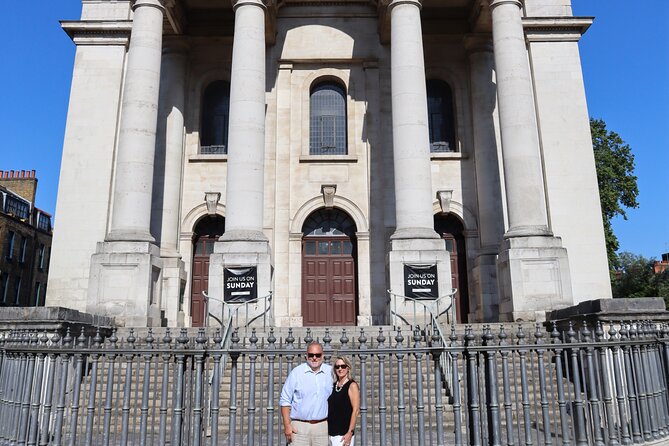
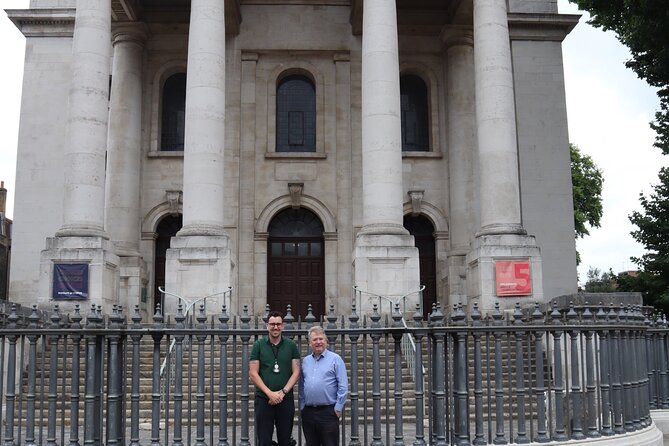
This is one of the longer stops, and it gives you more time to take in the area. The nearby Christ Church Spitalfields is another major feature. It has stood on Commercial Street for nearly 300 years, so it gives the stop a strong architectural and historical anchor.
The pub connection is particularly useful because it moves the story away from police files and into ordinary daily life. You get a sense of where people met, drank, and moved through the neighborhood. The building may be familiar from other London sightseeing, but here it becomes part of a very different story.
Spitalfields Market also makes a practical stop for a private cab tour because there is more to see around you than the crime connection alone. If you want a break from the darker material, Danny includes nearby places that are not directly tied to the murders.
Limehouse Basin and Elizabeth Stride
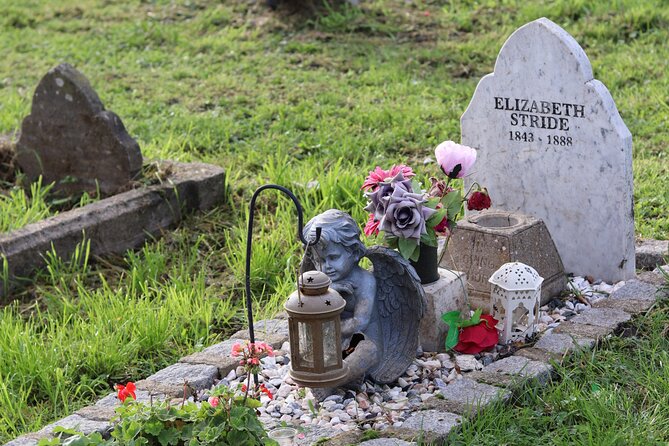
The next stop is around Henriques Street by Limehouse Basin, where Danny discusses Elizabeth Stride, described as the third victim.
You spend about ten minutes here. The canalside setting gives the route a change of mood and scenery, though the brief stop means the focus remains firmly on the story rather than on a long visit to the water.
The route also shows why a cab is useful. The stops are not all clustered tightly together, and walking between every location would take considerable time. The cab lets you see a wider portion of East London while keeping the main narrative moving.
If you are sensitive to crime details, this is a good point to remember that the tour does not soften the subject. The storytelling is intended to be informative and atmospheric, and you should expect descriptions of violence.
St Botolph’s Aldgate and Prostitutes Square
At St Botolph’s Aldgate, Danny discusses the church, which was present during the Jack the Ripper period. The area was also known as Prostitutes Square.
This ten-minute stop adds an important layer to the story. A church and its surrounding square help show how religious, commercial, and social life overlapped in Victorian London. The name Prostitutes Square also points to the way certain neighborhoods were labeled and judged.
I appreciate stops like this because they widen the tour beyond the identity of the killer. You learn something about how the area was seen by the people who lived there and by the wider city.
Cable Street, the riots, and the mortuary
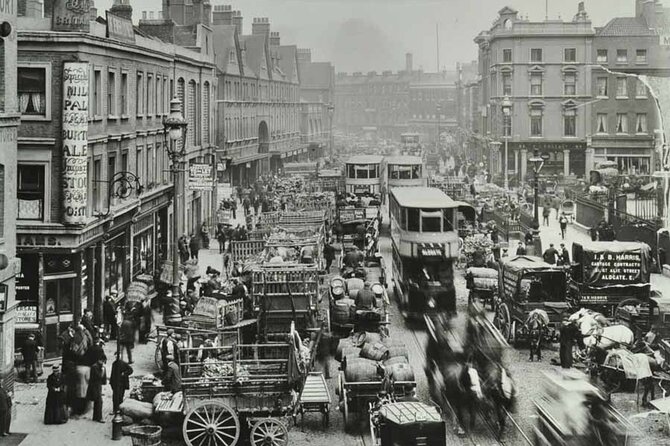
The Cable Street section includes a walk down the Cable Street Mural area. Danny talks about the Cable Street riots and shows you the mortuary used for some of the victims.
This stop lasts about fifteen minutes and brings two different parts of London’s past together. The riots belong to a later period, while the mortuary connects directly to the Ripper case. The result is a reminder that Cable Street’s importance did not begin or end in 1888.
The short walk is a welcome change from sitting in the cab. You get a closer look at the street and a chance to connect the area’s political history with its role in the murder investigation.
This is also one of the better stops for people who want more than a killer-suspect story. You will hear about community conflict and the way a neighborhood can carry several major chapters of history at once.
The Inner Temple and M. J. Druitt
The tour then travels to the Inner Temple, the workplace of one of the Jack the Ripper suspects. Danny explains how M. J. Druitt became connected to the case.
The stop lasts around fifteen minutes. It offers a change of setting from East London’s streets and focuses on the suspect theories that have kept the case alive.
M. J. Druitt is useful as a case study in how suspicion developed. The visit is not simply a declaration of guilt. Instead, Danny discusses why Druitt became a suspect, allowing you to see how evidence, rumor, and later theories became mixed together.
The Inner Temple also adds a legal atmosphere to the route. After hearing about murder scenes, inquests, and police work, you are brought to a place associated with the legal profession. That makes the stop feel connected to the broader machinery of Victorian justice.
Farringdon and the Central News Agency
In Farringdon, Danny visits the Central News Agency and discusses the taunting letters supposedly sent by the killer.
This fifteen-minute stop shifts attention from the streets to the press. The letters are a crucial part of the Ripper legend, but the wording supposedly sent is important. The tour presents them as part of the case and its publicity, not as simple proof of the killer’s identity.
That distinction is helpful. The letters helped shape the public image of Jack the Ripper, but newspaper coverage and public fear also made the case larger than the crimes themselves. You see how communication, rumor, and sensational reporting could spread through London.
For me, this is one of the most useful intellectual turns in the tour. It asks you to think about who created the Ripper image: the killer, the police, the press, or later generations.
Whitehall and old Scotland Yard
The final major stop is Whitehall, where you visit old Scotland Yard and the former Metropolitan Police headquarters dating from 1829.
The stop lasts around fifteen minutes and gives the tour a fitting finish. After visiting the crime locations and discussing witnesses, suspects, and letters, you end with the police institution responsible for the investigation.
Old Scotland Yard helps you think about the limits of policing in the period. The case became famous partly because the police never produced a confirmed killer. Seeing the former headquarters gives the investigation a physical setting rather than leaving it as an abstract mystery.
It also makes the route feel like a story with a clear arc. You begin with the neighborhoods and victims, move through suspects and public reaction, then finish with the institution that tried to control the crisis.
Danny’s guiding style and the value of old photographs
Danny is the named guide for this experience, and his approach combines clear storytelling with visuals and historical photographs. That matters because many of the locations have changed, even when the street names remain.
You can expect him to compare older images with what you see today. In some places, surrounding buildings may appear surprisingly familiar. In others, modern London makes the original setting harder to picture, so the photographs do much of the work.
Danny also takes photographs during the tour and shares them afterward. That is a useful extra for a private experience, especially if you want a record of the places visited rather than only a few quick phone pictures.
His style appears well suited to questions and mixed groups. The tour includes a lot of information, but the private format allows Danny to respond to your interests. He has also been praised for patient interaction with an autistic child, which suggests a considerate approach for families who need a guide willing to adjust his manner.
Is $338.90 good value?
The price is $338.90 per group of up to six people. For six, that works out to about $56.50 per person. For five people, it is about $67.80 each, and for four, about $84.75 each.
That is a fair price if you can fill the cab. You receive about three hours of private guiding, transport between widely spaced sites, short walks, historical images, and a route that would be awkward to reproduce on your own.
For two people, the per-person cost rises sharply. You are paying for privacy and convenience, not just admission to a site. If you mainly want a cheap walking tour, this is not the best fit. If you value a flexible departure, door-to-door pickup, and a guide who can answer your questions, the cost is easier to justify.
The price also includes no separate admission fees at the stops listed. The main value lies in the guide and the cab, rather than in entry to a museum or attraction.
Who should book this experience?
I would choose this tour if you are interested in crime history, Victorian society, London policing, or unusual city walks. It suits couples, families, and groups of friends who can share the fixed group price.
It is also a good option if you prefer not to walk long distances at night. You still get out at key locations, but the cab handles the connections between them.
Families should judge the subject carefully. Most people can participate, and service animals are allowed, but the murders and their discussion are not suitable for every child.
You should also choose another activity if you want a lighter London sightseeing tour. This experience includes social history and older buildings, but its main thread remains the Jack the Ripper murders.
Should you book the Jack the Ripper black cab tour?
Book it if you want a private, well-organized route through the case and you have at least four people to share the price. Danny’s use of photographs, his attention to the wider Victorian community, and the black cab transport give the tour more substance than a simple list of murder sites.
Think twice if graphic crime stories bother you, or if you want a slow walking tour with long time at each stop. The pace is steady, with many ten to fifteen-minute visits.
For the right group, this is a practical way to see a spread of East and central London locations in one evening. You get the famous case, but also churches, streets, police history, newspapers, suspects, and the human setting behind the headlines.
FAQ
How much does the private Jack the Ripper tour cost?
The tour costs $338.90 per group, with up to six people included.
How long does the tour last?
The experience lasts approximately three hours.
Is the tour private?
Yes. Only your own group participates.
Is pickup available?
Yes. Pickup is offered, and the tour includes round-trip transportation by air-conditioned black taxi.
What language is the tour offered in?
The tour is offered in English.
Can I choose the departure time?
Yes. You can choose a departure time that fits your schedule.
What is the cancellation policy?
You can cancel at least 24 hours before the local start time for a full refund. Cancellations or changes made less than 24 hours before the start time are not accepted for a refund.
Just added in London
- The Beatles and a Secret pub★ 4.5 · 36 reviews
- The Beatles & Liverpool Magical Mystery Tour from London★ 4.5 · 80 reviews
- Airport Coach Service from Heathrow to Oxford★ 3.5 · 67 reviews
- The Beatles Magical History Black Taxi Tour London★ 5.0 · 51 reviews
- The Beatles London walking tour. From Abbey Road to the Roof Top★ 5.0 · 61 reviews
- Private The Beatles Taxi Tour in London★ 5.0 · 12 reviews
- The Beatles London Walk★ 4.5 · 120 reviews
- Dinner and Jazz Cruise on the River Thames★ 4.0 · 140 reviews
Jack the Ripper Tours, compared.
London Jack the Ripper Guided Tour with Ripper-Vision
Read our review →
Ultimate Jack the Ripper : Guided Tour of London
Read our review →
London Jack The Ripper Small-Group Walking Tour
Read our review →

The Original Jack the Ripper Coach Tour of Haunted London
Read our review →
Jack the Ripper Tour with ‘Ripper-Vision’ in London- Afternoon
Read our review →Browse the lists this tour appears in