
Reviewed · JACK THE RIPPER TOURS
London Jack The Ripper Guided Walking Tour
East London’s streets tell this story better than a bus window ever could. This two-hour walk follows the Jack the Ripper case from Aldgate East through Spitalfields and Brick Lane to Mitre Square, using original photographs and reports to show how the area looked in 1888.
I like the strong historical context, which covers the five victims, the police investigation, local buildings, and life in Whitechapel rather than treating the murders as a simple guessing game. I also like the chance to ask questions directly to guides such as Jeremy, Angie, Philip, and Jackie, who bring different personalities and areas of interest to the walk.
The main drawback is the group size, which can reach 36 people. A large group may be harder to hear and move through narrow streets with, especially when the guide has to raise their voice. Some original sites have also disappeared beneath modern buildings.
Key points before you book
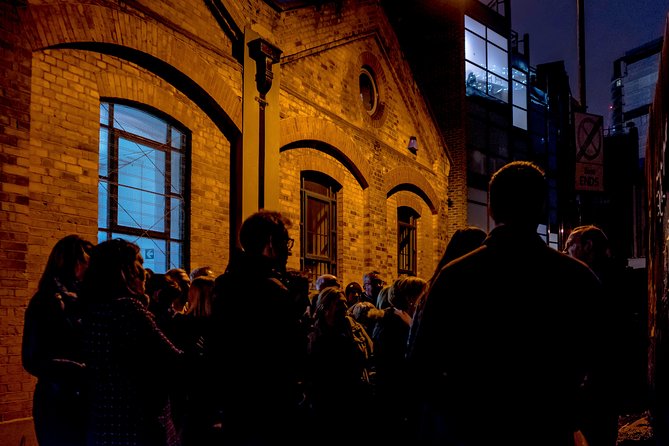
- The walk ends at Mitre Square, close to Aldgate Underground station, after starting at Aldgate East.
- Original photographs, police reports, and press reports help you compare Victorian East London with the streets you see today.
- Guides include Jeremy, Angie, Philip, and Jackie, with the strongest praise focused on their storytelling, enthusiasm, and care with the subject.
- Brick Lane and Christ Church Spitalfields add architecture and neighborhood history beyond the murder case.
- The tour lasts about two hours and may include up to 36 people, so comfortable shoes and a position near the guide matter.
- A free 194-page ebook gives you material to read after the walk.
Why walking East London makes the case clearer
Jack the Ripper stories can become a blur of suspects, dates, theories, and grisly details. The useful thing about this tour is that it puts those details on actual streets. You can see how close the places were to one another, how churches and markets shaped the area, and how much of the old street pattern remains.
The walk begins near Aldgate East Station and moves through the historic districts associated with the 1888 murders. Your guide explains the police investigation, introduces the suspects, and discusses the victims as people rather than using them only as pieces in a crime puzzle.
That distinction matters. The best moments of a true-crime tour are not simply the shocking ones. They are the parts that help you understand poverty, work, housing, policing, and the daily pressures of Victorian East London. This experience includes that wider setting, along with the architecture that formed the backdrop to the case.
Guides such as Jeremy have been praised for handling a group with mixed ages, keeping younger participants interested without losing the historical detail. Angie brings long-standing personal interest in the case, while Philip has been noted for adding gentle humor to an otherwise grim subject. The tone can vary by guide, but the shared aim is clear: tell the story with energy while treating the victims with care.
More walking tours in London:
- Tour for Muggles The Ultimate Harry Potter Walking Tour in London
★ 5.0 · 4,684 reviews - Changing of the Guard Guided Walking Tour in London
★ 5.0 · 1,793 reviews - The Great British Rock and Roll Walking Tour
★ 5.0 · 1,371 reviews
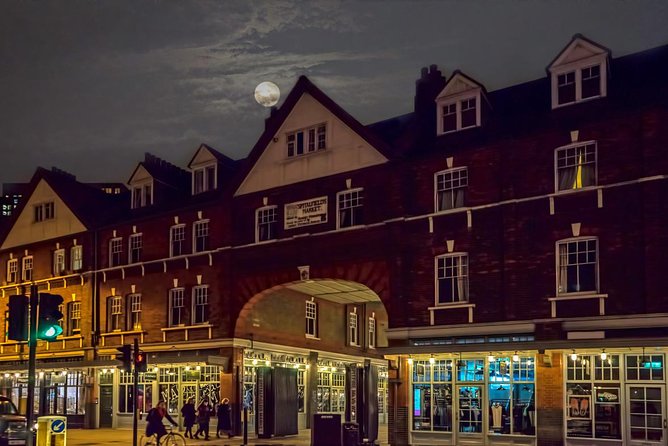
Spitalfields Market: the starting point for the story
Spitalfields Market is the broad starting area for the walk. It gives your guide room to set out the basic story before the group moves into smaller streets and lanes.
Here you begin to build a map in your mind. The guide explains where the murders occurred, how the police investigation developed, and why the case became such a lasting whodunnit. Original photographs show the locations as they appeared at the time, while police and newspaper reports add the period voice.
I find this material more useful than a modern retelling alone. A photograph can show a vanished building, an old street entrance, or the position of a lane far better than a spoken description. Reports also help you separate known facts from later theories.
The market itself is not presented as a paid attraction within the tour. Admission is listed as free, and the value comes from the guiding, the historic material, and the route through the surrounding streets. You should expect the guide to spend much of this two-hour period moving between points, not to remain in one market space.
Spitalfields is also a sensible place to begin because it connects the case with a living part of East London. The modern surroundings make the changes since 1888 easy to notice. That contrast is part of the appeal, though it can also remind you that this is not a preserved crime scene.
Christ Church Spitalfields: a landmark above the old streets
The stop at Christ Church Spitalfields lasts about eight minutes. Its soaring spire dominates the area today, and your guide explains how it also shaped the visual setting in which the 1888 events took place.
This is a short stop, but it gives the walk a strong sense of place. The church helps you picture how landmarks guided people through the district before today’s transport signs, maps, and screens. It also gives you a chance to look up from the darker parts of the story and notice the architecture around you.
The stop is not a church tour, and admission is not charged. Think of it as a viewpoint and historical marker within the wider route. If architecture interests you, pay attention when the guide connects the church and surrounding buildings with the neighborhood of the period.
The short timing also keeps the walk moving. You will not spend long at each landmark, so listen closely and stay near the guide. In a group that can reach 36 people, it is easy to fall behind while taking photographs.
Brick Lane: Victorian streets and modern East London
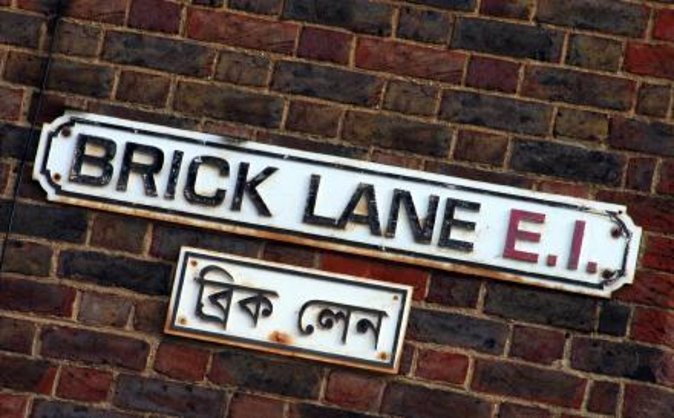
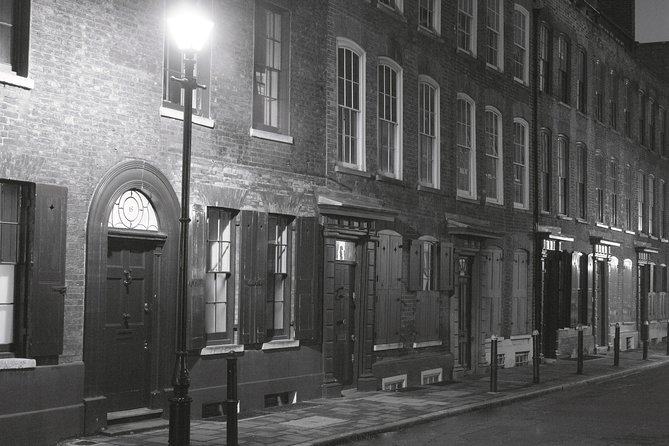
The Brick Lane section lasts about 25 minutes and provides one of the clearest links between the past and present. The streets around it are lined with sturdy 18th-century houses, many of which have changed less than you might expect since the Ripper crimes.
This is where the tour moves beyond a list of murder locations. The buildings help you picture the setting in which the story unfolded. Your guide discusses local architecture and the way the streets formed the backdrop to the crimes, while original images show what has been altered or lost.
You should keep your expectations realistic. Modern East London has changed, and not every original site survives. One useful part of the experience is learning which locations remain recognisable and which have disappeared beneath newer buildings and amenities.
That change can be disappointing if you want every stop to look exactly as it did in 1888. It is also historically honest. The tour does not pretend that the district is a preserved set. Instead, the guide uses photographs and reports to bridge the gap between the old streets and the ones in front of you.
Brick Lane also gives the walk a stronger neighborhood feel. You are not simply being taken from one address to the next. You are seeing how homes, churches, markets, and narrow streets fit together in the wider area.
Other Ripper walks in London:
- London Jack the Ripper Guided Tour with Ripper-Vision
★ 4.5 · 4,840 reviews - Ultimate Jack the Ripper : Guided Tour of London
★ 5.0 · 1,495 reviews - The Original Jack the Ripper : Guided Tour
★ 5.0 · 1,264 reviews - London Jack The Ripper Small-Group Walking Tour
★ 5.0 · 1,013 reviews
The final stop at Mitre Square
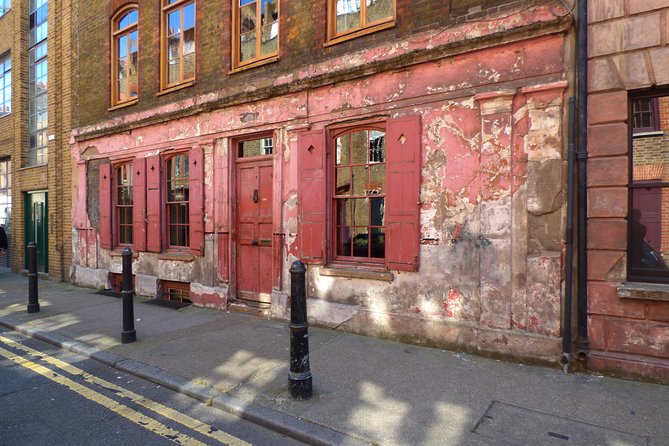
The tour finishes at Mitre Square in London EC3A 5DE, close to Aldgate Underground station. This ending gives the walk a clear finish and makes it easy to continue your evening by Underground or arrange your next stop nearby.
The final location matters because the route has gradually built toward specific murder sites and police questions. By the time you reach Mitre Square, you have heard the main case, seen period images, and walked through the districts that shaped the investigation.
Your guide can also take questions throughout the walk. This is helpful because Jack the Ripper has generated decades of theories, many of which blend fact with speculation. A good guide can explain what is documented, what was reported at the time, and what remains uncertain.
The tour does not claim to solve the case. Its strength is the way it lets you examine the evidence, locations, suspects, and social setting for yourself. That is more satisfying than a forced answer to an unsolved mystery.
Guide style matters more than the route alone
The route is important, but the guide will shape your experience. Jeremy is repeatedly praised for being funny, well-informed, energetic, and able to manage families and younger participants. He also adds small moments of humor that help a dark subject remain approachable.
Angie is described as highly passionate about the case and especially strong at telling the story in a way that keeps the group involved. Philip brings a similar mix of factual detail and light humor. Jackie is also praised for enthusiasm and command of the subject.
These details matter because the walk includes sensitive material. The murders are central, but the best version of the tour also explains who the victims were and what life was like in Whitechapel. The guide’s tone can prevent the experience from becoming either coldly academic or needlessly sensational.
You may not receive the same guide on every departure, so expect some variation in delivery. The consistent strengths are the use of original source material, the opportunity to ask questions, and the effort to connect the murders with the wider area.
Group size, walking effort, and practical comfort
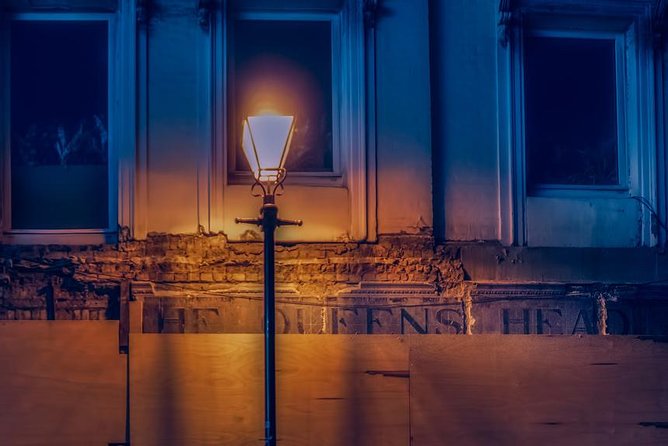
The advertised maximum is 36 people. That is a manageable size for a city walk, but it is not an intimate small-group tour. A group of 30 to 35 can be awkward on narrow streets, and you may need to stand close to hear clearly when traffic or city noise is nearby.
If you want the best listening position, stay toward the front and keep an eye on the guide when the group moves. The route is about two hours, so wear comfortable shoes and expect to be on your feet for most of the experience.
The tour is near public transportation at both ends. It begins at Aldgate East Station and finishes at Mitre Square near Aldgate Underground station, which makes it practical for an evening in East London. Travel to and from the walk is not included, so allow time to reach Aldgate East before the start.
Most people can take part, and service animals are allowed. The supplied information does not promise step-free access on every part of the route, so anyone with mobility concerns should confirm the details before booking.
Is the listed price really free?
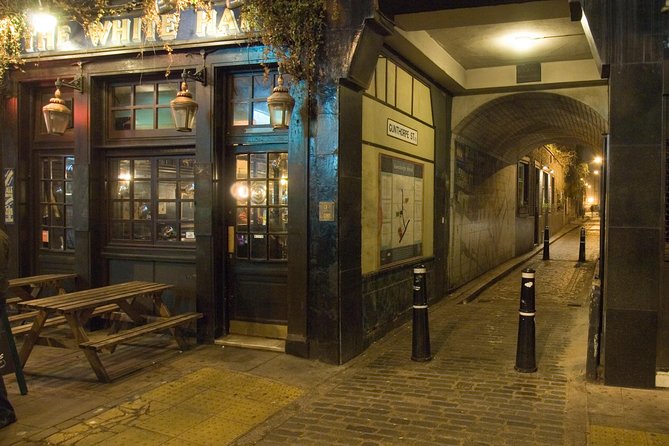
The supplied price is shown as $0.00, with free admission listed for the walking stops. That suggests there is no separate entry fee for Spitalfields Market, Christ Church Spitalfields, Brick Lane, or Mitre Square.
Still, check the final booking screen before you commit. A displayed zero price can sometimes reflect how a tour listing is presented rather than the complete cost of a reservation. Your transport to and from the meeting point is not included.
If the walk is available at no charge, the value is unusually strong because you receive a two-hour guided route, original location photographs, police and press reports, direct discussion with the guide, and a 194-page ebook. If a booking fee appears later, compare it with other London walking tours based on guide quality and group size, not simply on duration.
The ebook is a useful extra. You can use it to revisit names, theories, photographs, and reports after the tour, when you are no longer trying to keep up with a moving group.
Who will enjoy this walk most?
I would choose this tour if you enjoy true crime but also want social and architectural context. It suits visitors who prefer seeing a district on foot rather than riding past it, and it works well for families with older children if they can manage two hours of walking and serious subject matter.
It is also a good fit for first-time visitors to East London. The route introduces Spitalfields, Brick Lane, Christ Church Spitalfields, and Aldgate while giving you a focused reason to explore them.
You may want something else if you dislike gruesome crime stories, prefer a very small group, or need a fully preserved historic setting. The walk cannot restore locations that modern construction has removed, and a group of up to 36 may feel too large for close conversation.
The experience is less about dramatic staging and more about a guide using streets, images, documents, and stories to explain an unsolved case. That makes it a better choice for curious history fans than for anyone seeking a theatrical ghost show.
Cancellation and booking details
You can cancel for a full refund up to 24 hours before the experience begins. Cancellations or changes made within 24 hours are not accepted for a refund, and the cut-off follows local London time.
Confirmation is provided at booking, and the experience uses a mobile ticket. Keep the meeting point details handy: Aldgate East Station, London E1, with the finish at Mitre Square near Aldgate Underground station.
Should you book the Jack the Ripper walk?
Book it if you want a serious but entertaining look at the case, with real streets, period images, police and press material, and plenty of room for questions. The strongest reason to choose it is the guide-led storytelling, especially if you get Jeremy, Angie, Philip, or Jackie.
Go in expecting modern East London, not a preserved Victorian set. Accept the possibility of a large group and some missing original locations, then the walk offers a useful blend of crime history, local architecture, and neighborhood context. The free 194-page ebook makes it even more worthwhile for anyone who wants to keep examining the case after the evening ends.
FAQ
How long does the Jack the Ripper walking tour last?
The tour lasts approximately two hours.
Where does the tour begin?
It begins at Aldgate East Station in London E1.
Where does the tour finish?
The walk finishes at Mitre Square, London EC3A 5DE, close to Aldgate Underground station.
What locations are included?
The route includes the Spitalfields Market area, Christ Church Spitalfields, Brick Lane, and the murder locations associated with the Jack the Ripper case.
Is admission to the stops included?
Admission to the listed stops is free. Travel costs to and from the tour are not included.
Who guides the tour?
Guides named in the supplied information include Jeremy, Angie, Philip, and Jackie. The specific guide may vary by departure.
What material will the guide show?
The tour includes original photographs of the locations, along with police and press reports about the crimes.
Is an ebook included?
Yes. A link to a free 194-page ebook is included with the tour.
How many people can join the tour?
The maximum group size is 36 people.
Can I cancel for a refund?
Yes, you can cancel up to 24 hours before the start time for a full refund. Cancellations or changes made less than 24 hours before the start time are not accepted for a refund.
Just added in London
- Private London Departure Transfer – Hotel / Accommodation to Cruise Port★ 4.5 · 77 reviews
- Private landmarks photoshoot for families and couples★ 5.0 · 92 reviews
- Professional Photoshoot in London Photographer★ 5.0 · 102 reviews
- Private Tour: Night Photography Tour in London★ 5.0 · 48 reviews
- Professional Private Photoshoot in London★ 5.0 · 63 reviews
- Shoreditch Street Art and Graffiti Tour (Private Group Booking)★ 5.0 · 108 reviews
- Transfer London to Southampton Cruise Terminal (extra luggage)★ 4.5 · 81 reviews
- London, Windsor Castle, Hampton Court Palace with Free Snack Pack★ 4.0 · 102 reviews
Jack the Ripper Tours, compared.
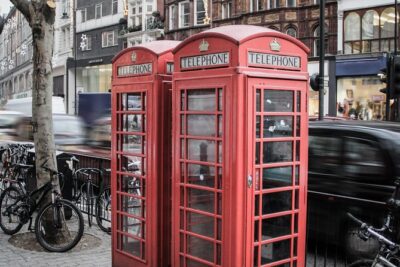
London Jack the Ripper Guided Tour with Ripper-Vision
Read our review →
Ultimate Jack the Ripper : Guided Tour of London
Read our review →

London Jack The Ripper Small-Group Walking Tour
Read our review →
The Original Jack the Ripper Coach Tour of Haunted London
Read our review →
Jack the Ripper Tour with ‘Ripper-Vision’ in London- Afternoon
Read our review →Browse the lists this tour appears in