
Reviewed · THAMES RIVER CRUISES
Thames Beachcombing
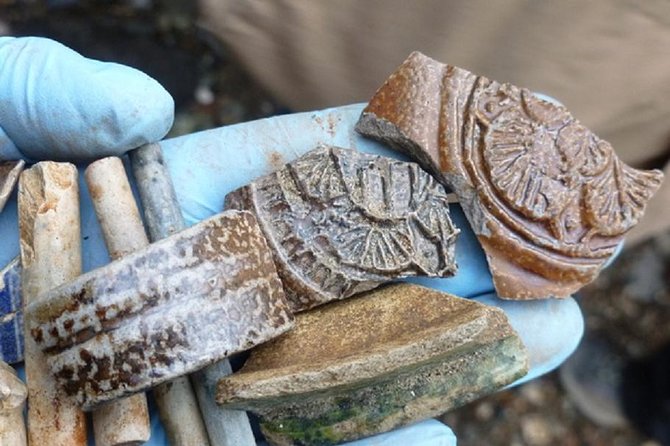
The best thing about Thames beachcombing is the chance to hold a small piece of London’s past in your hand. At low tide, you’ll search the foreshore for pottery, roof tiles, clay pipes, and other objects that have washed out of the river mud. Your guide then helps sort the finds and explain what they are.
I like the hands-on history and the small-group format, which lets you ask about each odd bit of ceramic or pipe stem. I also like that the activity feels calm and unpolished, more like a treasure hunt than a standard sightseeing walk. The main catch is that finds vary by location, tide, and weather, so you should not book this expecting a guaranteed haul.
Key points to know
- Low tide controls the day: The exact foreshore site and meeting time change during the year, and your guide sends those details after booking.
- Robert is a popular guide: He is especially good at identifying finds and explaining what they reveal about London.
- You search for about 90 minutes: The total activity lasts around two hours, with time at the end to sort and discuss what you found.
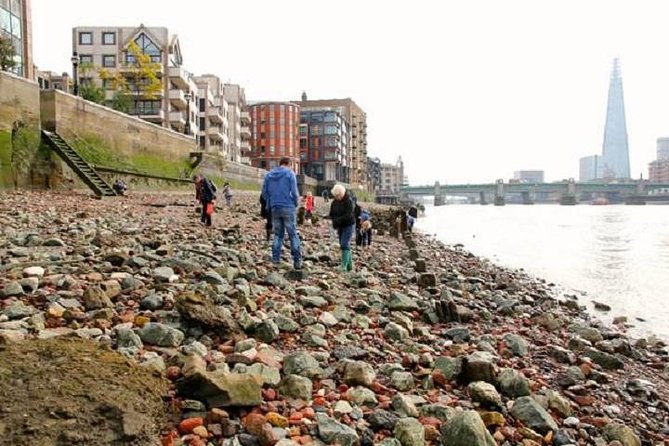
- Expect mud and stones: Wellington boots or hiking boots are essential. Ordinary city shoes are a poor choice.
- Good for families and curious minds: Children under 16 need an adult, and children as young as five have enjoyed the search.
- No treasure is promised: You may find clay pipes, tiles, or pottery, but the pleasure comes from the hunt and the stories attached to small objects.
What Thames beachcombing is really like
Mudlarking is an old London pastime with a simple rhythm: walk the exposed river edge, scan the ground, pick up likely pieces, and ask what they might be. This outing gives you a practical introduction without requiring any specialist knowledge.
The Thames foreshore is not a tidy beach. It is stony, uneven, and can be slick with mud. You’ll be looking down often, moving slowly, and bending or crouching to inspect small pieces. That physical pace is part of the appeal, but it also means you should have a moderate level of fitness.
Your guide provides gloves and plastic bags. The gloves keep your hands cleaner and make it easier to handle damp objects, while the bag gives you a place to keep possible finds as you continue searching. Bring sturdy footwear, clothes that can take a splash of mud, and enough layers for an exposed riverbank.
The activity is limited to objects you can spot with your eyes. You are not digging into the foreshore or using tools. That keeps the outing simple, but it also means you need patience and a sharp eye. Many pieces will be ordinary modern debris or broken fragments. The fun is learning to notice which scraps deserve a closer look.
Other boats on the river from London:
- London Big Bus Hop-On Hop-Off Tour with Optional River Cruise
★ 3.5 · 10,803 reviews - High-Speed Thames River Speedboat in London
★ 5.0 · 3,971 reviews - London Tootbus Hop on Hop off Bus Tour and Thames River Cruise
★ 4.0 · 3,834 reviews
Starting at a changing Thames foreshore
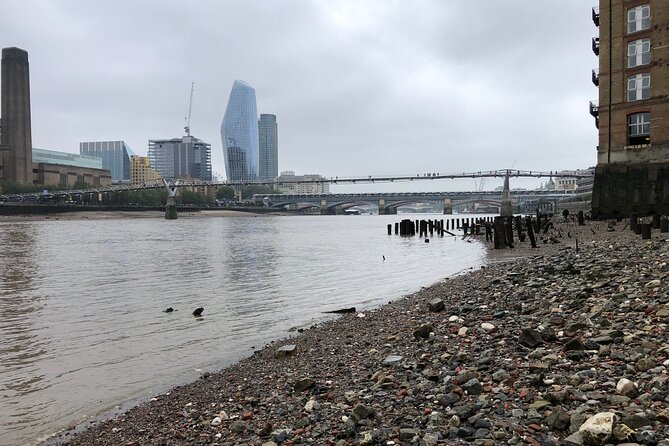
The activity begins somewhere in London, but the exact stretch of foreshore changes. Your guide contacts you with the meeting point and start time, since the safe and useful window depends on the tide and the time of year.
This is an important practical detail. You cannot treat the start location as a fixed attraction that you can casually find on a map. Read the instructions sent after booking and allow time to make your way there by public transport or on foot.
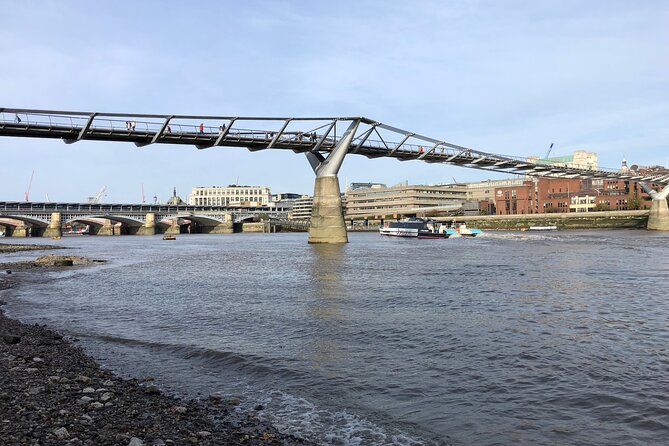
Different parts of the river can produce different sorts of objects. A site near one bridge may feel quite different from a stretch farther upstream. Some people find a particular section rewarding, while another outing can produce fewer pieces. That variation is normal and is one reason the experience feels like a real search rather than a staged display.
Once the group reaches the foreshore, the guide gives you gloves, bags, and an explanation of what to look for. You may also see examples or pictures of likely finds before you begin. This short introduction matters because a piece of old pottery can look like a dull shard until you know what features to notice.
Ninety minutes of searching
The main search lasts about an hour and a half. With a group capped at roughly 15 people in the description, and no more than 20 travelers in the additional information, expect a small group but not necessarily a private outing. The exact group size may vary.
Small groups work well here. You can spread out along the foreshore instead of standing in a tight circle, then return to the guide with questions. A good guide moves between people, checks promising objects, and helps you tell a historic fragment from modern rubbish.
The search can feel surprisingly absorbing. You may start by looking for obvious items such as a patterned tile or a clay pipe stem. After a while, you begin to scan for color, shape, glaze, texture, and the telltale curve of a manufactured piece.
Clay pipes are among the most memorable possible finds. Small fragments may seem insignificant at first, but they connect the foreshore to ordinary life in earlier London. Pottery fragments and roof tiles can also carry clues through their material and markings. One especially striking kind of find is a fingerprint left in clay while a handle or vessel was being made.
You might find objects dating to before the Great Fire of London, including older tiles or pottery. You might also find nothing more dramatic than a few small pieces. The guide’s interpretation is what gives those pieces meaning. A shard is not valuable because it is large. It is interesting because of what its shape, surface, and material can tell you.
Making sense of your finds with Robert
Robert is the guide most often associated with this experience, and his role goes well beyond pointing out where to look. He helps identify objects as you find them and then gives a fuller explanation at the end.
That final review is one of the strongest parts of the outing. You place your finds together, and the guide helps separate the interesting pieces from ordinary debris. You can ask how old something might be, what it was used for, and why it ended up along the Thames.
The group discussion adds another layer. You learn from the other objects found around you, not just your own. One person may have a pipe fragment, another a bit of pottery, and someone else a tile with an unusual surface. Taken together, these small pieces create a clearer picture of daily life along the river.
Robert is described as approachable and very good at explaining finds in plain terms. That matters for beginners. You do not need to arrive knowing the difference between types of ceramic or having a background in archaeology. You need curiosity and the willingness to look carefully.
Guide quality can vary, as it can on any small-group activity. The strongest outings depend on an engaged guide who keeps the group interested and takes time with each object. The high overall score of 4.7 from 100 ratings, with 93 percent recommending the experience, suggests that this usually happens. Still, the foreshore itself remains part of the experience, so your enjoyment should not depend entirely on a lively presentation.
Same base, a different kind of day:
- Stonehenge, Windsor Castle, and Bath from London
★ 4.5 · 18,662 reviews - London Small Group Tour of Historical Pubs
★ 5.0 · 10,422 reviews - Stonehenge, Windsor Castle and Bath with Pub Lunch in Lacock
★ 4.5 · 7,402 reviews - Tower of London and Crown Jewels Exhibition Ticket
★ 4.5 · 6,677 reviews
Why the small finds matter
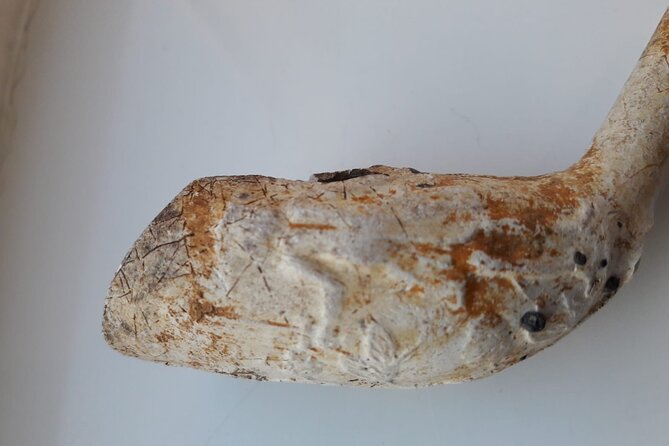
This is not a museum visit with labeled cases and polished displays. You handle fragments in the place where they were left. That changes how you think about London’s past.
A broken tile can show how a building was roofed. A clay pipe can point to smoking habits and ordinary routines. A piece of pottery may preserve a glaze, shape, or mark that helps identify its period. Even a fingerprint in clay gives the object a human connection that a glass case cannot quite match.
I like the way this activity rewards attention rather than speed. You are not racing from one famous sight to another. You are looking at the ground, noticing small changes, and asking questions. It can feel almost meditative, especially on a quiet morning.
There is also a useful lesson in uncertainty. You may find something that looks ancient but is not particularly old. You may overlook a valuable clue because it resembles a common stone. The guide helps, but you still take part in the process of figuring things out.
Do not assume you can take every object home. The supplied details say that the guide helps decide what is worth keeping, and some participants have brought home small pieces. Follow your guide’s instructions about finds and local rules. The point is not to strip the riverbank. It is to learn how to read it.
Family appeal and physical demands
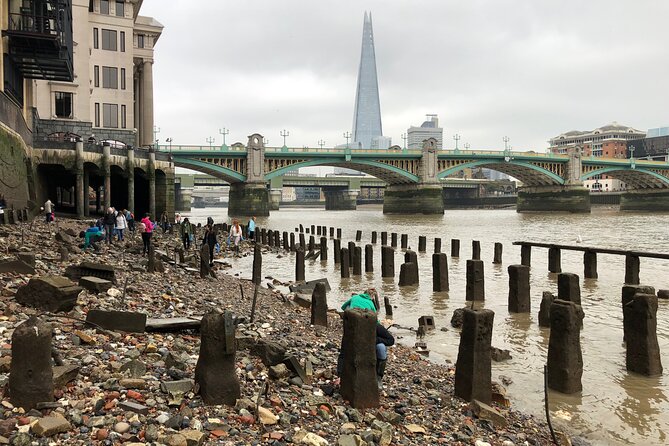
The activity can work well for families, especially children who like hunting games and objects with a story. A five-year-old has stayed engaged through the search, and a nine-year-old particularly enjoyed looking for clay pipes and old pieces of London.
Young children need close supervision. The foreshore is uneven, muddy, and near a tidal river. Children under 16 must be accompanied by an adult, and every child should have footwear that grips well.
One useful family tip: the supplied gloves may be too large for a very young child. Bring smaller gloves if you have them. Gloves that slide off every few minutes can turn a fun search into a steady nuisance.
For adults, the main physical issue is the ground. This is not a strenuous hike, but it is not a smooth pavement walk either. You may walk over stones, crouch, bend, and keep your balance on wet surfaces. The stated requirement for moderate fitness is fair.
Price, timing, and practical value
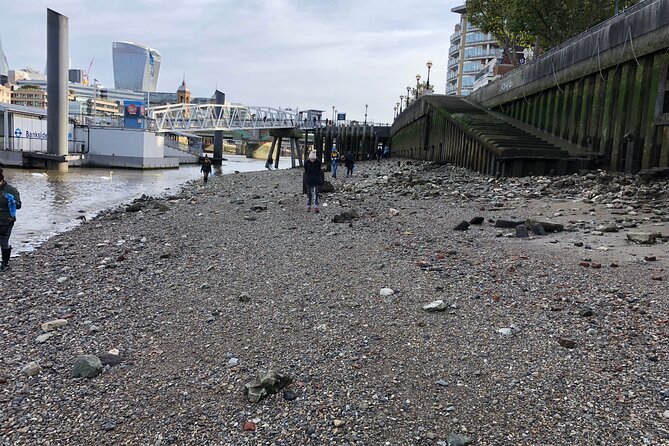
At $41.41 per person, the price is reasonable if you value an active, guided experience rather than a conventional tour. You get about two hours with a local guide, gloves, bags, object identification, and historical context. The main value comes from access to expert interpretation, not from the objects themselves.
You could walk beside the Thames for free, but you would not necessarily know what you were seeing. A chipped piece of ceramic might be meaningless without help. Here, the guide gives you a way to turn random fragments into evidence of past lives.
The price feels less attractive if you want guaranteed archaeological finds or a tightly scripted sightseeing program. The location changes, the weather can cancel the outing, and the foreshore can be generous one day and quiet the next. This is a search, not a display of prepared artifacts.
The experience lasts approximately two hours, including about 90 minutes of beachcombing. It is best suited to a morning or afternoon when you can remain flexible around the meeting time. The guide provides the final details, so do not build a rushed connection or another fixed appointment immediately afterward.
Confirmation arrives within 48 hours of booking, subject to availability. You can cancel for a full refund up to 24 hours before the start time. If poor weather causes cancellation, you are offered another date or a full refund.
Who should book this experience
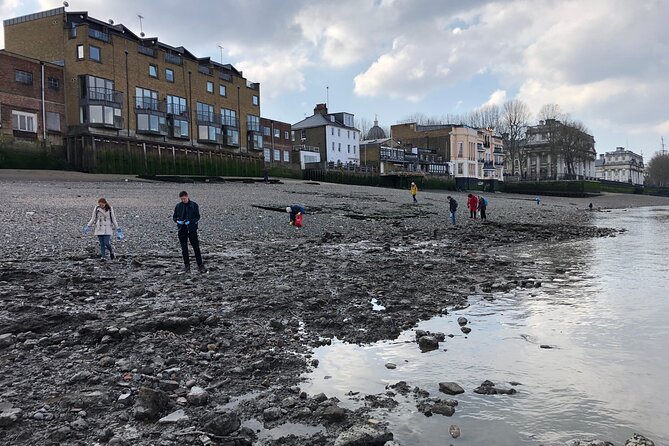
I would choose Thames beachcombing if you enjoy history in small, physical details. It is a strong match for people who like searching, collecting, photography, family activities, and unusual ways to understand a city.
It also suits repeat visitors who have already seen the major sights. The activity takes you away from the usual route and gives you something to do with your hands. Even if you have only a short London stay, it can provide a memorable change from museums and monuments.
Families should consider it, provided children can manage mud, stones, and a slow search. The activity has worked well for children aged five and nine, but younger children may need extra help with gloves and footing.
I would hesitate if you dislike dirt, have difficulty walking on uneven ground, or need a guaranteed schedule and fixed location. I would also think twice if you are mainly interested in taking home valuable antiques. The likely reward is a small object and a good story, not a rare treasure.
Final call: is Thames beachcombing worth it?
Yes, for the right kind of curiosity. The activity earns its strong reputation through three things: a genuine search along the river, useful explanations from the guide, and the thrill of finding objects tied to London’s everyday past.
Book it if you want a slow, hands-on experience and can accept uncertainty. Wear boots, keep your plans flexible, and expect small fragments rather than cinematic treasure. If Robert is leading your outing, you can expect careful help identifying what you find. The best souvenir may be the object you keep, but the better reward is learning how much of London’s story is still visible under your feet.
FAQ
How long does Thames beachcombing last?
The experience lasts approximately two hours. Around 90 minutes is spent searching the Thames foreshore, followed by time to identify and discuss the finds.
Where does the activity start?
It starts at a London meeting point on the Thames foreshore. The exact location changes during the year, and the guide provides the meeting details and time after booking.
What might I find?
Possible finds include clay pipe fragments, pottery, roof tiles, ceramics, and other objects washed onto the foreshore. You may also find pieces dating from before the Great Fire of London.
Are gloves and bags provided?
Yes. Gloves and plastic bags are included for the beachcombing session.
What should I wear?
Wear wellington boots or hiking boots. The foreshore is stony and may be muddy, so ordinary city shoes are not suitable.
Can children join the activity?
Yes. Children under 16 must be accompanied by an adult. The activity has been suitable for children as young as five, though young children may need smaller gloves than those provided.
What happens if the weather is poor?
The experience requires good weather. If the provider cancels because of poor weather, you can choose another date or receive a full refund.
Just added in London
- The Beatles and a Secret pub★ 4.5 · 36 reviews
- The Beatles & Liverpool Magical Mystery Tour from London★ 4.5 · 80 reviews
- Airport Coach Service from Heathrow to Oxford★ 3.5 · 67 reviews
- The Beatles Magical History Black Taxi Tour London★ 5.0 · 51 reviews
- The Beatles London walking tour. From Abbey Road to the Roof Top★ 5.0 · 61 reviews
- Private The Beatles Taxi Tour in London★ 5.0 · 12 reviews
- The Beatles London Walk★ 4.5 · 120 reviews
- The Alfred Hitchcock London Walk with Sandra Shevey★ 5.0 · 15 reviews
Thames River Cruises, compared.

London Big Bus Hop-On Hop-Off Tour with Optional River Cruise
Read our review →

London Tootbus Hop on Hop off Bus Tour and Thames River Cruise
Read our review →
Westminster to Greenwich Sightseeing Thames Cruise in London
Read our review →

London In One Day Tour with River Cruise & London Eye Option
Read our review →
Uber Boat – Single Journey River Thames Cruise
Read our review →
Browse the lists this tour appears in