
Reviewed · JACK THE RIPPER TOURS
Jack the Ripper – What About the Women?
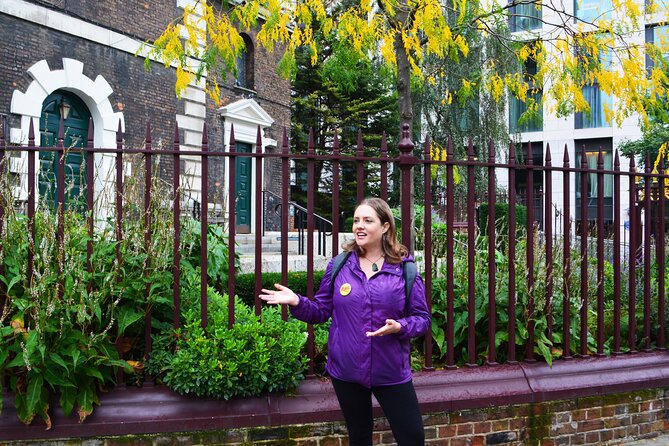
The most worthwhile thing about this tour is its choice of subject. Instead of making Jack the Ripper the main character, it puts Martha Tabram, Polly Nichols, Annie Chapman, Mary Jane Kelly, Elizabeth Stride, and Catherine Eddowes at the center of the story. You get a history walk about real women and the hard world they lived in, not a parade of murder lore.
I like the fact-based approach and the way the route connects the crimes to Victorian poverty, addiction, migration, and housing. I also like the small maximum group of 20, which should make it easier to hear guides such as Cecily and Ellie in the busy East End streets. The main drawback is that this is a two-hour walking tour with an emotionally heavy subject, and anyone expecting grisly crime scenes or sensational theories may find it too restrained.
Key points to know before you book
- The women come first: The tour focuses on the victims’ lives, families, work, and circumstances rather than glorifying the killer.
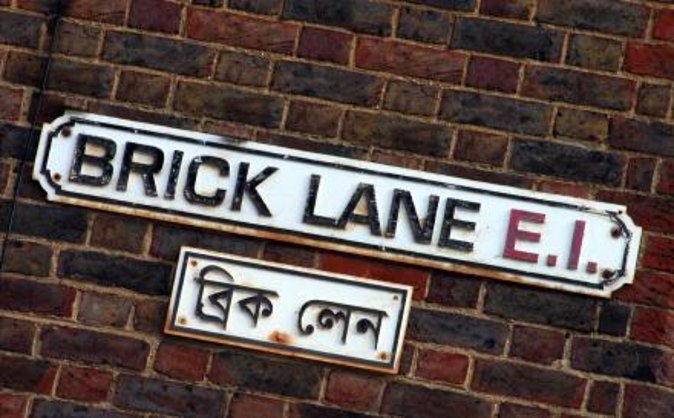
- A useful East End route: You’ll pass Whitechapel Road, Brick Lane, the Truman Brewery site, Spitalfields Market, Petticoat Lane, St Botolph’s Aldgate, and Mitre Square.
- A history tour as much as a crime tour: Expect discussion of workhouses, dosshouses, addiction, immigration, charities, and life among London’s poor.
- Good for mature families: The subject is serious, but the tour avoids grisly photographs and graphic descriptions.
- Evening timing matters: The 6:30 p.m. start lets you see East London after dark, when its streets feel particularly atmospheric.
- Strong value at $34.28: For two hours with an experienced guide and a route through several major East End sites, the price is reasonable.
Why this Whitechapel tour feels different
Many Jack the Ripper walks make the unknown killer the star. This one takes a more useful path. You learn who the women were, how they survived, and how Victorian society treated poor women who had few safe choices.
That change in focus matters. The murders happened in a place shaped by overcrowded housing, insecure work, alcohol addiction, and sharp class divisions. If you only hear the crime story, you miss the setting that made life so precarious. Here, the streets become a way to understand London in 1888, not simply a backdrop for a famous mystery.
The tour also corrects a common simplification. The women are often reduced to the label prostitute, even though their lives were more complicated than that. The guide explains the circumstances that brought them to Whitechapel and the social pressures they faced. You come away with people in mind, not just names on a murder list.
The tone is serious but not grim for the sake of drama. It is suitable for mature families, including older children and teenagers who can handle the subject. The absence of grisly images makes a big difference. You still hear about the murders, but the emphasis is on evidence, context, and human lives.
Other Ripper walks in London:
- London Jack the Ripper Guided Tour with Ripper-Vision
★ 4.5 · 4,840 reviews - London Jack The Ripper Guided Walking Tour
★ 5.0 · 3,131 reviews - Ultimate Jack the Ripper : Guided Tour of London
★ 5.0 · 1,495 reviews
Starting at Aldgate and entering the Victorian East End
The meeting point is outside Aldgate station on Aldgate High Street, with a start time of 6:30 p.m. That is an easy place to reach by public transport, and it gives you a clear landmark in a part of London where several streets can look alike.
The first section covers Whitechapel Road and introduces Martha Tabram and Polly Nichols. Rather than rushing straight to the crimes, the guide explains how working-class people lived in the Victorian East End.
You hear about dosshouses, workhouses, spikes, and other forms of cheap or emergency accommodation. These details show how little privacy or security many poor people had. A spike, for example, was not a comfortable shelter but a basic place to sleep, often tied to harsh conditions and strict rules.
This part also points to charities still working in the area today. That link between past and present gives the walk more purpose. Whitechapel is not a museum frozen in 1888. It remains a part of London where questions about housing, poverty, and support still matter.
Allow about 20 minutes for this opening stop. It is a strong beginning because it gives you the social setting before the tour moves into the women’s individual stories.
Brick Lane, Polly Nichols, and the changing East End
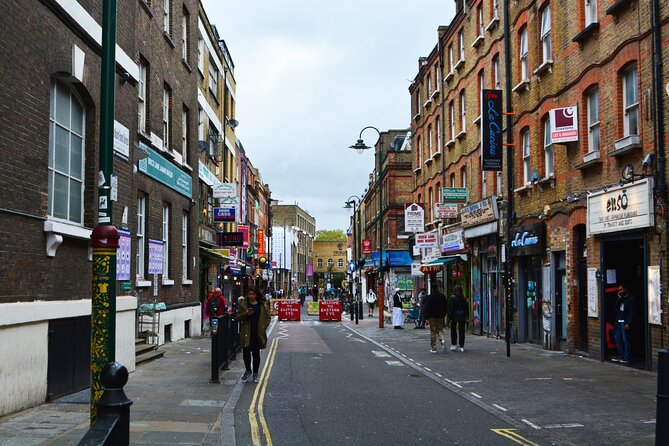
Brick Lane brings a shift in mood. Today, it is one of East London’s best-known streets for food, shops, street art, and changing communities. On this walk, you also hear about the pub where Polly Nichols spent her final night.
Her story opens a discussion about alcohol and addiction in the Victorian era. The point is not to judge her choices from a safe modern distance. Instead, you get a clearer sense of how addiction, poverty, unstable work, and limited support could combine to trap people.
The stop lasts about 15 minutes. You may have time to sit during parts of the tour, but much of the experience takes place on active city streets. Wear shoes that can handle two hours of walking and pay attention when the guide is speaking near traffic or other pedestrians.
The Brick Lane Mosque adds another important layer. The guide explains the East End’s immigration story and the cultural changes that shaped the area. That makes the tour about more than one notorious year. It shows how communities form, change, and leave their mark on the same streets over time.
I especially value this part because it connects the Victorian East End to the multicultural neighborhood you see today. The route does not treat local history as a sealed-off chapter. It helps you notice how the area’s identity has continued to develop.
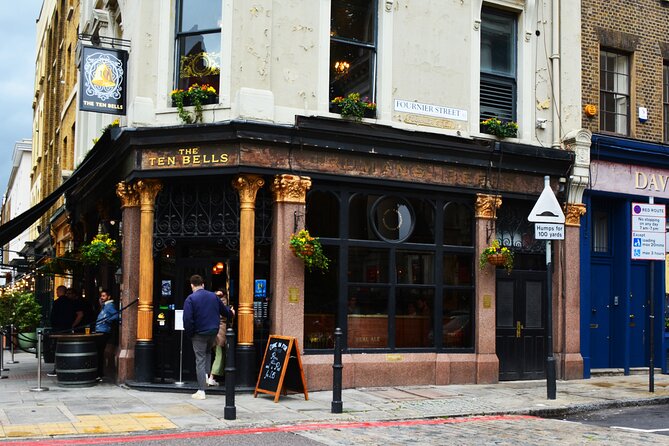
Spitalfields, Annie Chapman, and the Ten Bells story
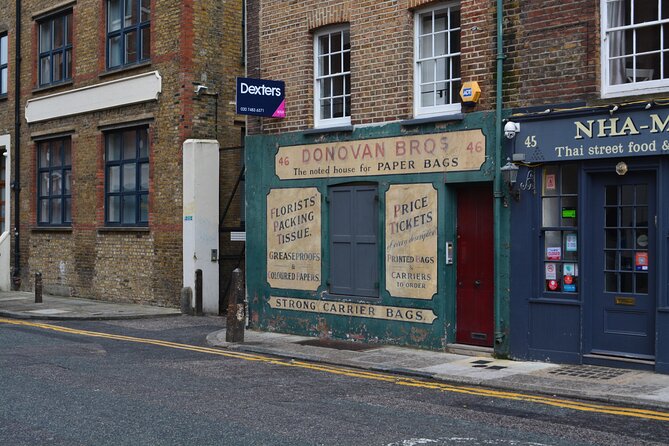
The Spitalfields section brings you to the site of the old Truman Brewery, once described as the largest brewery in the world. The scale of that operation helps you picture the East End as a major working district, not simply a poor quarter at the edge of London.
Nearby, you visit the site of 29 Hanbury Street, where Annie Chapman was found on September 8. The guide then turns back from the crime scene to Annie’s life and the grief she experienced.
That choice is central to the tour. You do not simply hear where a body was found. You hear about the woman who lived before that moment, the losses she suffered, and the social world around her.
Around the corner is the Ten Bells pub. Its connection with the murders has made it a regular stop on traditional Jack the Ripper walks. This tour also explains how the pub was renamed the Jack the Ripper pub and later returned to the name Ten Bells after pressure from the Reclaim the Night movement.
That detail is valuable because it shows how public memory can change. Names on buildings are not neutral. They can honor victims, sell a story, or turn violence into entertainment. The decision to move away from the killer’s name says something about how London chooses to remember its past.
This section takes about 10 minutes, but the surrounding material gives it more weight than a quick photo stop. You are encouraged to think about what gets remembered and what gets erased.
Same base, a different kind of day:
- Stonehenge, Windsor Castle, and Bath from London
★ 4.5 · 18,662 reviews - London Big Bus Hop-On Hop-Off Tour with Optional River Cruise
★ 3.5 · 10,803 reviews - London Small Group Tour of Historical Pubs
★ 5.0 · 10,422 reviews - Stonehenge, Windsor Castle and Bath with Pub Lunch in Lacock
★ 4.5 · 7,402 reviews
Old Spitalfields Market and Mary Jane Kelly
Old Spitalfields Market opened in 1887, the year of Queen Victoria’s Golden Jubilee and one year before the Whitechapel murders began. The market gives the guide a useful place to explain the contrasts of Victorian London.
The era produced grand celebrations, expanding industry, and displays of wealth. At the same time, many people lived in poor housing and struggled to pay for food and shelter. That contrast is one of the clearest themes running through the entire walk.
The route then heads toward Crispin Street and the former site of a refuge for working-class people that actually provided effective help. That makes an interesting counterpoint to the grim accommodation discussed earlier. Not every institution failed the people it was meant to serve.
Across the street is the former site of Mary Jane Kelly’s residence. She was the last of the women usually linked to the Whitechapel murders and remains the most mysterious figure in the story.
The guide treats that mystery carefully. You hear about Mary Jane Kelly without turning uncertainty into a license for wild claims. This is one of the places where the tour’s restrained tone works well. You get the known details and the limits of the evidence.
Old Spitalfields Market is also a practical place to orient yourself. The listed end point is at Spitalfields Market, 65 Brushfield Street, although the route includes later stops around Aldgate and Mitre Square. Check the exact meeting and ending details when you book, and allow time for the full walk rather than planning a tight dinner reservation immediately afterward.
Petticoat Lane and the working textile district
Petticoat Lane Market marks the former heart of the East End textile industry. The stop is short, about five minutes, but it adds useful economic context.
Textiles were a major part of working life in this area. A market, workshops, clothing trades, and cheap housing all helped shape the streets. The women’s lives cannot be separated from that wider system of work and trade.
This is not a long presentation at the market, so do not book the tour expecting extended shopping time. Its value is as a quick link between the people discussed and the industries that supported East London.
St Botolph’s Aldgate and the final stories
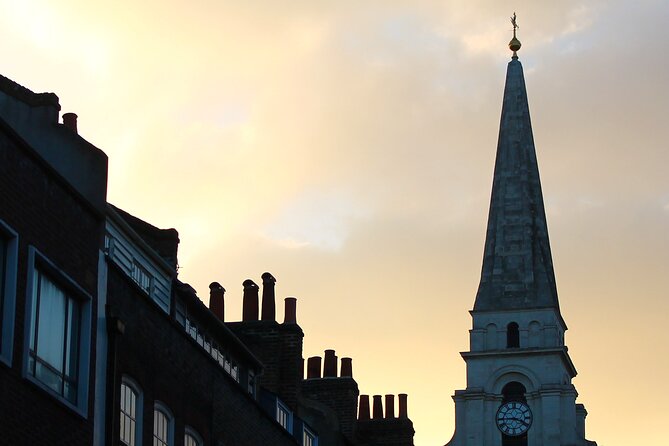
At St Botolph’s without Aldgate, the guide introduces Elizabeth Stride. Originally from Sweden, she had difficult beginnings in Gothenburg before making her way to London.
Her story broadens the tour again. Whitechapel was not only home to people born in London. It attracted migrants from across Britain and Europe, each bringing different backgrounds and facing their own barriers.
The final stop is Mitre Square, where Catherine Eddowes was found. The guide tells you about her life and describes her as a lively woman from Wolverhampton. That phrasing matters because it gives her personality rather than leaving her as the last name in a list.
The St Botolph’s and Mitre Square section takes about 25 minutes, making it the longest stop. It offers time to draw together the main ideas: poverty, migration, housing, addiction, gender, and the way the police and press treated working-class women.
Because the tour takes place in the evening, these locations carry a natural atmosphere. You see the streets after dark, but the experience does not depend on theatrical scares or spooky effects. The mood comes from the place itself and from the knowledge of what happened there.
Guides, group size, and the quality of the storytelling
The tour is led by an experienced guide, and Cecily and Ellie are named examples of the people who lead it. Both are praised for clear delivery, warmth, and strong command of the women’s stories and the local area.
Cecily’s speaking style is especially useful if you have hearing difficulty or English is not your first language. The tour depends on spoken storytelling, so clarity matters as much as historical detail.
The maximum group size is 20. That is not a private tour, but it is small enough to preserve a more personal feel than a large crowd. A smaller group also makes it easier to ask questions and hear the guide at frequent stops.
The route includes places to sit when needed, but you should still expect a fair amount of walking. The tour lasts about two hours, with stops of different lengths. Comfortable shoes are the sensible choice, and you should dress for London weather since this is an outdoor evening activity.
Service animals are allowed, and the tour is near public transportation. Most people can take part, though the combination of walking, uneven city movement, and a serious subject may not suit everyone.
Is $34.28 good value for two hours?
At $34.28 per person, this is a fair price for a guided London walk, especially if you want more than a crime story. You are paying for an experienced guide, a carefully planned route, and historical interpretation across several East End neighborhoods.
The value is strongest if you appreciate social history. You see the sites, but the guide also explains why these places mattered, how people lived, and how the area changed. That is more useful than simply collecting murder locations.
The price may feel less worthwhile if you want a short, theatrical evening activity with dramatic reenactments, ghost stories, or graphic crime detail. This tour is quieter and more reflective. Its subject is still dark, but its goal is understanding rather than shock.
The experience is offered in English with a mobile ticket. It is commonly booked well ahead, around 27 days in advance on average, so do not assume you can always leave it until the last moment.
Free cancellation is available up to 24 hours before the start time. Changes or cancellations inside that window are not accepted for a refund. The tour also requires good weather and a minimum number of participants. If poor weather or low enrollment cancels it, you are offered another date or experience, or a full refund.
Who should book Jack the Ripper: What About the Women?
Book this tour if you want a respectful look at the Whitechapel murders and the women behind the headlines. It suits visitors who have read about the case already and want something less focused on the killer, as well as first-time visitors who want a useful introduction to Victorian East London.
It is also a good choice for mature families. The lack of grisly images and graphic descriptions makes it more approachable than many crime walks, though the subject remains sad and unsettling.
I would skip it if your priority is a fast-paced mystery tour, supernatural storytelling, or sensational crime detail. For everyone else, the combination of real places, clear social context, and attention to forgotten lives makes this a thoughtful way to see East London after dark.
FAQ
Where does the tour start?
It starts at Aldgate High Street, London EC3N 1AH, outside Aldgate station. The scheduled start time is 6:30 p.m.
Where does the tour finish?
The listed end point is Spitalfields Market at 65 Brushfield Street, London E1 6AA. The route also includes later sites around St Botolph’s Aldgate and Mitre Square, so check the exact route details when booking.
How long does the experience last?
The walking tour lasts approximately two hours.
How much does the tour cost?
The listed price is $34.28 per person.
Is the tour suitable for children?
The tour contains a serious subject, but it does not use grisly pictures or graphic descriptions. It can suit mature children and teenagers who are comfortable learning about murder and Victorian poverty.
Is the tour available in languages other than English?
The tour is offered in English.
Can I cancel for a full refund?
Yes. You can cancel at least 24 hours before the local start time for a full refund. Cancellations or changes made less than 24 hours before the start time are not refunded.
Just added in London
- The Beatles and a Secret pub★ 4.5 · 36 reviews
- The Beatles & Liverpool Magical Mystery Tour from London★ 4.5 · 80 reviews
- Airport Coach Service from Heathrow to Oxford★ 3.5 · 67 reviews
- The Beatles Magical History Black Taxi Tour London★ 5.0 · 51 reviews
- The Beatles London walking tour. From Abbey Road to the Roof Top★ 5.0 · 61 reviews
- Private The Beatles Taxi Tour in London★ 5.0 · 12 reviews
- The Beatles London Walk★ 4.5 · 120 reviews
- The Alfred Hitchcock London Walk with Sandra Shevey★ 5.0 · 15 reviews
Jack the Ripper Tours, compared.
London Jack the Ripper Guided Tour with Ripper-Vision
Read our review →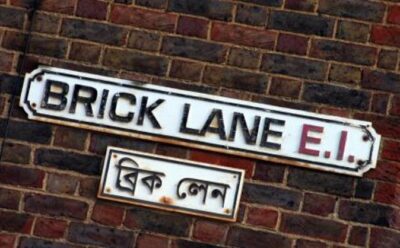
Ultimate Jack the Ripper : Guided Tour of London
Read our review →

London Jack The Ripper Small-Group Walking Tour
Read our review →

The Original Jack the Ripper Coach Tour of Haunted London
Read our review →
Jack the Ripper Tour with ‘Ripper-Vision’ in London- Afternoon
Read our review →Browse the lists this tour appears in