
Reviewed · SHAKESPEARE TOURS
Shakespeare Promenade
Shakespeare Promenade takes you through the city where London’s early theatres, churches, monasteries, markets, and burial grounds once shaped English drama. The most interesting part is the route itself: you begin beside the Thames and finish in Shoreditch, linking famous landmarks with quieter corners most visitors pass without noticing.
I like the small six-person maximum, which gives you room to ask questions rather than trail behind a flag. I also like the actor-guide format. Dee, one of the named guides, uses lines from Shakespeare’s plays and short performances to turn street corners into scenes from the past.
The main drawback is the pace. Two hours includes all walking, stairs, road crossings, and a 20-minute interval at the Barbican, so this is not a slow, café-to-café stroll. You need good shoes, a reasonable level of fitness, and comfort keeping up with a group.
Key points to know before you book
- The route runs from the Thames to Shoreditch, giving you a one-way story of Shakespeare’s London rather than a loop.
- The group has a maximum of six people, a real advantage for questions and personal attention.
- The guide is an actor and narrator, with quotations and performances woven into the history.
- The Millennium Bridge offers broad city views, while the Barbican Highwalk gives you a very different view of modern London.
- You visit the sites of early playhouses, including the first Theatre and the Blackfriars Playhouses.
- The walk suits adults and older teens, but it is not recommended for children under 16 or people with mobility problems.
Why this route tells Shakespeare’s story well
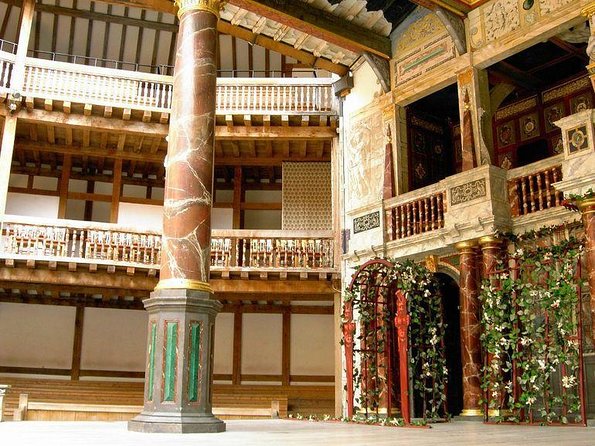
Many Shakespeare tours stay near the reconstructed Globe Theatre. This one uses the Globe as a starting point, then moves north through the City of London and onward to Shoreditch. That gives you a wider sense of the period.
You see where theatres stood, but you also pass churches, city walls, streets, and burial grounds. Those details matter because Shakespeare’s world was not only a stage. It was a dense working city, shaped by religion, trade, disease, fire, power, and constant movement across the Thames.
The route also avoids treating Shakespeare as a statue in a park. At the Guildhall, you hear about Heminges and Condell, the men connected with preserving Shakespeare’s plays in the First Folio. At Noble Street, you see Roman remains near the later city. At the Barbican, you learn how a major modern arts complex became London’s home for the Royal Shakespeare Company.
The actor-guide approach adds a useful change of pace. Dee has been praised for clear delivery, theatrical presentation, and a genuine love of Shakespeare and theatre. You can expect the history to come with lines from the plays, not just dates and building names.
More Shakespeare trips from London:
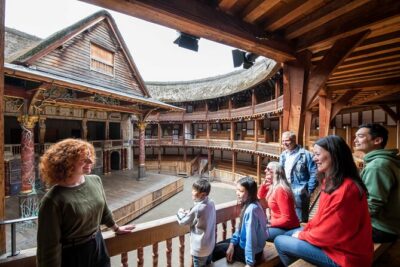
- Shakespeare’s Globe Guided Tour
★ 4.5 · 481 reviews - From London: Shakespeare’s Stratford-upon-Avon Day Trip by Coach
★ 4.5 · 352 reviews - Full Day Cotswolds Tour & Shakespeare’s Stratford From London
★ 5.0 · 204 reviews
Starting beside the Thames and crossing Millennium Bridge
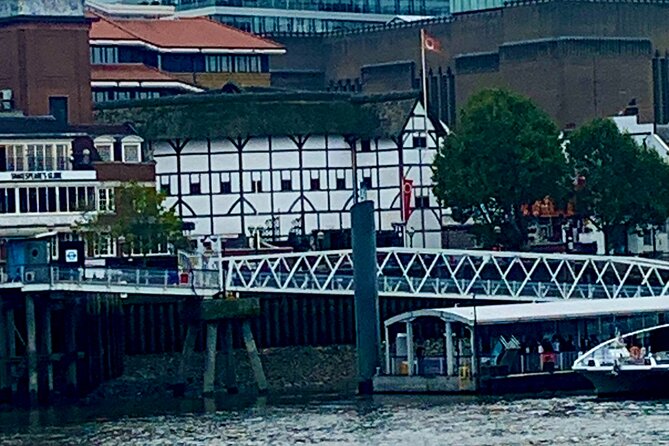
The meeting point is outside The Tallow Chandlers Company at 4 Dowgate Hill. This puts you in the City, close to the river and public transport. From there, the walk follows the Thames path on the north bank and gives you a view across the water toward the Globe Theatre.
The river opening is a good choice. Shakespeare’s theatres depended on the Thames, both for access and for the constant flow of Londoners moving between the north and south banks. Looking across at the Globe lets you place the theatre in its river setting before the tour moves into less obvious locations.
The route also includes crossing the Millennium Bridge, one of the best pedestrian viewpoints in central London. You get changing views of the river and the city, with St. Paul’s Cathedral and the modern skyline forming a sharp contrast to the period being discussed.
Do not expect a long stop at the Globe itself. The tour views it from across the river rather than presenting it as an interior theatre visit. That is useful if you want context, but you should plan a separate Globe visit if you want a performance or a detailed look inside.
Blackfriars, St. Paul’s, and the City streets
The next stops take you to Playhouse Yard, the site of the former Blackfriars Dominican Monastery and the First and Second Blackfriars Playhouses. The stop is short, about five minutes, so the value is in understanding the location rather than inspecting a large surviving structure.
This is one of the tour’s more subtle points. Shakespeare’s theatre world included more than the famous outdoor playhouses. Blackfriars connects drama with a former religious site and with indoor playhouses, giving you a broader picture of where performances took place.
From there, the walk circles St. Paul’s Cathedral along Cheapside and Milk Street. The stop at the cathedral area lasts about five minutes. You are not given a cathedral entry, so think of this as an exterior orientation point and a chance to connect Shakespeare’s London with the streets at the heart of the City.
Cheapside adds useful urban context. This was a major central route, and walking it helps you see how closely theatres, churches, commerce, and daily life were packed together. The guide can also keep the story moving here, since this section is more about setting than a preserved Shakespeare building.
Guildhall and the men who preserved the plays
At Guildhall, you see the Heminges and Condell Shakespeare statue on Love Lane. You also hear about the folio associated with Shakespeare’s plays and the history and speech connected with Guildhall.
This is a valuable stop because it shifts attention from Shakespeare alone to the people who helped keep his work in circulation. Heminges and Condell were linked with the publication of the First Folio, an important reason so many plays survived in a collected form.
The stop lasts around ten minutes. That is enough time for a focused explanation and questions, but not enough for a full Guildhall visit. Admission to the Guildhall interior is not listed as part of the experience, so you should treat the building as an exterior landmark unless the guide says otherwise on the day.
For me, this is the kind of stop that separates a useful history walk from a simple list of famous names. You are not just told where Shakespeare lived or worked. You get a sense of how his words reached later generations.
Same base, a different kind of day:
- Stonehenge, Windsor Castle, and Bath from London
★ 4.5 · 18,662 reviews - London Big Bus Hop-On Hop-Off Tour with Optional River Cruise
★ 3.5 · 10,803 reviews - London Small Group Tour of Historical Pubs
★ 5.0 · 10,422 reviews - Stonehenge, Windsor Castle and Bath with Pub Lunch in Lacock
★ 4.5 · 7,402 reviews
Roman London and Shakespeare’s lodgings
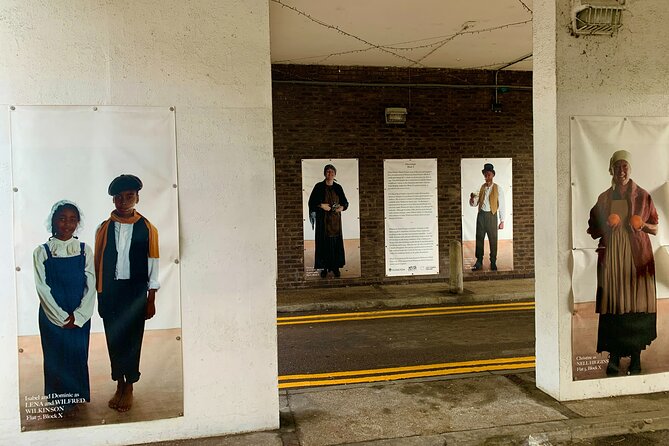
Noble Street brings another sharp change of subject. Here you see remains of the Roman wall of Londinium, along with a plaque marking Shakespeare’s lodgings on Silver Street.
The Roman ruins do not tell a Shakespeare story by themselves, but they show how many layers of London you are walking through. Roman London came centuries before Shakespeare, yet its walls and street pattern still help define the City.
The Silver Street plaque offers a more direct link to Shakespeare. It is worth keeping expectations sensible: this is a plaque and an urban site, not a preserved house furnished as Shakespeare’s rooms. Its value comes from location. You are standing in the same central district where Shakespeare’s working and personal world intersected with older London.
This section also reinforces the tour’s main strength. You keep moving through ordinary streets, where a small marker or fragment of wall carries much of the story. Pay attention to the guide here, since the surrounding modern buildings may not make the significance obvious.
The Barbican Highwalk and a 20-minute pause
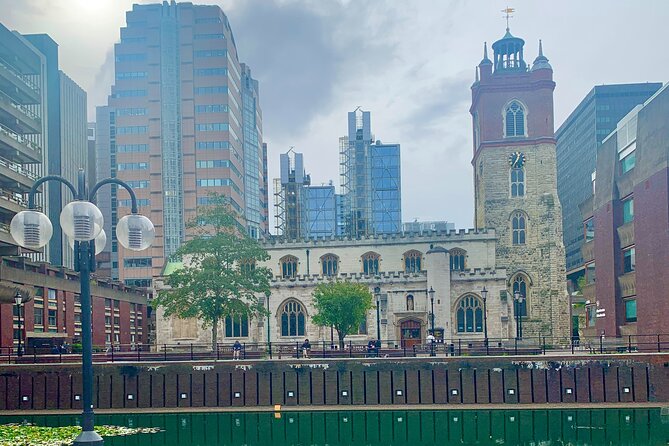
The Barbican Highwalk is one of the route’s most unusual sections. You use elevated walkways through the Barbican estate, with views of the complex and the Barbican Centre.
This is not an old Shakespeare site. That is precisely why it works. The walk places London’s theatre story beside a major modern arts development, showing how the city continues to build new cultural spaces on old ground.
The Barbican can feel confusing if you have never visited. The raised paths, stairs, concrete buildings, and different levels create a maze-like setting. Having a guide is especially useful here because you can focus on the story rather than trying to find your way.
There is a 20-minute interval at the Barbican, and restrooms are available. No food or drink is supplied, so bring your own bottled water and consider carrying a small snack if you need one. The break also gives your legs a chance to recover before the final stretch.
The Barbican Centre stop lasts about ten minutes and includes its history as London’s home for the Royal Shakespeare Company. Entry to the Barbican Centre is included, but do not assume this means a performance ticket or full access to every facility. The point is the building and its place in London’s theatre life.
Bunhill Fields and the first Theatre site
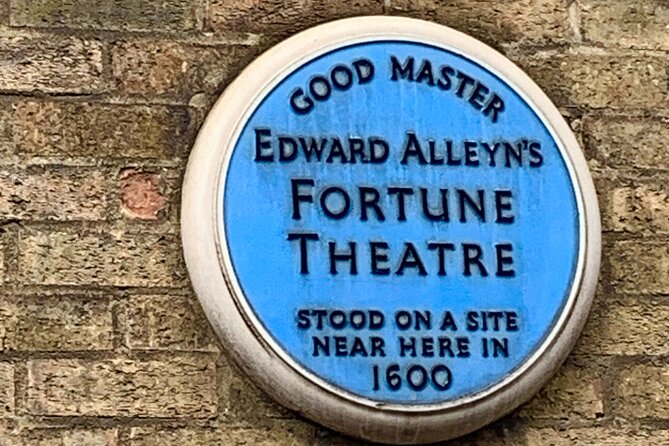
After the Barbican, the route heads up Whitecross Street and passes the site of the Fortune Playhouse. You then cross the boundary toward Shoreditch and hear about the history of Bunhill Fields.
The burial ground adds a quieter mood after the city streets and elevated walkways. It also broadens the tour beyond Shakespeare’s immediate life. Burial places reveal how London remembered writers, artists, and other figures, while the route itself shows how quickly the urban setting changes from the City to the eastern districts.
This part includes more walking, so the practical advice matters. Wear shoes with firm soles, watch for steps, and be ready for road crossings. The tour is not recommended for people who have trouble walking or keeping up with a group.
New Inn Yard and the first playhouse
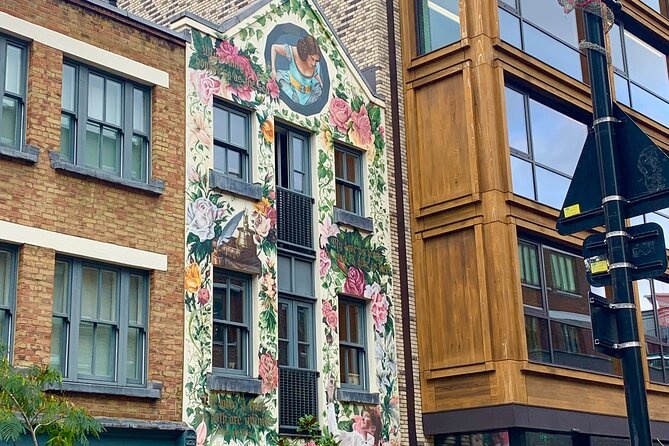
The final major destination is New Inn Yard, the site of the first playhouse, The Theatre. It is now also the location of the Shakespeare Museum.
This is the strongest finish for anyone interested in the beginnings of London’s purpose-built theatre. The route has already taken you past Blackfriars and the Fortune site, so reaching The Theatre feels like the next piece in a chain of performance spaces.
The museum’s presence gives the stop current purpose, but the tour itself does not list an entry fee or a separate museum visit. You finish outside the new Shakespeare Museum, so plan extra time if you want to explore it beyond the walking experience.
From New Inn Yard, it is about ten minutes to Old Street Tube on the Northern Line and about fifteen minutes to Liverpool Street on the Central Line. That makes the end point practical, though it is not near the starting point. You should think of the tour as a one-way walk and plan your onward journey before setting out.
Walking through Shoreditch to the finish
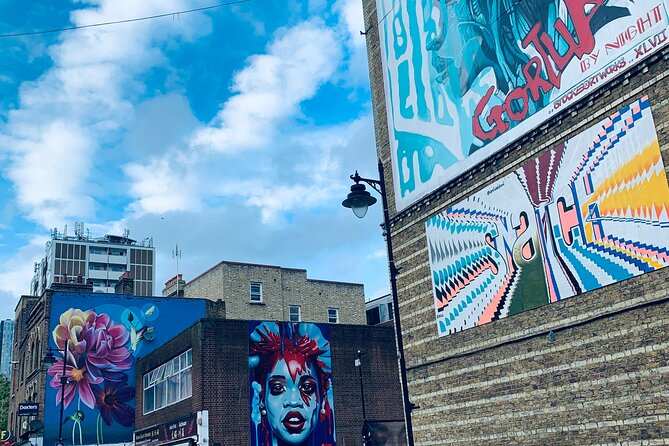
The last section leads through modern Shoreditch toward Curtain Road. It lasts about fifteen minutes and gives you a final contrast between Shakespeare’s theatre district and present-day London.
You may find this closing walk less focused on individual landmarks than the earlier stops. Its purpose is to connect the old playhouse site with the current neighborhood. That helps you see how the former theatre area has changed without pretending that the past remains untouched.
The route finishes outside the Shakespeare Museum in New Inn Yard. Since the group maximum is six, the guide can usually keep the ending personal, with time for final questions before you head off.
Price, pace, and practical value
At $23.08 per person, this is reasonably priced for a two-hour guided walk with an actor narrator and a maximum of six people. You are paying less for entry tickets and more for interpretation, route planning, and access to places that make sense when connected by a story.
The value is strongest if you already know the Globe and want something beyond the usual South Bank circuit. You see free public sites, but many are easy to miss or hard to understand without explanation. The small group also matters more than it would on a simple sightseeing walk because the guide uses performance and discussion rather than only pointing at buildings.
There are limits. No refreshments are included, and there are no listed entry fees beyond the included Barbican Centre access. You also do not get a long interior visit at the Globe, Guildhall, or the Shakespeare Museum based on the stated route.
Free cancellation is available if you cancel at least 24 hours before the start time. Changes or cancellations inside that window are not accepted for a refund.
Who should book this Shakespeare walk?
I would choose this for an adult who likes theatre, city history, and walking tours with a clear narrative. It also suits London residents who want to see familiar districts differently. One person on the walk discovered new places despite already knowing London and having an interest in history, which is a good sign for locals.
The tour is not recommended for children under 16. It is also not a good match if you need step-free access, have difficulty with stairs, or prefer a relaxed pace with frequent café stops.
Bring water, wear suitable walking shoes, and carry an umbrella or rain jacket. The tour operates in English and uses a mobile ticket. Service animals are allowed, and the route is near public transport, but you should allow time to reach the starting point at Dowgate Hill.
Should you book Shakespeare Promenade?
Book it if you want a lively, small-group walk through the wider theatre story, not simply a visit to the Globe. The route combines river views, early playhouse sites, Roman remains, the Barbican, and modern Shoreditch in a compact two-hour format.
Skip it if you want extensive indoor admissions, a slow pace, or a family outing for young children. For the right audience, the mix of places and the actor-guide delivery make $23.08 a fair price, especially when Dee or another guide brings the stops alive with quotations, performance, and time for questions.
FAQ
How long does Shakespeare Promenade last?
The experience lasts approximately two hours, including walking time and a 20-minute interval at the Barbican.
Where does the tour start?
It starts at The Tallow Chandlers Company, 4 Dowgate Hill, London EC4R 2SH.
Where does the tour finish?
It finishes at New Inn Yard, outside the new Shakespeare Museum. The end point is about ten minutes from Old Street Tube and fifteen minutes from Liverpool Street.
Is the tour conducted in English?
Yes. The experience is offered in English.
How large is the group?
The tour has a maximum of six participants.
Are entry fees included?
No general entry fees are included. Admission to the Barbican Centre is listed as included, while the other stated stops are free-access locations.
Is the walk suitable for people with mobility issues?
No. The route includes steps, stairs, road crossings, and elevated walkways. It is not recommended for people with mobility issues or those who have difficulty walking or keeping up with a group.
Just added in London
- The Beatles and a Secret pub★ 4.5 · 36 reviews
- The Beatles & Liverpool Magical Mystery Tour from London★ 4.5 · 80 reviews
- Airport Coach Service from Heathrow to Oxford★ 3.5 · 67 reviews
- The Beatles Magical History Black Taxi Tour London★ 5.0 · 51 reviews
- The Beatles London walking tour. From Abbey Road to the Roof Top★ 5.0 · 61 reviews
- Private The Beatles Taxi Tour in London★ 5.0 · 12 reviews
- The Beatles London Walk★ 4.5 · 120 reviews
- The Alfred Hitchcock London Walk with Sandra Shevey★ 5.0 · 15 reviews
Shakespeare Tours, compared.
Shakespeare’s Stratford-upon-Avon Day Trip by Coach
Read our review →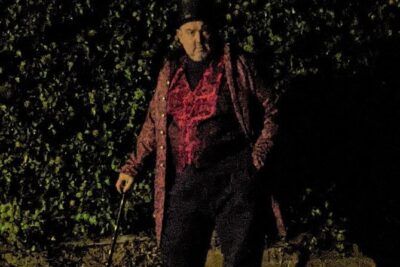
The Sinister Side of Shakespeare’s Stratford Walking Tour
Read our review →
Shakespeare’s Schoolroom & Guildhall Entry Ticket and Tour
Read our review →
Full Day Cotswolds Tour & Shakespeare’s Stratford From London
Read our review →
Shakespeare in the City Walk – In Shakespeare’s footsteps North of the Thames
Read our review →
Browse the lists this tour appears in