
Reviewed · GHOST TOURS
Private Ghosts and Gore Walking Tour of London
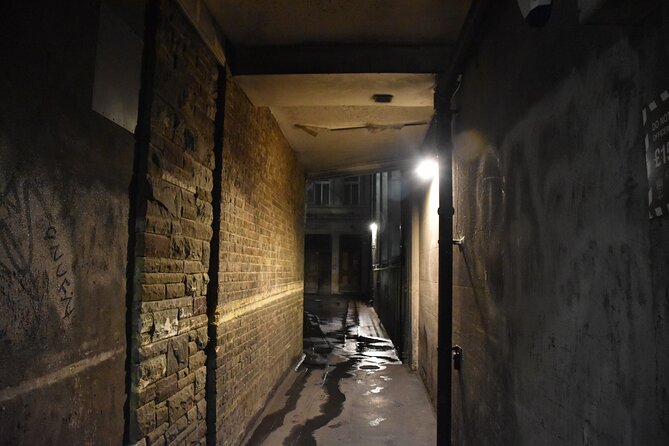
London’s oldest streets take on a different mood after dark. This private Ghosts and Gore Walking Tour links haunted churches, execution grounds, plague pits, and old prisons across the City, from the Monument to Farringdon. The stories are often grim, but the setting is the real draw: you’re walking through places where London’s past is still built into the pavement.
I like the private format, since your guide can shape the storytelling around your group rather than deliver a set speech to a crowd. I also like the historical depth. Guide Michael is described as more historian than basic tour leader, bringing context to tales of ghosts, grave robbers, Dickens, the Great Fire, and London’s criminal past.
The main drawback is the pace. The tour covers 24 stops in about two hours, so most locations receive only five minutes. You’ll get a brisk survey rather than a long visit inside each church or pub, and the moderate fitness requirement matters on a nighttime walk.
Key points to know before booking
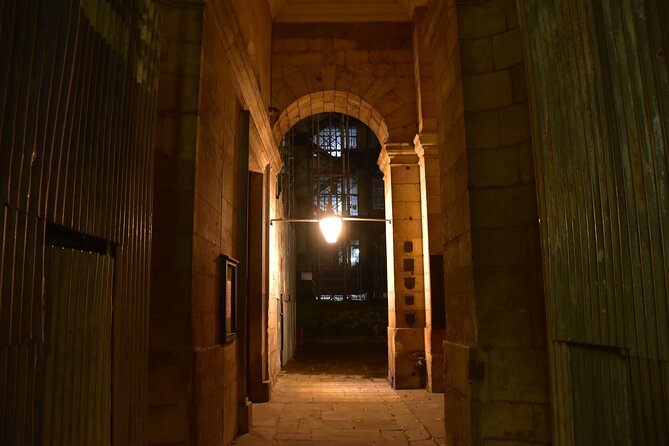
- Twenty-four dark-history stops: The route covers churches, ruined buildings, old prison sites, execution grounds, plague pits, and two famously haunted pubs.
- Private group value: The $247.70 price covers up to 15 people, making it more reasonable when shared by a family or small group.
- Strong guide-led storytelling: Michael is singled out for combining macabre tales with clear historical explanation.
- A point-to-point route: Begin beside the Monument to the Great Fire and finish near the Elizabeth Line entrance at Farringdon Station.
- Wheelchair and stroller accessible: The tour is listed as accessible, though you should still expect a substantial walk and a steady pace.
- Not just ghost stories: Dickens, the Great Fire, the plague, body snatching, medieval punishment, and London church history all play major roles.
From the Monument to the first haunted churches
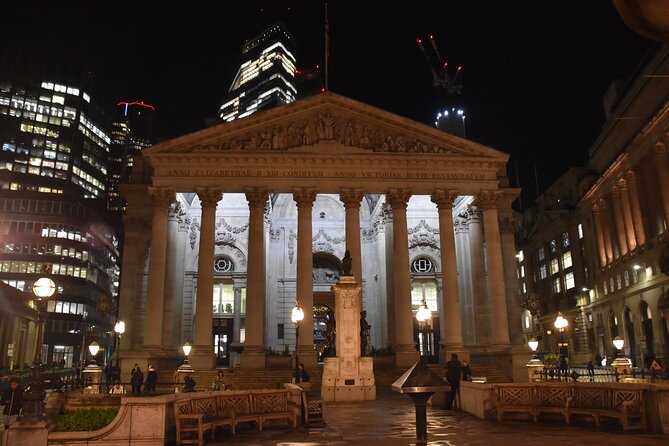
The meeting point is the Monument to the Great Fire of London on Fish Street Hill. It is a useful place to begin because the route immediately puts you in the old City of London, where narrow streets, ancient churches, banking buildings, and layers of Roman and medieval history sit close together.
At St. Magnus the Martyr, the tour opens with a shadowy figure connected to one particular grave. A spiritual medium reportedly identified the ghost in 1951 and explained the reason for its fixation. This is the sort of story that works best with a guide, since the question is not only who the ghost might be, but why the haunting remains unfinished.
The short stop at 54 and 55 Cornhill shifts from ghosts to architecture. Look above the street and you’ll find devils carved into the building. The explanation involves a dispute between an architect and a local vicar, a reminder that London’s old buildings often preserve grudges in stone.
St. Peter-upon-Cornhill brings literature into the route. This is the churchyard associated with the grave Ebenezer Scrooge sees in A Christmas Carol. You’ll also hear how London’s supernatural stories helped shape fiction written in the city across the centuries.
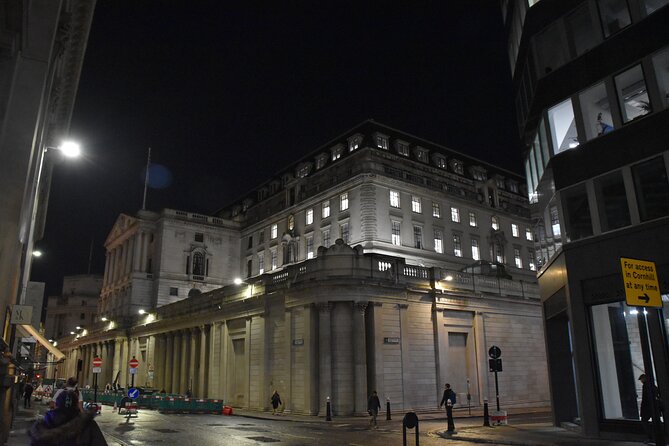
At St. Michael’s Cornhill, the subject is a storm and the supposed day the devil visited London. Then, at St. Margaret Lothbury, the story moves into the financial district. A very tall ghost is said to haunt the Bank of England after his bones were disturbed. The tale includes rattling guns, footsteps on stairs, and frightened bank workers, giving the modern City an unexpectedly old-fashioned menace.
More walking tours in London:
- Tour for Muggles The Ultimate Harry Potter Walking Tour in London
★ 5.0 · 4,684 reviews - London Jack The Ripper Guided Walking Tour
★ 5.0 · 3,131 reviews - Changing of the Guard Guided Walking Tour in London
★ 5.0 · 1,793 reviews
Bank Station, black ghosts, and a remarkable rat catcher
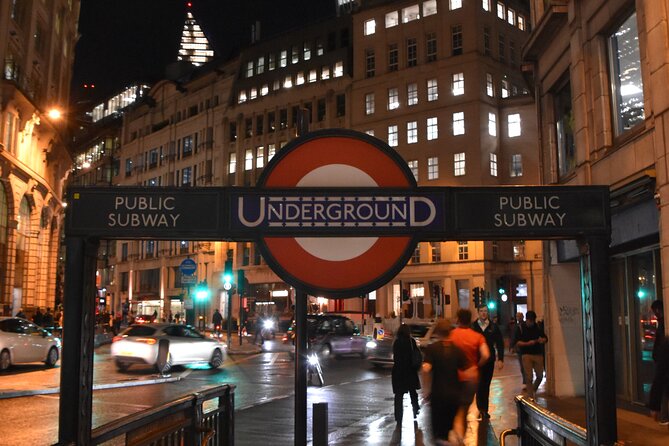
St. Mary Woolnoth is home to one of the best-known stories on the route. The Black Ghost, also called the Bank Ghost, is linked with Bank Station, the Bank of England, and the surrounding streets. A woman in black asking if you have seen her brother is considered a warning sign.
This stop also includes the grim secret of the Bank Station booking hall. The material here is particularly effective for people who use the Underground every day, since an ordinary transport hub becomes part of the story rather than just a place to pass through.
At St. Michael Paternoster Royal, the mood changes again. You’ll hear about a famous Lord Mayor of London and his feline companion, a skilled rat catcher said to have roamed between this church and the next stop. It is an unusual detail, and a welcome break from tales of executions and plague.
St. James Garlickhythe returns to the macabre. In 1835, workers found a mummified body near the altar. The remains were displayed in a case until about 20 years ago and were known as Jimmy the Mummy. The story is especially unsettling because local children reportedly played with the body. The ghost is said to point toward the place where the remains were buried.
Williamson’s Tavern adds a pub setting to the route. It is linked with Lord Mayors, poltergeists, and phantoms, and police dogs are said to become frightened when they try to enter. Doors bang, footsteps sound, and there is only one way out. You should not expect to go inside as part of the tour, but the exterior and its history make a good pause in the walk.
Curses, Roman walls, and plague pits
St. Mary Le Bow is famous for its bells. If you were born within their sound, you are traditionally a Cockney, or a proper Londoner. The church itself is presented as cursed rather than simply haunted, with a record of fires, collapses, accidents, murders, and deaths. It is a useful reminder that bad luck can be as central to a ghost story as a visible spirit.
Noble Street is one of the oldest sections of the route. The original Roman garrison was stationed here, and parts of the Roman and medieval walls remain nearby. The street is tied to death from the earliest period of the City, with reports of strange events and unusual lights in photographs. If you like the idea of a location rather than a single ghost, this is one of the stronger stops.
At St. Anne and St. Agnes Garden, you’ll learn about one of London’s plague pits. The discussion covers how the plague affected the city and why mysterious orbs appear in photographs taken here. You can take your own picture, though the tour does not promise a supernatural result.
The ruined churchyard at Christchurch Greyfriars is one of the route’s busiest supernatural locations. Its stories include Queen Isabella and her lover, a constantly arguing married couple, a religious prophetess, a monk, and a greyhound. The range of figures gives the stop an almost crowded feeling, even though the building itself is in ruins.
Heads on the gate and bones beneath the houses
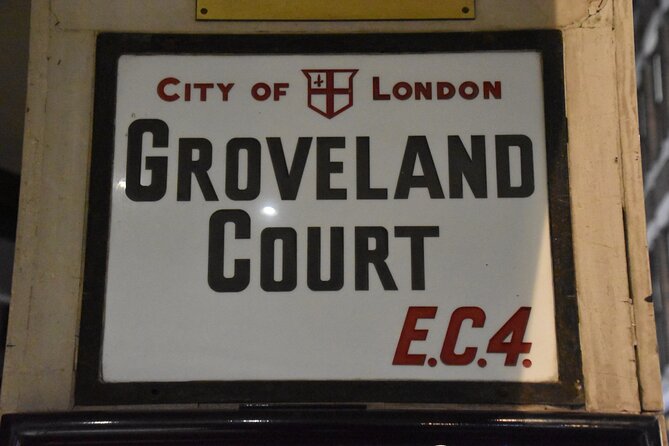
Temple Bar once marked the western entrance to the City. Designed by Sir Christopher Wren, it was also associated with the public display of severed heads belonging to traitors and criminals executed by the state. The story here is not subtle, and it gives the tour its clearest link between public punishment and ghost lore.
At Amen Court, you can see remnants of the walls of Newgate Prison. The prison was notorious, and the ground beneath nearby homes is said to contain the bones of executed men. The unsettling part is not only the presence of the dead, but the fact that children now play over the site without knowing what lies below.
The Viaduct Tavern is presented as London’s most haunted pub. Its ghost, Fred, is less murderous than mischievous. He is associated with odd tricks, including flushing the ladies’ toilets while they are occupied. A medium once questioned the ghost’s identity, adding another layer to the story.
The Old Bailey occupies the former Newgate Prison site. Until 1868, people were hanged in the street here. The area is also linked with the Black Dog of Newgate, a large phantom dog said to be a bad sign for anyone who sees it. This section gives the walk its clearest sense of how public executions once formed part of everyday London life.
More ghost tours in London:
- Ghost, Ghouls and Gallows Tour : Guided Tour with Boat Ride
★ 4.5 · 3,212 reviews - Ghost Bus Tour of London
★ 4.0 · 961 reviews - Ghastly Ghost Walking Tour in London
★ 5.0 · 878 reviews - The Original Jack the Ripper Coach Tour of Haunted London
★ 3.5 · 419 reviews
Bells, murder accusations, and the resurrection men
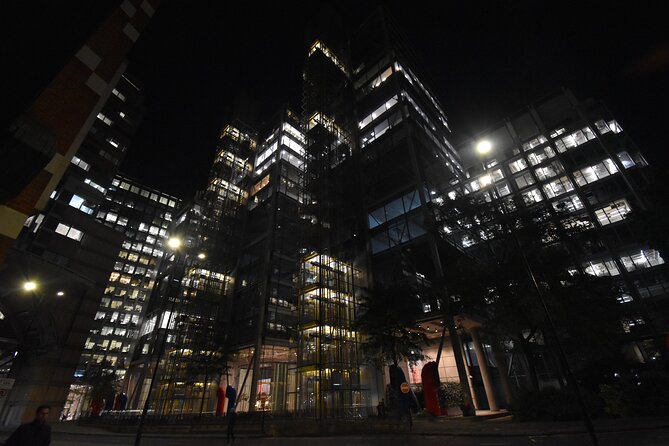
Holy Sepulchre Church houses an execution bell. It once rang before a condemned person was taken to the nearby prison and gallows. The church clerk who rang it becomes part of one of the tour’s most involved ghost stories, which reaches its climax on Cock Lane.
Cock Lane concerns a murder accusation and a young girl said to channel the spirit of a dead woman. The dead woman insists she was murdered, and leading minds in London attempt to determine the truth and save a man’s life. This story gives the tour a change of pace. Instead of a simple haunting, you get an investigation involving testimony, belief, and public fear.
At the Golden Boy of Pye Corner, you’ll learn where the Great Fire of London finally stopped. The cheerful-looking statue marks the western edge of the fire, but the surrounding history is far less cheerful. A pub once stood here, and stolen bodies were reportedly displayed for doctors at nearby St. Bartholomew’s Hospital.
This is where the guide explains grave robbing and the resurrection men who supplied fresh corpses for medical study. Demand for bodies led to a string of murders, making this one of the tour’s most disturbing historical subjects. It also shows how medical progress could depend on practices that were both illegal and cruel.
Smithfield executions and Rahere’s limping ghost
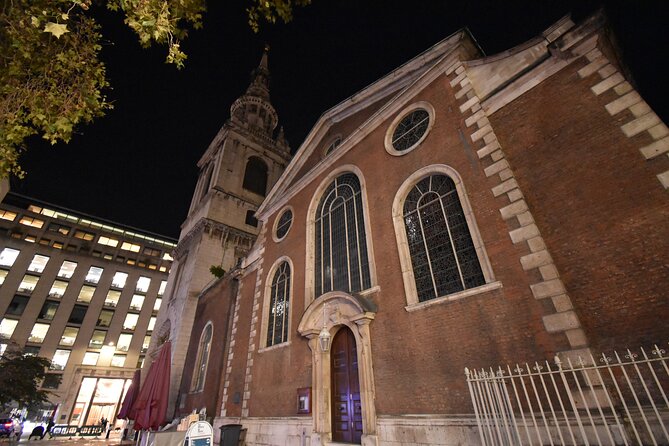
West Smithfield was one of London’s main execution sites. William Wallace and Wat Tyler were among the rebels killed here by hanging, drawing, and quartering. Others were burned at the stake, and some were boiled alive. The nearby meat market added the smells of blood and flesh to an already grim public setting.
The stop also brings in St. Bartholomew’s Hospital, the oldest hospital in the world according to the tour. It is linked with poltergeists, a haunted lift, and strange events reported by students working late in laboratories, rooms, and study areas. The combination of hospital life and old execution ground gives this section a particularly tense atmosphere.
St. Bartholomew the Great is the oldest surviving church on the route. Its founder, Rahere, is said to appear inside, now hobbling after centuries of walking normally. The guide explains why the limp began and who is blamed.
The Rising Sun is another resurrectionist pub, but its ghost story is more uncomfortable than comic. A disturbing spirit, nicknamed the sex pest ghost, is associated with the building. The story includes why female staff have been reluctant to live on-site, so this is a stop that may not suit everyone.
Charterhouse and the end near Farringdon
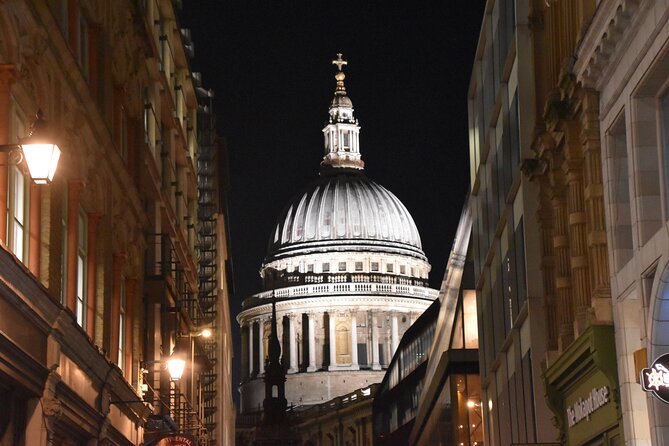
The final stop is the Charterhouse, a short walk from the Elizabeth Line entrance to Farringdon Station. Beneath the buildings is one of London’s largest plague pits, with an estimated 50,000 people buried below.
The Charterhouse also connects the supernatural stories with the Reformation. Monks were executed here, and the most frequently seen figure is a phantom monk at prayer. A headless duke is also said to walk the grounds.
The final explanation is more grounded. Modern medical science may account for some strange experiences, and Charterhouse Square is also home to one of the United Kingdom’s leading schools of psychiatry. That ending is useful because it lets you consider both the ghost story and the human reasons people perceive one.
What the price means for a private group
The price is $247.70 for up to 15 people. For one or two people, that is a serious cost for two hours. For a family or group of friends, the math is much better, since the per-person price drops sharply as your group grows.
The private setup is the main reason to pay more. You are not sharing the route with a large public crowd, and your guide can respond to your interests. If your group wants more church history, darker crime stories, or extra context about Dickens and the Great Fire, that personal contact has real value.
All guiding fees are included. The tour is offered in English and uses a mobile ticket. It is also listed as wheelchair and stroller accessible, with service animals allowed. Still, you should plan for a substantial outdoor walk and a moderate fitness level. The route is long, and the short stops mean you will keep moving.
The tour has a current rating of 4.8 from 13 reviews, with 92 percent of participants recommending it. The strongest praise focuses on Michael’s historical knowledge, entertaining delivery, and ability to make the experience feel personal rather than rehearsed. That matters here, since the quality of the guide will shape how well the many short stops hold together.
Who should book this London ghost tour?
I would choose this tour if you enjoy history as much as you enjoy ghosts. The supernatural stories are the hook, but the real substance comes from Roman London, plague burial, medieval punishment, the Great Fire, Dickens, the Bank of England, Newgate Prison, and the history of medical dissection.
It also suits a private family group or a gathering of friends who want a shared evening activity. The content is grim, so young children may find the execution, murder, and grave-robbing stories too much. The route is accessible, but it is not a restful sightseeing tour.
You should skip it if you want long visits inside churches, dramatic special effects, or proof of the paranormal. Most stops last about five minutes, and the experience depends on spoken storytelling and the atmosphere of the streets. You should also check the start time carefully, since the main appeal is seeing the City after dark.
Should you book the Private Ghosts and Gore Walking Tour?
Book it if you want a personal, historically grounded night walk rather than a simple scare show. The private format, Michael’s strong storytelling, and the route’s unusual range of churches, prisons, plague pits, pubs, and execution sites give it plenty of substance.
Think twice if your group dislikes grisly subjects or finds two hours of steady walking difficult. For a group of several people, the $247.70 price can be fair, especially when you value a private guide and a route that finishes conveniently near Farringdon. For history buffs and scare-seekers who want London’s darker past explained clearly, this is a strong choice.
FAQ
How long is the Private Ghosts and Gore Walking Tour?
The tour lasts approximately two hours.
Where does the tour begin?
It begins at the Monument to the Great Fire of London on Fish Street Hill, London EC3R 8AH.
Where does the tour finish?
The tour ends near the Elizabeth Line entrance to Farringdon Station on Cowcross Street.
How many stops are included?
The route includes 24 stops, covering churches, churchyards, pubs, old prison sites, execution grounds, plague pits, and historic streets.
Is the tour private?
Yes. Only your group participates, with a maximum group size of 15 people.
What language is the tour offered in?
The tour is offered in English.
Is the tour wheelchair and stroller accessible?
Yes. The tour is listed as wheelchair and stroller accessible.
Are service animals allowed?
Yes. Service animals are allowed.
What fitness level is required?
A moderate level of physical fitness is recommended. The experience is a walking tour with a steady route between many stops.
How much does the tour cost?
The price is $247.70 per group of up to 15 people.
Can I cancel for a full refund?
Yes. You can cancel at least 24 hours before the start time for a full refund. Cancellations made less than 24 hours before the start time are not refunded, and changes within that period are not accepted.
Just added in London
- The Beatles and a Secret pub★ 4.5 · 36 reviews
- The Beatles & Liverpool Magical Mystery Tour from London★ 4.5 · 80 reviews
- Airport Coach Service from Heathrow to Oxford★ 3.5 · 67 reviews
- The Beatles Magical History Black Taxi Tour London★ 5.0 · 51 reviews
- The Beatles London walking tour. From Abbey Road to the Roof Top★ 5.0 · 61 reviews
- Private The Beatles Taxi Tour in London★ 5.0 · 12 reviews
- The Beatles London Walk★ 4.5 · 120 reviews
- The Alfred Hitchcock London Walk with Sandra Shevey★ 5.0 · 15 reviews
Ghost Tours, compared.
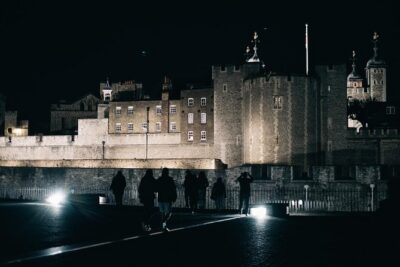
Ghost, Ghouls and Gallows Tour : Guided Tour with Boat Ride
Read our review →
Shadows of York: Ghost Walk and Horrible History.
Read our review →
The Original Jack the Ripper Coach Tour of Haunted London
Read our review →Browse the lists this tour appears in