
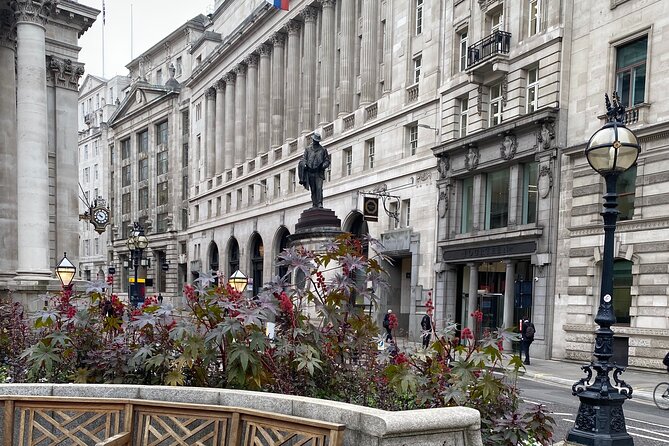
Reviewed · CITY TOURS
Money and Power in the City Sightseeing Tour
London’s financial district is far older and stranger than its glass towers suggest. This two-hour walk with Terry Silvers connects Roman and medieval London to the East India Company, coffeehouse stock trading, the Bank of England, and today’s Stock Exchange. Money and power are the thread, but the real subject is how the City grew and changed.
I like the small group of no more than eight, which makes it easier to hear Terry and ask questions. I also like the route’s mix of grand buildings and narrow lanes, especially Exchange Alley, where early stock trading grew out of coffeehouse culture. The main consideration is pace: you spend the full tour on foot, mostly outdoors, and poor weather can cause a cancellation.
Key points at a glance
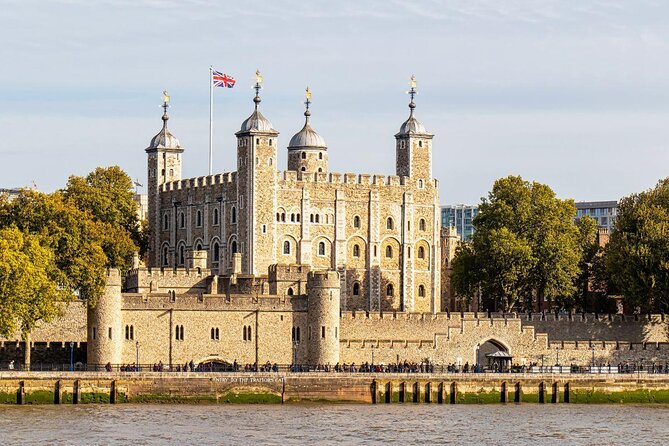
- Roman roots and medieval streets: Begin with the early foundations of the City of London before moving into its financial story.
- East India Company connections: See an important location linked to the company after visiting other related sites along the route.
- Royal Exchange and Bank of England: Compare the City’s grand neoclassical buildings and the institutions that shaped British commerce.
- Exchange Alley’s coffeehouse past: Learn how stock trading first took form in a narrow passage between Cornhill and Lombard Street.
- Guildhall and nearby guild buildings: See how medieval trade organizations stored goods, held ceremonies, and hosted public entertainments.
- Modern finance beneath St Paul’s: Finish near the London Stock Exchange, with St Paul’s Cathedral providing a striking historic counterpoint.
Why this City of London walk is different
Many London walks focus on royal palaces, famous churches, or political drama. This one takes a more specific route through the City of London, the compact financial core that grew around trade, banking, guilds, and imperial commerce.
The title is accurate. The tour looks at money and power together, since the two have long been tied to the same streets. You hear how commercial institutions developed, but also how their influence affected the shape and identity of London.
That focus gives the walk a useful structure. Instead of receiving a string of unrelated facts, you follow a line from Roman foundations to medieval guilds, early modern trade, coffeehouse finance, and the modern stock market. Terry’s role is to make those connections clear.
The tour is also built around places you can see from the street. You do not need to enter every building to understand why it matters. Grand facades, small alleys, old guild halls, and modern towers all become pieces of the same story.
More city tours in London:
- Westminster to Greenwich Sightseeing Thames Cruise in London
★ 4.5 · 2,969 reviews - London Sightseeing Tour: Guard Change with Tower of London Option
★ 4.5 · 2,672 reviews - Hop-On Hop-Off Sightseeing River Cruise on the Thames
★ 4.0 · 1,256 reviews
Starting at Emperor Trajan and London’s early City
The meeting point is Emperor Trajan, A100, London EC3N 4DR, with a 2:00 pm start. The first part of the walk covers Roman and medieval beginnings in the Financial District.
This is an important opening because the City is not simply a modern business quarter built on empty ground. Its streets and institutions grew through many layers of London’s past. Roman foundations helped establish the City’s early importance, while medieval commerce gave it a lasting role in trade and civic life.
You should expect Terry to set the scene before moving into the better-known financial landmarks. That background is useful. Without it, the Royal Exchange, Guildhall, and Bank of England can feel like impressive but separate buildings. With it, you can see them as part of a much longer process.
The route’s physical setting helps. London’s financial district mixes broad streets and monumental architecture with older, tighter passages. Walking between them gives you a sense of how the City changed without fully losing its older shape.
This is also where the tour’s walking format earns its keep. A coach could show you the major buildings, but it would miss the small connections between them. On foot, you can stop, look up, and notice how much history sits within a few blocks.
The East India Company and the reach of commerce
The tour includes the most important historic location connected with the East India Company, after showing you other sites linked to it.
The East India Company matters here because it represents commerce on a much larger scale than local trade. Its story brings questions of business, overseas power, political influence, and wealth into the streets of the City. You are not just looking at old offices or plaques. You are considering how a commercial organization could affect Britain and places far beyond London.
That connection gives the tour more range than a simple architecture walk. You learn about the buildings, but also about the forces that made them important.
Terry’s approach, based on the experience described, is especially useful for people who do not arrive with a background in financial or political history. He is praised for explaining difficult subjects in clear terms and for answering questions directly. That matters on a subject that can quickly become filled with unfamiliar names and institutions.
The East India Company section is likely to appeal most if you want London history tied to wider events. It also gives the route a serious edge. The City’s wealth was not produced by banking alone, and this part encourages you to think about the sources and consequences of commercial power.
The Royal Exchange, Bank of England, and Mansion House
The route then reaches three of the City’s best-known civic and financial buildings: the Royal Exchange, the Bank of England, and Mansion House.
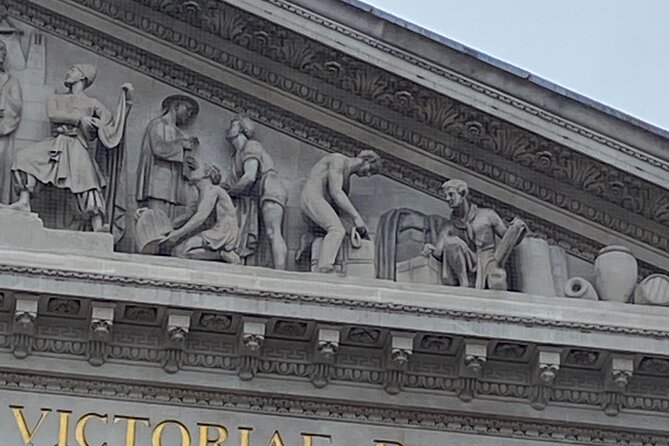
The Royal Exchange is the grandest expression of commerce on the walk. Its neoclassical design makes a clear public statement about order, wealth, and confidence. You can read the building as architecture, but the tour explains why this site became central to London’s trading life.
The Bank of England gives the story a different angle. Here, the focus shifts from merchants and trade to banking and national finance. Seeing it alongside the Royal Exchange helps you separate the roles of different institutions instead of treating every financial building as part of one vague system.
Mansion House adds the civic and political side of the City. Together, the three buildings show how business, banking, and public authority occupied the same small area.
This is one of the strongest parts of the walk for first-time visitors to the City. You get an efficient introduction to the district’s grandest landmarks, but the value is in the explanation around them. A quick photograph would not tell you why these buildings were placed where they are or what kind of power they represented.
The drawback is that this section is viewed from outside. The tour’s advertised purpose is to explain the places and their history, not to provide interior visits. If you want to tour the Bank of England Museum or enter the Royal Exchange, you would need to arrange that separately.
Same base, a different kind of day:
- Stonehenge, Windsor Castle, and Bath from London
★ 4.5 · 18,662 reviews - London Big Bus Hop-On Hop-Off Tour with Optional River Cruise
★ 3.5 · 10,803 reviews - London Small Group Tour of Historical Pubs
★ 5.0 · 10,422 reviews - Stonehenge, Windsor Castle and Bath with Pub Lunch in Lacock
★ 4.5 · 7,402 reviews
Exchange Alley and the coffeehouse origins of stocks
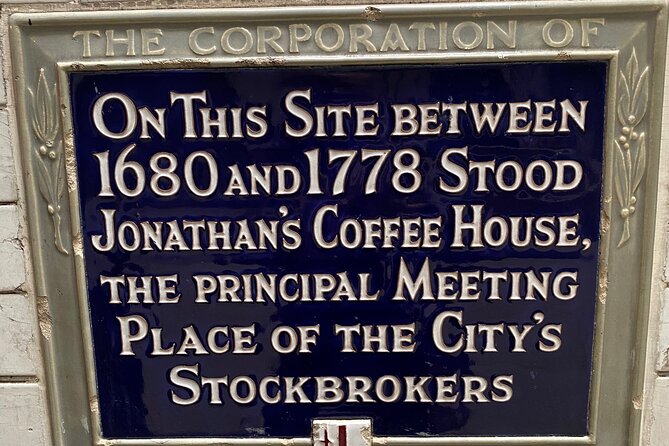
One of the most memorable stops is Exchange Alley, also called Change Alley. This narrow passage links Cornhill and Lombard Street and once offered a shortcut between the Royal Exchange and the Post Office.
Its importance goes beyond being an old lane. The tour identifies the location of the coffee shop where the stock market was first based. That detail makes the origins of modern finance feel surprisingly informal. Before stock trading became associated with electronic screens and purpose-built market buildings, it was connected to coffeehouses and face-to-face discussion.
Exchange Alley is exactly the kind of place that rewards a walking tour. It is easy to pass through without knowing why the alley matters. Once you understand its link to early trading, its tight shape and position between major streets take on new meaning.
I especially like this stop because it turns a large economic idea into a physical place. You can stand in the passage and picture how information, speculation, and business deals moved through the City.
It is also a useful reminder that finance did not begin in the polished towers seen elsewhere in London. It developed through ordinary urban spaces, conversations, shortcuts, and networks of people who knew where to meet.
Because the alley is narrow, the group size matters here. A group capped at eight should be easier to keep together than a large walking tour, and Terry can adjust the explanation if people have questions.
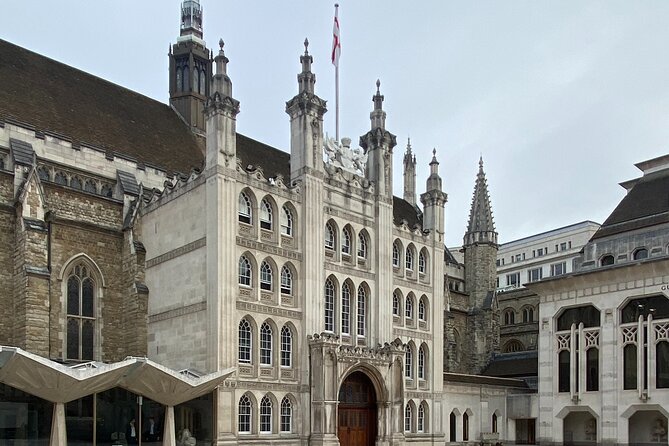
Guildhall and the medieval guild buildings
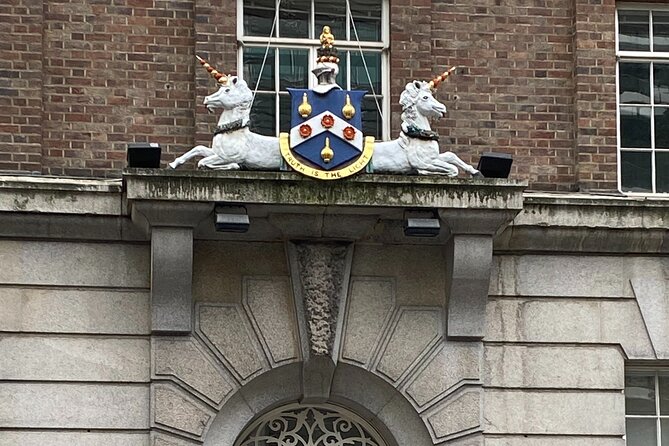
The next part of the route brings you to Guildhall and selected nearby guild buildings. These are essential for understanding how medieval commerce was organized.
Medieval guild halls served practical and social purposes. They stored goods and hosted celebrations for guild members. When guild events were not taking place, the halls could also be used for public entertainment, including Passion plays.
That combination tells you something important about medieval city life. Trade was not isolated from civic culture. The same organizations that protected commercial interests also had public roles, ceremonies, and places where people gathered.
Guildhall gives the tour a strong link to the working City before modern finance took over the public image. The nearby buildings help show how trade groups shaped both business and urban life.
For me, this is a useful counterweight to the grand financial institutions. The Royal Exchange and Bank of England can make the City seem like a place created only for large sums of money. Guildhall brings the story back to the people and organizations that handled goods, skills, services, and local power.
You should pay attention to the contrast between the medieval guild buildings and the newer towers around them. The route does not require you to travel far to see how London has rebuilt, expanded, and reused its central district.
The modern Stock Exchange beneath St Paul’s
The final stretch moves toward the modern stock market and ends at the London Stock Exchange, 10 Paternoster Square, London EC4M 7LS. The meeting point for the end is by the main column in Paternoster Square.
The closing view pairs modern finance with St Paul’s Cathedral. St Paul’s sits on Ludgate Hill, the highest point in the City, and its scale gives the ending a strong visual finish. The cathedral is an Anglican landmark and the mother church of the Diocese of London, while the Stock Exchange represents the modern financial world.
That contrast captures the tour’s main idea. London’s old centers of religion, government, trade, and finance still sit close together, even as their roles have changed.
The ending also makes practical sense. You finish near the London Stock Exchange rather than returning to the starting point, so plan your onward route from Paternoster Square. You may find public transport convenient from the City, but the supplied details do not specify a particular station or route.
If you have just arrived in London, this final view helps place the financial district within the wider city. You leave with a better sense of how the City relates to St Paul’s, Ludgate Hill, and the surrounding streets.
Terry’s storytelling and the small-group format
Terry is the guide named most often in the tour information, and the experience depends heavily on his delivery. The strongest praise focuses on his ability to explain early, middle, and modern London in a way that is clear, lively, and easy to follow.
That is important here because the subject can be dry if presented as a list of dates and institutions. Terry brings in stories, gossip, scandal, and personal detail about the City’s past. Those touches give the buildings a human side without losing the main historical thread.
The group limit is eight people. I see that as one of the tour’s best features. You should be able to hear the guide more easily, ask questions without interrupting a large crowd, and stay close together in narrow streets such as Exchange Alley.
The tour is offered in English and includes a mobile ticket. Service animals are allowed, the route is near public transportation, and most people can participate. Still, this is a walking experience, so you should be comfortable spending about two hours outside and moving through city streets.
Is $41.14 a fair price?
At $41.14 per person, this is not the cheapest way to see London’s financial district. You are paying for a focused, guide-led walk rather than transport or entry to a collection of attractions.
The value comes from the explanation. The Royal Exchange, Bank of England, Guildhall, and St Paul’s can all be seen in London without paying for a guided tour. What you do not get for free is the connection between Roman foundations, medieval guilds, East India Company power, coffeehouse trading, and the modern Stock Exchange.
The small group also improves the price comparison. A large, crowded walk may cost less, but you may have less chance to ask questions or hear the guide clearly. Here, the limit of eight gives the experience a more personal feel.
I would consider it good value if you are curious about how London’s financial district developed, especially if you prefer stories and context to simply checking off buildings. It is less useful if you want interior access, a general overview of all London, or a tour with little walking.
The tour is booked an average of 33 days ahead, so advance planning may be sensible if your schedule is fixed. Free cancellation is available up to 24 hours before the start time. If bad weather forces a cancellation, you are offered another date or a full refund.
Who should book this walk?
I would recommend it to anyone interested in London’s commercial, political, and civic past. It works particularly well for people who have already seen the main royal sights and want a different side of the city.
Families can also get a lot from it. The guide’s style is designed to meet people at different levels of background knowledge, and the small group allows questions. Children who enjoy stories about merchants, scandals, old institutions, and strange city customs may find it more engaging than a formal museum visit.
It is also a strong choice for an early London afternoon. Starting at 2:00 pm gives you time to visit another part of the city in the morning, then spend two hours in the City before dinner.
I would skip it if you dislike walking, need a fully indoor activity, or want to enter every major building. The route is about seeing the sites from the street and understanding their connections.
Should you book Money and Power in the City?
Book this tour if you want London explained through its financial district rather than through palaces and royal ceremonies. The route covers an unusually broad span, from Roman beginnings and medieval guilds to the East India Company, coffeehouse stock trading, and today’s market.
The best reasons to go are Terry’s clear storytelling, the eight-person group limit, and the chance to see places such as Exchange Alley that are easy to miss on your own. At $41.14, the price makes sense if historical context matters to you.
Think twice if you need indoor access or dislike weather-dependent walks. For everyone else, this is a focused, lively way to understand how money and power shaped the City of London.
FAQ
How long does the Money and Power in the City tour last?
The tour lasts approximately two hours.
What time and where does the tour begin?
It begins at 2:00 pm at Emperor Trajan, A100, London EC3N 4DR, UK.
Where does the tour finish?
The tour ends at the London Stock Exchange, 10 Paternoster Square, London EC4M 7LS, by the main column in Paternoster Square.
How many people can join the tour?
The tour has a maximum of eight participants.
Is the tour offered in English?
Yes. The tour is offered in English and includes a mobile ticket.
Can I cancel for a full refund?
Yes. You can cancel at least 24 hours before the experience start time for a full refund. If poor weather causes the tour to be canceled, you are offered another date or a full refund.
Just added in London
- The Beatles and a Secret pub★ 4.5 · 36 reviews
- The Beatles & Liverpool Magical Mystery Tour from London★ 4.5 · 80 reviews
- Airport Coach Service from Heathrow to Oxford★ 3.5 · 67 reviews
- The Beatles Magical History Black Taxi Tour London★ 5.0 · 51 reviews
- The Beatles London walking tour. From Abbey Road to the Roof Top★ 5.0 · 61 reviews
- Private The Beatles Taxi Tour in London★ 5.0 · 12 reviews
- The Beatles London Walk★ 4.5 · 120 reviews
- The Authentic London Food and History Tour★ 5.0 · 53 reviews
City Tours, compared.

Westminster to Greenwich Sightseeing Thames Cruise in London
Read our review →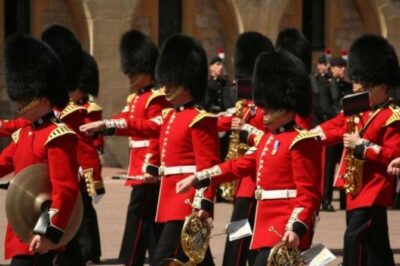
London Sightseeing Tour: Guard Change with Tower of London Option
Read our review →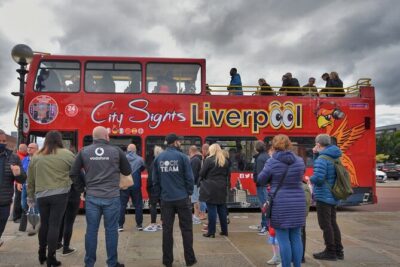
Liverpool City Sights Hop On Hop Off City Tour – 24hr Ticket
Read our review →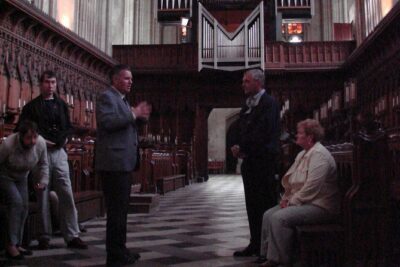
1.5-hour Oxford City and University Walking Tour
Read our review →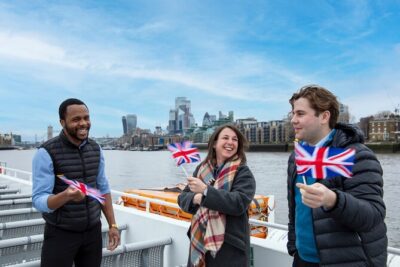
Hop-On Hop-Off Sightseeing River Cruise on the Thames
Read our review →
Browse the lists this tour appears in