
Reviewed · GHOST TOURS
London’s Ghosts & Gruesome Past Nighttime Walking Tour
London’s darkest stories are often hiding in plain sight. On this two-hour nighttime walk, you move from Farringdon to the Old Bailey, passing plague pits, execution sites, old churches, a hospital museum, and streets tied to grave robbing. The history is grim, but the route also gives you a fresh way to read central London after the shops close.
I like the mix of real places and strong storytelling, especially the stops at Smithfield, St. Bartholomew the Great, and the Old Bailey. I also like the small group limit of 20, which makes it easier to hear a guide such as Matt or Carolina in the evening street noise. The main consideration is the subject matter: this is not a mild folklore stroll. Expect executions, disease, surgery, murder, and some very unpleasant details.
Key points to know before you book
- Farringdon begins the evening with a ghost story about a girl said to haunt the station.
- Smithfield and the Old Bailey connect the walk to London’s grim justice system, including executions and notorious criminals.
- Charterhouse Square and St. Bartholomew the Great bring plague pits, tombs, and haunting tales into the route.
- The medical history is graphic, with old treatments, public surgery, amputations, and poor hospital conditions.
- Grave robbing links the churchyards, hospital, and pub stops in one of the tour’s most memorable stories.
- The $49 price is fair for a small-group, guide-led evening, particularly if you enjoy history more than jump scares.
Why this London ghost walk works
This tour succeeds because it treats London as a collection of real crime scenes, burial grounds, courts, and medical sites rather than as a stage set for made-up frights. You are not simply hearing a ghost story and moving on. You are walking through places where public punishment, epidemics, religion, and medicine shaped daily life.
The route also has a useful rhythm. A haunted station leads to a market built around public death. A quiet square brings the plague years into focus. An old church opens the door to burial tales, then the William Wallace Memorial shifts the story toward medieval violence. From there, the hospital and grave robbers show how closely death and medicine were once connected.
I would call this a history walk with a macabre theme, not a theatrical haunted house. The guide’s delivery matters a great deal. Matt is described as patient, easy to understand, and comfortable answering questions, while Carolina is praised for bringing real energy to the stories. Guide assignments can change, but those comments give you a useful sense of the experience: expect a storyteller, not simply someone reading dates from a script.
More walking tours in London:
- Tour for Muggles The Ultimate Harry Potter Walking Tour in London
★ 5.0 · 4,684 reviews - London Jack The Ripper Guided Walking Tour
★ 5.0 · 3,131 reviews - Changing of the Guard Guided Walking Tour in London
★ 5.0 · 1,793 reviews
Farringdon Station and the girl in the dark
Meet outside Cafe Pronto at Farringdon Station, 43 Cowcross Street, for the 6 pm start. This is a practical meeting point near public transport, but the station itself is part of the story. The guide introduces a girl who is said to haunt Farringdon, then explains the tragic events connected with her life and death.
The station is busy and noisy, so you will need to stay close and listen carefully. That is one of the few drawbacks of beginning here. The sound of trains, traffic, and evening footfall can compete with a softly told ghost story.
Still, the setting gives the opening some bite. You are not hearing about a distant castle or a remote moor. You are beside a modern station, in an ordinary part of London, while the guide points toward a disturbing tale said to linger below or around it. The stop lasts about 10 minutes, so it serves as a quick introduction rather than a long investigation.
Smithfield Market and London’s public executions
The walk continues to Smithfield Market, where the subject changes from alleged haunting to documented cruelty. For centuries, this area was associated with public executions. The guide asks you to picture the place before its modern role took shape, when crowds gathered to watch punishment in public.
This is one of the tour’s strongest historical stops because it explains how execution once functioned as entertainment, warning, and political theater. The stories involve heroes, martyrs, and ordinary people who were tortured and killed in different ways. The point is not only that executions happened, but that people came to watch them.
The guide may describe methods in blunt detail. That suits the theme, but it also means this section will not appeal to everyone. If you prefer your ghost walks to stay at the level of legends and atmosphere, Smithfield may feel too graphic. If you want the darker truth behind old London, the stop gives the evening real substance.
Charterhouse Square and the plague pits
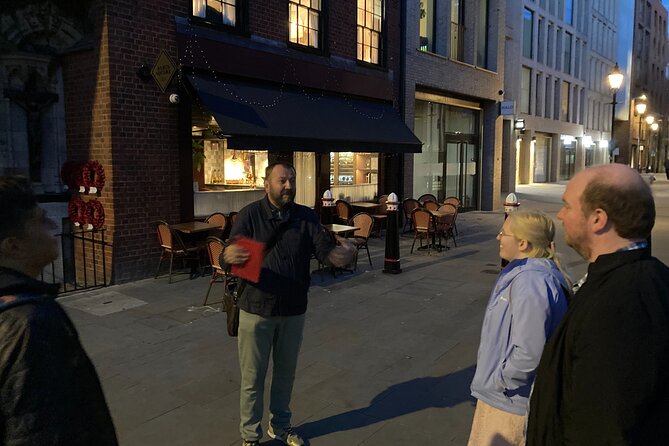
Charterhouse Square provides a sharp change of mood. It is a peaceful green space in the middle of the city, yet the ground beneath and around London contains reminders of repeated outbreaks of deadly disease. Here, the guide explains how plague changed the city, how doctors tried to respond, and what happened to people who survived.
The stop is valuable because it moves beyond the familiar image of a plague doctor in a mask. You hear about the scale of disease, the uncertainty of treatment, and the fear that shaped everyday life. The reference to plague pits also changes the way you look at the pavement. An attractive public square can occupy ground with a very different past.
The guide uses the setting well. A quiet park gives you room to picture earlier London without the same level of traffic noise found at Farringdon. You may want to watch your footing while listening, since the group is moving through a working city rather than a closed historic site.
More ghost tours in London:
- Ghost, Ghouls and Gallows Tour : Guided Tour with Boat Ride
★ 4.5 · 3,212 reviews - Ghost Bus Tour of London
★ 4.0 · 961 reviews - Ghastly Ghost Walking Tour in London
★ 5.0 · 878 reviews - The Original Jack the Ripper Coach Tour of Haunted London
★ 3.5 · 419 reviews
Cloth Fair, drinks, and the social side of execution

At Cloth Fair, the stories take a slightly odd turn. The guide points out where you could get a drink before attending a public execution. That detail is useful because it shows how ordinary activities could sit beside extreme violence.
London’s past was not divided into neat subjects such as crime, leisure, religion, and medicine. They often occupied the same few streets. A pub, church, market, and execution site could all be part of one evening out. This brief 10-minute stop helps make that point without slowing the walk.
Do not expect a long visit here. Cloth Fair is a link between the bigger stops, but it adds color and a little dark humor to the route.
St. Bartholomew the Great and the disturbed dead
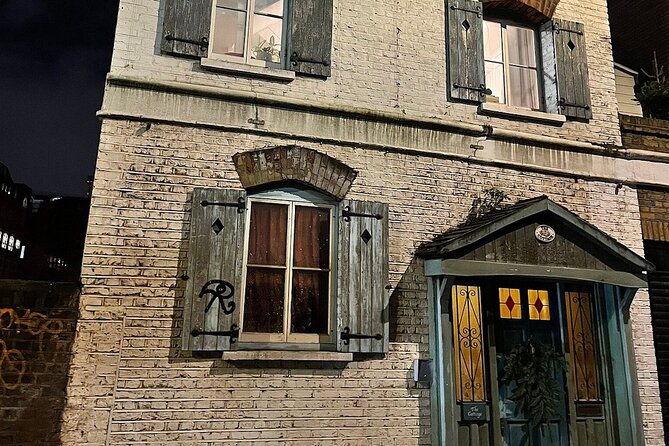
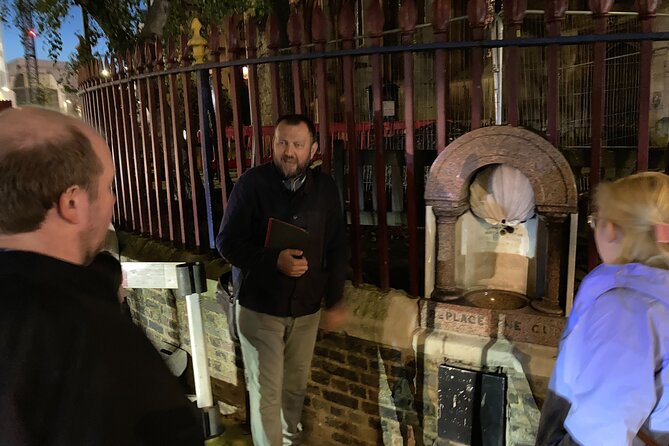
The walk then passes through narrow passages and old streets to St. Bartholomew the Great, one of London’s oldest churches. The church has served the local community for around nine centuries, and its surrounding graveyard gives the guide a fitting setting for stories about burial and unrest.
The main tale concerns the church’s founder. The guide explains how his rest was disturbed, what is missing from him, and how he was said to seek revenge. This is the point where architecture and story work together best. You are looking at old stone, tombstones, and quiet corners while hearing about the people connected with them.
I like this stop because it offers atmosphere without relying only on shock. The churchyard gives the tour a slower, more reflective section after the execution stories. It is also one of the places where your guide’s voice and pacing matter most. Matt has been praised for walking at a pleasant pace and allowing time for questions, a useful quality when the group is gathered in a confined old street.
William Wallace and the facts behind the film
The William Wallace Memorial brings a famous Scottish figure into the route. Here, the guide describes Wallace’s role in the conflict between England and Scotland, the gruesome details of his execution, and the later consequences for the relationship between the two countries.
The stop also separates the real Wallace from the popular film version of his life. That is a welcome change from treating every famous story as settled fact. You hear which parts belong to history and which parts were altered for drama.
This 10-minute section is less about ghosts than memory, politics, and the way modern entertainment reshapes the past. It gives the tour some range. You are not locked into one type of scary story from beginning to end.
St. Bartholomew’s Hospital and old medical practice
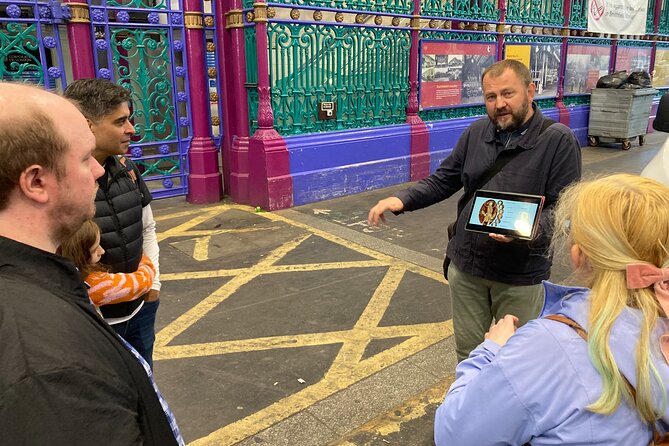
At St. Bartholomew’s Hospital Museum, the tone turns sharply toward medical history. The church and hospital share the same patron and a long connection with the area. The guide describes old treatments, tools, and hospital customs that make modern medical care look very reassuring.
Expect accounts of substances patients were told to drink, eat, or smear on their bodies. You also hear about doctors who did not wash their hands, patients sharing beds, and operations performed before an audience. Amputations and other procedures were carried out with limited pain relief and limited understanding of infection.
This is likely to be one of the most memorable stops, but also one of the hardest for sensitive listeners. The horror here does not need much decoration. The medical facts are disturbing on their own.
The tour also points out that merely watching surgery could be dangerous. That detail helps explain how limited medical knowledge affected not only patients but everyone around them. You begin to see why hospitals, graveyards, and body sellers appear together later in the walk.
Holy Sepulchre and the business of grave robbing
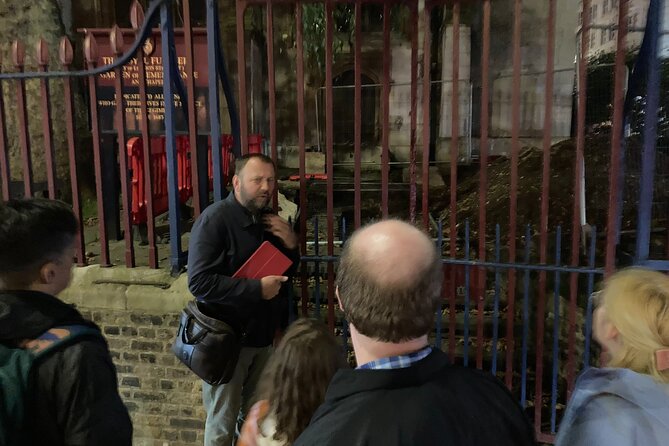
At Holy Sepulchre London, the guide asks a simple question: where are the graves? The answer leads into the trade in stolen bodies. Empty burial pits recall a period when some people made money by removing corpses and selling them.
This is one of the best-connected parts of the tour. You have just heard about old surgery and medical training. You have also passed a pub linked to the evening’s execution stories. The guide then joins those details together and asks who would buy a dead body and why.
The distinction between taking and stealing mattered in law and in public opinion. The guide explains how profitable the trade could be, how legality became complicated, and how the practice eventually ended. The story’s disturbing cover comes from the link between the dead and medical education.
For me, this section gives the tour more than a scare. It shows how a shortage of bodies for medical study created a market that encouraged people to disturb graves. That is exactly the sort of social connection that makes a themed walk worth the price.
Old Bailey and the final criminal story
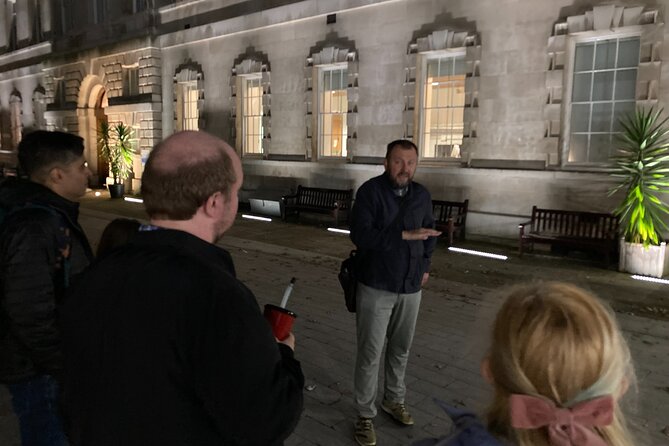
The tour finishes at the Old Bailey, near St. Paul’s Underground Station. The courthouse occupies the site of a former prison, and the guide saves one of the most unsettling stories for this final stretch.
You hear about a woman described as England’s worst serial killer, not Jack the Ripper. The story centers on her ordinary appearance, her chilling manner, and her habit of killing innocent people for money. The guide also explains that she was caught twice and still continued, and that she had a daughter.
The details are designed to shock, but the setting gives them weight. You are outside one of London’s most famous courts, on ground associated with criminals and punishment. Ending here also brings the evening back to the legal system introduced at Smithfield.
The finish is convenient. From 19 Old Bailey, you can walk to St. Paul’s Underground Station, making it easy to continue your evening or return to your accommodation. The tour does not return to Farringdon, so plan your route home from the ending point.
Price, group size, and what you receive
At $49 per person, this is not the cheapest way to spend two hours in London. You are paying for a guide-led walk rather than entry to several attractions, and the stops are viewed from public streets or outdoor areas. There is no promise of interior access to every church, museum, or courthouse.
The value comes from the route and the interpretation. A guide ties together Farringdon, Smithfield, Charterhouse Square, St. Bartholomew’s, the hospital, Holy Sepulchre, and the Old Bailey in one evening. Doing that independently would require research and careful navigation, and the stories would lose some force without someone explaining what happened at each place.
The group limit is 20 people. That is small enough to feel manageable, though busy streets and evening noise can still make it hard to hear if you fall behind. Stay near the guide, especially at Farringdon and around the older narrow lanes.
The mobile ticket is convenient. Confirmation arrives at booking, and free cancellation is available up to 24 hours before the 6 pm start. Changes made inside that window are not accepted, and the tour requires a minimum number of participants. Service animals are allowed, and most people can take part, but remember that this is a two-hour city walk with repeated outdoor stops.
Who should book this nighttime walk
I would recommend it to you if you enjoy real crime and medical history, old churches, urban legends, and stories that connect several parts of London’s past. It suits first-time visitors who want a different view of central London, as well as repeat visitors who have already seen the major museums and monuments.
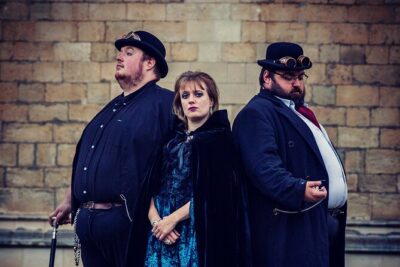
It is especially good for adults and older teenagers who can handle graphic subjects. The tour is also a strong choice around Halloween, when the evening setting and costumes can add to the mood. One guide has dressed in a mask and cape for the occasion, though you should not assume every departure will have the same presentation.
I would think twice if you dislike descriptions of torture, disease, surgery, murder, or grave robbing. This is not a gentle folklore tour, and the guide may describe old punishments and medical practices in direct language.
Should you book London’s Ghosts & Gruesome Past?
Book it if you want a well-paced history walk with genuine darkness, not a ride full of staged scares. The best parts are the connections: executions lead to social customs, plague pits lead to burial practices, and hospitals lead to grave robbing. That gives the evening more value than a string of unrelated ghost stories.
At $49, the tour makes the most sense if you value a good guide and a carefully linked route. Matt and Carolina have both been singled out for clear, enthusiastic storytelling, patience, and strong atmosphere, though the guide for your date may differ. If you want London after dark to feel unfamiliar again, this is a worthwhile choice. If you want a light, family-friendly ghost story, choose something gentler.
FAQ
Where does the tour begin?
The meeting point is outside Cafe Pronto at Farringdon Station, 43 Cowcross Street, London EC1M 6BY.
What time does the tour start?
The tour starts at 6:00 pm.
How long does the walking tour last?
The experience lasts approximately two hours.
Where does the tour finish?
The tour finishes at 19 Old Bailey, within walking distance of St. Paul’s Underground Station.
How many people can join the tour?
The maximum group size is 20 participants.
What does the tour include?
The booking includes an entertaining guided walk with a local guide. The listed stops are visited from public streets and outdoor areas, and admission tickets are not charged for the stops.
Is the tour suitable for people who dislike graphic history?
The tour includes executions, torture, plague, surgery, murder, and grave robbing. You should choose it only if you are comfortable with gruesome historical subjects.
Can I cancel for a full refund?
Yes. You can cancel at least 24 hours before the experience start time for a full refund. Cancellations or changes made less than 24 hours before the start are not accepted for a refund.
Just added in London
- The Beatles and a Secret pub★ 4.5 · 36 reviews
- The Beatles & Liverpool Magical Mystery Tour from London★ 4.5 · 80 reviews
- Airport Coach Service from Heathrow to Oxford★ 3.5 · 67 reviews
- The Beatles Magical History Black Taxi Tour London★ 5.0 · 51 reviews
- The Beatles London walking tour. From Abbey Road to the Roof Top★ 5.0 · 61 reviews
- Private The Beatles Taxi Tour in London★ 5.0 · 12 reviews
- The Beatles London Walk★ 4.5 · 120 reviews
- The Alfred Hitchcock London Walk with Sandra Shevey★ 5.0 · 15 reviews
Ghost Tours, compared.
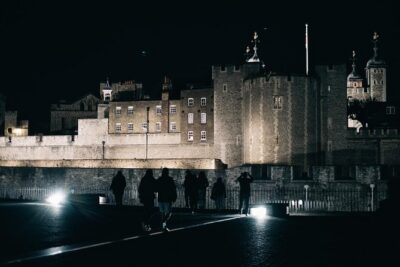
Ghost, Ghouls and Gallows Tour : Guided Tour with Boat Ride
Read our review →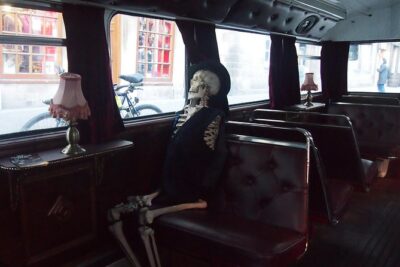
Shadows of York: Ghost Walk and Horrible History.
Read our review →
The Original Jack the Ripper Coach Tour of Haunted London
Read our review →Browse the lists this tour appears in