
Reviewed · WALKING TOURS
London Sightseeing Walking Tour with 30+ sights
London’s biggest sights are spread across two very different districts, yet this tour links them in one long day. You begin among Roman roads, medieval churches, and modern finance in the City of London, then cross to Westminster for royal homes, Parliament, parks, and the Thames.
I like the easy start at St. Paul’s Station and the useful finish at Buckingham Palace. I also like that guides such as Mike, Adam, Carolina, Eric, and Matt add personal stories, help with photos, and suggest places to revisit. The drawback is simple: five hours and about five miles on foot is a serious workout, and you enter none of the attractions.
Key points to know
- Two Londons in one walk: See the old financial district and royal Westminster in a single route.
- Thirty-plus photo stops: Big Ben, Tower Bridge, St. Paul’s, the London Eye, London Bridge, and Buckingham Palace are all on the day’s plan.
- A guide who adds context: Adam, Carolina, Eric, Matt, Mike, and Andrew are among the guides praised for clear stories, humor, and helpful city advice.
- One Tube journey included in the route: Bring an Oyster card, contactless card, or Apple Pay or Google Pay.
- Lunch near Tower Hill: Food is not included, but the break gives your feet a welcome rest.
- Best early in your visit: Use the tour to mark places for a later, longer visit.
What this five-hour London walk really offers
This is an orientation tour, not a museum tour. You move from sight to sight, hear the key story behind each place, take photographs, and keep going.
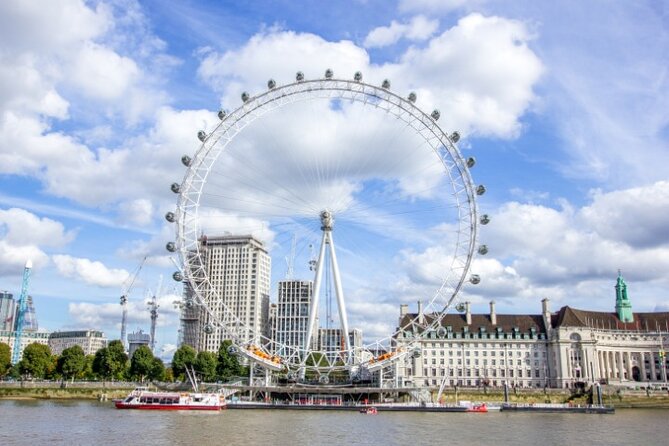
That distinction matters. The ticket price is $26.35 per person, which is low for a five-hour guided experience in central London. But the value comes from the route and the guide’s explanations, not from entry to St. Paul’s Cathedral, the Tower of London, Westminster Abbey, the London Eye, or any other paid attraction.
You will see the exteriors and public surroundings of more than 30 places. If you want to tour the Crown Jewels, climb inside St. Paul’s dome, enter Westminster Abbey, or ride the London Eye, you need separate tickets and extra time.
The route is at its best for a first or short visit. It helps you understand where the main sights sit in relation to one another. I would book it near the start of your stay, then return to the places that deserve a slower look.
More city tours in London:
- Westminster to Greenwich Sightseeing Thames Cruise in London
★ 4.5 · 2,969 reviews - London Sightseeing Tour: Guard Change with Tower of London Option
★ 4.5 · 2,672 reviews - Hop-On Hop-Off Sightseeing River Cruise on the Thames
★ 4.0 · 1,256 reviews
Starting at St. Paul’s and tracing Roman London
Meet at 10:00 a.m. at St. Paul’s Station, Exit 2, at the top of the steps beside Caffè Nero at 30 Newgate Street. The guide carries a yellow umbrella, a useful marker in a busy city.
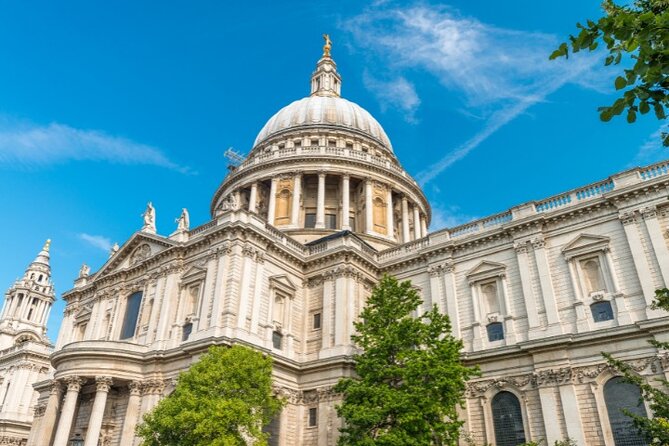
St. Paul’s Cathedral is the natural opening scene. Sir Christopher Wren’s great dome has shaped London’s skyline for centuries, and the exterior gives your guide plenty to explain about the city, worship, royal ceremonies, and national events. You get about 15 minutes here, enough for orientation and photographs, but not enough for an interior visit.
From here, the route moves into the City of London, where old roads and modern office towers sit side by side. Watling Street recalls the Roman road system that once connected London with ports and towns across England. It is the sort of detail you could easily miss while walking between headline attractions.
The Royal Exchange and the Bank of England shift the story from Roman Britain to global finance. The Royal Exchange began as a center for trade in 1571, while the Bank of England, often called the Old Lady of Threadneedle Street, remains central to the country’s money system.
Mansion House, the official home of the Lord Mayor of the City of London, adds a ceremonial note. Nearby, the Monument to the Great Fire rises 61 meters above the street. Its height is not just for effect: it marks the 1666 fire and the city’s rebuilding under Wren and others.
This first section rewards a guide who can connect the dates without turning the walk into a lecture. Adam, Eric, Matt, Carolina, and other guides have been praised for making the facts clear, friendly, and easy to follow. The best moments come when a guide points out why a plain-looking street or building matters.
The Shard, the Thames, and the Tower district
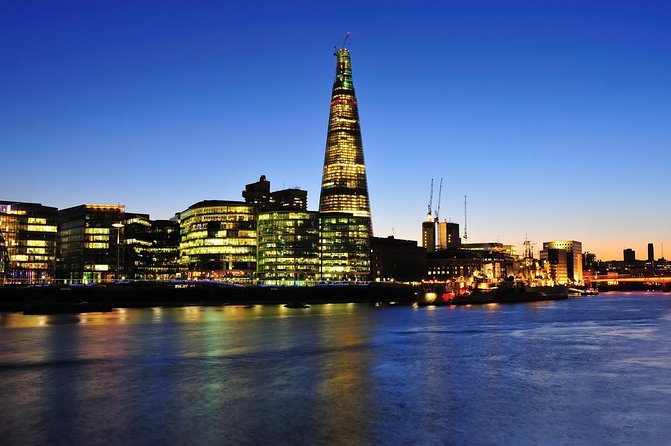
The modern City appears through the Shard, Bracken House, Bloomberg, and the Sky Garden. The Shard is the tallest building on London’s skyline, while Bracken House is known for its modern design and connection to the Financial Times. Bloomberg’s European headquarters is another example of newer architecture in a district shaped by old streets.
The Sky Garden sits high in the Walkie Talkie building at 20 Fenchurch Street. You see it from outside on this tour. Its public garden and city views are a possible return visit, but admission is not part of this experience.
The route also brings you to the Thames. The river is not just a scenic backdrop. It explains London’s growth as a port, trading center, and seat of government. From the riverfront, you can frame the Shard, Tower Bridge, HMS Belfast, and the financial district in a single series of photographs.
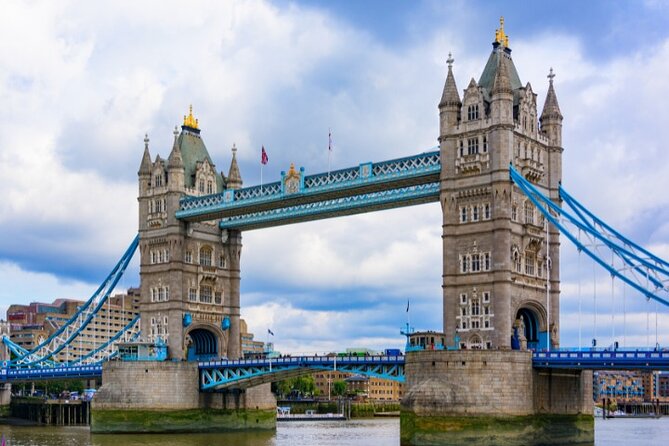
Tower Bridge is one of the day’s most recognizable stops. You see the bridge from the outside and learn how it links the Tower district with Southwark. The walk does not promise a visit inside the bridge, and one review specifically noted that the route did not cross it because doing so would add time. If walking across Tower Bridge is important to you, plan a separate visit.
The Tower of London receives about 15 minutes. That is enough to discuss William the Conqueror, the royal palace, prison, armory, Crown Jewels, and Yeoman Warders. It is not enough to explore the fortress properly. You should treat this as a preview and return with a timed admission ticket if the Tower is high on your list.
London Bridge comes next in the wider story. The current bridge opened in 1973, while earlier versions carried houses and inspired the familiar nursery rhyme. This is a good reminder that London’s famous names do not always point to the most ornate structure. Tower Bridge is the photogenic one. London Bridge is the one with the long succession of replacements.
HMS Belfast is another exterior stop. The former Royal Navy ship is now a museum and recalls the Second World War, including the Battle of the North Atlantic and the D-Day landings. Five minutes gives you an introduction, not a shipboard visit.
A useful break near Tower Hill
The tour takes a lunch break near Tower Hill, with food and drinks at your own expense. The break is practical rather than fancy. You can eat, rest your feet, and prepare for the Westminster portion.
This pause matters because the route keeps moving. Some days may feel leisurely, while others feel brisk, especially if the group includes people with different walking speeds. Wear shoes you would happily use for a full day in town, not just for a short sightseeing stroll.
The tour has a maximum of 25 people. That is not a private tour, but it is small enough for a guide to keep the group together and answer questions. One particularly useful habit described in the tour information is the guide offering to take photographs. That saves you from asking strangers at every major stop.
More walking tours in London:
- Tour for Muggles The Ultimate Harry Potter Walking Tour in London
★ 5.0 · 4,684 reviews - London Jack The Ripper Guided Walking Tour
★ 5.0 · 3,131 reviews - Changing of the Guard Guided Walking Tour in London
★ 5.0 · 1,793 reviews - The Great British Rock and Roll Walking Tour
★ 5.0 · 1,371 reviews
Crossing to Westminster by Tube
The route includes one London Underground journey after the City section. Your fare is not included, so each person needs a valid Oyster card, contactless credit or debit card, or Apple Pay or Google Pay.
This is a small but important detail. If you arrive without one of those payment methods, the Tube portion can become awkward. The journey also explains why this tour can cover so much ground without asking you to walk every connecting mile.
After the Tube, the character of London changes. The City is about commerce, old lanes, Roman traces, and rebuilding. Westminster is about monarchy, government, ceremony, and national memory.
Big Ben, Parliament, and the national center
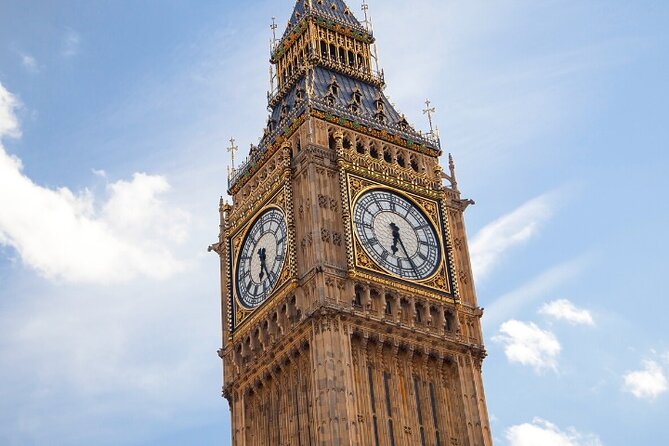
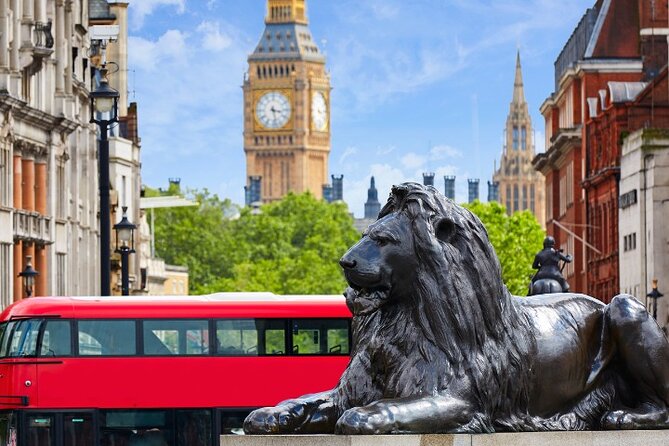
The Houses of Parliament and Big Ben form the visual heart of Westminster. Big Ben is technically the great bell, while the tower is officially the Elizabeth Tower, but the familiar name is the one almost everyone uses.
You get time for photographs and an explanation of the building’s role in British government. The Houses of Parliament contain the House of Commons and House of Lords, and the exterior gives you a strong sense of how closely politics and public ceremony are tied together here.
Westminster Abbey receives another short stop. Founded in 960, it has hosted coronations since 1066, along with royal weddings, funerals, and national ceremonies. You can admire the Gothic exterior and hear about Poet’s Corner, but admission is not included and the tour does not go inside.
St. Margaret’s Church sits beside Parliament Square. Known as the Politician’s Church, it has hosted royal weddings and other major events. It is a quieter counterpoint to the Abbey, and a good example of how much history is packed into a small area.
The Cenotaph and the Ministry of Defence add the military and civic side of Whitehall. The Cenotaph honors British and Commonwealth service members killed in the World Wars and later conflicts. The Ministry of Defence occupies the historic Main Building nearby.
The Cabinet Office and Great Scotland Yard continue the government theme. The Cabinet Office supports the Prime Minister and Cabinet, while New Scotland Yard is associated with policing across Greater London. These are not sightseeing interiors, but they help you read Whitehall as a working government district rather than a collection of grand façades.
Royal London from St. James’s Park to Buckingham Palace
The royal section begins with St. James’s Palace, built by Henry VIII and used as the monarch’s official residence before Buckingham Palace took that role. Its red brick exterior is less theatrical than Buckingham Palace, but its age and continuing royal connections make it worth a stop.
Clarence House is the official residence of King Charles III and his family. Lancaster House, nearby, is used for state events, diplomatic meetings, and official gatherings. These stops are viewed from outside, so you get the setting and story rather than an interior tour.
St. James’s Park provides a needed change of pace. The 57-acre park has a lake, gardens, and views toward Buckingham Palace. Pelicans and swans are among the park’s best-known residents, and one guide made a point of including them in the day. The park is also one of the few places on this route where you can pause without a grand building demanding your attention.
The Mall leads directly toward Buckingham Palace. Its broad, red-colored ceremonial avenue hosts processions, national celebrations, and royal events. The route also passes the Women of World War II Memorial, which honors women who served in civil defense, the armed forces, and wartime industry.
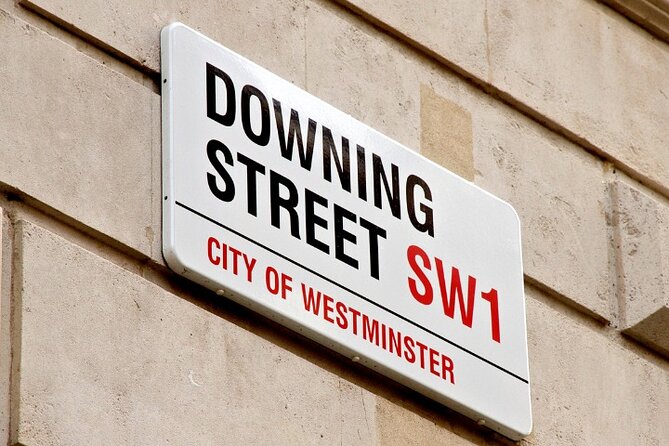
Downing Street, including No. 10 and No. 11, fits into this section as another address with outsized political meaning. The Prime Minister lives at No. 10, and the Chancellor of the Exchequer lives at No. 11. Security restrictions mean you view the entrance from outside.
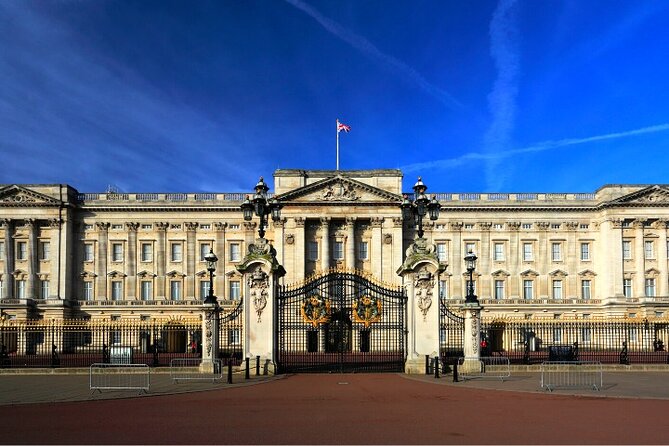
The tour ends at Buckingham Palace. That is a convenient finish for photographs and onward plans, but remember that you do not return to St. Paul’s. If you have a timed activity near the starting point later in the day, allow for the transfer across central London.
How the guides shape the day
The route covers a lot, so the guide makes or breaks the experience. The strongest guide style here is lively but controlled: enough dates and names to give each place meaning, with humor and practical advice to keep the day from feeling like a school lesson.
Adam has been praised for clear storytelling, good humor, and an ability to involve the whole group. Carolina is noted for a comfortable pace, practical tips about tickets and food, and care with the Tube transfer. Eric brings enthusiasm for London history and the relationship between Westminster and government.
Matt is described as funny, attentive, and generous with facts. Mike is especially associated with helping the group get comfortable, remembering names, taking photos, and suggesting ways to adjust the rest of a London itinerary. Andrew is also praised for his city knowledge.
You cannot choose a guide in advance from the details provided, but these names give you a useful idea of the standard to expect. The tour works best when you ask questions and tell the guide what you plan to see later. A good question can turn a quick exterior stop into advice you can use for the rest of your visit.
Is $26.35 good value?
At $26.35, the price is strong for a five-hour guided route through central London. You are paying for a human guide, a carefully connected route, photo help, and an introduction to more than 30 sights.
The cost looks less impressive if you expect admission to the Tower of London, Westminster Abbey, or the London Eye. None of those tickets is included. You also pay for lunch and the Tube fare.
I see the tour as a low-cost planning tool. It can save you from spending your first day staring at a map, and it shows you which places deserve a separate booking. For a short London stay, that orientation can be worth more than a tour that spends the same time inside only one attraction.
Who should book this walk?
Book it if you want to cover a lot of ground, enjoy history in short pieces, and prefer a guide to a self-guided map. It suits first-time visitors, short-break visitors, and anyone who wants to get bearings before choosing which attractions to enter.
It is also a good fit for people who value photographs and practical advice. Guides may help with pictures, explain ticket choices, and suggest how to use the rest of your day.
Think twice if you dislike long walks, need frequent stops, use a pram or buggy, or have mobility difficulties. The tour is specifically not suitable for prams, buggies, or strollers, and the stated route covers about five miles. Some people may experience it as closer to seven miles depending on the exact path and pace.
Should you book it?
I would book this tour early in a London stay if your main goal is to see the city’s headline sights and decide where to return. The price is fair, the route is ambitious, and the guides bring useful local detail to places you might otherwise photograph without understanding.
I would not book it as your only visit to the Tower, Westminster Abbey, St. Paul’s, or the London Eye. Use the walk as your broad first look, then give your favorite attractions the time and admission money they deserve.
FAQ
Where does the London sightseeing walking tour start?
It starts at 10:00 a.m. at St. Paul’s Station, Exit 2, at the top of the steps beside Caffè Nero at 30 Newgate Street, London EC2V 6AA. Look for the guide holding a yellow umbrella.
Where does the tour finish?
The tour ends at Buckingham Palace, London SW1A 1AA. It does not return to St. Paul’s Station.
How long does the tour last?
The tour lasts approximately five hours.
How many sights are included?
The route includes more than 30 London sights, landmarks, and attractions. The full route lists 34 stops across the City of London and Westminster.
Are entrance tickets included?
No. The tour does not enter the sights, landmarks, or attractions. Entrance tickets for places such as the Tower of London, Westminster Abbey, St. Paul’s Cathedral, and the London Eye are not included.
Is lunch included?
No. The tour takes a short lunch break near Tower Hill, and you pay for your own food and drinks.
Do I need a London Underground ticket?
Yes. The route includes one Tube journey. Each person needs an Oyster card, contactless credit or debit card, Apple Pay, or Google Pay.
Is the tour suitable for people with mobility difficulties or children in strollers?
The tour is not suitable for people with walking or mobility difficulties, and it is not suitable for prams, buggies, or strollers. The route covers about five miles on foot.
How many people can join the tour?
The maximum group size is 25 people. The tour is offered in English, and a professional guide leads the walk.
Can I cancel for a refund?
You can cancel at least 24 hours before the start time for a full refund. Changes or cancellations made less than 24 hours before the start time are not accepted for a refund. Poor weather or failure to meet the minimum number of participants may lead to a different date or a full refund.
Just added in London
- Private landmarks photoshoot for families and couples★ 5.0 · 92 reviews
- Professional Photoshoot in London Photographer★ 5.0 · 102 reviews
- Private Tour: Night Photography Tour in London★ 5.0 · 48 reviews
- Professional Private Photoshoot in London★ 5.0 · 63 reviews
- Shoreditch Street Art and Graffiti Tour (Private Group Booking)★ 5.0 · 108 reviews
- Transfer London to Southampton Cruise Terminal (extra luggage)★ 4.5 · 81 reviews
- London, Windsor Castle, Hampton Court Palace with Free Snack Pack★ 4.0 · 102 reviews
- Central London to Southampton Cruise Port Private transfers★ 4.5 · 128 reviews
Walking Tours, compared.
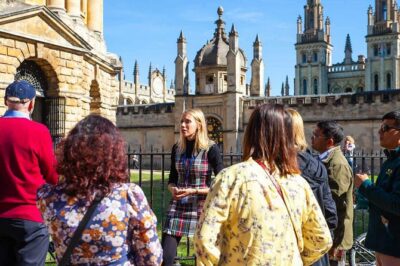
Oxford University Walking Tour With University Alumni Guide
Read our review →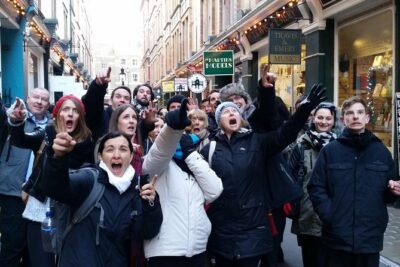
Tour for Muggles The Ultimate Harry Potter Walking Tour in London
Read our review →
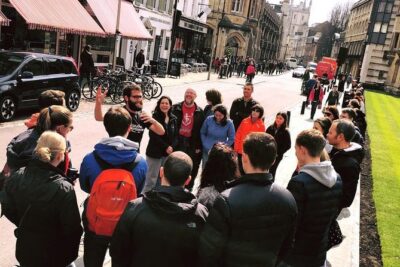
Cambridge University Walking Tour by Alumni™ Kings College Option
Read our review →
Blackbeard to Banksy – The Ultimate Walking Tour of Bristol
Read our review →
Air Raid Shelter + St. Nicholas Market Walking Tour
Read our review →
Walking Tour of Bath with Blue Badge Tourist Guide
Read our review →
Changing of the Guard Guided Walking Tour in London
Read our review →Browse the lists this tour appears in