
Reviewed · WALKING TOURS
London Crimes And Punishment Private Walking Tour
London’s darker past is not tucked away in one museum. It is written into pub walls, churchyards, market streets, plaques, and quiet corners that you could easily pass without noticing. This private walk links those places from Whitechapel to Southwark, covering gangland shootings, Jack the Ripper, public executions, debtors’ prisons, the Blitz, and the grim business of medieval justice.
I like the private format, since you can ask questions and move at your own pace instead of following a large group. I also like the range: the Krays, the Great Fire, William Wallace, Dickens, Shakespeare, and wartime London all appear in one morning. The main drawback is pace. With around 30 stops in three hours, many visits are brief looks from the street rather than long entries inside buildings.
- Start in Whitechapel: Begin near the old Bell Foundry and the pubs linked with the Krays and Jack the Ripper.
- Follow a broad London story: Crime is set beside immigration, poverty, religion, public health, war, and social reform.
- See famous places differently: St. Paul’s, London Bridge, Shakespeare’s Globe, and Borough Market gain darker associations.
- Expect mostly exterior stops: Some buildings are viewed from outside, and attraction admission is generally not included.
- Finish at Crossbones: End near a poignant graveyard for prostitutes, criminals, plague victims, and others denied a formal burial.
- Plan for steady walking: The route runs from Whitechapel to Borough High Street, with hotel pickup and drop-off offered on foot or by Underground.
Why this private London crime walk works
The best thing about this tour is its sense of place. You do not simply hear a list of murders and punishments. You move through the streets where those events fit into daily life. A pub becomes a gangland meeting point. A church marks the edge of a district once known for poverty. A modern market sits on ground used for trade for centuries.
Stephen Liddell is the guide named in the tour information, and his approach is clearly built around stories rather than a dry run through dates. His past tours are described as detailed and personal, with special attention to lesser-known material. That matters here because London’s most familiar sights are not the whole story.
You will also have room to steer the conversation. If you care about Victorian crime, the Krays, prison history, Dickens, religious change, or the Blitz, say so early. A private tour is most useful when you treat it as a conversation, not a fixed lecture.
The $247.73 per-person price is easier to justify for a couple or small private group than for one person. You are paying for a dedicated guide, hotel pickup and drop-off on foot or by Underground, and a route that crosses several parts of London. Group discounts may improve the price for larger parties, but you should still compare the total with a standard group walk if your main goal is simply to see the headline Jack the Ripper sites.
Whitechapel, the Bell Foundry, and the Krays
The morning begins at 9:30 a.m. at 277 Whitechapel Road. The first stop is the Whitechapel Bell Foundry, once associated with the casting of Big Ben and the Liberty Bell. The stop is not only about famous bells. You also hear how Big Ben got its name, adding a small piece of London lore before the tour turns toward crime.
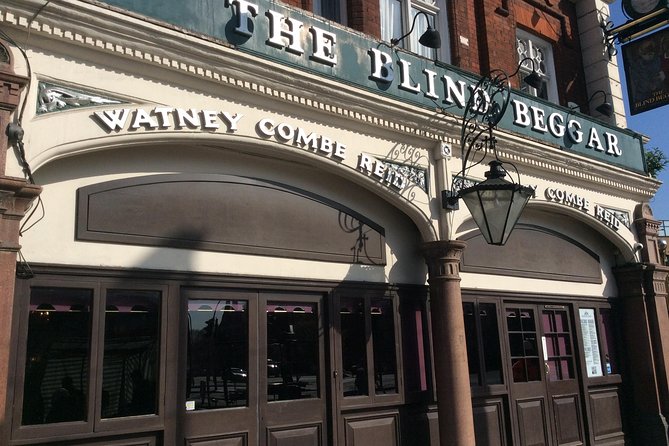
Next comes the Blind Beggar public house, linked with the notorious Krays gangland shooting in the 1960s. This is one of the tour’s strongest modern crime stops. The Krays are presented as London’s answer to Al Capone, which gives you a way to place their reputation in the city’s larger criminal story.
The visit is short, around 10 minutes, and admission is not included. Treat it as a street-level history stop. You are not booking a pub crawl, and the focus is the location and its story rather than spending time inside.
More walking tours in London:
- Tour for Muggles The Ultimate Harry Potter Walking Tour in London
★ 5.0 · 4,684 reviews - London Jack The Ripper Guided Walking Tour
★ 5.0 · 3,131 reviews - Changing of the Guard Guided Walking Tour in London
★ 5.0 · 1,793 reviews
Jack the Ripper’s Whitechapel
The Ten Bells is closely tied to the Jack the Ripper story, and the tour also visits the White Hart, another pub associated with the case. These places help you see how the Ripper story grew from real streets, pubs, lodging houses, and working neighborhoods rather than from a single crime scene.
You then walk through Brick Lane, now known for curry restaurants and markets. The useful part of this stop is the contrast between today’s popular street and the Victorian district described by the guide. The tour uses the Ripper story as an entry point, but it also looks at what life was like for ordinary people in a poor East End neighborhood.
At Brick Lane Jamme Masjid, the building’s changing religious identity becomes the focus. It was a Protestant church for French refugees, later a synagogue, and now a mosque. That single building tells you more about London’s shifting communities than a simple crime tour usually would.
This section is not just about identifying a killer. It is about poverty, migration, crowded housing, faith, and the way sensational crime stories can overshadow the people who lived in the area. Still, you should keep expectations sensible. The stops are short, usually five to 15 minutes, and the tour does not include a museum visit or a formal Jack the Ripper exhibition.
Fire, faith, and Victorian Spitalfields
The Golden Boy of Pye Corner is a small statue with a large lesson. Its connection to the Great Fire of London gives the guide a chance to explain why this rather unusual golden boy appears on a quiet street.
Christ Church Spitalfields provides another change of mood. The church was a center of Victorian life, close to a market and brewery and near a street remembered as one of the worst in London. You get a sense of how churches, commerce, poverty, and public life sat close together in the old East End.
The former Jewish soup kitchen for the poor adds a social history angle. It points to the efforts made to feed people living in hardship. Old Spitalfields Market then brings you beneath a Victorian roof where the setting is more attractive and modern, but the market’s long working history remains part of the story.
This is one of the tour’s best stretches for anyone who wants more than gruesome tales. Crime makes more sense when you see the pressures around it: low wages, poor housing, migration, hunger, and uneven access to justice.
Smithfield, Wallace, and public punishment
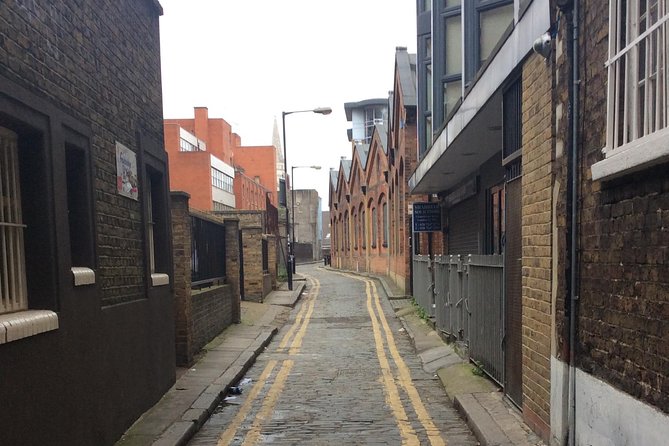
Smithfield Market has been tied to London’s meat trade for centuries. The stop also introduces the less pleasant side of older food production and public punishment. The area was not only about animals and commerce. It was also linked with executions and violent spectacle.
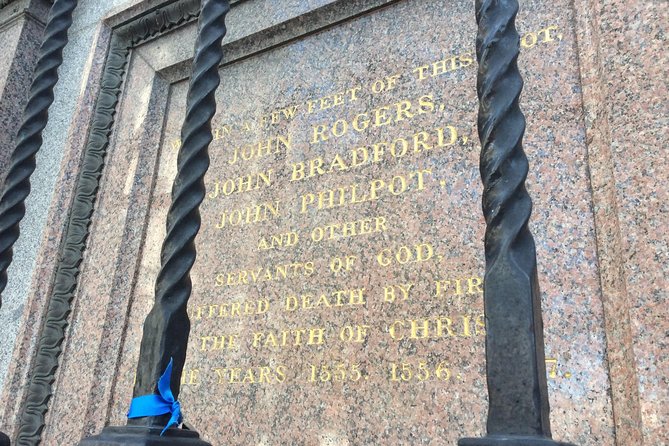
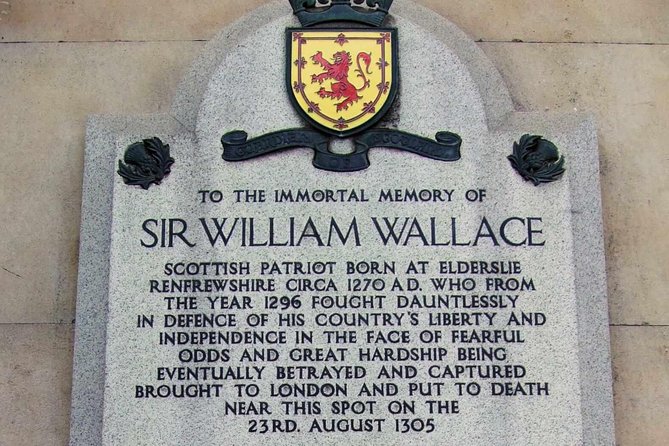
At the William Wallace Memorial, you hear about Wallace, known to many through Braveheart, and the punishment of being hanged, drawn, and quartered. The stop places one of England’s most brutal forms of execution beside other local stories of justice.
The Peasants’ Revolt plaque shifts the focus from individual criminals to political protest. It gives you a chance to consider how rebellion, punishment, and social change shaped later Western society. You may find this part less sensational than the Ripper stops, but it adds needed context.
The Church of St. Bartholomew the Great and its small graveyard continue the theme of old London hidden in plain sight. The stop is brief, yet the setting offers a quieter counterpoint to the public violence discussed earlier.
Same base, a different kind of day:
- Stonehenge, Windsor Castle, and Bath from London
★ 4.5 · 18,662 reviews - London Big Bus Hop-On Hop-Off Tour with Optional River Cruise
★ 3.5 · 10,803 reviews - London Small Group Tour of Historical Pubs
★ 5.0 · 10,422 reviews - Stonehenge, Windsor Castle and Bath with Pub Lunch in Lacock
★ 4.5 · 7,402 reviews
St. Paul’s, the Viaduct Tavern, and Old Bailey
At St. Paul’s Cathedral, you view the building from outside and hear how it escaped destruction during the Second World War. This is not a cathedral tour, so do not expect interior access. The value lies in connecting one of London’s best-known buildings with the wartime story.
The Viaduct Tavern is linked with nearby executions and with holding cells beneath the street. The idea of condemned men spending their last night in such cells makes this one of the tour’s most atmospheric stops. Again, the time is short, so the guide’s explanation carries more weight than the building visit itself.
Holy Sepulchre London brings another church into the route, this time with a more gruesome past. Then you reach Old Bailey, the famous criminal court where serious cases are still heard. The court is viewed from outside, but its active role gives the subject a modern edge. London’s justice system is not only a museum piece.
This section works best for you if you like the link between old punishment and present-day law. It also reminds you that London’s legal world developed beside churches, markets, prisons, and execution sites, not in isolation.
From the Blitz to London Bridge
Christchurch Greyfriars Church Garden is a small ruin and memorial garden connected with the Blitz. The National Firefighters Memorial honors people who died protecting London and other cities during the bombings and fires of the Second World War.
These stops widen the definition of crime and punishment. Not every dark chapter involves a murderer or a gallows. War, fire, public duty, and the cost of protecting a city belong in the story too.
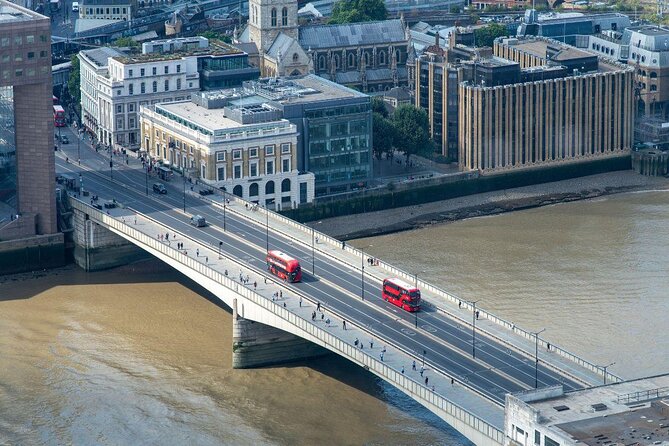
At London Bridge, the guide discusses the ceremonial spike used to display the heads of executed people as a warning to those entering the city. The modern bridge makes a sharp contrast with that older practice. You are looking at a familiar crossing while hearing how power once used the gateway as a public message.
The Millennium Bridge stop adds a darker story connected with a former suicide location and the sexist way such places were treated. The information provided does not include a visit to that former location, so this is best understood as a viewpoint and storytelling stop.
Shakespeare’s Globe, the Clink, and Winchester Palace
The area around Shakespeare’s Globe was far from respectable in Shakespeare’s time. The tour compares it with Amsterdam in its day, pointing to its theaters, drinking places, and sex trade. That context helps you see why the south bank mattered to people seeking entertainment outside the rules of the City.
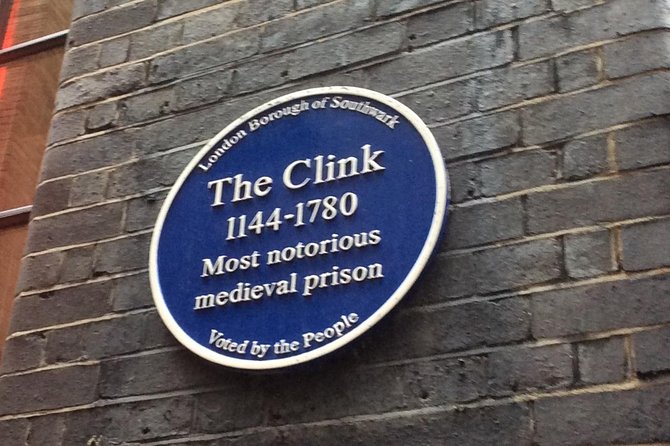
Outside the Clink Prison Museum, you learn why this part of London developed such a harsh reputation. The museum itself is not included, so you will not tour the cells unless you make a separate visit. If prison interiors are a priority, leave time to return on your own.
Winchester Palace adds the story of the bishop who once lived there and the fires that destroyed much of the building. Borough Market then takes you into the Dickensian side of London. The market has roots reaching back to Roman times and is tied here to the world of Oliver Twist.
This is a particularly useful part of the route for anyone who likes literature. Dickens did not invent poverty from thin air. The streets, markets, prisons, and social problems around Southwark gave his work much of its force.
Marshalsea Prison and Crossbones Graveyard
The tour finishes near the old Marshalsea Prison, a debtors’ prison that had a powerful effect on Charles Dickens. The remaining south wall is a modest physical remnant, but the story is large. Debt could separate families, trap people in poverty, and turn a legal problem into a life sentence.
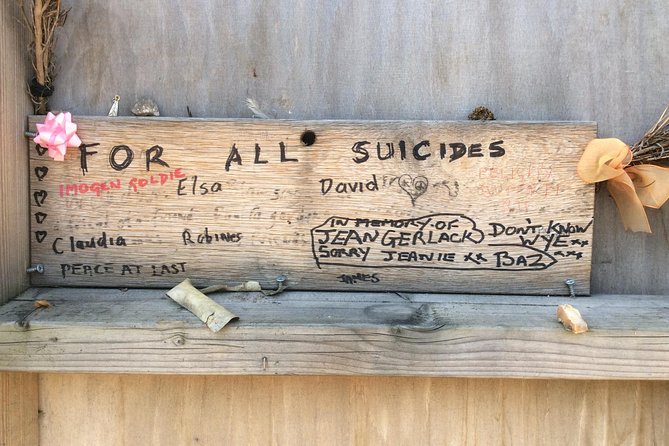
Crossbones Graveyard and Garden of Remembrance provides the most moving ending. It was used for centuries as a burial place for prostitutes, criminals, plague victims, and people who died by suicide. The site is little known, even within London, and its quiet character contrasts with the public displays of punishment discussed earlier.
Red Cross Cottages and Garden closes the route with an early effort to improve life for people living in severe poverty. That final shift matters. The walk does not leave you with only fear and spectacle. It ends with the question of how London tried, imperfectly, to care for people who had been pushed aside.
The official end is on Borough High Street, near the Marshalsea area. From there, you can continue around Borough Market or make your own way back.
Walking demands and practical details
This is a three-hour walk with many stops. The physical demand is listed as moderate, and you should wear comfortable shoes. The tour runs in all weather, so bring clothing suitable for rain, wind, or a cool morning.
Hotel pickup and drop-off are offered on foot or by London Underground, but transportation to and from attractions is not included. Since the route crosses from East London to Southwark, confirm the pickup details when booking and allow extra time if you are staying far from Whitechapel.
Most stops last five to 10 minutes. Brick Lane and Crossbones receive around 15 minutes, while some places are simply short explanations outside. Admission is generally not included, though Old Spitalfields Market is listed as included and the many public streets, gardens, plaques, and memorials cost nothing to view.
A mobile ticket is provided, and service animals are allowed. Confirmation is normally sent at booking, though bookings made within two days of travel may take up to 48 hours to confirm. Free cancellation is available up to 24 hours before the start time. Last-minute cancellations do not receive a refund.
Who should book this tour
I would choose this tour if you want London’s crime stories tied to real neighborhoods and wider social history. It suits couples, families with older children, history fans, readers of Dickens, and anyone who enjoys a guide who can follow questions instead of delivering the same talk to a crowd.
I would be more cautious if you want long indoor visits, formal museum exhibits, or a narrow focus on Jack the Ripper. You will see several Ripper-linked locations, but the tour also covers the Krays, the Great Fire, medieval punishment, religious change, the Blitz, Shakespeare’s London, and social reform.
The private format is the main reason to pay the premium. With Stephen Liddell as the named guide, you can ask for more detail and spend less time on subjects that do not interest you. The short stops and long route mean the tour is best treated as a lively introduction to London’s darker corners, not a full visit to every attraction along the way.
Should you book it?
Book it if you want a broad, story-led walk that makes ordinary streets feel newly charged with meaning. The route gives you a strong mix of famous names and overlooked places, from the Blind Beggar and Ten Bells to Crossbones Graveyard and the Marshalsea wall.
Skip it if you dislike grim subject matter, have limited walking ability, or want to spend time inside museums and churches. For most people who enjoy London’s less polished stories, the private setting, wide route, and attention to small details make this a worthwhile use of three hours.
FAQ
How long is the London Crimes and Punishment Private Walking Tour?
The tour lasts approximately three hours.
What time does the tour start?
It starts at 9:30 a.m.
Where does the tour begin?
The meeting point is 277 Whitechapel Road, London E1 1BY.
Where does the tour finish?
The route ends on Borough High Street, London SE1 1JX, near the Marshalsea Prison South Wall and Crossbones area.
Is this a private tour?
Yes. Only you and your party participate in the private activity.
Is hotel pickup available?
Yes. Hotel pickup and drop-off are offered on foot or by London Underground.
Is admission to the attractions included?
Most stops are viewed from outside and do not include admission. Old Spitalfields Market and several public sites are listed as included or free, while places such as the Clink Prison Museum are not entered as part of the tour.
Can I cancel for a refund?
You can cancel at least 24 hours before the local start time for a full refund. Cancellations made less than 24 hours before the start time are not refunded.
Just added in London
- The Beatles and a Secret pub★ 4.5 · 36 reviews
- The Beatles & Liverpool Magical Mystery Tour from London★ 4.5 · 80 reviews
- Airport Coach Service from Heathrow to Oxford★ 3.5 · 67 reviews
- The Beatles Magical History Black Taxi Tour London★ 5.0 · 51 reviews
- The Beatles London walking tour. From Abbey Road to the Roof Top★ 5.0 · 61 reviews
- Private The Beatles Taxi Tour in London★ 5.0 · 12 reviews
- The Beatles London Walk★ 4.5 · 120 reviews
- Dinner and Jazz Cruise on the River Thames★ 4.0 · 140 reviews
Walking Tours, compared.
Oxford University Walking Tour With University Alumni Guide
Read our review →
Tour for Muggles The Ultimate Harry Potter Walking Tour in London
Read our review →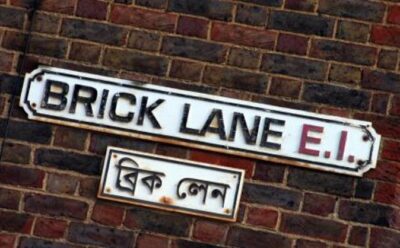
Cambridge University Walking Tour by Alumni™ Kings College Option
Read our review →
Blackbeard to Banksy – The Ultimate Walking Tour of Bristol
Read our review →
Air Raid Shelter + St. Nicholas Market Walking Tour
Read our review →
Walking Tour of Bath with Blue Badge Tourist Guide
Read our review →
Changing of the Guard Guided Walking Tour in London
Read our review →Browse the lists this tour appears in