
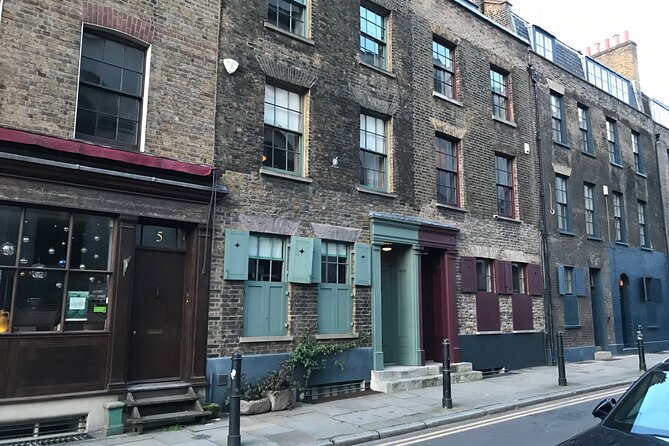
Reviewed · JACK THE RIPPER TOURS
London – Jack the Ripper Small Group Tour
Jack the Ripper’s story is most powerful when you leave the foggy legend behind and walk the real streets of Whitechapel. This evening tour follows the murder sites through Whitechapel and Spitalfields, with guide Richard Walker focusing on the five women, the police investigation, and competing theories about the killer.
I like the small-group format, capped at 15 people, and the radio microphone with earpieces, which keeps Richard easy to hear. I also like the iPad images, which help you picture streets and buildings that have changed since 1888. The main drawback is that you spend long stretches standing while listening, and this is not a spooky ghost walk or a graphic re-creation.
Key points to know
- Victim-focused storytelling: Learn about the women, their lives, and the assumptions made about them.
- Four murder sites: Walk from Whitechapel Road through Buck’s Row, Brick Lane, Spitalfields, and Dorset Street.
- Richard Walker’s theories: Hear arguments based on Scotland Yard’s geographical profile and an FBI criminal profile.
- Useful audio equipment: A radio microphone and earpieces help you follow the talk beside busy London streets.
- About 1.5 miles on foot: Wear comfortable shoes and expect to remain standing at several stops.
- Easy finish: The route ends near Liverpool Street Station and several Underground and Elizabeth line services.
Following the case from Whitechapel Road
The tour begins at 7 p.m. outside London Hospital on Whitechapel Road. This is where Emma Elizabeth Smith died on April 3, 1888, after being attacked. Her death is treated as the starting point for the Whitechapel Murders, although she is not one of the five canonical victims usually linked to Jack the Ripper.
That opening detail matters. It places the case in the wider setting of violence, poverty, and fear in East London rather than dropping you straight into a neat serial-killer story. Richard uses the first stop to establish what is known, what was assumed at the time, and how later writers shaped the popular legend.
You meet opposite the hospital at 279 Whitechapel Road. The start is close to public transport, but I would still arrive early enough to locate the exact meeting place. Richard is recognizable by his Indiana Jones hat, and the audio equipment makes it easier to find the group and follow the opening talk.
Other Ripper walks in London:
- London Jack the Ripper Guided Tour with Ripper-Vision
★ 4.5 · 4,840 reviews - London Jack The Ripper Guided Walking Tour
★ 5.0 · 3,131 reviews - Ultimate Jack the Ripper : Guided Tour of London
★ 5.0 · 1,495 reviews
Buck’s Row and the first murder scene
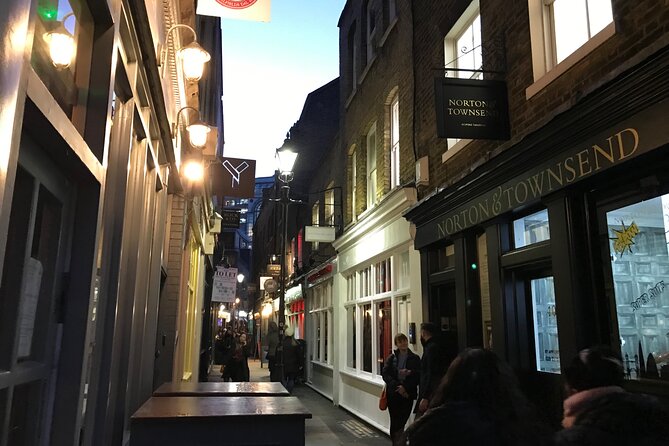
From Whitechapel Road, the group moves to Buck’s Row, now known as Durward Street. Here Richard examines the murder of Mary Ann Nichols, known as Polly, who was found in the early morning of August 31, 1888.
This is presented as a crime-scene investigation rather than a theatrical scare stop. You hear about when and where the body was found, how the attack may have happened, and why the location mattered. Richard also introduces the first suspect in his wider case for who Jack the Ripper may have been.
The value here is the method. Instead of simply naming a suspect and announcing a conclusion, Richard asks you to consider geography, timing, witness accounts, and the limits of the evidence. That approach suits you if you enjoy true crime for its unanswered questions and competing explanations.
The downside is that the group may remain in one place for a while as the details are explained. If you prefer a fast-moving walk with short talks at each stop, this section can feel slow. If you want a careful account, the pause gives you time to listen and ask questions.
Brick Lane and the geography of the murders
Brick Lane brings a change of mood. Today it is famous for curry houses, street art, and food, but on this tour it becomes a useful marker for understanding the killers’ territory and the lives of the women who died.
Richard points out that the five victims lived within a fairly compact area. He connects Brick Lane with Thrawl Street, where Polly Nichols stayed at Wilmott’s Lodging House, and with Flower and Dean Street, where two other victims lived. These addresses help show how close the lodging houses, pubs, workplaces, and murder sites were to one another.
You also hear about Annie Chapman, who was found dead near Brick Lane. Her murder leads to another crime-scene discussion and another suspect. Richard links this theory to both a Scotland Yard geographical profile and a profile developed by FBI Special Agent John Douglas.
This is one of the tour’s strongest sections for anyone who likes evidence over folklore. The geographical argument asks where a killer might live in relation to his crimes, rather than relying only on dramatic descriptions of a shadowy Victorian villain. I appreciate that the tour also questions the old claim that every victim was definitively working as a prostitute. That assumption shaped much of the traditional story, but the evidence is less tidy than the usual version suggests.
Brick Lane itself can be noisy and busy. The headset helps, but you should expect an active city street rather than a silent historic site. There are no admission charges for the outdoor stops.
Christ Church and the Ten Bells
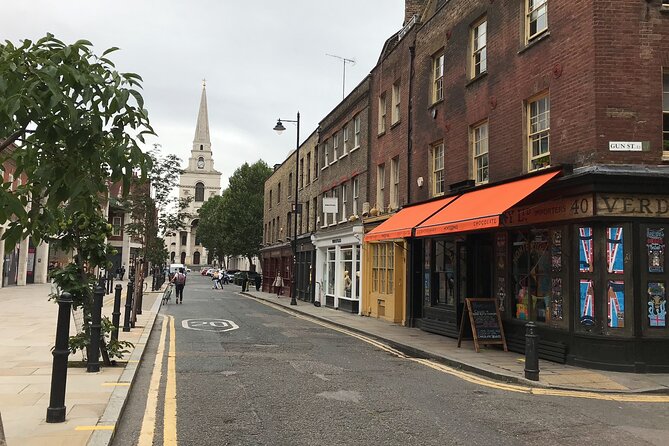
Christ Church Spitalfields provides one of the route’s clearest architectural moments. The church was designed by Nicholas Hawksmoor, and its tall form gives you a strong sense of the Victorian neighborhood’s religious and social structure.
Across the road is the Ten Bells pub, associated with the women and the local community. The pub’s name comes from the church bells. Its connection to the case has helped make it one of the best-known places on a Jack the Ripper walk, though the modern pub is not a preserved crime scene.
Richard uses this stop to connect everyday life with the murders. Pubs, lodging houses, markets, churches, and narrow streets all formed part of the same small area. The result is less about staged fright and more about how people moved through the district.
You do not need to pay an admission fee for the tour stops, but any drink or food at the pub would be your own expense. Coffee and tea are not included. I would not count on sitting here for a break, since the tour is built around walking and standing.
Same base, a different kind of day:
- Stonehenge, Windsor Castle, and Bath from London
★ 4.5 · 18,662 reviews - London Big Bus Hop-On Hop-Off Tour with Optional River Cruise
★ 3.5 · 10,803 reviews - London Small Group Tour of Historical Pubs
★ 5.0 · 10,422 reviews - Stonehenge, Windsor Castle and Bath with Pub Lunch in Lacock
★ 4.5 · 7,402 reviews
Old Spitalfields Market and Victorian poverty
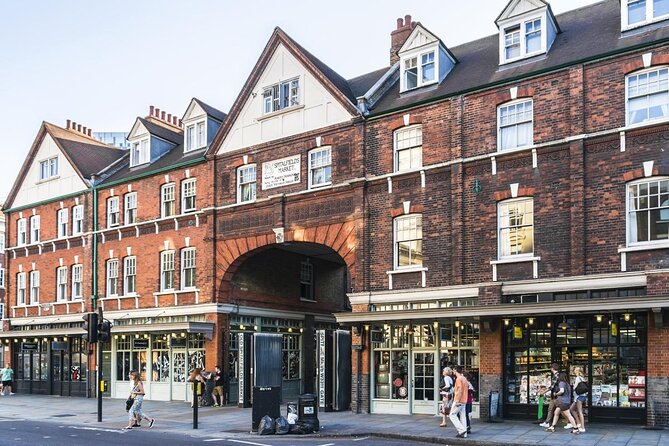
Old Spitalfields Market has served the local community for centuries. On the tour, it also becomes a place to consider the poverty that shaped life in Victorian East London.
Richard refers to the American writer Jack London, who saw severe poverty in this part of London. That detail widens the story beyond the murders. You begin to understand why lodging houses mattered, how unstable accommodation could be, and why people moved through the district without much privacy or protection.
This is where the tour’s social history earns its keep. Jack the Ripper is often treated as a puzzle about one unknown man. The setting reminds you that the victims were living within a much larger crisis of housing, wages, illness, and public safety.
Again, the format is mostly listen and observe. Richard welcomes questions, but the amount of interaction depends partly on the group. A small group gives you a better chance to ask something than a 40-person walk, but it does not turn the evening into a workshop.
Spitalfields, Dorset Street, and the final case
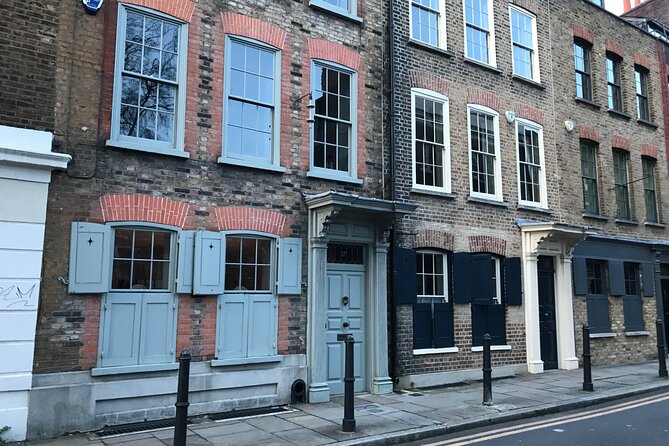
The route continues through Spitalfields, including the area once associated with one of London’s worst streets. This is connected to Annie Chapman’s former home and to Mary Jane Kelly, who was murdered in Dorset Street.
Mary Kelly is presented as a different kind of victim from the others, and her story introduces a third suspect. Richard uses her case to show how the evidence, witness accounts, and later theories do not all point in the same direction.
This final part is also where the tour makes its strongest case for treating the women as people rather than props in a murder mystery. You hear about where they lived and how they fit into the neighborhood before hearing the familiar labels attached to them by newspapers and later writers.
The material can be grim, but the presentation is not designed to shock you with gore. If you are looking for a scary night walk, this may feel too restrained. If you want the social setting, the known facts, and the uncertainty around the suspects, the approach is more rewarding.
Richard Walker’s style and the use of technology
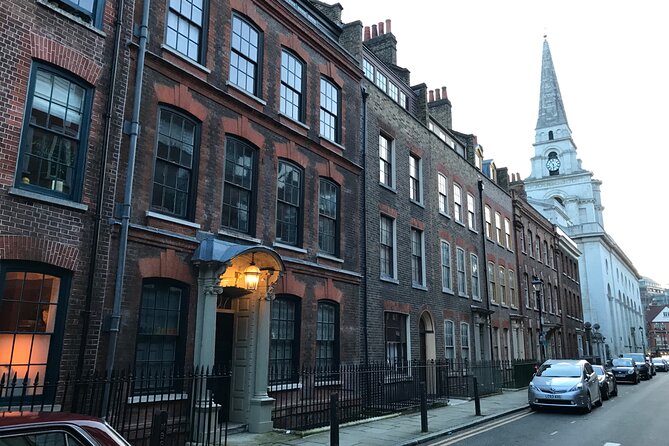
Richard Walker is the only guide named for this experience, and his style is central to the evening. He brings strong personal interest to the subject and has spent years examining the case, including theories that challenge common assumptions.
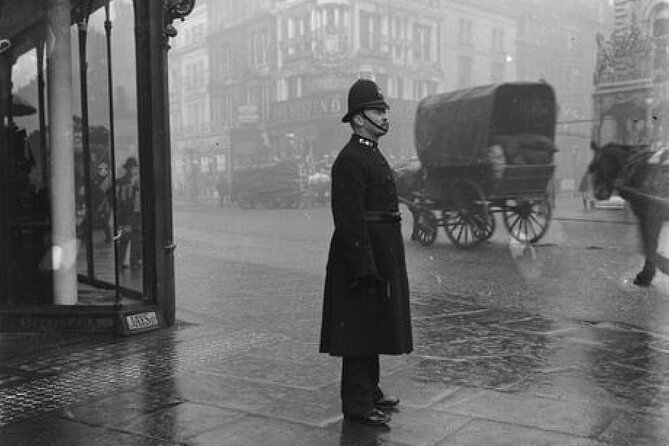
He uses an iPad to show images of streets, buildings, and people from the period. That is especially useful where modern roads no longer look like their Victorian counterparts. You can compare the present-day street with the earlier setting instead of trying to picture everything from spoken description alone.
The radio microphone and earpieces are a real practical advantage. Whitechapel and Spitalfields are active parts of London, and traffic, pedestrians, and nearby groups can make an ordinary walking tour hard to hear. The equipment means you can keep some distance from Richard without losing the thread.
Richard is also willing to discuss theories rather than present one answer as proven fact. That suits you if you already know the standard suspects and want a different reading of the evidence. Some of the material reaches beyond the five murders, including other historical suspects and the way films helped shape public ideas about the case. If you want only the most direct murder evidence, those side paths may feel unnecessary.
Group size, pace, and physical demands
The maximum group size is 15 people. Some departures may be smaller, even down to a private-feeling group, but you should plan for the full limit rather than assume you will have Richard to yourself.
The tour covers about 1.5 miles, or 2.5 kilometers, over roughly 2 hours and 15 minutes. It is not suitable if walking is difficult. Comfortable shoes matter more than smart evening footwear, and you should be ready to stand for extended periods.
One practical concern is the lack of planned seating. Several sections involve a talk at one location before the group moves on. If you need frequent rests, this is worth considering before booking. The route is not described as strenuous, but its length and standing time can make it tiring.
The small group helps in several ways. You can hear better, ask questions, and stay connected to the guide. It also avoids the feel of the very large Jack the Ripper walks that gather around the same streets. Still, small-group does not mean constant conversation. You may spend much of the evening listening to Richard’s prepared material.
Who will get the best value from the $41.67 price
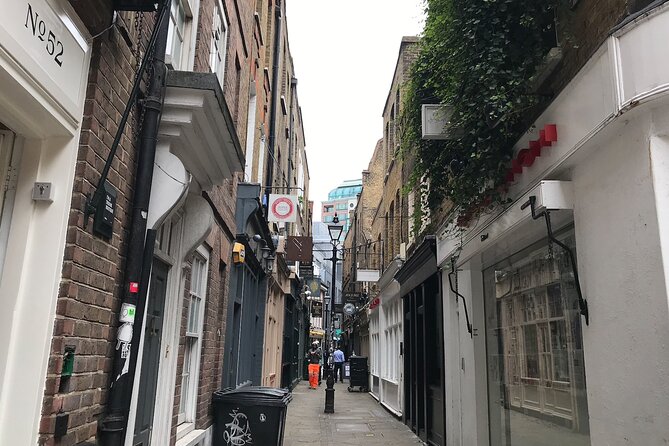
At $41.67 per person, the cost is reasonable for a 2-hour-15-minute guided walk in central London, particularly when you factor in the small group, the audio equipment, and the visual material. There is no museum admission to add, and the outdoor stops themselves are free.
I see the best value for people who have already read about the case, enjoy testing theories, or want the story placed in its neighborhood setting. You are paying for interpretation and research, not for access to a locked room or a theatrical performance.
The price is less appealing if you mainly want a short, spooky introduction. You can find cheaper or larger group walks built around atmosphere and familiar legends. This tour asks you to spend more time with the victims, the social conditions, and the weaknesses in the evidence.
The tour is offered in English and uses a mobile ticket. It is often booked well ahead, with an average booking lead time of about 54 days, so I would not leave it until the last night of a short London visit.
Finishing at Liverpool Street Station
The walk ends at 126A Middlesex Street, close to Liverpool Street Station. This is a useful finish because you can continue by the Central, Circle, Hammersmith and City, or Metropolitan lines. The Elizabeth line is also available, making it practical for reaching other parts of London.
Ending at a major station is better than being left in an unfamiliar residential street after dark. You can carry on to dinner, return to your hotel, or connect with another part of the city without arranging a taxi.
The tour is non-refundable and cannot be changed after booking. I would choose the date carefully, especially because the experience starts in the evening and depends on your being comfortable with a long walk and substantial time on your feet.
Should you book this Whitechapel walk?
Book it if you want serious, victim-focused true crime, a close look at Victorian Whitechapel, and a guide who is happy to question accepted theories. Richard’s iPad images, clear audio system, and small group make the material easier to follow than on a crowded street walk.
Skip it if your main goal is gore, jump scares, or a ghost-story atmosphere. The tone is educational, analytical, and sometimes socially focused. For me, that is the point, but it will not suit everyone who arrives expecting a frightening night out.
The best match is a curious adult or older child with comfortable shoes, an interest in unsolved cases, and patience for detailed explanations. If that sounds like you, the route through Whitechapel and Spitalfields offers a useful way to see the case as part of London life, not just as a dark legend.
FAQ
Where does the Jack the Ripper tour start?
The tour starts at 279 Whitechapel Road, London E1 1BY, opposite London Hospital.
What time does the tour begin?
The scheduled start time is 7 p.m.
How long does the tour last?
The experience lasts approximately 2 hours and 15 minutes.
Where does the tour finish?
It ends at 126A Middlesex Street, near Liverpool Street Station.
How many people can join the tour?
The maximum group size is 15 people.
Is the tour offered in English?
Yes. The tour is offered in English.
What equipment is included?
A radio microphone, earphones, and an iPad for displaying images are included.
How much walking is involved?
The route covers about 1.5 miles, or 2.5 kilometers. You should have a moderate fitness level and wear comfortable shoes.
Is the tour suitable for someone with walking difficulties?
No. The tour description states that it is not suitable for people with walking difficulties, and you should expect extended periods of walking and standing.
Just added in London
- Private Tour: Night Photography Tour in London★ 5.0 · 48 reviews
- Professional Private Photoshoot in London★ 5.0 · 63 reviews
- Shoreditch Street Art and Graffiti Tour (Private Group Booking)★ 5.0 · 108 reviews
- Transfer London to Southampton Cruise Terminal (extra luggage)★ 4.5 · 81 reviews
- London, Windsor Castle, Hampton Court Palace with Free Snack Pack★ 4.0 · 102 reviews
- Central London to Southampton Cruise Port Private transfers★ 4.5 · 128 reviews
- London Christmas Lights Tour by Vintage Double-Decker Bus★ 4.0 · 135 reviews
- London Christmas Lights Guided Tour With Christmas Music★ 5.0 · 118 reviews
Jack the Ripper Tours, compared.
London Jack the Ripper Guided Tour with Ripper-Vision
Read our review →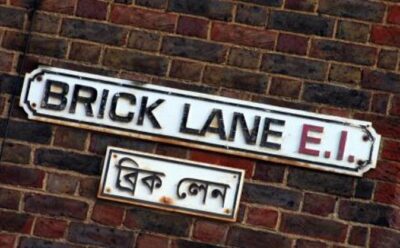
Ultimate Jack the Ripper : Guided Tour of London
Read our review →
London Jack The Ripper Small-Group Walking Tour
Read our review →
The Original Jack the Ripper Coach Tour of Haunted London
Read our review →
Jack the Ripper Tour with ‘Ripper-Vision’ in London- Afternoon
Read our review →Browse the lists this tour appears in