
Reviewed · JACK THE RIPPER TOURS
Jack the Ripper Private Immersive Tour
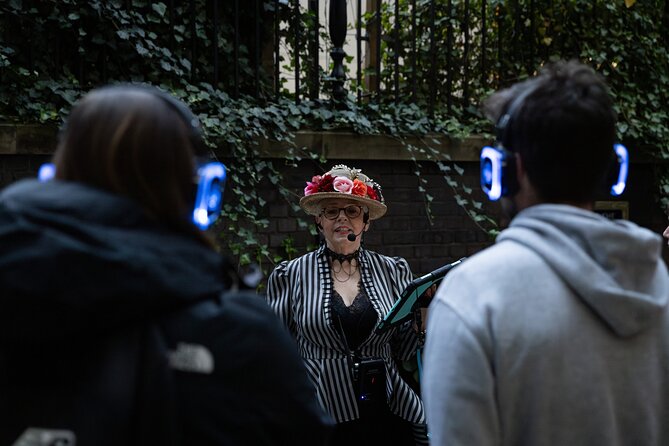
Jack the Ripper’s crimes become far more unsettling when you follow the narrow streets where the events happened. This private walk takes you from Aldgate through Whitechapel and Spitalfields, using historic photographs and carefully timed sound effects to connect the modern city with London in 1888.
I like the social detail as much as the crime story, especially the explanations of common lodging houses, workhouses, homelessness, and the desperate need for a few pennies for a bed. I also like having a private guide, since you can ask as many questions as you wish. The main drawback is simple: two and a half hours on foot with no scheduled break can be tiring, and the audio setup may not suit everyone.
Key points at a glance
- Fifteen stops across Whitechapel and Spitalfields: The route covers Aldgate Station, Mitre Square, Goulston Street, Brick Lane, Hanbury Street, and the area near Mary Kelly’s final home.
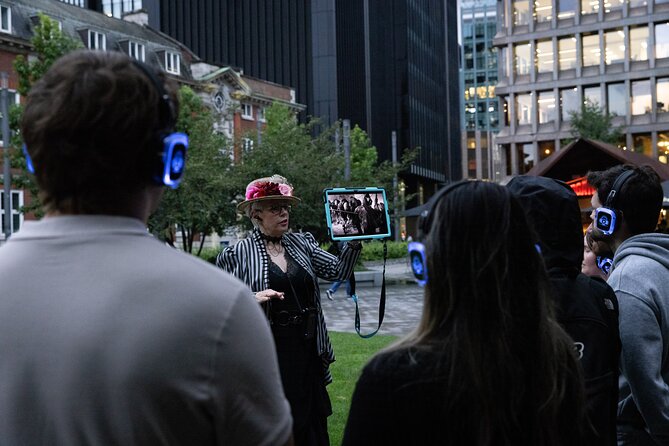
- Guide Jenny leads the walk: Her presentation combines crime details, local history, photos, suspect theories, and questions from your group.
- The setting matters: You learn how poverty, lodging houses, workhouses, unemployment, and newspaper panic shaped the case.
- Sound adds atmosphere: Headphones, pub music, street cries, and newspaper sellers help recreate the feel of the period.
- The five canonical victims are not the whole story: The walk also discusses a possible earlier victim linked to Professor David Wilson’s research.
- Plan for steady walking: The tour lasts about 2 hours and 30 minutes and is not recommended if you have difficulty walking or standing.
Following the case from Aldgate Station
The meeting point is outside Aldgate Station, a useful starting place for a walk through the eastern edge of the City of London. The tour ends on Bell Lane, with directions toward Liverpool Street Station, so you can continue your evening from there.
At the Dorsett City Hotel, the guide sets the scene. You receive an introduction to the murders and a picture of the area as it looked in 1888. This first stop is short, but it gives you the basic map and timeline before the walk moves into the harder social questions.
At St Botolph’s Aldgate, the focus shifts from murder mystery to daily life. On the green, you hear about common lodging houses, workhouses, homelessness, and unemployment. Those details matter because the victims were not simply names attached to crime scenes. Their lives were shaped by an economy in which losing a few pennies could mean losing a bed for the night.
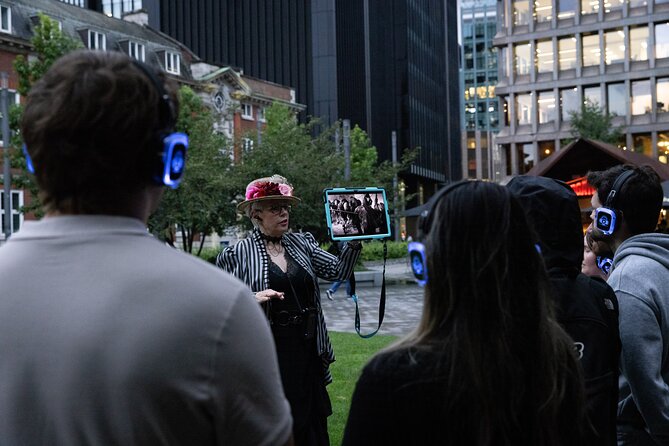
The guide uses photographs on a 14-inch tablet. That is useful after dark, when old street scenes and victim photographs can be difficult to see on a small phone screen. It also gives you something concrete to study while the guide explains how the district worked.
Other Ripper walks in London:
- London Jack the Ripper Guided Tour with Ripper-Vision
★ 4.5 · 4,840 reviews - London Jack The Ripper Guided Walking Tour
★ 5.0 · 3,131 reviews - Ultimate Jack the Ripper : Guided Tour of London
★ 5.0 · 1,495 reviews
Mitre Street and the double murder night
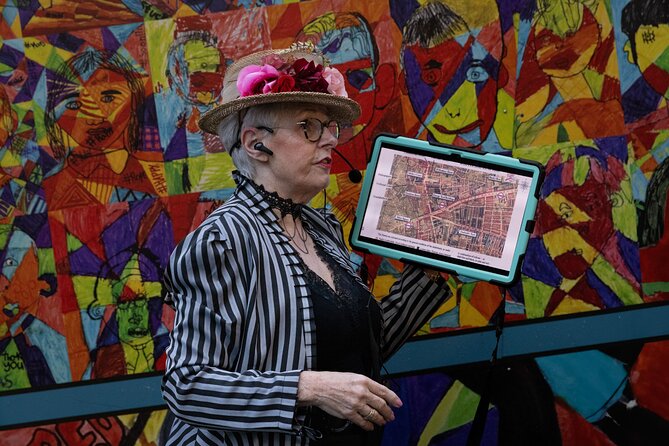
At Mitre Street, the story turns to Elizabeth Stride. You hear about the hours before her death and how Louis Diemschütz discovered her body at the gateway to Dutfield’s Yard. The photographs help you compare the historic location with the present street.
This is one of the places where a private format earns its keep. You can pause to ask about the evidence, the discovery of the body, or the way the police handled the scene. A large public group can make those questions awkward. Here, the guide can adjust the pace to your interests.
Mitre Square brings the story of Catherine Eddowes. Her body was discovered by PC Edmund Watkins during his beat, shortly after the murder of Elizabeth Stride. The guide follows the police search from the square toward the clue found on Goulston Street.
The crime details are graphic. That is part of the tour’s purpose, but you should know what you are booking. This is not a light London ghost walk. The presentation deals directly with mutilation, death, and the fear that spread through the district.
Goulston Street and the clue that caused a police problem
At Goulston Street, you stop opposite numbers 108 to 119 and look toward the doorway associated with the case’s most famous clue. The guide explains what happened after the writing was discovered and why it created tension between the Metropolitan Police and the City of London Police.
That division is more than a footnote. The two forces were separate then and remain separate today, and the walk uses this incident to show how jurisdiction affected the investigation. For anyone who enjoys the police and evidence side of the story, this is a useful part of the route.
The clue itself did not solve the case. Instead, it added another layer of argument, interpretation, and missed opportunity. The guide treats it as a disputed piece of evidence rather than a magic answer.
Wentworth Street and a victim outside the usual five
At Wentworth Street, the guide steps back to the beginning of the murders. This stop discusses a woman who is not usually included in the canonical five victims but has recently been described as a likely victim by Professor David Wilson, a criminologist.
You hear how the murder happened and why the case has been connected to Jack the Ripper. Photographs of the site and the victim support the explanation. This is a good stop for anyone who has already read about the more familiar victims and wants to explore the wider debate.
The distinction is important. Jack the Ripper history contains established facts, disputed evidence, later theories, and names added to the list long after 1888. A good guide needs to separate those categories, and this part of the walk gives you a chance to ask where the evidence becomes uncertain.
A few more things to do in London worth a look
- The Premier Classic London: Private 4-Hour Tour in a Black Cab
★ 5.0 · 2,737 reviews - Stonehenge Inner Circle Private Tour from London with Bath Visit
★ 5.0 · 1,909 reviews - Private Tour: Black Taxi Tour of London
★ 5.0 · 1,153 reviews - Private London Arrival Transfer – Airport to Hotel / Accommodation
★ 3.5 · 1,085 reviews
Brick Lane, Polly Nichols, and the sound of 1888
As the route turns into Brick Lane by Osborn Street, the atmosphere changes. Music plays as it might have from pubs and music halls in 1888. The sound is brief, but it breaks up the spoken history and gives the walk a more theatrical quality.
At Brick Lane, opposite the Frying Pan pub, you hear about Polly Nichols. This was described as the last place where she had a drink. The guide connects her death to the immediate pressure of finding money for lodging, a small but powerful detail that brings the social background back into view.
You also hear how two men discovered her body in Berner’s Street and sent for the police. The photographs show the victim and the murder site while the guide explains what followed. It is a grim story, but the focus on poverty keeps it from becoming only a sensational crime tale.
As you leave Polly Nichols, street vendors and police questioning recreate the noise and confusion of the district. The sound effects are one reason the tour can feel more absorbing than a standard lecture. They also make headphones useful, since you can hear the added audio while moving through modern streets.
There is one practical caution here. The equipment has not worked equally well for everyone. One person with hearing difficulty struggled to hear a guide using a microphone and speaker during a busy evening. If you have hearing loss, tell Jenny at the start and ask to walk near the front. The provider says hi-tech headphones are included, but the exact setup may vary by group and tour format.
Hanbury Street and the growth of public fear
Hanbury Street is the site connected with Annie Chapman. The guide discusses her life, the events before her death, and how Mrs Long saw her less than an hour earlier with a man outside number 27. You then hear how Chapman was lured toward the backyard of number 29 with promises of money.
The walk does not skip the brutal details. If you prefer a gentler treatment of true crime, this may be an uncomfortable evening. If you want the case presented with the setting, witness accounts, and police context, the stop provides plenty to consider.
On Wilkes Street, the subject broadens again. Newspapers were stoking fear, and the local community was becoming increasingly angry. You also hear about the old houses along the street, including buildings dating back to the 1700s, and why they were built.
This mix of architecture and crime helps the route feel like a London history walk rather than a string of murder scenes. You look at the street itself, not just an invisible point on a map.
Letters, newspaper sellers, and the Ten Bells area
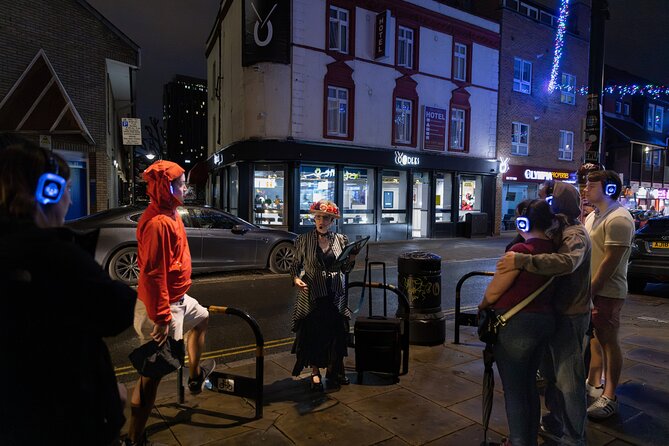
At Puma Court, the guide discusses one of the letters sent to the press. More than 1,000 letters went to police and newspapers, but the guide identifies this one and another as especially important. Newspaper sellers then call out lurid headlines, showing how the press helped turn fear into a public spectacle.
The letters are a strong fit for anyone who enjoys the evidence and media side of the case. They also raise a useful question: how much of the Ripper legend was created by the killer, and how much was amplified by newspapers eager to sell copies?
On Commercial Street, opposite the Ten Bells, you hear about the pub associated with Mary Kelly. The guide also discusses Spitalfields Market and Christchurch Graveyard, which offered a place for homeless people to sleep. Everyday needs such as shelter and access to small comforts could cause arguments among people living under severe pressure.
This is one of the tour’s best qualities. It gives you the street-level story of poor Londoners, not just the identity of a suspected killer. The area around the Ten Bells is now familiar to visitors, but the walk explains why it mattered to people living there in 1888.
The Lusk letter and Mary Kelly’s final room
At Brushfield Street, you stand in the entrance to the London Fruit and Wool Exchange building. The guide presents the Lusk letter, which arrived in a box with an item claimed to have come from one of the victims. You see photographs of the letter and the person who received it.
As with the Goulston Street clue, the value is in hearing what is known, what is claimed, and what remains open to doubt. The guide’s use of photos makes the material easier to follow than a spoken description alone.
The final stop takes place in the central courtyard of the London Fruit and Wool Exchange. It is the closest point on this route to the place associated with Mary Kelly’s room. Kelly was the youngest of the five canonical victims and the only one killed indoors.
The guide explains the events before her death, the murder itself, and the leading suspects connected with the case. This is the most graphic portion of the tour, so you should be prepared for a detailed account rather than a vague summary.
Jenny then gives her own view of who may have been responsible. You are free to question her theory, which is exactly where the private format helps. The walk ends with directions toward Liverpool Street Station, making it easy to continue to dinner or return to your accommodation.
What the private format is worth
The price is $47.52 per person. For a private walk lasting about two and a half hours, that is reasonable if your group wants detailed storytelling and the freedom to ask questions. You are paying less for transport or entry tickets and more for the guide’s preparation, photos, sound design, and route.
The value depends on your interest. If you already enjoy the case, the fifteen stops give you a fuller evening than a short, standard walking tour. If you only want a quick look at the Ten Bells and one or two crime scenes, this route may feel too long.
The private format also matters for pacing. You can ask about suspects, police work, the letters, or the social setting without waiting for a large group to move on. The tour is listed for Monday through Thursday, from 3:00 PM to 9:00 PM, within the published operating period of February 26, 2026, through March 18, 2027.
The group is your own party, but the audio experience deserves a quick check. The tour includes headphones, though one confusing booking communication described a different tour format, and one person reported receiving a microphone and speaker instead of private headphones. Confirm the exact arrangement before setting out, especially if clear audio is important to you.
You should also bring water. Bottled water is not included, and there is no planned break. Wear comfortable shoes and expect to stand for long periods. Service animals are allowed, and the route is close to public transportation.
Who should book this walk
I would choose this tour if you enjoy true crime, Victorian London, police history, newspaper culture, and walking through real locations. It is particularly well suited to someone who wants more than a list of victims and dates.
You should also be comfortable with gruesome material. The stories of Chapman, Eddowes, Stride, Nichols, and Kelly are presented in detail. The use of photos and sound effects adds atmosphere, but it can also make the subject feel more immediate.
This is less suitable if you have walking or standing difficulties, need regular breaks, or want a short evening activity. It is also not ideal if you prefer a strictly academic presentation with no guide theory. Jenny gives her own opinion about the killer, and that is part of the discussion.
Free cancellation is available when you cancel at least 24 hours before the start time. Poor weather or failure to reach the minimum number of participants can lead to a new date or a full refund.
Should you book the Jack the Ripper Private Tour?
Book it if you want a serious, detailed walk through Aldgate, Whitechapel, Brick Lane, and Spitalfields, with photos, sound, social history, and plenty of time for questions. Guide Jenny receives especially strong praise for her energy, clear communication, and command of the subject.
Before booking, accept three conditions: the material is graphic, the route is long, and the audio arrangement should be confirmed if you have hearing difficulties. For a true crime fan who wants to see the streets and understand the poverty and panic behind the case, $47.52 is a fair price for a private evening walk.
FAQ
Where does the Jack the Ripper Private Tour start?
The tour starts at Aldgate Station, Aldgate, London EC3A, UK.
Where does the tour end?
The tour ends on Bell Lane in London. The guide can direct you toward Liverpool Street Station at the end.
How long does the tour last?
The walk lasts approximately 2 hours and 30 minutes, with no scheduled break.
Is the tour private?
Yes. Only your group participates in the activity.
Are headphones included?
Hi-tech headphones are listed as included. Because the audio setup may vary, ask the provider about the exact equipment before booking if you have hearing difficulties.
What happens if I need to cancel?
You can receive a full refund if you cancel at least 24 hours before the local start time. Cancellations or changes made less than 24 hours before the start time are not accepted for a refund.
Just added in London
- The Beatles and a Secret pub★ 4.5 · 36 reviews
- The Beatles & Liverpool Magical Mystery Tour from London★ 4.5 · 80 reviews
- Airport Coach Service from Heathrow to Oxford★ 3.5 · 67 reviews
- The Beatles Magical History Black Taxi Tour London★ 5.0 · 51 reviews
- The Beatles London walking tour. From Abbey Road to the Roof Top★ 5.0 · 61 reviews
- Private The Beatles Taxi Tour in London★ 5.0 · 12 reviews
- The Beatles London Walk★ 4.5 · 120 reviews
- Dinner and Jazz Cruise on the River Thames★ 4.0 · 140 reviews
Jack the Ripper Tours, compared.
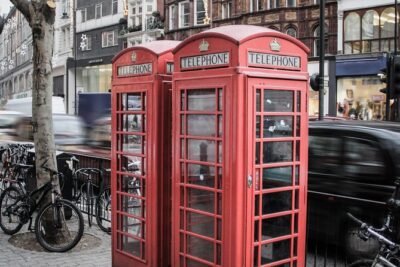
London Jack the Ripper Guided Tour with Ripper-Vision
Read our review →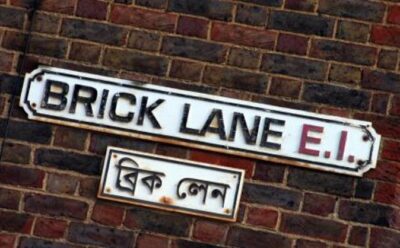
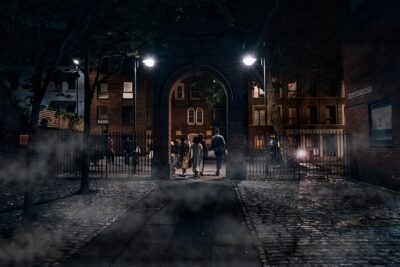
Ultimate Jack the Ripper : Guided Tour of London
Read our review →

London Jack The Ripper Small-Group Walking Tour
Read our review →
The Original Jack the Ripper Coach Tour of Haunted London
Read our review →
Jack the Ripper Tour with ‘Ripper-Vision’ in London- Afternoon
Read our review →Browse the lists this tour appears in